A study new finds that neutrophils—the most abundant white blood...

Vipin M. Vashishtha@vipintukur
13 views
May 24, 2025
~2 min read
Advertisement
1
A study new finds that neutrophils—the most abundant white blood cells in humans—may be altered by SARS-CoV-2 virus to cease their normal function of destroying pathogens in the body and, instead, significantly inhibit other immune cells critical for fighting the virus. 1/

2
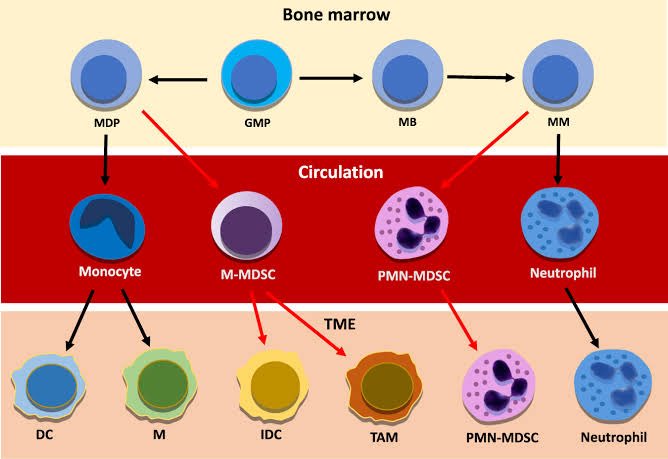
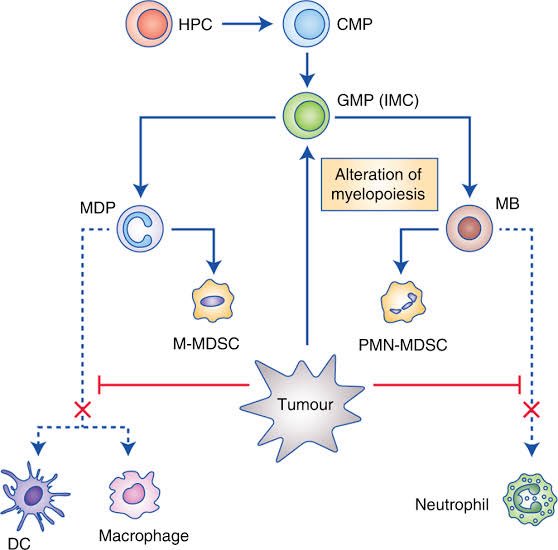
The study finds that in some COVID infections, SARS-CoV-2 may dramatically impair the immune response by reprogramming neutrophils—front-line immune cells central to fighting infections—into a cell type called polymorphonuclear myeloid derived suppressor cells (PMN-MDSCs) 2/

3
Polymorphonuclear myeloid derived suppressor cells (PMN-MDSCs) are known to suppress virus-fighting T cells & it is believed that the reprogramming that creates them could provide a mechanism by which severe COVID, a more dangerous form of the disease, may arise. 3/
4
Earlier study has shown that severe COVID-19 is associated w/ an increased number of neutrophils. Researchers goal was to find out whether these neutrophils had been reprogrammed by SARS-CoV-2, and if so, did they contribute to the shift from mild to a more serious infection 4/
5
In their study, the researchers examined neutrophils found in blood samples from 39 participants hospitalized in the Johns Hopkins Health System in 2020 for acute COVID-19 that became severe, and from nine people without a SARS-CoV-2 infection as healthy controls 5/
6
They found upon examining the neutrophils is that in people with COVID-19, the cells had degranulated [released their granular contents into the surrounding environment] & differentiated into PMN-MDSCs, which are known to suppress T cells—and therefore, the immune system. 6/

7
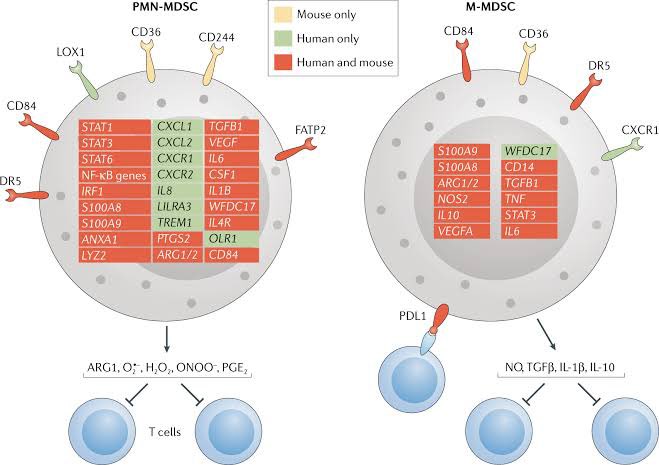
PMN-MDSCs associated with cancers and other nonviral diseases, are known to have two key proteins on their surfaces that negatively affect the immune system: lectin-type oxidized low-density lipoprotein receptor-1 (LOX-1) and programmed cell death ligand 1 (PD-L1). 7/
8
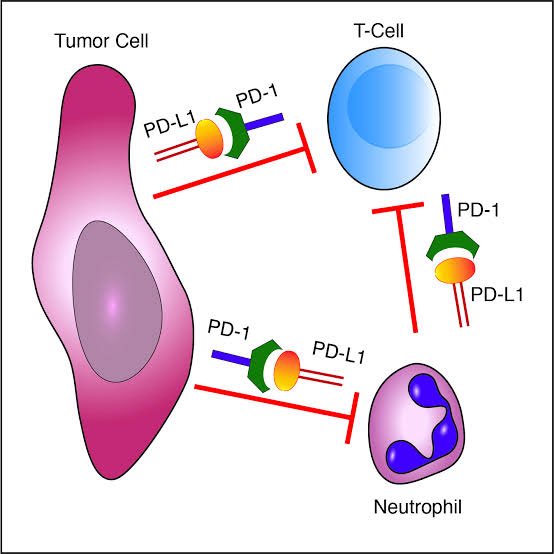
While the role of LOX-1 on neutrophils remains unclear, PD-L1 is well known for binding to a specific receptor, called PD-1, on T cells, which inhibits their activation, proliferation, differentiation and ability to signal other immune cells to the presence of a pathogen. 8/
9
When the researchers compared neutrophils from people with severe COVID to those with mild to moderate COVID, they found that the cells from the former were more likely to express LOX-1 and PD-L1. 9/

10
Further, they cultured neutrophils in the presence of SARS-CoV-2 in the lab, which induced the neutrophils to differentiate into PMN-MSDCs that were capable of limiting T-cell proliferation & inhibiting T cells from releasing cytokines. 10/

11
The researchers also co-cultured neutrophils with H1N1 influenza virus, but did not see any conversion to PMN-MDSCs. Additionally, an earlier study reported that PMN-MDSCs were not found in people hospitalized with severe influenza infections. 11/
12
So, it appears that not all viruses can cause the differentiation. SARS-CoV-2 may directly induce neutrophils to take on the functions of a PMN-MDSC, and in turn, weaken the immune response against the virus enough to cause severe COVID. 12/12
science.org/doi/10.1126/sc…
science.org/doi/10.1126/sc…