🧵 Four clinical trials from the 1960s-70s on the effects of dietary...

Nick Jikomes@trikomes
35 views
May 18, 2025
~3 min read
Advertisement
1
🧵 Four clinical trials from the 1960s-70s on the effects of dietary fat composition on human health (mortality).
First, note the broad trends in fat sources in the US during and after this period:
- Vegetable fat/seed oils availability rose, while animal fat availability declined.
- Fat sources like butter, lard, and tallow dropped off; shortening/margarine rose before dropping again ~2000, and seed oils rose and then rose faster.
Much of this was driven by massive increases in crop yields post-WWII, which created huge surpluses of grains, which caused the need for companies to figure out how to market and sell excess grain-derived products like corn oil, etc.
Also recall that Ancel Keys' diet-heart hypothesis (saturated fat --> cholesterol --> heart disease) rose and prominence and became public policy in this time, leading to the low-fat craze of the late 20th century, "heart healthy" designations for polyunsaturated fats, and widespread belief (still prominent today) that saturated (animal) fats = bad, and unsaturated (vegetable/seed) fats = good.
With that in mind, here are the basic results from trials in the 1960-70s period...
1/5
2
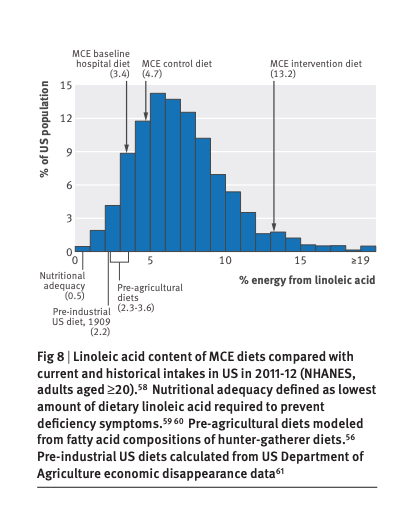
Re-evaluation of the traditional diet-heart hypothesis: analysis of recovered data from Minnesota Coronary Experiment (1968-73)
Replacing saturated fat in the diet with linoleic acid (the main omega-6 PUFA in seed oils):
- DOES lower serum cholesterol
- Does NOT lower risk of death
- Reductions in cholesterol associated with INCREASED risk of death
2/5


Replacing saturated fat in the diet with linoleic acid (the main omega-6 PUFA in seed oils):
- DOES lower serum cholesterol
- Does NOT lower risk of death
- Reductions in cholesterol associated with INCREASED risk of death
2/5
3
Sydney Diet Heart Study
Replacing saturated fats from animal fats with the omega-6 PUFA linoleic acid (from safflower oil):
- HIGHER rate of all-cause mortality
- HIGHER rates of cardiovascular disease mortality
- HIGHER rates of coronary heart disease mortality
3/5
Replacing saturated fats from animal fats with the omega-6 PUFA linoleic acid (from safflower oil):
- HIGHER rate of all-cause mortality
- HIGHER rates of cardiovascular disease mortality
- HIGHER rates of coronary heart disease mortality
3/5
4
Incidence of cancer in men on a diet high in polyunsaturated fat (LA veterans study)
In an eight-year controlled trial in men, a diet low in saturated fat and cholesterol and high in polyunsaturated fat saw:
- LOWER fatal atherosclerotic events
- NO DIFFERENCE in total mortality
- HIGHER fatal carcinomas
In other words, the high PUFA diet group died less often from atherosclerosis, but more often from cancer, with the two groups dying at a similar overall rate.
(Note my recent podcast, M&M 229, demonstrating a direct link between linoleic acid and cancer via mTOR)
4/5
5
Corn Oil in Treatment of Ischaemic Heart Disease
First sentence of the Results section is a gem:
"The prescribed dose of oil was 80 g./day. But many found the treatment burdensome: distaste, nausea, and diarrhea were the commonest complaints."
People struggled to consume this much corn oil for very long.
The two intervention groups in this trial were NOT animal fats (saturated) vs. PUFAs, but rather olive oil (largely monounsaturated fat) vs. corn oil (largely omega-6 PUFA).
Conclusion:
"The patients receiving the key treatment (corn oil) fared worse than those in the other two groups: two years from the start of treatment, infarction or death had occurred in one-quarter more of the corn-oil than of the control group."
But there was a third, non-intervention control group... which had higher saturated fat content and total fat content, as well as higher protein and calorie content. How did they compare to the olive oil and corn oil groups?
"At two years the proportion of patients remaining free of major cardiac events is greater for the control group (75%) than for the two oil groups (olive oil 57%, corn oil 52%)."
5/5