Is your patient’s “overthinking” early Obsessive Compulsive...

Psychiatry Excellence@psycheureka
19 views
Jun 18, 2025
~2 min read
Advertisement
1
Is your patient’s “overthinking” early Obsessive Compulsive Disorder (OCD)?
“I can’t stop thinking.”
Clinicians hear this often. But beneath “overthinking” may lie obsessive phenomena, early OCD traits, or even treatment-resistant pathology.
Let’s break down the network-level and phenomenological clues to look for. 👇🧵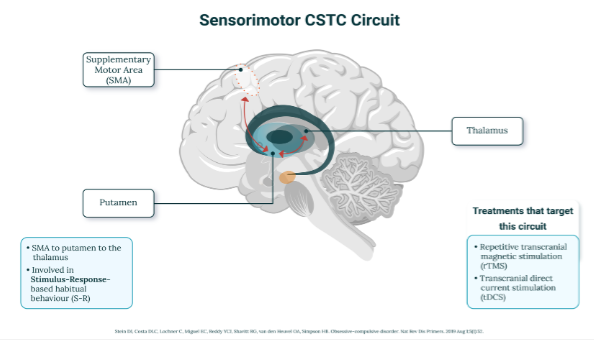
“I can’t stop thinking.”
Clinicians hear this often. But beneath “overthinking” may lie obsessive phenomena, early OCD traits, or even treatment-resistant pathology.
Let’s break down the network-level and phenomenological clues to look for. 👇🧵
2
What Are Patients Really Describing?
Common patient expressions:
● Repetitive, intrusive thoughts
● Difficulty shifting focus
● Internal “noise” or looping ideas
But these aren't all the same.
They can range from preoccupations to obsessions to ruminations—and each has different neural underpinnings.
Common patient expressions:
● Repetitive, intrusive thoughts
● Difficulty shifting focus
● Internal “noise” or looping ideas
But these aren't all the same.
They can range from preoccupations to obsessions to ruminations—and each has different neural underpinnings.
3
Meet the Triple Network Model
Obsessive phenomena arise from dysfunction in:
● Salience Network (SN): Detects emotional relevance
● Default Mode Network (DMN): Self-referential thought
● Executive Control Network (ECN): Inhibition, planning
Obsessive phenomena arise from dysfunction in:
● Salience Network (SN): Detects emotional relevance
● Default Mode Network (DMN): Self-referential thought
● Executive Control Network (ECN): Inhibition, planning
4
OCD Circuitry in Action
In OCD:
1. SN flags a threat →
2. DMN generates intrusive thoughts →
3. ECN fails to suppress it →
4. Compulsions emerge to reduce distress
This loop is the hallmark of obsessive-compulsive pathology.
In OCD:
1. SN flags a threat →
2. DMN generates intrusive thoughts →
3. ECN fails to suppress it →
4. Compulsions emerge to reduce distress
This loop is the hallmark of obsessive-compulsive pathology.
5
Dissecting Obsessions Clinically
1. Obsessions = intrusive, ego-dystonic thoughts
2. Compulsions = rituals to reduce anxiety
3. Insight ranges from full to delusional
Insight level predicts treatment response and resistance.
1. Obsessions = intrusive, ego-dystonic thoughts
2. Compulsions = rituals to reduce anxiety
3. Insight ranges from full to delusional
Insight level predicts treatment response and resistance.
6
From Impulse to Habit: The Circuit Shift
Early OCD:
● Ventral striatum → impulsive, reward-driven compulsions
Late OCD:
● Dorsal striatum → rigid, habitual loops
This ventral-to-dorsal shift explains why some OCD becomes entrenched.
Early OCD:
● Ventral striatum → impulsive, reward-driven compulsions
Late OCD:
● Dorsal striatum → rigid, habitual loops
This ventral-to-dorsal shift explains why some OCD becomes entrenched.
7
Executive Dysfunction in OCD
The Executive Control Network (ECN) underperforms, impairing:
1. Inhibition
2. Set-shifting
3. Reappraisal
The result: thoughts feel “sticky,” and patients can't disengage.
The Executive Control Network (ECN) underperforms, impairing:
1. Inhibition
2. Set-shifting
3. Reappraisal
The result: thoughts feel “sticky,” and patients can't disengage.
8
Default Mode Network (DMN): The Ruminative Engine
The Default Mode Network (DMN) becomes hyperactive in OCD:
● Excessive introspection
● “Just right” obsessions
● Existential/philosophical ruminations (common in Pure-O)
This is not just overthinking—it’s maladaptive internal processing.
The Default Mode Network (DMN) becomes hyperactive in OCD:
● Excessive introspection
● “Just right” obsessions
● Existential/philosophical ruminations (common in Pure-O)
This is not just overthinking—it’s maladaptive internal processing.
9
The Threat Detector: Salience Network (SN)
The Salience Network (SN), especially the amygdala, tags intrusive thoughts as urgent.
Results in:
● Heightened anxiety
● Ritualised avoidance
● Reassurance-seeking behavior
Even if the patient knows the fear is irrational.
The Salience Network (SN), especially the amygdala, tags intrusive thoughts as urgent.
Results in:
● Heightened anxiety
● Ritualised avoidance
● Reassurance-seeking behavior
Even if the patient knows the fear is irrational.
10
Tailoring OCD Treatment to Network Stage
Ventral-stage OCD:
1. SSRIs at high doses
2. CBT with ERP (Exposure and Response Prevention)
Dorsal-stage OCD:
1. Augment with antipsychotics (e.g. risperidone)
2. Consider glutamatergic agents (e.g. memantine)
3. Use intensive behavioural therapy
Ventral-stage OCD:
1. SSRIs at high doses
2. CBT with ERP (Exposure and Response Prevention)
Dorsal-stage OCD:
1. Augment with antipsychotics (e.g. risperidone)
2. Consider glutamatergic agents (e.g. memantine)
3. Use intensive behavioural therapy
11
Learn more about the neurocircuitry behind obsessive thinking and how it progresses from early-stage symptoms to treatment-resistant loops in our in-depth course, "Obsessive Compulsive Disorder (OCD) – A Practical Guide" on The Academy:
psychscene.co/3RvypXC
psychscene.co/3RvypXC