One of the states I find most fascinating, after Rhodesia, of...

Will Tanner@Will_Tanner_1
29 views
Mar 03, 2025
~5 min read
Advertisement
1
One of the states I find most fascinating, after Rhodesia, of course, is Singapore
Why?
Because, it, in its undemocratic nature and drive for excellence, shows how we can escape our current decline and build a future of greatness even as decline surrounds us
A short 🧵👇
Why?
Because, it, in its undemocratic nature and drive for excellence, shows how we can escape our current decline and build a future of greatness even as decline surrounds us
A short 🧵👇
2
Why is it a glimpse at a good future?
It, much like Rhodesia, embraced the functional aspects of our civilization without the egalitarian insanity
As such, it shows what me must avoid to have a thriving society
It is undemocratic, and thus practical rather than ideological, prosperous rather than race communism obsessed, and gleaming rather than covered in the usual refuse of the Third World and increasingly Third Worldified West
It, much like Rhodesia, embraced the functional aspects of our civilization without the egalitarian insanity
As such, it shows what me must avoid to have a thriving society
It is undemocratic, and thus practical rather than ideological, prosperous rather than race communism obsessed, and gleaming rather than covered in the usual refuse of the Third World and increasingly Third Worldified West
3
It is, in other words, the opposite of South Africa
It embraced excellence rather than equality, and prospered for it, creating a world in which one would like to live rather than some steaming, Third World hell
It embraced excellence rather than equality, and prospered for it, creating a world in which one would like to live rather than some steaming, Third World hell
4
Further, it's a glimpse at the Network State concept
It is, of course, a locality, not a network
But it is a city-state, and in that shows what can be achieved when the focus is on success in a small, relatively likeminded grouping rather than on wealth redistribution across a vast, continent-sized country
It's a repudiation of the Twentieth Century in that respect; it embraces excellence rather than mere bigness and democratic scale
That too is part of a successful future; whatever we achieve will be because of excellence, not mere scale.
Fraternal networks, network states, Singapore-style city-states, all of it is potentially possible as the Westphalian system declines and something different emerges in its place
It is, of course, a locality, not a network
But it is a city-state, and in that shows what can be achieved when the focus is on success in a small, relatively likeminded grouping rather than on wealth redistribution across a vast, continent-sized country
It's a repudiation of the Twentieth Century in that respect; it embraces excellence rather than mere bigness and democratic scale
That too is part of a successful future; whatever we achieve will be because of excellence, not mere scale.
Fraternal networks, network states, Singapore-style city-states, all of it is potentially possible as the Westphalian system declines and something different emerges in its place
5
Notably, President Trump seems to recognize that such are the tools and pathways to success in the 21st century, as show by his "freedom city" concept
These aren't fully sovereign city-states, of course, but would be a space where excellence could be the goal rather than compliance with the Civil Rights Act and regulatory regime
These aren't fully sovereign city-states, of course, but would be a space where excellence could be the goal rather than compliance with the Civil Rights Act and regulatory regime
6
In any case, what Lee Kuan Yew achieved with Singapore is a so far more permanent version of what was achieved in Rhodesia
Living standards and per-capita GDP are some of the highest on the continent, the city is now gleaming and futuristic rather than a fetid swamp, and the various constituent ethnic groups work (somewhat) together rather than being at each other's throats, as happens in its neighbors
He, in short, turned it from Third World to First
Living standards and per-capita GDP are some of the highest on the continent, the city is now gleaming and futuristic rather than a fetid swamp, and the various constituent ethnic groups work (somewhat) together rather than being at each other's throats, as happens in its neighbors
He, in short, turned it from Third World to First
7
That's not to say it's without issues.
It is sterile, as has been noted, which can be offputting and tiresome
It is overcrowded; being an island is limiting, in many respects
And the TFR is a measly 1.04, making it one of the great "IQ shredders," as Steve Sailer put it, and potentially endangering its future. Even in a cosmopolitan city-state, immigration can't preserve a people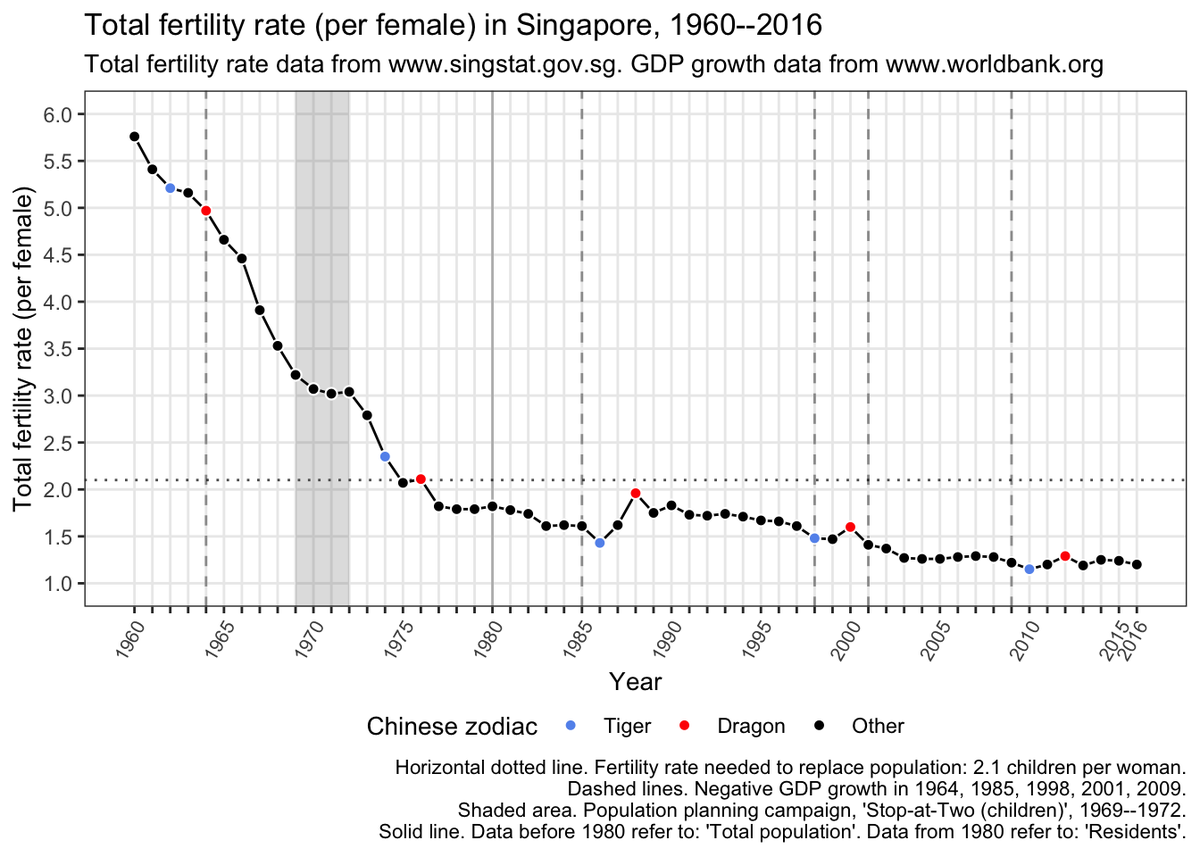
It is sterile, as has been noted, which can be offputting and tiresome
It is overcrowded; being an island is limiting, in many respects
And the TFR is a measly 1.04, making it one of the great "IQ shredders," as Steve Sailer put it, and potentially endangering its future. Even in a cosmopolitan city-state, immigration can't preserve a people
8
But there is reason to hope that those problems can be overcome because of its strengths
As an undemocratic center of excellence, it can draw talent, it can build, and some sterility is far preferable to looking like the Congo, or even the NYC subway
So, we'll see, but there's no reason for despair yet
As an undemocratic center of excellence, it can draw talent, it can build, and some sterility is far preferable to looking like the Congo, or even the NYC subway
So, we'll see, but there's no reason for despair yet
9
There is much for us to learn from that, and much off which we can build
Namely, the lesson is that excellence, in any and all fields, matters. There's a reason Singapore, despite being a tiny island, is a beacon of prosperity, while Indonesia, a land of 100 million, is known for achieving nothing
Singapore, particularly under Lee, wanted to achieve. There was no messing around with mass democracy. Communism was crushed. Ethnic resentments were suppressed. Education was geared toward creating bright and competent citizens. In short, the usual gunk that clogs up countries was eliminated, and public investment used to grease the wheels of competence.
Indonesia, meanwhile, had ethnic feuds and attempts at communism. It achieves as little now as it did then.
Namely, the lesson is that excellence, in any and all fields, matters. There's a reason Singapore, despite being a tiny island, is a beacon of prosperity, while Indonesia, a land of 100 million, is known for achieving nothing
Singapore, particularly under Lee, wanted to achieve. There was no messing around with mass democracy. Communism was crushed. Ethnic resentments were suppressed. Education was geared toward creating bright and competent citizens. In short, the usual gunk that clogs up countries was eliminated, and public investment used to grease the wheels of competence.
Indonesia, meanwhile, had ethnic feuds and attempts at communism. It achieves as little now as it did then.
10
So, how to emulate that?
That, broadly, is what @extradeadjcb and I discussed in today's podcast on fraternal networks
Yes, we're not the state. No, we can't build Orania in America. No, joining the Masons won't get you anywhere now
But we can find likeminded men of excellence and build a network alongside them.
Men of greatness, competence, and vitality are the future. Why? Because we need to build something new to prosper, not just bureaucratically maintain rotting systems. Because the social ties that bind and create communities died in the postwar world, and need to be rebuilt. Because most of the population is obviously incompetent, and isn't going to be able to figure out clean water, much less making it to Mars. Because what existing institutions there are want Global Zimbabwe, so the only way to do something notable is to EXIT them and build something new that obviates them. That is a task calling for networks of the competent and of the great, not for the grey and bureaucratic mass man
This isn't new. It is, in (very) broad strokes, how the Hospitallers (along with the Templars) became a leading force for centuries nearly a millennium ago.
But it is increasingly relevant as the system rots around us
That, broadly, is what @extradeadjcb and I discussed in today's podcast on fraternal networks
Yes, we're not the state. No, we can't build Orania in America. No, joining the Masons won't get you anywhere now
But we can find likeminded men of excellence and build a network alongside them.
Men of greatness, competence, and vitality are the future. Why? Because we need to build something new to prosper, not just bureaucratically maintain rotting systems. Because the social ties that bind and create communities died in the postwar world, and need to be rebuilt. Because most of the population is obviously incompetent, and isn't going to be able to figure out clean water, much less making it to Mars. Because what existing institutions there are want Global Zimbabwe, so the only way to do something notable is to EXIT them and build something new that obviates them. That is a task calling for networks of the competent and of the great, not for the grey and bureaucratic mass man
This isn't new. It is, in (very) broad strokes, how the Hospitallers (along with the Templars) became a leading force for centuries nearly a millennium ago.
But it is increasingly relevant as the system rots around us
11
And, of course, Dr. Bennett is the guy drawing attention to the TFR issue, which we talked about
The future belongs to those who show up, and right now Singapore's greatest issue is that the next generation isn't going to show up
The same is true of much of competent America
We need people interested in building dynasties again, and Lee Kuan Yew shows what can be accomplished when you think like that
The future belongs to those who show up, and right now Singapore's greatest issue is that the next generation isn't going to show up
The same is true of much of competent America
We need people interested in building dynasties again, and Lee Kuan Yew shows what can be accomplished when you think like that
12
Finally, Singapore's story is critical to learn because it is a reminder that you can build in the ruins
When Lee Kuan Yew began to transform his island, he did so in the face of not only near-total domestic poverty, but a collapsing British empire that couldn't and wouldn't protect him and his island. The Japanese had conquered, the British were a basket case, predatory neighbors looked on and licked their chops, and lesser men would have succumbed to despair and cried amongst the ruins
Lee, instead, built one of the most prosperous states in a hemisphere
So yes, the empire in which we live is declining. But that means that their is opportunity, particularly at the fringes, not that we should despair
When Lee Kuan Yew began to transform his island, he did so in the face of not only near-total domestic poverty, but a collapsing British empire that couldn't and wouldn't protect him and his island. The Japanese had conquered, the British were a basket case, predatory neighbors looked on and licked their chops, and lesser men would have succumbed to despair and cried amongst the ruins
Lee, instead, built one of the most prosperous states in a hemisphere
So yes, the empire in which we live is declining. But that means that their is opportunity, particularly at the fringes, not that we should despair
13
Here’s that interview with @extradeadjcb: theamericantribune.news/p/building-fra…
14
@Gravitonpingpon That's not true, it's split between three main races