This is an interesting question that comes up often Why don't our...

Will Tanner@Will_Tanner_1
35 views
Jan 30, 2025
~9 min read
Advertisement
1
This is an interesting question that comes up often
Why don't our billionaires build beautiful things as their Gilded Age counterparts did?
Because egalitarian mass democracy neither inculcates an honor-bound duty of noblesse oblige, nor incentivizes commons protection🧵👇
Why don't our billionaires build beautiful things as their Gilded Age counterparts did?
Because egalitarian mass democracy neither inculcates an honor-bound duty of noblesse oblige, nor incentivizes commons protection🧵👇
2
This is a cycle that often repeats: whereas the old wealth has (if properly taught virtue, as it should be) an understood duty to the commons because of the immense privilege with which it was born, "new men" only rarely grasp that duty
For one, they see their wealth as earned rather than the result of privilege, and so like Morrison in the Flashman series are loathe to part with it when called by duty to do so
But, more than that, they have a point: if self-made, they weren't born with the duties and privilege attendant to the silver spoon, and so don't have the same view of duty to the commons
This is why, as a side note, the House of Lords championed labor law reform that got rid of child labor, limited hours, etc.; duty

For one, they see their wealth as earned rather than the result of privilege, and so like Morrison in the Flashman series are loathe to part with it when called by duty to do so
But, more than that, they have a point: if self-made, they weren't born with the duties and privilege attendant to the silver spoon, and so don't have the same view of duty to the commons
This is why, as a side note, the House of Lords championed labor law reform that got rid of child labor, limited hours, etc.; duty
3
That difference in attitude presents itself in various ways, and one of my favorite ways to tell it is, as I did with @EMBurlingame recently, through the lens of English fox-hunting
Originally, the hunting of the fox was an activity that united most of the country classes. Lords, gentlemen, yeoman farmers, and tenant farmers participated together as a group, in their local hunt; the Lord kept and paid for the dogs, the farmers let their fields be used, the hunters paid for damage to the fences and fields incurred in the hunts, and events like hunt dinners brought the country society together rather than keeping the ranks stratified. Such wasn't always the case, and certainly it wasn't an egalitarian levelling of society, but is was a fun activity in which the different classes participated and got along
Then came the second half of the 19th Century, and the Industrial Revolution destroyed much of that. Namely, railroads enabled men from all over (but particularly London) to travel to hunts in communities in which they didn't live and had no ties, and the new wealth created by it put people who had no ties of duty, tradition, or life to a community in the hunting field amidst the different classes. They, somewhat unlike the upper ranks, despised their inferiors (probably out of a sense of inferiority to the lords) and were rude to the farmers who once participated in the hunts while driving them off the hunting fields
That led, in turn, to the decline of fox-hunting as farmers stopped letting their fields be used, put up barbed wire in place of wood fences that made hunting too dangerous, and didn't cooperate in keeping livestock-killed foxes alive. More importantly, it created bad blood between the country classes that pushed things in a more radical political direction
Originally, the hunting of the fox was an activity that united most of the country classes. Lords, gentlemen, yeoman farmers, and tenant farmers participated together as a group, in their local hunt; the Lord kept and paid for the dogs, the farmers let their fields be used, the hunters paid for damage to the fences and fields incurred in the hunts, and events like hunt dinners brought the country society together rather than keeping the ranks stratified. Such wasn't always the case, and certainly it wasn't an egalitarian levelling of society, but is was a fun activity in which the different classes participated and got along
Then came the second half of the 19th Century, and the Industrial Revolution destroyed much of that. Namely, railroads enabled men from all over (but particularly London) to travel to hunts in communities in which they didn't live and had no ties, and the new wealth created by it put people who had no ties of duty, tradition, or life to a community in the hunting field amidst the different classes. They, somewhat unlike the upper ranks, despised their inferiors (probably out of a sense of inferiority to the lords) and were rude to the farmers who once participated in the hunts while driving them off the hunting fields
That led, in turn, to the decline of fox-hunting as farmers stopped letting their fields be used, put up barbed wire in place of wood fences that made hunting too dangerous, and didn't cooperate in keeping livestock-killed foxes alive. More importantly, it created bad blood between the country classes that pushed things in a more radical political direction
4
So, whereas the old orders had, whatever their varied flaws, a general sense of duty to and commonality with much of the commons that created a steady society generally lacking in bad blood, the new men didn't
Rather, less secure in their wealth and social standing, they had sharper elbows and more of a willingness to, whatever the eventual cost, attempt to establish their own standing and show their superiority. Not only does that show a lack of long-term sense, it shows the utter lack of a sense of duty and noblesse oblige, which makes some sense given that they weren't nobles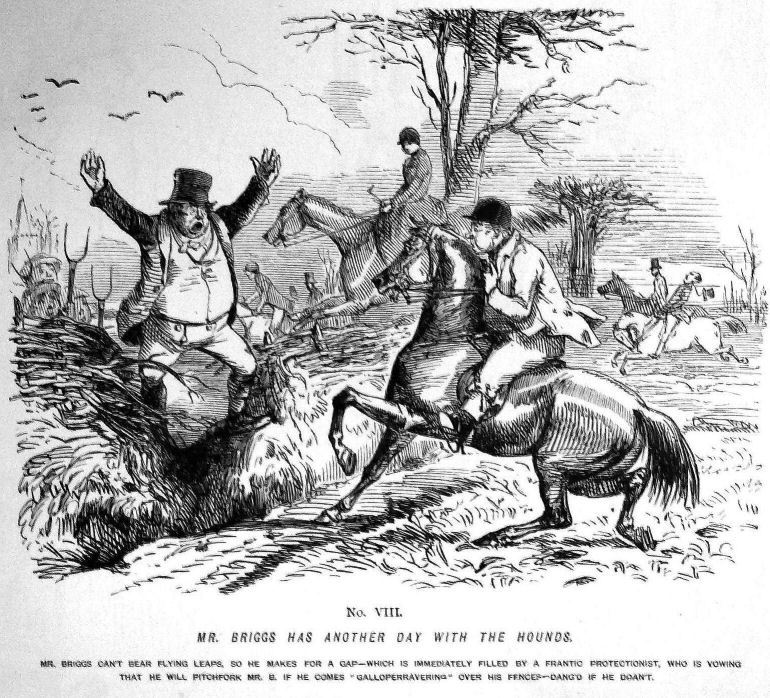
Rather, less secure in their wealth and social standing, they had sharper elbows and more of a willingness to, whatever the eventual cost, attempt to establish their own standing and show their superiority. Not only does that show a lack of long-term sense, it shows the utter lack of a sense of duty and noblesse oblige, which makes some sense given that they weren't nobles
5
This then leads back to architecture and what is built:
The Old World mindset, whether involving new men like Carnegie, JP Morgan and Rockefeller who generally adopted it or the older families who had long had it, generally meant a very low time preference, a sense of duty to the commons, and a willingness to, within the proper hierarchical bounds, get along. Further, lacking as it did the subversive desire to tear down, it tended to have good taste and show it through the creation of beauty
What this produced, in terms of public architecture, is structures that are beautiful, well-built, and long-lasting. Two prominent examples come to mind.
One is the old Eaton Hall, built up by the 1st Duke of Westminster: not only did he want to build something magnificent, but he saw it as his duty to keep it and its grounds open to visitors of all classes to that they might get something out of its existence. Death duties forced its destruction, but while it existed it provided countless jobs and much enjoyment for those in its environs
The other is the collection of libraries built by Carnegie: in this respect like the best of the old order, he thought it to be his duty to lift up the public through providing public access to education, and for those structures doing so to be beautiful and thus uplifting rather than ugly and utilitarian. So, many of the public libraries that still exist are marvelous, stone structures the existence of which is inspiring and uplifting rather than depressing

The Old World mindset, whether involving new men like Carnegie, JP Morgan and Rockefeller who generally adopted it or the older families who had long had it, generally meant a very low time preference, a sense of duty to the commons, and a willingness to, within the proper hierarchical bounds, get along. Further, lacking as it did the subversive desire to tear down, it tended to have good taste and show it through the creation of beauty
What this produced, in terms of public architecture, is structures that are beautiful, well-built, and long-lasting. Two prominent examples come to mind.
One is the old Eaton Hall, built up by the 1st Duke of Westminster: not only did he want to build something magnificent, but he saw it as his duty to keep it and its grounds open to visitors of all classes to that they might get something out of its existence. Death duties forced its destruction, but while it existed it provided countless jobs and much enjoyment for those in its environs
The other is the collection of libraries built by Carnegie: in this respect like the best of the old order, he thought it to be his duty to lift up the public through providing public access to education, and for those structures doing so to be beautiful and thus uplifting rather than ugly and utilitarian. So, many of the public libraries that still exist are marvelous, stone structures the existence of which is inspiring and uplifting rather than depressing
6
The thing is, the spirit that builds such structures at such great expense merely because they are good and beautiful rather than in the hope of pecuniary gain, is unique to a specific mindset, that described above
If not cultivated by the teaching of virtue and duty, the example set by existing men, and the cultivation of taste, it dies out
So, men like Carnegie and Morgan had the English landed elite to look to, and thus to learn from in the hope of being gentlemen with noble bearings. That aided them, and led to things like the Carnegie libraries and JP Morgan twice saving the American financial system and dollar.
The absence of such men to look up to as paragons of proper behavior in the upper echelons of the social hierarchy is a problem, as the new men are not taught to act in such a manner and instead, like their spiritual compatriots on the fox fields, cause rancor by trying to bully their way into prominence

If not cultivated by the teaching of virtue and duty, the example set by existing men, and the cultivation of taste, it dies out
So, men like Carnegie and Morgan had the English landed elite to look to, and thus to learn from in the hope of being gentlemen with noble bearings. That aided them, and led to things like the Carnegie libraries and JP Morgan twice saving the American financial system and dollar.
The absence of such men to look up to as paragons of proper behavior in the upper echelons of the social hierarchy is a problem, as the new men are not taught to act in such a manner and instead, like their spiritual compatriots on the fox fields, cause rancor by trying to bully their way into prominence
7
Now, we are decidedly without such men to set the standard and turn out new Carnegies and Morgans into pro-social men who build and think for the long-term good rather than merely in terms of wants
While this presents across the spectrum, it is clearest in architecture. Thinking not about the long-term good and raising the public up, but rather about gaining notoriety through shocking, what new men of great wealth do donate buildings on the Carnegie mold largely create hideous glass and steel structures that depress/shock rather than inspire and will fall apart relatively quickly, whereas stone buildings last for centuries
Bill and Melinda Gates Hall is a great example of this
While this presents across the spectrum, it is clearest in architecture. Thinking not about the long-term good and raising the public up, but rather about gaining notoriety through shocking, what new men of great wealth do donate buildings on the Carnegie mold largely create hideous glass and steel structures that depress/shock rather than inspire and will fall apart relatively quickly, whereas stone buildings last for centuries
Bill and Melinda Gates Hall is a great example of this
8
And that's if they decide to act for the public good at all: will the exception of Elon's purchase of X, most use "philanthropy" to feel good and avoid taxes, rather than acting out of a sense of duty to the public good
Hence the modern art that's donated, the awful modernist architecture, and so on: it's ugly nonsense, doing nothing to build the spirit or educate the public in virtue and history, but it is "expensive" and so is a large if hideous tax break

Hence the modern art that's donated, the awful modernist architecture, and so on: it's ugly nonsense, doing nothing to build the spirit or educate the public in virtue and history, but it is "expensive" and so is a large if hideous tax break
9
And, that's if philanthropy is even engaged in. As Fussell notes in his magnificent book Class, now the mega-rich generally hide out of sight and out of mind because of the hostile government policy of the 19th century
So, because they want to avoid a redux of the 90% death and income taxes, the trust-busting destruction of private property, the tax-enable expropriation of great estates, they hide out behind the scenes and whatever societal benefits would be reaped by their wealth never happen
Thus, the system itself, one of egalitarian mass democracy in which the commons is worked into a spiteful desire to level and enabled in so doing by voting laws, prevents great public works from being made, as doing so would serve as a reminder of the wealth and present the idea that it ought be taxed away
So, because they want to avoid a redux of the 90% death and income taxes, the trust-busting destruction of private property, the tax-enable expropriation of great estates, they hide out behind the scenes and whatever societal benefits would be reaped by their wealth never happen
Thus, the system itself, one of egalitarian mass democracy in which the commons is worked into a spiteful desire to level and enabled in so doing by voting laws, prevents great public works from being made, as doing so would serve as a reminder of the wealth and present the idea that it ought be taxed away
10
So, if you want billionaires to build magnificent structures again, what's needed is a shift in understanding back toward the old way, and policy changes that restore trust on both sides of the equation
Combining long-term thinking with a sense of duty, of noblesse oblige, and the resultant understanding that the commons must be aided and protected, is the way to get whatever our needed equivalent of the Carnegie Libraries is. Without that sense of duty and properly inculcated virtue, we'll just keep getting ugly nonsense, if anything at all
Similarly, there has to be some change that rids us of the tax version of the Sword of Damocles: now, those who would be building great things are largely warned away from doing so by the implicit threat that if wealth is shown, it will be taxed to nothing. That inculcates a culture of hoarding wealth, of doing little with it for fear that spending or giving some of it will lead to its total destruction, and thus prevents the construction of big and beautiful things; Eaton Hall cost around $150 million in modern currency to build, even if it was kept open to the public, would that not lead to the builder getting raked over the coals today? So, the whack-a-mole style of wealth destruction via taxation has to die, or else this will continue
Combining long-term thinking with a sense of duty, of noblesse oblige, and the resultant understanding that the commons must be aided and protected, is the way to get whatever our needed equivalent of the Carnegie Libraries is. Without that sense of duty and properly inculcated virtue, we'll just keep getting ugly nonsense, if anything at all
Similarly, there has to be some change that rids us of the tax version of the Sword of Damocles: now, those who would be building great things are largely warned away from doing so by the implicit threat that if wealth is shown, it will be taxed to nothing. That inculcates a culture of hoarding wealth, of doing little with it for fear that spending or giving some of it will lead to its total destruction, and thus prevents the construction of big and beautiful things; Eaton Hall cost around $150 million in modern currency to build, even if it was kept open to the public, would that not lead to the builder getting raked over the coals today? So, the whack-a-mole style of wealth destruction via taxation has to die, or else this will continue
11
That's a tall order, but it's better than the alternative, which is the continual accumulation of assets by cold, impersonal corporations like Blackstone and BlackRock
They never build beautiful public structures, have no desire to do so, and see no duty other than to extract every drop of value for the short-term benefit of their shareholders
This is already what's happening in England, what has been enabled by the post-Parliament Bill sky-high death and income taxes, and is utterly destroying their once-beautiful and pleasant world
We must head in the opposite direction of that, which is the sort of pro-social world of duty, obligation, and honor that existed not that long ago
They never build beautiful public structures, have no desire to do so, and see no duty other than to extract every drop of value for the short-term benefit of their shareholders
This is already what's happening in England, what has been enabled by the post-Parliament Bill sky-high death and income taxes, and is utterly destroying their once-beautiful and pleasant world
We must head in the opposite direction of that, which is the sort of pro-social world of duty, obligation, and honor that existed not that long ago
12
If this interested you, here are my thoughts on this from an angle of public rather than private construction:
Will Tanner@Will_Tanner_1
This is one of those perennial questions (though this cathedral was completed in the '60s), and the answer is quite obvious: democracy can't construct wonderous beauties like this because it's not what democracy is geared toward doing
Time for a new 🧵👇
Time for a new 🧵👇
13
And this is a great clip from @costofglory on the importance of architecture and how Rome’s great men built magnificent public buildings

Alex Petkas@costofglory
Nietzsche was right:
Architecture is the art of immortality, and the Romans knew it best.
Roman leaders used buildings to cement their legacy, and sometimes met their doom in them.
Caesar built the Temple of Clementia to showcase his victory. Pompey cleverly disguised his theater as a temple to Venus (theaters weren't allowed in Rome).
In history's greatest irony, Caesar was assassinated in a meeting house in Pompey's theater, falling at the feet of his rival's statue.
Even in death, he left his mark by building the Curia Julia, a new Senate house that still stands in Rome today.
This is more than architecture: it's power, politics, and immortality carved in stone. A reminder that the buildings we create today will tell our stories tomorrow.
Architecture is the art of immortality, and the Romans knew it best.
Roman leaders used buildings to cement their legacy, and sometimes met their doom in them.
Caesar built the Temple of Clementia to showcase his victory. Pompey cleverly disguised his theater as a temple to Venus (theaters weren't allowed in Rome).
In history's greatest irony, Caesar was assassinated in a meeting house in Pompey's theater, falling at the feet of his rival's statue.
Even in death, he left his mark by building the Curia Julia, a new Senate house that still stands in Rome today.
This is more than architecture: it's power, politics, and immortality carved in stone. A reminder that the buildings we create today will tell our stories tomorrow.
14
@costofglory This is, in effect, the death of the gentleman: theamericantribune.news/p/the-death-of…
