Lack of full spectrum sunlight will lead to insomnia, mitochondrial...

George Ferman@Helios_Movement
34 views
Jan 26, 2025
~12 min read
1
Lack of full spectrum sunlight will lead to insomnia, mitochondrial dysfunction (think fatigue for starters), gut issues, getting sick very often, low libido, hormonal issues and a lot more.
So let's talk about some important facts about sunlight.
Thread 🧵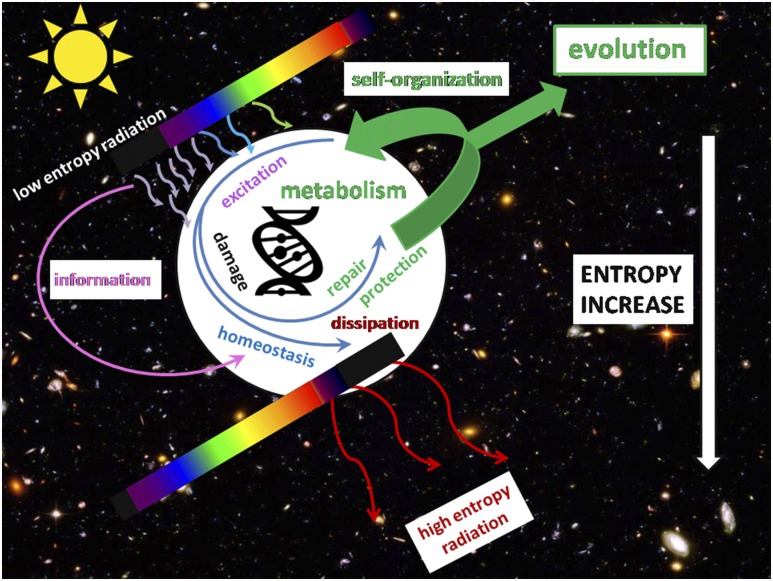
So let's talk about some important facts about sunlight.
Thread 🧵
2
*Standard disclaimer that nothing in this post should be used as a substitute for medical advice.
First of all light is a type of electromagnetic wave and thus, it comes in a spectrum (X-rays, radio waves and microwaves are other kinds of electromagnetic radiation).
Of course, not all wavelengths are visible and we can only see the ones between 400nm and 700nm (red light has the longest wavelength and violet light the shortest).
Some characteristics of light include:
-Wavelength (some of it is visible and the some invisible as we said)
Notes about wavelength:
1. Wavelength= distance from one crest to the next.
2. Short wavelength = lots of carried energy.
3. Long wavelength = not so much.
-Frequency
-Color temperature
-Flux
-Lumen (lm)
-Lux (lx)
You can also partly (oversimplification) view this as photon density (a subatomic particle that some people here call stuff such as quantum unit).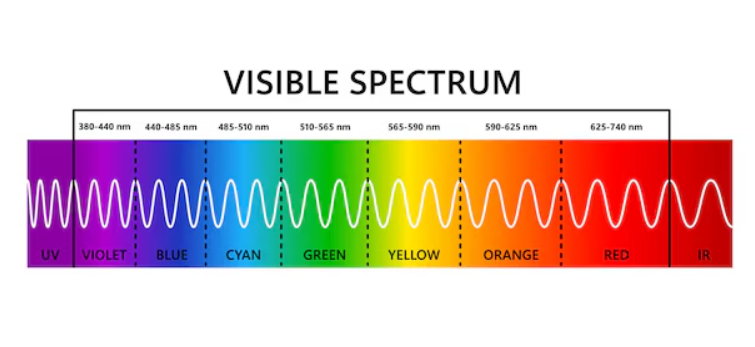
First of all light is a type of electromagnetic wave and thus, it comes in a spectrum (X-rays, radio waves and microwaves are other kinds of electromagnetic radiation).
Of course, not all wavelengths are visible and we can only see the ones between 400nm and 700nm (red light has the longest wavelength and violet light the shortest).
Some characteristics of light include:
-Wavelength (some of it is visible and the some invisible as we said)
Notes about wavelength:
1. Wavelength= distance from one crest to the next.
2. Short wavelength = lots of carried energy.
3. Long wavelength = not so much.
-Frequency
-Color temperature
-Flux
-Lumen (lm)
-Lux (lx)
You can also partly (oversimplification) view this as photon density (a subatomic particle that some people here call stuff such as quantum unit).
3
Now before we break down the spectrum and classify it based on wavelength let's mention the following since it might not be obvious for some people.
The right light environment will:
-Improve your sleep
-Improve your hormonal profile
-Improve your athletic performance (easy test you can do right now is perform an exercise indoors and then outdoors) and recovery
-Improve your energy levels
-Assist your libido
-Improve your mood
And the wrong light environment will cause:
-Migraines
-Pre mature skin ageing
-Low libido
-Low energy
-Metabolic damage
-Sleep issues
-Bad mood
So light can either set our bodies and their countless process that happen every minute in tune or out of tune.

The right light environment will:
-Improve your sleep
-Improve your hormonal profile
-Improve your athletic performance (easy test you can do right now is perform an exercise indoors and then outdoors) and recovery
-Improve your energy levels
-Assist your libido
-Improve your mood
And the wrong light environment will cause:
-Migraines
-Pre mature skin ageing
-Low libido
-Low energy
-Metabolic damage
-Sleep issues
-Bad mood
So light can either set our bodies and their countless process that happen every minute in tune or out of tune.
4
Something that also might not be obvious is that in order to experience the maximum benefits of sunlight and positive affect things such as POMC, neurotransmitters, sex hormones, thyroid hormones, catecholamines, prolactin, melatonin, melanin, growth hormone and so on, the sun needs to touch a large portion of your skin.
Just your face and neck won’t do it. It’s better than nothing but not enough in order to maximize the benefits.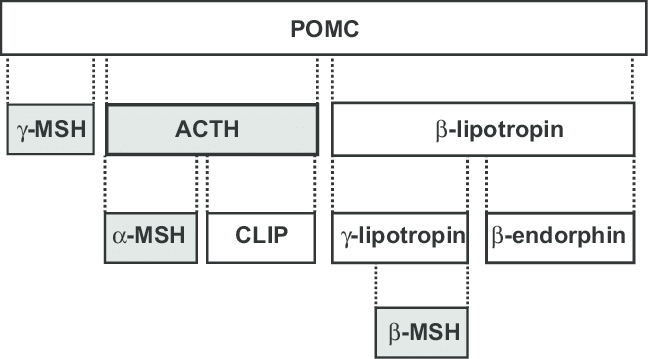
Just your face and neck won’t do it. It’s better than nothing but not enough in order to maximize the benefits.
5
Let’s break down the spectrum now.
Number 1: Ultraviolet (100-400 nm (so it's not visible))
There are three main types of UVR.
1. UVC (100-280nm) (Absorbed by the ozone layer)
2. UVB (280 - 315 nm). (Epidermis)
3. UVA (315-400 nm). (Dermis)
Ultraviolet radiation has been blamed for a lot of trouble but is this true?
Well, first of all, UV radiation was one of the main drivers of evolution.
A good starting book on this topic is the origins of order.
Number 1: Ultraviolet (100-400 nm (so it's not visible))
There are three main types of UVR.
1. UVC (100-280nm) (Absorbed by the ozone layer)
2. UVB (280 - 315 nm). (Epidermis)
3. UVA (315-400 nm). (Dermis)
Ultraviolet radiation has been blamed for a lot of trouble but is this true?
Well, first of all, UV radiation was one of the main drivers of evolution.
A good starting book on this topic is the origins of order.
6
Then, without UVB the synthesis of sulfated vitamin D can not be stimulated and this is a big deal since we can only cover maybe ½ of our vitamin D needs from food (at the very very very very best).
This is not a small deal since as i like to say, it is impossible for a health issue to be resolved or decently improved if a person has suboptimal vitamin D levels.
Without enough vitamin D we can not have:
-A healthy immune system
-Healthy bones
-A healthy hormonal profile (testosterone and androgens in general, thyroid hormones, insulin, progesterone, leptin (to be fair though, since this (leptin) is related to adiponectin, this only happens when a person reaches >50ng/dl from what most research indicates) etc)
-A healthy liver
-Healthy skeletal muscles
-Healthy skin
-A healthy gut
-Detox properly
and more.
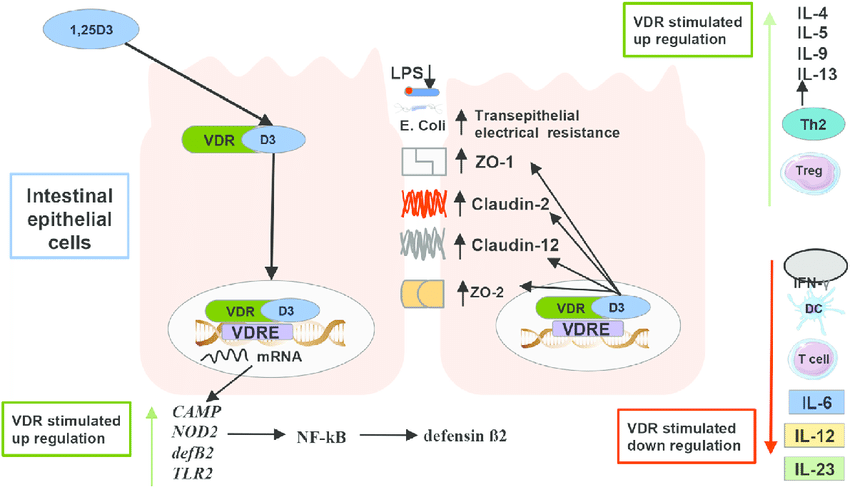
Why this is the case is not hard to understand since for example vitamin D, plays a role in dopaminergic neurogenesis and differentiation, its receptor is crucial for many things but also crucial for helping various steps during the detoxification of xenobiotics, directly influences the tight junctions (or you can reas about the vitamin D–cathelicidin pathway), stimulates the expression of insulin receptors, the CYP2R1, CYP27B1 and CYP24A1 enzymes are affected by vitamin D, affects the GH axis, obviously influences calcium handling in the Leydig cells through calbindins for example, is needed in order for the gut to make antimicrobial peptides, the VDR is essential for hair follicle homeostasis and more.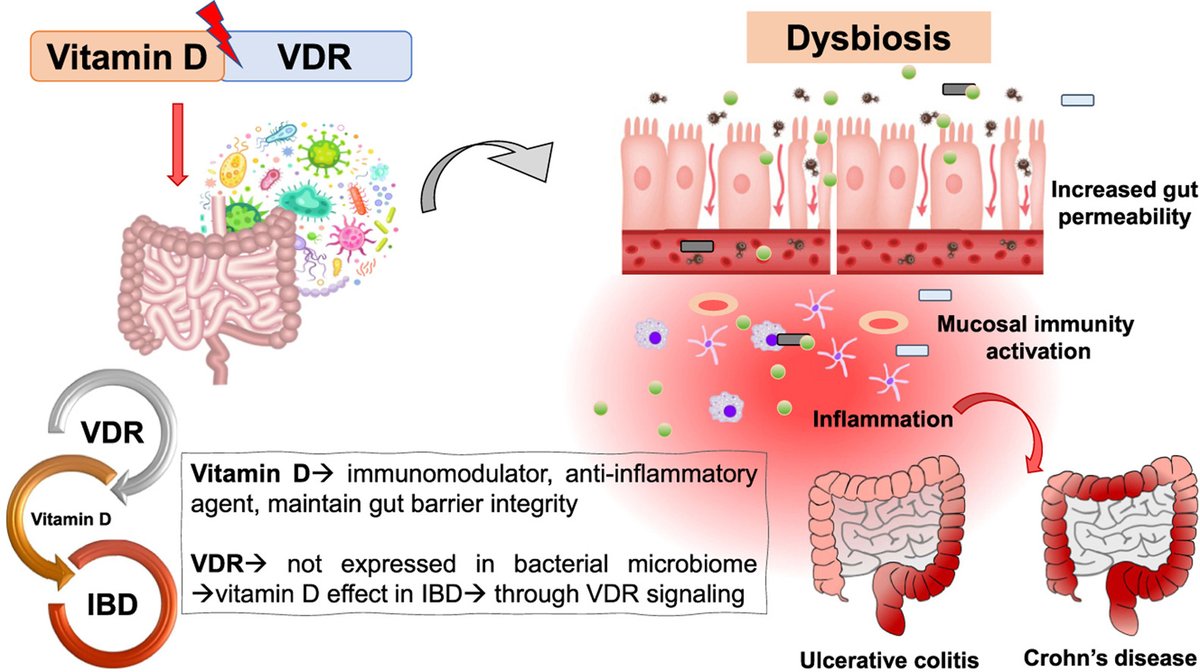
This is not a small deal since as i like to say, it is impossible for a health issue to be resolved or decently improved if a person has suboptimal vitamin D levels.
Without enough vitamin D we can not have:
-A healthy immune system
-Healthy bones
-A healthy hormonal profile (testosterone and androgens in general, thyroid hormones, insulin, progesterone, leptin (to be fair though, since this (leptin) is related to adiponectin, this only happens when a person reaches >50ng/dl from what most research indicates) etc)
-A healthy liver
-Healthy skeletal muscles
-Healthy skin
-A healthy gut
-Detox properly
and more.
Why this is the case is not hard to understand since for example vitamin D, plays a role in dopaminergic neurogenesis and differentiation, its receptor is crucial for many things but also crucial for helping various steps during the detoxification of xenobiotics, directly influences the tight junctions (or you can reas about the vitamin D–cathelicidin pathway), stimulates the expression of insulin receptors, the CYP2R1, CYP27B1 and CYP24A1 enzymes are affected by vitamin D, affects the GH axis, obviously influences calcium handling in the Leydig cells through calbindins for example, is needed in order for the gut to make antimicrobial peptides, the VDR is essential for hair follicle homeostasis and more.
7
As stated, one way that we posses in order to get vitamin D3 are UV-B rays that convert 7-dehydrocholesterol (as substance in the skin that's pretty close the end of the conversion of cholesterol from lanosterol and is often referred to as pro-vitamin D3) to vitamin D3.
That's kind of what happens in plants as well where UV-B rays allow ergosterol to turn into ergocalciferol aka vitamin D2.
If all these sound too mumbo jumbo here's the deal: UV-B rays hit the skin -> We get pre-vitamin D3 -> and then two hydroxylations happen, one in the liver on carbon 25 (in order to get 25-hydroxyvitamin D) and one in the kidneys on carbon 1 (in order to get 1,25-dihydroxyvitamin D).
That's it.
That's kind of what happens in plants as well where UV-B rays allow ergosterol to turn into ergocalciferol aka vitamin D2.
If all these sound too mumbo jumbo here's the deal: UV-B rays hit the skin -> We get pre-vitamin D3 -> and then two hydroxylations happen, one in the liver on carbon 25 (in order to get 25-hydroxyvitamin D) and one in the kidneys on carbon 1 (in order to get 1,25-dihydroxyvitamin D).
That's it.
8
But that’s not all when it comes to UVB.
It also stimulates the synthesis of melanin which will be discuss in detail later and even the synthesis of beta endorphins.
It’s also crucial for neurotransmitter health through the impact that it has on aromatic amino acids among other things with a benzene ring.
If we want to have a healthy intracutaneous and cHPA axis we NEED UVR.
Also keep in mind that UVB can also upregulate the expression of MC1R and is also crucial for glucosteroidogenesis.
Again, these and many other effects are INDEPENDED of vitamin D production.
In fact it is UVR is so crucial that when the eyes of mice (just the eyes) were exposed to UVB ithe serum levels of α-MSH, b-endorphin, ACTH, CRH, and urocortin 2 increased a few hours later.
It also stimulates the synthesis of melanin which will be discuss in detail later and even the synthesis of beta endorphins.
It’s also crucial for neurotransmitter health through the impact that it has on aromatic amino acids among other things with a benzene ring.
If we want to have a healthy intracutaneous and cHPA axis we NEED UVR.
Also keep in mind that UVB can also upregulate the expression of MC1R and is also crucial for glucosteroidogenesis.
Again, these and many other effects are INDEPENDED of vitamin D production.
In fact it is UVR is so crucial that when the eyes of mice (just the eyes) were exposed to UVB ithe serum levels of α-MSH, b-endorphin, ACTH, CRH, and urocortin 2 increased a few hours later.
9
But how about UVA?
It is very true that for the things mentioned (b-endorphins for example), UVB has a bigger impact, BUT, a “medium dose” of UVA1 (340-400 nm) has been shown to improve atopic dermatitis and scleroderma.
In general, UVA supports the release of nitric oxide which is partly why sunlight has cardiovascular benefits that are independent from vitamin D.
And vasodilation is not a small thing either.
Excessive vasoconstriction can lead to headaches, migraines, fatigue, eyesight issues and even exacerbate the healing of scars and even hair loss.
It is very true that for the things mentioned (b-endorphins for example), UVB has a bigger impact, BUT, a “medium dose” of UVA1 (340-400 nm) has been shown to improve atopic dermatitis and scleroderma.
In general, UVA supports the release of nitric oxide which is partly why sunlight has cardiovascular benefits that are independent from vitamin D.
And vasodilation is not a small thing either.
Excessive vasoconstriction can lead to headaches, migraines, fatigue, eyesight issues and even exacerbate the healing of scars and even hair loss.
10
Number 2: Violet light (400 nm - 450 nm)
This is one is pretty interesting regarding myopia, NO homeostasasis, it also affects antimicrobial peptides.
But it seems that just like blue light in isolation, it can also cause a bit of damage when used in isolation (compared to red light for example) but if i'm wrong please correct me.
This is one is pretty interesting regarding myopia, NO homeostasasis, it also affects antimicrobial peptides.
But it seems that just like blue light in isolation, it can also cause a bit of damage when used in isolation (compared to red light for example) but if i'm wrong please correct me.
11
Number 3: Blue light (450 nm - 490 nm).
This in isolation (nnEMF) is evil especially during the night as we will soon see.
But when it's present in the sunlight (EMF) is needed in order to regulate our CR.
Now here are some ways that artificial blue light ruins your health.
Number 1: ALAN ruins sleep and your CR
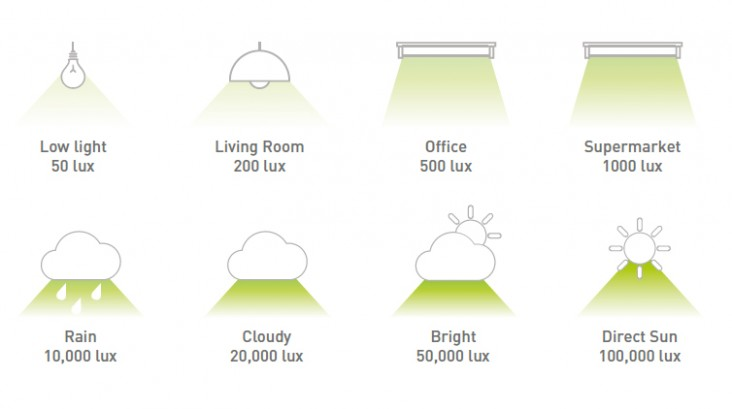
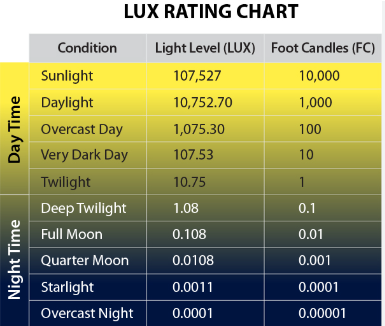
For millions of years, we lived under the influence of sources of light with a lux of 0.0001-3.4 at night.
But now?
You can live even under 500! This is 50.000 times MORE in some cases.
And poor sleep is not something to take lightly.
If we want to mention more rare downsides of ALAN at this point, a digestive issue a lot of people struggle with is acid reflux and guess what?
The gastric acid secretion follows a circadian pattern and also, the esophageal valve should be closed at night.
So your disrupted CR and chronic late eating could easily be one of the main causes for your acid reflux. So before getting that antacids, H2 or PPIs, fix your CR.
This in isolation (nnEMF) is evil especially during the night as we will soon see.
But when it's present in the sunlight (EMF) is needed in order to regulate our CR.
Now here are some ways that artificial blue light ruins your health.
Number 1: ALAN ruins sleep and your CR
For millions of years, we lived under the influence of sources of light with a lux of 0.0001-3.4 at night.
But now?
You can live even under 500! This is 50.000 times MORE in some cases.
And poor sleep is not something to take lightly.
If we want to mention more rare downsides of ALAN at this point, a digestive issue a lot of people struggle with is acid reflux and guess what?
The gastric acid secretion follows a circadian pattern and also, the esophageal valve should be closed at night.
So your disrupted CR and chronic late eating could easily be one of the main causes for your acid reflux. So before getting that antacids, H2 or PPIs, fix your CR.
12
Number 2: Suppresses the most potent antioxidant (melatonin which is stimulated when light is not present) which affects anything from sleep, osteoblasts (your bones), skin and our immune system all the way to our metabolism and reproduction.
And if you add ALAN on top of glyphosate sprayed foods, dysfunctional mitochondria, calcified pineals glands and more, things get even worse.
Number 3: Messes up your skin
Number 4: Messes up our metabolism and glucose metabolism.
Number 5: Messes up your eyesight.
But there's more.
It also:
-Elevates intracellular calcium levels
-Messes up dopamine
-Degrades melanin
-Suppresses BDNF
-Dehydration (it messes vasopressin (essential for fluid and electrolyte balance)

And if you add ALAN on top of glyphosate sprayed foods, dysfunctional mitochondria, calcified pineals glands and more, things get even worse.
Number 3: Messes up your skin
Number 4: Messes up our metabolism and glucose metabolism.
Number 5: Messes up your eyesight.
But there's more.
It also:
-Elevates intracellular calcium levels
-Messes up dopamine
-Degrades melanin
-Suppresses BDNF
-Dehydration (it messes vasopressin (essential for fluid and electrolyte balance)
13
Number 4: Green light (490 nm - 560 nm)
What's really cool with green light is that it can help people with migraines and stimulate angiogenesis.
Number 5: Yellow/orange light (560 nm - 630 nm)
This is the perfect example regarding why we need to get full spectrum sunlight since it greatly mitigates the ROS produced by UVR, can lower triglycerides and it even helps us with the expression of type 1 collagen.
What's really cool with green light is that it can help people with migraines and stimulate angiogenesis.
Number 5: Yellow/orange light (560 nm - 630 nm)
This is the perfect example regarding why we need to get full spectrum sunlight since it greatly mitigates the ROS produced by UVR, can lower triglycerides and it even helps us with the expression of type 1 collagen.
14
Number 6: Red light (630 nm - 700 nm) + NIR (700nm-3000nm).
These two quite literally are the jack of all trades regarding light.
They help with almost everything:
-Recovery
-EZ water expansion
-Skin health
-Blood sugar regulation
-Mitigating UVR damage
-ATP upregulation
These two quite literally are the jack of all trades regarding light.
They help with almost everything:
-Recovery
-EZ water expansion
-Skin health
-Blood sugar regulation
-Mitigating UVR damage
-ATP upregulation
15
Now a common question is "won't the sun give me cancer?".
Well, it depends.
Quick tips for safe sunlight exposure would include:
Number 1: Exposing ourselves to that sunrise and sunset light.
The early A.M late filled with NIR and red light, prepares your body for receiving sunlight exposure later in the day (photobiomodulation preconditioning) and the late P.M sunlight is crucial for repairing our skin (photobiomodulation repair).
Number 2: Not increasing lipid peroxides by smoking, vaping, or drinking alcohol while sunbathing.
Number 3: Having a healthy diet.
Let's start with something more niched down which is not getting enough minerals such as (some of the following minerals for example are crucial for eumelanin synthesis) are: silica, glycine, copper (within reason), molybdenum, zinc, selenium, magnesium and potassium.
Also never forget that zinc is crucial for a-MSH. Do you also want to know one of the reasons why even raw vegans (who obviously do not consume any stuff like canola oil) sunburn a lot? It's because BCAAs are also crucial for a-MSH.
Of course regarding our diet, if we don't provide the building blocks for the skin, vitamins such as vitamin C, E, B2 and so on while consuming an abundance of bad fats, we will sunburn.
Number 4: Not disrupting our skins CR by eating too late.
Number 5: Not ruining our skin through bad cosmetic products, polyester and showering in tap water.
Number 6: Not wearing sunglasses all the time.
Sunglasses block UV light by default so you're not even signaling to your body to produce melanin. Also, if you have sunglasses on constantly, your eyes will miss some of the 1,400+ wavelengths that you NEED by default in order for your eyes to be healthy. In general, by messing up with the light that goes through the retina, we can not properly stimulate the hypothalamus which is responsible for regulating every single one of our hormones.
Number 7: Not thinking that hormesis is a fairy tail for weak willed individuals and we go from getting 10 minutes of sunlight per day, to 10 hours during a vacation.
Number 8: Eating no plants.
Okay, this will annoy a lot of people, but there's a reason why nature is full of polyphenol rich foods when the sun's out.
Well, it depends.
Quick tips for safe sunlight exposure would include:
Number 1: Exposing ourselves to that sunrise and sunset light.
The early A.M late filled with NIR and red light, prepares your body for receiving sunlight exposure later in the day (photobiomodulation preconditioning) and the late P.M sunlight is crucial for repairing our skin (photobiomodulation repair).
Number 2: Not increasing lipid peroxides by smoking, vaping, or drinking alcohol while sunbathing.
Number 3: Having a healthy diet.
Let's start with something more niched down which is not getting enough minerals such as (some of the following minerals for example are crucial for eumelanin synthesis) are: silica, glycine, copper (within reason), molybdenum, zinc, selenium, magnesium and potassium.
Also never forget that zinc is crucial for a-MSH. Do you also want to know one of the reasons why even raw vegans (who obviously do not consume any stuff like canola oil) sunburn a lot? It's because BCAAs are also crucial for a-MSH.
Of course regarding our diet, if we don't provide the building blocks for the skin, vitamins such as vitamin C, E, B2 and so on while consuming an abundance of bad fats, we will sunburn.
Number 4: Not disrupting our skins CR by eating too late.
Number 5: Not ruining our skin through bad cosmetic products, polyester and showering in tap water.
Number 6: Not wearing sunglasses all the time.
Sunglasses block UV light by default so you're not even signaling to your body to produce melanin. Also, if you have sunglasses on constantly, your eyes will miss some of the 1,400+ wavelengths that you NEED by default in order for your eyes to be healthy. In general, by messing up with the light that goes through the retina, we can not properly stimulate the hypothalamus which is responsible for regulating every single one of our hormones.
Number 7: Not thinking that hormesis is a fairy tail for weak willed individuals and we go from getting 10 minutes of sunlight per day, to 10 hours during a vacation.
Number 8: Eating no plants.
Okay, this will annoy a lot of people, but there's a reason why nature is full of polyphenol rich foods when the sun's out.
16
Now if you follow the previous step, you are on your way to experiencing the benefits of melanin (which is regulated by a-MSH and thus POMC, so pay attention to the next parts of this thread as well) a pigment made by melanocytes and distribute it to cells near by.
It's also a semiconductor.
We have 3 main types of melanin:
-Eumelanin
-Pheomelanin
-Neuromelanin
All 3 are vary important for varies reasons.
From protecting our skin from UV, binding metal ions, dopamine regulation, protecting our neurons, eyes and more.
Some quick things that you can keep in mind in order to experience the maximum benefits of melanin you will have to:
-Get sunlight (obviously)
-Go to bed at a decent hour (obviously)
-Avoid alcohol (huge one)
-Anything that disrupts the shikimate pathway such as glyphosate will negative affect melanin
-Get enough tyrosine/amino acids in general
-Ground
Regarding a-MSH, it is very underrated regarding regulating our food cravings, libido and gut.
And it of course possesses other benefits whether these are anti-inflammatory properties, NO homeostasis, improved insulin sensitivity or thyroid function.
How to help this out?
-Don’t mess up the signal (sunlight first thing in the morning without sunglasses etc)
-Get enough zinc
-No toxic sunscreens
-Eat breakfast
-No alcohol
-Be very careful with melatonin supplementation and supplements such as resveratrol
-Do not get stressed for no reason and take care of your adrenals (magnesium, vitamin C, cycle stimulants, the usuals)
-Some cold exposure
-Take care of your androgens
*Of course anything else regarding lifestyle factors that can help leptin, POMC can be added.
It's also a semiconductor.
We have 3 main types of melanin:
-Eumelanin
-Pheomelanin
-Neuromelanin
All 3 are vary important for varies reasons.
From protecting our skin from UV, binding metal ions, dopamine regulation, protecting our neurons, eyes and more.
Some quick things that you can keep in mind in order to experience the maximum benefits of melanin you will have to:
-Get sunlight (obviously)
-Go to bed at a decent hour (obviously)
-Avoid alcohol (huge one)
-Anything that disrupts the shikimate pathway such as glyphosate will negative affect melanin
-Get enough tyrosine/amino acids in general
-Ground
Regarding a-MSH, it is very underrated regarding regulating our food cravings, libido and gut.
And it of course possesses other benefits whether these are anti-inflammatory properties, NO homeostasis, improved insulin sensitivity or thyroid function.
How to help this out?
-Don’t mess up the signal (sunlight first thing in the morning without sunglasses etc)
-Get enough zinc
-No toxic sunscreens
-Eat breakfast
-No alcohol
-Be very careful with melatonin supplementation and supplements such as resveratrol
-Do not get stressed for no reason and take care of your adrenals (magnesium, vitamin C, cycle stimulants, the usuals)
-Some cold exposure
-Take care of your androgens
*Of course anything else regarding lifestyle factors that can help leptin, POMC can be added.
17
POMC is a precursor for:
-B-endorphin
-ACTH
-MSH
-CLIP
-Lipotropins
and more.
There are only two things that you can do in order to support it.
Number 1: Get UV light.
*Obviously get full spectrum sunlight and don't sit in front of a window just because it has "UV".
Anything that alters the natural light spectrum will create issues whether that is sunglasses, windows that result in you getting lots of UVA but not vitamin D/UVB or even spending too much time indoors (just check the lux and see the difference).
Number 2: Cold exposure
"What about opsins?"
In a nutshell we have 9 of these light sensitive proteins through a vitamin A based chromophore that are mainly present in our eyes and skin (yes, your skin can sense light).
1. OPN1LW
2. OPN1MW
3. OPN1SW
4. OPN2
5. OPN3
6. OPN4
7. OPN5
8. RGR
9. RRH
-B-endorphin
-ACTH
-MSH
-CLIP
-Lipotropins
and more.
There are only two things that you can do in order to support it.
Number 1: Get UV light.
*Obviously get full spectrum sunlight and don't sit in front of a window just because it has "UV".
Anything that alters the natural light spectrum will create issues whether that is sunglasses, windows that result in you getting lots of UVA but not vitamin D/UVB or even spending too much time indoors (just check the lux and see the difference).
Number 2: Cold exposure
"What about opsins?"
In a nutshell we have 9 of these light sensitive proteins through a vitamin A based chromophore that are mainly present in our eyes and skin (yes, your skin can sense light).
1. OPN1LW
2. OPN1MW
3. OPN1SW
4. OPN2
5. OPN3
6. OPN4
7. OPN5
8. RGR
9. RRH
18
Some studies:
pubmed.ncbi.nlm.nih.gov/25988614/
pubmed.ncbi.nlm.nih.gov/27060353/
pubmed.ncbi.nlm.nih.gov/12485453/
t.co/1GeZ7u95hu
pubmed.ncbi.nlm.nih.gov/16512874/
pubmed.ncbi.nlm.nih.gov/25803468/
t.co/mjnz126VP2
pubmed.ncbi.nlm.nih.gov/26212084/
pubmed.ncbi.nlm.nih.gov/35406694/
pubmed.ncbi.nlm.nih.gov/35338345/
ncbi.nlm.nih.gov/pmc/articles/P…
pubmed.ncbi.nlm.nih.gov/25988614/
pubmed.ncbi.nlm.nih.gov/27060353/
pubmed.ncbi.nlm.nih.gov/12485453/
t.co/1GeZ7u95hu
pubmed.ncbi.nlm.nih.gov/16512874/
pubmed.ncbi.nlm.nih.gov/25803468/
t.co/mjnz126VP2
pubmed.ncbi.nlm.nih.gov/26212084/
pubmed.ncbi.nlm.nih.gov/35406694/
pubmed.ncbi.nlm.nih.gov/35338345/
ncbi.nlm.nih.gov/pmc/articles/P…
20
That was it.
Sunlight is of course a huge topic and can't be covered in one thread.
But i hope that you enjoyed this and learned something from it regardless.
If you did make sure to leave a like/RT.
x.com/Helios_Movemen…
Sunlight is of course a huge topic and can't be covered in one thread.
But i hope that you enjoyed this and learned something from it regardless.
If you did make sure to leave a like/RT.
x.com/Helios_Movemen…
21
For more:
fitandball.gumroad.com/l/thesystem23
fitandball.gumroad.com/l/thesystem23