Once upon a time, the idea that academia might destroy capitalism...

joseph francis@joefrancis505
14 views
Dec 31, 2024
~3 min read
Advertisement
1
Once upon a time, the idea that academia might destroy capitalism did not seem so absurd.
In Capitalism, Socialism, and Democracy (1942), Joseph Schumpeter argued that the expansion of higher education would lead to the emergence of an underemployed academic precariat. 1/16
In Capitalism, Socialism, and Democracy (1942), Joseph Schumpeter argued that the expansion of higher education would lead to the emergence of an underemployed academic precariat. 1/16
2
Schumpeter predicted that malcontented academics would demand socialism, and capitalism would be destroyed.
In the 1960s, it seemed possible that this prophecy would come true. Protests racked universities, with students and faculty demanding change. 2/16
In the 1960s, it seemed possible that this prophecy would come true. Protests racked universities, with students and faculty demanding change. 2/16
3
Yet the protests were repressed, and universities began to focus more on improving the “student experience” to prevent such unrest in the future. There would be no more carrying pictures of Chairman Mao. 3/16 youtube.com/watch?v=BGLGzR…
4
Students’ demands for democratization led to the expansion of university administrations, which focused on meeting their needs and fulfilling their desires. Higher education became a service for students to consume. 4/16 academic.oup.com/book/40915
5
At the same time, the federal government tried to make research more relevant. The National Science Foundation (NSF) established the Research Applied to National Needs program, which was supposed to use academia to solve the problems that had caused the unrest. 5/16
6
Yet academia struggled to address itself to society’s needs. The NSF was mocked for having supplied “silly grants,” such as for a project dubbed “The Study of the Sex Life of the Titmouse.” 6/16 jstor.org/stable/4159422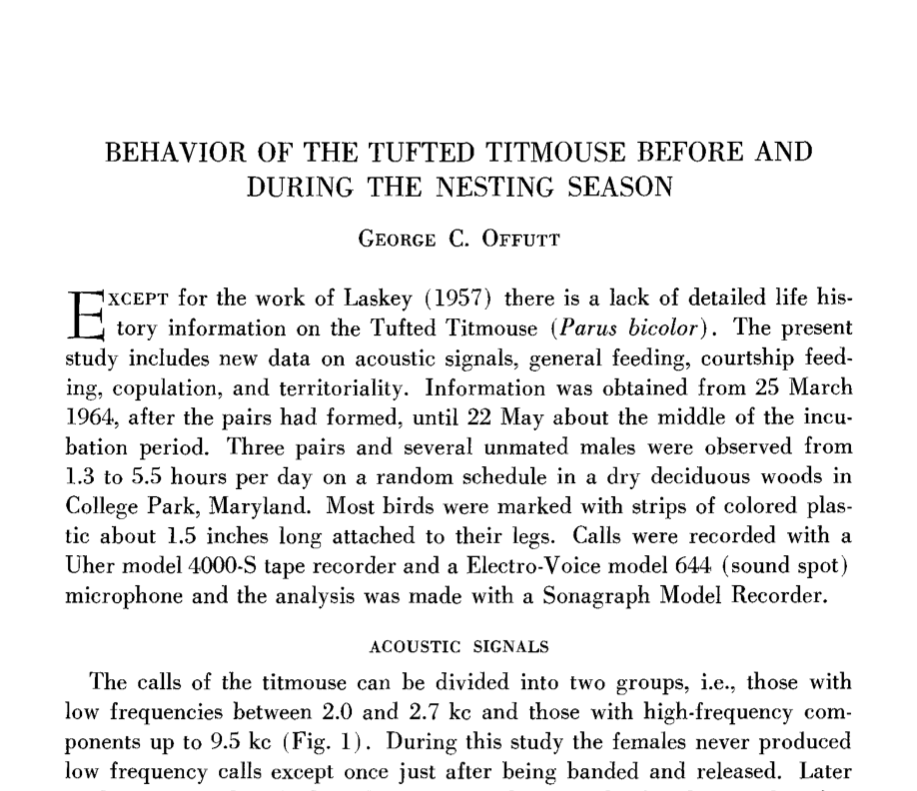
7
Conservative politicians in Congress also decried the funding that the NSF was giving to projects that seemed to promote liberal values. The “Man: A Course of Study” project came under particular attack for corrupting the morals of American school children. 7/16
8
In 1975, these attacks then culminated in hearings in Congress on the NSF’s peer review system. The politicians wanted to know how public money had come to be spent on such things.
For academia, this raised the prospect of politicians demanding more oversight over research. 8/16
For academia, this raised the prospect of politicians demanding more oversight over research. 8/16
9
As Melinda Baldwin has argued, academia responded by placing peer review on a pedestal. Politicians could not possibly provide oversight, the argument went, because only academics could judge what qualified as knowledge. 9/16 journals.uchicago.edu/doi/abs/10.108…
10
In my essay, “Is Academia Killing Capitalism?” I argue that these two developments – the growth of academic bureaucracy and the institutionalization of peer review – had unintended consequences. 10/16 thepoorrichworld.substack.com/p/is-academia-…
11
Administrators made the number of peer-reviewed articles published the primary metric for research productivity, while senior academics used the peer review system to maintain their authority. It became harder for new ideas to emerge. 11/16
12
This culture of conformism then contributed to what @tylercowen called “The Great Stagnation.” The rate of innovation fell, leading to lower productivity growth. This is widely recognized, but academics have struggled to explain why. 12/16 books.google.co.uk/books?id=KWeYD…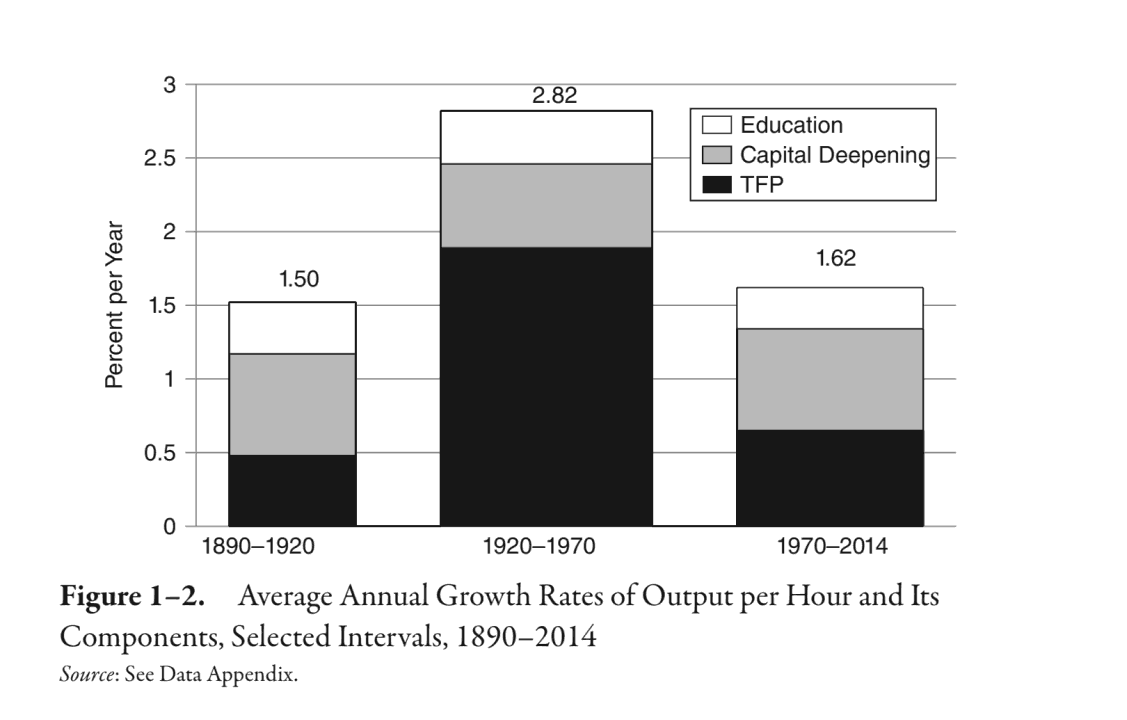
13
Academics are confused because the number of peer-reviewed articles being published has grown, which they interpret as scientific progress. They then become puzzled about why there is relatively little innovation. 13/16 journals.uchicago.edu/doi/full/10.10…
14
They wonder why ideas are “getting harder to find,” without considering whether academia’s own culture of conformism – enforced by bloated administrations and the peer review system – makes researchers less productive. 14/16 aeaweb.org/articles?id=10…
15
My hypothesis, then, is that Schumpeter might have been right, but for the wrong reasons. Rather than academics’ radicalism, it is their conformism that has become the bigger threat to capitalism. Our system of knowledge production has gone badly wrong. 15/16
16
The result has been lower growth, leading to more discontent with democracy. History begins again, and megalothymia rears its ugly head.
And that, I believe, is why we need new ideas, now. The question, however, is “Where from?” 16/16 x.com/Volod_Ishchenk…
And that, I believe, is why we need new ideas, now. The question, however, is “Where from?” 16/16 x.com/Volod_Ishchenk…
17
p.s. I’ll be pursuing this hypothesis further in my Substack, which you can follow here: thepoorrichworld.substack.com.