A common driver behind hair loss, skin issues such as psoriasis and...

George Ferman@Helios_Movement
54 views
Dec 20, 2024
~12 min read
1
A common driver behind hair loss, skin issues such as psoriasis and vitiligo, PMS, eczema, sleep apnea, gut issues and insomnia all the way to respiratory problems, anxiety and migraines, is a histamine intolerance.
Here's what you need to know.
Thread🧵
Here's what you need to know.
Thread🧵
2
*Standard disclaimer that nothing in this thread should be used as a substitute for medical advice*
First and foremost, what is histamine?
Histamine is a biogenic amine that is naturally occurring in the body and many foods.
It is synthesized by the pyridoxal phosphate-containing l-histidine decarboxylase from the amino acid histidine in mast cells, basophils, platelets, histaminergic neurons, and enterochromaffine cells.
Note: Even though histamine might be synthetized in mast cells for example, it is critical to understand that it is STORED there and it’s NOT really released without a stimuli.
This is why you will read the term “histamine liberator” later.
It was discovered in 1910 and identified as a mediator of anaphylactic reactions pretty soon after that.

First and foremost, what is histamine?
Histamine is a biogenic amine that is naturally occurring in the body and many foods.
It is synthesized by the pyridoxal phosphate-containing l-histidine decarboxylase from the amino acid histidine in mast cells, basophils, platelets, histaminergic neurons, and enterochromaffine cells.
Note: Even though histamine might be synthetized in mast cells for example, it is critical to understand that it is STORED there and it’s NOT really released without a stimuli.
This is why you will read the term “histamine liberator” later.
It was discovered in 1910 and identified as a mediator of anaphylactic reactions pretty soon after that.
3
Now histamine exerts its effects by binding to its 4 receptors on target cells in various tissues.
We have 4 types of receptors that modulate histamine.
The H1, H2, H3 and H4. All of them are G-protein coupled receptors (7-transmembrane chain proteins) which is why in the case of H1 for example, an increase in cytoplasmic calcium can happen (Gq-coupled receptor).
H1 receptors are mostly found in neurons, muscle cells in the air way and blood vessels.
They partly regulate our emotional state, ability to learn, sleep, appetite and locomotion.
H2 receptors are found for the most part in our gut (the gastric mucosa parietal cells), heart and muscle cells.
H3 receptors are found in histaminergic neurons that affect the release of dopamine, acetylcholine, serotonin and noradrenaline in the CNS.
And last but not least, H4 receptors are found in the bone marrow and peripheral hematopoietic cells.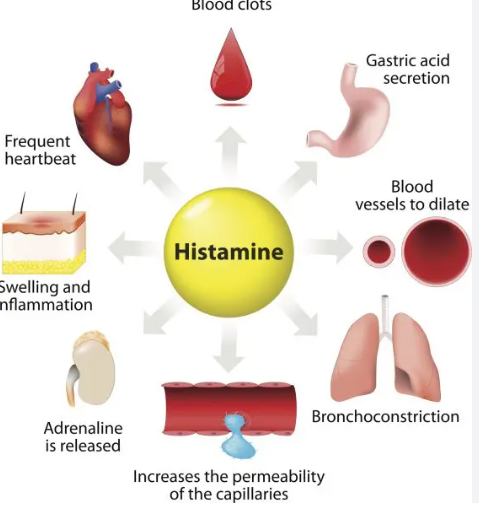
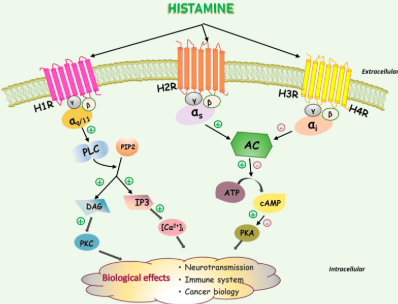
We have 4 types of receptors that modulate histamine.
The H1, H2, H3 and H4. All of them are G-protein coupled receptors (7-transmembrane chain proteins) which is why in the case of H1 for example, an increase in cytoplasmic calcium can happen (Gq-coupled receptor).
H1 receptors are mostly found in neurons, muscle cells in the air way and blood vessels.
They partly regulate our emotional state, ability to learn, sleep, appetite and locomotion.
H2 receptors are found for the most part in our gut (the gastric mucosa parietal cells), heart and muscle cells.
H3 receptors are found in histaminergic neurons that affect the release of dopamine, acetylcholine, serotonin and noradrenaline in the CNS.
And last but not least, H4 receptors are found in the bone marrow and peripheral hematopoietic cells.
4
Why it's important?
Well, histamine affects our gut, sleep-wake cycle, certain hormones, smooth muscle cell contraction, appetite, the function of our pituitary gland and the overall function of our metabolism.
Hypothalamic histamine also regulates things such as oxytocin, b-endorphin, adrenocorticotropic hormone and prolactin.
And obviously it also affects our immune system since it regulates T cells, B cells and dendritic cells (for example, Th1 cells have a H1-R prevalence and Th1 cytokines are also associated with conditions such as atopic dermatitis).
Some studies that could interest you:
ncbi.nlm.nih.gov/pubmed/1941356…
ncbi.nlm.nih.gov/pubmed/1817243…
ncbi.nlm.nih.gov/pmc/articles/P…
ncbi.nlm.nih.gov/pubmed/1941356…
ncbi.nlm.nih.gov/pubmed/11531797
link.springer.com/chapter/10.100…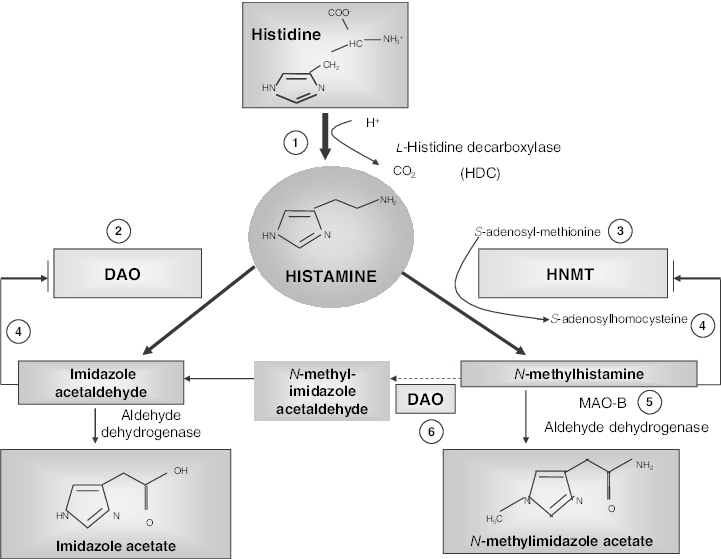
Well, histamine affects our gut, sleep-wake cycle, certain hormones, smooth muscle cell contraction, appetite, the function of our pituitary gland and the overall function of our metabolism.
Hypothalamic histamine also regulates things such as oxytocin, b-endorphin, adrenocorticotropic hormone and prolactin.
And obviously it also affects our immune system since it regulates T cells, B cells and dendritic cells (for example, Th1 cells have a H1-R prevalence and Th1 cytokines are also associated with conditions such as atopic dermatitis).
Some studies that could interest you:
ncbi.nlm.nih.gov/pubmed/1941356…
ncbi.nlm.nih.gov/pubmed/1817243…
ncbi.nlm.nih.gov/pmc/articles/P…
ncbi.nlm.nih.gov/pubmed/1941356…
ncbi.nlm.nih.gov/pubmed/11531797
link.springer.com/chapter/10.100…
5
Let’s move on to how histamine is metabolized.
Histamine can be metabolized in two ways and which one will be used depends on the localization of histamine.
Number 1: Oxidative deamination by diamine oxidase (DAO) when it comes to EXTRAcellular/ingested histamine which is primarily found in the cells lining the intestinal mucosa of the small intestine.
Number 2: Ring methylation by histamine-N-methyltransferase (HNMT) when it comes to INTRAcellular histamine which is found throughout the body.
Given the nature of these two:
-An SNP (keep reading the thread) in DAO is often one of the potential root causes behind gut issues(*) such as even Chron's and ulcerative colitis, headaches or even migraines after meals and break outs.
-An SNP in the HNMT one of the potential root causes behind issues such as anxiety (since HNMT breaks down histamine in the nerve system), asthma bronchiale and sleep apnea.
(*)In fact, lower DAO activity is often used as an indicator of intestinal mucosa damage.
Histamine can be metabolized in two ways and which one will be used depends on the localization of histamine.
Number 1: Oxidative deamination by diamine oxidase (DAO) when it comes to EXTRAcellular/ingested histamine which is primarily found in the cells lining the intestinal mucosa of the small intestine.
Number 2: Ring methylation by histamine-N-methyltransferase (HNMT) when it comes to INTRAcellular histamine which is found throughout the body.
Given the nature of these two:
-An SNP (keep reading the thread) in DAO is often one of the potential root causes behind gut issues(*) such as even Chron's and ulcerative colitis, headaches or even migraines after meals and break outs.
-An SNP in the HNMT one of the potential root causes behind issues such as anxiety (since HNMT breaks down histamine in the nerve system), asthma bronchiale and sleep apnea.
(*)In fact, lower DAO activity is often used as an indicator of intestinal mucosa damage.
6
Now histamine intolerance is basically what happens when the rate we consume or produce histamine is way faster than our ability to break it down and eliminate it aka degrade it.
Which leads to the necessity of briefly discussing the differences between histamine intolerance and MCAS.
Most of histamine in the body is produced by mast cells (and basophils), BUT, mast cells synthesize and secrete proteases, prostaglandin D2, leukotrienes, heparin, and a variety of cytokines as well.
So:
1) Histamine intolerance happens when there's an increased availability of histamine and/or impaired histamine degradation and MCAS is a condition where the mast cells in your body become overly active.
So MCAS is a broad immune system disorder and thus causes a wider array of symptoms compared to a histamine intolerance.
2) It is VERY unlikely that a person with MCAS will not have histamine intolerance, BUT, a lot of people with histamine intolerance do NOT have MCAS.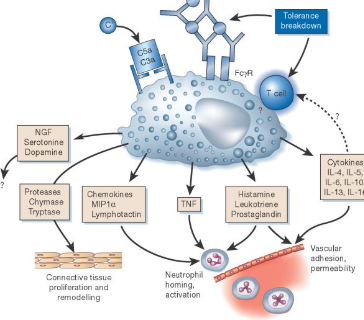
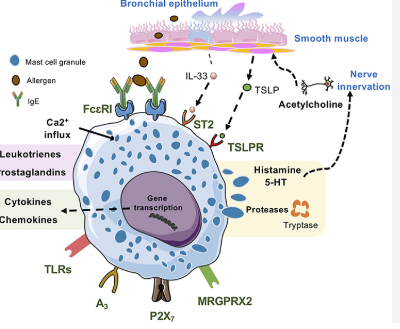
Which leads to the necessity of briefly discussing the differences between histamine intolerance and MCAS.
Most of histamine in the body is produced by mast cells (and basophils), BUT, mast cells synthesize and secrete proteases, prostaglandin D2, leukotrienes, heparin, and a variety of cytokines as well.
So:
1) Histamine intolerance happens when there's an increased availability of histamine and/or impaired histamine degradation and MCAS is a condition where the mast cells in your body become overly active.
So MCAS is a broad immune system disorder and thus causes a wider array of symptoms compared to a histamine intolerance.
2) It is VERY unlikely that a person with MCAS will not have histamine intolerance, BUT, a lot of people with histamine intolerance do NOT have MCAS.
7
Note: if you have some of the symptoms that were mentioned in the title of this thread and want to do some basic tests, DAO (blood) and N-methylhistamine (urine) are the first ones someone should do in my opinion.
ncbi.nlm.nih.gov/pubmed/28715791
Now that we've discussed all these, here are some of the root causes of histamine intolerance.
ncbi.nlm.nih.gov/pubmed/28715791
Now that we've discussed all these, here are some of the root causes of histamine intolerance.
8
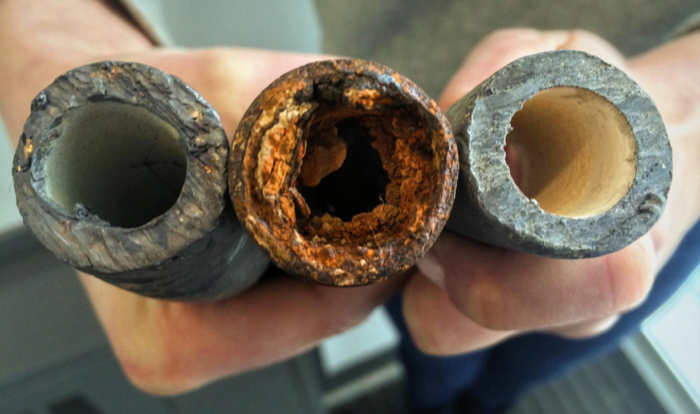
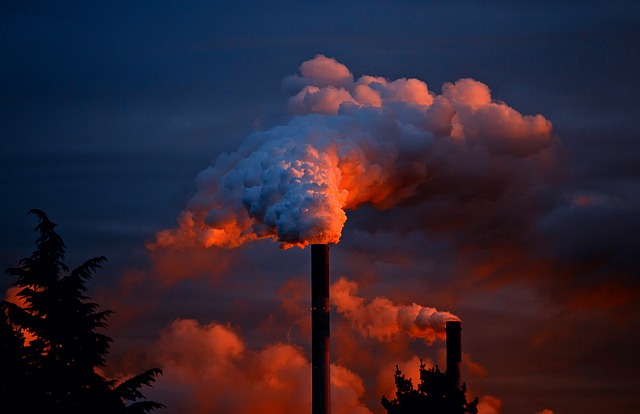
Number 1: Over-exposure to "allergens".
I use quotes, because in this category we will include anything from heavy metals such as mercury, pestcides, herbicides, xenoestrogens all the way to mold and mycotoxins.
This becomes a bigger and bigger issue and it's no wonder why.
Pause and think for example to how many "allergens" most people are exposed to every day.
A lot live in houses infested with mold, use skincare, hygiene and cleaning products that are full of allergens, ingest heavy metals though polluted air, vaping, smoking and even low quality fish and eat mycotoxins multiple times per day (think commercial cereal, cheap coffee and so on).
All of these are of course one quick search away:
pmc.ncbi.nlm.nih.gov/articles/PMC86…
ncbi.nlm.nih.gov/pmc/articles/P…
ncbi.nlm.nih.gov/pmc/articles/P…
What should you do?
The first step is simple and is to:
-A1 dairy
-Get rid of all highly processed foods
-Eat organic if you can
-Quit smoking/vaping/whatever chinese method there is this day to inject nicotine
-Only use natural hygiene and cosmetic products
-Quit all grains, nuts, seeds and coffee for a couple of months
-Use an air filter at your home
-Make sure to consume the nutrients that are crucial for us to deal with these toxins in the first place such as selenium zinc, vitamin D, taurine, glycine, magnesium and B vitamins
-Use some safe binders such as zeolites a couple of times per week and eat a bit of fiber
The second step if you have some spare cash since admittedly a lot of people with histamine intolerance will actually have MCAS that is driven by mold and mycotoxins would be to test for:
-Aspergillus
-Cladosporium
-Mucor
-Stachybotrys
-Satratoxin G and H
- Roridin A, E and H
- Verrucarin A and J
- Zearalenone
-Aflatoxin M1 (AFM1)
-Sterigmatocystin (STG)
- Roridin E 30
-Ochratoxin A (OTA)
-Enniatin B1
-Verrucarin A
-Gliotoxin
-Mycophenolic Acid
- Chaetoglobosin A
-Citrinin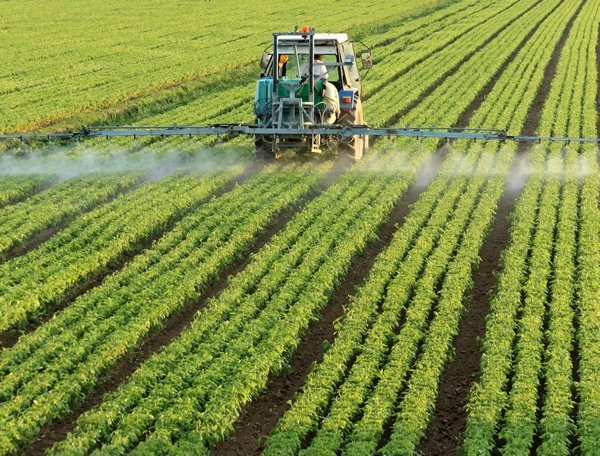
I use quotes, because in this category we will include anything from heavy metals such as mercury, pestcides, herbicides, xenoestrogens all the way to mold and mycotoxins.
This becomes a bigger and bigger issue and it's no wonder why.
Pause and think for example to how many "allergens" most people are exposed to every day.
A lot live in houses infested with mold, use skincare, hygiene and cleaning products that are full of allergens, ingest heavy metals though polluted air, vaping, smoking and even low quality fish and eat mycotoxins multiple times per day (think commercial cereal, cheap coffee and so on).
All of these are of course one quick search away:
pmc.ncbi.nlm.nih.gov/articles/PMC86…
ncbi.nlm.nih.gov/pmc/articles/P…
ncbi.nlm.nih.gov/pmc/articles/P…
What should you do?
The first step is simple and is to:
-A1 dairy
-Get rid of all highly processed foods
-Eat organic if you can
-Quit smoking/vaping/whatever chinese method there is this day to inject nicotine
-Only use natural hygiene and cosmetic products
-Quit all grains, nuts, seeds and coffee for a couple of months
-Use an air filter at your home
-Make sure to consume the nutrients that are crucial for us to deal with these toxins in the first place such as selenium zinc, vitamin D, taurine, glycine, magnesium and B vitamins
-Use some safe binders such as zeolites a couple of times per week and eat a bit of fiber
The second step if you have some spare cash since admittedly a lot of people with histamine intolerance will actually have MCAS that is driven by mold and mycotoxins would be to test for:
-Aspergillus
-Cladosporium
-Mucor
-Stachybotrys
-Satratoxin G and H
- Roridin A, E and H
- Verrucarin A and J
- Zearalenone
-Aflatoxin M1 (AFM1)
-Sterigmatocystin (STG)
- Roridin E 30
-Ochratoxin A (OTA)
-Enniatin B1
-Verrucarin A
-Gliotoxin
-Mycophenolic Acid
- Chaetoglobosin A
-Citrinin
9
"What about sauna as a way to deal with these toxins?"
I like the classic sauna, banya and infrared sauna a lot.
But in serious cases it should be avoided in the beginning and added later.
ncbi.nlm.nih.gov/pubmed/16038788
I like the classic sauna, banya and infrared sauna a lot.
But in serious cases it should be avoided in the beginning and added later.
ncbi.nlm.nih.gov/pubmed/16038788
10
Number 2: Nutrient deficiencies.
We can approach this from multiple angles.
Magnesium for example, since it's a pretty common deficiency, plays a role in the activity of histidine decarboxylase.
Then, B6, B12, copper and vitamin C are vitamins that activate the DAO enzyme.
The zinc chelator N,N,N′,N′-tetrakis(2-pyridylmethyl)ethylenediamine (TPEN) for example inhibits the release of histamine, the production of cytokines, and the secretion of lipid mediators in mast cells. Then, if we don't get enough B9 and B12 (or if our ability to metabolize them is harmed (more about this later), HNMT won't be able to function properly.
Then if someone is aware of acetylhistamine, other B vitamins such as B1 and B5 will also be crucial. Two other vitamins that are very crucial yet unfortunately neglected are vitamin E and D (sunlight).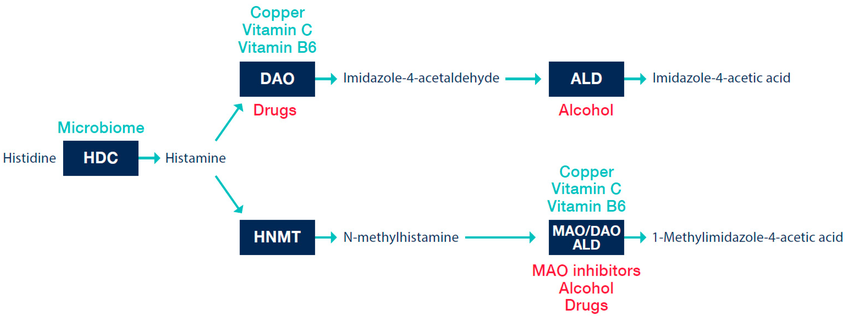
We can approach this from multiple angles.
Magnesium for example, since it's a pretty common deficiency, plays a role in the activity of histidine decarboxylase.
Then, B6, B12, copper and vitamin C are vitamins that activate the DAO enzyme.
The zinc chelator N,N,N′,N′-tetrakis(2-pyridylmethyl)ethylenediamine (TPEN) for example inhibits the release of histamine, the production of cytokines, and the secretion of lipid mediators in mast cells. Then, if we don't get enough B9 and B12 (or if our ability to metabolize them is harmed (more about this later), HNMT won't be able to function properly.
Then if someone is aware of acetylhistamine, other B vitamins such as B1 and B5 will also be crucial. Two other vitamins that are very crucial yet unfortunately neglected are vitamin E and D (sunlight).
11
Number 3: Gut dysbiosis.
There's a vicious circle often created here where gut issues lead to histamine overload and then the overload further compromises ones gut health.
In general imbalanced gut bacteria = histamine issues.
H. Pylori for example will inhibit the absorption of vitamin C and then vitamin C will make degrading histamine way harder.
Or candida for example:
ncbi.nlm.nih.gov/pubmed/2411109
Then, a lot of histamine is stored in the ECL cell of the stomach for example.
Usually, the following seems to help if your histamine intolerance stems from gut dysbiosis.
1. Focus on rebuilding your defenses through things such as proper nutrition and sunlight (obviously avoid things that ruin them such as alcohol, lots of gluten, toxins etc).
2. Seal the gut (nuking something before this step will backfire for most people).
Tools such as BPC-157, zinc carnosine, slippery elm, quality broths, aloe vera etc could be used here.
3. Get bile metabolism at an optimal stage and the lymphatic system going.
4. Tackle the specific biofilm (NAC, ser, etc).
5. Nuke the specific pathogen (bso, caprylic acid etc).
6. Bind the byproducts (think zeolites, fiber).
7. Heal/repopulating the gut.
There's a vicious circle often created here where gut issues lead to histamine overload and then the overload further compromises ones gut health.
In general imbalanced gut bacteria = histamine issues.
H. Pylori for example will inhibit the absorption of vitamin C and then vitamin C will make degrading histamine way harder.
Or candida for example:
ncbi.nlm.nih.gov/pubmed/2411109
Then, a lot of histamine is stored in the ECL cell of the stomach for example.
Usually, the following seems to help if your histamine intolerance stems from gut dysbiosis.
1. Focus on rebuilding your defenses through things such as proper nutrition and sunlight (obviously avoid things that ruin them such as alcohol, lots of gluten, toxins etc).
2. Seal the gut (nuking something before this step will backfire for most people).
Tools such as BPC-157, zinc carnosine, slippery elm, quality broths, aloe vera etc could be used here.
3. Get bile metabolism at an optimal stage and the lymphatic system going.
4. Tackle the specific biofilm (NAC, ser, etc).
5. Nuke the specific pathogen (bso, caprylic acid etc).
6. Bind the byproducts (think zeolites, fiber).
7. Heal/repopulating the gut.
12
VERY IMPORTANT NOTE:
Rebalance the gut microbiome with histamine degrading probiotics such as Lactobacillus plantarum that help with the production of DAO and supports mast cell stabilization.
Rebalance the gut microbiome with histamine degrading probiotics such as Lactobacillus plantarum that help with the production of DAO and supports mast cell stabilization.
13
Also, tools for battling minor pathogen overgrowths without nuking everything in the gut include:
-Methionine restriction
-Sunlight
-Bitters
-Iodine rich foods (scallops, seaweed etc)
-Lactoferrin
-Selenium
-Taurine (TLR4 antagonist)
-Quality cinnamon
-Ginger tea
-Garlic
-Mastic
-BSO
-Niacinamide
-Propolis
-Manuka honey
-Methionine restriction
-Sunlight
-Bitters
-Iodine rich foods (scallops, seaweed etc)
-Lactoferrin
-Selenium
-Taurine (TLR4 antagonist)
-Quality cinnamon
-Ginger tea
-Garlic
-Mastic
-BSO
-Niacinamide
-Propolis
-Manuka honey
14
Number 4: Genetic SNPs.
If you've been experiencing issues with histamine for years and haven't find the root cause of it, maybe it's time to check for SNPs.
SNPs= Single Nucleotide Polymorphisms (aka variations or differences in our DNA code).
There are many SNPs, but ones in the genes encoding DAO and HNMT enzymes WILL lead to problems with histamine.
In general we have, HNMT C314T, AOC1, rs2052129, rs10156191,rs2268999, rs104974
If you've been experiencing issues with histamine for years and haven't find the root cause of it, maybe it's time to check for SNPs.
SNPs= Single Nucleotide Polymorphisms (aka variations or differences in our DNA code).
There are many SNPs, but ones in the genes encoding DAO and HNMT enzymes WILL lead to problems with histamine.
In general we have, HNMT C314T, AOC1, rs2052129, rs10156191,rs2268999, rs104974
15
Can MTHFR also come into play?
Yes.
In general, in this case you might want to:
-Avoid all fortified foods first and foremost.
-Actually prioritize lowering the toxic burden that you're exposing your body to and doing some work on the lymphatic system, sweat etc.
Everyone wants to hop on supplements before doing this. It won't really work in the long run.
-Pay attention to how much choline, B2, B6 (if your main source of B6 are plant products you will need more B2), magnesium, molybdenum, retinol and glycine you're consuming.
-After you're getting enough of the above mentioned nutrients, pay attention to how certain foods that are rich in B9, foods that are rich in B3 and foods that are rich in B12 make you feel.
If B9 rich foods make you feel great, then consider methylfolate.
Don't start with it.
If they make you feel awful, consider supplementing with low doses of B2 and glycine. If B3 rich foods make you feel awful, consider adding TMG if your gut can handle the boost in HCL.
A similar approach can be added to B12.
-If you still have elevated homocysteine levels and don't react well do creatine supplementation, consider low dose (150-300mg) of quercetin.
-Get a ceruloplasmin and total copper test done since a lot of "under" methylators (if that's your issue) are also struggling with free copper (you might want to supplement molybdenum if that's the case instead of only getting it from whole foods).
-Alpha-gpc could also be used and even needed.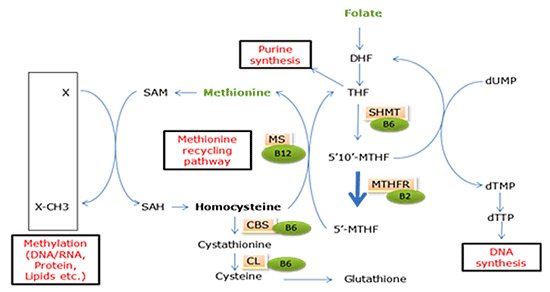
Yes.
In general, in this case you might want to:
-Avoid all fortified foods first and foremost.
-Actually prioritize lowering the toxic burden that you're exposing your body to and doing some work on the lymphatic system, sweat etc.
Everyone wants to hop on supplements before doing this. It won't really work in the long run.
-Pay attention to how much choline, B2, B6 (if your main source of B6 are plant products you will need more B2), magnesium, molybdenum, retinol and glycine you're consuming.
-After you're getting enough of the above mentioned nutrients, pay attention to how certain foods that are rich in B9, foods that are rich in B3 and foods that are rich in B12 make you feel.
If B9 rich foods make you feel great, then consider methylfolate.
Don't start with it.
If they make you feel awful, consider supplementing with low doses of B2 and glycine. If B3 rich foods make you feel awful, consider adding TMG if your gut can handle the boost in HCL.
A similar approach can be added to B12.
-If you still have elevated homocysteine levels and don't react well do creatine supplementation, consider low dose (150-300mg) of quercetin.
-Get a ceruloplasmin and total copper test done since a lot of "under" methylators (if that's your issue) are also struggling with free copper (you might want to supplement molybdenum if that's the case instead of only getting it from whole foods).
-Alpha-gpc could also be used and even needed.
16
Number 5: Estrogen excess.
We are mentioning this as number 5 because we just talked about methylation and poor methylation can lead to problems with estrogen clearance by messing up COMT which can lead mast cells to release histamine (but also downregulate DAO).
In general, when it comes to estrogen excess:
-Maintaining a healthy bf
-Avoiding xenoestrogens
-Getting sunlight and fat soluble vitamins
-Getting choline
-Properly regulating iron
-Improving bile flow
are all a good start.
We are mentioning this as number 5 because we just talked about methylation and poor methylation can lead to problems with estrogen clearance by messing up COMT which can lead mast cells to release histamine (but also downregulate DAO).
In general, when it comes to estrogen excess:
-Maintaining a healthy bf
-Avoiding xenoestrogens
-Getting sunlight and fat soluble vitamins
-Getting choline
-Properly regulating iron
-Improving bile flow
are all a good start.
17
Number 6: The wrong use of supplements.
This is a big cause in the health space.
Supplemental iron, too much zinc, molybdenum, NAC and high dose niacin can all lead to issues with histamine by depleting copper or harming methylation for example.
This is a big cause in the health space.
Supplemental iron, too much zinc, molybdenum, NAC and high dose niacin can all lead to issues with histamine by depleting copper or harming methylation for example.
18
Number 7: Consuming A LOT, of histamine, oxalate and salicylate rich foods, histamine liberators and things that harm DAO such as alcohol.
A basic list includes:
● Kefir
● Aged cheeses
● Canned foods
● Chocolate
● Soy
● Nuts
● Mustard
● Tomatoes
● Cured meats
● Dried fruit
● Preservatives
● Bananas
● Yogurt
● Kimchi
● Kombucha
● Coffee
● Vinegar
● Yeast
● Sourdough
● Alcohol
● Too much olive oil
● Cacao
● Spinach
● Kale
● Most berries
● Certain tubers
A basic list includes:
● Kefir
● Aged cheeses
● Canned foods
● Chocolate
● Soy
● Nuts
● Mustard
● Tomatoes
● Cured meats
● Dried fruit
● Preservatives
● Bananas
● Yogurt
● Kimchi
● Kombucha
● Coffee
● Vinegar
● Yeast
● Sourdough
● Alcohol
● Too much olive oil
● Cacao
● Spinach
● Kale
● Most berries
● Certain tubers
19
Note: some of these foods can be beneficial, but in the online world everyone tends to do something to the absolute extreme and when you say something like "kimchi could help your gut health" tons of people think "i should eat half a jar".
Second of all, if you already have issues these foods are VERY high in histamine or have additives such as citric acid.
Finally, certain amines in things such as cereal, walnuts and bananas are degraded by the same pathway as histamine and if thus if you are struggling with an excess, the competition” between these two pathways and the third one is that things such as nicotine and alcohol block DAO.
Second of all, if you already have issues these foods are VERY high in histamine or have additives such as citric acid.
Finally, certain amines in things such as cereal, walnuts and bananas are degraded by the same pathway as histamine and if thus if you are struggling with an excess, the competition” between these two pathways and the third one is that things such as nicotine and alcohol block DAO.
20
Number 8: Work on your lymphatic system.
Ever read/heard holistic chicks telling that "omg i started dry brushing and my allergies got better"?
It's all true.
x.com/Helios_Movemen…
Ever read/heard holistic chicks telling that "omg i started dry brushing and my allergies got better"?
It's all true.
x.com/Helios_Movemen…
21
Number 9: Look at the medications you are using.
Medications such as modafinil and metformin are known to affect histamine a lot.
ncbi.nlm.nih.gov/pmc/articles/P…
ncbi.nlm.nih.gov/pubmed/12614915
pmc.ncbi.nlm.nih.gov/articles/PMC46…
Medications such as modafinil and metformin are known to affect histamine a lot.
ncbi.nlm.nih.gov/pmc/articles/P…
ncbi.nlm.nih.gov/pubmed/12614915
pmc.ncbi.nlm.nih.gov/articles/PMC46…
22
Number 10: In the case of a flair up (which means that these will NOT be used every day for months on end), keep an eye on:
-Quercetin
-Magnesium (all forms except for citrate,oxide and in general very cheap ones)
-B1
-B5
-P5P
-Chamomile
-Whole food vitamin E believe it or not
-Glutamine (unless the urea cycle is a mess and it could thus harm the liver)
-Astragalus
-Apigenin
-Theanine
-Ginger
-Holy basil
-Rutin
-Ceylon cinnamon
-Bromelain
-Blackseed oil
-Nettle root
-Quercetin
-Magnesium (all forms except for citrate,oxide and in general very cheap ones)
-B1
-B5
-P5P
-Chamomile
-Whole food vitamin E believe it or not
-Glutamine (unless the urea cycle is a mess and it could thus harm the liver)
-Astragalus
-Apigenin
-Theanine
-Ginger
-Holy basil
-Rutin
-Ceylon cinnamon
-Bromelain
-Blackseed oil
-Nettle root
23
Number 11: Your thyroid matters more than you might think when it comes to histamine.
pmc.ncbi.nlm.nih.gov/articles/PMC93…
Check this thread:
x.com/Helios_Movemen…
pmc.ncbi.nlm.nih.gov/articles/PMC93…
Check this thread:
x.com/Helios_Movemen…
24
That was it.
I hope that you learned something from this thread.
If you did make sure to leave a like/RT.
x.com/Helios_Movemen…
I hope that you learned something from this thread.
If you did make sure to leave a like/RT.
x.com/Helios_Movemen…
25
For more:
fitandball.gumroad.com/l/thesystem23
fitandball.gumroad.com/l/thesystem23