Eating more eggs could reduce your risk of developing Alzheimer's...

Dr. Rhonda Patrick@foundmyfitness
18 views
Feb 17, 2025
~2 min read
Advertisement
1
Eating more eggs could reduce your risk of developing Alzheimer's disease by nearly 50%.
And for women, eggs may mitigate changes in cognitive function due to old age.
That's what a pair of new studies suggests.
In one study, a higher egg intake was associated with less of a decline in verbal fluency among women during a 4-year period, with those consuming 5 or more eggs per week experiencing the greatest benefit. However, no association between egg intake and cognitive function changes was observed in men.
In the other study, eating 2 or more eggs per week was associated with a 47% reduction in Alzheimer's disease risk over a nearly 7-year follow-up period.
But that's not all—an analysis of brain samples from participants who died during the study revealed that consuming 1 or more eggs per week reduced the odds of having a pathological diagnosis of Alzheimer’s disease by up to 49%—indicated by the presence of fewer plaques and neurofibrillary tangles.
These effects are likely due to choline—an essential nutrient that serves as a precursor for methylation, affecting epigenetics globally, and plays a role in the production of the neurotransmitter acetylcholine. Choline is also converted into phosphatidylcholine, a crucial component of cell membranes that regulates intracellular transportation. Choline literally makes up the stuff of our brain and cells.
40% of the beneficial effects of eggs on Alzheimer's disease risk reduction were directly mediated by choline intake, highlighting the critical importance of this nutrient for brain health and reducing neurodegenerative disease burden.
Not only are eggs rich in choline, but they're packed with omega-3 fatty acids and the carotenoids lutein and zeaxanthin, which have well-known benefits for the brain.
I'm covering both of these studies and more on eggs and brain health in tomorrow's newsletter.
Sign up here to receive it:foundmyfitness.com/newsletter
Studies referenced
- PMID:39203901
- PMID:38782209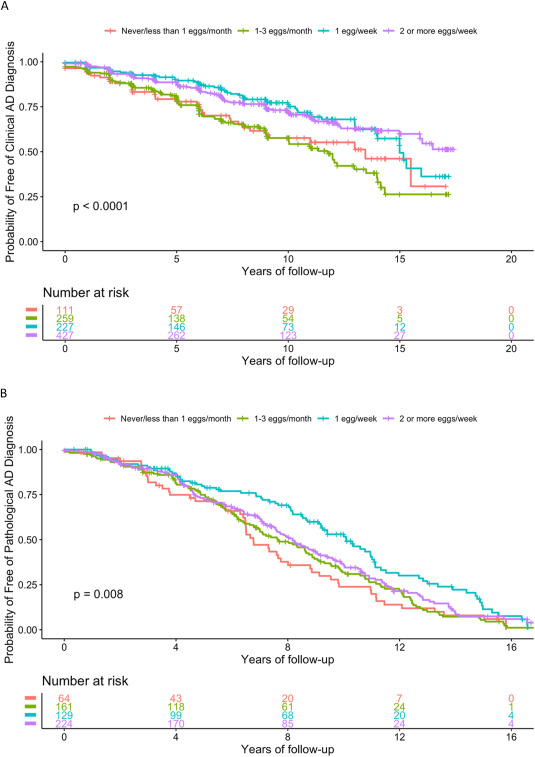
And for women, eggs may mitigate changes in cognitive function due to old age.
That's what a pair of new studies suggests.
In one study, a higher egg intake was associated with less of a decline in verbal fluency among women during a 4-year period, with those consuming 5 or more eggs per week experiencing the greatest benefit. However, no association between egg intake and cognitive function changes was observed in men.
In the other study, eating 2 or more eggs per week was associated with a 47% reduction in Alzheimer's disease risk over a nearly 7-year follow-up period.
But that's not all—an analysis of brain samples from participants who died during the study revealed that consuming 1 or more eggs per week reduced the odds of having a pathological diagnosis of Alzheimer’s disease by up to 49%—indicated by the presence of fewer plaques and neurofibrillary tangles.
These effects are likely due to choline—an essential nutrient that serves as a precursor for methylation, affecting epigenetics globally, and plays a role in the production of the neurotransmitter acetylcholine. Choline is also converted into phosphatidylcholine, a crucial component of cell membranes that regulates intracellular transportation. Choline literally makes up the stuff of our brain and cells.
40% of the beneficial effects of eggs on Alzheimer's disease risk reduction were directly mediated by choline intake, highlighting the critical importance of this nutrient for brain health and reducing neurodegenerative disease burden.
Not only are eggs rich in choline, but they're packed with omega-3 fatty acids and the carotenoids lutein and zeaxanthin, which have well-known benefits for the brain.
I'm covering both of these studies and more on eggs and brain health in tomorrow's newsletter.
Sign up here to receive it:foundmyfitness.com/newsletter
Studies referenced
- PMID:39203901
- PMID:38782209