READ THIS IF YOU WANT TO FIX YOUR GUT. If you have IBS, bloating,...

Dalton (Analyze & Optimize)@Outdoctrination
98 views
Mar 15, 2025
~8 min read
Advertisement
1
READ THIS IF YOU WANT TO FIX YOUR GUT.
If you have IBS, bloating, gas, poor bowel movements or brain fog, you NEED to see this.
This is a comprehensive DEEP dive into fixing your digestive health: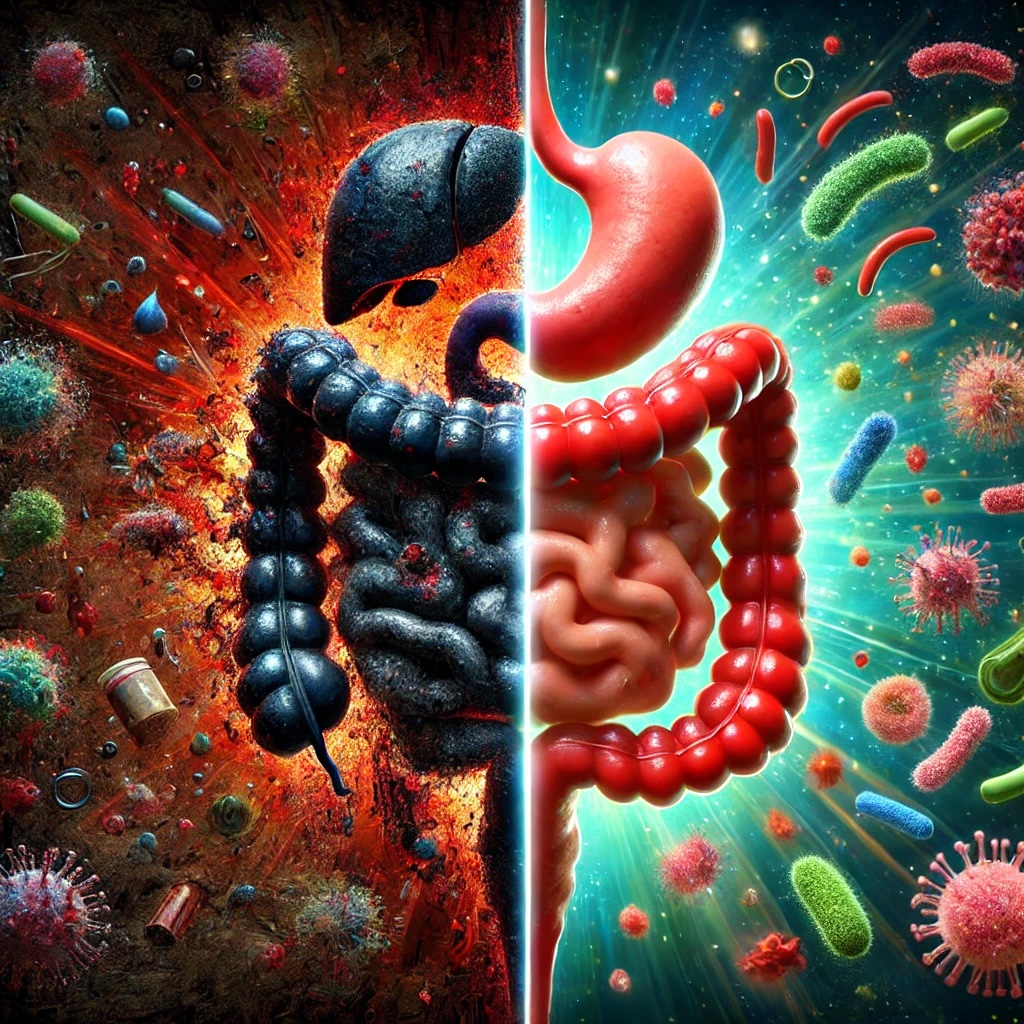
If you have IBS, bloating, gas, poor bowel movements or brain fog, you NEED to see this.
This is a comprehensive DEEP dive into fixing your digestive health:
2
The first & most important thing to address is dysbiosis (“bad bacteria” in the gut)
It will drive:
⬩Pain⬩Gas⬩Sensitization⬩Bloating⬩Food intolerances⬩Diarrhea⬩Poorly formed stools⬩Constipation⬩Acid reflux⬩& more
It will drive:
⬩Pain⬩Gas⬩Sensitization⬩Bloating⬩Food intolerances⬩Diarrhea⬩Poorly formed stools⬩Constipation⬩Acid reflux⬩& more
3
2 easy and free ways to tell if you have dysbiosis:
1. Coated tongue in the morning (especially in the back)
2. Consistent foamy urine
If these are prevalent along with other gut symptoms - you can bet dysbiosis is an issue.
I go more into that here:


1. Coated tongue in the morning (especially in the back)
2. Consistent foamy urine
If these are prevalent along with other gut symptoms - you can bet dysbiosis is an issue.
I go more into that here:
Dalton (Analyze & Optimize)@Outdoctrination
You probably experience these things, but think nothing of it.
Here are 5 "normal" signs that your health is deteriorating,
+ what causes them, & what to do about it:
Here are 5 "normal" signs that your health is deteriorating,
+ what causes them, & what to do about it:
4
Stool testing can be useful, but the results are highly questionable.
Ultimately the results will typically not have much impact on how you move forward.
Plus, high quality ones can be quite expensive.
There are exceptions, but this is the rule.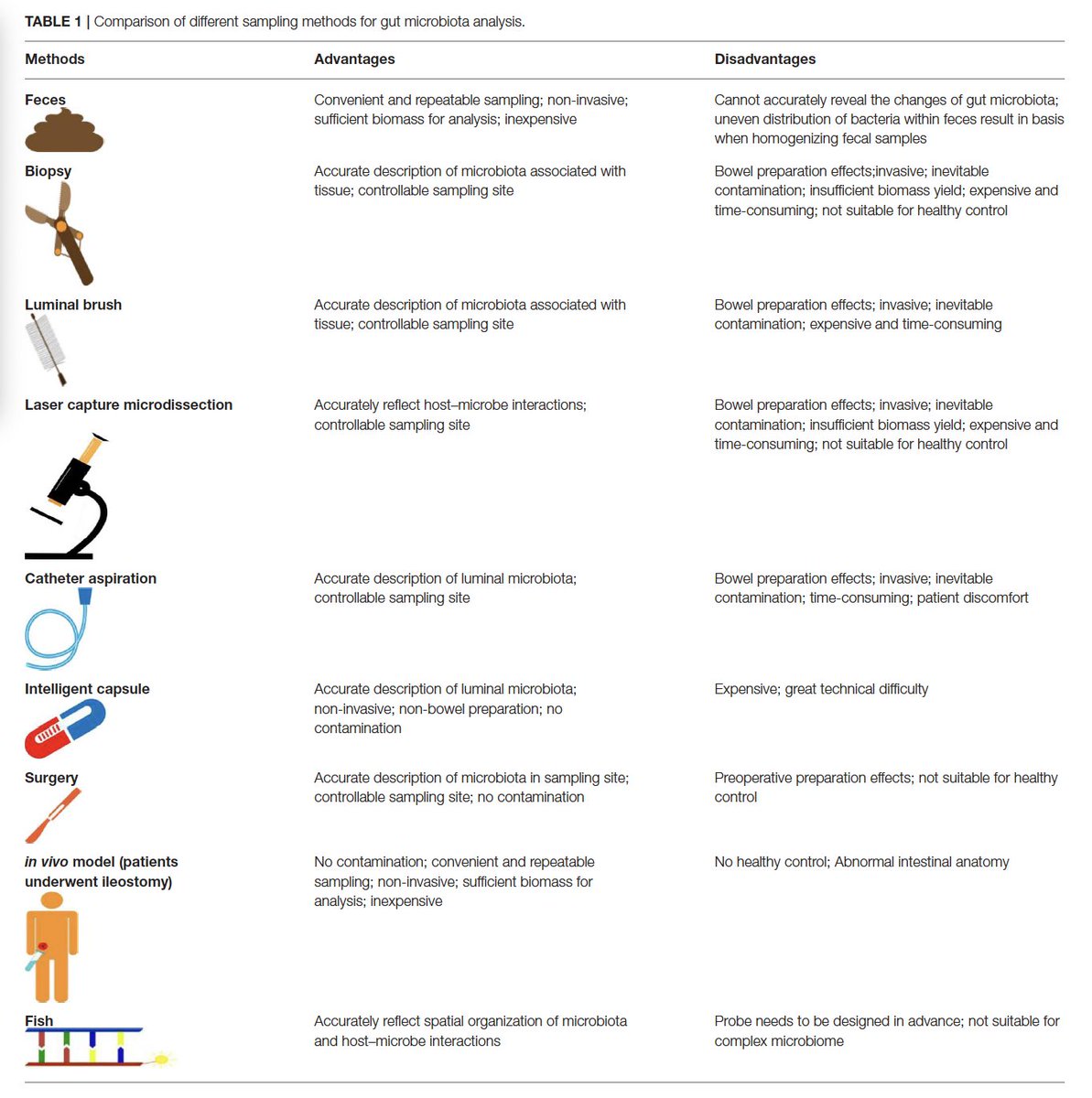
Ultimately the results will typically not have much impact on how you move forward.
Plus, high quality ones can be quite expensive.
There are exceptions, but this is the rule.
5
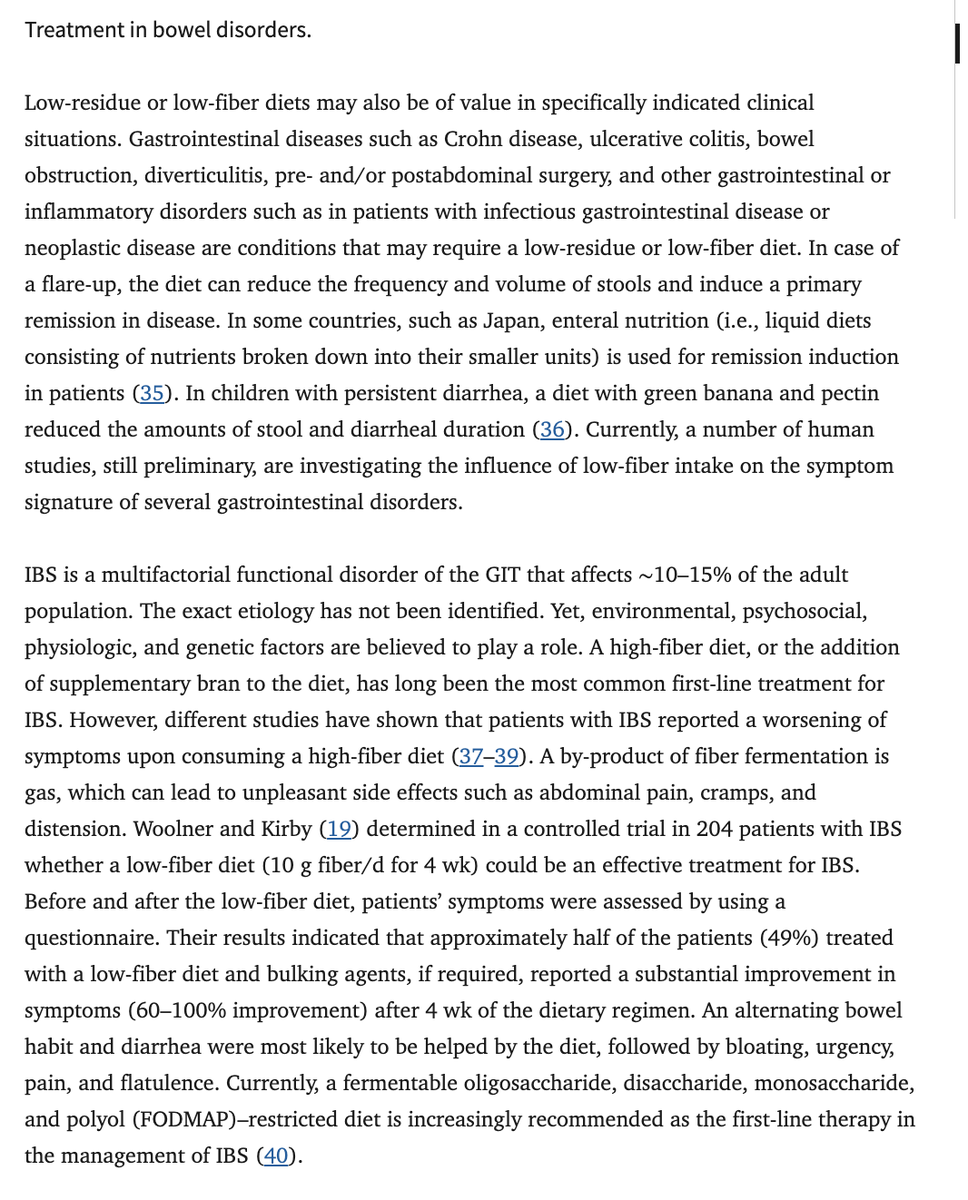
Start with a low residue or low fiber diet that limits bacterial fermentation.
All cuts & types of meat, eggs, seafood, dairy as tolerated (cottage cheese + Greek yogurt typically)
Easily digestible carbs like fruit juices, cane sugar and honey.

All cuts & types of meat, eggs, seafood, dairy as tolerated (cottage cheese + Greek yogurt typically)
Easily digestible carbs like fruit juices, cane sugar and honey.
Dalton (Analyze & Optimize)@Outdoctrination
The foods everyone tells you to eat but are wrecking your digestion.
FIBER - why it’s RUINING your gut, and CAUSING constipation:
FIBER - why it’s RUINING your gut, and CAUSING constipation:
6
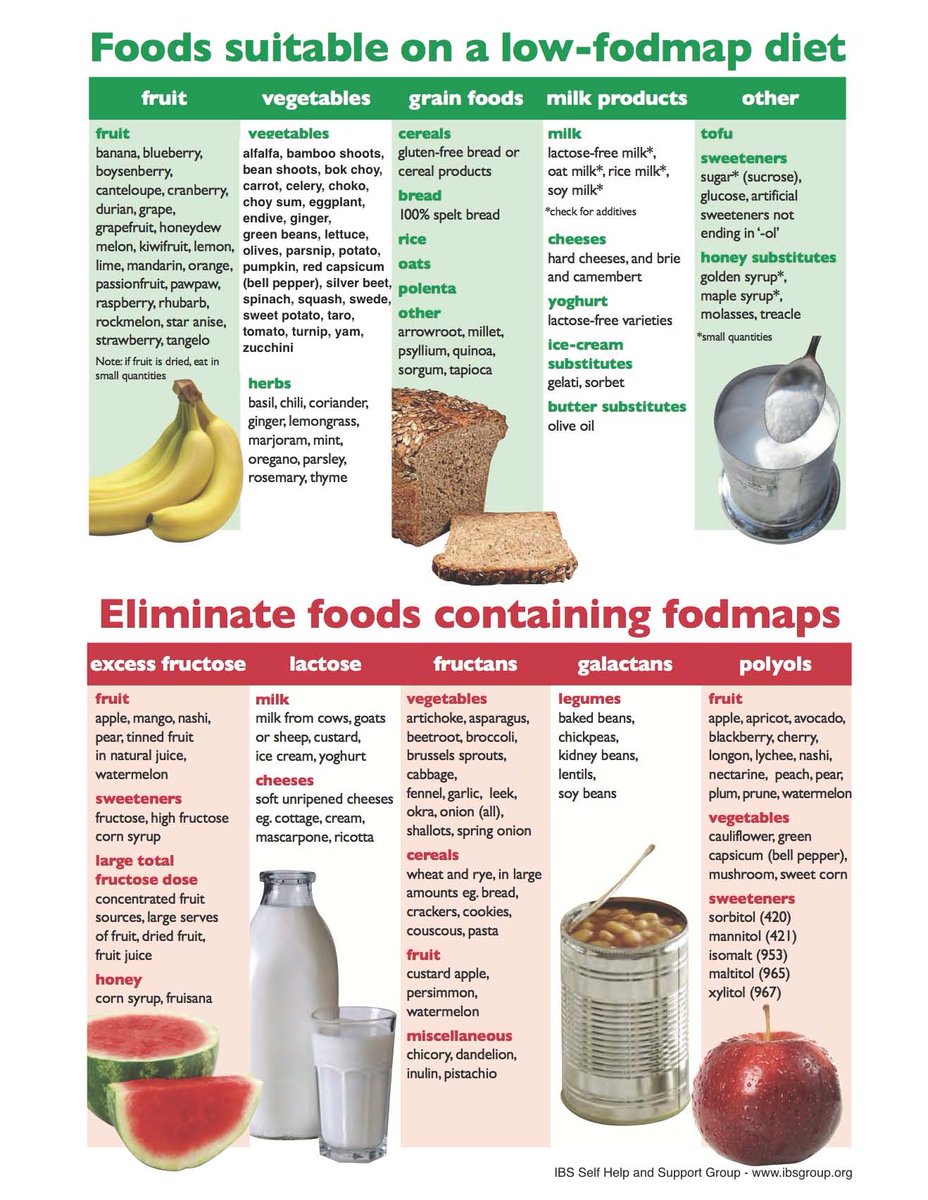
A low FODMAP diet can be effective if the problem is more upper GI (belching, upper bloating, lack of appetite).
Keep polyunsaturated fats LOW (seed oils mainly).
The fats in these oils are absolutely horrible for the gut.
I've gone into that here:
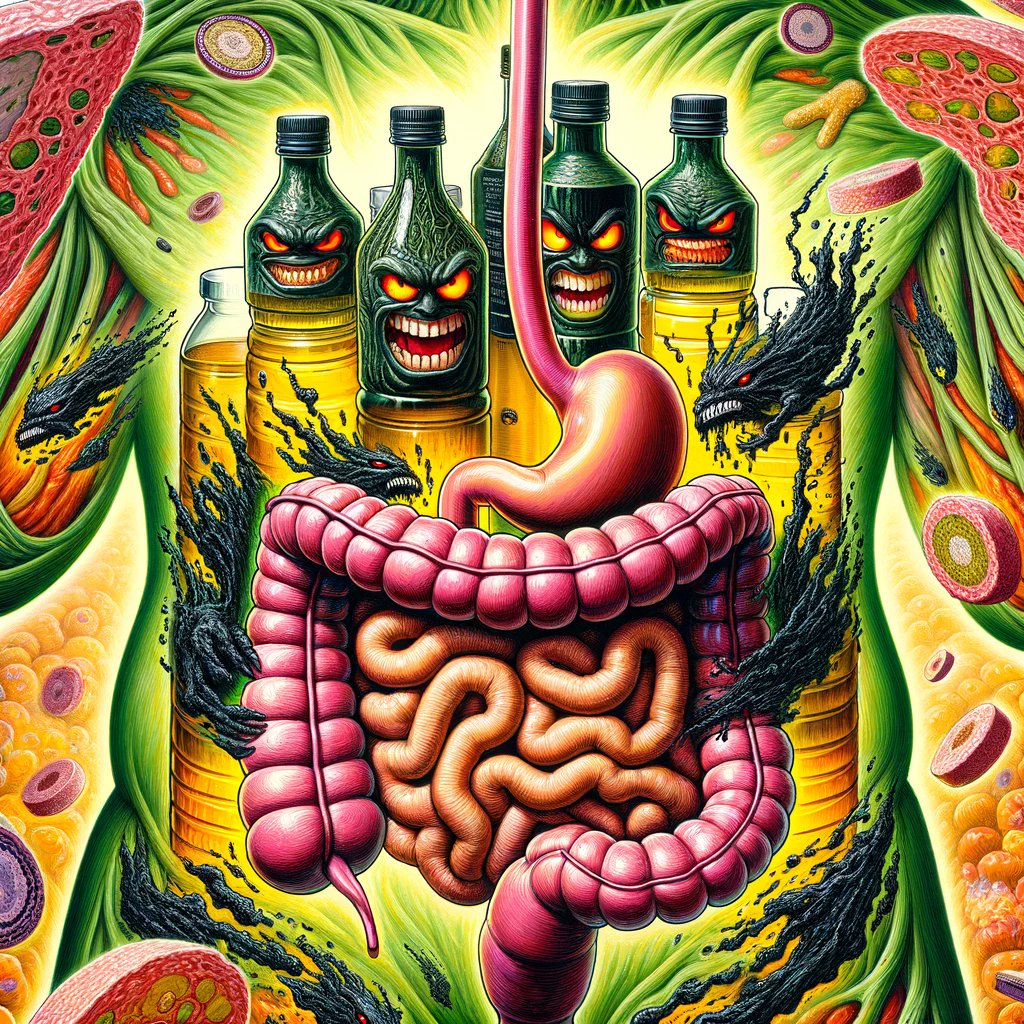
Keep polyunsaturated fats LOW (seed oils mainly).
The fats in these oils are absolutely horrible for the gut.
I've gone into that here:
Dalton (Analyze & Optimize)@Outdoctrination
The NUMBER ONE food you need to eliminate to heal your gut.
SEED OILS - Why they are destroying your digestion:
SEED OILS - Why they are destroying your digestion:
7
Avoid food additives: added iron, colors, gums, dyes, etc.
If you don’t recognize an ingredient, then it’s best to avoid it.
These additives disrupt the mucus layer, foster a pathogenic bacterial load, and drive inflammation.
More on that here:
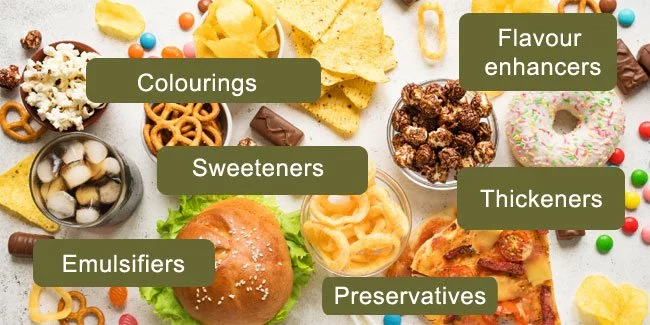

If you don’t recognize an ingredient, then it’s best to avoid it.
These additives disrupt the mucus layer, foster a pathogenic bacterial load, and drive inflammation.
More on that here:
Dalton (Analyze & Optimize)@Outdoctrination
THIS might just be causing your gut problems.
The FDA has swept these under the rug for decades.
We’re now waking up to the harms of these so-called “safe” ingredients, added to nearly every commercial food.
Let’s talk about it⬇️
The FDA has swept these under the rug for decades.
We’re now waking up to the harms of these so-called “safe” ingredients, added to nearly every commercial food.
Let’s talk about it⬇️
8
As your gut begins to heal, the more you should expand the diet over time.
⬩Fruit⬩Well cooked potatoes / rice⬩Cooked grains (sourdough)⬩Well cooked vegetables⬩
You don't want to have a restrictive diet long term, as this can backfire and limit your progress.
⬩Fruit⬩Well cooked potatoes / rice⬩Cooked grains (sourdough)⬩Well cooked vegetables⬩
You don't want to have a restrictive diet long term, as this can backfire and limit your progress.
9
In general - over or under-eating will make things worse.
Listen to your body.
You also want to eat a diet that is enjoyable.
Eating foods you don’t think are tasty and that you don’t want to eat measurably impairs your digestion:

Listen to your body.
You also want to eat a diet that is enjoyable.
Eating foods you don’t think are tasty and that you don’t want to eat measurably impairs your digestion:
Dalton (Analyze & Optimize)@Outdoctrination
Enjoy your meals, it is essential for good digestion.
In 1922, Dr. Walter Alvarez stated:
⬩Digestion is faster if food is palatable
⬩Digestion is slower when the food was thought to be disgusting
⬩Animals and people had slower digestion if being fed vs eating on their own.
In 1922, Dr. Walter Alvarez stated:
⬩Digestion is faster if food is palatable
⬩Digestion is slower when the food was thought to be disgusting
⬩Animals and people had slower digestion if being fed vs eating on their own.
10
ANTIMICROBIALS are a huge part of fixing gut dysbiosis.
Very low dose, safe antibiotics can be an absolute life saver.
I know a lot of people don’t like to hear this, but using at a microdose & duration is incredibly powerful. Just easy to overdo it.
Very low dose, safe antibiotics can be an absolute life saver.
I know a lot of people don’t like to hear this, but using at a microdose & duration is incredibly powerful. Just easy to overdo it.
11
Some natural antimicrobials:
⬩Oregano oil⬩Allicin (garlic/onion)⬩Mastic gum ⬩Pau D'Arco⬩Rosemary⬩Thyme⬩Activated charcoal⬩Wormwood⬩Camphor⬩Carrot⬩Berberine⬩Vitamin D⬩Vitamin K2⬩Zinc⬩Lactoferrin⬩
⬩Oregano oil⬩Allicin (garlic/onion)⬩Mastic gum ⬩Pau D'Arco⬩Rosemary⬩Thyme⬩Activated charcoal⬩Wormwood⬩Camphor⬩Carrot⬩Berberine⬩Vitamin D⬩Vitamin K2⬩Zinc⬩Lactoferrin⬩
12
One herbal protocol that was studied for SIBO.
2 capsules each of proprietary blends (you can get these online) FC Cidal + Dysbiocide or Candibactin-AR + Candibactin-BR, 2x a day for 4 weeks.
Equivalent to standard antibiotics in terms of effectiveness.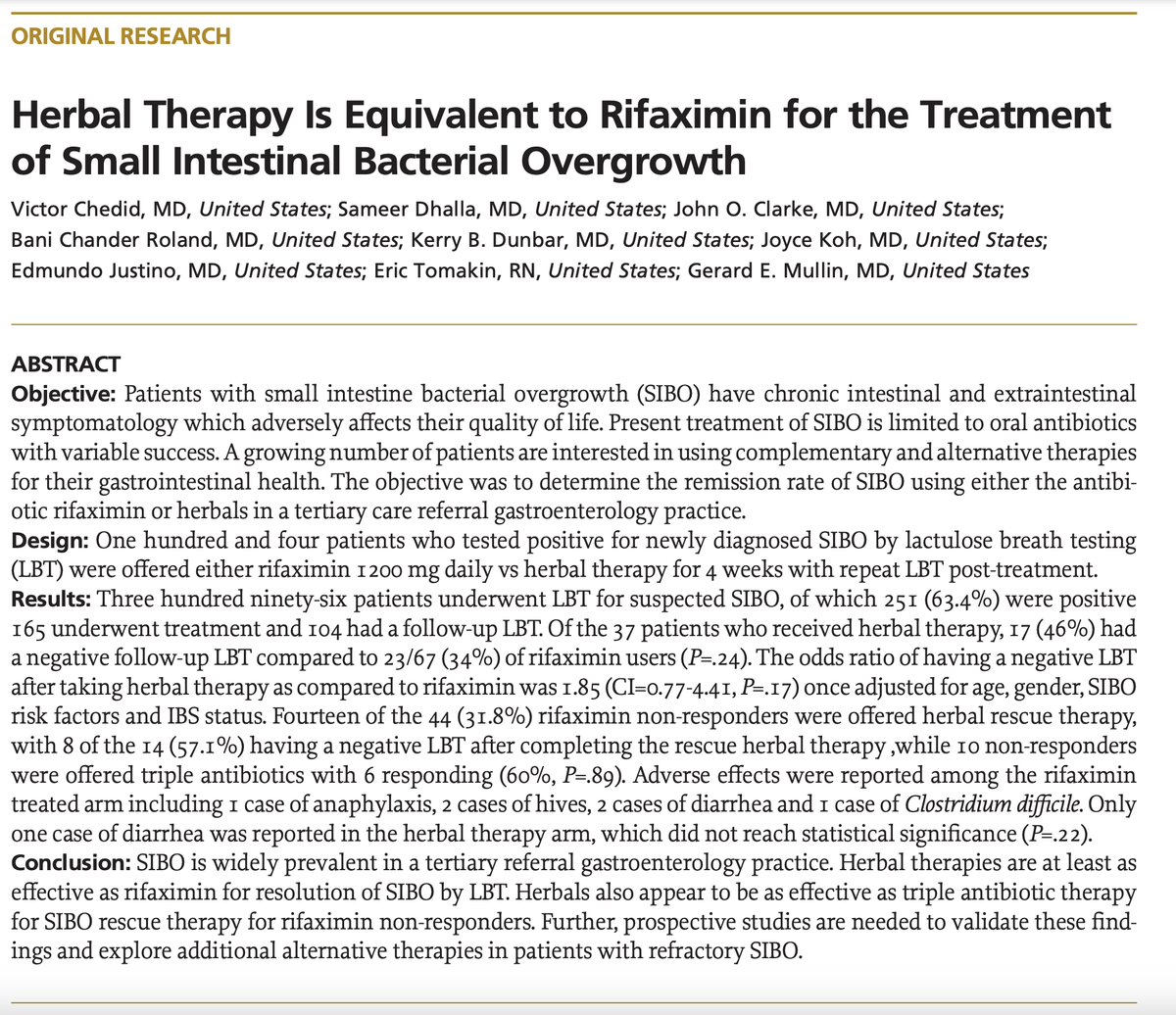
2 capsules each of proprietary blends (you can get these online) FC Cidal + Dysbiocide or Candibactin-AR + Candibactin-BR, 2x a day for 4 weeks.
Equivalent to standard antibiotics in terms of effectiveness.
13
PROBIOTICS:
I wouldn't start with these if the problem is really bad, but the closer you get back to normal, the more important they become.
⬩Antimicrobial/anti-biofilm effects
⬩Essential for gut immunity
⬩Enhance gut motility
⬩Can metabolize food components
I wouldn't start with these if the problem is really bad, but the closer you get back to normal, the more important they become.
⬩Antimicrobial/anti-biofilm effects
⬩Essential for gut immunity
⬩Enhance gut motility
⬩Can metabolize food components
14
There are a few key types of probiotics:
1. Lacto/Bifido blends
2. S. Boulardii
3. Spore based probiotics
There are more, and each has shown effectiveness in their own right.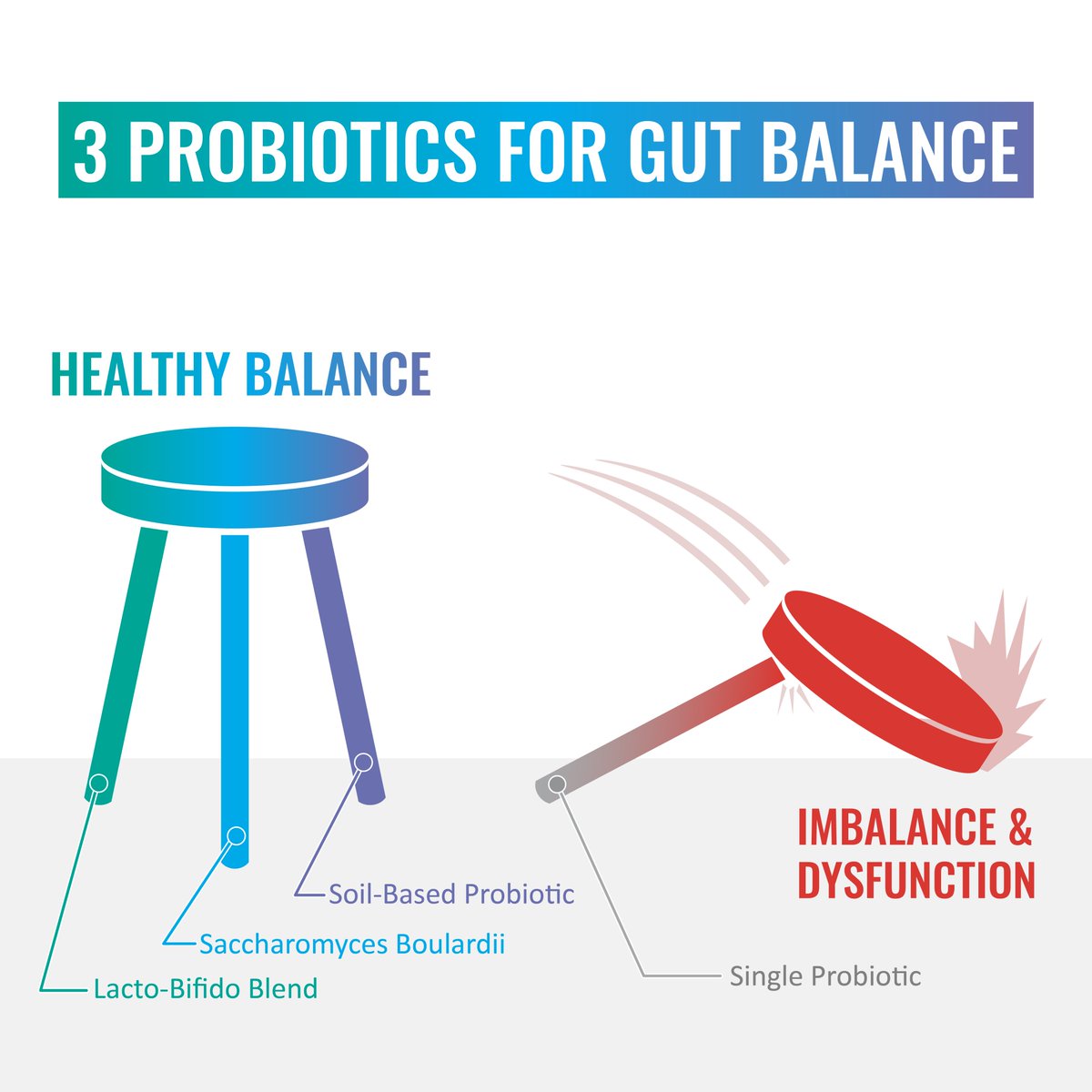
1. Lacto/Bifido blends
2. S. Boulardii
3. Spore based probiotics
There are more, and each has shown effectiveness in their own right.
15
The keys to success using probiotics seem to be:
1. Using multiple strains / types
2. Consistency & duration - 2 months is a good starting point
3. Taking with antimicrobials - counterintuitive but works better
Fermented foods can also be good.
1. Using multiple strains / types
2. Consistency & duration - 2 months is a good starting point
3. Taking with antimicrobials - counterintuitive but works better
Fermented foods can also be good.
16
GUT MOTILITY is VITAL for fixing digestion.
If you don't:
⬩Greater bacterial fermentation
⬩More inflammation from food lingering
⬩More gas production, retention (bloating)
Some hallmarks of gut problems are slowed motility & greater fecal mass.
If you don't:
⬩Greater bacterial fermentation
⬩More inflammation from food lingering
⬩More gas production, retention (bloating)
Some hallmarks of gut problems are slowed motility & greater fecal mass.
17
Some tools to enhance gut motility:
⬩Coffee⬩Cascara⬩Triphala⬩Raw carrot⬩Mushrooms⬩Mastic gum⬩
More on mastic here:
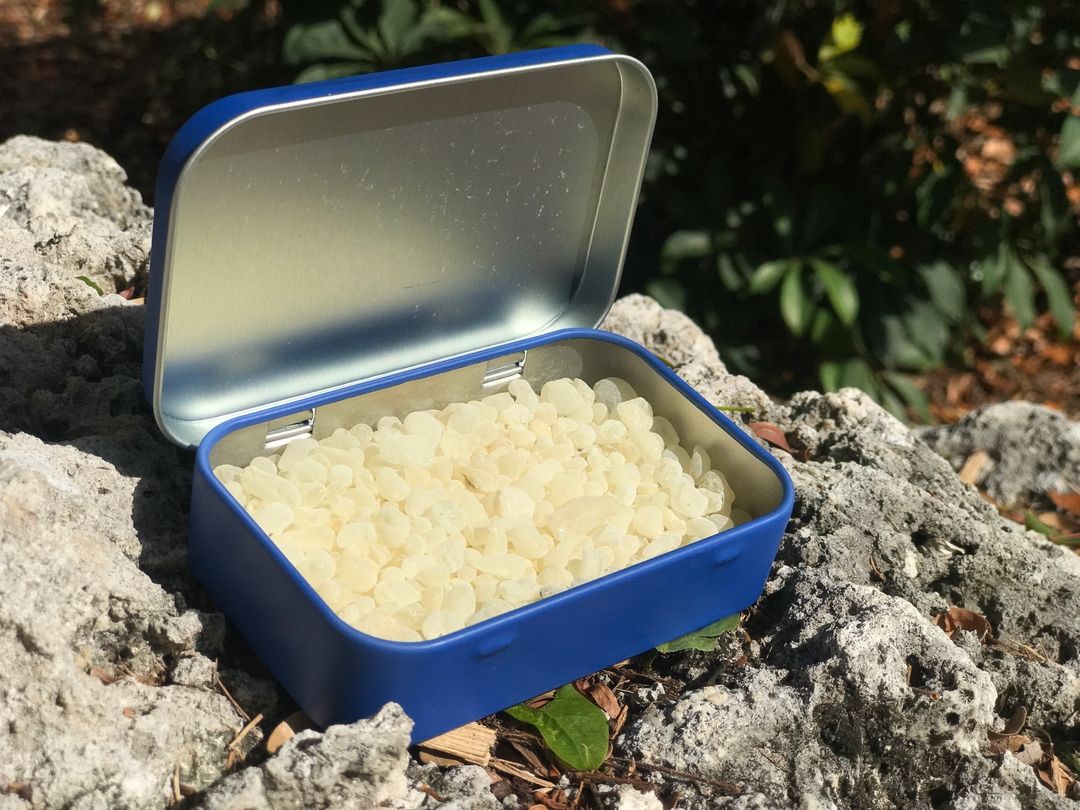
⬩Coffee⬩Cascara⬩Triphala⬩Raw carrot⬩Mushrooms⬩Mastic gum⬩
More on mastic here:
Dalton (Analyze & Optimize)@Outdoctrination
A POWERFUL DIGESTIVE HEALING TOOL
EVEN FOR IBS AND IBDs!
MASTIC GUM: HOW IT PROTECTS THE GUT!
THREAD
EVEN FOR IBS AND IBDs!
MASTIC GUM: HOW IT PROTECTS THE GUT!
THREAD
18
A HUGELY underrated & important factor for gut health (specifically motility) is the circadian rhythm.
This controls the gut’s immune system, motility, enzyme secretion, and more.
People with disrupted rhythm’s are at around double the risk of getting IBS.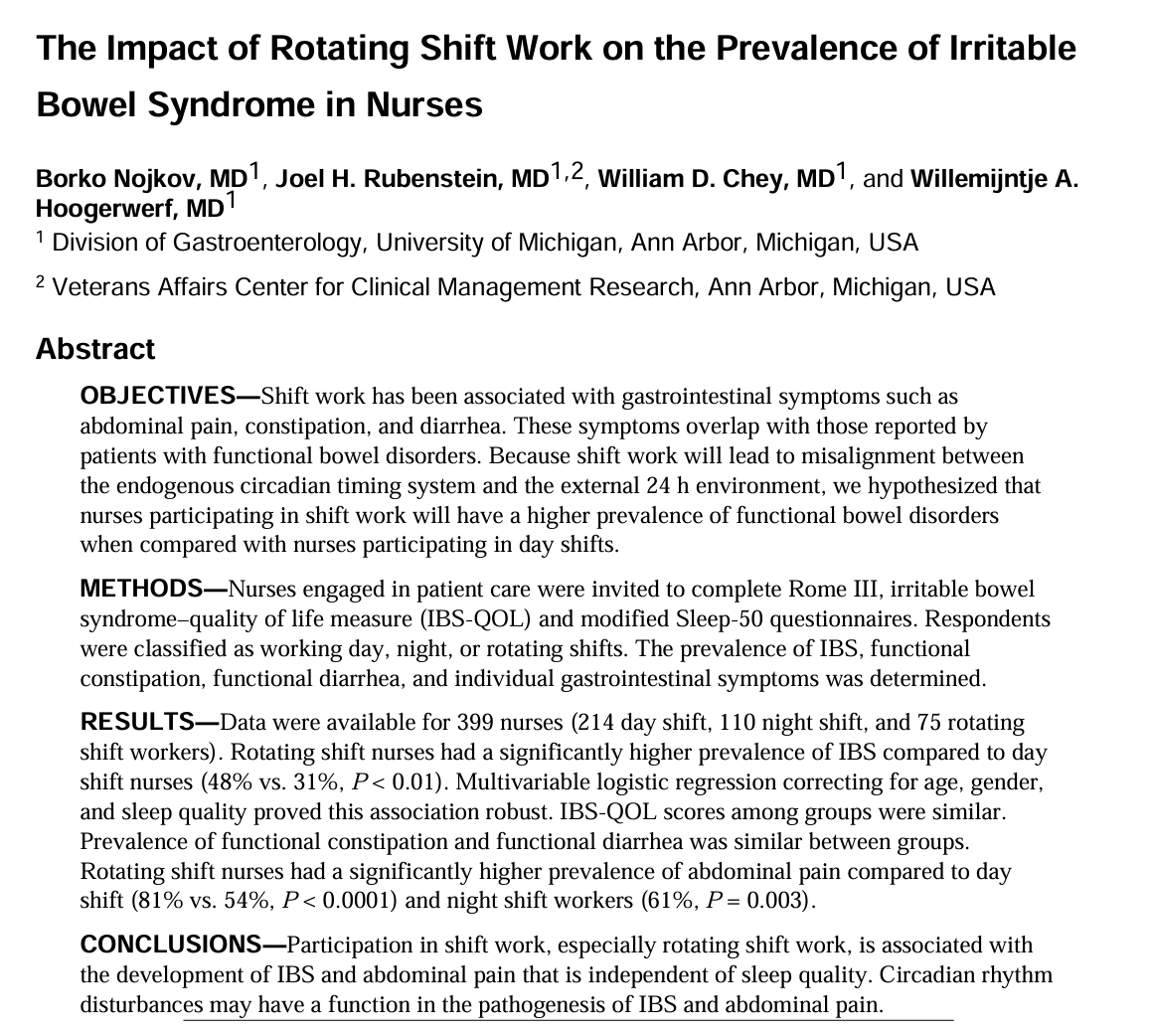
This controls the gut’s immune system, motility, enzyme secretion, and more.
People with disrupted rhythm’s are at around double the risk of getting IBS.
19
KEYS to a robust circadian rhythm for optimal gut health:
⬩Consistent sleep / wake times
⬩Sunlight exposure to the eyes (especially early morning)
More on that here:

⬩Consistent sleep / wake times
⬩Sunlight exposure to the eyes (especially early morning)
More on that here:
Dalton (Analyze & Optimize)@Outdoctrination
You WILL NOT have good digestion… without addressing this first.
The key to relieving your indigestion, constipation, and bloating may be where you least expect it.
Let’s talk about it:
The key to relieving your indigestion, constipation, and bloating may be where you least expect it.
Let’s talk about it:
20
Gut motility is largely governed by the vagus nerve - the main nerve of the "rest and digest" system.
The primary neurotransmitter of the vagus nerve is acetylcholine, and its synthesis is supported by:
• Choline • B1 • B2 • B5 • B9 • B12 • Glycine • Creatine •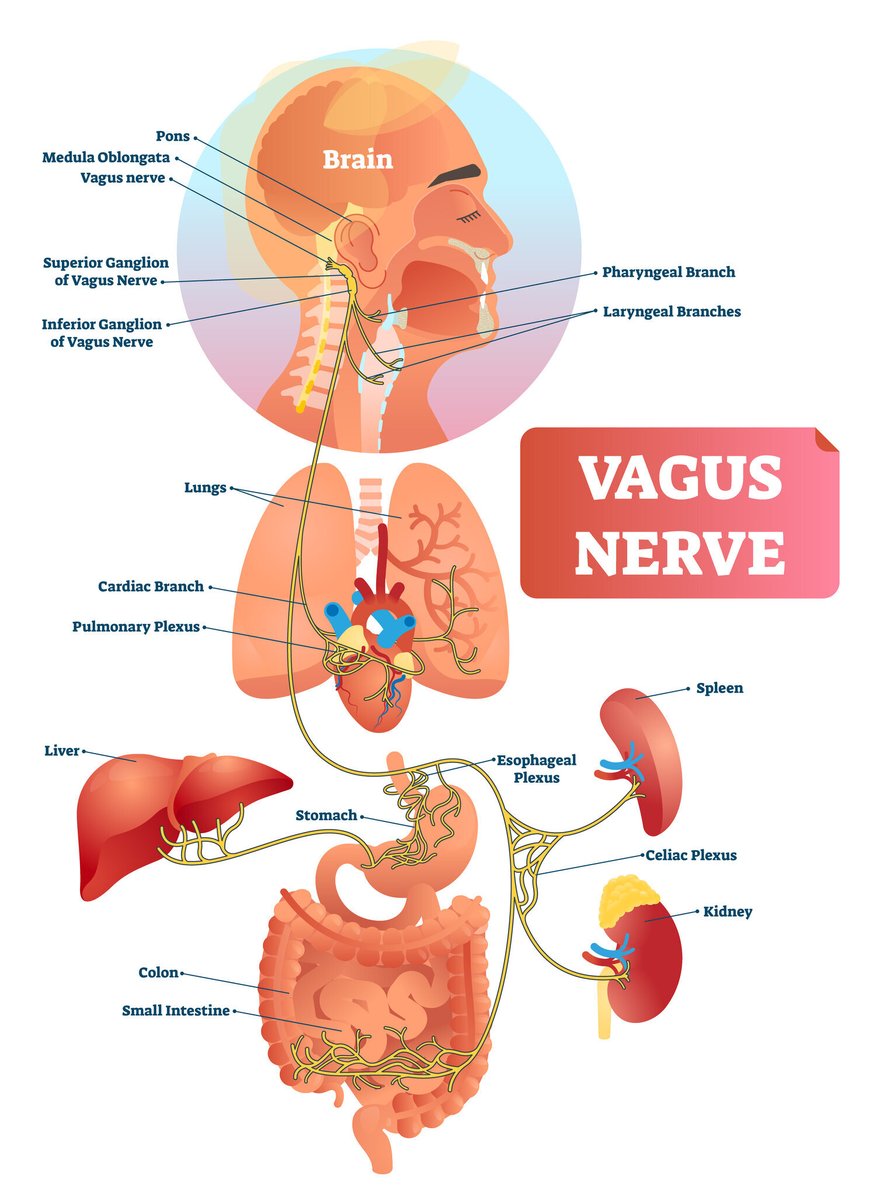
The primary neurotransmitter of the vagus nerve is acetylcholine, and its synthesis is supported by:
• Choline • B1 • B2 • B5 • B9 • B12 • Glycine • Creatine •
21
Other ways to support the vagus nerve:
⬩Pregnenolone⬩Progesterone⬩Carnosine⬩Butyrate⬩Humming⬩Acupressure points⬩Breathing practices⬩Sunlight⬩Maintaining circadian rhythm⬩Grounding⬩
More on grounding here:
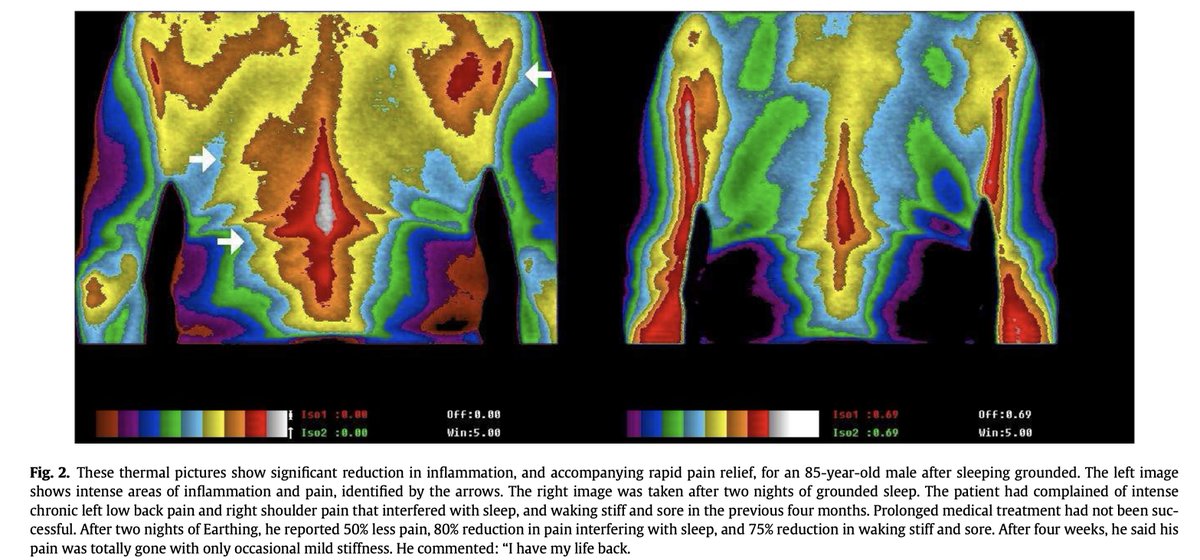
⬩Pregnenolone⬩Progesterone⬩Carnosine⬩Butyrate⬩Humming⬩Acupressure points⬩Breathing practices⬩Sunlight⬩Maintaining circadian rhythm⬩Grounding⬩
More on grounding here:
Dalton (Analyze & Optimize)@Outdoctrination
The best thing you can do for your health that no one is talking about.
You’ll be sleeping like a baby, reducing your stress, and crushing inflammation.
Literally touch grass.
Why GROUNDING is the missing link to your optimal health:
You’ll be sleeping like a baby, reducing your stress, and crushing inflammation.
Literally touch grass.
Why GROUNDING is the missing link to your optimal health:
22
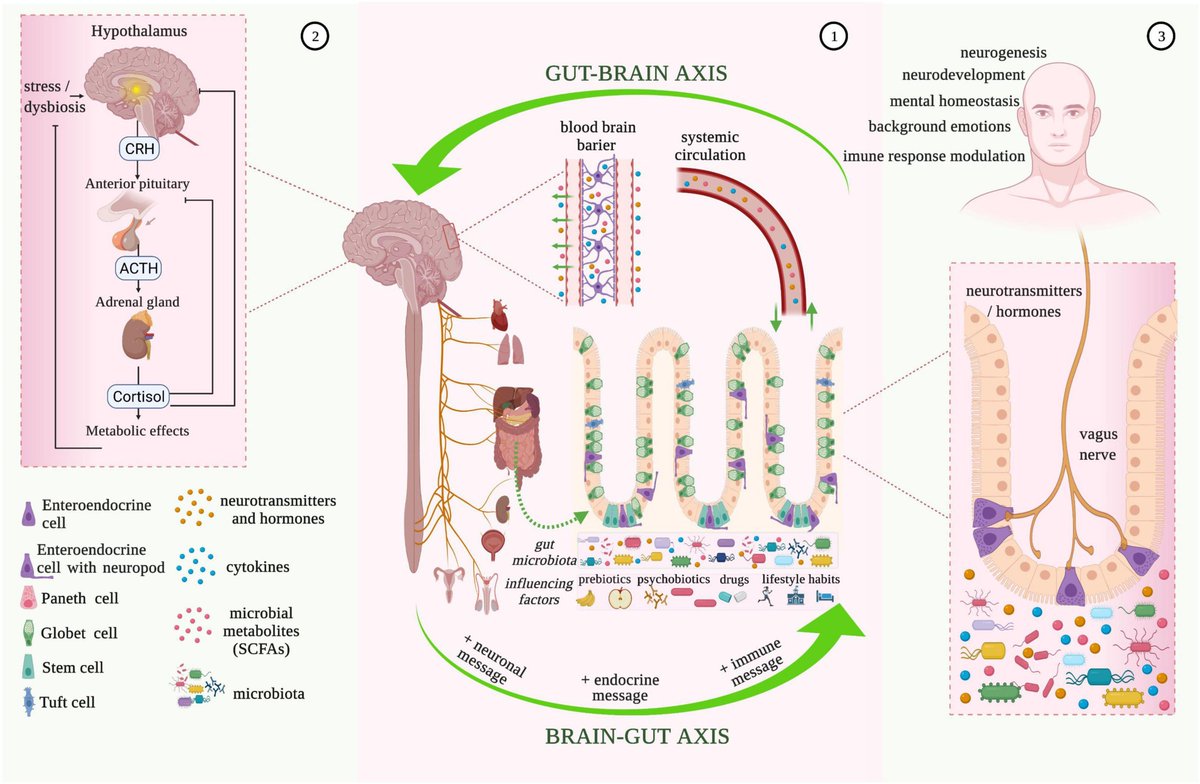
STRESS will destroy digestion.
⬩Worsens gut immunity - allowing for dysbiosis
⬩Slows motility (but can also cause diarrhea)
⬩Impairs energy production
⬩Directly drives inflammation
More on that here:

⬩Worsens gut immunity - allowing for dysbiosis
⬩Slows motility (but can also cause diarrhea)
⬩Impairs energy production
⬩Directly drives inflammation
More on that here:
Dalton (Analyze & Optimize)@Outdoctrination
Stress DESTROYS your gut more than anything.
1. During stress, CRH is released from the brain.
This hormone travels to the gut, and directly causes:
• "Leaky gut" - which exposes bacteria / food components to the body, driving inflammation.
• Serotonin release - a primary mediator of symptoms like bloating, sensitivity, lack of appetite, etc.
Carbohydrate, pregnenolone & progesterone are tools to help lower the release of CRH.
2. Stress worsens immunity.
Chronic stress:
• Depletes sIgA, an antibody in the gut that prevents adhesion & inflammation
• Shrinks the thymus gland, a primary immune organ where immune cells develop.
• Directly suppresses & kills immune cells
This all leaves us susceptible to pathogenic bacterial overgrowth, which:
• Produce gas, leading to pain & bloating
• Drive serotonin production
Vitamins A, D, C, and zinc are the primary nutrients for supporting immunity.
3. Stress weakens digestion
Stress has been shown to lower the production of:
• Digestive enzyme
• Stomach acid
• Bile acid
All of which are obviously vital for actually breaking down & absorbing the food.
Stress ALSO screws up motility.
The vagus nerve is one of the primary parasympathetic or "rest & digest" nerves in the body.
One of its primary functions is to support the proper contractions of the digestive system.
This ensures that the food gets moved along properly to prevent physical irritation.
It also ensures that food doesn't stick around long enough to get overly fermented by bacteria.
Digestive enzymes can be directly supplemented, stomach acid can be aided with Betaine HCl, and Bile acids can be supported with taurine / glycine or TUDCA.
4. Stress increases estrogen
Cortisol is known to increase the conversion of androgens into estrogens via the aromatase enzyme.
Women are more susceptible to conditions like IBS, especially during points in the cycle with higher estrogen to progesterone ratio.
Androgens, especially DHT, have been shown to protect against the sensitivity & pain in the gut, while estrogen causes it.
Estrogen ALSO up-regulates serotonin production, by causing the degranulation of immune cells called mast cells.
These cells also produce histamine and other proteases that can lead to symptoms.
Tools to lower / oppose estrogen:
‣ Saturated fat
‣ Vitamin A
‣ Vitamin D
‣ Vitamin E
‣ Progesterone
‣ Aspirin
‣ Vitamin B2
‣ White button mushrooms
‣ Insoluble fiber (raw carrot)
‣ Naringin, naringenin, apigenin (citrus fruits)
1. During stress, CRH is released from the brain.
This hormone travels to the gut, and directly causes:
• "Leaky gut" - which exposes bacteria / food components to the body, driving inflammation.
• Serotonin release - a primary mediator of symptoms like bloating, sensitivity, lack of appetite, etc.
Carbohydrate, pregnenolone & progesterone are tools to help lower the release of CRH.
2. Stress worsens immunity.
Chronic stress:
• Depletes sIgA, an antibody in the gut that prevents adhesion & inflammation
• Shrinks the thymus gland, a primary immune organ where immune cells develop.
• Directly suppresses & kills immune cells
This all leaves us susceptible to pathogenic bacterial overgrowth, which:
• Produce gas, leading to pain & bloating
• Drive serotonin production
Vitamins A, D, C, and zinc are the primary nutrients for supporting immunity.
3. Stress weakens digestion
Stress has been shown to lower the production of:
• Digestive enzyme
• Stomach acid
• Bile acid
All of which are obviously vital for actually breaking down & absorbing the food.
Stress ALSO screws up motility.
The vagus nerve is one of the primary parasympathetic or "rest & digest" nerves in the body.
One of its primary functions is to support the proper contractions of the digestive system.
This ensures that the food gets moved along properly to prevent physical irritation.
It also ensures that food doesn't stick around long enough to get overly fermented by bacteria.
Digestive enzymes can be directly supplemented, stomach acid can be aided with Betaine HCl, and Bile acids can be supported with taurine / glycine or TUDCA.
4. Stress increases estrogen
Cortisol is known to increase the conversion of androgens into estrogens via the aromatase enzyme.
Women are more susceptible to conditions like IBS, especially during points in the cycle with higher estrogen to progesterone ratio.
Androgens, especially DHT, have been shown to protect against the sensitivity & pain in the gut, while estrogen causes it.
Estrogen ALSO up-regulates serotonin production, by causing the degranulation of immune cells called mast cells.
These cells also produce histamine and other proteases that can lead to symptoms.
Tools to lower / oppose estrogen:
‣ Saturated fat
‣ Vitamin A
‣ Vitamin D
‣ Vitamin E
‣ Progesterone
‣ Aspirin
‣ Vitamin B2
‣ White button mushrooms
‣ Insoluble fiber (raw carrot)
‣ Naringin, naringenin, apigenin (citrus fruits)
23
Deficiencies of pretty much any nutrient can cause stress, but the most noteworthy anti-stress nutrients IMO are:
⬩Magnesium⬩Vitamin D⬩Carbohydrate⬩Salt⬩Potassium⬩Vitamin C
Vitamin D specifically is often low in IBS, and supplementing is therapeutic.
⬩Magnesium⬩Vitamin D⬩Carbohydrate⬩Salt⬩Potassium⬩Vitamin C
Vitamin D specifically is often low in IBS, and supplementing is therapeutic.
24
Excess estrogen can also wreck gut function.
Women are more susceptible to IBS, especially during points in the cycle with higher estrogen ratio.
Androgens, especially DHT, have been shown to protect against the sensitivity & pain in the gut, while estrogen causes it.
Women are more susceptible to IBS, especially during points in the cycle with higher estrogen ratio.
Androgens, especially DHT, have been shown to protect against the sensitivity & pain in the gut, while estrogen causes it.
25
Estrogen ALSO causes the degranulation of immune cells called mast cells.
These cells also produce histamine and other proteases that can lead to symptoms.
The levels of these cells are elevated in conditions like IBS.
More on histamine here:

These cells also produce histamine and other proteases that can lead to symptoms.
The levels of these cells are elevated in conditions like IBS.
More on histamine here:
Dalton (Analyze & Optimize)@Outdoctrination
If you have chronic bloating and gut pain, this is for you.
This is A KEY culprit wreaking havoc on your gut that your doctor won’t even think about.
Here’s how it’s tearing up your insides (and what to do about it):
This is A KEY culprit wreaking havoc on your gut that your doctor won’t even think about.
Here’s how it’s tearing up your insides (and what to do about it):
26
Tools to lower / oppose estrogen:
⬩ Saturated fat ⬩ Vitamin A ⬩ Vitamin D ⬩ Vitamin E ⬩ Progesterone (most important)⬩ Aspirin ⬩ Vitamin B2 ⬩ White button mushrooms ⬩ Insoluble fiber (raw carrot) ⬩ Naringin, naringenin, apigenin (citrus fruits) ⬩Calcium D-Glucarate⬩
⬩ Saturated fat ⬩ Vitamin A ⬩ Vitamin D ⬩ Vitamin E ⬩ Progesterone (most important)⬩ Aspirin ⬩ Vitamin B2 ⬩ White button mushrooms ⬩ Insoluble fiber (raw carrot) ⬩ Naringin, naringenin, apigenin (citrus fruits) ⬩Calcium D-Glucarate⬩
27
If your metabolism sucks, good luck digesting anything.
You need energy for:
⬩Stomach acid⬩Digestive enzyme secretion⬩Motility⬩Immunity⬩Maintaining bacterial balance⬩
The gut is extremely energy demanding.
You need energy for:
⬩Stomach acid⬩Digestive enzyme secretion⬩Motility⬩Immunity⬩Maintaining bacterial balance⬩
The gut is extremely energy demanding.
28
Some keys to enhancing energy production:
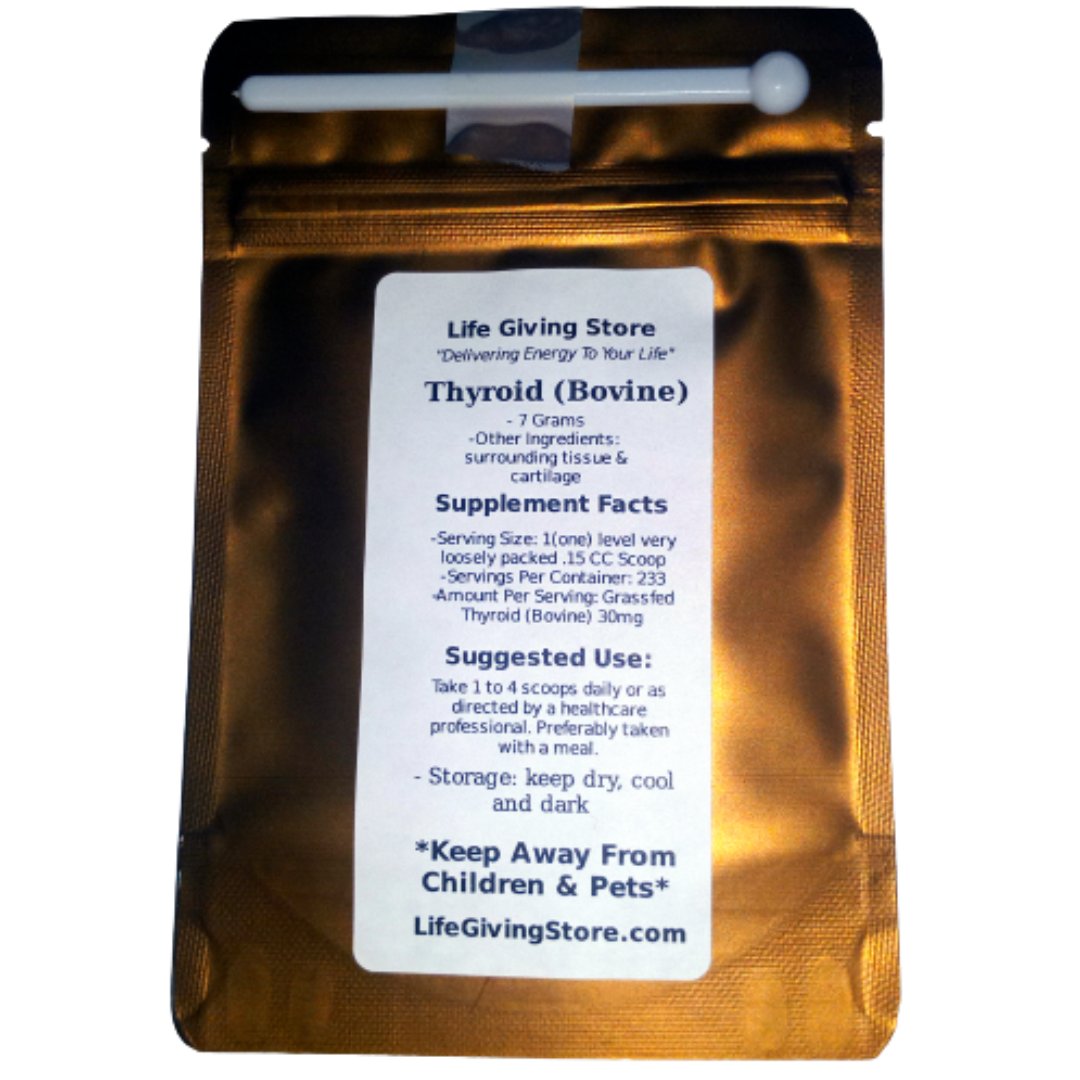
⬩Thyroid optimization / supplementation⬩B vitamins⬩Copper⬩Limiting polyunsaturated fats
This is only scratching the surface, but thyroid health seems to be a low hanging fruit for many.
⬩Thyroid optimization / supplementation⬩B vitamins⬩Copper⬩Limiting polyunsaturated fats
This is only scratching the surface, but thyroid health seems to be a low hanging fruit for many.
Dalton (Analyze & Optimize)@Outdoctrination
The ultimate supplement to boost your metabolism:
THYROID HORMONE - A complete guide
1. Symptoms you may be hypothyroid
Just to name a few:
• ALWAYS being tired
• Feeling COLD, especially at the extremities
• Slow / lethargic speech
• Stubborn weight gain
• Poor mood
• Puffy features: cheeks, love handles, general water retention
• Gynecomastia (man boobs)
• Muscular weakness
• Dry skin and hair
• Anxiety
• Hair loss
• Always being sick
Digestion is particularly responsive to thyroid hormone.
• Constipation or diarrhea
• Nausea
• Bacterial overgrowth
• Reflux
are all common in hypothyroidism.
Thyroid hormone is:
⬨ Key for gut regeneration, healing
⬨ Pro-motility
⬨ Vital for producing digestive enzymes
⬨ Required for producing stomach acid
⬨ Critical for gut immunity, gut barrier
2. Why labs are often misleading
TSH is the primary (and often only) metric a doctor will test for hypothyroidism.
A lower TSH should be indicative of higher thyroid hormone secretion, but it doesn't tell the full story.
For starters, TSH can be lowered by:
• Infection
• Trauma
• Cortisol
• Adrenaline
• Caffeine
• Fever
So a low TSH alone cannot rule out hypothyroidism.
The standard TSH reference range is also WAY too lenient (up to 5).
TSH >2 has been associated with:
• Heart disease
• High cortisol
Thyroid hormones:
• T4 (inactive)
• T3 (active, pro-metabolic)
• Reverse T3 (anti-metabolic)
can also be measured in the blood, but this doesn't tell the full story either.
These hormones must be transported through the blood, enter their target cells, and attach to the specific proteins in the cells that facilitate their actions.
Not as simple as thyroid in blood = thyroid activity.
Values of the “free” T3 and T4 can be misleading as well.
Thyroid hormones do not need to be "free" to exert their effects on various tissues, contrary the current medical dogma.
I still think testing can often be helpful, but you can certainly be hypothyroid while your labs look good on paper.
3. Diagnostics
An underarm temperature measured first thing in the morning, leaving the thermometer under the arm for 10 minutes to equilibrate, should start be >97.8°F.
Lower temperatures are highly indicative of hypothyroidism.
This was the gold standard thyroid test (along with aforementioned symptoms) that was successfully used to treat thousands of hypothyroid people before blood tests.
You can have “ideal” thyroid lab values yet be at the temperature of a hibernating bear.
A healthy resting pulse averaged 85 beats per minute, though Dr. Ward Dean has suggested between 65-75 is a good range.
If you eat carbs can and feel more tired and have lower temperature and pulse rate, this indicates a reliance on the stress hormones and a lack of thyroid function.
The response of the Achilles tendon when tapped was another assessment tool.
In a well-functioning thyroid, the foot would swing back energetically due to quick muscle relaxation.
but a slow, controlled return motion indicated potentially sluggish energy status, often a sign of hypothyroidism.
High cholesterol is another sign of hypothyroidism, while thyroid supplementation normalizes it.
4. NOT supplementing thyroid is unnatural
Consuming thyroid gland is as natural and "ancestral" as it gets.
Paleo researchers have stated that we probably consumed lots of thyroid gland throughout human history:
"the shift from scavenging towards hunting... would have increased thyroid gland consumption by hominins and thereby exogenous thyroid exposure."
"these Homo forebears started consuming small animals, such as amphibians, birds, and reptiles. This prey was consumed whole, and the animals’ thyroid glands thus provided a significant amount of thyroid hormone to their hominid predators."
"Nevertheless, tissues and organs (including thyroid glands) are commonly consumed by the primary hunters"
In fact, thyroid gland used to be in common foods like ground beef up until the mid 80s.
It is only recently when we stopped eating the whole animal, including the thyroid gland!
5. Using natural desiccated thyroid (NDT)
Desiccated thyroid comes from the thyroid glands of pigs or cows, and is the traditional way of supplanting thyroid hormones.
A grain (60 mg) is the unit of measurement for supplementation, containing ~40 mcg T4 + ~10 mcg T3.
A starting dose of a half grain is reasonable, and should be continued for 2-4 weeks before adjusting.
The hormones take around this long to stabilize.
As you use NDT, you should consistently track:
1. Morning temperature
2. Symptoms
Once you get to >97.8°F and symptoms resolve, the correct dose has been found.
The brand matters a lot. Many products seem to be unreliable, or outright useless.
That’s definitely been my experience. I’ve tried numerous products over the last few years.
I'll link below the thyroid product I have been using recently for myself and with clients.
I would take it with food to slow the absorption, or even split into multiple doses with meals.
I prefer at dinner.
While some may require full replacement (4 to 5 grains), others find relief with as little as 15 mg (quarter grain).
Broda Barnes observed that his patients often required about two grains of thyroid to alleviate hypothyroid symptoms, occasionally needing more.
If you experience
• Too fast of a heart rate
• Palpitations,
• Anxiety,
• Overheating
• Fatigue
• Shaky feelings
then you might have taken too much thyroid.
The amount taken should be reduced or discontinued entirely.
Effects of over stimulation should resolve in a few hours.
This type of response can also indicate low cholesterol or an issue with liver function, two systems that the thyroid depends on to do its good.
You may also need more nutrients, as the increased metabolic rate demands more resources.
Eat your liver, egg yolks, and oysters.
Many people who should be candidates for supplementation find that thyroid does nothing for them, no matter how much they take.
In my experience, this always seems to be tied to an issue with the gut.
I would try to address this first.
Or, you just may not need it at all. You may need to address other factors.
Of course, supplementing thyroid is not the ONLY way to improve thyroid function, but it seems like an appropriate strategy when other factors have been addressed.
THYROID HORMONE - A complete guide
1. Symptoms you may be hypothyroid
Just to name a few:
• ALWAYS being tired
• Feeling COLD, especially at the extremities
• Slow / lethargic speech
• Stubborn weight gain
• Poor mood
• Puffy features: cheeks, love handles, general water retention
• Gynecomastia (man boobs)
• Muscular weakness
• Dry skin and hair
• Anxiety
• Hair loss
• Always being sick
Digestion is particularly responsive to thyroid hormone.
• Constipation or diarrhea
• Nausea
• Bacterial overgrowth
• Reflux
are all common in hypothyroidism.
Thyroid hormone is:
⬨ Key for gut regeneration, healing
⬨ Pro-motility
⬨ Vital for producing digestive enzymes
⬨ Required for producing stomach acid
⬨ Critical for gut immunity, gut barrier
2. Why labs are often misleading
TSH is the primary (and often only) metric a doctor will test for hypothyroidism.
A lower TSH should be indicative of higher thyroid hormone secretion, but it doesn't tell the full story.
For starters, TSH can be lowered by:
• Infection
• Trauma
• Cortisol
• Adrenaline
• Caffeine
• Fever
So a low TSH alone cannot rule out hypothyroidism.
The standard TSH reference range is also WAY too lenient (up to 5).
TSH >2 has been associated with:
• Heart disease
• High cortisol
Thyroid hormones:
• T4 (inactive)
• T3 (active, pro-metabolic)
• Reverse T3 (anti-metabolic)
can also be measured in the blood, but this doesn't tell the full story either.
These hormones must be transported through the blood, enter their target cells, and attach to the specific proteins in the cells that facilitate their actions.
Not as simple as thyroid in blood = thyroid activity.
Values of the “free” T3 and T4 can be misleading as well.
Thyroid hormones do not need to be "free" to exert their effects on various tissues, contrary the current medical dogma.
I still think testing can often be helpful, but you can certainly be hypothyroid while your labs look good on paper.
3. Diagnostics
An underarm temperature measured first thing in the morning, leaving the thermometer under the arm for 10 minutes to equilibrate, should start be >97.8°F.
Lower temperatures are highly indicative of hypothyroidism.
This was the gold standard thyroid test (along with aforementioned symptoms) that was successfully used to treat thousands of hypothyroid people before blood tests.
You can have “ideal” thyroid lab values yet be at the temperature of a hibernating bear.
A healthy resting pulse averaged 85 beats per minute, though Dr. Ward Dean has suggested between 65-75 is a good range.
If you eat carbs can and feel more tired and have lower temperature and pulse rate, this indicates a reliance on the stress hormones and a lack of thyroid function.
The response of the Achilles tendon when tapped was another assessment tool.
In a well-functioning thyroid, the foot would swing back energetically due to quick muscle relaxation.
but a slow, controlled return motion indicated potentially sluggish energy status, often a sign of hypothyroidism.
High cholesterol is another sign of hypothyroidism, while thyroid supplementation normalizes it.
4. NOT supplementing thyroid is unnatural
Consuming thyroid gland is as natural and "ancestral" as it gets.
Paleo researchers have stated that we probably consumed lots of thyroid gland throughout human history:
"the shift from scavenging towards hunting... would have increased thyroid gland consumption by hominins and thereby exogenous thyroid exposure."
"these Homo forebears started consuming small animals, such as amphibians, birds, and reptiles. This prey was consumed whole, and the animals’ thyroid glands thus provided a significant amount of thyroid hormone to their hominid predators."
"Nevertheless, tissues and organs (including thyroid glands) are commonly consumed by the primary hunters"
In fact, thyroid gland used to be in common foods like ground beef up until the mid 80s.
It is only recently when we stopped eating the whole animal, including the thyroid gland!
5. Using natural desiccated thyroid (NDT)
Desiccated thyroid comes from the thyroid glands of pigs or cows, and is the traditional way of supplanting thyroid hormones.
A grain (60 mg) is the unit of measurement for supplementation, containing ~40 mcg T4 + ~10 mcg T3.
A starting dose of a half grain is reasonable, and should be continued for 2-4 weeks before adjusting.
The hormones take around this long to stabilize.
As you use NDT, you should consistently track:
1. Morning temperature
2. Symptoms
Once you get to >97.8°F and symptoms resolve, the correct dose has been found.
The brand matters a lot. Many products seem to be unreliable, or outright useless.
That’s definitely been my experience. I’ve tried numerous products over the last few years.
I'll link below the thyroid product I have been using recently for myself and with clients.
I would take it with food to slow the absorption, or even split into multiple doses with meals.
I prefer at dinner.
While some may require full replacement (4 to 5 grains), others find relief with as little as 15 mg (quarter grain).
Broda Barnes observed that his patients often required about two grains of thyroid to alleviate hypothyroid symptoms, occasionally needing more.
If you experience
• Too fast of a heart rate
• Palpitations,
• Anxiety,
• Overheating
• Fatigue
• Shaky feelings
then you might have taken too much thyroid.
The amount taken should be reduced or discontinued entirely.
Effects of over stimulation should resolve in a few hours.
This type of response can also indicate low cholesterol or an issue with liver function, two systems that the thyroid depends on to do its good.
You may also need more nutrients, as the increased metabolic rate demands more resources.
Eat your liver, egg yolks, and oysters.
Many people who should be candidates for supplementation find that thyroid does nothing for them, no matter how much they take.
In my experience, this always seems to be tied to an issue with the gut.
I would try to address this first.
Or, you just may not need it at all. You may need to address other factors.
Of course, supplementing thyroid is not the ONLY way to improve thyroid function, but it seems like an appropriate strategy when other factors have been addressed.
29
Something NOBODY talks about but is important to consider is SEROTONIN.
You WILL have excess gut serotonin if you have these issues. It directly drives:
⬩Nausea⬩Pain⬩Sensitivity⬩Diarrhea⬩Bloating⬩Loss of appetite⬩
and more.
You WILL have excess gut serotonin if you have these issues. It directly drives:
⬩Nausea⬩Pain⬩Sensitivity⬩Diarrhea⬩Bloating⬩Loss of appetite⬩
and more.
30
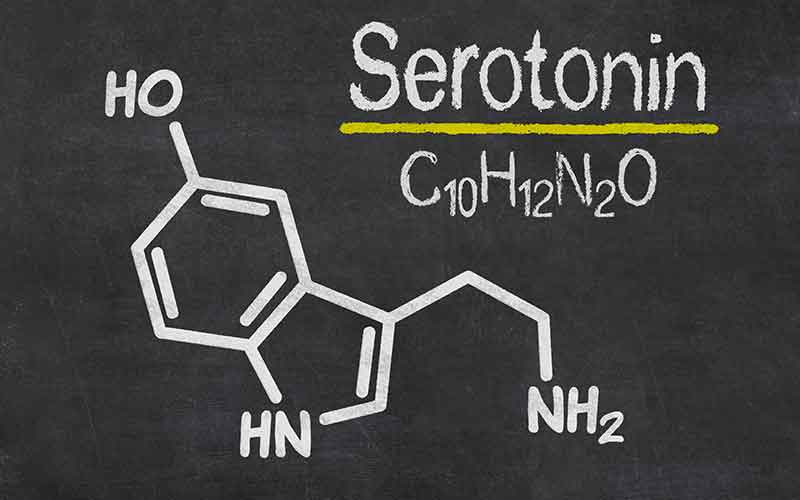
Serotonin is primarily the result of dysbiosis and gut irritation.
Some tools that can directly lower serotonin:
⬩Ginger⬩Lysine⬩Vitamins A & D⬩Zinc⬩Cyproheptadine⬩Benadryl⬩Zofran (Ondansetron)⬩Famotidine⬩
A deep dive on gut serotonin here:
Some tools that can directly lower serotonin:
⬩Ginger⬩Lysine⬩Vitamins A & D⬩Zinc⬩Cyproheptadine⬩Benadryl⬩Zofran (Ondansetron)⬩Famotidine⬩
A deep dive on gut serotonin here:
Dalton (Analyze & Optimize)@Outdoctrination
YOU MUST ADDRESS THIS TO FIX YOUR GUT
This “happy hormone” is the primary driver of digestive problems.
I found that out the hard way.
Here’s what I’ve learned, how I lowered it and how you can do the same:
This “happy hormone” is the primary driver of digestive problems.
I found that out the hard way.
Here’s what I’ve learned, how I lowered it and how you can do the same:
31
INFLAMMATION is what directly facilitates a lot of these symptoms.
The breakdown of the intestinal barrier, or "leaky gut," is a common underlying theme in all digestive problems that drives inflammation.
The breakdown of the intestinal barrier, or "leaky gut," is a common underlying theme in all digestive problems that drives inflammation.
32
Everything mentioned above plays a key role in driving or managing inflammation and the intestinal barrier,
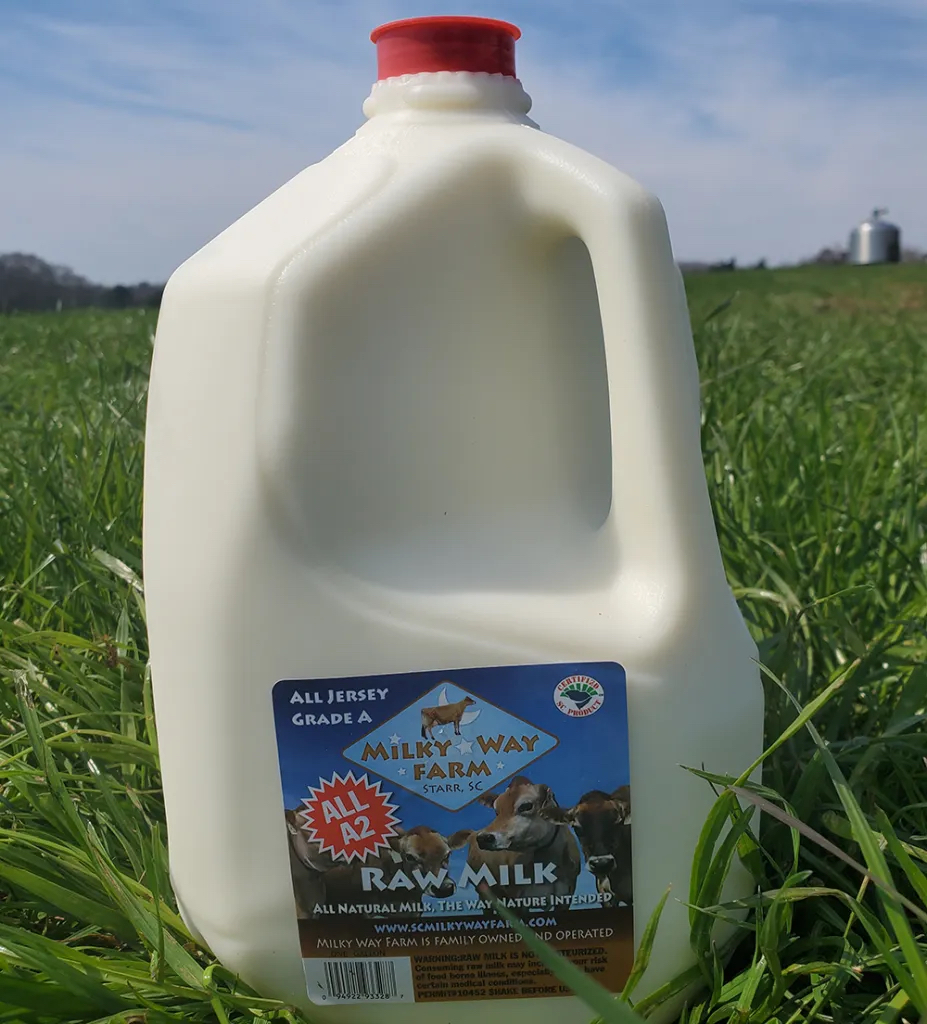
but some good foods to directly target it:
⬩Gelatinous meats / bone broth (glycine + hydroxyproline)⬩Raw milk⬩Orange juice⬩
but some good foods to directly target it:
⬩Gelatinous meats / bone broth (glycine + hydroxyproline)⬩Raw milk⬩Orange juice⬩
Dalton (Analyze & Optimize)@Outdoctrination
The most incredible healing food on the planet has been BANNED.
It is a godsend for digestion, prevents allergies, lowers inflammation and even improves cognition.
Why RAW MILK is a superfood:
It is a godsend for digestion, prevents allergies, lowers inflammation and even improves cognition.
Why RAW MILK is a superfood:
33
LACTOFERRIN is a Godsend for gut issues.
⬨ Repairs gut barrier ⬨ Bolsters iron absorption (unabsorbed iron is a serious problem for the gut) ⬨ Antibacterial ⬨ Anti-diarrheal ⬨ Anti-nausea ⬨ Reduces abdominal pain ⬨
More on lactoferrin below.
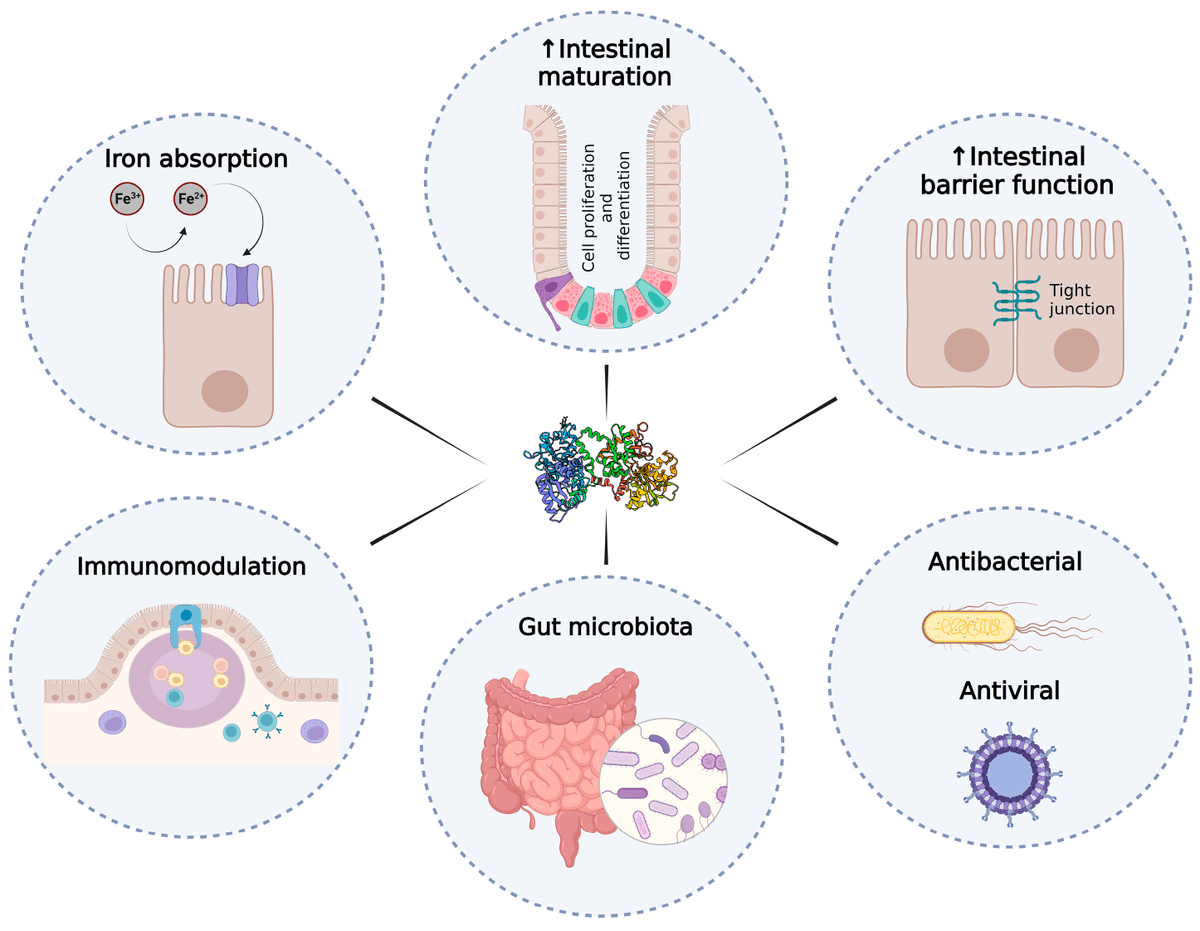

⬨ Repairs gut barrier ⬨ Bolsters iron absorption (unabsorbed iron is a serious problem for the gut) ⬨ Antibacterial ⬨ Anti-diarrheal ⬨ Anti-nausea ⬨ Reduces abdominal pain ⬨
More on lactoferrin below.
Dalton (Analyze & Optimize)@Outdoctrination
LACTOFERRIN: A “miracle” supplement for your gut.
1. Lactoferrin is a powerful gut anti-inflammatory
Lactoferrin was known to prevent and even cure cancer in the digestive tract of animals.
A research group decided to apply this in humans.
Patients given 3 grams of lactoferrin had their colon tumors slow in growth significantly.
A 22 year old young man with severe Crohn’s disease caught wind of these results.
He just moved to the United States and had lost access to the hefty medications he was on.
He decided to try 1 gram of lactoferrin daily for himself.
Cured.
Lactoferrin at just 100 mg/day helped in Crohn’s disease, decreasing levels of the inflammatory markers IL-6 and hepcidin.
One trial showed that 3 grams of lactoferrin per day resulted in 50% fewer incidences of diarrhea in just 2 weeks.
2. Any digestive symptom - lactoferrin can help
Lower doses of lactoferrin are still a godsend for severe digestive symptoms.
Another study showed lactoferrin at 600 mg daily diminished nausea, diarrhea and abdominal pain.
One report of children who consumed lactoferrin at 100 mg / day showed a reduction in vomiting and gut inflammation.
3. Lactoferrin is antibacterial, antifungal and regulates iron
Lactoferrin is critically important for its regulation of IRON.
While iron is of course essential, it is a double edged sword.
Unabsorbed free iron, which we are exposed to so much in today's food and in disease, directly causes inflammation and bacterial overgrowth in the gut.
Lactoferrin is critical for chelating and ENHANCING intestinal absorption of iron.
Lactoferrin acts as an iron transporter and thus REDUCES oxidative damage in the gut's nervous system.
Think of iron literally rusting on your most vital tissues: lactoferrin is there to PREVENT this.
It also boosts the expression of the famous BDNF in the gut, which allows the gut’s nervous system to regenerate properly.
These gut based nerves are responsible for perceiving digestive symptoms, as well as numerous regulating motility which is impaired in digestive distress.
But the ultimate root cause of these digestive conditions is typically bacterial.
Lactoferrin has potent antibacterial effects, in part by binding with free iron.
This deprives more pathogenic bacteria of this essential growth element,
while actually providing iron to some commensal bacteria which have lower iron requirements.
Lactoferrin also has direct antimicrobial properties by disrupting bacterial cell membranes.
It also increases the activity of serine protease, and antimicrobial peptides like RegIII𝛾, enzymes which shred up bacteria.
Lactoferrin has even been found to be effective against a variety of Candida species, an infamous fungus that causes gut and systemic infections in humans.
4. Lactoferrin heals the structure of the gut
Lactoferrin is essential for both the creation and the differentiation of the intestinal epithelial into all of the cellular subtypes necessary to keep the gut functioning properly.
Disruptions in the gut epithelial barrier can lead to antigens entering the area just underneath these cells,
triggering the release of a variety of cytokines and contributing to intestinal inflammation.
This is a phenomenon seen in EVERY digestive disease, and many other conditions seemingly unrelated to the gut.
If you suffer from bloating, gut pain, loose stools or poor bowel habits, or issues like poor sleep, mood and skin problems, you can bet that this process is involved.
HOWEVER, lactoferrin contributes to MAINTAINING the intestinal epithelial barrier and has immunomodulatory properties,
which are both critical functions in protecting the gut mucosal immune system.
Lactoferrin has been shown to support intestinal barrier integrity by upregulating tight junction protein expression and protecting the intestine from bacterial infections.
I cannot stress enough how important this is.
This is the most prevalent mechanism in any digestive condition you can think of, and lactoferrin can help prevent and heal it!
5. Lactoferrin calms the immune system
Lactoferrin could be a viable solution to addressing lactose intolerance.
It promotes the production of key digestive enzymes that break down lactose and sugar.
If you seem to react poorly to a myriad of normal foods (skin reactions, loose stools, diarrhea, brain fog, etc), then lactoferrin could be the solution.
We have various immune cells that are constantly sampling components of the gut to recognize the normal while weeding out pathogens.
But this process can become impaired and our immune systems can become overactive, mounting unwarranted inflammatory responses,
& driving tons of different digestive symptoms and intolerances to otherwise normal foods.
However, lactoferrin influences immune cells to become more tolerant, and less inflammatory, preventing various gut symptoms.
Essentially, it helps your immune system properly differentiate between what should and shouldn’t require inflammation.
Secretory IgA is an immune component that serves a PIVOTAL role in gut health.
It binds to pathogenic bacteria and other antigens from the environment and prevents them from causing inflammation.
sIgA is known to get depleted during times of stress, and its absence tends to result in inflammatory problems in the gut.
However, lactoferrin supplementation has been shown to INCREASE sIgA production in the gut,
supporting our immunity and protecting us from bacterial overgrowths and infections that can wreak havoc on our gut health.
Toll-like receptors (TLRs) are another critical mediator of intestinal inflammation, sensing various bacterial components in the gut like endotoxin.
These receptors are elevated in the gut of people with IBS and inflammatory bowel diseases,
yet lactoferrin has been shown to REDUCE their expression, leading to subsequent quelling of inflammation.
6. What is lactoferrin?
Lactoferrin is a protein that is found mainly in MILK, at its highest concentrations in colostrum, the milk the mother produces when lactation first begins.
This milk needs to be incredibly enriched in regenerative components for the offspring to survive and develop at this most crucial period.
Bovine colostrum has been consumed for millennia for its God-like medicinal properties.
Even Cleopatra was said to use it as it was seen as an immortal ingredient.
7. How to use it
Therapeutic doses range from 100 mg up to 3 grams of lactoferrin daily.
Makes sense to start at the lower end and gradually increase, though it is very safe so trying higher doses can be an option.
Of course you can also get it from bovine milk (20-200 mg/L) or colostrum (2g/L), especially when raw,
but the amount is variable and it can be tough to consume enough to hit the therapeutic targets.
Human milk is even higher in lactoferrin, if you're really adventurous.
I'll link the supplement we use with clients below, it's been such a key to our success!
1. Lactoferrin is a powerful gut anti-inflammatory
Lactoferrin was known to prevent and even cure cancer in the digestive tract of animals.
A research group decided to apply this in humans.
Patients given 3 grams of lactoferrin had their colon tumors slow in growth significantly.
A 22 year old young man with severe Crohn’s disease caught wind of these results.
He just moved to the United States and had lost access to the hefty medications he was on.
He decided to try 1 gram of lactoferrin daily for himself.
Cured.
Lactoferrin at just 100 mg/day helped in Crohn’s disease, decreasing levels of the inflammatory markers IL-6 and hepcidin.
One trial showed that 3 grams of lactoferrin per day resulted in 50% fewer incidences of diarrhea in just 2 weeks.
2. Any digestive symptom - lactoferrin can help
Lower doses of lactoferrin are still a godsend for severe digestive symptoms.
Another study showed lactoferrin at 600 mg daily diminished nausea, diarrhea and abdominal pain.
One report of children who consumed lactoferrin at 100 mg / day showed a reduction in vomiting and gut inflammation.
3. Lactoferrin is antibacterial, antifungal and regulates iron
Lactoferrin is critically important for its regulation of IRON.
While iron is of course essential, it is a double edged sword.
Unabsorbed free iron, which we are exposed to so much in today's food and in disease, directly causes inflammation and bacterial overgrowth in the gut.
Lactoferrin is critical for chelating and ENHANCING intestinal absorption of iron.
Lactoferrin acts as an iron transporter and thus REDUCES oxidative damage in the gut's nervous system.
Think of iron literally rusting on your most vital tissues: lactoferrin is there to PREVENT this.
It also boosts the expression of the famous BDNF in the gut, which allows the gut’s nervous system to regenerate properly.
These gut based nerves are responsible for perceiving digestive symptoms, as well as numerous regulating motility which is impaired in digestive distress.
But the ultimate root cause of these digestive conditions is typically bacterial.
Lactoferrin has potent antibacterial effects, in part by binding with free iron.
This deprives more pathogenic bacteria of this essential growth element,
while actually providing iron to some commensal bacteria which have lower iron requirements.
Lactoferrin also has direct antimicrobial properties by disrupting bacterial cell membranes.
It also increases the activity of serine protease, and antimicrobial peptides like RegIII𝛾, enzymes which shred up bacteria.
Lactoferrin has even been found to be effective against a variety of Candida species, an infamous fungus that causes gut and systemic infections in humans.
4. Lactoferrin heals the structure of the gut
Lactoferrin is essential for both the creation and the differentiation of the intestinal epithelial into all of the cellular subtypes necessary to keep the gut functioning properly.
Disruptions in the gut epithelial barrier can lead to antigens entering the area just underneath these cells,
triggering the release of a variety of cytokines and contributing to intestinal inflammation.
This is a phenomenon seen in EVERY digestive disease, and many other conditions seemingly unrelated to the gut.
If you suffer from bloating, gut pain, loose stools or poor bowel habits, or issues like poor sleep, mood and skin problems, you can bet that this process is involved.
HOWEVER, lactoferrin contributes to MAINTAINING the intestinal epithelial barrier and has immunomodulatory properties,
which are both critical functions in protecting the gut mucosal immune system.
Lactoferrin has been shown to support intestinal barrier integrity by upregulating tight junction protein expression and protecting the intestine from bacterial infections.
I cannot stress enough how important this is.
This is the most prevalent mechanism in any digestive condition you can think of, and lactoferrin can help prevent and heal it!
5. Lactoferrin calms the immune system
Lactoferrin could be a viable solution to addressing lactose intolerance.
It promotes the production of key digestive enzymes that break down lactose and sugar.
If you seem to react poorly to a myriad of normal foods (skin reactions, loose stools, diarrhea, brain fog, etc), then lactoferrin could be the solution.
We have various immune cells that are constantly sampling components of the gut to recognize the normal while weeding out pathogens.
But this process can become impaired and our immune systems can become overactive, mounting unwarranted inflammatory responses,
& driving tons of different digestive symptoms and intolerances to otherwise normal foods.
However, lactoferrin influences immune cells to become more tolerant, and less inflammatory, preventing various gut symptoms.
Essentially, it helps your immune system properly differentiate between what should and shouldn’t require inflammation.
Secretory IgA is an immune component that serves a PIVOTAL role in gut health.
It binds to pathogenic bacteria and other antigens from the environment and prevents them from causing inflammation.
sIgA is known to get depleted during times of stress, and its absence tends to result in inflammatory problems in the gut.
However, lactoferrin supplementation has been shown to INCREASE sIgA production in the gut,
supporting our immunity and protecting us from bacterial overgrowths and infections that can wreak havoc on our gut health.
Toll-like receptors (TLRs) are another critical mediator of intestinal inflammation, sensing various bacterial components in the gut like endotoxin.
These receptors are elevated in the gut of people with IBS and inflammatory bowel diseases,
yet lactoferrin has been shown to REDUCE their expression, leading to subsequent quelling of inflammation.
6. What is lactoferrin?
Lactoferrin is a protein that is found mainly in MILK, at its highest concentrations in colostrum, the milk the mother produces when lactation first begins.
This milk needs to be incredibly enriched in regenerative components for the offspring to survive and develop at this most crucial period.
Bovine colostrum has been consumed for millennia for its God-like medicinal properties.
Even Cleopatra was said to use it as it was seen as an immortal ingredient.
7. How to use it
Therapeutic doses range from 100 mg up to 3 grams of lactoferrin daily.
Makes sense to start at the lower end and gradually increase, though it is very safe so trying higher doses can be an option.
Of course you can also get it from bovine milk (20-200 mg/L) or colostrum (2g/L), especially when raw,
but the amount is variable and it can be tough to consume enough to hit the therapeutic targets.
Human milk is even higher in lactoferrin, if you're really adventurous.
I'll link the supplement we use with clients below, it's been such a key to our success!
34
Another excellent tool is GLUTAMINE:
⬨ Improves small intestinal metabolism ⬨ Prevents dysbiosis ⬨ Anti-inflammatory ⬨ Repairs intestinal barrier ⬨ Improves abdominal pain / bloating /nbowel movements ⬨
A deep dive on using glutamine here:


⬨ Improves small intestinal metabolism ⬨ Prevents dysbiosis ⬨ Anti-inflammatory ⬨ Repairs intestinal barrier ⬨ Improves abdominal pain / bloating /nbowel movements ⬨
A deep dive on using glutamine here:
Dalton (Analyze & Optimize)@Outdoctrination
A cheap, easy and powerful tool for healing your gut.
For bloating, distention, brain fog and more, the answer might just be GLUTAMINE.
Here’s why, and how to use it for maximal digestive benefit:
For bloating, distention, brain fog and more, the answer might just be GLUTAMINE.
Here’s why, and how to use it for maximal digestive benefit:
35
Sodium butyrate is another hidden gem for reducing gut inflammation.
◇ Supports gut energy production ◇ Anti-inflammatory ◇ Increases mucus production ◇ Increases antimicrobial peptides ◇ Increases gut motility ◇
Clinical benefit in IBD + IBS.

◇ Supports gut energy production ◇ Anti-inflammatory ◇ Increases mucus production ◇ Increases antimicrobial peptides ◇ Increases gut motility ◇
Clinical benefit in IBD + IBS.
Dalton (Analyze & Optimize)@Outdoctrination
Researchers have called it the guardian of the gut.
It is a godsend for IBS, Crohn’s, Ulcerative Colitis and even colon cancer.
Why BUTYRATE might be your key optimal digestion + gut health:
It is a godsend for IBS, Crohn’s, Ulcerative Colitis and even colon cancer.
Why BUTYRATE might be your key optimal digestion + gut health:
36
There are tons of other supplements you can add to further support the gut.
My point is not to take everything here at once, but to try to hit all angles for a comprehensive approach.
Mix & match. Experiment. You will find a combo that works.
My point is not to take everything here at once, but to try to hit all angles for a comprehensive approach.
Mix & match. Experiment. You will find a combo that works.
Dalton (Analyze & Optimize)@Outdoctrination
Over the years, these tools have helped me and those I have worked with REVERSE digestive issues.
16 SUPPLEMENTS TO HELP HEAL YOUR GUT (and how to use them):
16 SUPPLEMENTS TO HELP HEAL YOUR GUT (and how to use them):
37
Many of these principles & symptoms also apply to fungal overgrowths (like candida).
Some antifungals that can help with candida:
⬨ Methylene Blue ⬨ Flowers of sulfur ⬨ Pau D'arco ⬨ Niacinamide ⬨ Aspirin ⬨ Oregano oil ⬨ Rosemary ⬨ S. Boulardii ⬨ Coconut oil ⬨ Raw honey ⬨
The pharmaceutical route (nystatin or fluconazole) can be effective here, too.
One thing about fungal overgrowths is that they LOVE estrogen, they thrive on it.
This is why fungal UTIs are common in women, especially pregnant women.
Focusing on combating estrogen will be absolutely vital - see above.
The prevailing notion is that carbs should be reduced during fungal overgrowth, though I don’t think this is true.
Sure, carbs & sugars may serve as fuel for these organisms, but they also fuel our immune system’s capacity to get rid of excessive fungi.
Some antifungals that can help with candida:
⬨ Methylene Blue ⬨ Flowers of sulfur ⬨ Pau D'arco ⬨ Niacinamide ⬨ Aspirin ⬨ Oregano oil ⬨ Rosemary ⬨ S. Boulardii ⬨ Coconut oil ⬨ Raw honey ⬨
The pharmaceutical route (nystatin or fluconazole) can be effective here, too.
One thing about fungal overgrowths is that they LOVE estrogen, they thrive on it.
This is why fungal UTIs are common in women, especially pregnant women.
Focusing on combating estrogen will be absolutely vital - see above.
The prevailing notion is that carbs should be reduced during fungal overgrowth, though I don’t think this is true.
Sure, carbs & sugars may serve as fuel for these organisms, but they also fuel our immune system’s capacity to get rid of excessive fungi.
38
Parasites are also a noteworthy cause of gut issues.
Signs you might have a parasite:
• Digestive issues
• Chronic fatigue
• Skin issues
• Muscle / joint pain
• Anemia
• Itchiness
• Grinding teeth
• Insomnia
ESPECIALLY if these symptoms manifest more in the middle of the night (1-3 AM)
Wormwood is a good natural option here.
A short course of an antiparasitic like albendazole or ivermectin is also very low risk and effective for parasitic infections.
Signs you might have a parasite:
• Digestive issues
• Chronic fatigue
• Skin issues
• Muscle / joint pain
• Anemia
• Itchiness
• Grinding teeth
• Insomnia
ESPECIALLY if these symptoms manifest more in the middle of the night (1-3 AM)
Wormwood is a good natural option here.
A short course of an antiparasitic like albendazole or ivermectin is also very low risk and effective for parasitic infections.
39
All of these different variables interact.
Inflammation drives gut dysbiosis + vice versa.
Poor metabolism drives inflammation + vice versa.
Dysbiosis will drive serotonin + vice versa.
Poor motility will increase stress + vice versa.
You need to focus on EVERYTHING to heal.
Inflammation drives gut dysbiosis + vice versa.
Poor metabolism drives inflammation + vice versa.
Dysbiosis will drive serotonin + vice versa.
Poor motility will increase stress + vice versa.
You need to focus on EVERYTHING to heal.
40
Thank you for reading this, hopefully it was helpful.
If it was, pls RT the first tweet here:
If it was, pls RT the first tweet here:
Dalton (Analyze & Optimize)@Outdoctrination
READ THIS IF YOU WANT TO FIX YOUR GUT.
If you have IBS, bloating, gas, poor bowel movements or brain fog, you NEED to see this.
This is a comprehensive DEEP dive into fixing your digestive health:
If you have IBS, bloating, gas, poor bowel movements or brain fog, you NEED to see this.
This is a comprehensive DEEP dive into fixing your digestive health:
41
If you want personalized help from us with your gut or any other health goals, click where it says “schedule a free call” here: prism.miami
