The race for blockchain security supremacy is gaining momentum....

Stacy Muur@stacy_muur
64 views
Mar 12, 2024
~6 min read
Advertisement
1
The race for blockchain security supremacy is gaining momentum.
EigenLayer → Restaking.
Cosmos → Replicated Security model.
Osmosis → Mesh Security.
Stacks → Proof-of-Transfer.
Babylon → Bitcoin to secure PoS.
One thread to navigate all modular chain developments.
🧵 1/33
EigenLayer → Restaking.
Cosmos → Replicated Security model.
Osmosis → Mesh Security.
Stacks → Proof-of-Transfer.
Babylon → Bitcoin to secure PoS.
One thread to navigate all modular chain developments.
🧵 1/33
2
GETTING STARTED: WTF ARE MODULAR BLOCKCHAINS
As an immutable ledger of transactions, a blockchain must perform four key functions:
• Consensus – agreement on transaction ordering;
• Data availability;
• Execution – processing transactions;
• Settlement – finality.
🧵 2
As an immutable ledger of transactions, a blockchain must perform four key functions:
• Consensus – agreement on transaction ordering;
• Data availability;
• Execution – processing transactions;
• Settlement – finality.
🧵 2
3
Monolithic blockchains like Bitcoin or Ethereum handle all of these functions on the same layer in a generalized manner.
In contrast, modular blockchains aim to separate these functions across multiple different chains.
🧵 3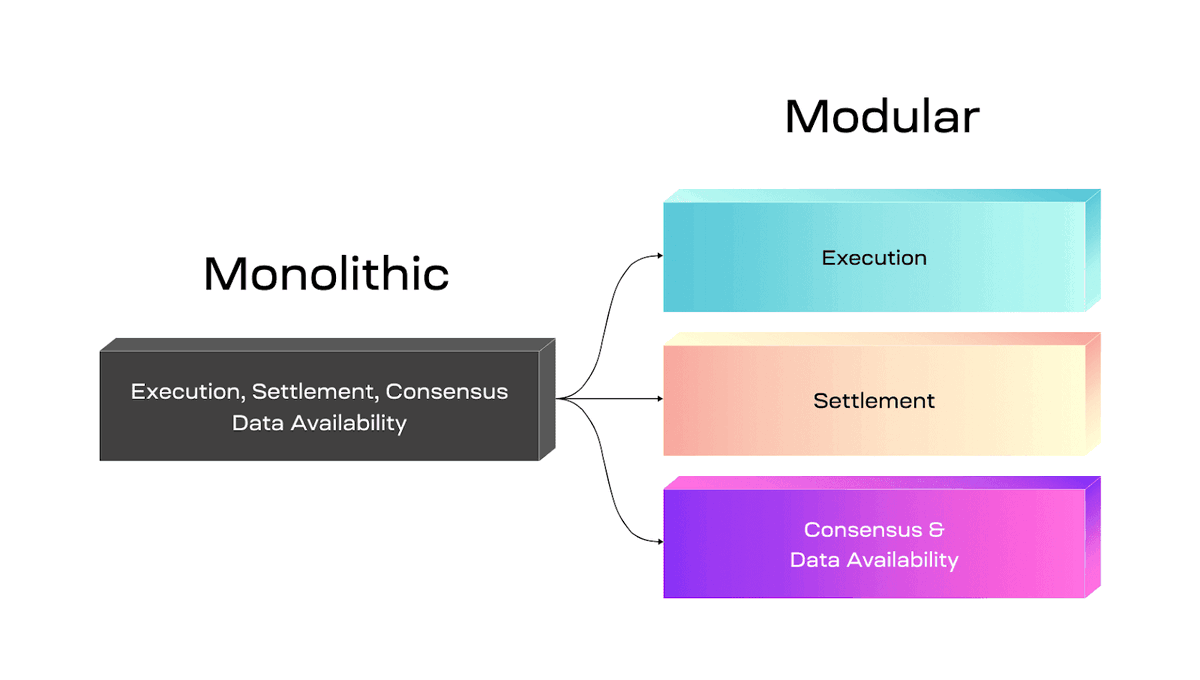
In contrast, modular blockchains aim to separate these functions across multiple different chains.
🧵 3
4
WHY DO THEY CARE?
1️⃣ Scalability:
→ Monolithic approach: increasing block sizes.
→ Modular approach: shifting transaction execution from the main L1 chain to L2 solutions, then using proofs to verify transactions on L1.
🧵 4
1️⃣ Scalability:
→ Monolithic approach: increasing block sizes.
→ Modular approach: shifting transaction execution from the main L1 chain to L2 solutions, then using proofs to verify transactions on L1.
🧵 4
5
2️⃣ Decentralization:
→ Monolithic approach: the same set of validators to perform both execution and verification of transactions (full nodes).
→ Modular approach: the execution layer solely focused on block production, while a separate layer handles verification.
🧵 5
→ Monolithic approach: the same set of validators to perform both execution and verification of transactions (full nodes).
→ Modular approach: the execution layer solely focused on block production, while a separate layer handles verification.
🧵 5
6
This implies that block production can function within a relatively small group, as long as their work is verified by a large and decentralized group of verifiers.
This concept forms the core thesis of @VitalikButerin, as described in his article "Endgame".
🧵 6
This concept forms the core thesis of @VitalikButerin, as described in his article "Endgame".
🧵 6
7
3️⃣ Security
→ Monolithic approach: An attacker would need to gain control of 51%+ of hashing power of staked tokens to reorganize a blockchain.
→ Modular approach: Validity security is independent of consensus or the coin value. It relies on users running full nodes.
🧵 7
→ Monolithic approach: An attacker would need to gain control of 51%+ of hashing power of staked tokens to reorganize a blockchain.
→ Modular approach: Validity security is independent of consensus or the coin value. It relies on users running full nodes.
🧵 7
8
TL;DR:
The modular approach offers a solution that addresses all three key factors of the Blockchain Trilemma. This approach has the potential to provide a highly customizable solution that is optimized for both developers and users.
🧵 8
The modular approach offers a solution that addresses all three key factors of the Blockchain Trilemma. This approach has the potential to provide a highly customizable solution that is optimized for both developers and users.
🧵 8
9
L2 ROLLUPS: SCALING ETHEREUM
• Much cheaper than using Ethereum L1 for conducting activities.
• Perform transactions outside of L1 and then submit the data to the L1, where consensus and settlement take place.
• Benefit from the security of the Ethereum network.
🧵 9
• Much cheaper than using Ethereum L1 for conducting activities.
• Perform transactions outside of L1 and then submit the data to the L1, where consensus and settlement take place.
• Benefit from the security of the Ethereum network.
🧵 9
10
The design of rollups suggests that there is a cost associated with posting transaction data to the L1 (publishing fees).
In fact, rollups have become a significant source of revenue for Ethereum. This is why other L1s (e.g. Solana) now develop their own L2 solutions.
🧵 10
In fact, rollups have become a significant source of revenue for Ethereum. This is why other L1s (e.g. Solana) now develop their own L2 solutions.
🧵 10
11
ETHEREUM STAKING
Among all PoS chains, Ethereum stands out with the highest security budget. With 24 million ETH staked, the chain is backed by over $45 billion in value.
🧵 11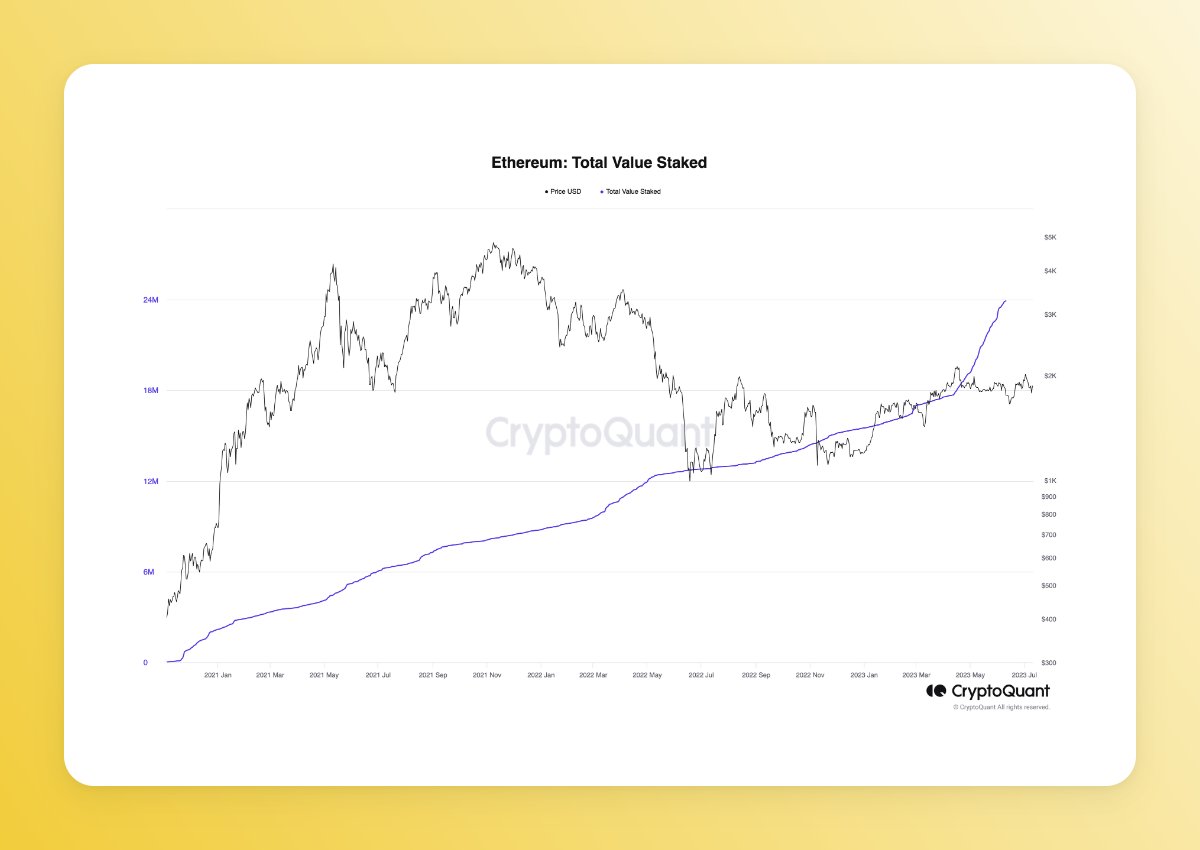
Among all PoS chains, Ethereum stands out with the highest security budget. With 24 million ETH staked, the chain is backed by over $45 billion in value.
🧵 11
12
In order to gain control of the Ethereum chain, an attacker would need to control at least 51% of its value. This is no small task, given the immense numbers involved.
Now you understand why LSDs are highly prioritized by the DeFi community.
🧵 12
Now you understand why LSDs are highly prioritized by the DeFi community.
🧵 12
13
RESTAKING: EIGENLAYER
Restaking addresses the issue of fragmented blockchain security.
When creating a decentralized network, builders typically need to establish crypto-economic security, like staking $ETH tokens in the Ethereum network.
🧵 13
Restaking addresses the issue of fragmented blockchain security.
When creating a decentralized network, builders typically need to establish crypto-economic security, like staking $ETH tokens in the Ethereum network.
🧵 13
14
However, this process can be inefficient and costly for other services.
Creating a new PoS network requires significant capital investment. Projects issuing a new token for security purposes face challenges in convincing participants to stake this token instead of $ETH.
🧵 14
Creating a new PoS network requires significant capital investment. Projects issuing a new token for security purposes face challenges in convincing participants to stake this token instead of $ETH.
🧵 14
15
Moreover, generating sufficient security can be time-consuming and result in inferior security compared to Ethereum itself.
Restaking pools Ethereum's security, allowing other applications to leverage it with no need to issue their own tokens.
🧵 15
Restaking pools Ethereum's security, allowing other applications to leverage it with no need to issue their own tokens.
🧵 15
16
.@eigencloud calls itself a “restaking collection for Ethereum” and aims to create a marketplace for decentralized trust.
It iallows Ethereum stakers to repurpose their staked $ETH to secure other applications built on the network.
🧵 16
It iallows Ethereum stakers to repurpose their staked $ETH to secure other applications built on the network.
🧵 16
17
COSMOS
Over the past year, @cosmos and its application-specific blockchain ("appchain") thesis have been steadily gaining traction.
In a nutshell, the Cosmos ecosystem revolves around the Cosmos Hub, an appchain that is secured by the $ATOM token.
🧵 17
Over the past year, @cosmos and its application-specific blockchain ("appchain") thesis have been steadily gaining traction.
In a nutshell, the Cosmos ecosystem revolves around the Cosmos Hub, an appchain that is secured by the $ATOM token.
🧵 17
18
The Cosmos Hub is connected to several other appchains, known as "Zones." These Zones utilize the Inter-Blockchain Communication (IBC) protocol to facilitate seamless communication and data transfer between them.
🧵 18
🧵 18
19
A "Hub" refers to a Zone that enables communication with multiple other Zones.
The Cosmos Hub holds the distinction of being the first and largest of its kind, but other contenders like Osmosis, Axelar, and Evmos are also starting to emerge.
🧵 19
The Cosmos Hub holds the distinction of being the first and largest of its kind, but other contenders like Osmosis, Axelar, and Evmos are also starting to emerge.
🧵 19
20
One of the main challenges faced by Cosmos appchains is the responsibility of bootstrapping a validator set that is both sufficiently staked and decentralized.
To address this challenge, each Zone has issued its own tokens, with varying degrees of success.
🧵 20
To address this challenge, each Zone has issued its own tokens, with varying degrees of success.
🧵 20
21
REPLICATED SECURITY
This is where Replicated Security comes into play. It allows the Cosmos Hub (“provider chain”) to lend its security to other blockchains (“consumer chains”) in return for fees.
🧵 21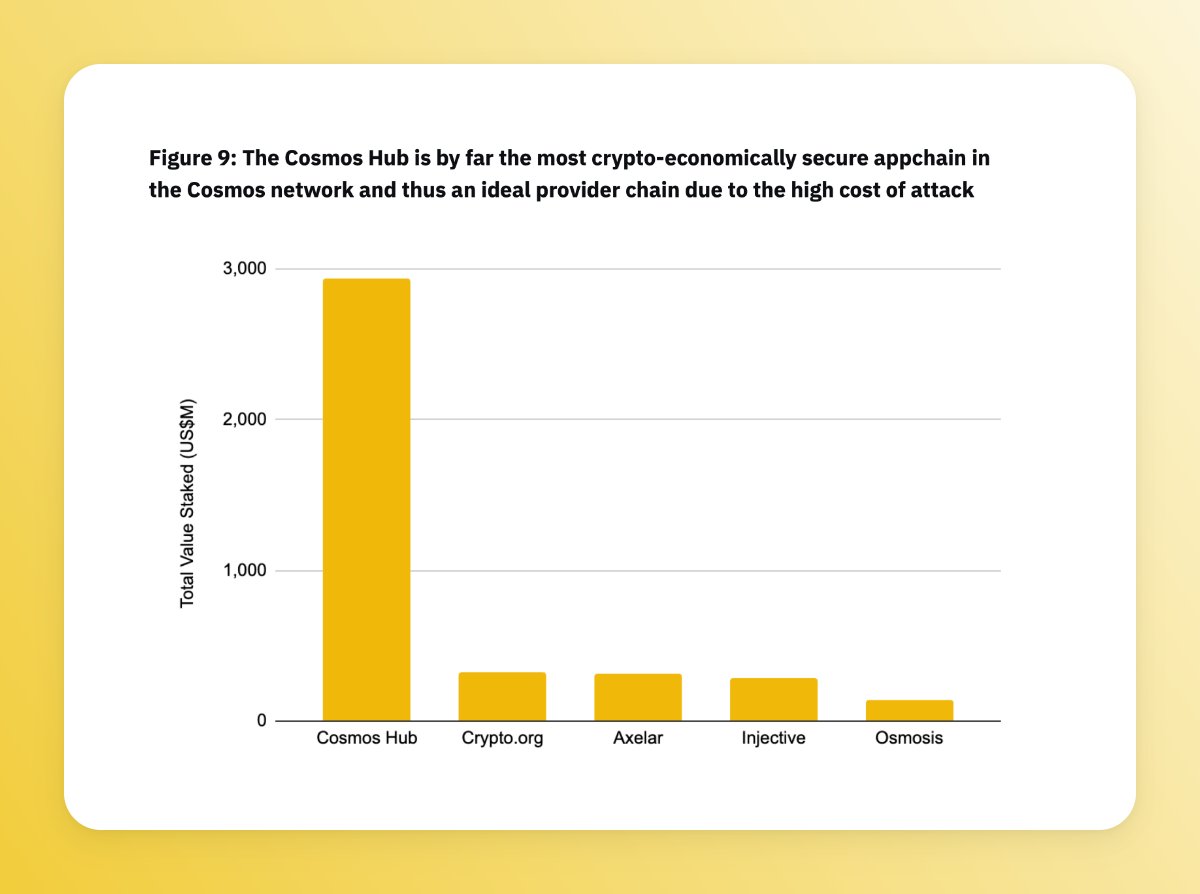
This is where Replicated Security comes into play. It allows the Cosmos Hub (“provider chain”) to lend its security to other blockchains (“consumer chains”) in return for fees.
🧵 21
22
NEUTRON – FIRST CONSUMER CHAIN ON COSMOS
@Neutron_org is a general-purpose, permissionless smart contract platform built on top of Cosmos. Neutron is the first project to utilize Replicated Security and be launched on the Cosmos Hub as a consumer chain.
🧵 22
@Neutron_org is a general-purpose, permissionless smart contract platform built on top of Cosmos. Neutron is the first project to utilize Replicated Security and be launched on the Cosmos Hub as a consumer chain.
🧵 22
23
As part of the agreement to provide security to Neutron, the Cosmos Hub will receive 25% of its transaction fees and 25% of its MEV revenue.
The MEV revenue will be denominated in their native $NTRN token, while transaction fees will be a mix of $ATOM and $NTRN tokens.
🧵 23
The MEV revenue will be denominated in their native $NTRN token, while transaction fees will be a mix of $ATOM and $NTRN tokens.
🧵 23
24
OSMOSIS AND MESH SECURITY
@osmosis, an appchain in the Cosmos ecosystem that is based on AMMs, is also working on another shared security solution similar to Replicated Security.
Note that Osmosis has the most direct connections to other Zones in the ecosystem.
🧵 24
@osmosis, an appchain in the Cosmos ecosystem that is based on AMMs, is also working on another shared security solution similar to Replicated Security.
Note that Osmosis has the most direct connections to other Zones in the ecosystem.
🧵 24
25
Mesh Security enables token delegators (not validators) to restake their staked tokens on a partner chain within the ecosystem.
This allows for bidirectional or multilateral security flow, as different appchains can combine their mcaps to enhance overall security.
🧵 25
This allows for bidirectional or multilateral security flow, as different appchains can combine their mcaps to enhance overall security.
🧵 25
26
BABYLON AND BITCOIN SECURITY
@babylon_chain, a project within the Cosmos ecosystem, aims to enhance the security of Cosmos appchains and other PoS chains by leveraging the security of Bitcoin.
The primary focus of Babylon is to use Bitcoin's timestamping feature.
🧵 26
@babylon_chain, a project within the Cosmos ecosystem, aims to enhance the security of Cosmos appchains and other PoS chains by leveraging the security of Bitcoin.
The primary focus of Babylon is to use Bitcoin's timestamping feature.
🧵 26
27
Babylon employs a three-part architecture:
1. Bitcoin serves as the timestamping service.
2. The Babylon Chain, functioning as a Cosmos Zone, acts as the middle layer and aggregator.
3. Other Cosmos Zones serve as the consumers of security.
🧵 27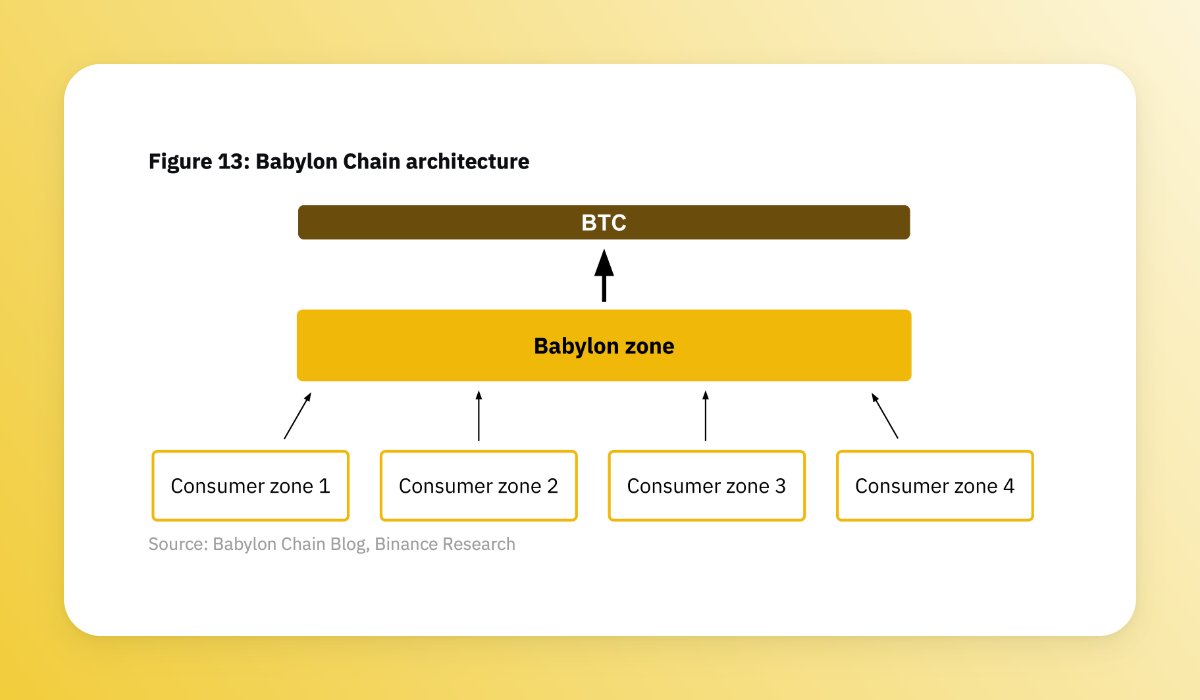
1. Bitcoin serves as the timestamping service.
2. The Babylon Chain, functioning as a Cosmos Zone, acts as the middle layer and aggregator.
3. Other Cosmos Zones serve as the consumers of security.
🧵 27
28
Checkpoints from participating Zones are sent to the Babylon Chain through IBC. The aggregated checkpoint is then transmitted to Bitcoin.
This enables:
• Faster unbonding periods
• Bootstrapping new Zones
• Increased censorship resistance
• Benefits of slow finality
🧵 28
This enables:
• Faster unbonding periods
• Bootstrapping new Zones
• Increased censorship resistance
• Benefits of slow finality
🧵 28
29
STACKS – LAYER FOR BITCOIN SMART CONTRACTS
@Stacks aims to operate as a secondary layer for Bitcoin smart contracts. It utilizes the $STX token for transaction fees and block miners incentives.
It relies on a unique consensus mechanism called Proof of Transfer ("PoX").
🧵 29
@Stacks aims to operate as a secondary layer for Bitcoin smart contracts. It utilizes the $STX token for transaction fees and block miners incentives.
It relies on a unique consensus mechanism called Proof of Transfer ("PoX").
🧵 29
30
Since the launch of their mainnet in 2021, Stacks has seen the emergence of numerous projects built on top of it. These include Bitcoin Name System (BNS), Alex, Hiro Wallet, and more.
🧵 30
🧵 30
31
In this thread, I have summarized the extensive research conducted by @Sh_ivam for @BinanceResearch.
If you're interested in delving into the state of modular blockchains, I highly recommend checking out the full research ↓
research.binance.com/en/analysis/mo…
🧵 31
If you're interested in delving into the state of modular blockchains, I highly recommend checking out the full research ↓
research.binance.com/en/analysis/mo…
🧵 31
32
In this thread, I also used charts and data from:
@cryptoquant_com
@MessariCrypto
@MapOfZones
🧵 32
@cryptoquant_com
@MessariCrypto
@MapOfZones
🧵 32
33
If you loved this thread, consider giving me a follow and keep an eye on updates from my nerdy frens:
@Flowslikeosmo
@Defi_Warhol
@poopmandefi
@Hercules_Defi
@DefiIgnas
@arndxt_xo
@0xSalazar
@0xsurferboy
@DeFiMinty
@defi_mochi
@francescoweb3
@WinterSoldierxz
@0xjeff
🧵 33
@Flowslikeosmo
@Defi_Warhol
@poopmandefi
@Hercules_Defi
@DefiIgnas
@arndxt_xo
@0xSalazar
@0xsurferboy
@DeFiMinty
@defi_mochi
@francescoweb3
@WinterSoldierxz
@0xjeff
🧵 33