The expected value is one of the most important concepts in...

Tivadar Danka@TivadarDanka
12 views
Feb 12, 2025
~3 min read
Advertisement
1
The expected value is one of the most important concepts in probability and statistics.
For instance, all the popular loss functions in machine learning, like cross-entropy, are expected values. However, its definition is far from intuitive.
Here is what's behind the scenes.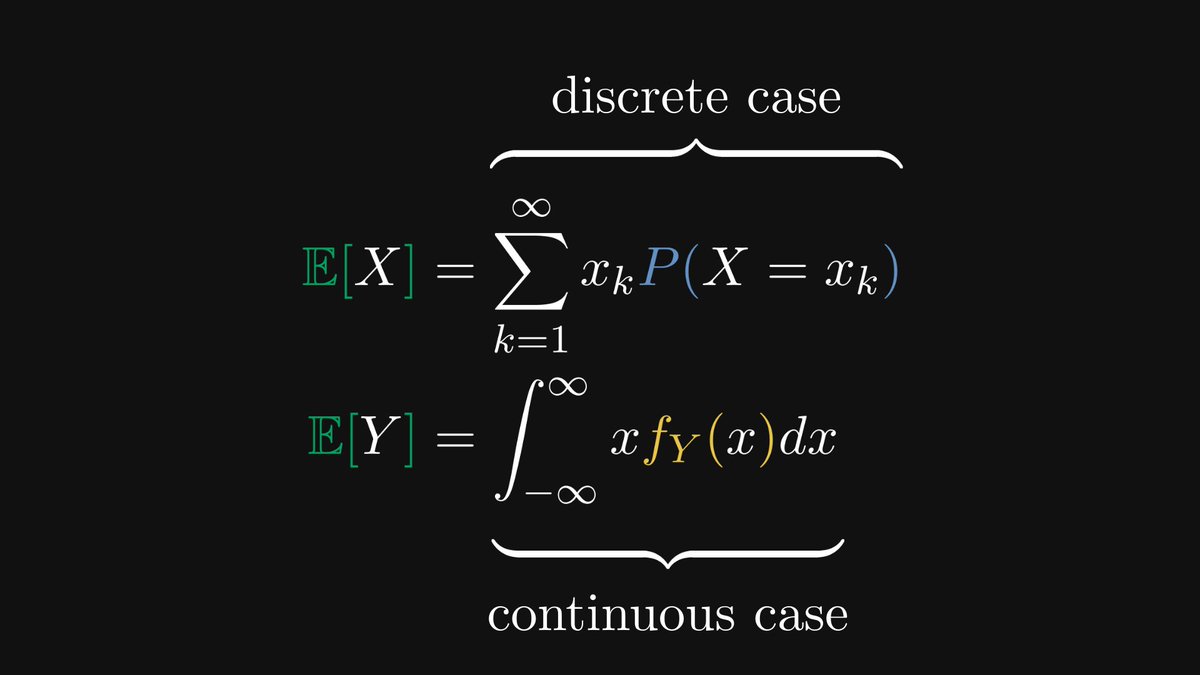
For instance, all the popular loss functions in machine learning, like cross-entropy, are expected values. However, its definition is far from intuitive.
Here is what's behind the scenes.
2
It's better to start with an example. So, let's play a simple game!
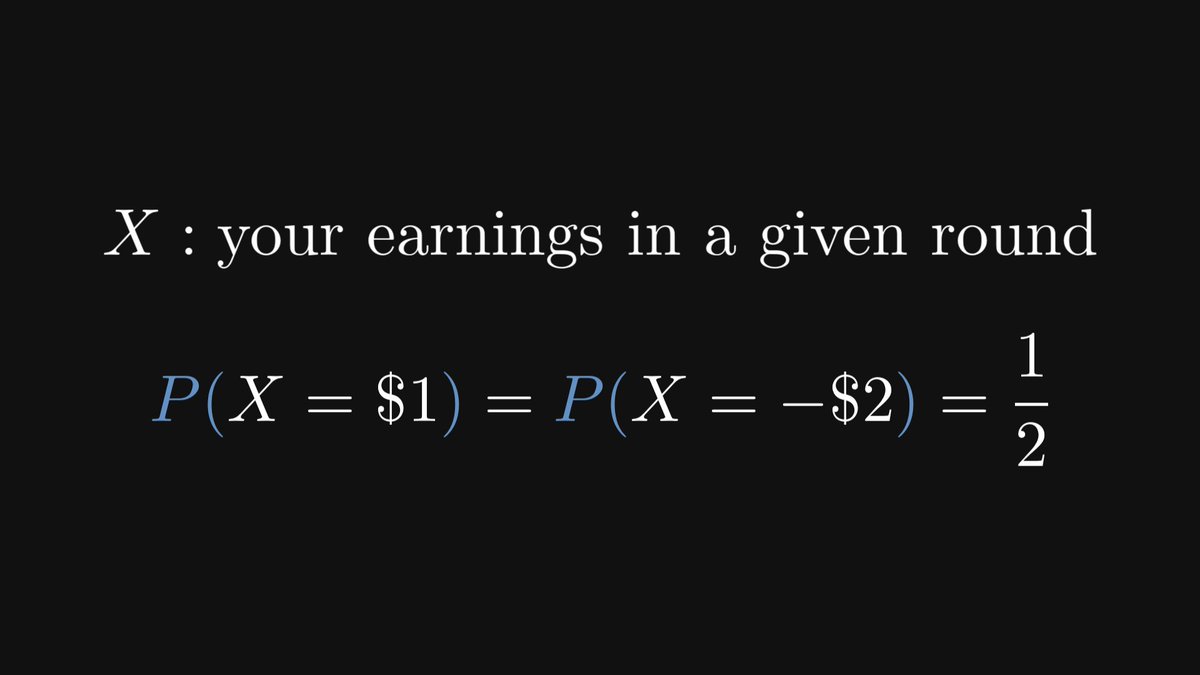
The rules: I’ll toss a coin, and if it comes up heads, you win $1. However, if it is tails, you lose $2.
Should you even play this game with me? We’ll find out.
The rules: I’ll toss a coin, and if it comes up heads, you win $1. However, if it is tails, you lose $2.
Should you even play this game with me? We’ll find out.
3
After n rounds, your earnings can be calculated by the number of heads times $1 minus the number of tails times $2.
If we divide total earnings by n, we obtain your average earnings per round.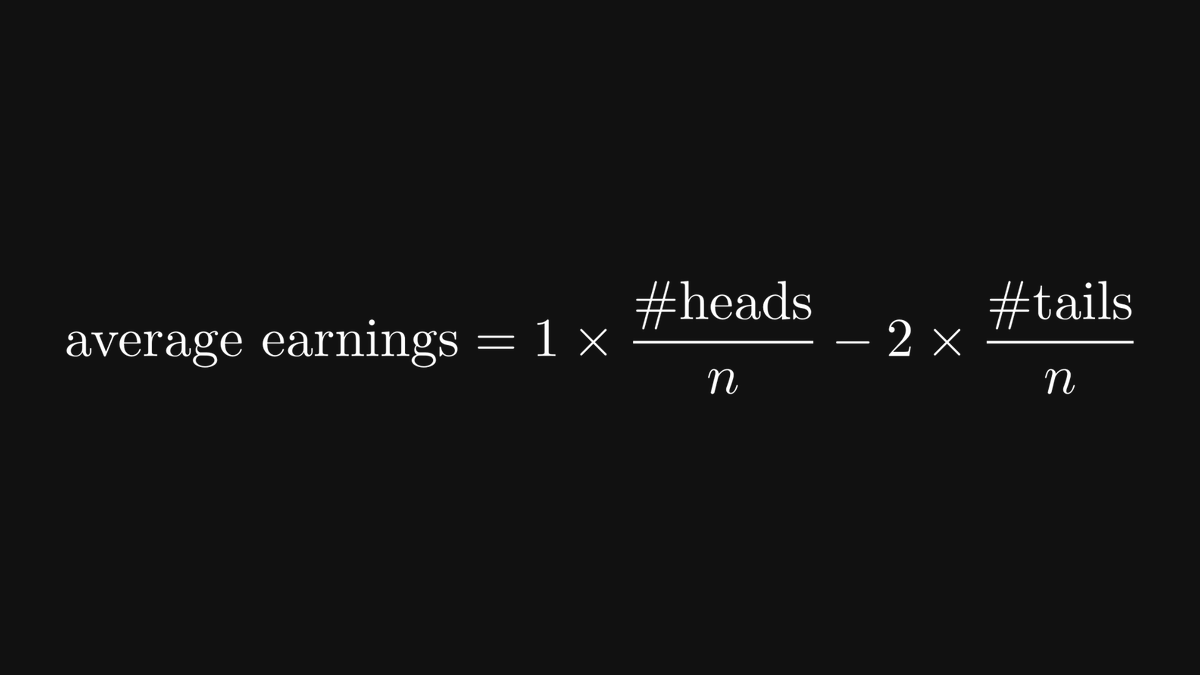
If we divide total earnings by n, we obtain your average earnings per round.
4
What happens when n approaches infinity?
As you have probably guessed, the number of heads divided by the number of tosses will converge to the probability of a single toss being heads.
Similarly, tails per tosses also converge to 1/2.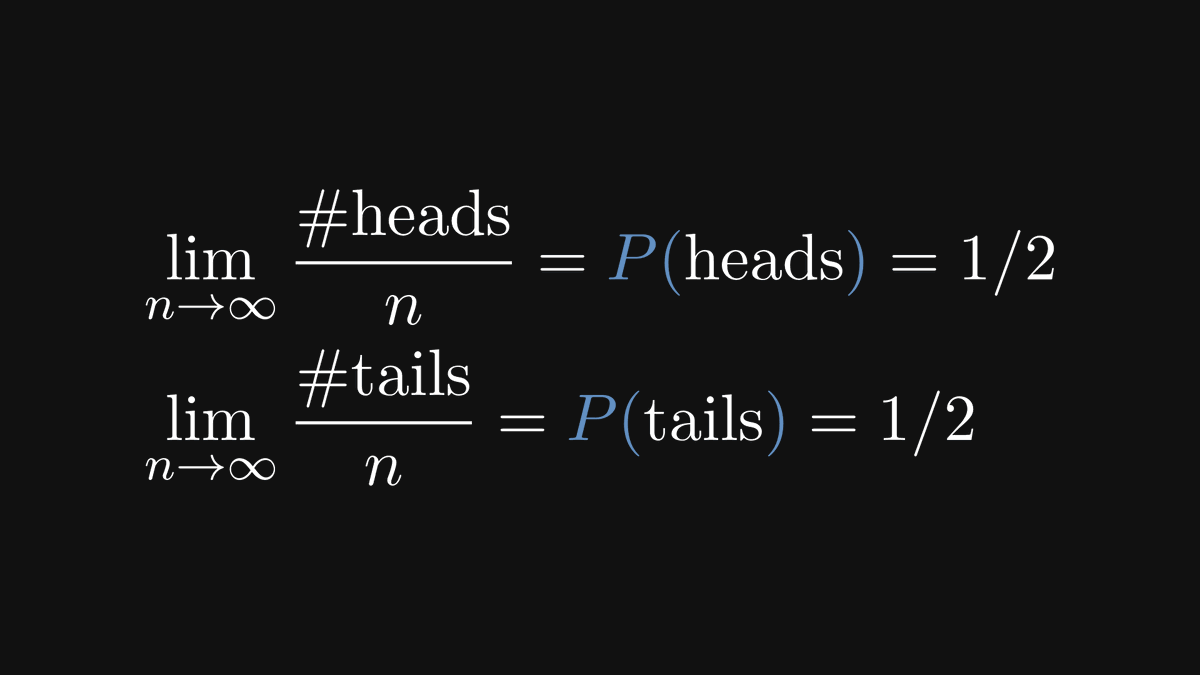
As you have probably guessed, the number of heads divided by the number of tosses will converge to the probability of a single toss being heads.
Similarly, tails per tosses also converge to 1/2.
5
With this in mind, we can explicitly calculate your average earnings per round.
Which is -1/2, so, you definitely shouldn't play this game with me.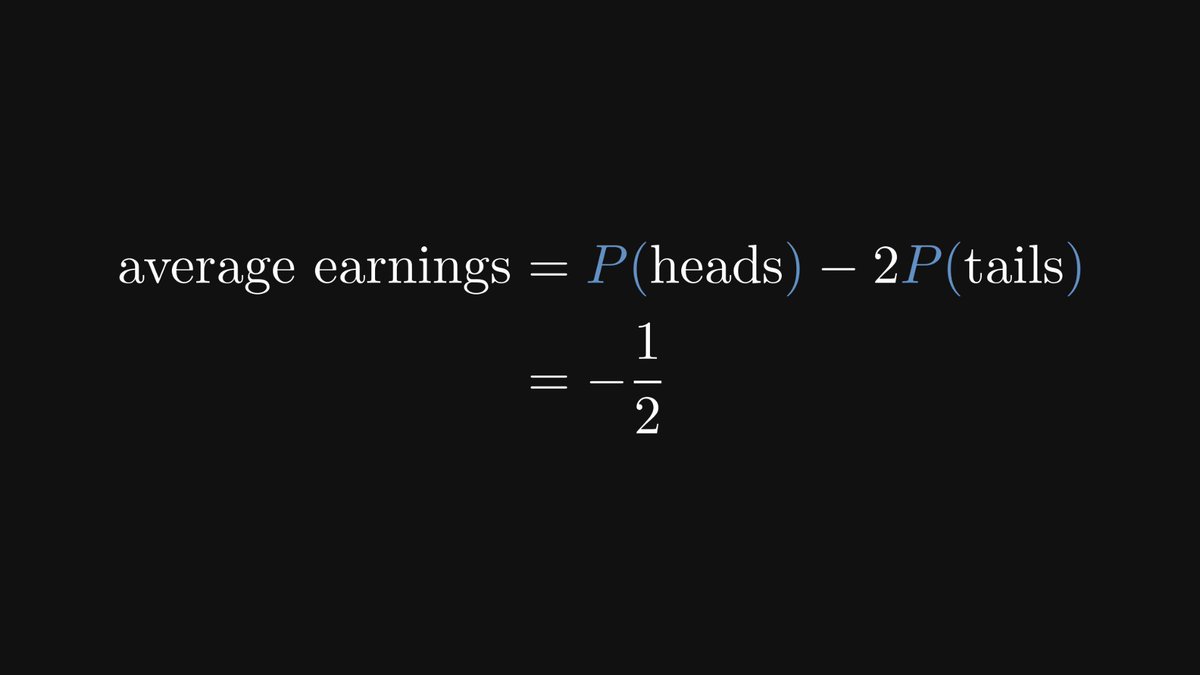
Which is -1/2, so, you definitely shouldn't play this game with me.
6
This is the expected value! To see this, let’s formalize our little game with a random variable X, denoting your earnings.
7
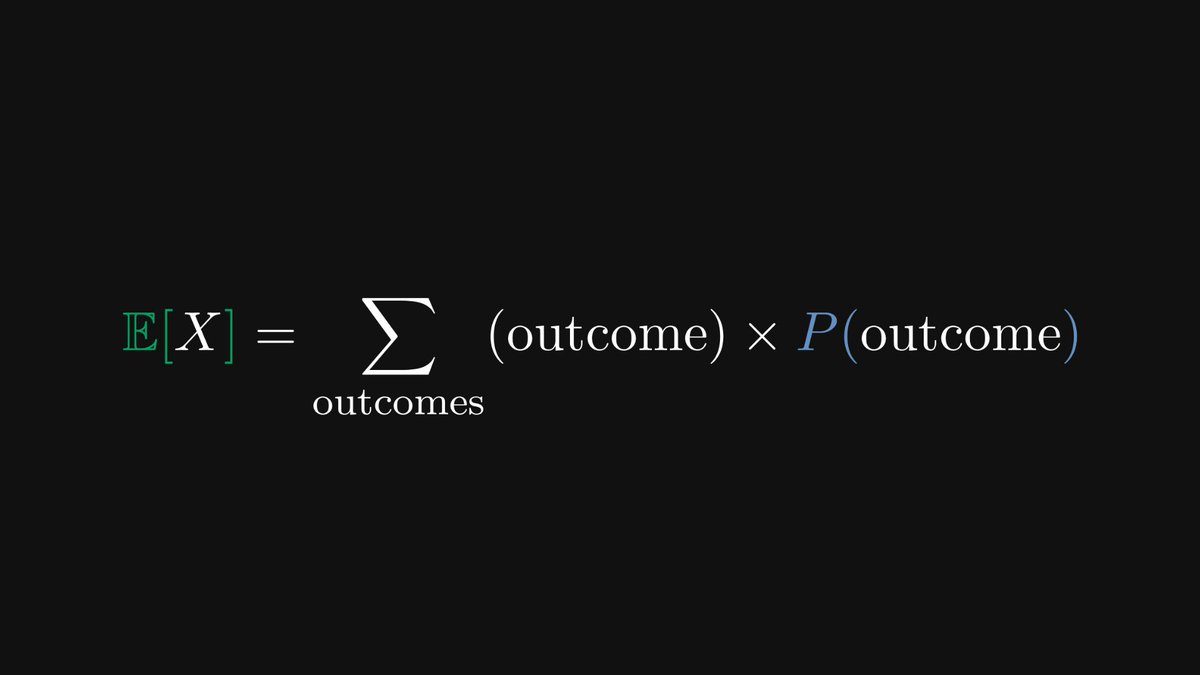
By plugging this into the formula of expected value, we obtain just what we calculated before: the average earnings per round!

8
In plain English, the expected value is just the average outcome per experiment when you let it run infinitely!
9
To sum up, let’s look at the general formula.
In essence, the expected value is the average of all possible outcomes, weighted by their respected probabilities.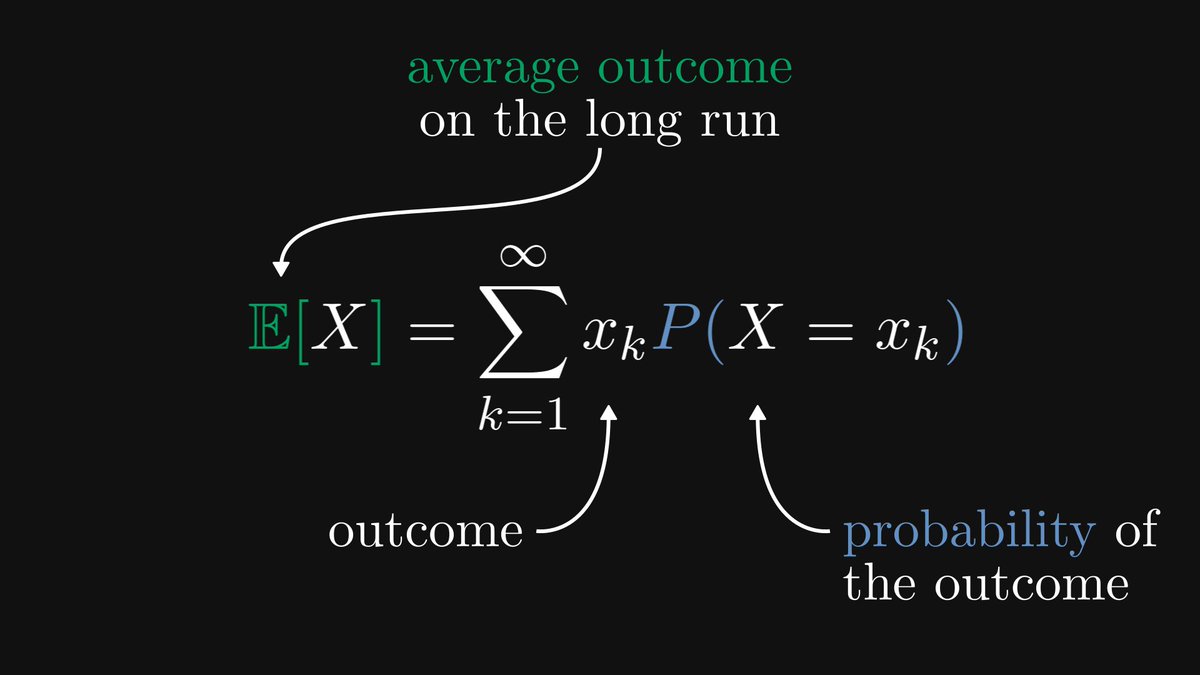
In essence, the expected value is the average of all possible outcomes, weighted by their respected probabilities.
10
Poker is a real-life example where this is really useful.
I used to play no limit Texas hold'em all the time, and the expected value is behind one of the most important concepts: positive and negative pot odds.
I used to play no limit Texas hold'em all the time, and the expected value is behind one of the most important concepts: positive and negative pot odds.
11
According to the rules, each player holds two cards on their own, while five more shared cards are dealt. The shared cards are available for everyone, and the player with the strongest hand wins.
This is how the table looks before the last card (the river) is revealed.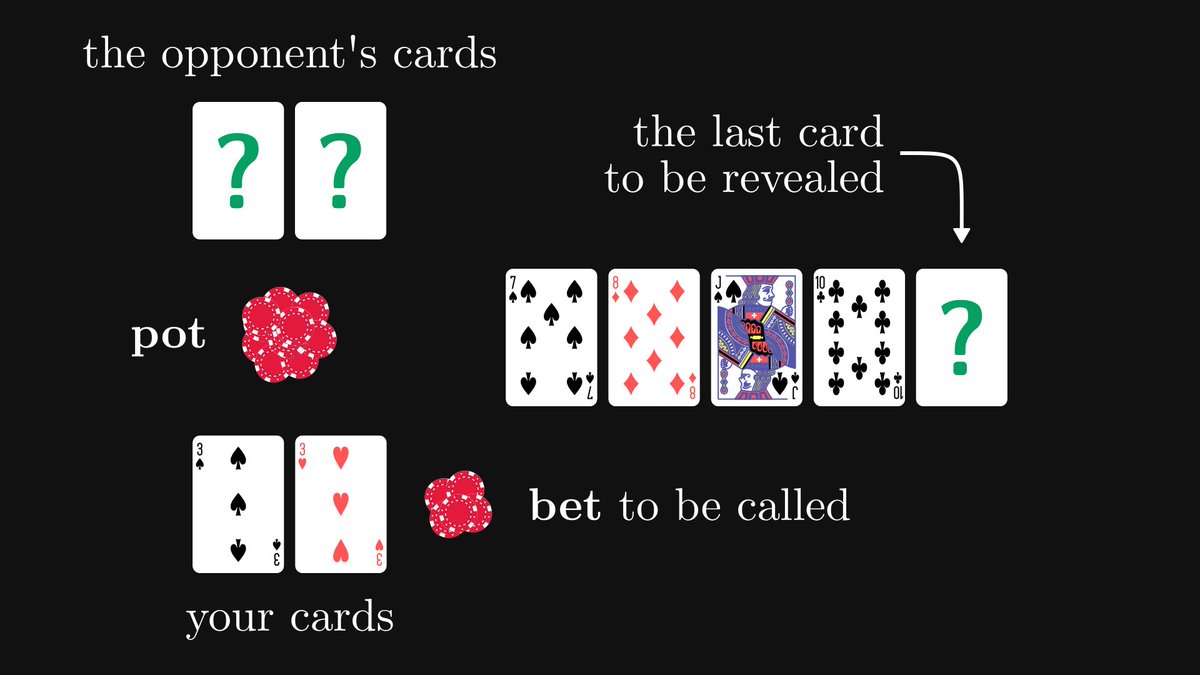
This is how the table looks before the last card (the river) is revealed.
12
There is money in the pot to be won, but to see the river, you have to call the opponent’s bet.
The question is, should you? Expected value to the rescue.
Let’s build a probabilistic model. We would win the pot with certain river cards, but lose with all the others.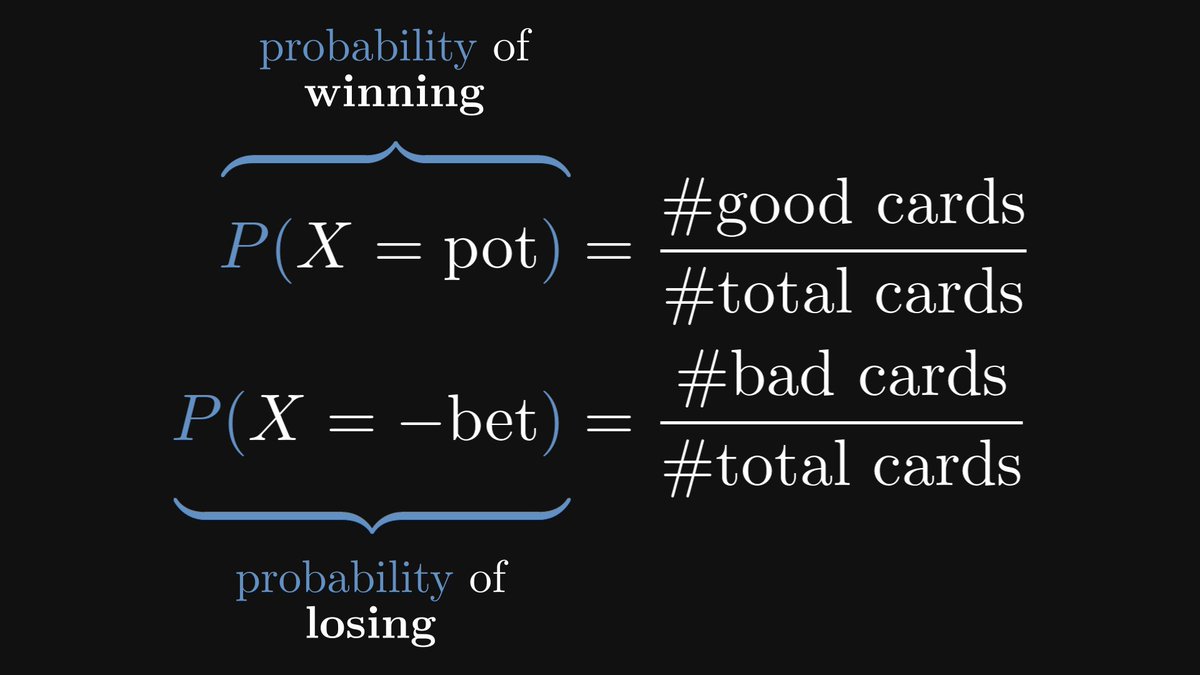
The question is, should you? Expected value to the rescue.
Let’s build a probabilistic model. We would win the pot with certain river cards, but lose with all the others.
13
The rule is simple: if the expected winnings are positive, we call the bet. Otherwise, we fold.
We can quantify this using the expected value.
We can quantify this using the expected value.
14
With some algebra, we obtain that our expected winnings are positive if the ratio of good and bad cards is better than the ratio of the bet and the pot.
This is called "positive pot odds", and it is an essential tool in a poker player's arsenal.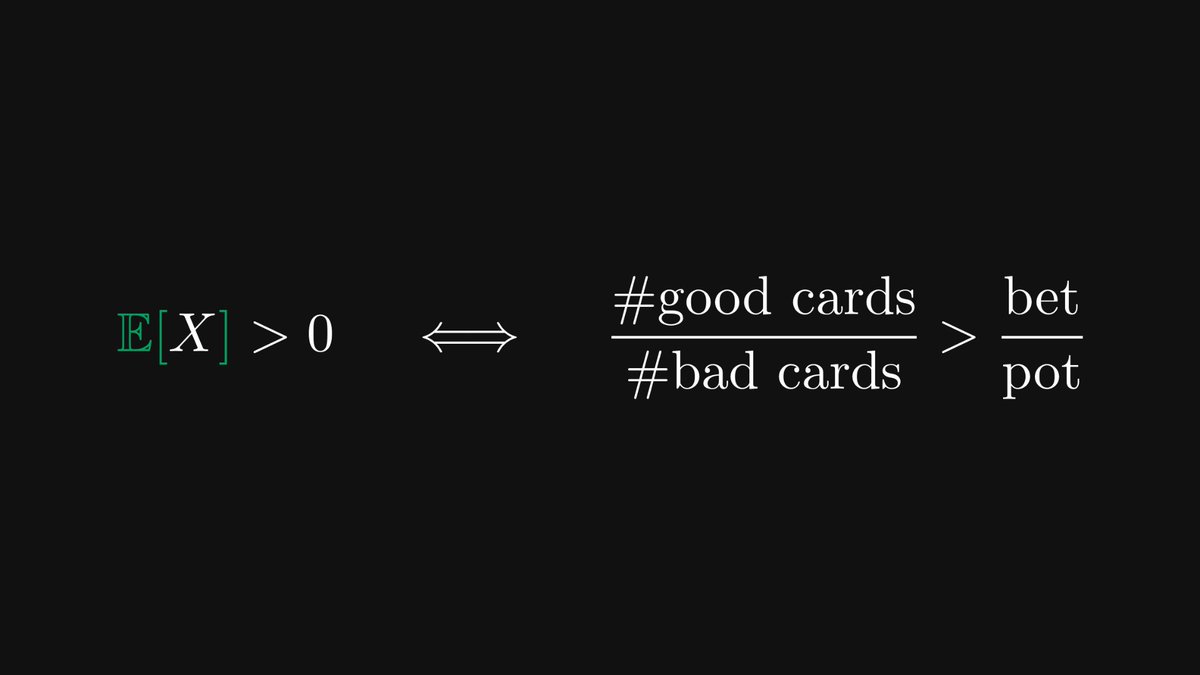
This is called "positive pot odds", and it is an essential tool in a poker player's arsenal.
15
(By the way, I was a mediocre poker player, but at least I understood the math.
However, it is far from enough to be successful. But that's a story for another day :) )
However, it is far from enough to be successful. But that's a story for another day :) )
16
There is much more to the expected value. For instance, what about experiments where the set of possible outcomes is not countable?
If you are interested, check out the full post on my Substack, where I'll explain it all:
thepalindrome.substack.com/p/whats-the-me…
If you are interested, check out the full post on my Substack, where I'll explain it all:
thepalindrome.substack.com/p/whats-the-me…
17
If you have enjoyed this thread, follow me and subscribe to my newsletter!
Understanding mathematics is a superpower, and I regularly post deep-dive explanations about seemingly complex concepts from math, engineering, and science.
thepalindrome.substack.com
Understanding mathematics is a superpower, and I regularly post deep-dive explanations about seemingly complex concepts from math, engineering, and science.
thepalindrome.substack.com