Halloween in Islam A Detailed Thread 🧵

H🇺🇸@Born2Takfir
80 views
Nov 01, 2026
~5 min read
Advertisement
1
Halloween in Islam
A Detailed Thread 🧵

A Detailed Thread 🧵

2
In the Name of Allah, the Most Merciful, the Compassionate

3
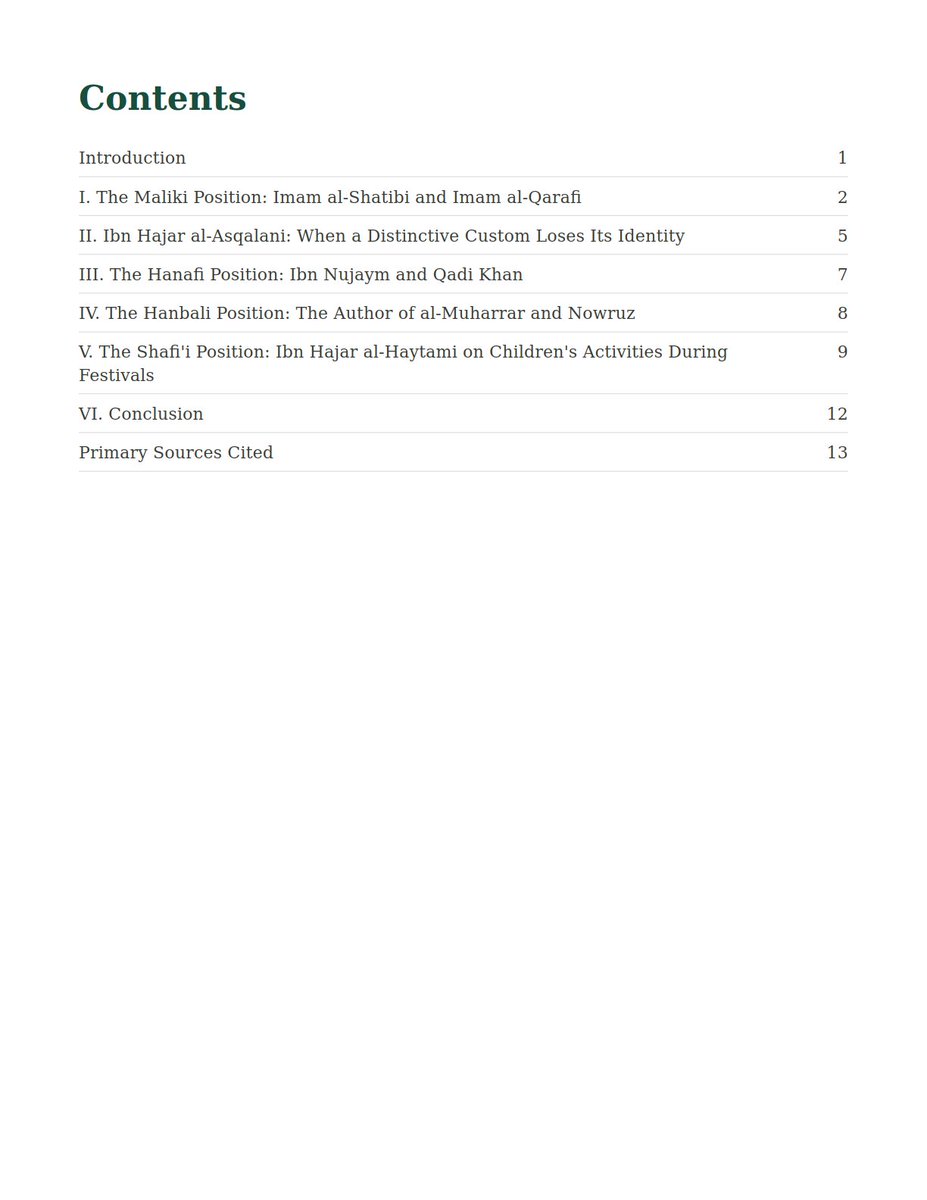
Contents:
4
Reason for writing this:
I have written because i have seen people takfiring other Muslims for simply participating in Halloween activities, wearing costumes etc.
Those who takfir others on this don't know how fiqh works and don't even know what manat is or even takhrij.
I have written because i have seen people takfiring other Muslims for simply participating in Halloween activities, wearing costumes etc.
Those who takfir others on this don't know how fiqh works and don't even know what manat is or even takhrij.
5
Imam Shatibi said:
"Ordinary customary matters, insofar as they remain ordinary customs, contain no innovation. But when they are treated as acts of devotion, or placed in the position of devotional practices, innovation enters into them."
"Ordinary customary matters, insofar as they remain ordinary customs, contain no innovation. But when they are treated as acts of devotion, or placed in the position of devotional practices, innovation enters into them."
6
"The conclusion is that most of the occurrences which the Prophet, peace and blessings upon him, foretold would take place, appear and spread are innovations resembling religious legislation.
7
However this is from the perspective of treating them as devotional practices, not from the perspective of their being ordinary customary matters. This is the
distinction between a sinful act that constitutes an innovation and a sinful act that does not constitute an innovation."
distinction between a sinful act that constitutes an innovation and a sinful act that does not constitute an innovation."
8
This is important because somethind does not become a religious innovation simply because its new, repeated annually or practised by people.
9
Al Qarafi said:
"Rulings established upon customary practices revolve around them wherever they revolve, and cease when those customs cease, just as with currencies in transactions and defects in goods in sales, and similar matters.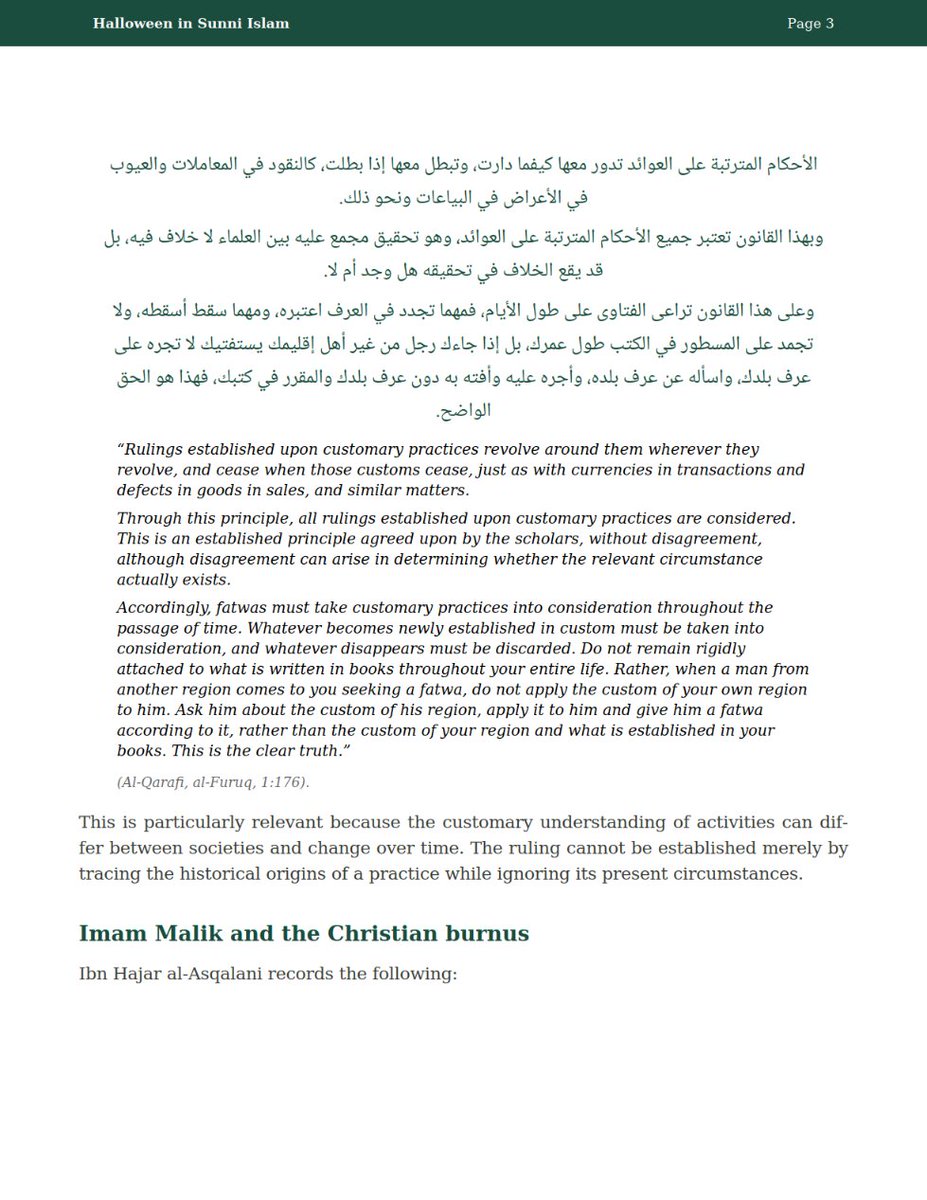
"Rulings established upon customary practices revolve around them wherever they revolve, and cease when those customs cease, just as with currencies in transactions and defects in goods in sales, and similar matters.
10
Through this principle, all rulings established upon customary practices are considered. This is an established principle agreed upon by the scholars, without disagreement, although disagreement can arise in determining whether the relevant circumstance actually exists.
11
Accordingly, fatwas must take customary practices into consideration throughout the passage of time. Whatever becomes newly established in custom must be taken into consideration, and whatever disappears must be discarded.
12
Do not remain rigidly attached to what is written in books throughout your entire life. Rather, when a man from another region comes to you seeking a fatwa, do not apply the custom of your own region to him.
13
Ask him about the custom of his region, apply it to him and give him a fatwa according to it, rather than the custom of your region and what is established in your books. This is the clear truth.”
14
This is very important and relevant because the customary understanding of activities can differ between societies and change over time. The ruling cannot be established merely by tracing the historial origins of a practice while ignoring its present circumstances.
15
Imam Malik was asked about Burnus (Cloak of Monks)
He said: "There is no harm in it."
Then someone said: But it is among the clothing of the Christians."
He replied: "It used to be worn here."
Ibn Abi Bakr said: "There was not a single Qari except that he possesed a burnus."
He said: "There is no harm in it."
Then someone said: But it is among the clothing of the Christians."
He replied: "It used to be worn here."
Ibn Abi Bakr said: "There was not a single Qari except that he possesed a burnus."
16
Ibn Hajar Asqalani on when a distinctive custom loses its identity:
"If we say that the prohibition was specific to the red mayathir (Cushion type seat), then the consideration behind their prohibition is what was mentioned concerning other such items previously."
"If we say that the prohibition was specific to the red mayathir (Cushion type seat), then the consideration behind their prohibition is what was mentioned concerning other such items previously."
17
"If we say that it was not specific to the red ones, then the consideration behind their prohibition was the luxury involved in them. A person might become accustomed to using them, and then find it difficult to do without them,
18
making their prohibition a form of guidance for a wordly benefit."
"If we say that their prohibition was due to resemblance to the Persians, then it was for a religious consideration. However, at that time they were their distinguishing sign while they were disbelievers.
"If we say that their prohibition was due to resemblance to the Persians, then it was for a religious consideration. However, at that time they were their distinguishing sign while they were disbelievers.
19
Then, when they ceased to be exclusive to their distinguishing custom, that consideration disappeared and the dislike disappeared. And Allah knows best."
He made a similar statement concerning the tayalis (Jewish Shawl):
“Using the example of the Jews as evidence is only —
He made a similar statement concerning the tayalis (Jewish Shawl):
“Using the example of the Jews as evidence is only —
20
appropriate during the time when the tayalis are among their distinguishing signs. That characteristic subsequently disappeared, and wearing them consequently became included in the general category of permissible things.”
The Point is clear:
The Point is clear:
21
Hanafi Position:
"Know that resemblance to the people of the book is not disliked in every matter; for we eat and drink just like they do. What is prohibited in matters that are blameworthy and in matters in which imitation is intended.
"Know that resemblance to the people of the book is not disliked in every matter; for we eat and drink just like they do. What is prohibited in matters that are blameworthy and in matters in which imitation is intended.
22
Qadi Khan mentioned this in his commentary of Jami Saghir. Accordingly, if the imitation is not intended, it is not disliked according to the two companions."
Takfiris are not going to like what Hanafi Imams said about imitation because this won't support their extremism
Takfiris are not going to like what Hanafi Imams said about imitation because this won't support their extremism
23
Hanbali Position:
Ibn Muflih said:
"It is disliked to fast on Nowruz because this involves agreeing with the disbelievers in venetrating their festival however the author of al-Muharrar said it is not disliked because they do not venetrate those days through fasting."
Ibn Muflih said:
"It is disliked to fast on Nowruz because this involves agreeing with the disbelievers in venetrating their festival however the author of al-Muharrar said it is not disliked because they do not venetrate those days through fasting."
24
This is a particularly useful distinction. The discussion examines the particular act and whether that act is itself a means of venerating the occasion.
25
Shaf'i Position:
Ibn Hajar Haythami was asked about a non-Muslim festival in which kids play wear yellow clothes and eat large bananas cooked with sugar and there was no idol worship either
He replied:
Ibn Hajar Haythami was asked about a non-Muslim festival in which kids play wear yellow clothes and eat large bananas cooked with sugar and there was no idol worship either
He replied:
26
"This is not kufr and its only kufr if one intends to imitate them in a symbol of kufr."
"But if he does not intend to imitate them at all, then there is nothing against him."
This passage is very important and deserves attention.
"But if he does not intend to imitate them at all, then there is nothing against him."
This passage is very important and deserves attention.
27
Al Shirbini said:
"It is not disliked to single out a festival of the religious communities for fasting, such as Nowruz and Mihragan."
Another example of a juristic discussion in which the coincidence of an action with another community's festival is not making it haram.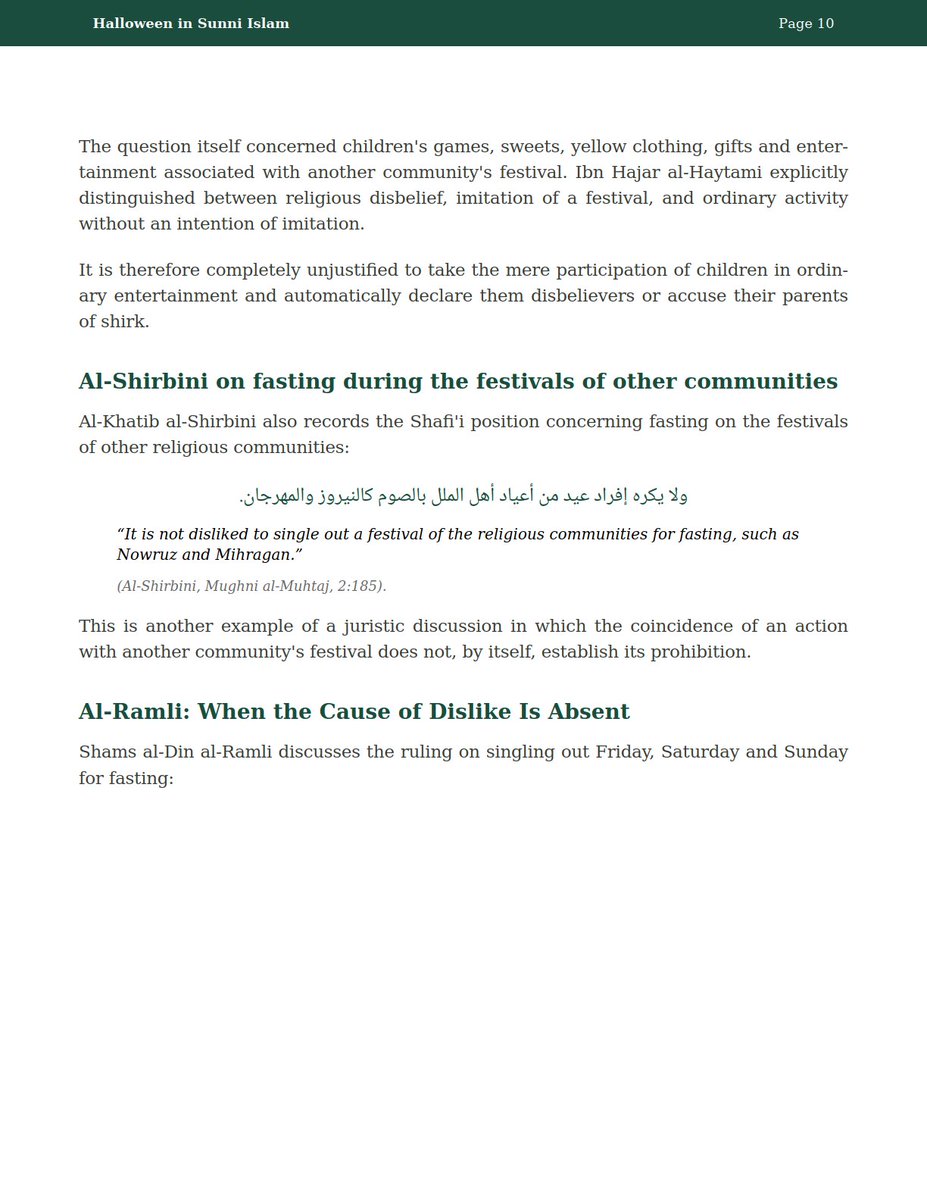
"It is not disliked to single out a festival of the religious communities for fasting, such as Nowruz and Mihragan."
Another example of a juristic discussion in which the coincidence of an action with another community's festival is not making it haram.
28
Al Ramli: When the cause of dislike is absent:
This is very important read it very carefully till the end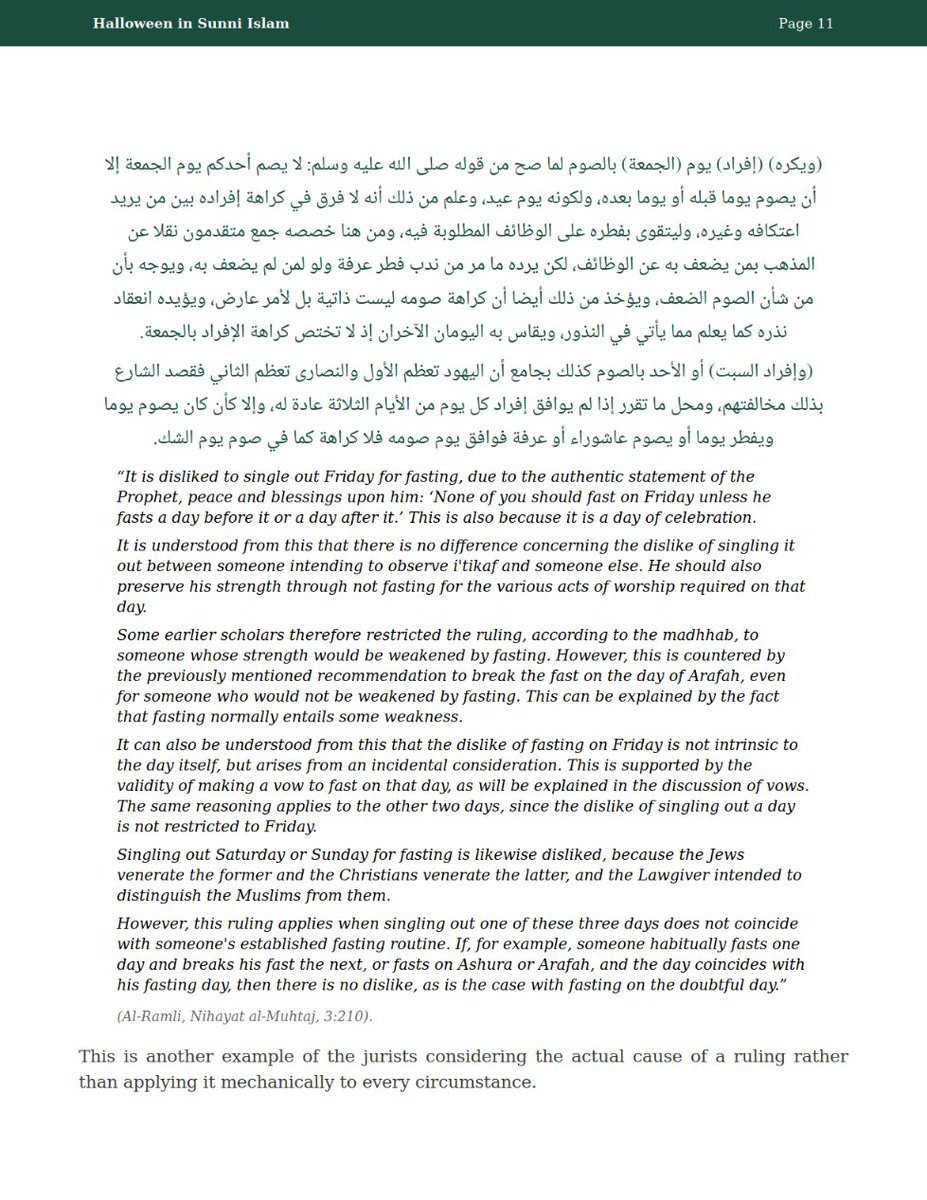
This is very important read it very carefully till the end
29
Conclusion:
What has been established through these discussions is that the issue cannot be reduced to historical origins or the mere presence of resemblance.
The scholars have distinguished between ordinary customs, devotional practices etc and following their method is —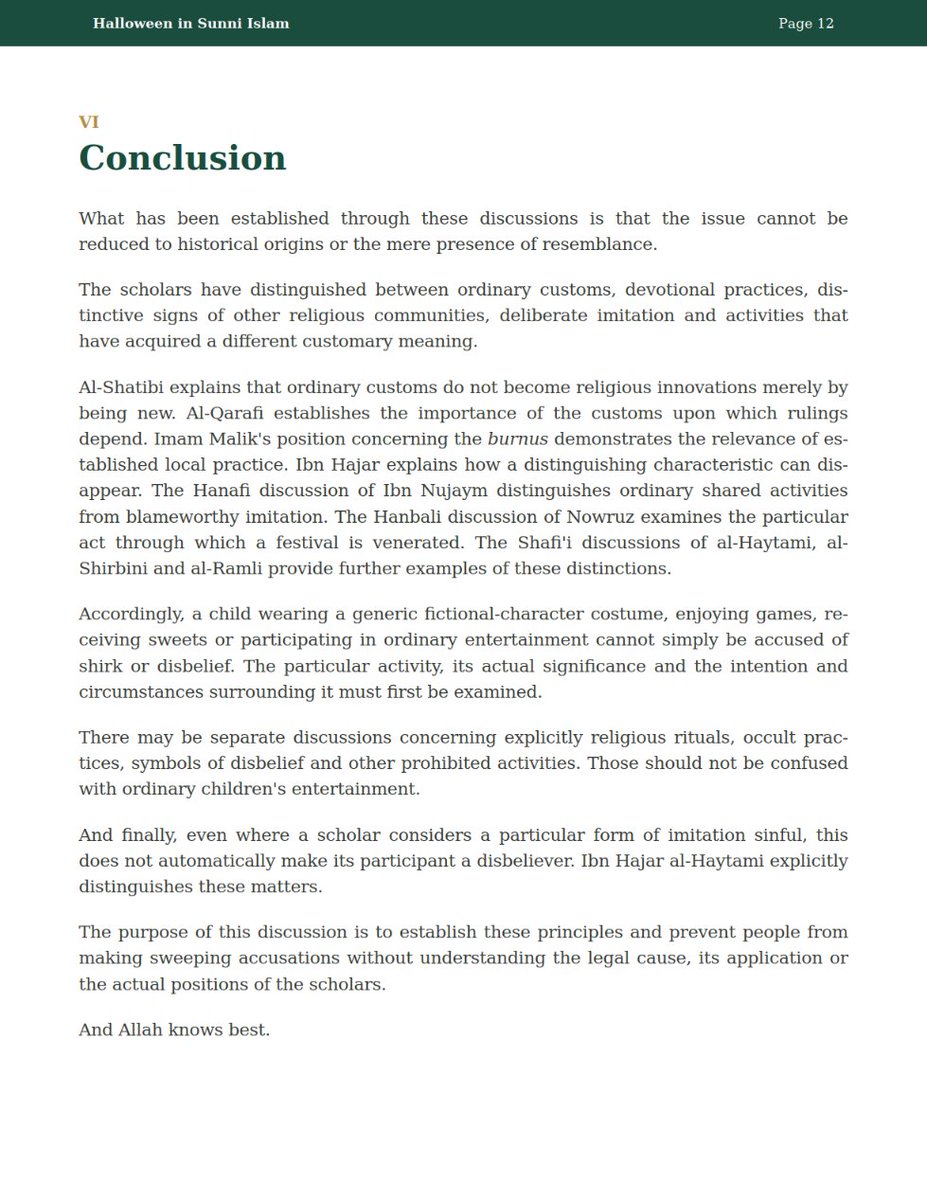
What has been established through these discussions is that the issue cannot be reduced to historical origins or the mere presence of resemblance.
The scholars have distinguished between ordinary customs, devotional practices etc and following their method is —
30
What we need to do instead of takfiring others for participating in that event.
The purpose of this discussion is to establish these principles and prevent people form making sweeping accusations without understanding the legal cause or the positions of the scholars.
The purpose of this discussion is to establish these principles and prevent people form making sweeping accusations without understanding the legal cause or the positions of the scholars.
31
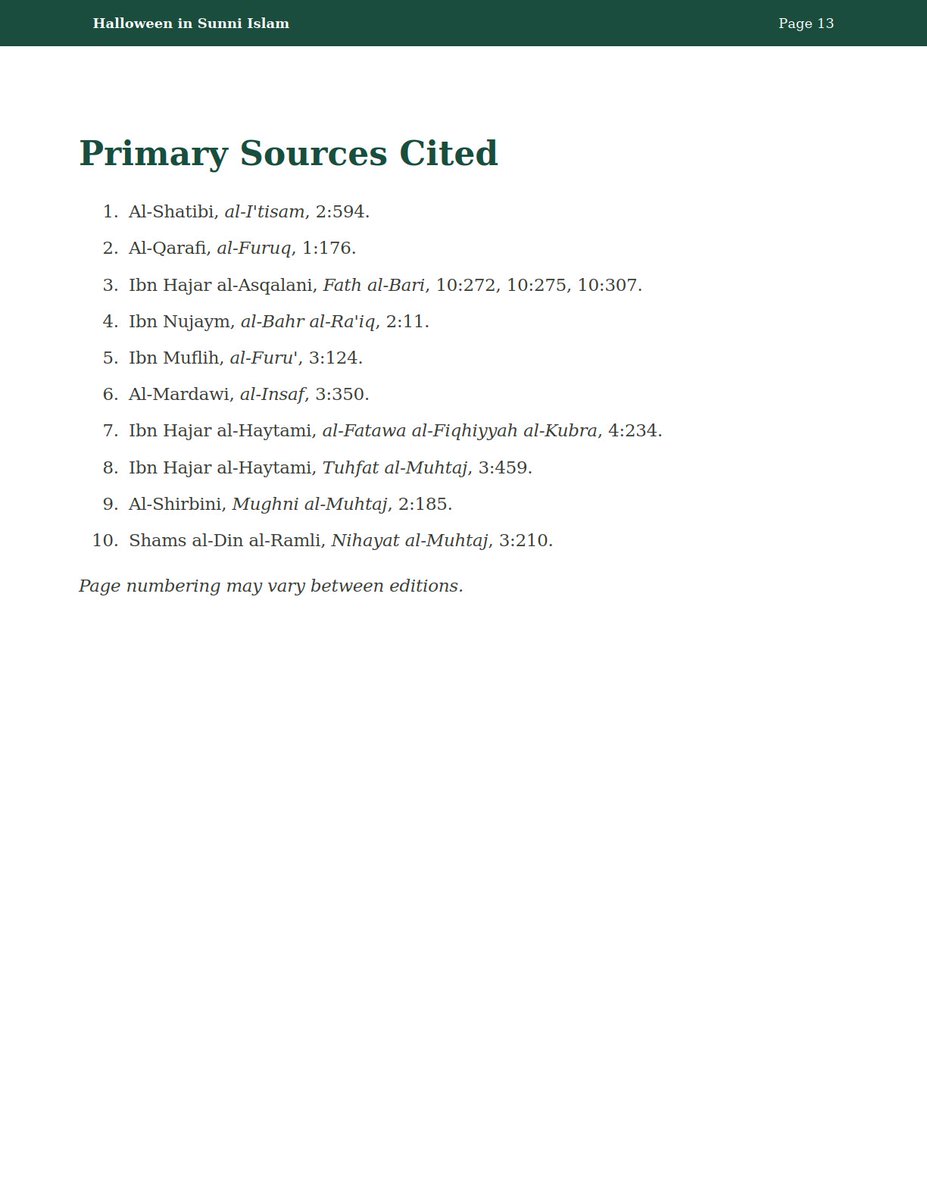
Primary Sources Cited:
32
End of Thread 🌹
