Liquidity Dispersal Theory got a huge response in early access, so...

Ritrade@ritrade_
25 views
Oct 12, 2026
~1 min read
Advertisement
1
Liquidity Dispersal Theory got a huge response in early access, so here are all 22 pages, free.
Why NQ, ES and YM reach the same level one after another, and how to trade the one still lagging.
The leader shows you where. The strength switch shows you when. 🧵


Why NQ, ES and YM reach the same level one after another, and how to trade the one still lagging.
The leader shows you where. The strength switch shows you when. 🧵
2
The model
One objective, finite capital. Smart money moves the lightest asset first, books profit at the level, then recycles that capital into the next.
That’s why the leader turns bearish on a bullish day. Not a reversal. Capital leaving for the laggard.

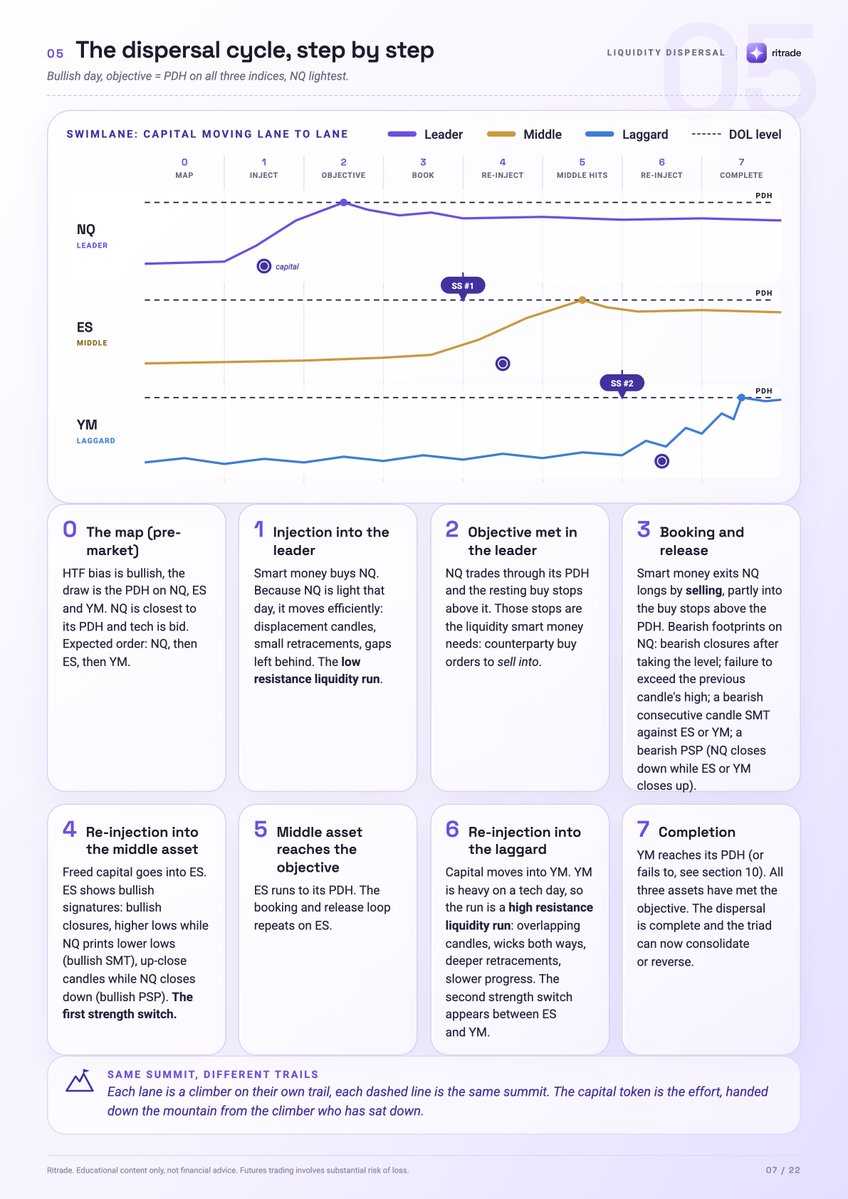

One objective, finite capital. Smart money moves the lightest asset first, books profit at the level, then recycles that capital into the next.
That’s why the leader turns bearish on a bullish day. Not a reversal. Capital leaving for the laggard.
3
The strength switch
At the objective, the leader closes against the day’s direction while the laggard closes with it. That’s the handover.
SMT or PSP alone is a hint. Both together is a signal. And it only counts at the level, never mid-range.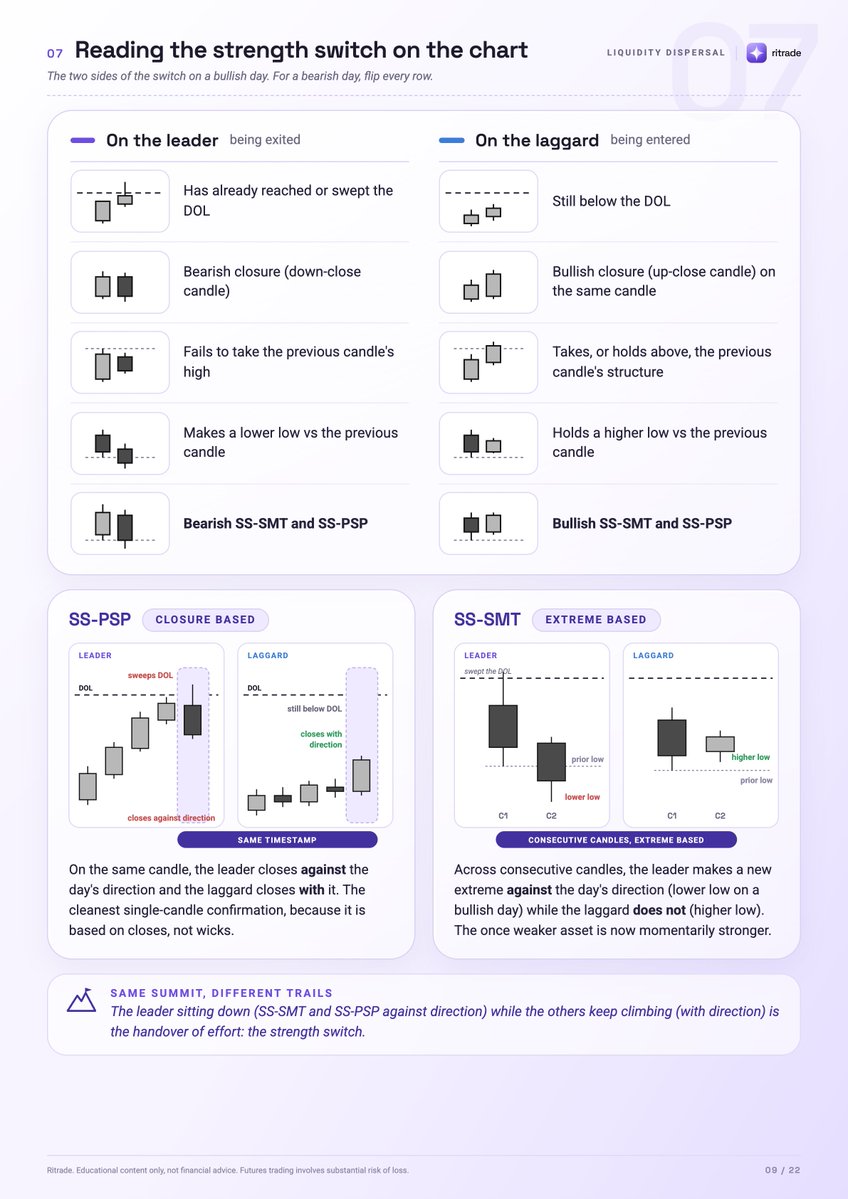


At the objective, the leader closes against the day’s direction while the laggard closes with it. That’s the handover.
SMT or PSP alone is a hint. Both together is a signal. And it only counts at the level, never mid-range.
4
Trading it
Find the order: proximity, HTF structure, session strength.
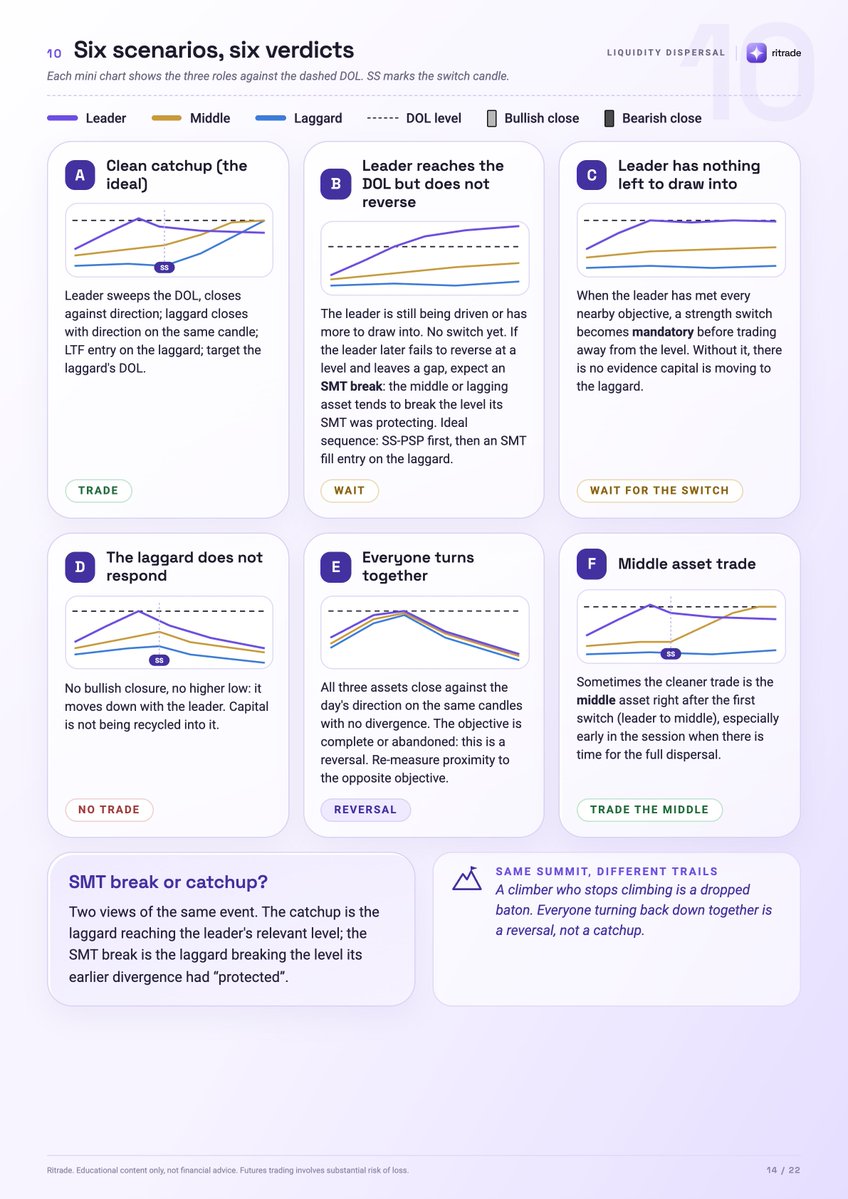
Six scenarios: trade, wait or stand aside.
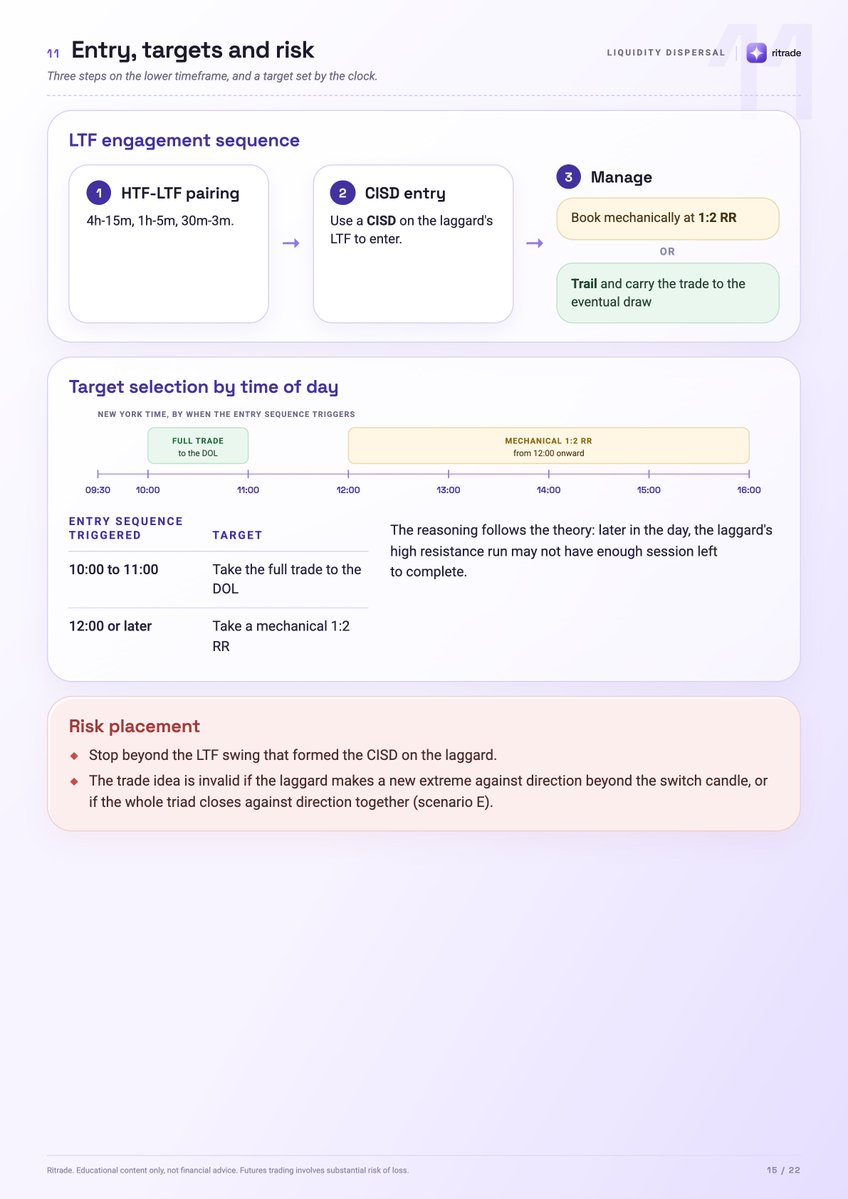
Entry: CISD on the laggard, target set by time of day.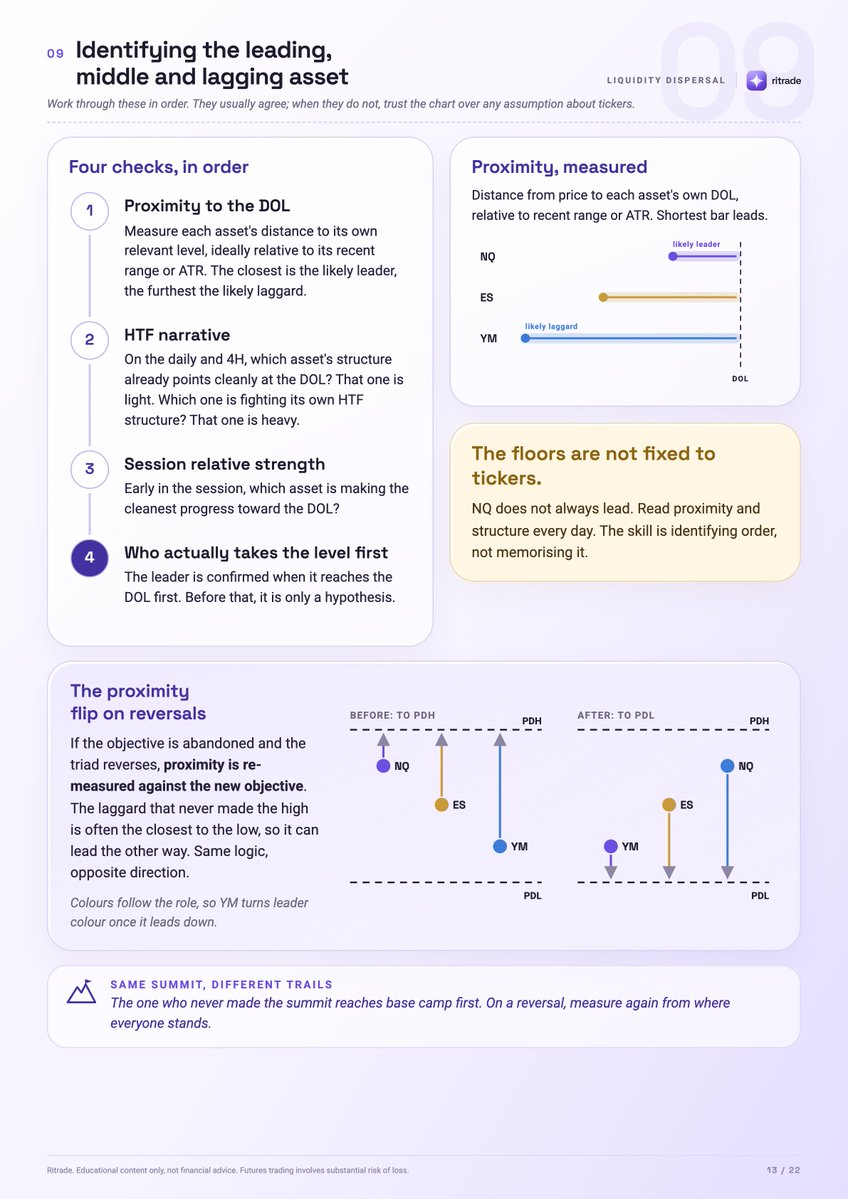
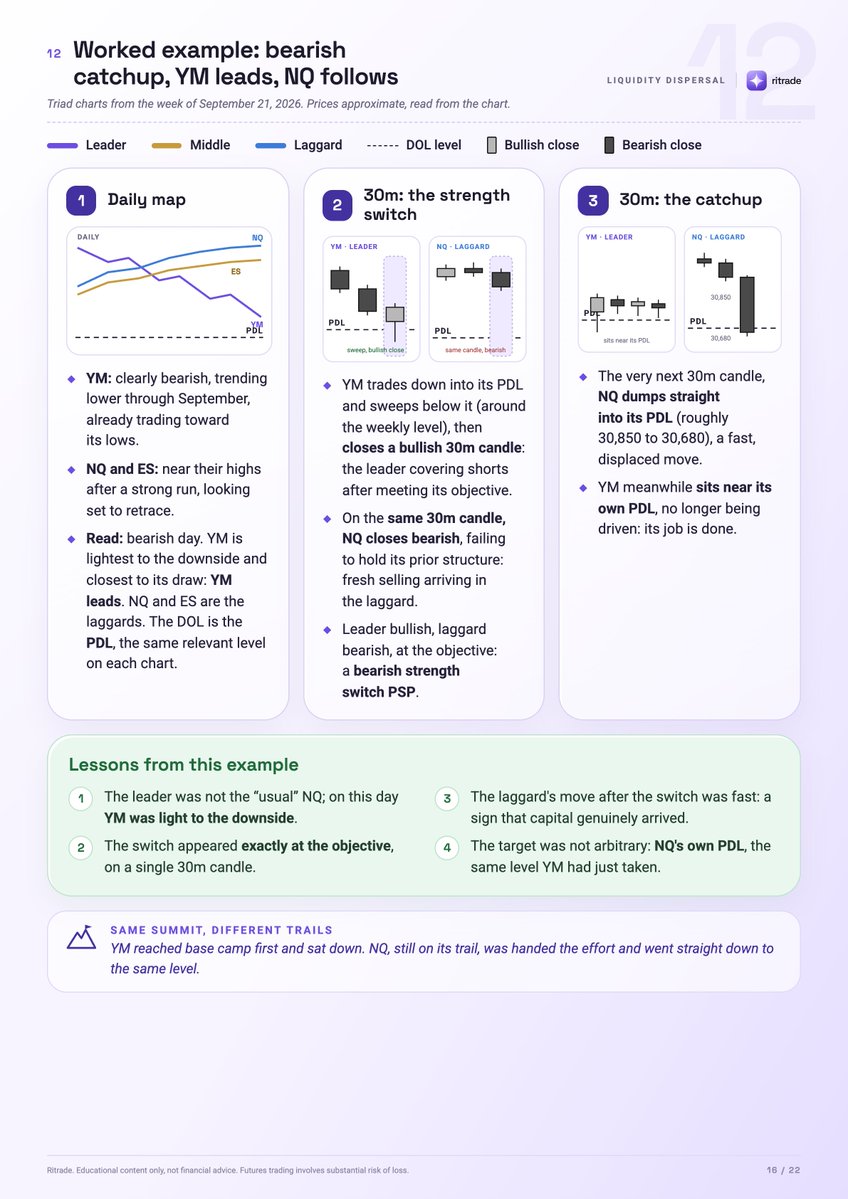
Find the order: proximity, HTF structure, session strength.
Six scenarios: trade, wait or stand aside.
Entry: CISD on the laggard, target set by time of day.
5
Beyond indices
The same logic works on gold vs silver and crude vs a correlated partner. Two assets, no middle: leader, then laggard.
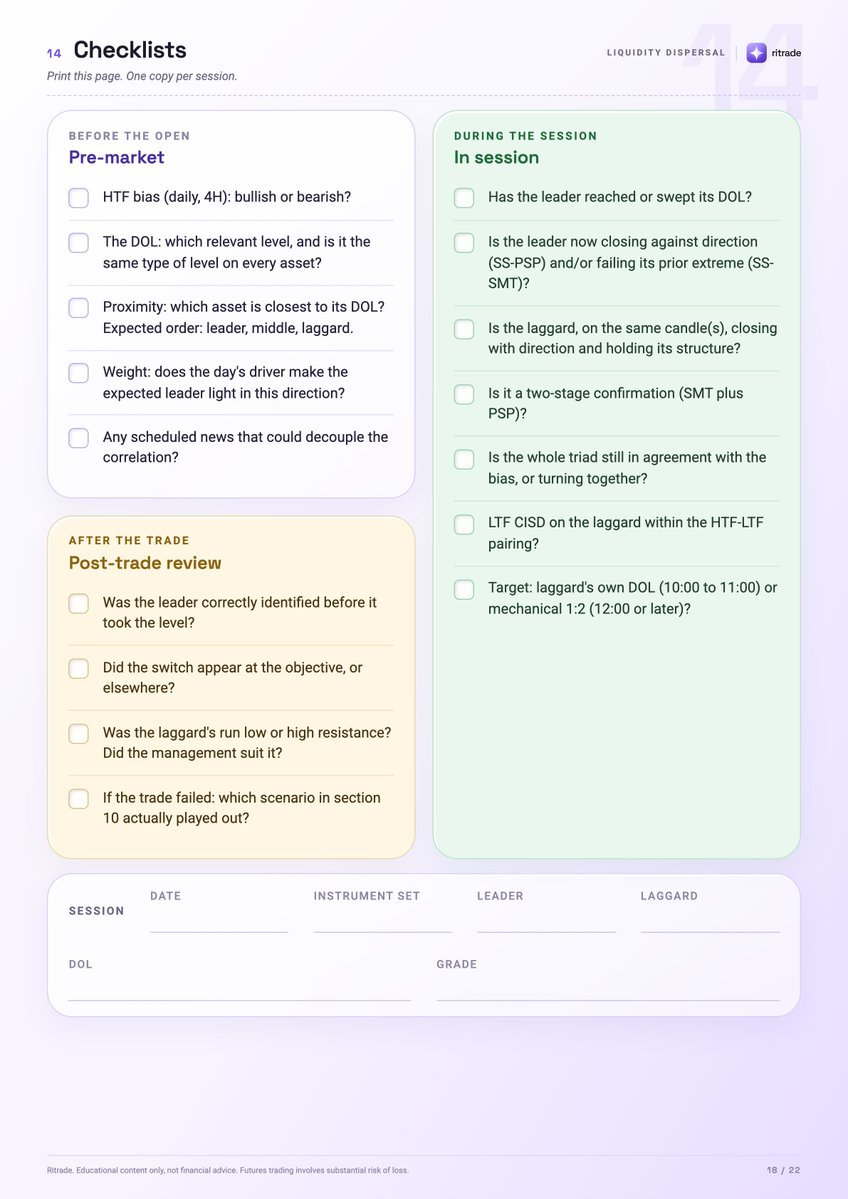
Plus a printable session checklist, the most common mistakes, and an FAQ.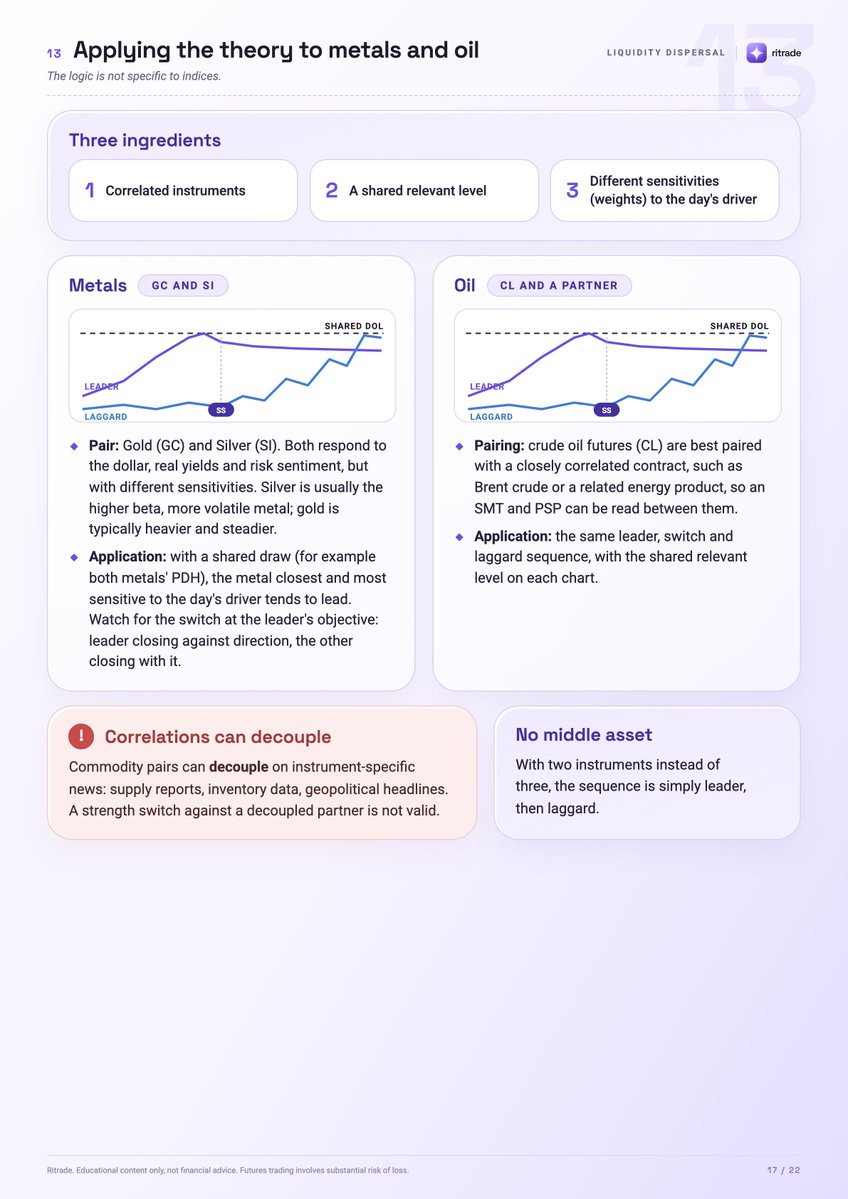

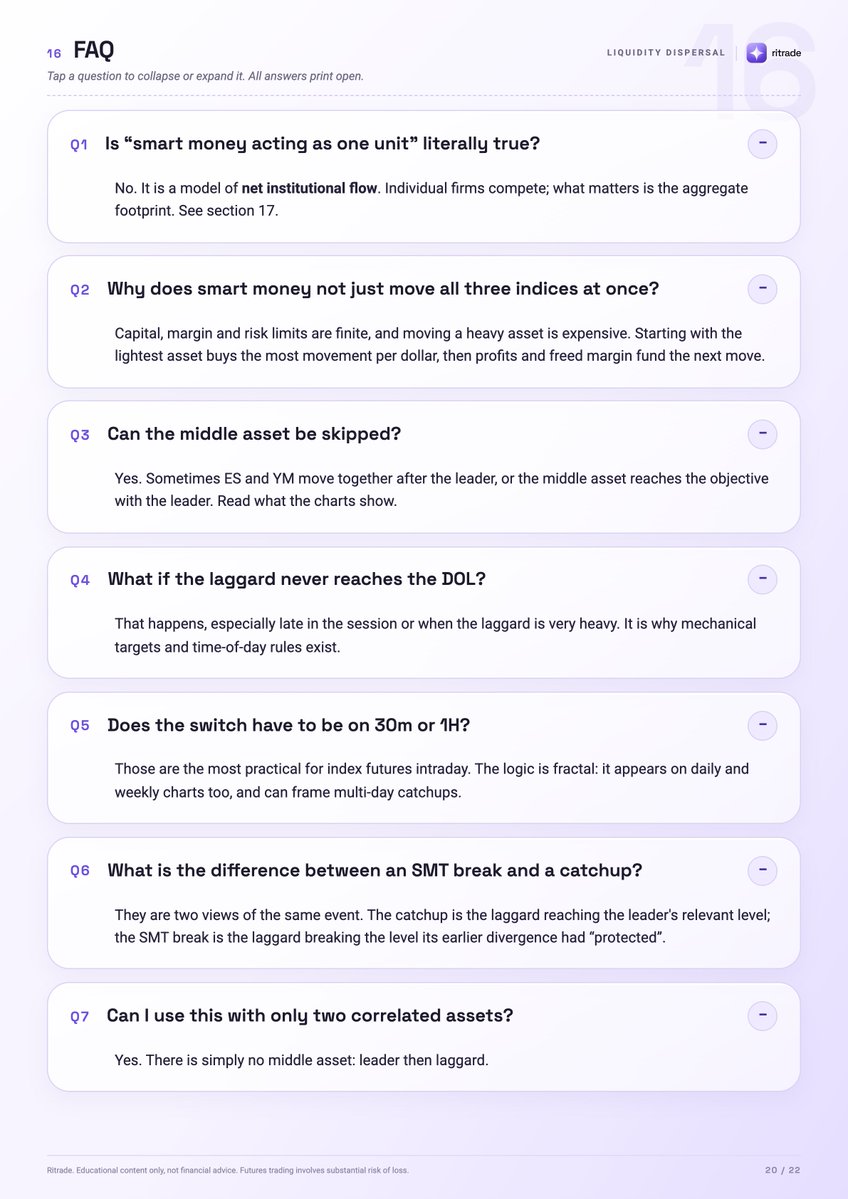
The same logic works on gold vs silver and crude vs a correlated partner. Two assets, no middle: leader, then laggard.
Plus a printable session checklist, the most common mistakes, and an FAQ.
6
Last page is a quick reference card. Save it.
If this helped, repost so it reaches someone who needs it.

If this helped, repost so it reaches someone who needs it.