10 Ways to Actually Make Money With Grok Bot

Grok Bot costs $200 a month to run. Every method below is priced against real 2026 market rates for the exact same work - not made up, not rounded up for the headline. I pulled the numbers from what agencies publish, what freelancers bill, and what people selling this stuff report earning. Sources linked throughout. Run three or four of these at once and you clear $5K/month against that $200 subscription without much trouble. Run all ten and the math gets silly.

This isn't "10 ideas." It's 10 methods, each with what it actually pays, and the exact steps to run it. Two of them need real code - I didn't skip that part.
The Honest Framing First
2026 is the year agentic AI stopped being a toy and started being infrastructure people build businesses on top of, with individuals building small systems that handle research, outreach, content, and product development without needing a large team or funding to get started. The business model underneath nearly all of it is the same three things: subscriptions to tools, paid custom setups for specific clients, and consulting around the integrations and monitoring that keep it running.
Every method below is one of those three, aimed at a specific niche where the value is obvious enough that nobody has to be sold on AI as a concept.
Method 1 - Resell AI Voice Receptionists to Local Service Businesses
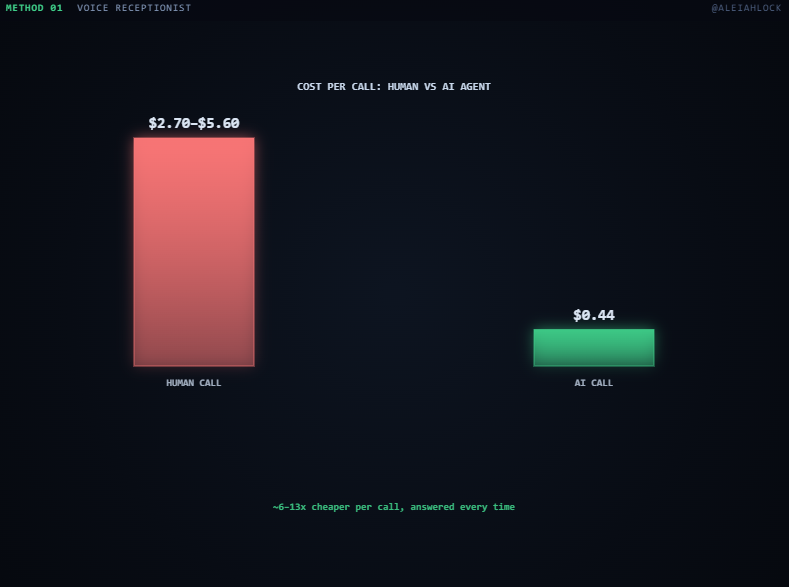
What it is: Dentists, med spas, home services, and real estate offices lose real revenue to missed calls. The average SMB loses roughly $126,000 a year to missed calls, and for home services businesses specifically, each missed call represents about $1,200 in lost revenue on average. A fully-loaded human call agent costs $35-42/hour once benefits, attrition, training, and management overhead are counted - not the $20/hour sticker wage - while AI voice agents run around $0.11 per minute, putting a typical 4-minute call at $0.44 against an industry-benchmarked $2.70-5.60 for the human-handled equivalent.
Realistic income: Agencies reselling AI voice receptionists to dental practices pitch it as: "your practice misses roughly 15 calls a week after hours, at an average case value of $350, that's over $5,000 a month in potential revenue walking away - the AI receptionist costs less than one missed crown". You don't need 50 clients. Four small local clients at $200-300/month each is $800-1,200/month, and the AI agent itself connects directly into the clinic's existing booking system, checking the patient record and booking the appointment in real time, the same way a front-desk staff member would.
How to actually do it:
The technical piece: the voice engine (something like a Vapi or Retell-style API) needs to hand off the call transcript to your agent and get a structured booking decision back. A minimal webhook that receives the call event and routes it into your task queue:
from fastapi import FastAPI, Request
import httpx

app = FastAPI()
GROK_BOT_INBOX = "https://your-groktbot-endpoint/inbox"

@app.post("/voice-webhook")
async def handle_call(request: Request):
    payload = await request.json()
    transcript = payload.get("transcript", "")
    caller = payload.get("from_number", "")

    # Hand the raw call off to the intake agent, same as a captured voice note
    async with httpx.AsyncClient() as client:
        resp = await client.post(GROK_BOT_INBOX, json={
            "source": "voice_call",
            "caller": caller,
            "text": transcript,
        })
    decision = resp.json()  # {"action": "book", "slot": "...", "confidence": 0.91}

    if decision["action"] == "book" and decision["confidence"] > 0.8:
        return {"say": f"You're booked for {decision['slot']}. Anything else?"}
    return {"say": "Let me get someone to call you back to confirm details."}
That confidence check is the important line - it's the same "suggested, not stated" rule from the escalation logic in the rest of this series. Below the confidence bar, it hands off to a human instead of guessing.
Method 2 - Sell Pre-Built Grok Bot Workflow Templates
What it is: Package a working agent setup - the charter, the routing logic, the integration - as a downloadable product instead of a custom build.
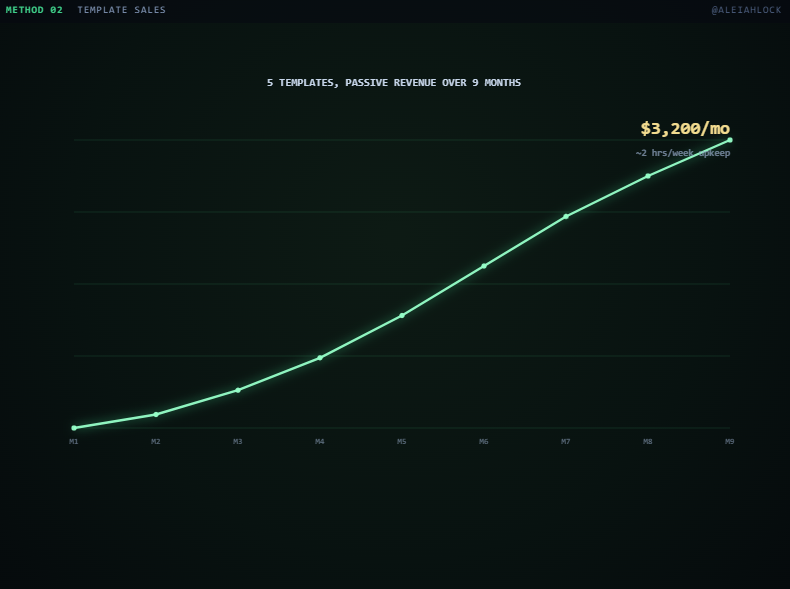
Realistic income: Template price points on marketplaces like Gumroad typically run $29 for a simple workflow up to $299+ for a complex, industry-specific one, and bundling several together into a $199-499 pack is standard practice. This isn't theoretical - one developer reported five workflow templates across multiple marketplaces generating roughly $3,200 a month in largely passive income, spending about two hours a week on customer questions and updates. A different write-up on the same story notes the figure is self-reported and unaudited, worth treating as a data point about trajectory rather than a guarantee - fair caveat, and the same one I'd give you.
How to actually do it:
Method 3 - Done-For-You Setups for Local Businesses
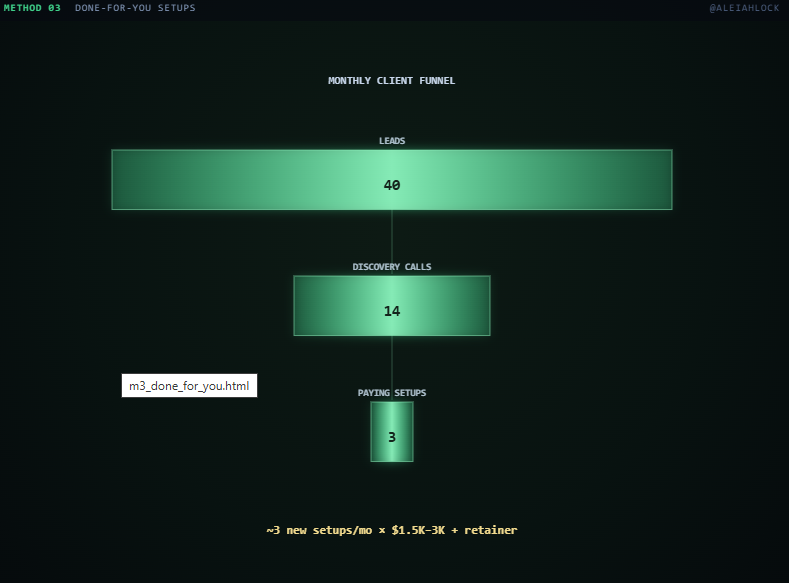
This is the model the rest of this series has already covered in depth - the clinic build, the same math applied elsewhere. Quick recap since it belongs on this list: $1,500-3,000 per setup, $150-300/month retainer after. Two new clients a month against a handful of retainers already running clears $4,000+ some months without much strain.
What's different here: don't undercut Method 1's pricing by accident - a "done-for-you Grok Bot setup" and a "voice receptionist subscription" are the same underlying tech sold two different ways to two different buyer mindsets. One's a project, one's a subscription. Keep them as separate pitches even to the same prospect.
Method 4 - Freelance Automation Building
What it is: Straightforward contract work building agent workflows for businesses that found you, not the other way around.
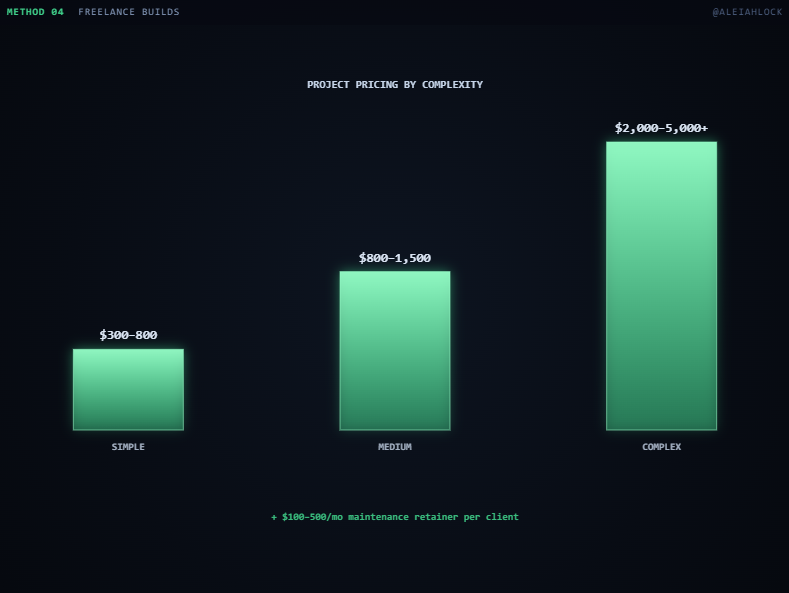
Realistic income: Freelance automation experts bill $40-100/hour on platforms like Upwork, and project-based pricing typically runs $300-800 for a simple workflow, $800-1,500 for a medium one involving AI plus integrations, and $2,000-5,000+ for complex or enterprise work - with monthly maintenance retainers adding another $100-500 per client on top. Ten hours a week at the low end of that range is already $2,400/month.
How to actually do it:
Method 5 - AI-Powered Lead Generation as a Service
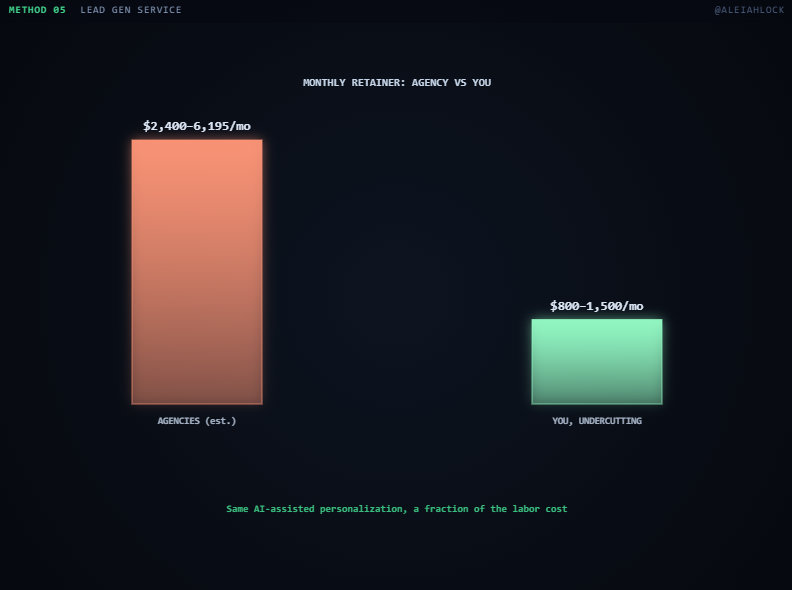
What it is: Use Grok Bot's research and outreach agents to run cold email or LinkedIn outreach for B2B clients, and sell the booked meetings.
Realistic income: this is the widest-margin method on the list if you price right. Established agencies charge anywhere from $3,000/month up to $4,500-6,195/month for outreach programs, and a lean, single-channel cold email operation publishes pricing as low as $1,995-2,400/month. You're not competing with the $10K/month enterprise players - you're underpricing the $2,400/month tier while running the exact same style of AI-assisted personalization they do, because your labor cost is a $200/month subscription instead of a team.
How to actually do it:
Method 6 -Google Review Reply + Reputation Management

What it is: An agent that monitors Google reviews and replies within 30 seconds, sold as a subscription to businesses that care about their star rating and don't have time to respond to every review personally.
Realistic income: this exact product has been sold at $197/month per customer in documented cases. Five small local clients at a more modest $147/month is $735/month, for a setup that runs almost entirely unattended once it's live.
How to actually do it:
Method 7 - AI-Assisted Content Production for Clients
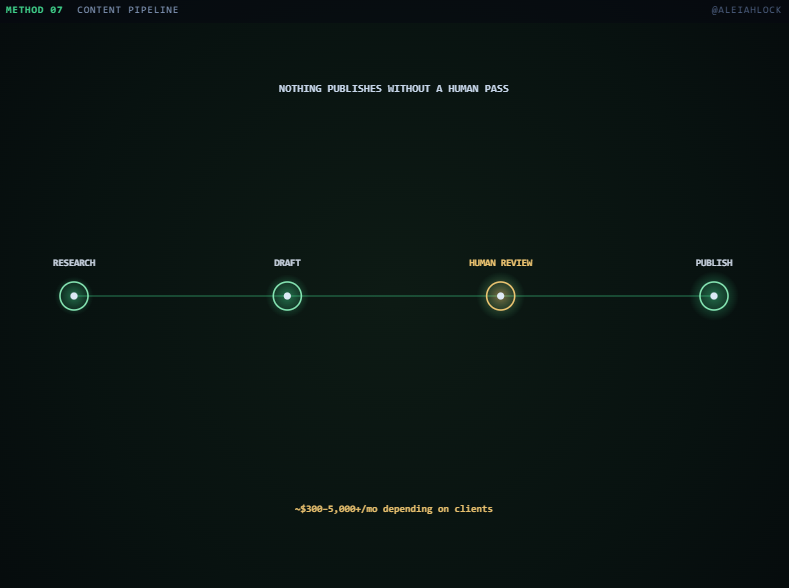
What it is: Content writing and content-pipeline services using agents to draft, research, and format at a pace a solo human can't match, sold to small businesses and creators who need consistent output and don't have an in-house writer.
Realistic income: income in this category runs roughly $300-5,000+ per month depending on client count and scope. Two mid-size clients at $500/month each is a realistic, unhurried starting point.
How to actually do it:
Method 8 -Sell the Build Itself as a Guide
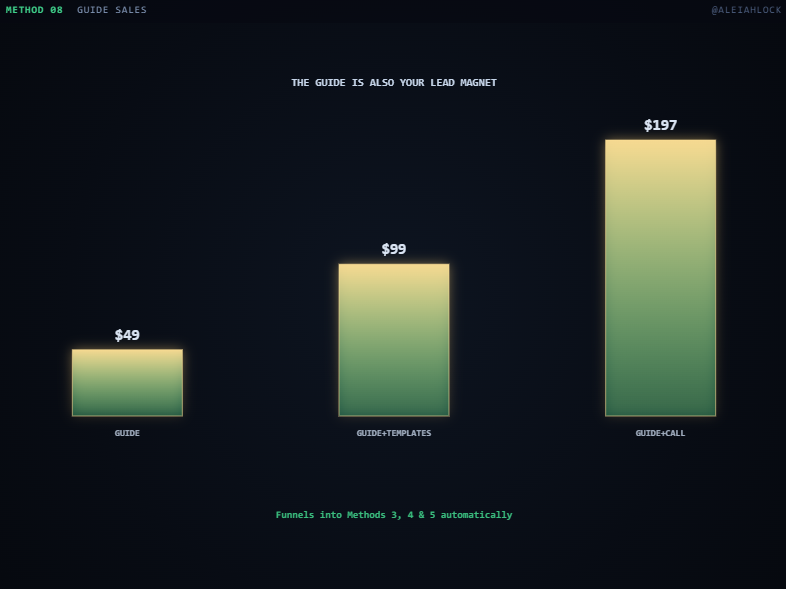
The model this exact article series runs on. A $49-99 template or guide routinely functions as a trust-building entry point that funnels buyers toward a much larger implementation engagement - so even if the guide itself only nets $500-1,500/month in direct sales, it's also your lead magnet for Methods 3, 4, and 5.
Method 9 - Automation Arbitrage: Sell the Output, Not the Tool
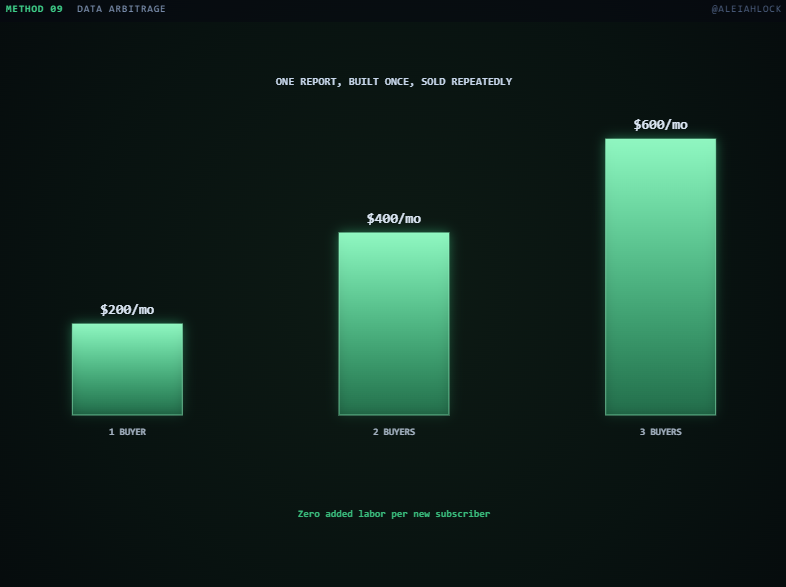
What it is: the least obvious method on this list, and worth including specifically because almost nobody's doing it yet. Instead of selling the workflow itself, you sell what it produces on a recurring schedule - a curated lead list, a weekly market report, a monitoring digest - as a subscription.
Realistic income: modest per-buyer ($100-400/month), but it stacks because one agent setup can serve many buyers with zero added labor per subscriber. Three buyers at $200/month is $600/month from a report you built once.
The technical piece: this one needs a scheduler, not just a chat interface -Grok Bot's agent produces the report, but you need something firing on a cadence and pushing the output somewhere buyers actually check. A minimal cron-triggered export:
import schedule, time, csv
from datetime import datetime

def generate_and_send_report():
    # pull the week's output from your agent's task log
    leads = fetch_grok_bot_output(agent="research_agent", since_days=7)
    filename = f"weekly_report_{datetime.now():%Y-%m-%d}.csv"
    with open(filename, "w", newline="") as f:
        writer = csv.writer(f)
        writer.writerow(["company", "signal", "confidence", "source"])
        for row in leads:
            writer.writerow([row["company"], row["signal"], row["confidence"], row["source"]])
    email_to_subscribers(filename)  # your delivery method — email, Slack webhook, whatever

schedule.every().monday.at("07:00").do(generate_and_send_report)
while True:
    schedule.run_pending()
    time.sleep(60)
Simple on purpose. The product isn't the code, it's the report - the code just has to run reliably every week without you remembering to trigger it.
Method 10 - Wrap One Agent Into a Productized SaaS

What it is: the highest-leverage, highest-effort method on the list. instead of selling one custom build once, you wrap the same agent into a subscription product and charge every customer $97-997/month for the same underlying build - the example given in the sourced write-up is a review-reply agent packaged at $197/month, with 50 customers producing roughly $9,850/month recurring with no added fulfillment work per customer.
Realistic income: don't start at 50 customers. Ten customers at $97/month is $970/month, and it's the same build as Method 6 - just billed through a real subscription system instead of you manually invoicing five people.
The technical piece - this is the one that actually needs engineering. You need account provisioning, billing, and a way to keep customer data separated. The minimum viable version is a Stripe subscription check gating access to a per-customer agent instance:
import stripe
from fastapi import FastAPI, HTTPException

app = FastAPI()
stripe.api_key = "sk_live_..."

@app.post("/customer/{customer_id}/run-agent")
async def run_agent(customer_id: str, task: dict):
    subscriptions = stripe.Subscription.list(customer=customer_id, status="active")
    if not subscriptions.data:
        raise HTTPException(402, "No active subscription")

    # each customer's agent instance is scoped to their own workspace —
    # never let one customer's data leak into another's context
    workspace = get_or_create_workspace(customer_id)
    result = dispatch_to_grok_bot(workspace_id=workspace.id, task=task)
    return result

@app.post("/stripe-webhook")
async def stripe_webhook(event: dict):
    if event["type"] == "customer.subscription.deleted":
        deactivate_workspace(event["data"]["object"]["customer"])
    return {"received": True}
That workspace isolation line is the whole business, honestly. Everything else is a wrapper around it.
The Math
Run all ten conservatively and you're well past $5K/month combined - realistically closer to $9-10K if every method is running at the modest end of its range. Nobody should run all ten at once; pick two or three that fit your actual skills (Method 10 needs someone comfortable with code, Method 7 needs someone comfortable writing) and the $5K line is crossed with three or four running, not ten.
Against a $200/month subscription, the breakeven on literally any single method above is one client.
What This Article Won't Pretend
Every number above is a market rate, not a guarantee. Self-reported income figures in this space are exactly that - self-reported and unaudited, and the gap between "the market pays this" and "you personally will land clients at this rate on day one" is sales work, not automation work. The agent does the delivery. It does not do the cold outreach that gets you your first client - that part's still you, for a while, on every single method on this list.
