I tested 50 AI Trading Bots. One Completely Dominated (insane gains)

TL;DR: How to actually find profitable trading strategies to inject into your AI trading bot to actually start making money.
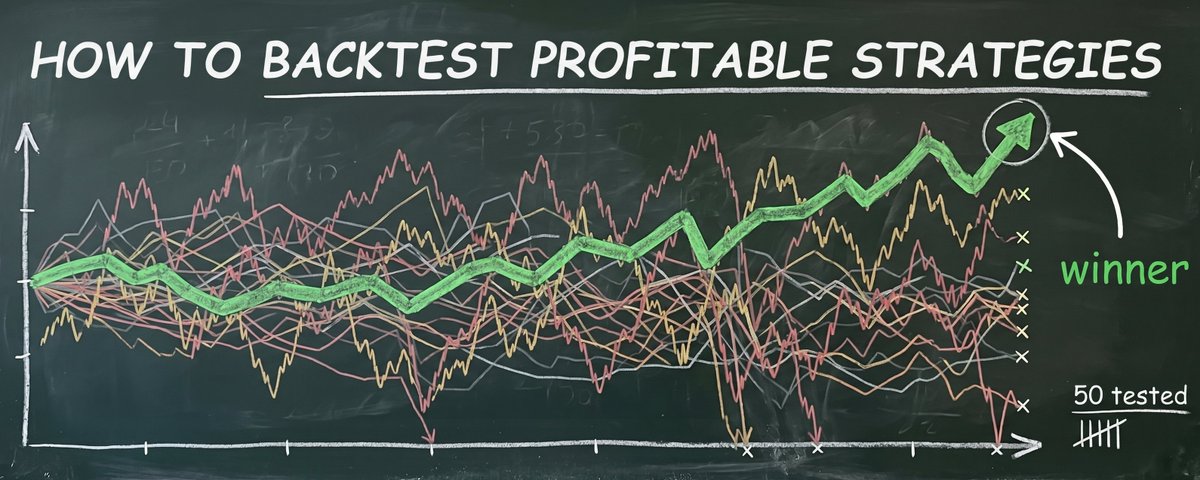
For the past few weeks, I've published a ton of content showing you guys how to build an AI trading bot from scratch.
Using Claude to automate trading, AI for deep financial research, and so on.
While that content was helpful, I've read the comments, and the same pushback keeps coming up:
"Miles this is just automating losses"
"Just because you build a bot doesn't mean you'll be profitable"
etc. etc.
And you guys are right. Automating an unprofitable, sh*t strategy will just accelerate your losses.
So, I sourced 50 proven trading strategies from various resources, ran 325+ backtests across crypto and stocks, and used Claude to extract the best ones.
By the time you finish reading this, you'll know:
You're getting the entire system I use to find, validate, and live-test real trading strategies.
Out of all my content from the past month, this is probably the most important piece if you actually want to make money:
4 Free Sources for Finding Strategies
Before we dive into the process I use to find and validate strategies, I want to teach you how to fish.
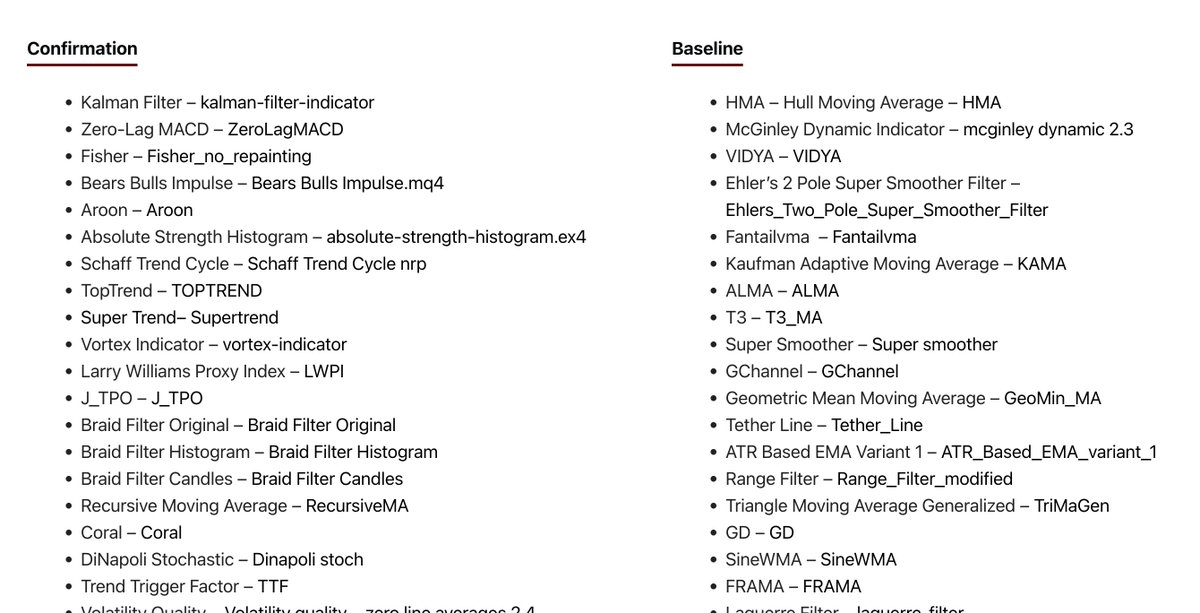
This section is a few good resources you can use to source your own profitable strategies (credit to David Tech):
You've probably used TradingView for charting. But most people miss the community scripts library. Thousands of indicators and strategies built by other traders, with the full source code available for free.
To find them:
Mainly for Forex strategies.
Head to Resources, then Indicator Library. You'll find a huge collection of free indicators, many already tested and documented.
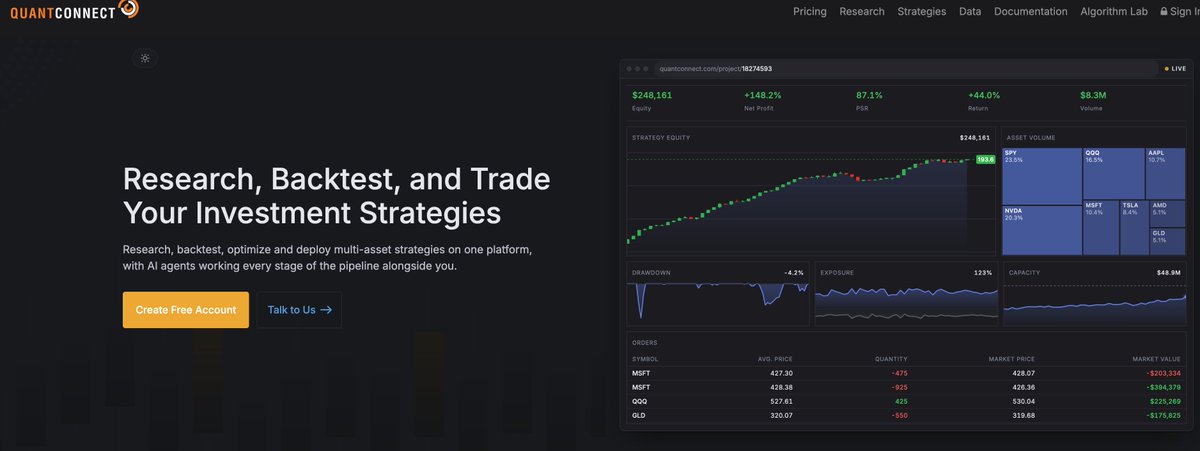
QuantConnect is an algorithmic trading platform with a public strategy leaderboard.
You can also backtest strategies directly here.
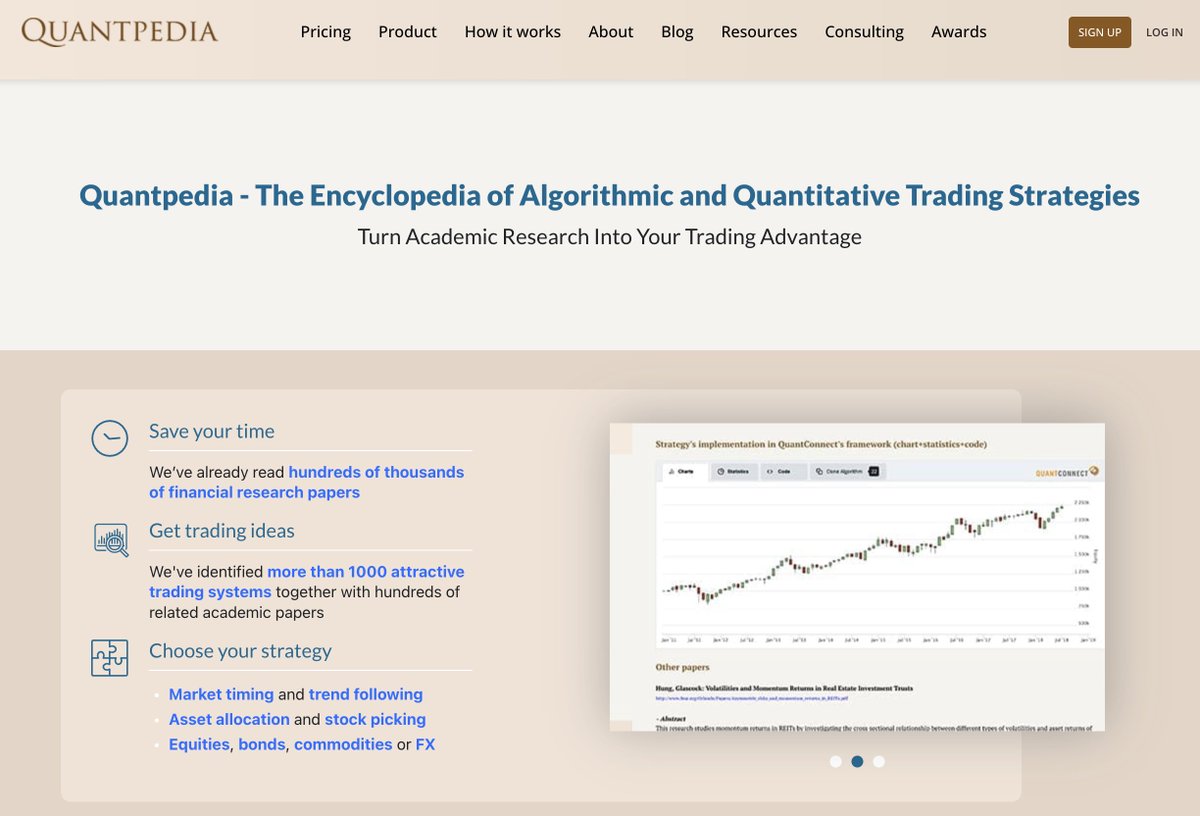
Quantpedia takes academic research papers on trading and turns them into usable strategies.
The "encyclopedia" of algorithmic and quant trading.
Feel free to browse these sites for a few minutes. If you come across any interesting indicators / source code, just go ahead and save them for now.
You'll probably find maybe strategies returning 10-50%+.
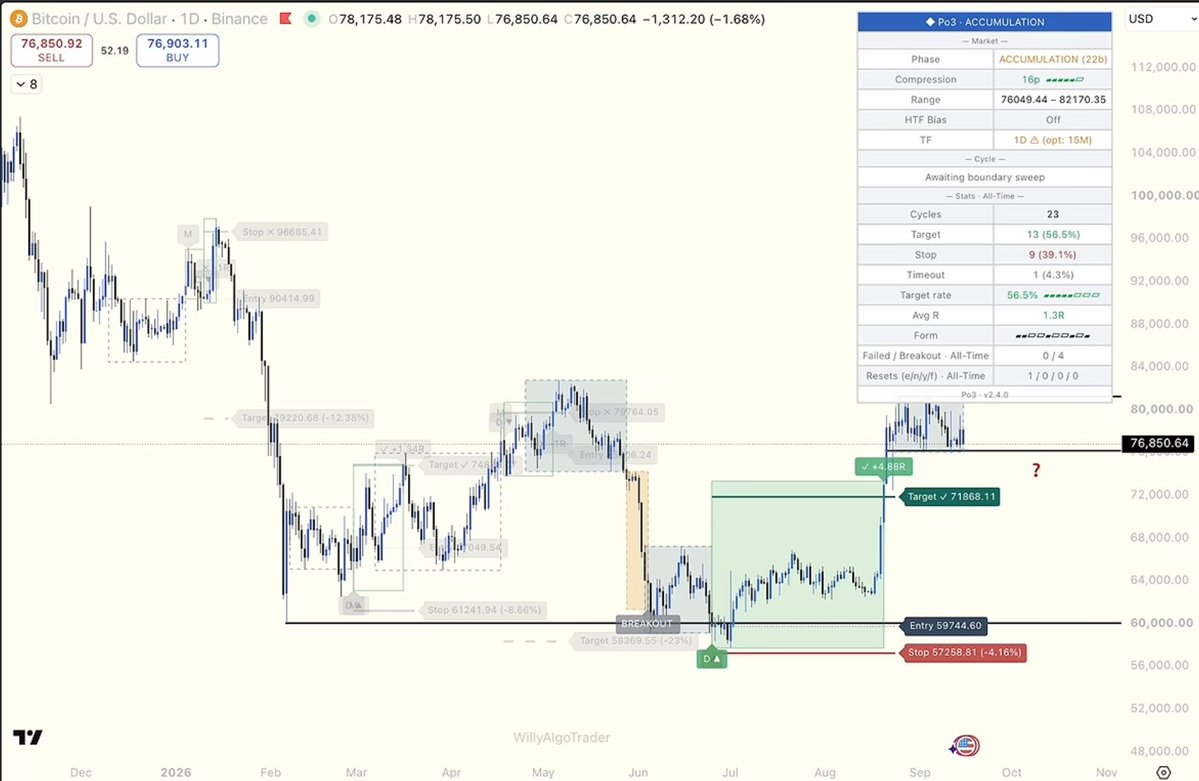
For example, a pretty cool strategy I found below:
Collecting Strategies with Claude
So you have a few indicators and source code, but how do you actually validate and test their performance?
The first step is to inject the code into Claude and store it (for now).
Depending on where you sourced the strategy, how we send it to Claude will vary.
TradingView: Convert the Pine Script
This is the only source that needs real conversion work.
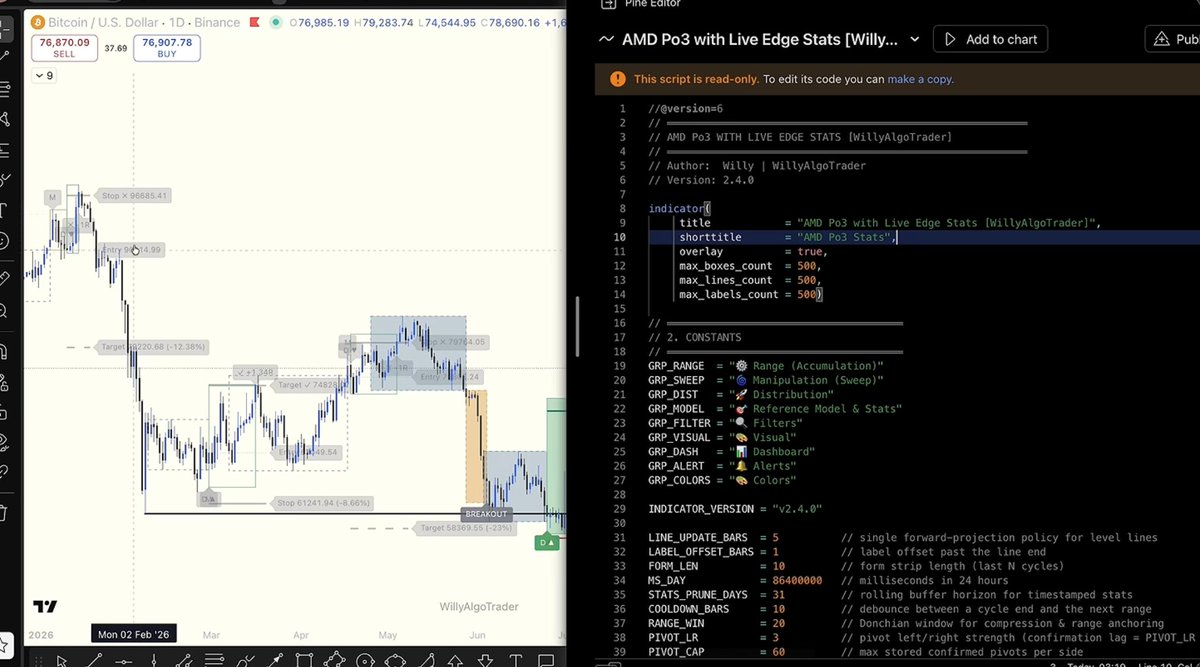
Open the indicator directly inside TV and copy the source code.
Then, start a new chat with Claude.
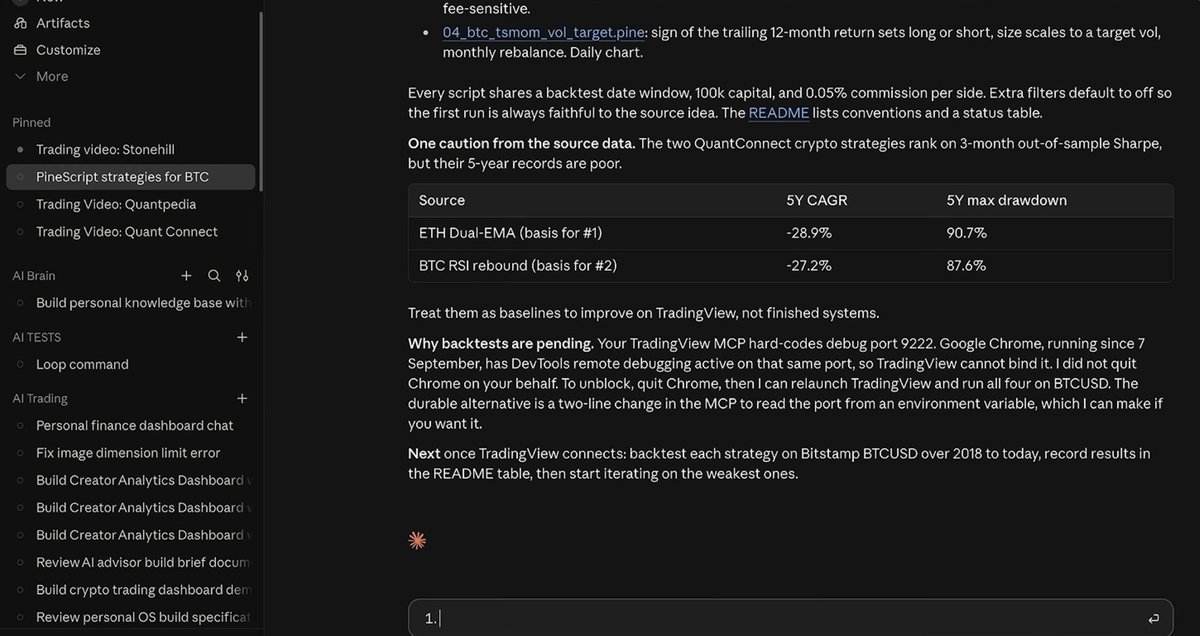
Paste this prompt so Claude can actually start backtesting the historical performance:
PINE SCRIPT CONVERSION PROMPT

I took these three indicators from TradingView. I don't know whether
they can become profitable strategies in practice, so I want to run a
backtest.

Rewrite each Pine Script so it can actually be backtested, with
proper risk parameters and trading parameters (entries, exits, stop
losses, position sizing).

Keep each one as true to the original indicator as possible, as if
the author had designed it to be a trading strategy.
Stonehill, QuantConnect, and Quantpedia: Just Paste the Link
These three are much easier. The strategies are already written out, so Claude just needs to go and collect them.
For each site, I pasted the link into Claude with a simple instruction:
STRATEGY COLLECTION PROMPT

Go through this site and collect every strategy listed.

For each one, break down the method and write a spec that can be
backtested: asset, timeframe, entry rules, exit rules, stop loss, and
position sizing.

Save each strategy as its own markdown file.

[Paste link]
Worth flagging: I literally sourced and injected 50 strategies into Claude to find the best one. It costs a LOT of credits... just be aware that some of these strategies are quite complex.
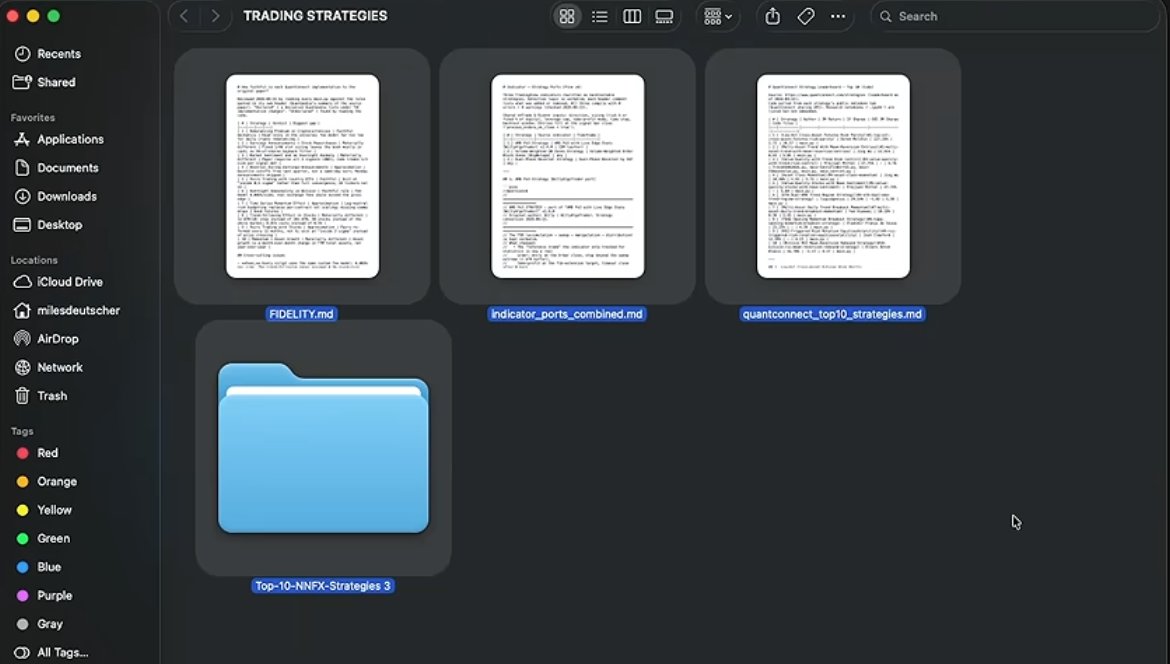
The goal of this stage is to collect a bunch of strategies, inject them into Claude, and create this desktop folder that we'll use later.
After backtesting 50 strategies, all sourced from various resources, I compiled them into a desktop folder:
Building the Backtesting Engine
This is where the real sauce happens.
Claude now has all your strategies (in my case 50), so we can now build a backtesting engine to spot the outliers.
Start a new Claude chat and attach your strategies folder we just created.
Then, paste this prompt so Claude can begin backtesting:
MEGA BACKTEST PROMPT

This folder contains every trading strategy I've collected from
TradingView, Stonehill Forex, QuantConnect, and Quantpedia.

STEP 1: EXTRACT EVERY STRATEGY
Go through every file and identify the strategy inside it.
- If it's already a complete strategy, take it as written.
- If it's an indicator with no trade rules, build a strategy from it
  using the author's signals and description, based on the source
  site it came from.

STEP 2: NNFX STRATEGIES
For anything from Stonehill Forex, structure it using the full NNFX
framework: baseline, confirmation indicators, volatility filter, and
exit indicator. Fill any missing components using standard NNFX
defaults and flag what you added.

STEP 3: WRITE A SPEC FOR EVERY STRATEGY
Create one markdown file per strategy covering: source, asset,
timeframe, entry rules, exit rules, stop loss, position sizing, and
any assumptions you made.

STEP 4: BUILD THE ENGINE
Build a backtesting engine that can run every spec across the
relevant assets and timeframes. Include trading fees and slippage.

STEP 5: RUN EVERYTHING AND REPORT
Run every strategy and produce a report ranking them by performance.
For each one, show: total return, max drawdown, win rate, profit
factor, number of trades, and performance vs buy-and-hold of the same
asset.

BONUS
Add five strategies of your own. Famous, proven strategies you think
deserve a place on this list. Use your own reasoning and strategic
judgment to choose them, without backtesting first.
Since I tested 50 strategies, this took a long time. Claude ran 325+ backtests across all 50 strategies.
In the end, it outputted this backtesting engine that aggregates all the data and highlights the top-performing strategy:
If you use the prompt above, it will actually tell Claude to highlight the strategies it thinks are the best.
Based on:
You can also specify which factors you value most, and Claude will then highlight the most correlated strategies.
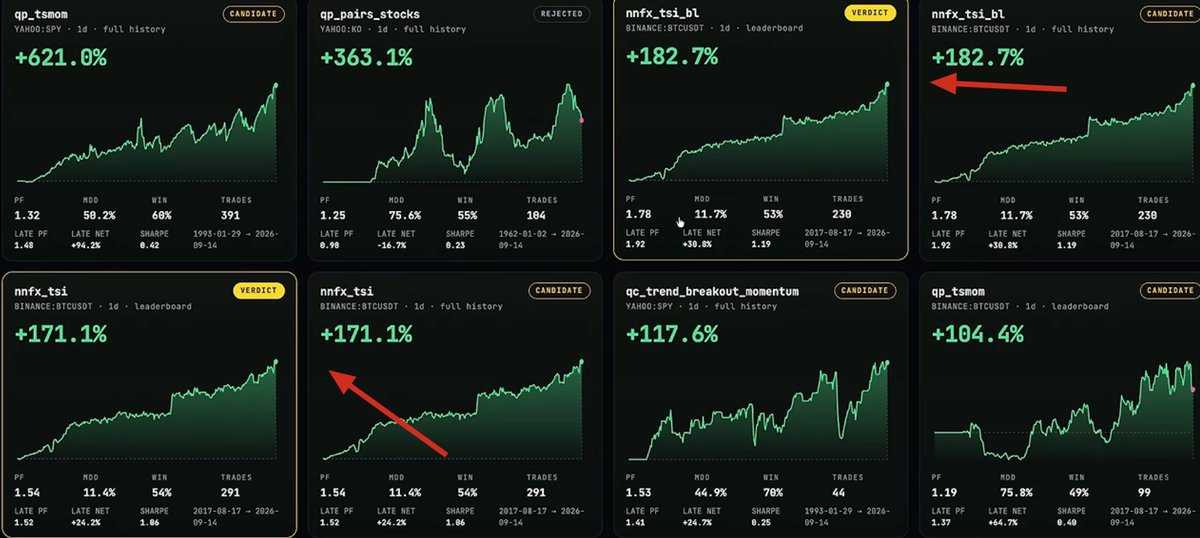
Also note that just because you see a popular indicator in one of the resources above does not mean it will actually be profitable.
A ton of the strategies I backtested lost money (the whole point of this exercise).
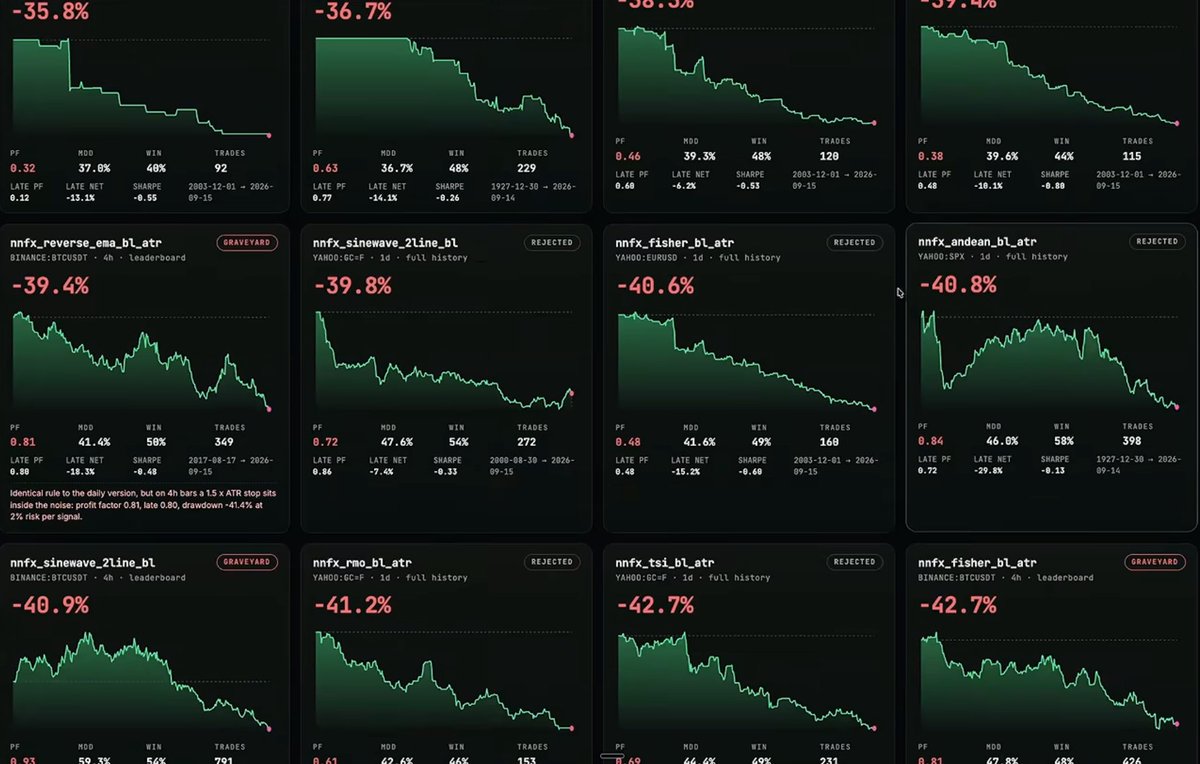
Keep in mind that you have this backtesting engine for all your strategies, so you can query the data.
Send prompts like
etc.
Verifying in TradingView
Claude's backtest is step one. Step two is checking every shortlisted strategy on TV.
To do this:
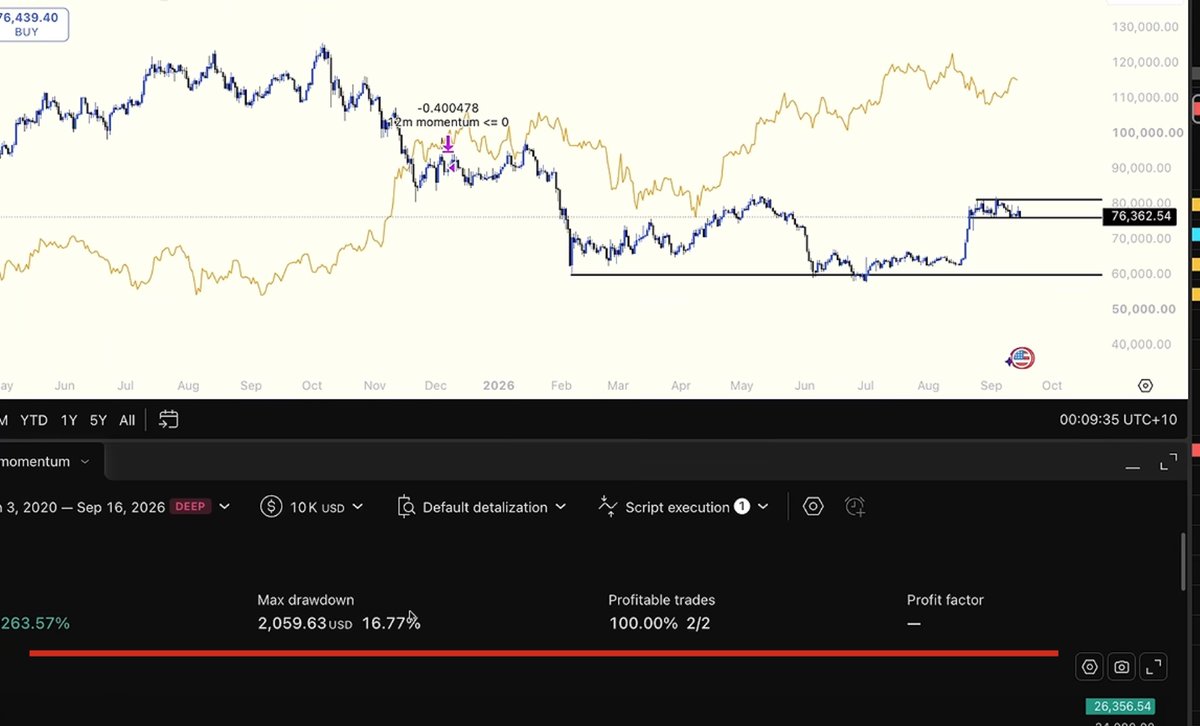
]My advice: Create a shortlist of the top strategies from Claude, then verify them on TradingView with actual market data just to confirm Claude didn't hallucinate during the backtest.
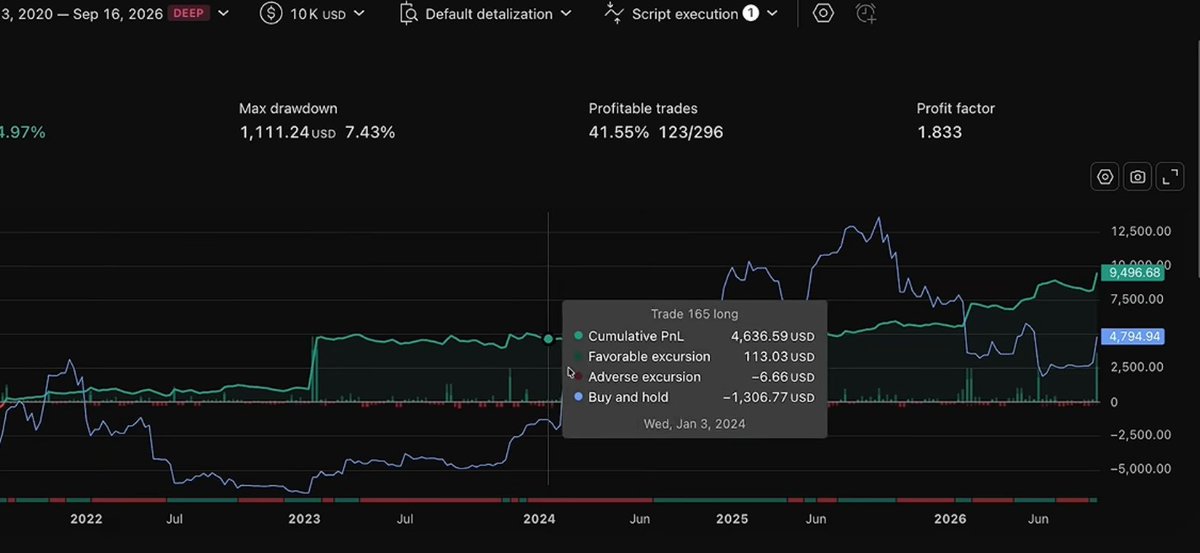
The strategy that won (out of fifty)
Winner: the Stonehill strategy
How to Forward-Test Your Winners
Everything up until this point has been a backtest. While backtesting helps validate an idea, we need to actually forward-test before risking any real capital.
The process I use to forward-test with low stakes:
Step 1: Understand Why It Works
Before you test anything, figure out why the strategy made money in the first place.
Claude can help here:
STRATEGY BREAKDOWN PROMPT

Analyse this strategy in depth.

1. Why did it make money in this backtest? What market behaviour
   is it actually exploiting?
2. Which market conditions does it perform best in (trending,
   ranging, high volatility, low volatility)?
3. When is it most likely to fail?
4. What are its biggest weaknesses?
5. Suggest 5 specific variations that could improve risk-adjusted
   returns, and explain the reasoning behind each.
Step 2: Optimise the Variants
Once you understand the strategy, start making tweaks.
What happens if you add max drawdown protection? Tighten the stop? etc.
One warning: be careful not to over-optimize. If you tweak a strategy until it fits the past perfectly, it will almost certainly fail in the future. Every change should have a logical reason behind it.
Step 3: Paper Forward Test
Now run the strategy live, with fake money.
Step 4: Small Live Test
If the paper test holds up, move to real money. But small. An amount you'd be completely fine losing.
Step 5: Scale Up Over Time
Only once the strategy has proven itself live do you increase the size.
The Bot Architecture (how to execute paper and live tests)
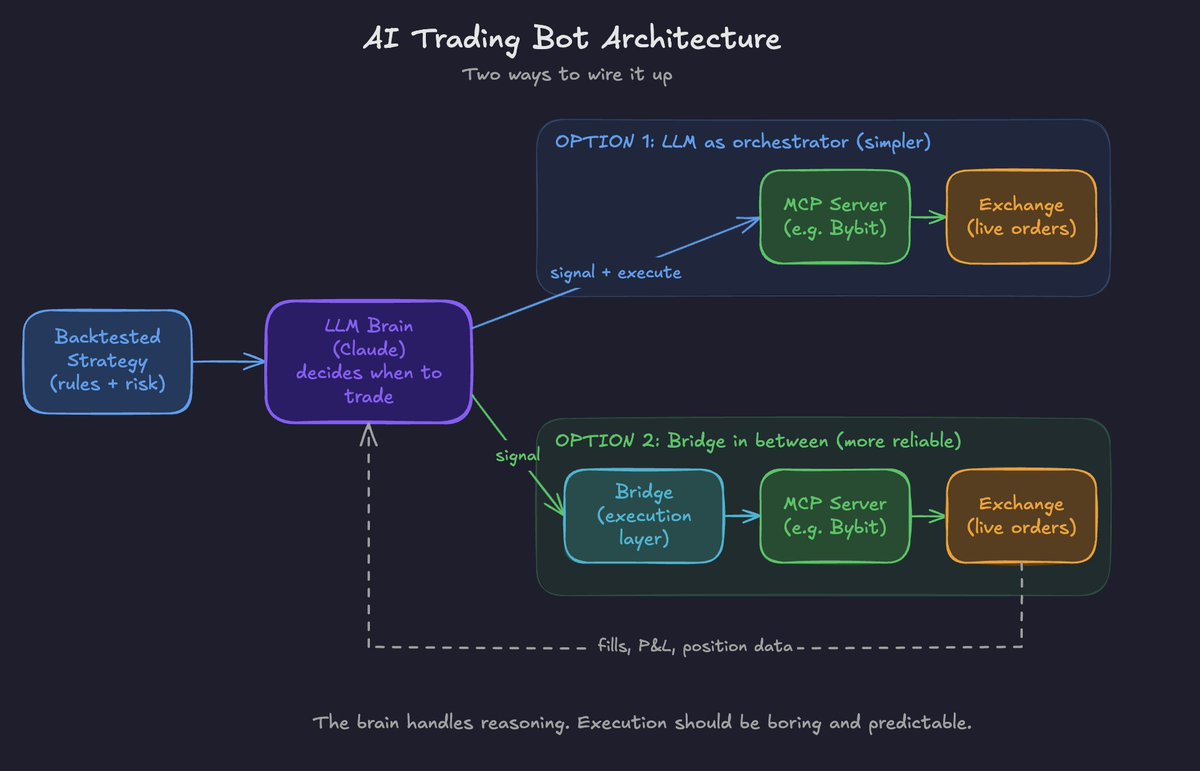
I've covered full trading bot builds in previous articles, but here's the simplified version:
The brain: an LLM like Claude. It holds the strategy logic and decides when conditions are met.
The hands: an exchange connection. For example, an MCP server connected to an exchange like Bybit, executing trades based on preset parameters.
If you're curious about how to build your first bot so that you can forward-test, I recommend reading this:
Wrapping Up
I hope you've found this article helpful.
If you did, be sure to follow me here @milesdeutscher. Every single week, I post practical breakdowns on how you can leverage AI in financial markets to gain an edge.
For deeper AI insights, follow me over on @aiedge_.
If you enjoy written content about using AI in the markets, I also have a free newsletter where we send market alpha every week!

100% free AI x markets Skool community where I post prompts, financial workflows & more.
👉 skool.com/milesdeutscher…

