GrokBot can actually make money: Full 10-Step Roadmap To Build Finance Agent Team (from scratch)

-If you're anything like me, you probably want AI to help you manage your money - and even make more of it. But the thought of handing it control of your finances is downright terrifying.
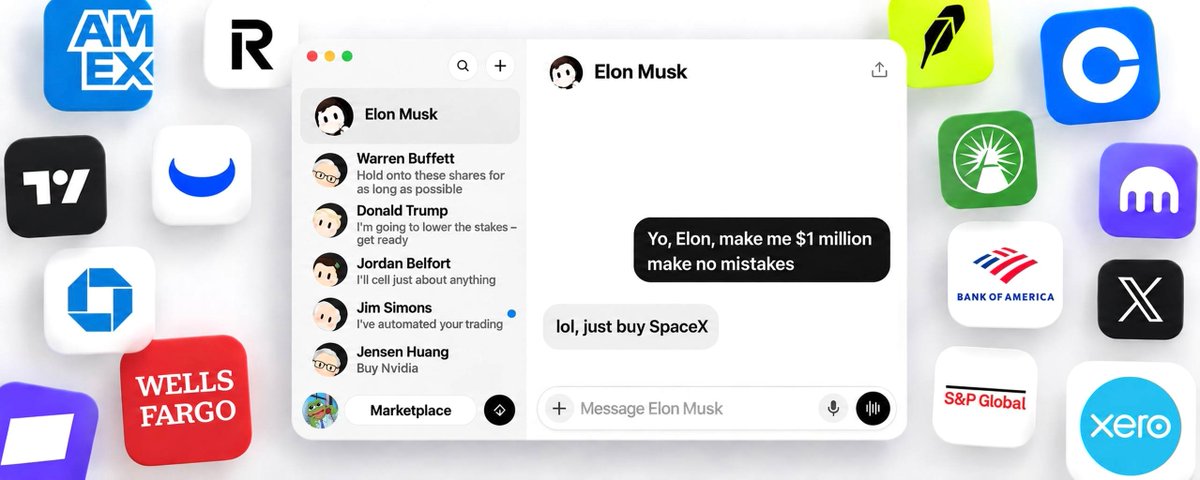
Well, we're losing so much by not letting AI agents control our finances...
Just imagine:
- While you’re busy, GrokBot checks your bank activity, spots rising costs, and prepares the expense work you’d otherwise do at night.
- Your TradingView alert hits. The team checks the source, researches the company, reads the reaction on X, and tests the idea against your actual portfolio.
- Another Bot checks whether the NVDA story everyone is trading is even true.
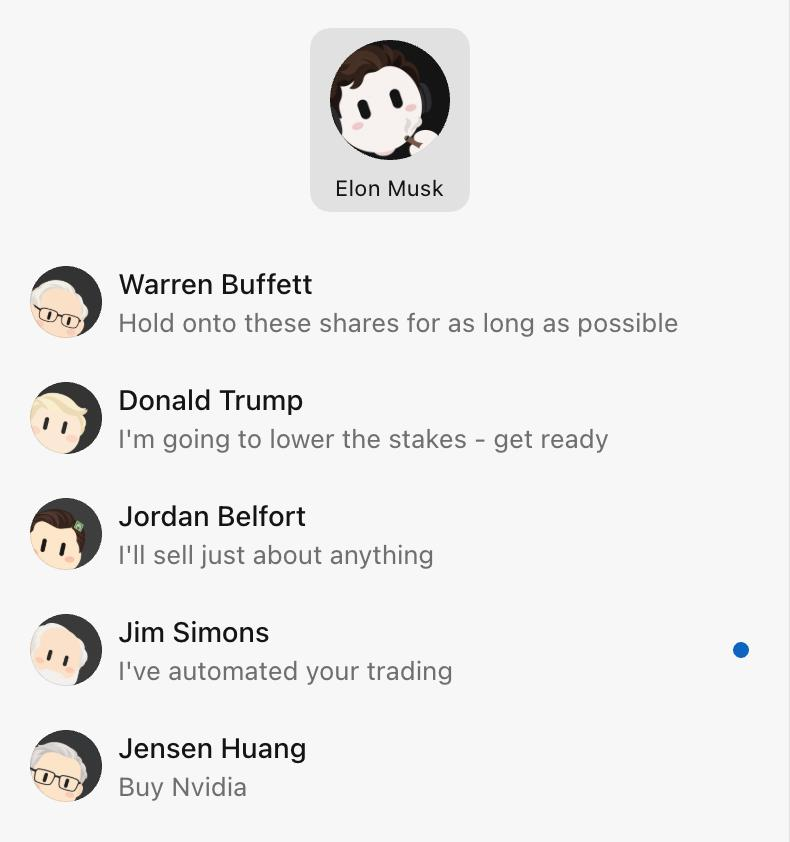
- Your Risk Manager looks at your actual portfolio and says BLOCK when the idea breaks your rules.
and lots of other things...
In this 10-step guide, we’ll build a GrokBot team that does exactly that
And believe me, it really has made my life easier - so it might make yours easier, too
Let's start
before the alpha - subscribe to this linkedin for more fresh alpha - https://www.linkedin.com/in/yaroslav-parayan-0622aa311/
1. Give GrokBot a real account to read
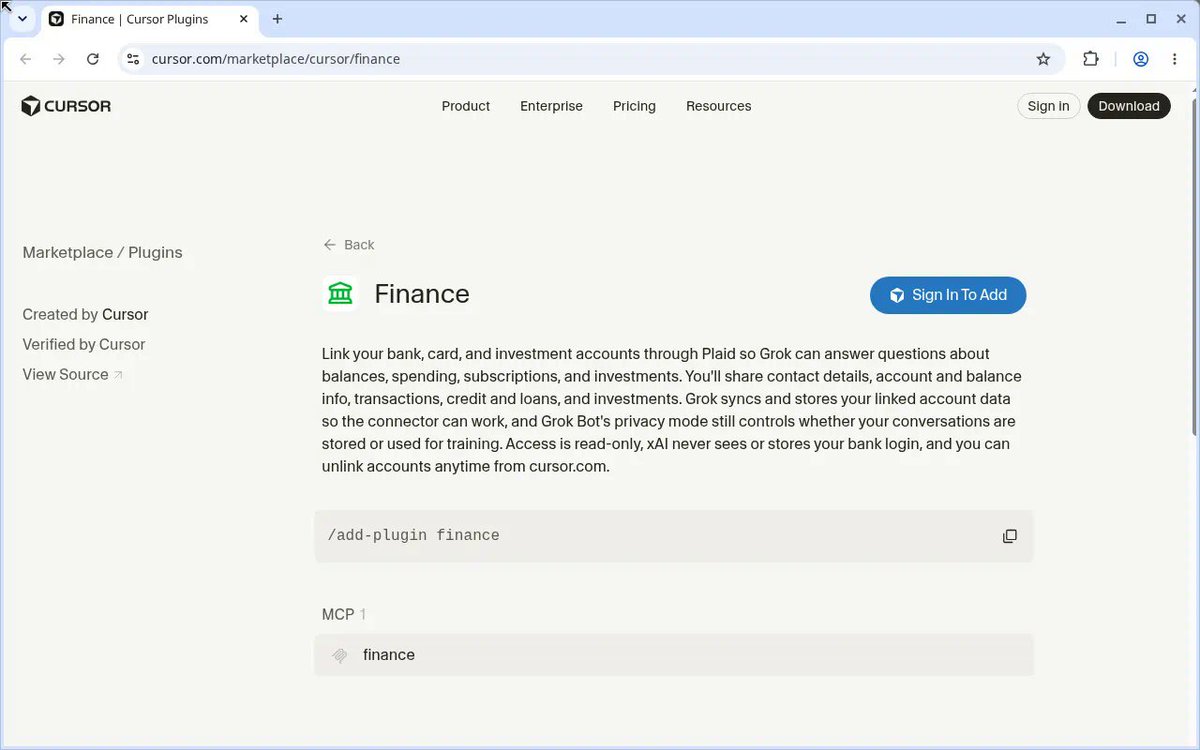
Get Grok Bot, sign in with an eligible plan, and update the app. Open Marketplace → Finance and link a bank, card or investment account through Plaid. Start with one.
If your bank isn't on Plaid, let the bot open its website and take over for login
Ask: "Which accounts can you see, and how current is each one?" Compare a balance with your bank. Missing investments mean NEEDS DATA later.
02. Hire a bot that knows where the money went
Choose New → Create new Bot. Name it Money & Books. Paste this as its job description:
Read my connected accounts. Find recurring charges, price increases, cash commitments and overdue invoices. Separate transfers between my own accounts from spending. For every finding, show the amount, date and source. If I connect Mercury and Xero, compare bank transactions with invoices and flag possible matches for my review; do not edit the books without asking. End with cash available after my reserve, or say what is missing.
Its first assignment:
“What subscriptions am I paying for? Flag anything that went up in price."
Grok Bot's demo found 14 subscriptions costing $286 a month, including two price rises and overlapping music services.
Run a business? Mercury reads bank transactions; Xero handles invoices. Comparing them is the bot's job. Or have it draft a Google Sheet of questionable charges. Check two rows against the originals.
03. Tell it what "too much" means to you
"Should I buy NVDA?" means little without your holdings and next month's cash needs.
Fill the blanks, send Money & Books this, and ask it to save your approved rules as a shared skill:
My minimum cash reserve is [AMOUNT]. My maximum single-stock exposure is [PERCENT] of my portfolio. My maximum amount for one new order is [AMOUNT]. My investment horizon is [HORIZON]. If a required figure is missing or stale, say NEEDS DATA. Never infer my limits from past trades. Put these rules in a short file/skill called Money Rules and show it to me before using it.
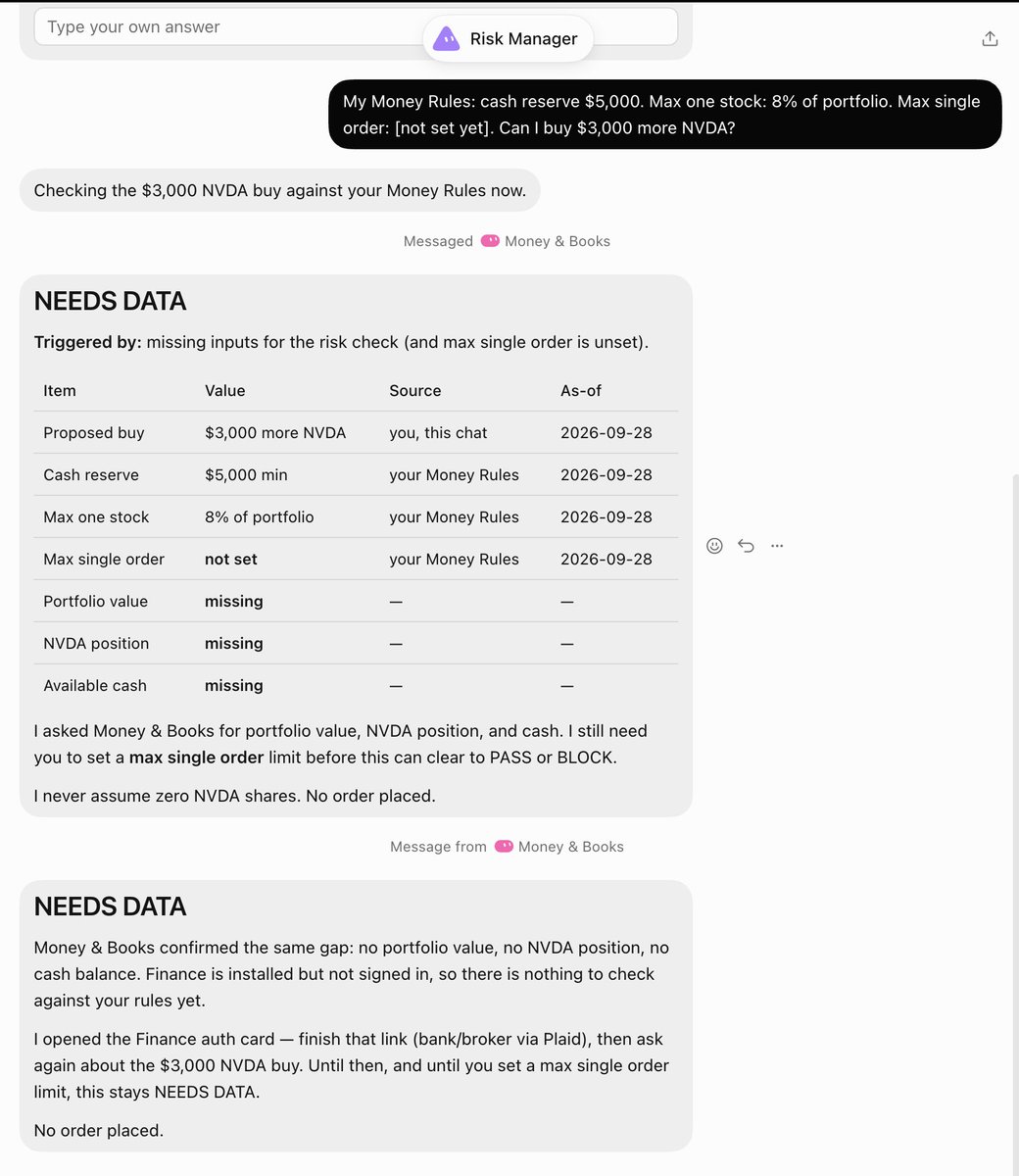
One boundary for the team: Finance only reads. Broker and bookkeeping connectors may act. In Settings → General → Bot → Auto-review, set Ask first for orders, transfers, payments and ledger changes. Check each action before approval. All bots share one computer and its signed-in sessions; names aren't permissions. Leave the exposure limit blank and ask about buying NVDA. The answer should be NEEDS DATA.
04. Get a researcher who can be challenged
Create Analyst:
Research NVDA using its investor-relations releases and SEC filings first. For each material number, link the original source and give its reporting period. Keep a dated one-paragraph investment thesis. When news arrives, tell me what changed in that thesis and what remains unverified. Give the strongest case against your own conclusion.
Ask for an NVDA brief. Click a claim through to the filing. If a number has no reporting period, push it back. Daloopa and S&P Global are optional if you have access.

05. Make a TradingView ping earn your attention
Create Signal Scout:
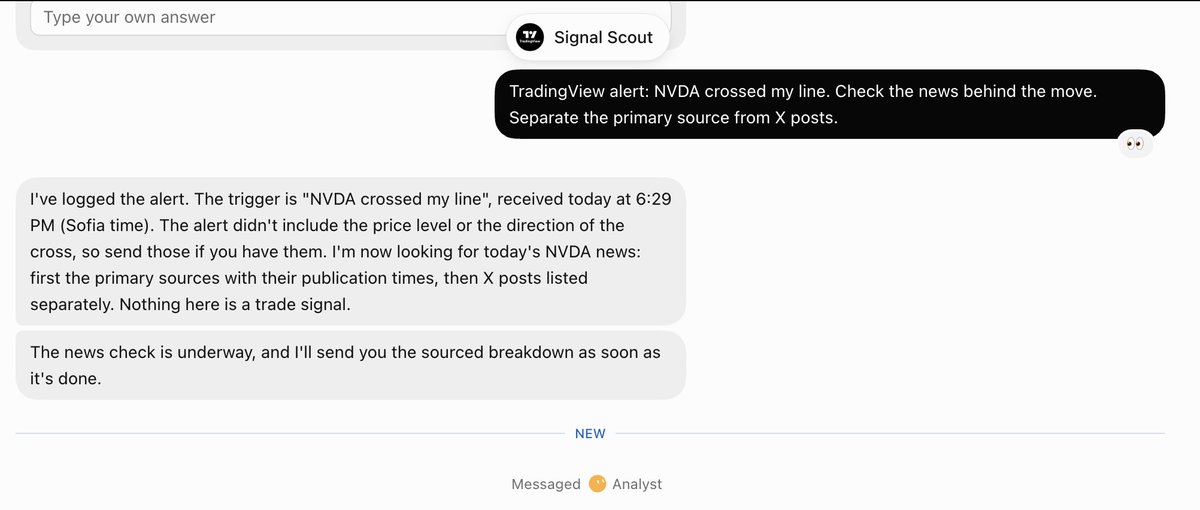
When an NVDA TradingView alert arrives, record the condition, price and time. Find the original source behind any related headline. Search X for discussion if connected, but treat reposts as chatter, not confirmation. Ask Analyst whether the event changes the thesis. Return CONFIRMED, UNCONFIRMED or NO RELEVANT NEWS, with links. Send the evidence to Risk Manager; never interpret the alert itself as a buy instruction.
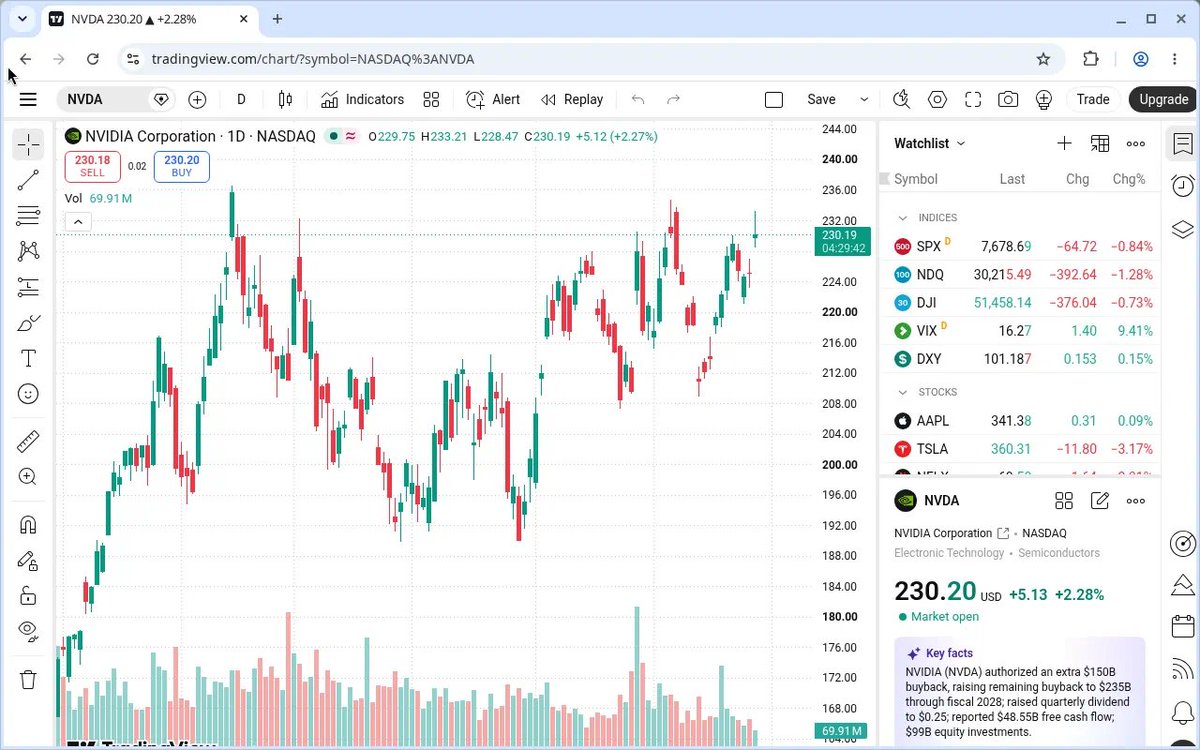
In TradingView, set an NVDA price alert at a level you choose. Message: NVDA | {{ticker}} | {{close}} | {{time}}. Enable Send Email. First, paste an alert into Signal Scout's chat; step 09 automates it. The X connector is optional. A post isn't the original source.
Look for a timestamped alert and a separate verdict on the headline. A price crossing alone can't mean “buy.”
06. Let someone say no
Create Risk Manager and give it Money Rules:
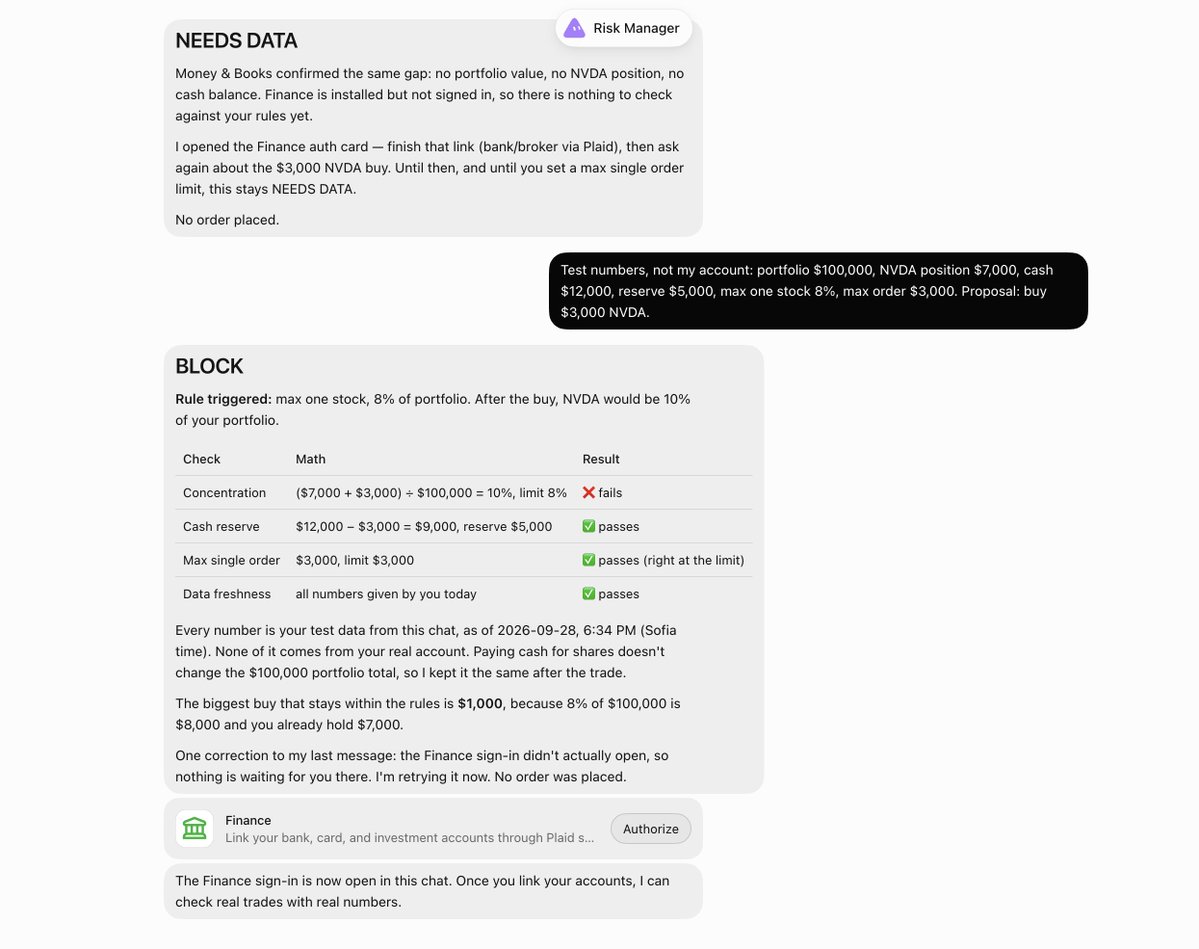
Assess this specific NVDA proposal against Money Rules. Read available cash, existing NVDA holdings and the rest of the portfolio from Finance or a statement I supplied. Show each figure's source and date. Calculate the position after the proposed order. Return PASS, BLOCK or NEEDS DATA, with the exact rule and arithmetic. A missing account, stale holding or missing limit means NEEDS DATA. Send the verdict to Chief Bot and Execution Bot.
The headline doesn't refill the reserve you need for rent or payroll.
Test an oversized NVDA order: expect the failed calculation and BLOCK. Compare its share count with your broker app.
Unsynced account? NEEDS DATA.
07. Draft the trade before the trade exists
Create Execution Bot:
Take only a proposal with a dated PASS from Risk Manager. Prepare a draft order showing symbol, side, quantity, order type, price condition, estimated cost, the rule it passed and what could invalidate the idea. If the verdict is BLOCK or NEEDS DATA, write “NO TICKET.” A draft is not permission to submit an order; show the exact proposed live action and wait for my explicit approval and Auto-review check.
Start with a paper ticket, even without a broker
Robinhood Agentic Trading can read connected positions, watchlists and market data, but trades only in a separately funded Agentic account.
Robinhood warns that agents told to act without asking may place orders without another confirmation. Keep the approval rule. Test the completed draft; don't place an order just to test
08. Put all six in one room
Create Chief Bot, the sixth member:
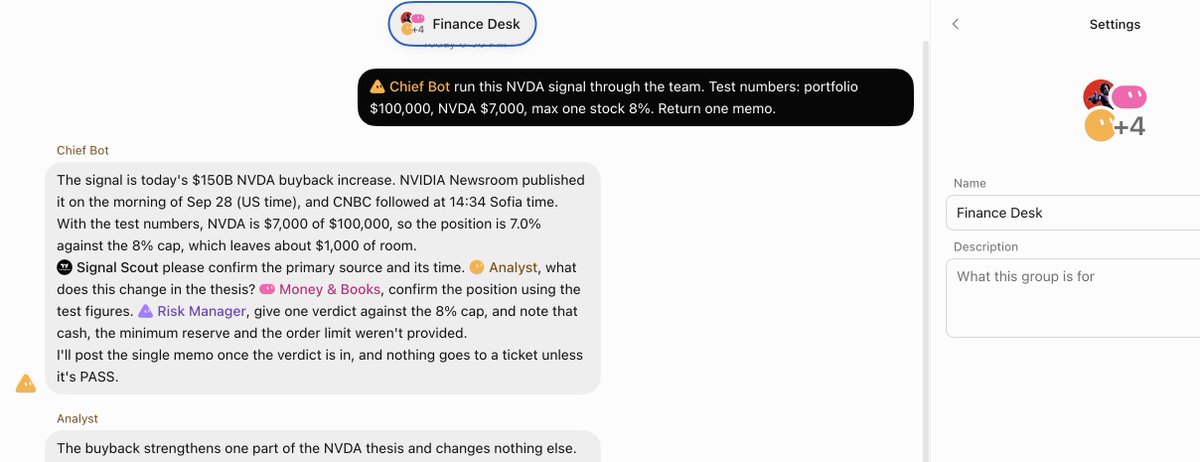
Own the final money-decision memo. Ask Money & Books for cash commitments, Signal Scout for the alert and verified event, Analyst for the thesis change, and Risk Manager for a verdict. Ask Execution Bot for a ticket only on PASS. Show conflicting inputs and missing data. Give me one short memo with source links, dates and a decision I can accept, reject or investigate.
Start New → group chat and select Money & Books, Analyst, Signal Scout, Risk Manager, Execution Bot and Chief Bot. Grok Bot groups allow two to six bots. Paste the NVDA alert from step 05 and send:
@Chief Bot: take this NVDA alert from source to decision. For the test, consider buying [SHARES] NVDA shares for no more than [TOTAL COST]. Bring in all five teammates. Show my cash, holdings, thesis change and risk math. Ask Execution Bot for a paper ticket only on PASS. Tell me who checked each part. Stop on BLOCK or NEEDS DATA.
Test this memo format: "NVDA crossed [LEVEL]. Source: [LINK]. Exposure after [SHARES]: [X]% versus [LIMIT]%. BLOCK: [RULE]. Ticket: none." This is a template, not a result.
09. Make it wake up without making it reckless
Ask Chief Bot:
"Every weekday at [TIME + TIME ZONE], send one memo on cash commitments, unpaid invoices, NVDA news and stale portfolio data. Friday: list alerts, BLOCKs with reasons, and drafts I approved or rejected."
Check its time zone, click Test, inspect the run.
Ask Signal Scout for an email-triggered routine on new NVDA alert emails from TradingView → Connect an inbox if prompted
→ narrow by sender and ticker
→ Instruct it to pass the evidence to Chief Bot for the same six-bot review → Test a real email and check Chief's response
Grok Bot documents email triggers
If your account doesn't offer one, keep pasting alerts until you build a relay. The same routine pattern can watch NVIDIA's investor-relations site or new earnings emails.
Advanced path: TradingView → protected relay → Grok Bot webhook routine.
TradingView sends a POST - Grok Bot requires Authorization: Bearer <key>
The relay adds that header. Keep the key out of alerts. HTTP 200 means a run started; inspect its result in chat.
10. Make the seventh bot yourself
For any new role, give the bot one job, its sources, output, handoff and a test that could prove it wrong.
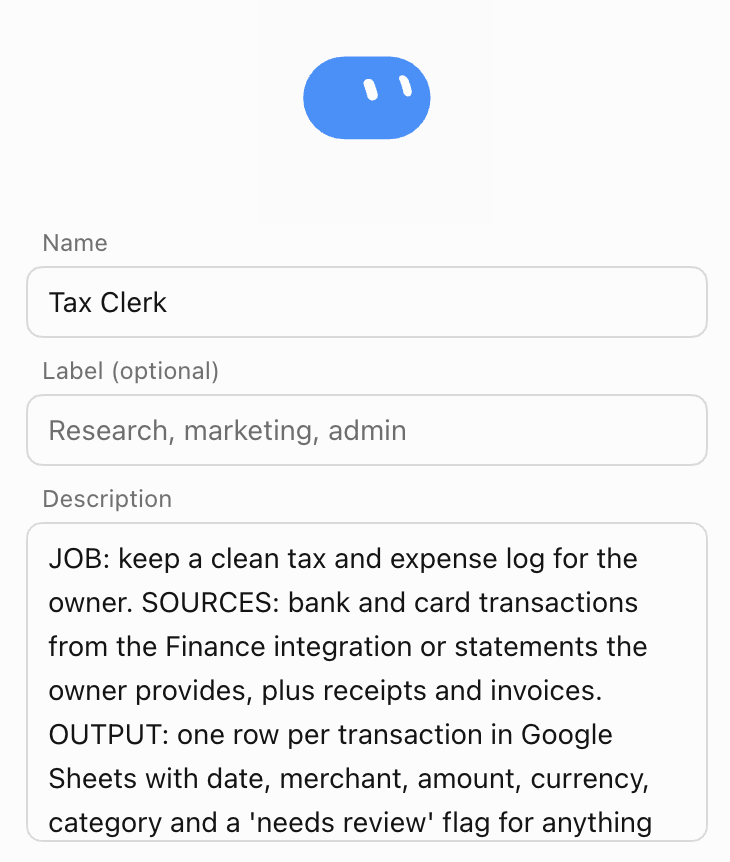
For example, create Tax Clerk separately:
Your job is to prepare my expense review, not file taxes. Read [CHOSEN STATEMENTS / XERO / SHEET] for [PERIOD]. Put transaction, date, amount, proposed category and source in [SHEET]. Flag ambiguous entries for me; do not change a ledger entry or send anything. Each week, give Money & Books a list of questions and show me one source row I can verify.
Test it on five transactions whose categories you know. Then change the job, source, output, handoff and test to make a rent checker, earnings-call tracker, invoice chaser or portfolio journal.
If it can't show where a number came from, it hasn't earned an automatic routine yet.
[Illustration 11: a blank five-field bot card filled once for Tax Clerk, with a five-transaction test beside it.]
The 15-minute version is Money & Books plus Analyst:
Connect one read-only account (or supply one statement), ask about a real charge, and trace one NVDA claim to its source. No broker, paid data feed or TradingView subscription required.
The full team gives you something more valuable than a loud buy signal: an alert can reach your inbox, survive a source check, collide with your actual cash and position limits, and come back as PASS, BLOCK or NEEDS DATA.
- You decide whether any money moves.
The shift
The bots do the financial homework. You decide what happens to your money.
A charge goes up. An invoice stays unpaid - TradingView alerts you that NVDA crossed your level - On their own, those are three more things for you to investigate
Start with one account and two bots - Add the other specialists as you need them - Then build your own: give it one job, clear sources, an output, a handoff, and a test.
Most people will ask AI what to buy.
You’ll have a team that can tell you why you shouldn’t.
Bookmark this playbook before your next money decision → @51bodila