Credo and the Investment Case for AI Connectivity

$CRDO opportunity is expanding as AI networks demand more bandwidth and greater reliability. The company already has a profitable connectivity business, and its growing optical portfolio gives it additional ways to participate in infrastructure spending. My bullish case is that Credo can earn a larger role in customer systems as those systems become more demanding to connect and operate.

The September launch makes the optical strategy concrete
On September 15, Credo introduced 1.6T ZeroFlap optical transceivers combining its 224G-per-lane digital signal processor, Kfir200 silicon photonics chip and PILOT diagnostics platform. Credo describes them as its first products to bring together its DSP and advanced silicon photonics PIC. They extend the company’s optical offering to a new port speed while adding visibility into link health.
That combination matters because network performance depends on more than maximum throughput. A connection that repeatedly drops and reconnects can interrupt useful work. Credo is trying to help operators identify deteriorating links before they cause disruptions.
My interpretation is that combining the optical hardware with diagnostics can make Credo more valuable to the team running the cluster. If customers see a measurable reduction in troubleshooting and downtime, purchasing decisions can reflect operating costs as well as the initial price of a component.
Revenue and profits already support the thesis
For fiscal Q1 2027, ended August 1, Credo reported $479.0 million in revenue, up 114.7% year over year and 9.6% sequentially. GAAP net income was $129.4 million; non-GAAP net income was $236.3 million. GAAP and non-GAAP gross margins were 64.5% and 68.0%, respectively.
Management guided the following quarter to $525–535 million in revenue. The $530 million midpoint implies approximately 10.6% sequential growth, calculated from reported Q1 revenue. This is guidance, not a reported result.
The investment question is how long $CRDO can sustain profitable growth as its product range broadens. The latest results establish a substantial commercial base from which to assess that expansion.
Copper remains an important part of the opportunity

$CRDO active electrical cables use powered electronics to maintain high-speed electrical connections. Its current ZeroFlap portfolio spans multiple speeds, and its published 800G configurations include different cable lengths and connector arrangements. The company also emphasizes thinner, lighter cabling compared with passive alternatives.
The appeal is practical. Dense racks need cables that fit, connections that remain stable and a power budget that leaves room for compute. At suitable distances, electrical links can remain attractive even as optical networking expands. The right medium depends on reach, bandwidth and the economics of the specific system.
This gives Credo two opportunities: increasing deployment of its existing electrical products and growth in optical connections where customers require them. The balance will change with network architecture. I would evaluate both businesses together rather than assume every optical deployment must eliminate an equivalent amount of AEC revenue.
The relationships that can be documented
Microsoft’s connection is longstanding. Credo’s July 2021 HiWire SWITCH AEC announcement described joint $MSFT presentations on its SONiC implementation and included commentary from a Microsoft development manager. This establishes technical collaboration, without identifying current revenue from Microsoft.
$AMZN connection is documented in SEC filings. Credo’s January 2026 quarterly filing states that Amazon NV Investment Holdings had exercised all customer-warrant shares, resulting in a net issuance of 3.8 million shares. The warrant was no longer outstanding. That history should not be presented as a fresh investment or proof of Amazon’s current ownership. Rebellions provides a more recent named deployment example. In May, the companies announced that Credo’s ZeroFlap AECs were integrated into the production-ready RebelPOD AI inference platform. The announcement identifies a specific system using $CRDO connectivity, although it does not disclose an order value.
Keysight separately documented an 800 Gigabit Ethernet testing collaboration in 2021 that used Credo AEC technology. It illustrates participation in validation infrastructure as well as production networks. It does not mean every company using Keysight equipment is a $CRDO customer.
These relationships demonstrate different forms of engagement. For the investment case, the next useful evidence is repeat production demand and broader adoption across customer programs.
DustPhotonics expands what Credo can supply
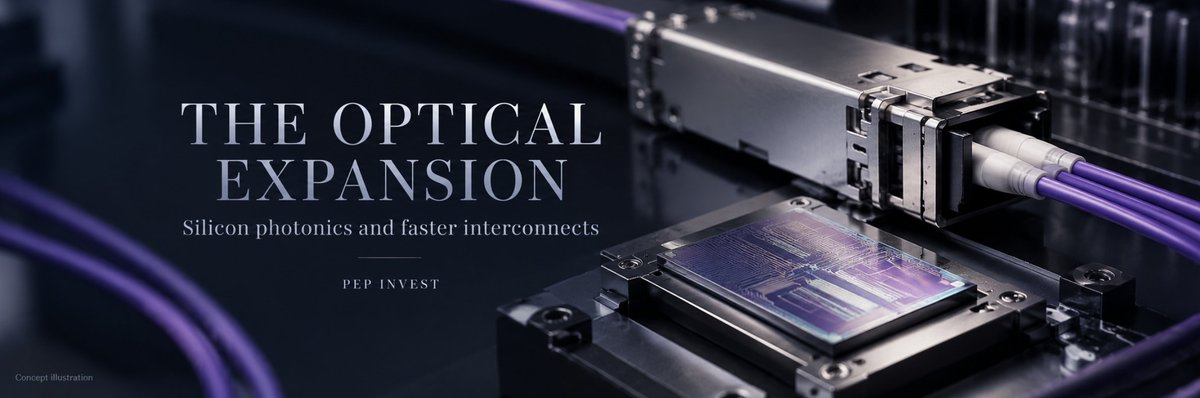
Credo completed its DustPhotonics acquisition on May 28. The transaction added silicon photonics integrated circuits to a portfolio already built around signal processing and high-speed connectivity. Credo described the combined capability as spanning SerDes, DSPs, silicon photonics and system integration across electrical and optical networks.
SerDes circuits convert data between parallel and serial formats for high-speed transmission. An optical DSP processes electrical signals used in the optical link, while a photonic integrated circuit performs optical functions. Having these capabilities within one company can make it easier to coordinate product design and troubleshoot interactions between components.
The September transceiver launch is a concrete example of that integration. My bullish interpretation is that ownership of more of the design could improve product development and give Credo greater control over performance and costs. Whether those advantages reach shareholders will depend on manufacturing yields, pricing and customer adoption.
The optical revenue opportunity is becoming material
When Credo announced the acquisition agreement in April, it expected its combined optical transceiver, optical DSP and silicon photonics portfolio to generate more than $500 million in fiscal 2027 revenue. That was a dated management expectation, not revenue already booked and not revenue attributable solely to DustPhotonics.
The transaction also carried a significant price. The announced agreement specified $750 million in cash and approximately 0.92 million shares upfront, with potential additional share consideration tied to financial milestones.
For that investment to create lasting value, the combined portfolio must earn returns that justify the purchase price. Strong product adoption would help; integration costs, competitive pricing or slower customer ramps could reduce the benefit. I would track optical sales, profitability and cash generation together.
The underlying design capability supports further generations
Credo’s September 2025 introduction of 224G PAM4 SerDes IP on TSMC’s N3 process provides another relevant piece of the technical history. The company positioned it for high-bandwidth connectivity, including 1.6T port designs. IP licensing offers a different commercial route from selling a complete cable or transceiver.
The opportunity therefore extends across several product formats. Customers can engage with Credo at the chip-design stage or buy components and complete interconnect products. That breadth is valuable if the company continues to deliver competitive performance across successive network generations.
Reliability can strengthen the commercial proposition

PILOT combines telemetry with debugging tools to help engineers understand link behavior and identify signal-integrity problems. Credo describes support across electrical and optical interfaces, including live status information and optical monitoring.
I see a potential commercial advantage in making that information useful to operators. A supplier that helps a customer diagnose intermittent faults can become part of its operating workflow. That can strengthen a relationship, although it does not establish a separate recurring software revenue stream.
Credo’s September 14 AI Infra Summit announcement also included an OmniConnect presentation focused on AI inference memory connectivity. I treat this as an additional product-development area to monitor. A scheduled presentation is not evidence of a large production order.
What investors still need to watch
Customer concentration remains a material consideration. Credo’s January 2026 filing described dependence on a limited number of customers and explained that a contract manufacturer may place orders for an end customer. Those are different measures of customer exposure. A longer list of relationships alone does not establish a diversified revenue base.
Profit quality also matters. The latest quarter’s non-GAAP earnings exclude items including share-based compensation and acquisition-related costs. Credo reported $764.3 million of cash and short-term investments at quarter-end, but investors should still assess acquisition spending, working capital and dilution when judging growth.
Competition and architectural change can affect both price and volume. Customers can qualify additional suppliers, redesign links or shift the mix between electrical and optical connections. The DustPhotonics integration adds execution risk, while higher expectations can leave the share price vulnerable even when the underlying business grows.
Why I remain interested in the long term
The strongest bullish case is continued AEC demand alongside a growing optical contribution, supported by customer adoption of integrated products. That would allow $CRDO to increase its role in AI infrastructure without relying on a single connector format or one product generation.
I would look for repeat optical orders, broader revenue participation across customers, stable economics through new product ramps and growth in cash flow per share. Those are the developments that could turn a successful connectivity supplier into a larger and more durable business.
The September launch gives investors something specific to follow.
Credo now needs to demonstrate how widely customers adopt the combined optical platform and how profitably it can deliver it. I find that opportunity compelling, while keeping the business thesis separate from the price worth paying for the shares.
For information only; not personalized investment advice.