malleable agent-native IDE for typed knowledge

a knowledge base should work like a codebase. it needs typed files with relationships and conventions the agent understands
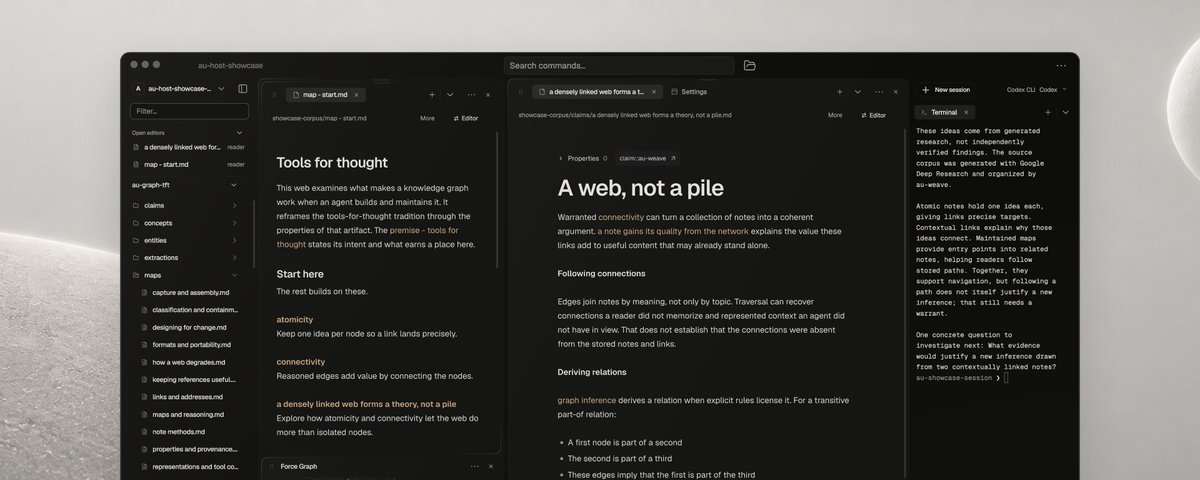
something you keep building on together over time
today we launch the early alpha of @arsumbrisai, a malleable agent-native IDE for typed knowledge
the app is built on a type engine and an extensible agent framework
you can reshape the whole system and build your own apps, components or missing features on top of your knowledge
we built our complete app with the same primitives and SDKs you can use to make it yours
thats what malleable means here. the software itself is something you can extend and modify with the agent using it
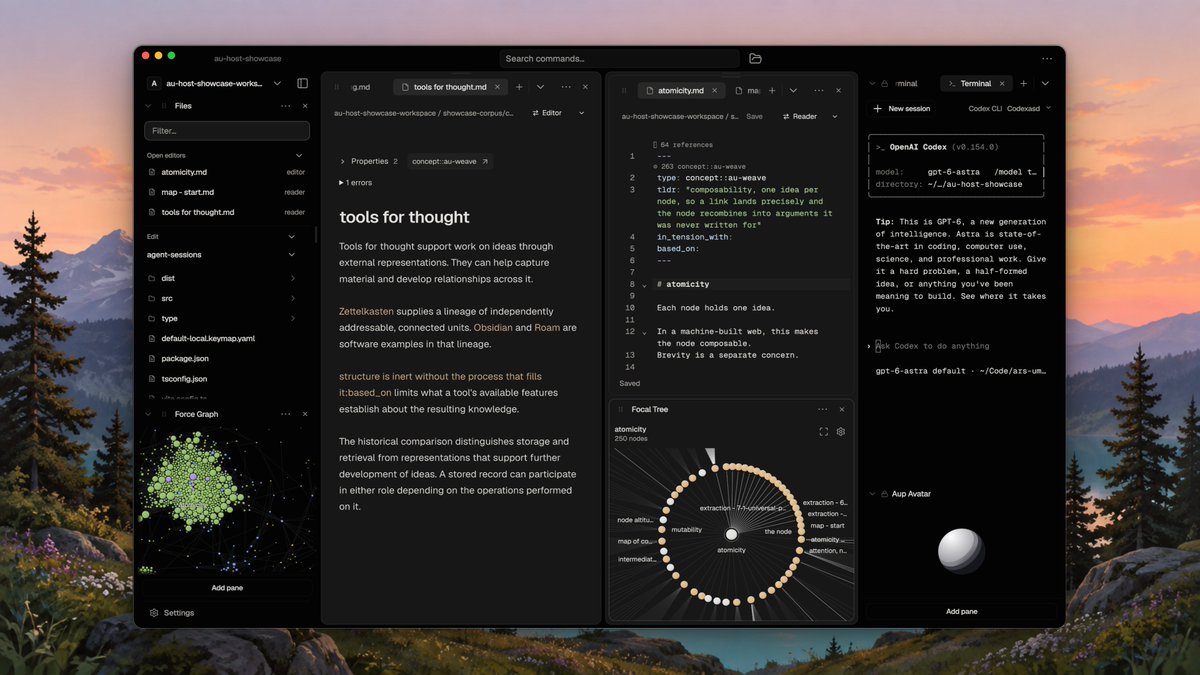
a composable repo for everything
an ars umbris repo is a folder that holds your work and the capabilities for working on it
that includes:
these parts live together as local files in one or more composable repos
a repo might contain a company brain, a research field, a book or just one useful tool another repo depends on
a research workspace might look like this:
my-research/
├── .arsumbris/
│   └── repo.yaml
├── type/
├── questions/
├── articles/
├── skills/
└── projections/
the small manifest gives the repo a name and declares its dependencies, similar to importing packages in a codebase:
name: my-research
deps:
  - name: au-tree-research
that dependency provides the research vocabulary, reusable skills and mcp tools. your own questions and articles stay in your repo
a workspace brings the repos you need together and the engine reads their files as one typed graph
wikilinks work across repo boundaries too. [[a note::another-repo]] points to a note in another-repo, so you can reference existing knowledge where it lives
a shared type works similarly: source::au-base-types names the source type from the au-base-types package
like imports in code, these references make dependencies explicit. you can reuse everything across projects and build new capabilities on top of what another repo provides
knowledge work needs a type engine
in software, compilers, type checkers and linters give the agent feedback about its work
you need something similar for knowledge work
an agent can keep writing pages while broken links, missing fields and inconsistent structures accumulate. the next session reads those files and builds on those mistakes
telling the agent to follow conventions helps on a small scale, but a compounding structure needs checks that run independently of whether the model remembers to look
in ars umbris you define the shapes of your knowledge as types. the engine checks fields, required sections and the kinds of objects a reference can point to
say you define a minimal claim type with a required reference to a source:
# type/claim.type.yaml
fields:
  source: source::au-base-types*
the agent writes a claim like this:
---
type: claim
---

a knowledge graph needs structural checks
the source field is missing, so the engine reports a diagnostic against that note
the agent can read them through its tools, fix it and check the result
checking whether the source actually supports the claim still takes judgment. but the typed relationships give you and your agent something explicit to follow and verify
the same graph also supplies the IDE with definitions, references and type-aware views
a meta harness for one shared state
ars umbris connects different agent harnesses to that working environment
claude code and codex connect through mcp adapters. each session has its own conversation and context, but sessions in the same workspace can read and change the same durable files
when an agent records something, another can inspect it and continue from that state. you choose the tools, skills and guidance each session works with
thats why we think of it as a meta harness. you shape the environment around your agents while they work on one shared representation
tools and hooks are plugins, skills and profiles are typed files and the UI is composed from typed projections. you can build and recombine these parts around the graph
you get one agreed state that you and your agents can inspect, revise and keep building on
the art of shadows (ars umbris)
a graph can grow far beyond what you can comprehend at once. externalizing it gives it a form, but you still need ways to build your own understanding
this draws on giordano bruno's shadows of ideas: the shadows we perceive reveal only a part of the deeper reality behind them
the graph models the relationships between your ideas. projections render slices of that structure. each reveals a part and moving between them helps you understand the whole
ars umbris is a collaboration workspace where humans and agents build that understanding together
thats what the art of shadows means to us: shaping the views through which we understand and steer a structure we cannot hold in our minds all at once
the name is an homage to ars memoriae, ars combinatoria and the renaissance tradition of building structures to think with
you should own your repos
your thinking should survive the tools you use to work on it
its all markdown, yaml, media or code files on your machine. you can keep it in git, inspect the files with another editor and keep reading them even if you stop using ars umbris
start with a repo for something you actually want to work on. build the knowledge together, then build the tools you need around it
heinrich, @feriederich and @lt0gt
DISCLAIMER:
@arsumbrisai is in early alpha and work-in-progress. expect breaking changes as we develop the framework
for now its macos only and youll need to compile it yourself from the source on github. prebuilt releases and support for other platforms will follow soon
github: link in comments
