Gen X, Gen Z, Boomers you know what we are getting at, but have you...

The Paperclip@Paperclip_In
53 views
Aug 12, 2026
~4 min read
Advertisement
1
Gen X, Gen Z, Boomers you know what we are getting at, but have you wondered why all these people are clubbed into something called a generation? Let us, or rather, let Karl Mannheim explain. 1/20

2
In 1923, Karl Mannheim, a Hungarian sociologist, while working on his post-doctoral studies at Heidelberg University in Germany, published a profound essay which he titled ‘Das Problem der Generationen’ or the problem of Generations. 2/20

3
Mannheim explained that people are significantly influenced by the socio-historical environment of their youth, giving rise, on the basis of shared experience, to social cohorts that in turn shape and influence future generations. 3/20
4
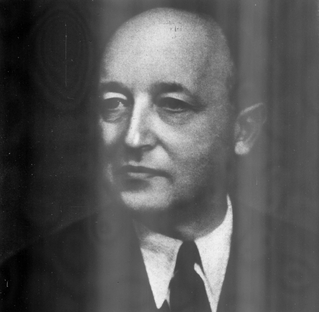
But first, some background. Karl Mannheim grew up in Budapest, where his father worked as a textile merchant. During the First World War, Mannheim moved through the intellectual circles where some of Europe’s greatest minds converged. 4/20
5
The Galileo circle was founded by Karl Polanyi, which also included Mátyás Rákosi, who later became the communist dictator of Hungary from 1948 to 1952. Manheim was also part of the Sonntagskreis or 'Sunday Circle' founded by György Lukács, one of the key proponents of Western Marxism. 5/20
6
When Miklós Horthy came to power as Regent of Hungary, he banned the Hungarian Communist Party and later the far-right Arrow Cross Party. Under his regime, activists and people across the political spectrum were viewed with suspicion, as political dissent increasingly came under scrutiny. 6/20

7
It was at this time that Mannheim decided to leave his home country and seek refuge in Germany, where he started pursuing his post-doctoral studies. In 1926, Mannheim was selected to teach social sciences over candidates, which even included the philosopher Walter Benjamin. 7/20
8
Mannheim left Germany during the height of the Nazi regime because of his Jewish heritage. He would ultimately settle down in London, teaching at the London School of Economics. 8/20

9
Now, coming back to his theory, Mannheim described a generation as something different from kinship or blood-related generations. His generation is a group of people of similar ages who have experienced a significant historical event in a set period of time. 9/20
10
He also said that social consciousness and the perspectives of people in a generation would be significantly influenced by a key event in that era, thus shaping their lives. So, in theory at least, a particular generation would have its own set of perspectives and distinctive identity. 10/20
11
He also argued that social change could unfold gradually, without the need for a single defining event. Yet even such gradual transformations, he maintained, were likely to emerge amid periods of intensified social and cultural change. 11/20
12
While important, Mannheim’s theory was just a theory until it was practically applied. So, we start with the Baby Boomer generation. Born between 1946 and 1964, their generation was about rebuilding the world after the devastation caused by the Second World War. 12/20

13
The Generation X label first appeared in a photo essay by the photojournalist Robert Capa in 1953. Interestingly, Capa was also of Hungarian descent. The essay was on young men and women coming of age following the Second World War. 13/20

14
To quote Capa himself, “We named this unknown generation the Generation X.” The name resurfaced decades later when a British publication released a book on youth culture titled Generation X. From there, Gen X became the preferred label for those born after 1964. 14/20

15
It was not, however till 1991 that Douglas Coupland’s book titled Generation X: Tales of an Accelerated Culture solidified the name. Coupland explained that the letter X was meant to signify the generation’s desire not to be defined. 15/20

16
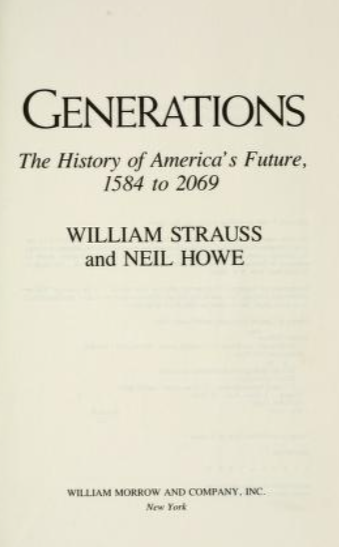
In the same year, American authors William Strauss and Neil Howe came up with a theory of their own. They theorised a recurring generation cycle in which historical events are associated with generational personas called archetypes. 16/20
17
Each persona is released into a new era, which typically lasts for 21 years; each cycle might be different from the other in terms of its social, political, and economic aspects. The theory further contextualises Mannheim’s generation theory. 17/20
18
Furthermore, it was Strauss and Howe who coined the term millennials. In their book Millennials Rising: The Next Generation, published in 2000, they discussed the various aspects of the millennial generation whose oldest members graduated from their class in the year 2000. 18/20
19
Though the naming of the generations doesn’t follow normal conventions, it was done alphabetically to maintain some form of consistency from Gen X to Gen Y(Millennials) to Gen Z and then, with Gen Alpha, the first letter of the Greek alphabet. 19/20
20
Do the Labels help? They might help to understand some historical context, but in many cases they can lead to stereotypes.
Which generation are you, and what has been the most significant moment in your generation? Let us know in the comments. 20/20
Which generation are you, and what has been the most significant moment in your generation? Let us know in the comments. 20/20
21
Sources: “Karl Mannheim (1893–1947): A Cosmopolitan Outsider at LSE.” LSE History, June 5, 2024.
Pilcher, Jeffrey M. “Mannheim and the Sociology of Generations.” British Journal of Sociology 45, no. 3 (1994): 481–495.
NPR. “Don’t Label Me: Origins of Generational Names and Why We Use Them.” October 6, 2014. NPR article
Pilcher, Jeffrey M. “Mannheim and the Sociology of Generations.” British Journal of Sociology 45, no. 3 (1994): 481–495.
NPR. “Don’t Label Me: Origins of Generational Names and Why We Use Them.” October 6, 2014. NPR article
22
Image attributes: @WikiCommons; magnumphotos.com/newsroom/gener…; frontline.thehindu.com/columns/gen-z-…