THE NECK TRAINING GUIDE

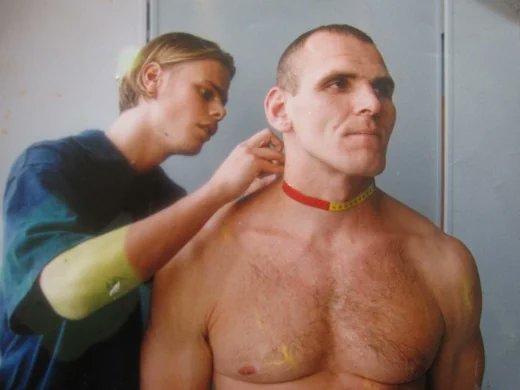
The neck is one of the, if not THE, first muscle groups that makes an impression. When meeting somebody the first true muscle group you'll see is the neck, even when wearing a t-shirt or button up. Everyone has seen the mugshot and Channing Tatum edit with the thin vs thick neck, and while these might be slightly ridiculous; the essence is correct.

As I mentioned in my initial post regarding neck training, even the lads at the lower weight classes in the wrestling rooms look like studs, simply because they have a neck that is difficult to snap.
For me personally, I added neck training immediately after watching Bugenhagen in 2019 when I realized I had pencilneck, at least way out of proportion with my wider frame. This was about 1-2 years before I went full into grappling, and while I saw great results with directly targeting the muscle group, it went parabolic after incorporating both.

I'm definitely not the first to write about it, other people who have mentioned neck training a lot would be Josh Bryant from Jailhouse Strong (Tom Haviland by extension), Eric Bugenhagen, JT Performance on IG, and Laird Hamilton in his documentary Take Every Wave.
However, to this day I have never seen anybody but myself train the neck directly (in conventional gyms that is). This would mean that even with multiple people talking about it in the past; it still did not stick.
This guide will serve as an introduction to necktraining so that you can incorporate it into your weekly workout routine, with exercises at an incremental difficulty.
Why train the neck directly?
A stronger neck carries over hard to wrestling and jiu jitsu. In wrestling, it helps you keep posture in ties, resist snapdowns, and stay harder to fold when someone is driving through your head or collar. It also helps with hand-fighting because your whole upper chain stays more organized when the head and neck are not collapsing.
In jiu jitsu, neck strength matters in frames, bridges, reversals, and surviving bad positions. It helps you keep your head safer when someone is trying to flatten you, crank you, or force your posture down. That extra strength also makes front headlock positions, guard retention, and stand-ups feel more stable because your neck is part of the structure, not the weak point.
It also carries over to rugby, striking and general athletics. For boxing, a stronger neck can help you keep your chin tucked, maintain posture when you’re moving, and better tolerate impact and head movement under pressure. In other physical activities, it can improve bracing for heavy lifting, rough contact, falls, carrying, scrambling, and any movement where your head needs to stay controlled while the rest of the body is working hard.
Some would argue it can help prevent concussions during car crashes, but I wouldn't recommend being the N=1 for that.

The Exercises
Let me first state: I'm not a physical therapist. An untrained neck is prone to overload quickly, so it's important to build the strength up in increments.
This started the same way for myself, and I built it from the ground up.
Don't watch one Mike Tyson video and hop straight into neck bridges (even though they can be performed with perfect safety).
That being said, let's look at some of the (many) exercises
Phase 1 - Pencilneck stage, build control and tolerance
Light, forgiving, perfect for teaching your neck what tension feels like. You learn to brace in each direction without overloading joints or discs.
Lying on a bench, holding a plate to the forehead or back of the head, slowly flexing and extending. Early on, the goal is control and time under tension, not load. This builds basic strength and endurance in the anterior and posterior chains. Start off with no resistance, then add a 5kg plate. You can use a towel or beanie for comfort.
This is part of all my wrestling sessions. You can either do this by yourself or with a training partner, simply by putting slight resistance on the neck and extending. It’s crude but effective for waking up deep stabilizers and learning to push against a live, changing force.
These are the first exercises to look into when starting neck training. They ensure a strong base before loading the neck more and helps prevent injuries.

Phase 2 – Intermediate, build strength and range
Heavier plates, stricter tempo, longer sets. This is where you start to see visible hypertrophy. At this point, you can start doing both curls and extensions with 10kg + plates. Keep it controlled.
Controlled bridges on a bench or mat, focusing on dynamic reps instead of static max holds. This builds strength through range, teaches the neck to support bodyweight, and conditions the posterior chain for wrestling positions. This is the step proceeding neck bridges.
Set the cable, lock your head in position, and hold against load. Track the weight and the time. This one is the easiest to do in increments, as you simply add more weight onto the cable machine.

Phase 3 – Advanced, armor building
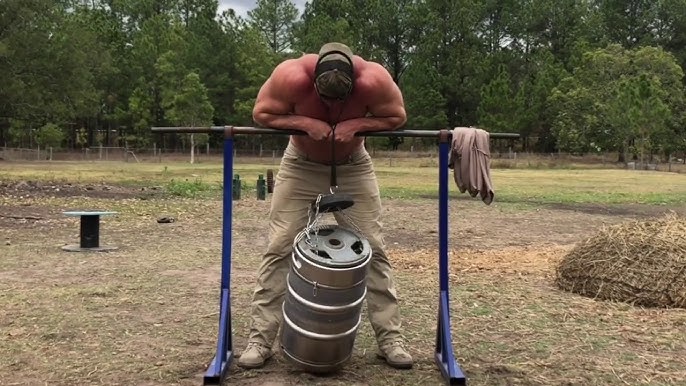
This could actually be implemented at an earlier phase as you can start light with it. However, as it requires you to buy a neck harness, I would implement it after covering the free basics. Harness work lets you load all planes – forward, backward, lateral, and rotational. It’s simple to progress, brutally effective, and builds both size and strength. Easy to use at home as well, you can simply pull the chain down and use manual resistance that way.
If you have access to a sled at your gym, you can use the neck harness to pull the sled. Easy to load, and safe since there is no resistance on your neck as long as you are not pulling (nothing is hanging from your neck or pushing back).
The one exercise people think of when they hear neck training (because of that Mike Tyson video). And since Mike Tyson had neck issues at a later stage in his life, people assume it is BECAUSE of wrestler bridges. However, if you have truly built up neck strength with training, they are a great tool for both neck strength and flexibility. Start off with short static holds, and increase the time under tension. When it starts feeling comfortable, add some momentum. It is important to gradually build this up, as you are putting your bodyweight on your neck. They’re a finishing tool for athletes who already bridge and enjoy it, not a starting point.
These are not all exercises that are out there for training neck, but will cover all bases.
I know there are tons of other accessoires for training the neck (e.g. Iron Neck), but those are redundant at the earlier stages. You can build the neck without any tools with most of the exercises above. If you're going to buy anything, get a simple neck harness.
Implementing (The Protocol)
You don’t need a “neck day.” You need a small, consistent dose of work, 2–3 times per week, layered onto what you already do.
The simple rule of thumb:
If you’re in Phase 1 (pencilneck / beginner):
Plate neck flexion (light) – 2–3 sets of 15–20
Manual resistance extension – 2–3 sets of 15–20
You can slot this at the end of upper-body days or before wrestling/judo/BJJ. The goal here is exposure and coordination, not max effort.
If you’re in Phase 2 (intermediate):
Plate neck flexion (progressed, e.g. 10 kg+) – 2–3 sets of 15–20
Bench bridges – 2–3 sets of 15–20 dynamic reps/static holds to near failure.
Or:
- Cable isometric holds (flexion or extension, timed holds) – 2–3 “sets” of 20–30 seconds
- Plate neck extension – 2–3 sets of 15–20
You still keep reps relatively high; intensity comes from time under tension and consistency, not from ego loads.
If you’re in Phase 3 (advanced / armor building):
Neck harness flexion – 2–3 sets of 15–20
Neck harness extension or rotation – 2–3 sets of 15–20
Bonus day (if you’re deep into it):
- Sled pulls with harness – 4–6 short pulls
- Wrestler bridges – 2–3 sets of short static holds, gradually building time and then adding momentum over weeks, not days
You can also treat harness work like any other accessory lift: tag it onto your main strength sessions, track the load, and progress slowly.
Two important points:
A simple way to begin:
2 days/week, Phase 1 exercises, 2×15–20 each.
3 days/week, mix Phase 1 + Phase 2, still in the 15–20 rep range.
Introduce the harness and, when the neck start the get stronger, you can look into neck bridges.
I started this without a childhood base, without years of wrestling behind me. All my neck gains came from the last 5-6 years when I was only doing neck curls with manual resistance, and gradually went up in resistance and got a neck harness. Only started wrestling around that time as well.
Sleep apnea
Sleep apnea gets brought up a lot with neck training, so I want to address it directly. Personally, I haven’t experienced anything of the sort, and I have a feeling this is not directly caused by neck training, but rather by increased neck size from gaining weight in general. If you are going to gain a ton of weight, especially non-lean body mass, you are more prone to health complications to begin with. No guarantees, but I'd highly doubt you'd get sleep apnea simply from implementing some neck training into your routine.
All of that being said:
Don't neglect the neck


