Mumbai has an elegant solution for slums: relocate residents to...

Paul Novosad@paulnovosad
76 views
Jul 30, 2026
~2 min read
Advertisement
1
Mumbai has an elegant solution for slums: relocate residents to tall buildings on some of the slum real estate, develop the rest.
This is an elegant solution to the perpetual slum dilemma: cast out the poorest, or accept low value land use in perpetuity. Did it work? 1/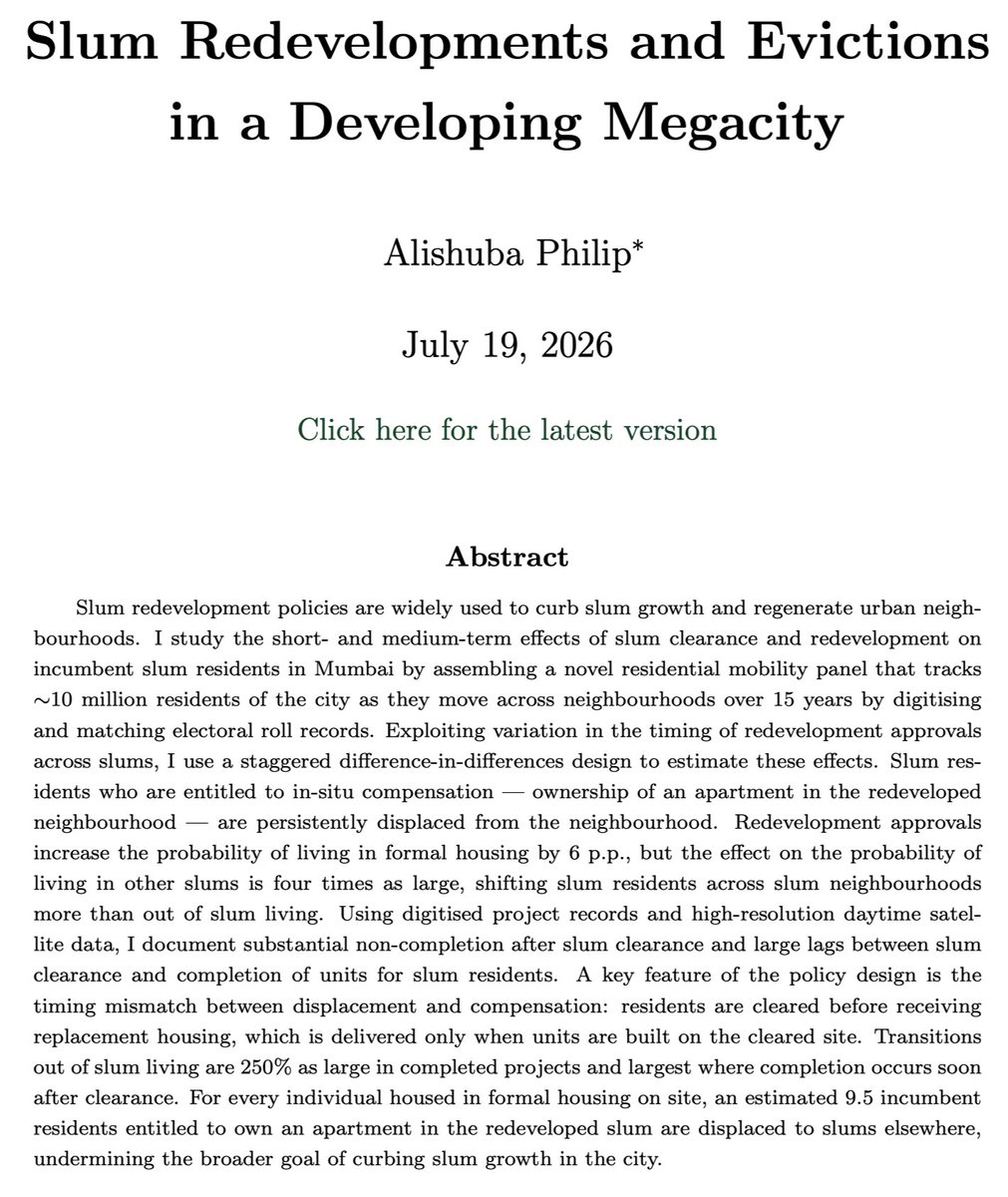
This is an elegant solution to the perpetual slum dilemma: cast out the poorest, or accept low value land use in perpetuity. Did it work? 1/
2
This is an incredible paper. 10 years ago, it was nigh unheard of to be able to track people at scale after their slums were redeveloped.
It turns out electoral rolls in India have tons of identifying info — ages, parent names, etc — and are updated every five years. 2/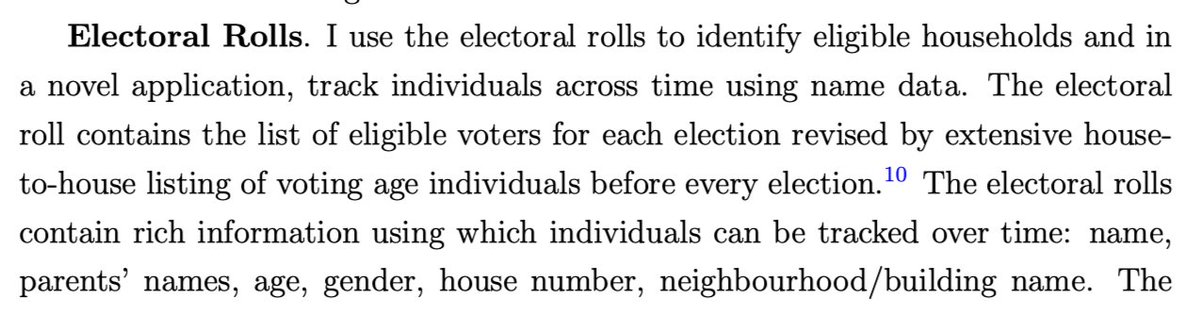
It turns out electoral rolls in India have tons of identifying info — ages, parent names, etc — and are updated every five years. 2/
3
Aside, I look forward to seeing voter data get as established as historical US Censuses as a tool for understanding economic change in India.
There is so much there, and so many individual researchers are doing overlapping work making sense of them. We need a SHRUG for this! 3/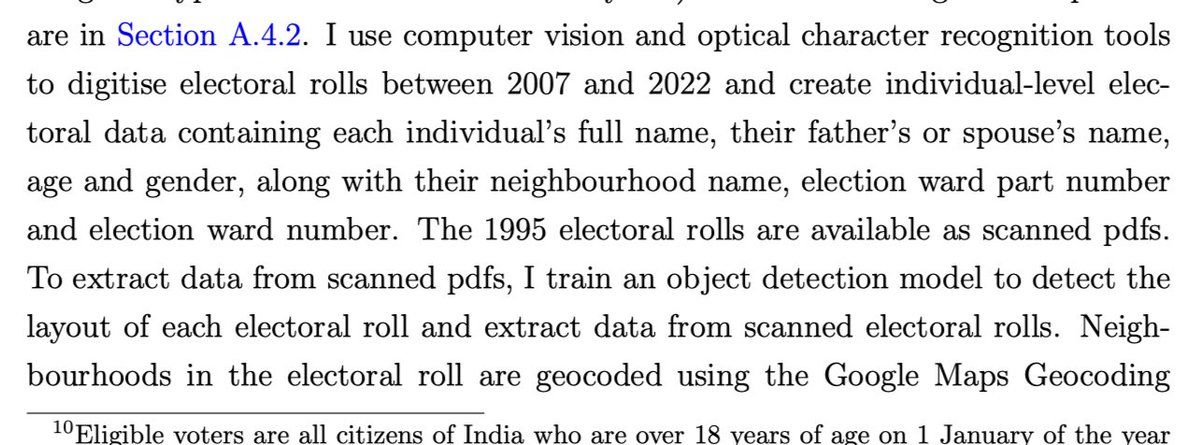
There is so much there, and so many individual researchers are doing overlapping work making sense of them. We need a SHRUG for this! 3/
4
Does the program work?
Argh, only if you can actually run the gauntlet and actually build something.
Only a 1/3 of approved projects get redeveloped. Worse, over 1/3 get cleared but not redeveloped 🤦♂️ 4/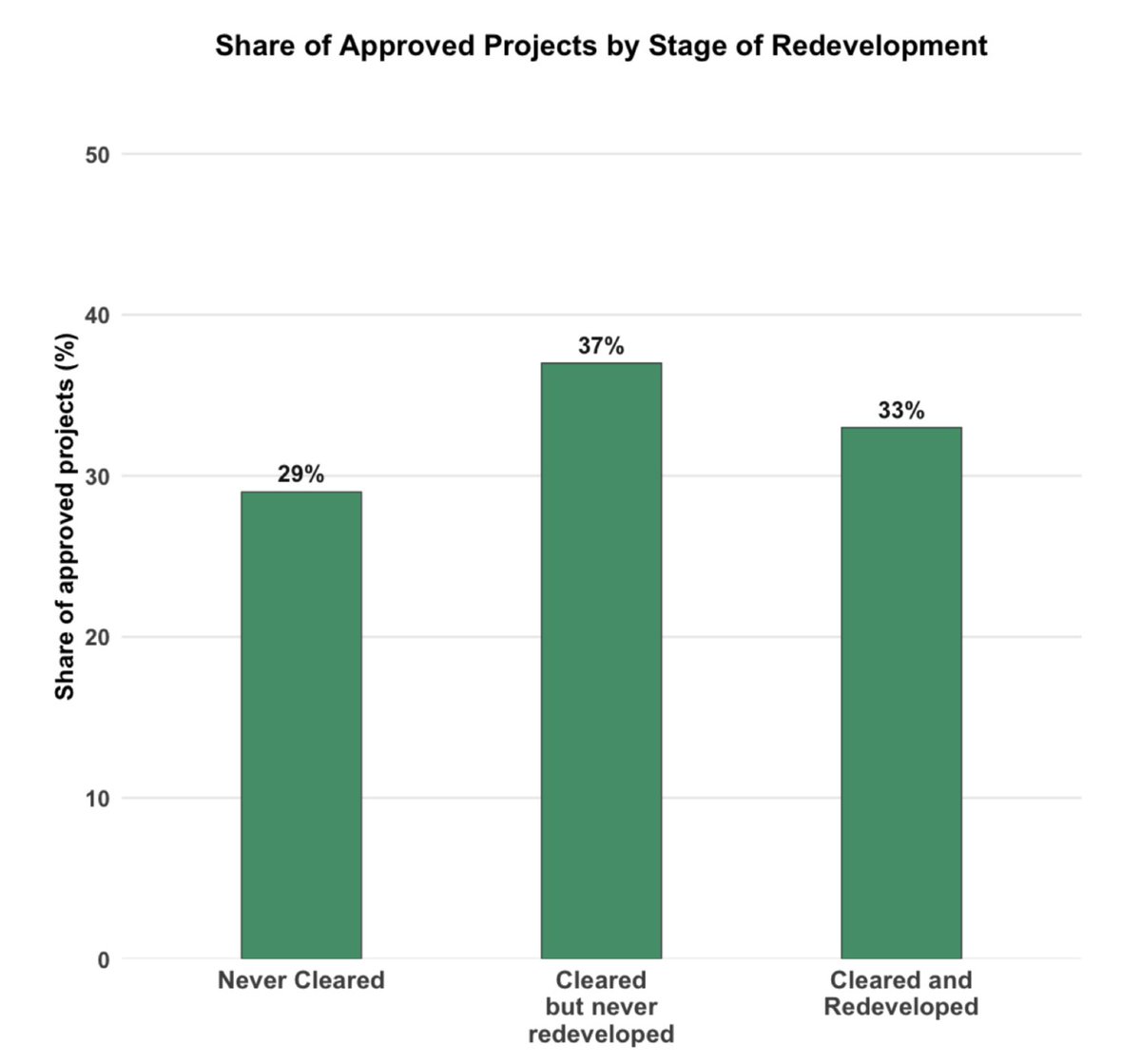
Argh, only if you can actually run the gauntlet and actually build something.
Only a 1/3 of approved projects get redeveloped. Worse, over 1/3 get cleared but not redeveloped 🤦♂️ 4/
5
Distribution of time taken for construction, conditional on completion.
Honestly the 6-year mean/medians aren't crazy, but this is still a serious negative shock if you're in the "don't worry you're eligible for a new apartment" category 5/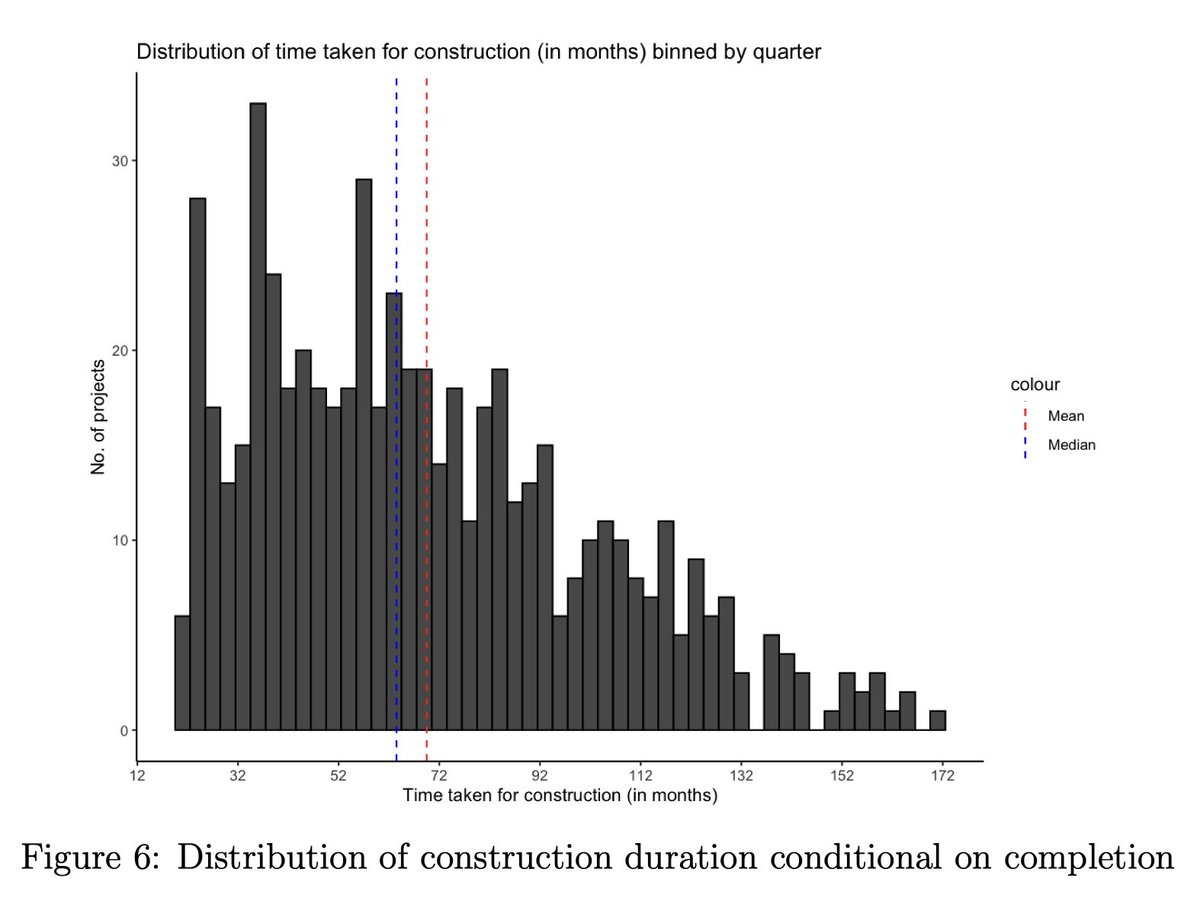
Honestly the 6-year mean/medians aren't crazy, but this is still a serious negative shock if you're in the "don't worry you're eligible for a new apartment" category 5/
6
You have to be on the 1995 electoral roll to be eligible for a new apartment in the redeveloped slum.
But 5–10 years later, you can barely tell the difference between eligible and ineligible residents.
Graph shows share no longer living on slum premises. 6/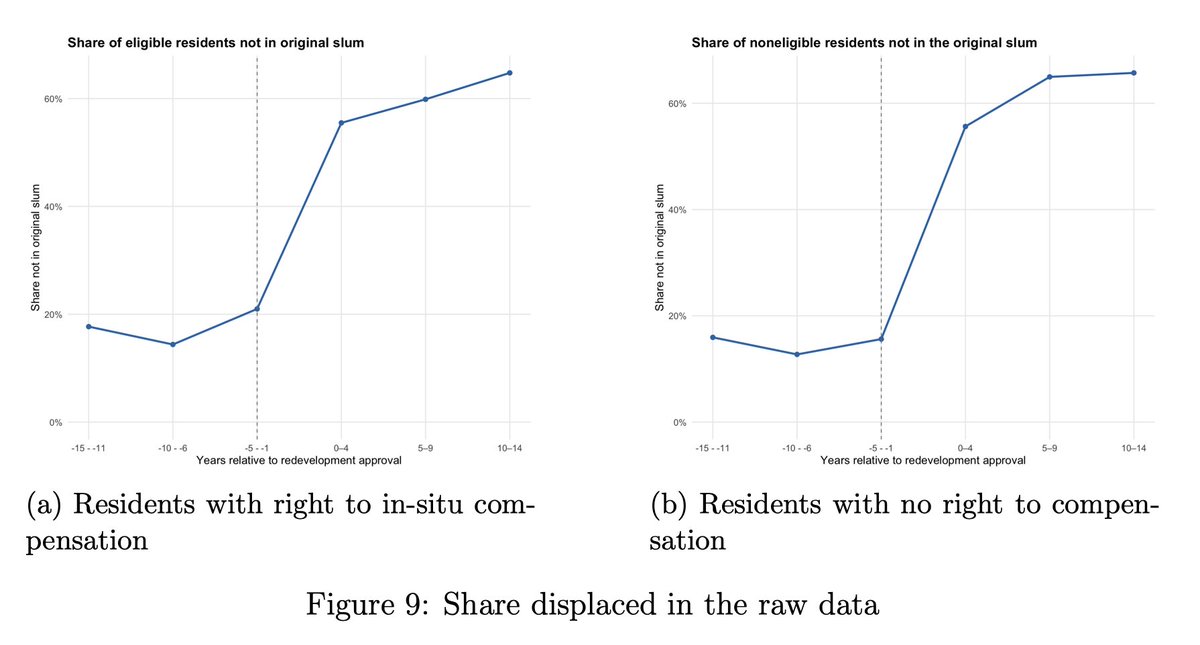
But 5–10 years later, you can barely tell the difference between eligible and ineligible residents.
Graph shows share no longer living on slum premises. 6/
7
Compensation for redevelopment works at least a little bit *when you actually get the redevelopment done*
(Though even in areas that got redeveloped, only 17% of compensation-eligible slum residents are living in a formal neighborhood)
(Though even in areas that got redeveloped, only 17% of compensation-eligible slum residents are living in a formal neighborhood)
8
Another case of "Justice delayed is justice denied."
If the redevelopment happens quickly, slum residents manage to claim formal housing in the new slum.
When it takes a long time, they don't. 8/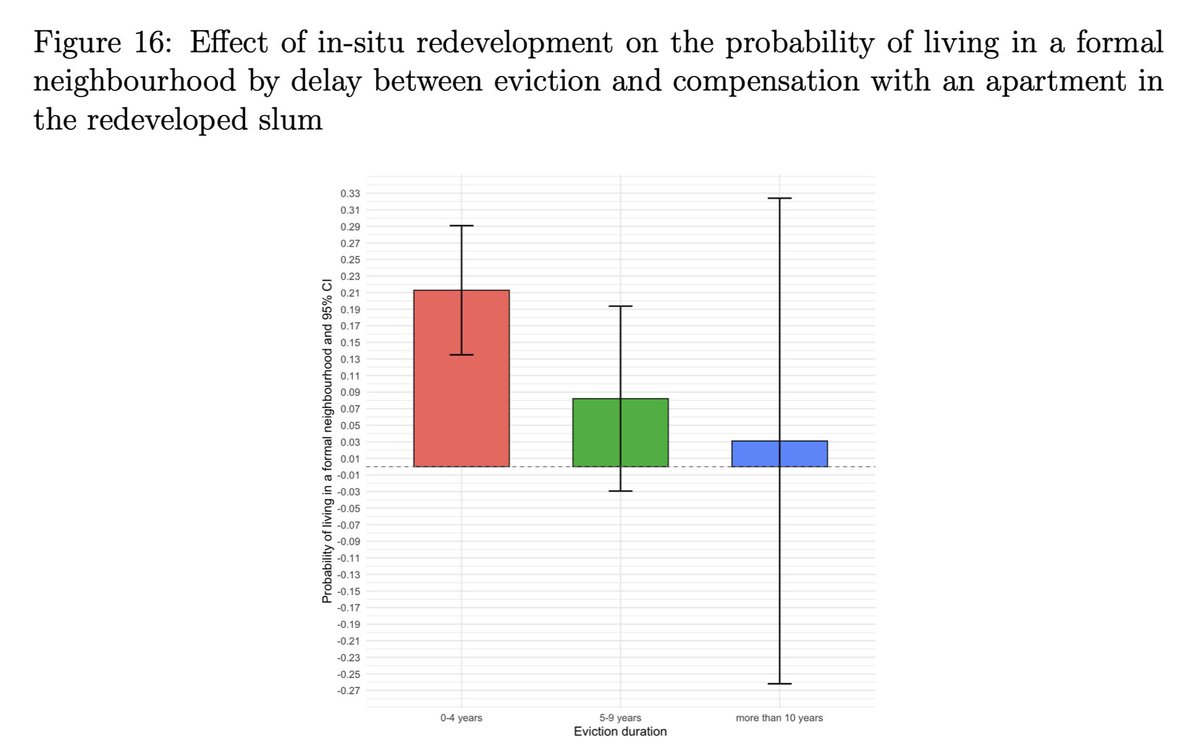
If the redevelopment happens quickly, slum residents manage to claim formal housing in the new slum.
When it takes a long time, they don't. 8/
9
I'm not sure what is happening with the "compensated" families who don't end up in a formal neighborhood.
Did they manage to sell the rights, or just get defeated by the bureaucracy?
Who gets the new property right? Could be some perverse developer incentives here. 9/
Did they manage to sell the rights, or just get defeated by the bureaucracy?
Who gets the new property right? Could be some perverse developer incentives here. 9/
10
The paper is super impressive and looks like an instant classic.
Alishuba Philip is a PhD student at the University of Zurich.
You can watch her present this paper in ~1 hour (8:55 ET today), YouTube link here: nber.org/conferences/si…
Alishuba Philip is a PhD student at the University of Zurich.
You can watch her present this paper in ~1 hour (8:55 ET today), YouTube link here: nber.org/conferences/si…