How we generated 20.3 million clicks with a buy-intent programmatic SEO Claude agent

If you want AI to automate content that drives traffic AND CONVERTS, but:

↳ When you push 1,000 pages, Google penalizes your site.
↳ Your agent writes AI slop.
↳ You think programmatic SEO is dead.
Then keep reading because I'll show you the difference between Buy-Intent programmatic SEO and high-volume SPAM.
I built a Claude Agent to automate Buy-Intent pSEO 👈
...because most AI SEO systems are broken:
↳ Pick a high-volume keyword.
↳ Ask a model for 2,000 words.
↳ Publish it.
↳ Repeat until the content calendar looks busy.
That is high-volume SPAM with an API.
Across 397 Google Search Console properties connected to Distribb, the sites recorded 20,319,728 organic clicks and 670,133,194 search impressions from July 20, 2025 through July 18, 2026.
I analyzed 1,000 high-buy-intent Google queries, then turned 10 of those buying decisions into equivalent ChatGPT prompts and compared the winners.

I used those findings to teach Claude what to build for each type of buying decision.
Pick high buy-intent keywords that convert
The unit of useful programmatic SEO in 2026 is not a high-volume keyword but a buying decision.
A high-volume keyword tells you what people search. A buying decision tells you why they have not paid yet.
People search:
↳ [product] alternatives
↳ [x] vs [y]
↳ [product] pricing
↳ [product] cost
↳ [product] review
↳ [product] free trial
↳ [product] discount
These searches are close to money, but they are not the same intent.
Someone looking for alternatives wants a reason to switch. Someone searching pricing wants the real cost. Someone searching reviews wants proof from somebody other than you.
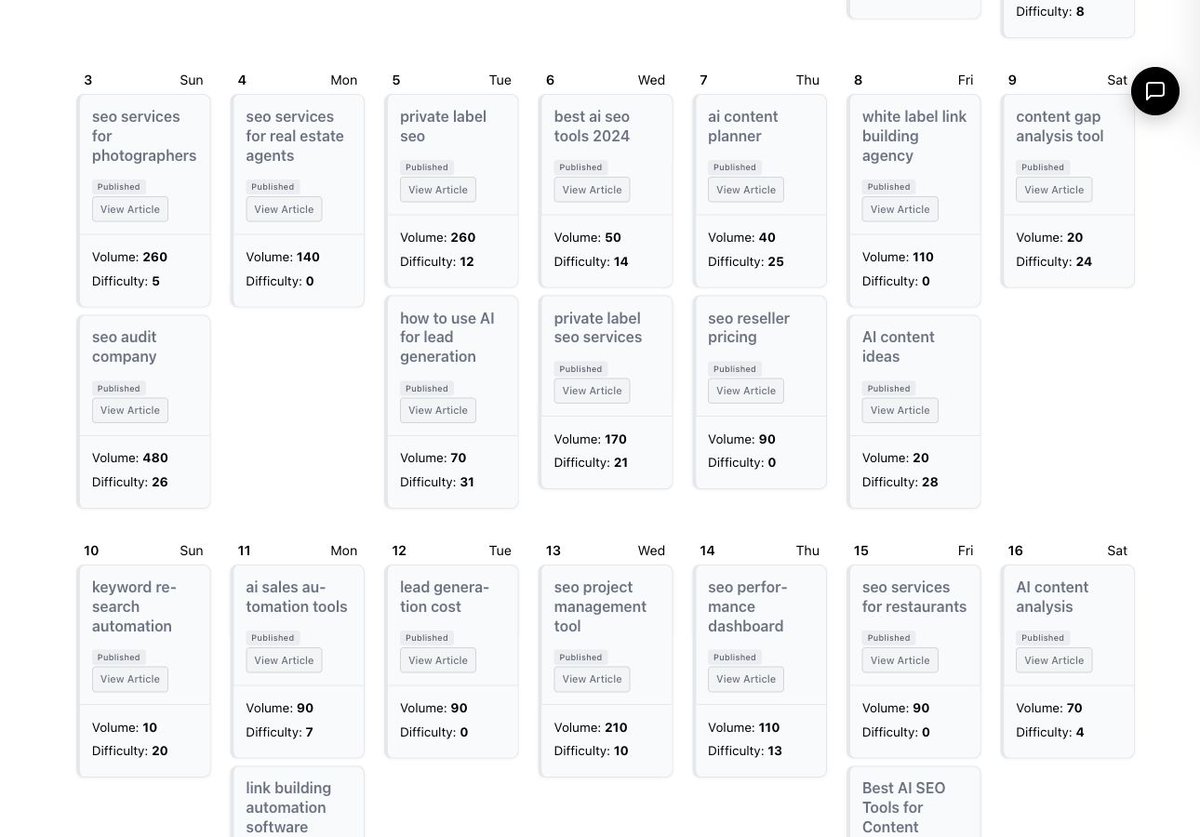
What ranks for 6 Buy-Intent searches closest to a purchase
1️⃣ Alternatives: give people a reason to switch
Across the alternatives queries in my 1,000-query study:
↳ 79% of ranking pages used a number in the title.
↳ 50% used a year.
↳ 84% ranked outside the searched brand's domain.
↳ The median winner had 3 backlinks.
The buyer already knows the product. Your page needs to explain why they should switch and which alternative fits them best.
Claude should compare:
↳ Why customers switch.
↳ Price and contract differences.
↳ Missing features.
↳ Migration effort.
↳ The best fit for each buyer.
↳ The limitation most likely to stop the sale.
Takeaway: Do not summarize 17 product homepages. Give the buyer a shortlist and tell them who should choose what.

2️⃣ Comparisons: help the buyer choose between two finalists
For X-vs-Y searches:
↳ 71% of ranking pages were published by one of the two brands.
↳ 79% matched the comparison directly in the title.
↳ The median winner had 2 backlinks.
You do not need a giant domain to rank the comparison your prospects already ask about on sales calls.
The page should:
↳ Compare both products using the same criteria.
↳ Show the real price.
↳ Explain where the competitor wins.
↳ Give a verdict for different buyer types.
↳ End with the correct next step.
Takeaway: If your product wins every row, you did not publish a comparison. You published an ad.

3️⃣ Pricing and cost: answer the money question once
Across 118 paired product sets, pricing and cost searches ranked the same URL 92% of the time.
At least 87% ranked a page on the product's own domain.
One canonical page should answer:
↳ Plans.
↳ Usage limits.
↳ Add-ons.
↳ Billing terms.
↳ Real total-cost examples.
↳ What the buyer should do next.
Takeaway: Do not create three weak articles for pricing, cost and fees. Update one useful page and make it the best answer.

4️⃣ Reviews: get proof from somebody else
Sixty-six percent of ranking review pages were outside the product's domain.
Eighty-nine percent displayed an author byline.
The intent is simple: “Can I trust this product?”
For review keywords, Claude cannot publish on your site and stop there:
↳ Make your product facts easy to verify.
↳ Earn first-hand reviews.
↳ Get included in credible roundups.
↳ Give independent writers screenshots, current pricing and real limitations.
5️⃣ Trials: remove every reason not to start
Eighty-nine percent of free-trial searches ranked a page on the product's own domain.
Eighty-nine percent placed the CTA above the fold.
The first screen should answer:
↳ How long is the trial?
↳ What is included?
↳ Is a card required?
↳ What happens when it ends?
↳ Where do I start?
Takeaway: If an old help article or an affiliate owns your free-trial search, you do not have a content problem. You have a conversion problem.

6️⃣ Discounts: prove the offer is real
Discount and free-trial searches ranked the same URL only 10% of the time.
They are different buying decisions.
Trial intent asks: “Can I use it?”
Discount intent asks: “Can I buy it for less, and what is the catch?”
The discount page needs:
↳ The amount.
↳ Eligibility.
↳ Expiration.
↳ Exclusions.
↳ Renewal price.
↳ Redemption instructions.
Takeaway: If the offer does not exist, Claude should not invent one because the keyword has volume.
The difference between Buy-Intent pSEO and high-volume SPAM
High-volume SPAM starts with a keyword and forces it into an article template.
Buy-Intent pSEO starts with the buying decision, then Claude chooses the right page type or skips publishing.
Before Claude writes anything, it asks:
1️⃣ Is this query close to a trial, demo, quote or purchase?
2️⃣ What is stopping the buyer from choosing?
3️⃣ Does this need a listicle, comparison, pricing page, review, trial page or offer page?
4️⃣ Does the site already have a page that should be updated instead?
5️⃣ What evidence would make the page worth ranking and citing?
6️⃣ Does the answer also need proof from a third party?
The output might be a new article, a pricing-page update, an internal link, a comparison rewrite, a reviewer brief or no new page at all. A useful SEO agent has to know when not to publish.
The 9-step Claude workflow I built
1️⃣ Give Claude the business so it gathers context
Claude learns what the company sells, who buys it, the action that creates revenue, its competitors, existing pages, brand rules and publishing setup.
2️⃣ Find the questions closest to money
Search Console shows what people already search and which pages Google already trusts.
Sales calls, reviews, support tickets and lost-deal notes reveal the constraints buyers add before making a decision.
Keyword volume is one input. How close the query is to a trial, demo, quote or purchase decides what gets built first.
3️⃣ Create a Google query and an AI prompt for the same decision
The Google query might be:
best CRM for recruiting agency
The ChatGPT prompt might be:
What is the best CRM for a 15-person recruiting agency that needs Gmail sync, simple reporting and a fast setup? Recommend one and explain the trade-offs.
The ChatGPT version adds the real buyer constraints Claude needs to answer on the page.
4️⃣ Inspect who already wins
For Google, the agent records:
↳ Which pages rank.
↳ Who owns them.
↳ Which format Google prefers.
↳ What the titles promise.
↳ What evidence the pages use.
↳ What the current results miss.
For AI, it records which products get recommended and which sources support the answer.
5️⃣ Choose the right asset
Claude does not receive a permanent “write a blog post” instruction.
It decides whether to create or improve a comparison, listicle, pricing page, trial page, offer page or review-distribution brief.
6️⃣ Build the page around evidence
Every page needs something a keyword-swapping template cannot produce:
↳ Current prices.
↳ Screenshots.
↳ Real limitations.
↳ A consistent comparison method.
↳ Named authorship.
↳ A recommendation you can defend.
Without this evidence, Claude is just swapping keywords into the same article 1,000 times.
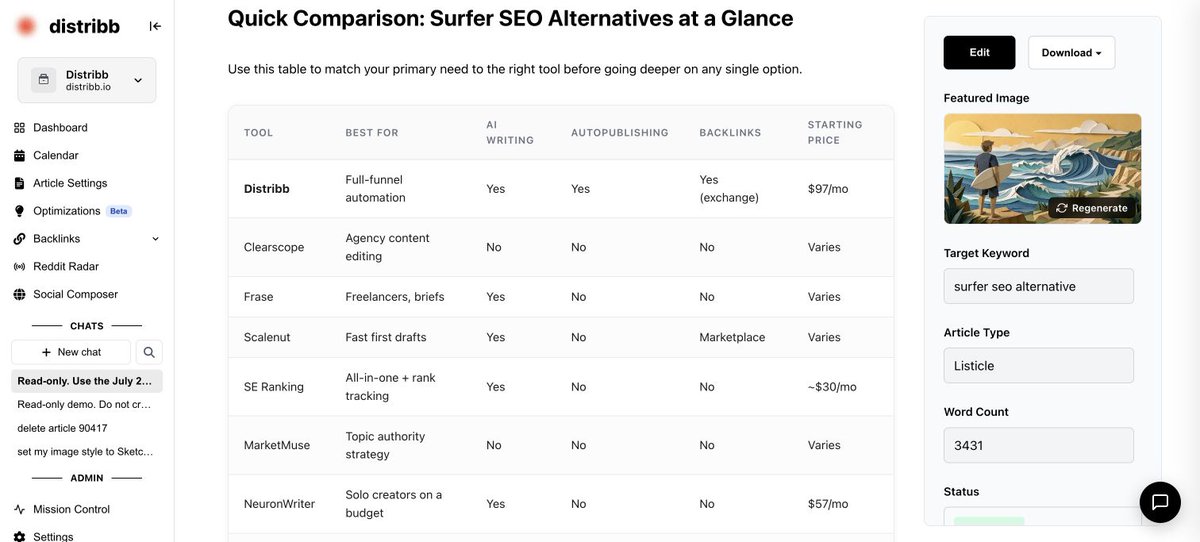
7️⃣ Connect the page to the rest of the site
The agent finds internal-link opportunities, avoids keyword cannibalization and connects related buying decisions into a cluster.
8️⃣ Publish through the CMS you already use
The same workflow can publish through WordPress, Webflow, Shopify, Ghost, Wix, Notion, GoHighLevel, Framer or a custom webhook.
9️⃣ Measure what happened and improve the page
Search Console shows pages stuck near page one, declining pages and high-impression queries with weak CTR.
The agent can prepare the change, show the difference and update the existing URL instead of publishing another competing article.
Ranking on Google does not mean ChatGPT recommends you
The 1,000-query study only measured Google, so I ran a second test to see whether ChatGPT recommended the same companies.
So I took 100 software buying decisions and created two versions of each:
↳ A short Google query.
↳ A natural ChatGPT prompt with the same buying intent.
Here is what happened:
↳ Google returned 790 visible organic results.
↳ ChatGPT recommended 500 products.
↳ Only 90 of those 500 product domains appeared in the paired Google results.
↳ Only 20 of ChatGPT's 100 number-one choices had their official domain in Google's captured results.
↳ Only 50 of 200 visible ChatGPT source domains also appeared in Google for the same decision.
Google ranks URLs. ChatGPT recommends products and uses other pages as sources. You need to win all three.

The 3 jobs your agent now needs to do
1️⃣ Rank the decision page
Google ranks a URL, and that URL might belong to a vendor, publisher, directory, forum or reviewer.
Claude needs to create the page format that matches the buying decision.
2️⃣ Make the product recommendable
ChatGPT recommends products, not domains.
It needs clear and consistent facts about the product's fit, pricing, features, constraints and limitations across sources it can retrieve.
Ranking your website and becoming the recommended product are not the same thing.
3️⃣ Become a source AI cites
The cited source does not need to be the company ChatGPT recommends.
A publisher, community, directory or vendor-owned category page can shape the shortlist and the trade-offs the AI explains.
Fastly, Amplitude and UptimeRobot completed the full loop in our pilot:
↳ A vendor-owned category page ranked.
↳ The vendor appeared as a visible source.
↳ Its product was recommended.
Test this today for $0
You can test the strategy with 10 buying decisions and the browser you already have.
1️⃣ List the 10 buying questions closest to a trial, demo, quote or purchase.
2️⃣ Write the short Google query for each one.
3️⃣ Write the equivalent ChatGPT prompt using the buyer's real constraints.
4️⃣ Record Google's organic domains in order.
5️⃣ Record the products ChatGPT recommends in order.
6️⃣ Verify the official domain for every product.
7️⃣ Record the visible AI sources separately.
8️⃣ Mark each gap: missing decision page, weak product evidence or missing third-party support.
9️⃣ Build the five assets closest to revenue first.
🔟 Repeat the check after publishing.
Give Claude the system, not “write me an article”
You can give this workflow to Claude, Codex or ChatGPT
The Distribb Skill connects your model to:
↳ Business and competitor context.
↳ Keyword and Search Console data.
↳ Existing pages and internal links.
↳ The content calendar and CMS connection.
↳ Backlink workflows.
↳ Google rankings and AI recommendation tracking.
try Distribb today https://distribb.io👈
Thanks for reading!
Borja
What the 20.3M number actually measures
The headline metric is aggregate Google Search Console performance across 397 properties connected to Distribb. Together, those sites recorded 20,319,728 organic clicks, 670,133,194 impressions, a 3.0% CTR and an impression-weighted average position of 11.4.
The Buy-Intent findings come from a separate 1,000-query Google study.
Run this playbook with Distirbb, try it today 👇 distribb.io