“But Stalin created Israel and he was a crypto Jew.” Or: “Stalin...

Rina Lu🇷🇺@rinalu_
97 views
Mar 21, 2026
~9 min read
Advertisement
1
“But Stalin created Israel and he was a crypto Jew.” Or: “Stalin was an antisemite.”
You’ve heard these claims. I know you have. The favorite villain of the twentieth century is never allowed to rest. The propaganda just keeps going. And propaganda doesn’t need logic. It only needs repetition.
So let’s look at what actually happened.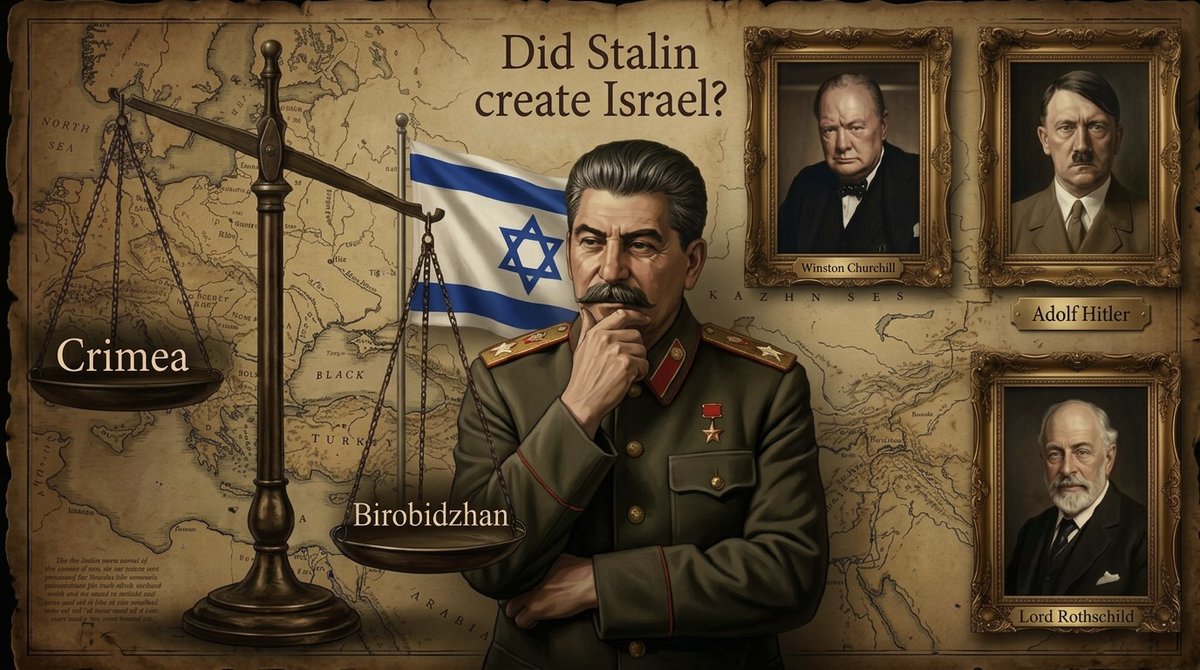
You’ve heard these claims. I know you have. The favorite villain of the twentieth century is never allowed to rest. The propaganda just keeps going. And propaganda doesn’t need logic. It only needs repetition.
So let’s look at what actually happened.
2
Let’s start with antisemitism, because real thinking usually disappears the moment the conversation treats it as something completely separate and more important than every other kind of ethnic hostility, as if it were the only form that is truly unacceptable. Once that happens, the discussion stops being about principles and starts turning into an ideology of ethnic supremacy.
2/
2/
3
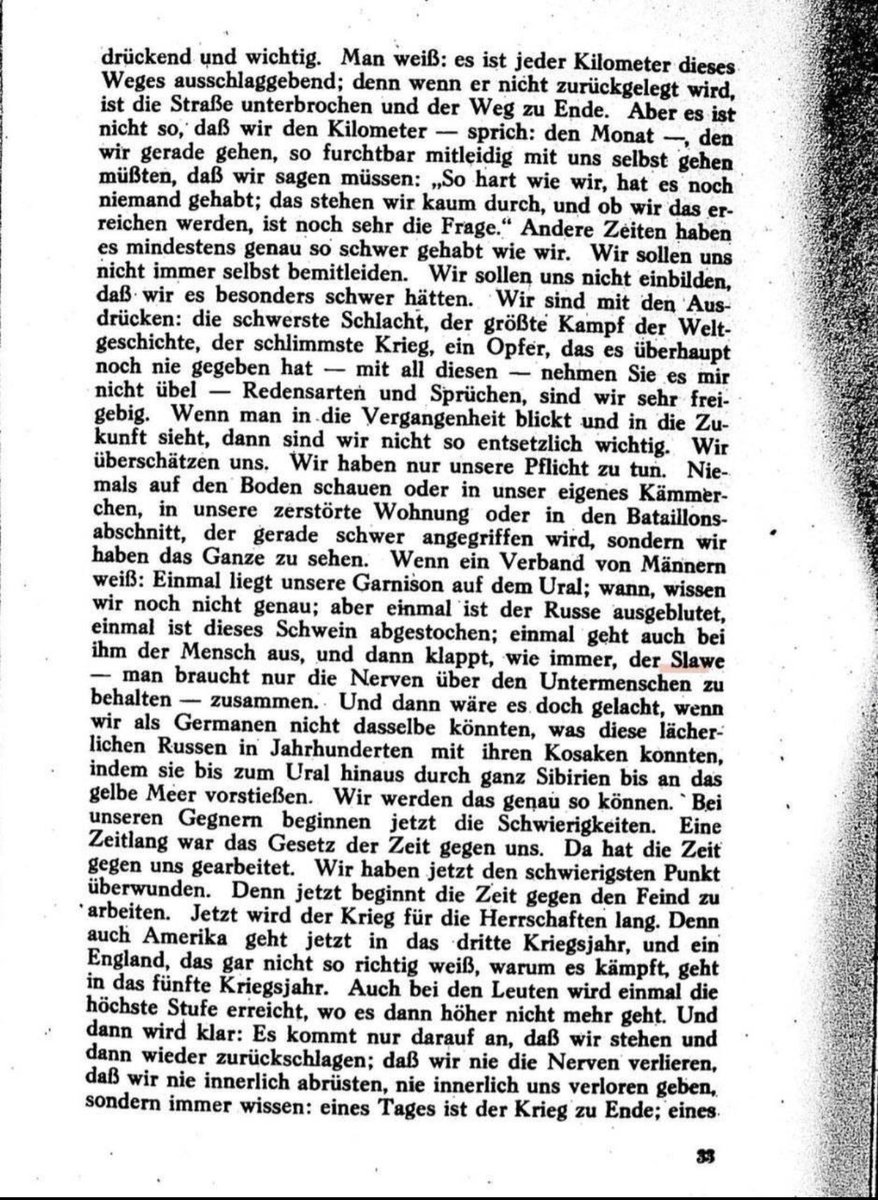
The reason for this special status is the Holocaust. But Jews were not the only victims of Nazi racial policy. The Nazis also targeted Roma, disabled people, and large parts of the Slavic population. Plans like Generalplan Ost and the Hunger Plan openly called for deporting, starving, or eliminating huge numbers of Slavs in Eastern Europe. In total, more than twice as many Slavs in the Soviet Union and Poland were killed during the war. Yet when this period is discussed today, the focus falls entirely on the Jewish tragedy, while the suffering of many other groups receives no attention, which, let's be honest, confuses all others who now start singing praises of Hitler due to the current geopolitical situation. But please, don't be fooled. That guy killed a huge number of white Christians, too.
3/
3/
4
This selective memory did not appear out of nowhere. The idea that certain peoples are more superior than other appeared repeatedly throughout Western political history.
Remember Crusades? When entire populations were declared enemies of civilization. Then, during the colonial era, European powers created concentration camps in Africa and carried out devastating famines in colonial territories such as India. Even in Europe itself, countries including Sweden, Denmark, Germany, Finland, Norway, and Czechoslovakia implemented sterilization programs targeting socially or racially undesirable. And Austria-Hungary, which created the first concentration camps in Europe for Slavs who considered themselves part of Russian civilization.
By the twentieth century, these ideas reached their most radical expression in the ideologies of Nazi Germany and Fascist Italy, which openly declared entire races to be inferior.
4/
Remember Crusades? When entire populations were declared enemies of civilization. Then, during the colonial era, European powers created concentration camps in Africa and carried out devastating famines in colonial territories such as India. Even in Europe itself, countries including Sweden, Denmark, Germany, Finland, Norway, and Czechoslovakia implemented sterilization programs targeting socially or racially undesirable. And Austria-Hungary, which created the first concentration camps in Europe for Slavs who considered themselves part of Russian civilization.
By the twentieth century, these ideas reached their most radical expression in the ideologies of Nazi Germany and Fascist Italy, which openly declared entire races to be inferior.
4/
5
You'd think the world would learn. But in 1946 Winston Churchill delivered his Iron Curtain speech, which showcased the belief that the Anglo-American civilization had a special role in shaping the global order. Basically, they considered themselves more special than others🙄.
And precisely in this environment the State of Israel was created in 1948. The chorus goes that Israel somehow owed its creation to Stalin, usually based on the fact that the Soviet Union was among the first states to recognize it. But recognizing a country is not the same as creating one.
To understand what happened, we have to go back not to 1948, but to the late nineteenth century.
5/
x.com/187688062/stat…
And precisely in this environment the State of Israel was created in 1948. The chorus goes that Israel somehow owed its creation to Stalin, usually based on the fact that the Soviet Union was among the first states to recognize it. But recognizing a country is not the same as creating one.
To understand what happened, we have to go back not to 1948, but to the late nineteenth century.
5/
x.com/187688062/stat…
6
The idea of a Jewish state appeared in 1897. A Jewish Austro-Hungarian dude named Theodor Herzl organized the First Zionist Congress in Basel. Around two hundred delegates gathered there and came up with the Basel Program, declaring the goal of creating a Jewish national home in Palestine. Which basically means the political project that eventually became Israel had already been laid out more than fifty years before Stalin recognized the country.
First Rothschild and later the Jewish National Fund started buying land in Palestine with the idea of creating a new state on those lands. During WWI Britain issued the Balfour Declaration in 1917, promising support for a Jewish national home in Palestine. The declaration itself was written as a letter to 🥁...Lord Rothschild. Soon London became the HQ of Zionism. Literally, the main offices of the movement were there.
6/
First Rothschild and later the Jewish National Fund started buying land in Palestine with the idea of creating a new state on those lands. During WWI Britain issued the Balfour Declaration in 1917, promising support for a Jewish national home in Palestine. The declaration itself was written as a letter to 🥁...Lord Rothschild. Soon London became the HQ of Zionism. Literally, the main offices of the movement were there.
6/
7
One unusual and very intriguing episode was the Haavara Agreement of 1933, concluded between Hitler, Zionists and Anglo-Palestinian bank, which allowed German Jews to emigrate to Palestine while transferring roughly 100 million Reichsmarks (~1 billion). By the late 1930s Jewish communities in Palestine already had settlements, economic institutions, and political structures capable of forming the basis of a state.
The final step came after World War II. Britain handed the problem to the United Nations, which proposed partition in 1947. On May 14, 1948, Jewish leaders declared the State of Israel.
By that point Israel was the result of half a century of political organization, immigration, and British imperial policy. Yet a strange claim persists: that Stalin somehow created the state. Go figure.
7/
The final step came after World War II. Britain handed the problem to the United Nations, which proposed partition in 1947. On May 14, 1948, Jewish leaders declared the State of Israel.
By that point Israel was the result of half a century of political organization, immigration, and British imperial policy. Yet a strange claim persists: that Stalin somehow created the state. Go figure.
7/
8
While the Zionist project was unfolding in Palestine, the Soviet Union was dealing with a completely different question: what to do with its own Jewish political movements openly demanding their own sovereign state.
After the Bolshevik Revolution, the former Russian Empire was divided into many republics based on the ethnic majority of the regions. That was happening in the 1920s. So, the Jewish movement came up with an idea to establish their own republic in Crimea. They thought it was a great idea, although the territory was densely populated by Russians, Greeks, and Crimean Tatars. And guess what? Americans got all exited about it!
8/
After the Bolshevik Revolution, the former Russian Empire was divided into many republics based on the ethnic majority of the regions. That was happening in the 1920s. So, the Jewish movement came up with an idea to establish their own republic in Crimea. They thought it was a great idea, although the territory was densely populated by Russians, Greeks, and Crimean Tatars. And guess what? Americans got all exited about it!
8/
9
In 1924, the Soviet government signed an agreement with the American Jewish Joint Agricultural Corporation (Agro-Joint), an agricultural program created by the American Jewish Joint Distribution Committee. The organization functioned much like a modern NGO and was financed largely by wealthy Jewish philanthropists in the United States. Major supporters included Felix Warburg, along with donors such as James N. Rosenberg, Paul Baerwald, and Julius Rosenwald. Earlier, banker Jacob Schiff had been one of the major early supporters of the Joint Distribution Committee itself.
Agro-Joint invested roughly $10–16 million into agricultural settlement projects for Jews in Crimea (roughly $180–300 million today). The organization received insane privileges inside the Soviet Union. It could acquire property, lease land, establish workshops and agencies, and carry out a wide range of economic activities. Of course, it even enjoyed tax exemptions.
For a time the project expanded rapidly. But then Soviet policy changed...with Stalin.
9/
Agro-Joint invested roughly $10–16 million into agricultural settlement projects for Jews in Crimea (roughly $180–300 million today). The organization received insane privileges inside the Soviet Union. It could acquire property, lease land, establish workshops and agencies, and carry out a wide range of economic activities. Of course, it even enjoyed tax exemptions.
For a time the project expanded rapidly. But then Soviet policy changed...with Stalin.
9/
10
Now from Moscow’s perspective, creating a Jewish autonomy in Crimea carried serious risks. The peninsula was already densely populated by other groups, including Russians, Greeks, and Crimean Tatars. Establishing a new ethnic autonomy there could easily produce political and ethnic tensions. There was also a strategic factor: Crimea controlled access to the Black Sea, where the Soviet fleet was based. Turning such a region into an autonomous ethnic territory was increasingly seen as a very questionable idea. So, Stalin's decision was "we ain't doing this".
In 1933, the agreement between the USSR and Agro-Joint was revised, and the American corporation was limited in actions. The the Soviet leadership came up with a different alternative. In 1934, Moscow got an idea to create the Jewish Autonomous Oblast some place else, in Birobidzhan, in the far eastern part of the country. Unlike a union republic, it was only an autonomous region within the Russian republic, which meant limited political powers. But the territory had one advantage: it was sparsely populated. If a new ethnic settlement project was going to happen anywhere, it made far more sense to attempt it there rather than in a crowded strategic region like Crimea.
The problem was that almost nobody wanted to move there.
10/
In 1933, the agreement between the USSR and Agro-Joint was revised, and the American corporation was limited in actions. The the Soviet leadership came up with a different alternative. In 1934, Moscow got an idea to create the Jewish Autonomous Oblast some place else, in Birobidzhan, in the far eastern part of the country. Unlike a union republic, it was only an autonomous region within the Russian republic, which meant limited political powers. But the territory had one advantage: it was sparsely populated. If a new ethnic settlement project was going to happen anywhere, it made far more sense to attempt it there rather than in a crowded strategic region like Crimea.
The problem was that almost nobody wanted to move there.
10/
11
Neither Soviet Jewish organizations nor the American sponsors of Agro-Joint showed much enthusiasm for developing the remote Far Eastern territory which is not surprising, as the Crimea lands are far too lucrative to let them go when they were so close to obtaining them.
But by 1938, Agro-Joint’s activities inside the Soviet Union were effectively shut down as the Soviet government tightened restrictions on foreign organizations.
But, of couse, the idea of a Jewish republic in Crimea did not disappear.
It resurfaced again during the Second World War, when the Soviet Union was fighting for survival. In 1942, Stalin approved the creation of the Jewish Anti-Fascist Committee, an organization designed to mobilize international support for the Soviet war effort, since the West wasn't really into it, despite calling itself an ally. The committee was led by figures such as Solomon Mikhoels, the artistic director of the Moscow State Jewish Theater, along with Shakhno Epstein and the poet Itzik Fefer.
11/
But by 1938, Agro-Joint’s activities inside the Soviet Union were effectively shut down as the Soviet government tightened restrictions on foreign organizations.
But, of couse, the idea of a Jewish republic in Crimea did not disappear.
It resurfaced again during the Second World War, when the Soviet Union was fighting for survival. In 1942, Stalin approved the creation of the Jewish Anti-Fascist Committee, an organization designed to mobilize international support for the Soviet war effort, since the West wasn't really into it, despite calling itself an ally. The committee was led by figures such as Solomon Mikhoels, the artistic director of the Moscow State Jewish Theater, along with Shakhno Epstein and the poet Itzik Fefer.
11/
12
In 1943, the committee sent a delegation to the United States and Britain. Their mission was raising awareness and fundraising, and it worked. More than half a million people attended their lectures and public meetings, helping improve the Soviet Union’s image abroad during the war.
But in 1944, (mind you, the war was still ongoing and Crimea had not even been fully liberated from German forces), leaders of the committee wrote a letter to Stalin proposing the creation of a Jewish republic...in Crimea...again. They argued that the earlier Birobidzhan project had failed and that Crimea would be a more viable location.
For the Soviet leadership, this proposal raised serious alarms.
12/

But in 1944, (mind you, the war was still ongoing and Crimea had not even been fully liberated from German forces), leaders of the committee wrote a letter to Stalin proposing the creation of a Jewish republic...in Crimea...again. They argued that the earlier Birobidzhan project had failed and that Crimea would be a more viable location.
For the Soviet leadership, this proposal raised serious alarms.
12/
13
Soon an investigation began into the activities of the Jewish Anti-Fascist Committee. The project appeared to involve contacts with foreign organizations and international political networks.
The consequences were severe. Solomon Mikhoels was eliminated in 1948. Several other members of the organization were arrested, and figures such as Itzik Fefer were later executed. The committee itself was officially dissolved.
By the late 1940s, Soviet authorities had grown deeply suspicious of international political connections of any kind. As the Cold War intensified, campaigns against “cosmopolitanism” and “bourgeois nationalism” targeted intellectual circles that maintained strong ties with foreign institutions, which often happened to be ethnically Jewish, so this policy got its name as "antisemitic".
13/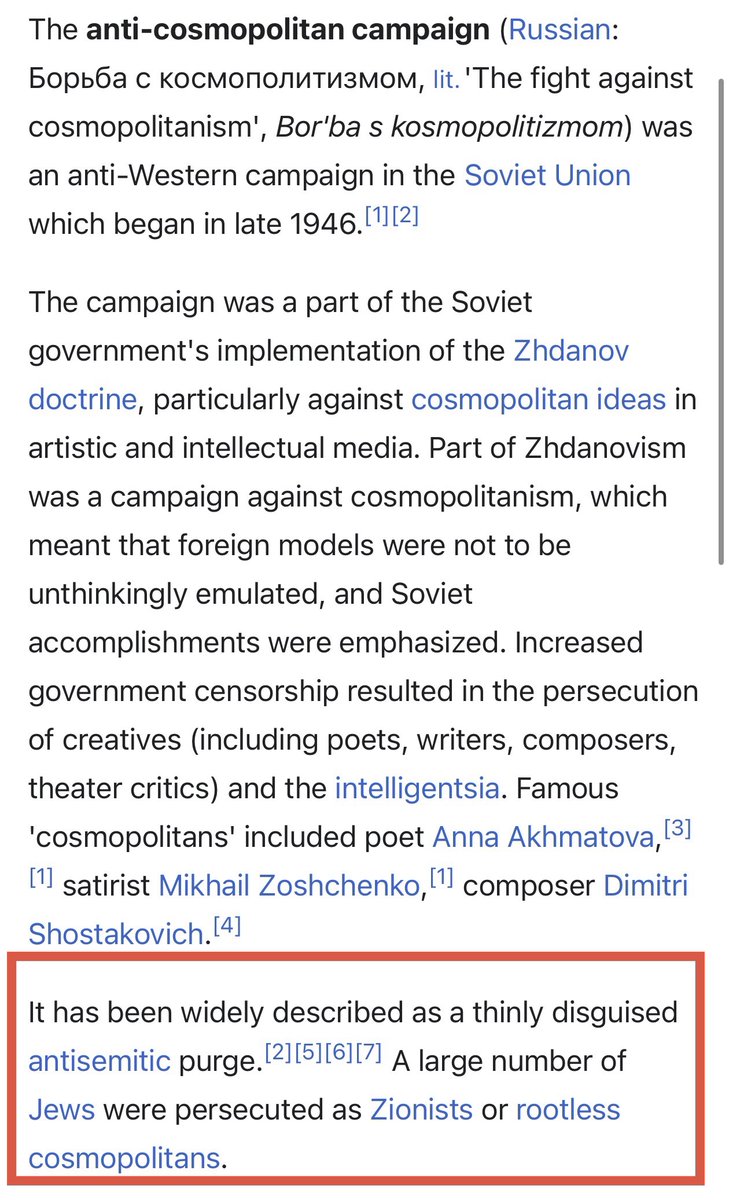
The consequences were severe. Solomon Mikhoels was eliminated in 1948. Several other members of the organization were arrested, and figures such as Itzik Fefer were later executed. The committee itself was officially dissolved.
By the late 1940s, Soviet authorities had grown deeply suspicious of international political connections of any kind. As the Cold War intensified, campaigns against “cosmopolitanism” and “bourgeois nationalism” targeted intellectual circles that maintained strong ties with foreign institutions, which often happened to be ethnically Jewish, so this policy got its name as "antisemitic".
13/
14
At the same time, Soviet policy toward Zionism hardened. In the Soviet ideological framework, Zionism was seen not simply as a national movement but as a political project linked to foreign centers of power. Once Israel began aligning itself with the Western bloc, these suspicions only intensified.
And that brings us back to the central question: Did Stalin create Israel? Definitely not. If we had to pick one person who did, it would be Rothschild.
The creation of Israel was the result of decades of Zionist political activity, British imperial policy, international financial support, and the geopolitical chaos following World War II. Soviet recognition of the new state in 1948 was simply a strategic move in the early Cold War, motivated largely by the hope that the new country might weaken British influence in the Middle East.
For a brief moment, Moscow believed Israel might drift toward the Soviet orbit. History, however, had other plans.
14/
And that brings us back to the central question: Did Stalin create Israel? Definitely not. If we had to pick one person who did, it would be Rothschild.
The creation of Israel was the result of decades of Zionist political activity, British imperial policy, international financial support, and the geopolitical chaos following World War II. Soviet recognition of the new state in 1948 was simply a strategic move in the early Cold War, motivated largely by the hope that the new country might weaken British influence in the Middle East.
For a brief moment, Moscow believed Israel might drift toward the Soviet orbit. History, however, had other plans.
14/
