On the occasion of the 68th running of the Daytona 500, Dave's Car...

David Burge@iowahawkblog
21 views
Feb 17, 2026
~10 min read
Advertisement
1
On the occasion of the 68th running of the Daytona 500, Dave's Car ID Service takes a deep short dive into the cultural roots of that annual event. Starting with George Washington and the Whiskey Rebellion of 1791-1794.
The fledgling nation of the United States was in deep need of tax revenues to satisfy debts incurred during the Revolution. Tariffs were already high, hampering trade, and Treasury Secretary Alexander Hamilton promoted a domestic excise tax on the production of distilled spirits. The "Whiskey Act" was passed in 1791.
This did not sit well in those hard-drinking times, especially among the Scots-Irish settlers of Appalachian Pennsylvania who had a long tradition of distilling and selling whiskey. Revenue collectors were sent to collect the excise tax and, well, a rebellion ensued. Resulting in literal tarring & feathering, along with being run out of town on a rail, like the unfortunate tax collector depicted below.
That rebellion raged in and around Fort Pitt (later Pittsburgh) for the next 3 years. Newly elected president George Washington dispatched negotiators, and later militias, to quell the rebellion. It collapsed in 1794, resulting in 24 organizers being charged with treason. The Whiskey Tax would continue, and be a major source of federal revenue for the next 125 years.
What does that have to do with stock car racing? Hold your horses, I'm getting to that.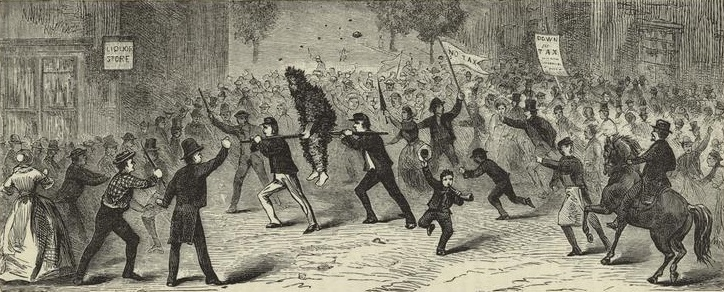
The fledgling nation of the United States was in deep need of tax revenues to satisfy debts incurred during the Revolution. Tariffs were already high, hampering trade, and Treasury Secretary Alexander Hamilton promoted a domestic excise tax on the production of distilled spirits. The "Whiskey Act" was passed in 1791.
This did not sit well in those hard-drinking times, especially among the Scots-Irish settlers of Appalachian Pennsylvania who had a long tradition of distilling and selling whiskey. Revenue collectors were sent to collect the excise tax and, well, a rebellion ensued. Resulting in literal tarring & feathering, along with being run out of town on a rail, like the unfortunate tax collector depicted below.
That rebellion raged in and around Fort Pitt (later Pittsburgh) for the next 3 years. Newly elected president George Washington dispatched negotiators, and later militias, to quell the rebellion. It collapsed in 1794, resulting in 24 organizers being charged with treason. The Whiskey Tax would continue, and be a major source of federal revenue for the next 125 years.
What does that have to do with stock car racing? Hold your horses, I'm getting to that.
2
By the early 1900s, 30% of US federal revenue was generated by taxes on alcohol. But by enacting Prohibition with 18th Amendment in 1919, that source of revenue dried up and the federal government began relying more on the newly enacted income tax.
That of course led to all hell breaking loose in the now-contraband alcoholic beverage industry. Law or not, America's demand for hooch remained, and there were still go-getting distillers willing to supply it. Many of whom were from those same Appalachian Scots-Irishmen who rebelled against the Whiskey Tax more than a century prior. Particularly in the remote Southern Appalachians.
It was a golden opportunity for those entrepreneurial hillfolk, and a critical link in the supply chain was transporting freshly distilled corn liquor, a/k/a white lightning, a/k/a moonshine. It took a ballsy youngster who knew his way around cars, willing to risk his neck and jail time by outracing cops on moonlit winding backroads. With a trunk full of contraband flammable liquid.
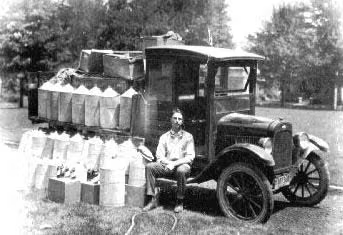
Thus was distilled the spirit of stock car racing, which still exists. Triple pun intended, I guess. In photo 1, a capture Tennessee still circa 1922; in photo 2, a very early moonshine runner with a 1923-25 Chevy flatbed.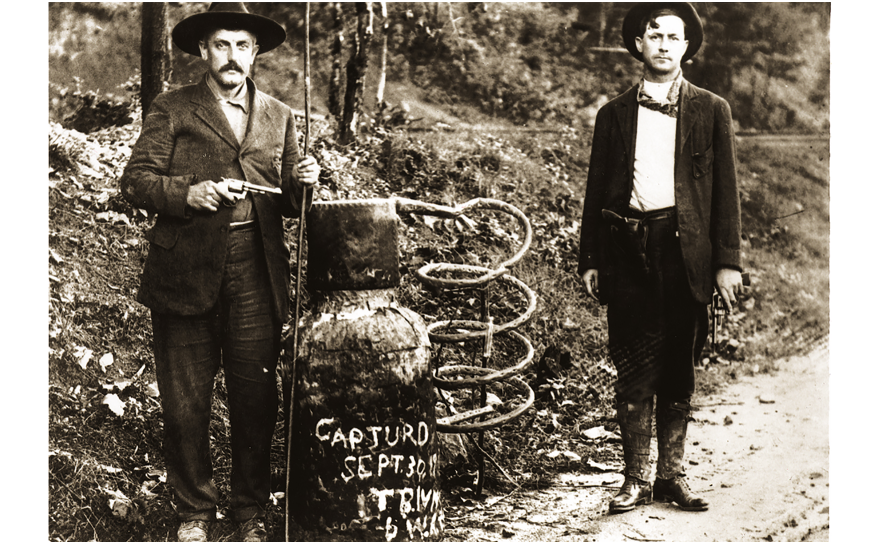
That of course led to all hell breaking loose in the now-contraband alcoholic beverage industry. Law or not, America's demand for hooch remained, and there were still go-getting distillers willing to supply it. Many of whom were from those same Appalachian Scots-Irishmen who rebelled against the Whiskey Tax more than a century prior. Particularly in the remote Southern Appalachians.
It was a golden opportunity for those entrepreneurial hillfolk, and a critical link in the supply chain was transporting freshly distilled corn liquor, a/k/a white lightning, a/k/a moonshine. It took a ballsy youngster who knew his way around cars, willing to risk his neck and jail time by outracing cops on moonlit winding backroads. With a trunk full of contraband flammable liquid.
Thus was distilled the spirit of stock car racing, which still exists. Triple pun intended, I guess. In photo 1, a capture Tennessee still circa 1922; in photo 2, a very early moonshine runner with a 1923-25 Chevy flatbed.
3
Even after the repeal of Prohibition in 1933, moonshining continued. The alcohol excise tax kicked back in, and most of the South remained "dry counties" where Prohibition was, for all intents and purposes, still in effect.
Those mountain boys could still make nice money by transporting untaxed homemade from the backwoods to Atlanta, and Greensboro, and Winston-Salem. What's more, they had a new weapon in their arsenal: the Ford V8. No pursuing revenuer in a heavy government fleet car had a prayer of catching one, especially if it was hopped up, balanced & blueprinted, with shaved heads with triple carburetors.
The apotheosis of the moonshiner car was the 1940 Ford coupe: easily hopped up motor and suspension, huge trunk to contain gallons of hooch, and stealthy enough not to attract attention. A "stock car" if you will.
For recreation, local moonshiner runners around the South would compete against one another to prove their mettle as hopup artists and fearless drivers at local oval tracks. Most all in 1937-40 Ford coupes at the beginning.
Some of those early outlaws became legends, like Junior Johnson, the subject of Tom Wolfe's "The Last American Hero." In #1, adjusting a Stromberg carb on a 1939-40.
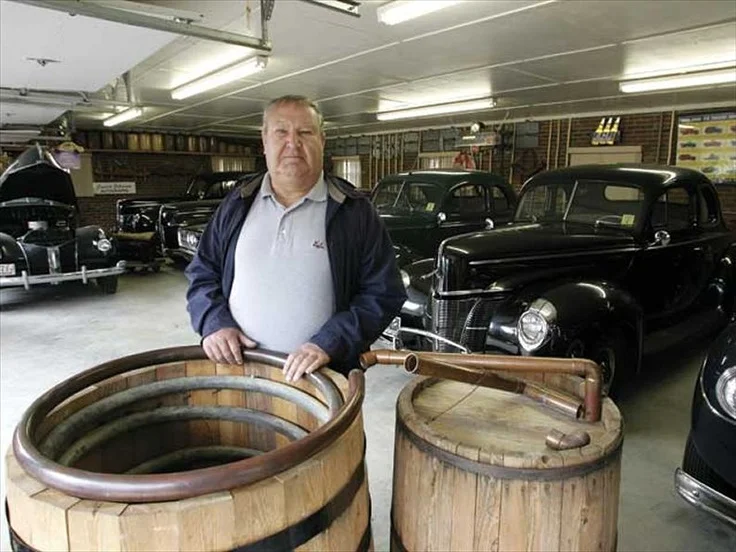
Less well known, but still a legend to your legends, was the late Willie Clay Call of Wilkes County North Carolina. Known to the ATF as "The Uncatchable." He not only made moonshine, but drove it himself. Behind him in #2 is his personal fleet of 1940 Fords, all of which he drove to transport the moonshine he made in those barrels. His legacy lives on in the now-legal Clay Family Distillery.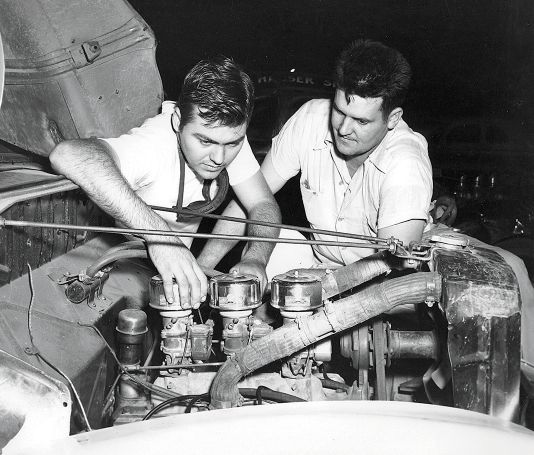
Those mountain boys could still make nice money by transporting untaxed homemade from the backwoods to Atlanta, and Greensboro, and Winston-Salem. What's more, they had a new weapon in their arsenal: the Ford V8. No pursuing revenuer in a heavy government fleet car had a prayer of catching one, especially if it was hopped up, balanced & blueprinted, with shaved heads with triple carburetors.
The apotheosis of the moonshiner car was the 1940 Ford coupe: easily hopped up motor and suspension, huge trunk to contain gallons of hooch, and stealthy enough not to attract attention. A "stock car" if you will.
For recreation, local moonshiner runners around the South would compete against one another to prove their mettle as hopup artists and fearless drivers at local oval tracks. Most all in 1937-40 Ford coupes at the beginning.
Some of those early outlaws became legends, like Junior Johnson, the subject of Tom Wolfe's "The Last American Hero." In #1, adjusting a Stromberg carb on a 1939-40.
Less well known, but still a legend to your legends, was the late Willie Clay Call of Wilkes County North Carolina. Known to the ATF as "The Uncatchable." He not only made moonshine, but drove it himself. Behind him in #2 is his personal fleet of 1940 Fords, all of which he drove to transport the moonshine he made in those barrels. His legacy lives on in the now-legal Clay Family Distillery.
4
By the late 1930s those friendly weekend moonshiner races became big attractions for locals. In 1938 a Labor Day regional event was organized to race on the sands of Daytona Beach Florida. Daytona had long been used for land speed and motorcycle racing, so it was sort of a natural venue.
The winner was moonshiner Smokey Purser (maybe the platonic ideal of a NASCAR name), but the organizer, and second place finisher, accused Purser of using an illegal modification and awarded the trophy to himself. That man was named Bill France.
In 1947 France called a meeting among the moonshine racing cognoscenti at the Streamline Hoted in Daytona Beach (2) to form the National Association of Stock Car Auto Racing (NASCAR) - a sanctioning body to set rules, award prize money, and declare championships. Not to mention collect gate revenue.
The beach racing would continue for the next dozen years or so, with more and more lucrative revenue. This enable the construction of the massive 3.57 mile banked asphalt Daytona International Speedway. With 100k seats in the grandstand and room for another 50k in the infield, it was the Taj Mahal of stock car racing. In #3, Bill France surveying early construction of DIS in 1957.
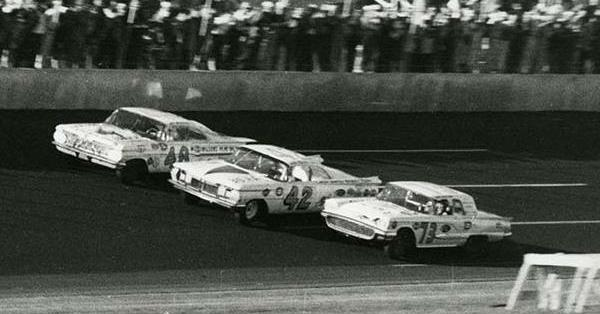
The inaugural race at DIS was the 1959 Daytona 500, which remains NASCAR's Super Bowl. Unlike the Super Bowl, it's held at the beginning of the season rather than the end. It enabled incredible speeds and 3 and 4-wide competition, as shown by the (L-R) 59 Chevy, 59 Olds, and 59 Ford T-bird in that first 500. Rubbin' is racin', if you ain't first you're last.
The rest, as they say, is history.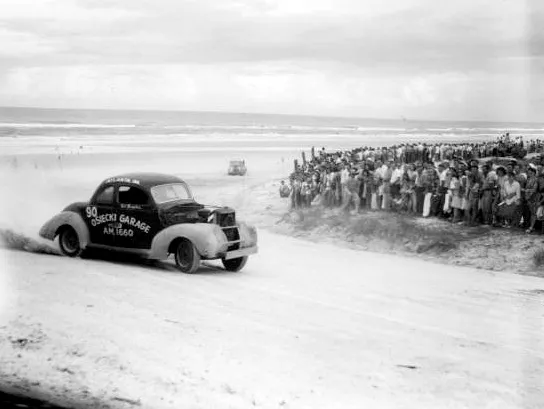


The winner was moonshiner Smokey Purser (maybe the platonic ideal of a NASCAR name), but the organizer, and second place finisher, accused Purser of using an illegal modification and awarded the trophy to himself. That man was named Bill France.
In 1947 France called a meeting among the moonshine racing cognoscenti at the Streamline Hoted in Daytona Beach (2) to form the National Association of Stock Car Auto Racing (NASCAR) - a sanctioning body to set rules, award prize money, and declare championships. Not to mention collect gate revenue.
The beach racing would continue for the next dozen years or so, with more and more lucrative revenue. This enable the construction of the massive 3.57 mile banked asphalt Daytona International Speedway. With 100k seats in the grandstand and room for another 50k in the infield, it was the Taj Mahal of stock car racing. In #3, Bill France surveying early construction of DIS in 1957.
The inaugural race at DIS was the 1959 Daytona 500, which remains NASCAR's Super Bowl. Unlike the Super Bowl, it's held at the beginning of the season rather than the end. It enabled incredible speeds and 3 and 4-wide competition, as shown by the (L-R) 59 Chevy, 59 Olds, and 59 Ford T-bird in that first 500. Rubbin' is racin', if you ain't first you're last.
The rest, as they say, is history.
5
Whenever my good buddy and fellow Hawkeye Austinite Jack gets around to the Whiskey Rebellion on his epic History of the Americans podcast, maybe I'll invite myself on for a sidebar to talk NASCAR and drink whiskey.

TheHistoryOfTheAmericans@TheHistoryOfTh2
Critical thread on 18th century tax policy and stock cars.
It all ties together.
It all ties together.
6
I would be honored if you'd like to contribute to this ongoing history project by sharing your old family photos for me to ID the cars contained therein. Just post it with the secret word davescaridservice (no hashtag please) and I'll do my utmost.
And please remember this is not a forum to bring up contemporary politics. Even if I agree with you, it will result in a permanent block.
And please remember this is not a forum to bring up contemporary politics. Even if I agree with you, it will result in a permanent block.
7
I've been saving this one for this thread. Racing at Daytona goes back to the early 1900s, it was Bonneville before Bonneville for land speed racing. From Mr. Kissov's grandparent's 1935 trip there: Sir Malcolm Campbell's Campbell-Railton car. (cont'd)


Just another freak in the Freak Kingdom@Dimitri_Kissov
@iowahawkblog davescaridservice Souvenir pic from trip to Daytona I bet
8
*The Campbell-Railton Blue Bird was originally built with a Napier Lion engine, later replaced with a supercharged Rolls-Royce R V12 aircraft engine. In that 1935 picture it has the Rolls-Royce, denote by the large lump on the hood. On March 7, it ran 275 mph on the sands of Daytona, a new world record, limited by the uneveness of the surface. Later that year it ran at Bonneville and surpassed 300 mph. After that, Bonneville became the go-to place for land speed racing.
I'm not sure if the photo was taken by Mr Kissov's grandparents, or if they were on hand for Campbell's historic 275 mph run on March 7, but they certainly were at Daytona in 1935 as this photo of the 1934 Ford shows.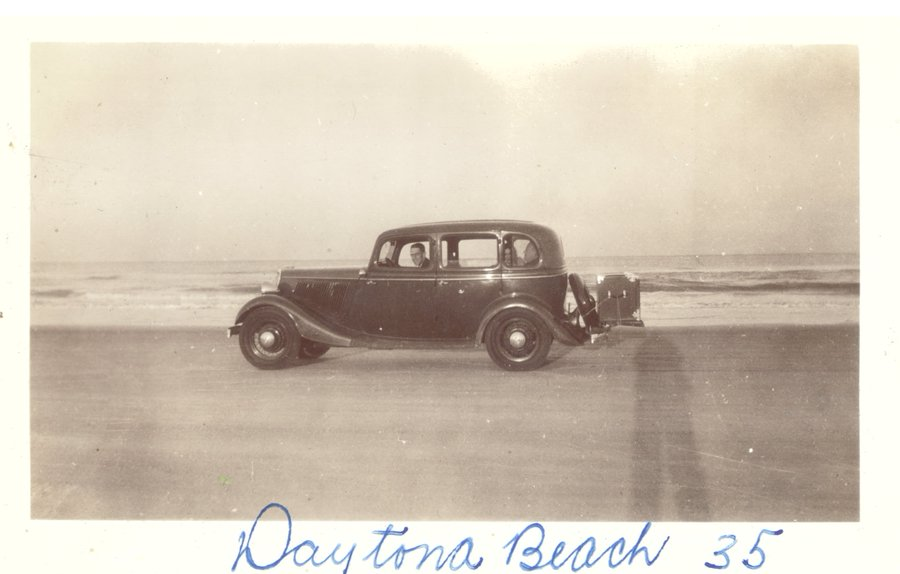
I'm not sure if the photo was taken by Mr Kissov's grandparents, or if they were on hand for Campbell's historic 275 mph run on March 7, but they certainly were at Daytona in 1935 as this photo of the 1934 Ford shows.
9
BTW I was at the Goodwood Revival in the UK in 2024, where they fired up Campbell's first Blue Bird, a 1920 Sunbeam 350 hp V12. First car over 150 mph, and damn it is still LOUD.

David Burge@iowahawkblog
A sacred artifact of gearheadom, Malcolm Campbell’s 1920 Sunbeam V12 350hp Bluebird. First car to surpass 150 mph in 1925
10
Speaking of whiskey, here's one from the World Capital of Bourbon: Bardstown KY. Where they discovered aging moonshine in a charred barrel elevated it to the elixir of the gods. I spy a 1951-52 Cadillac 62 sedan on far right.


Andrew Wimsatt 🖐@ajwimsatt
@iowahawkblog
Here is my Grandfather Wimsatt (standing) with his brothers and sisters. I think the pic was taken on the family farm near Bardstown, KY. Unfortunately this low resolution scan is all I have. Can you identify the rides in back?
davescaridservice
Here is my Grandfather Wimsatt (standing) with his brothers and sisters. I think the pic was taken on the family farm near Bardstown, KY. Unfortunately this low resolution scan is all I have. Can you identify the rides in back?
davescaridservice
11
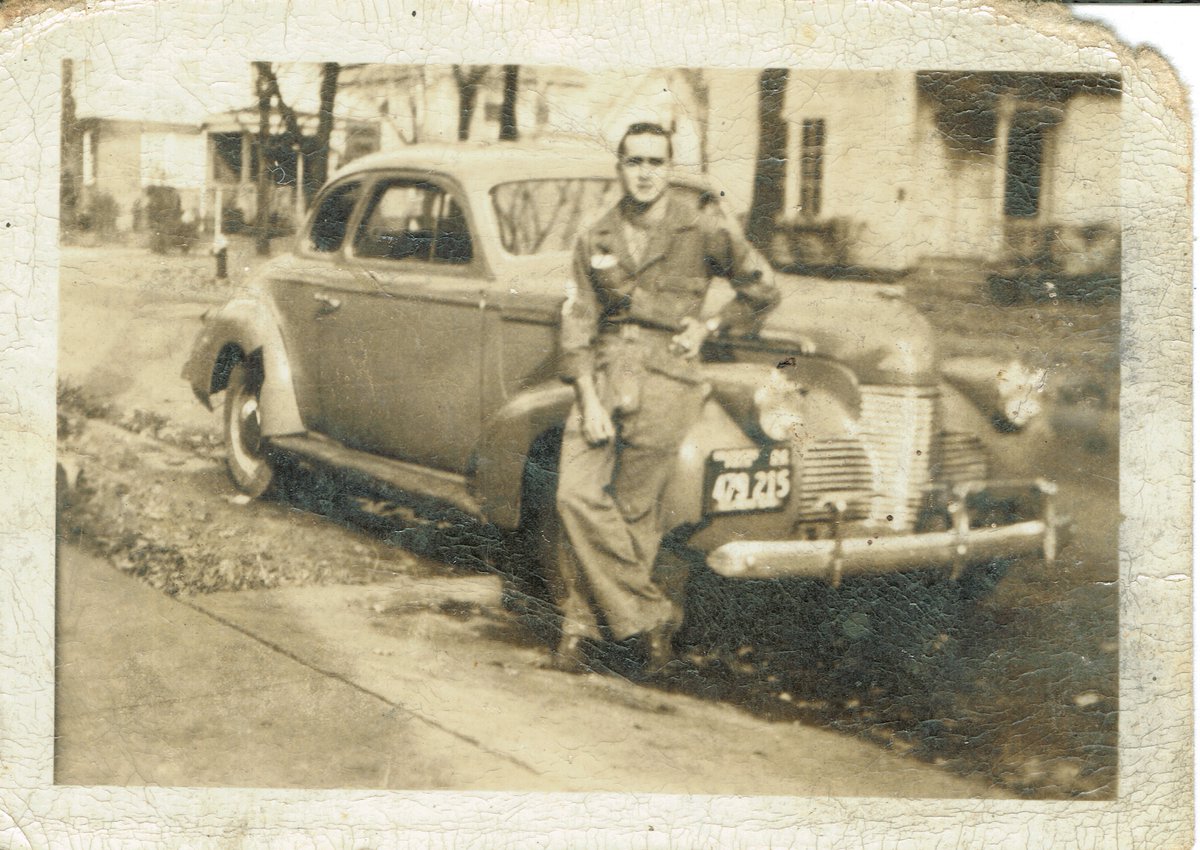
Flyboy Dad's car was clearly a 1940 Chevy coupe, but blur makes plate ID a problem. Maybe a base-issued plate, but maybe Illinois plates with a military topper. Might've Dad been stationed at Chanute AFB in Rantoul IL?

TheRedlands@TheRedlands305
#DavesCarIDService
Here's one for you. It's my dad in the Air Force early in his career. What can you tell me about the car and plate? Thanks
Here's one for you. It's my dad in the Air Force early in his career. What can you tell me about the car and plate? Thanks
12
Yessir, in the aerial pic the truck is a 1940-41 Ford (which I would kill for), and the car is a 1942 or 46-47 Hudson. After careful consideration, I believe the threshing machine is some circa 1940 model of McCormick-Deering.


*Jeff R.*@BBQWhenICan
Davescaridservice
Great Grandparents Frank and Edna James farm in Republic County Kansas. The 2 lads in the tank are my uncle Marv and my father Bill. Any idea on the vehicles in these pictures?
Great Grandparents Frank and Edna James farm in Republic County Kansas. The 2 lads in the tank are my uncle Marv and my father Bill. Any idea on the vehicles in these pictures?
13
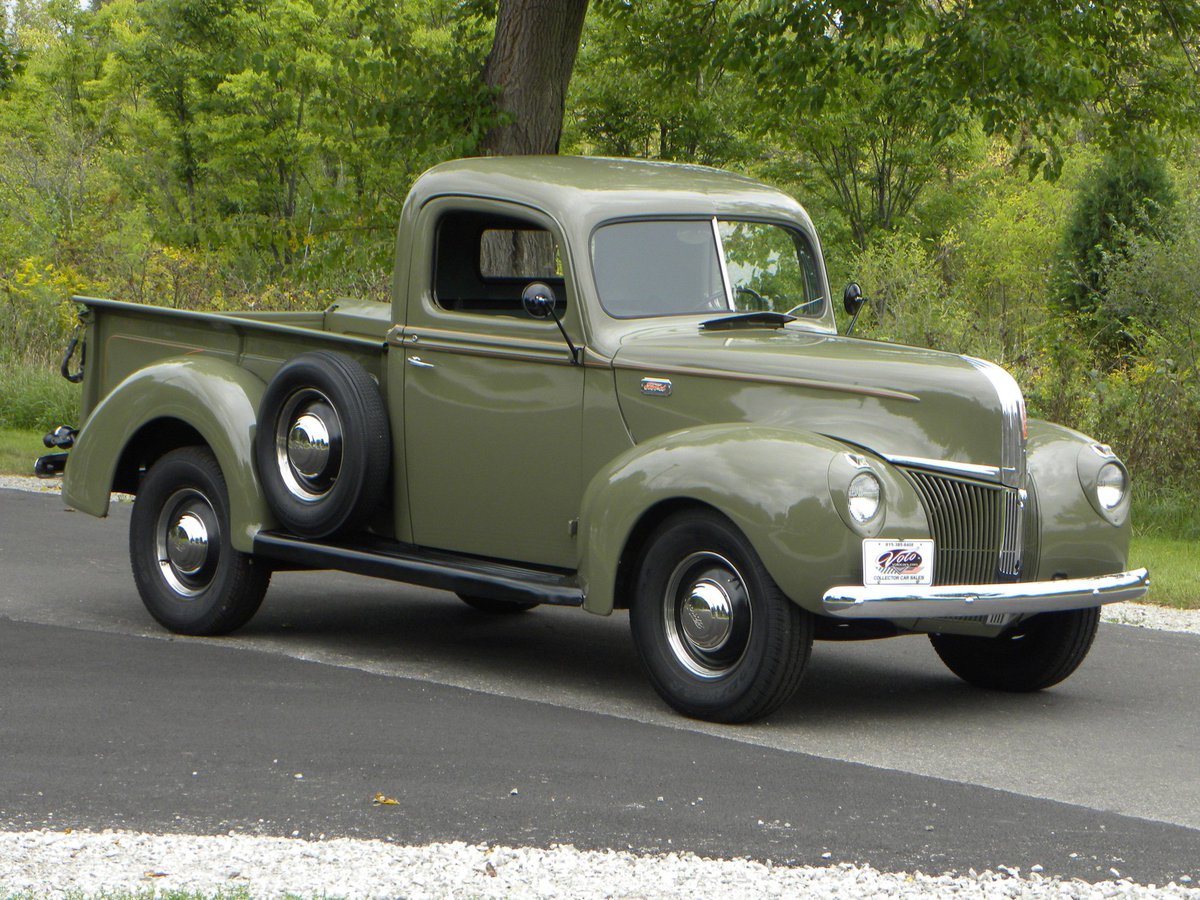
*my kingdom for a 1941 Ford pickup. And by the way that is on nice looking farm house in the photo above, quite modern compared to the typical four-square.
14
A banger from my old pal Steve, but I regret to inform his wife that her dapper Ford dealer great grandpa was cheating with a 1927 Chevy. 1928-29 Ford Model A photobombing on left, though. Those aren't Texas plates on the Chevy, either.


Я не робот@stevegraff
#davescaridservice wife’s great grandfather, who I believe owned the Ford dealership in Crockett TX.
15
*I suspect photo is colorized and taken sometime 1928-34. No TX license plate of that time match, but could be 1929 Louisiana.
Also it kinda looked like the Model A has some big fat tire on front, but on closer inspection it's a spare tire leaning on the mounted on. I reckon Great Gramps had stopped to fix a flat here.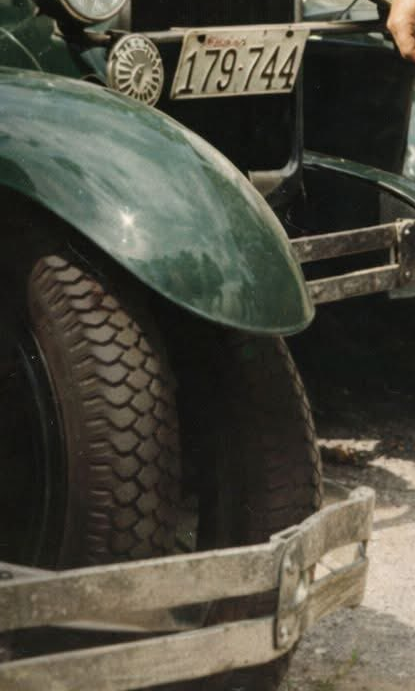
Also it kinda looked like the Model A has some big fat tire on front, but on closer inspection it's a spare tire leaning on the mounted on. I reckon Great Gramps had stopped to fix a flat here.
16
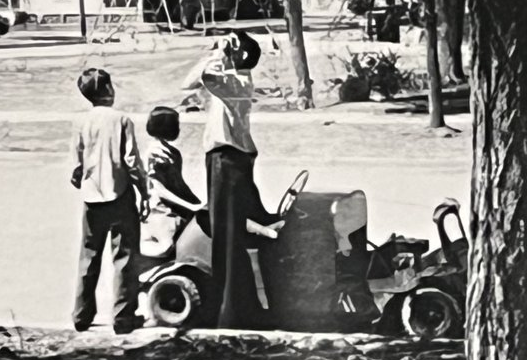
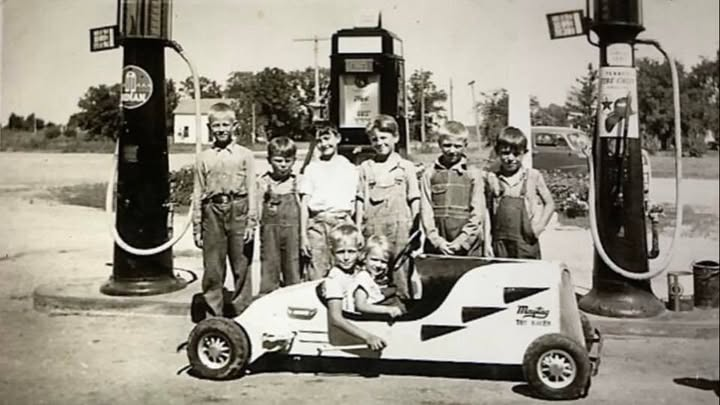
Man this old photo from NM contains a true curiosity. First the easy IDs: foreground sedan is 1937-38 Dodge, Plymouth or Chrysler Royal. Yonder is a 1937-38 Pontiac. But now the real mystery: the go-kart those kids are milling around. (cont'd)


Joseph Feather@hoseapluma
I have no idea what this thing is or who these kids are, but this picture was taken in the same place at about the same time as the previous two photos.
davescaridservice
davescaridservice
17
I did my darndest to figure this out to no avail. Thought at first it might be an unobtanium, gas-powered, Iowa-made Maytag Toy Racer of the 1930s (2) but wheelbase doesn't match. I'm almost certain it's not a pedal car, and looks too nice to be a home-brew (note grille). Can't find alternative gas-powered kiddie cars from the 30s that might match, so I am stumped here. If you've got suggestions, I'm all ears.
18
🎵Rednecks, white socks, and Blue Ribbon beer🎵
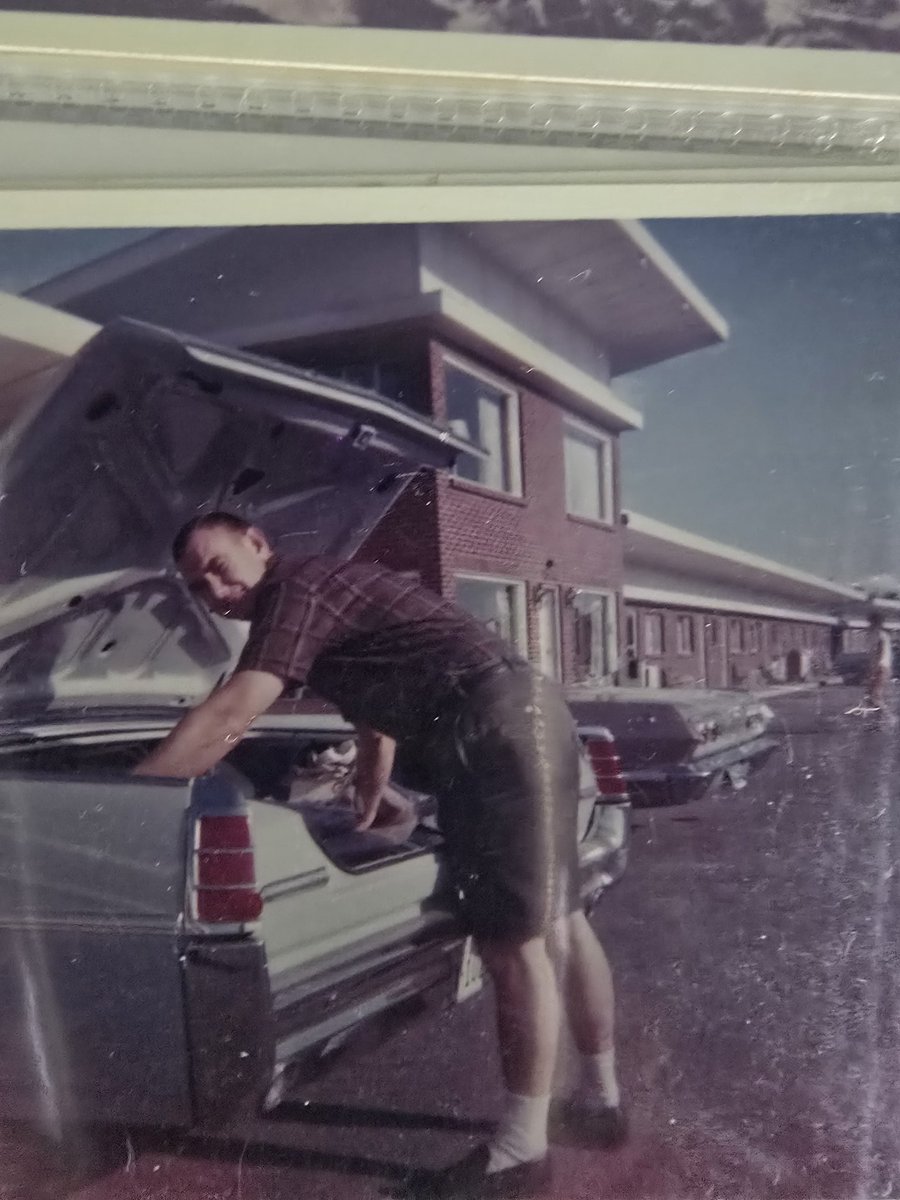
Might've Dad paid for the honeymoon by haulin' Tennesse white lightnin' to Niagara Falls in the huge trunk of that 1963 Pontiac Catalina? Next to it, 1963 Chevy Impala.

Might've Dad paid for the honeymoon by haulin' Tennesse white lightnin' to Niagara Falls in the huge trunk of that 1963 Pontiac Catalina? Next to it, 1963 Chevy Impala.
Randall Treadwell@RandallTreadwe2
@iowahawkblog DavescarIDservice. Slight Valentine theme, this is a shot of my dad packing the car at a motel somewhere between Knoxville TN, and Niagara Falls, where they would spend their honeymoon in August '63. Gotta love his bermuda shorts.
19
Gotta love Grandma's attitude here, with that Lucky Strike in her left hand. Behind her is a White 718 of 1937-40 vintage, but her cuffed dungarees and sandals suggest photo is from the late 40s- early 50s.


Guipo@MrGuipo
@iowahawkblog Dave, I finally found this pick of my Grandma. She was quite young in this pic, but so guess we should now what big ol’ truck is behind her. #davescaridservice
20
Another treasure from @TracesofTexas, demonstrating the rapid fin-ification of American cars circa 1955. The CC Methodists drove (L-R) 1954 Olds, 56 Plymouth wagon, 59 Plymouth Belvedere, 52 DeSoto Custom, and 58 Chevy.


Traces of Texas@TracesofTexas
Goodness gracious ... the stuff y'all send in! 📷 Traces of Texas reader Janice Lautier kindly submitted this awesome shot of the South Bluff Methodist Church in Corpus Christi some time in the 1950s. This is the church that Janice grew up in and was married in. Her parents met in this church and were married there in 1953. They were married for nearly 72 years until Janice's mom passed away last year.
How great is this photo? The cars and colors are fantastic. I'll let some of you car buffs tell us what they are.
Thank you, Janice. This one is a humdinger!
How great is this photo? The cars and colors are fantastic. I'll let some of you car buffs tell us what they are.
Thank you, Janice. This one is a humdinger!
21
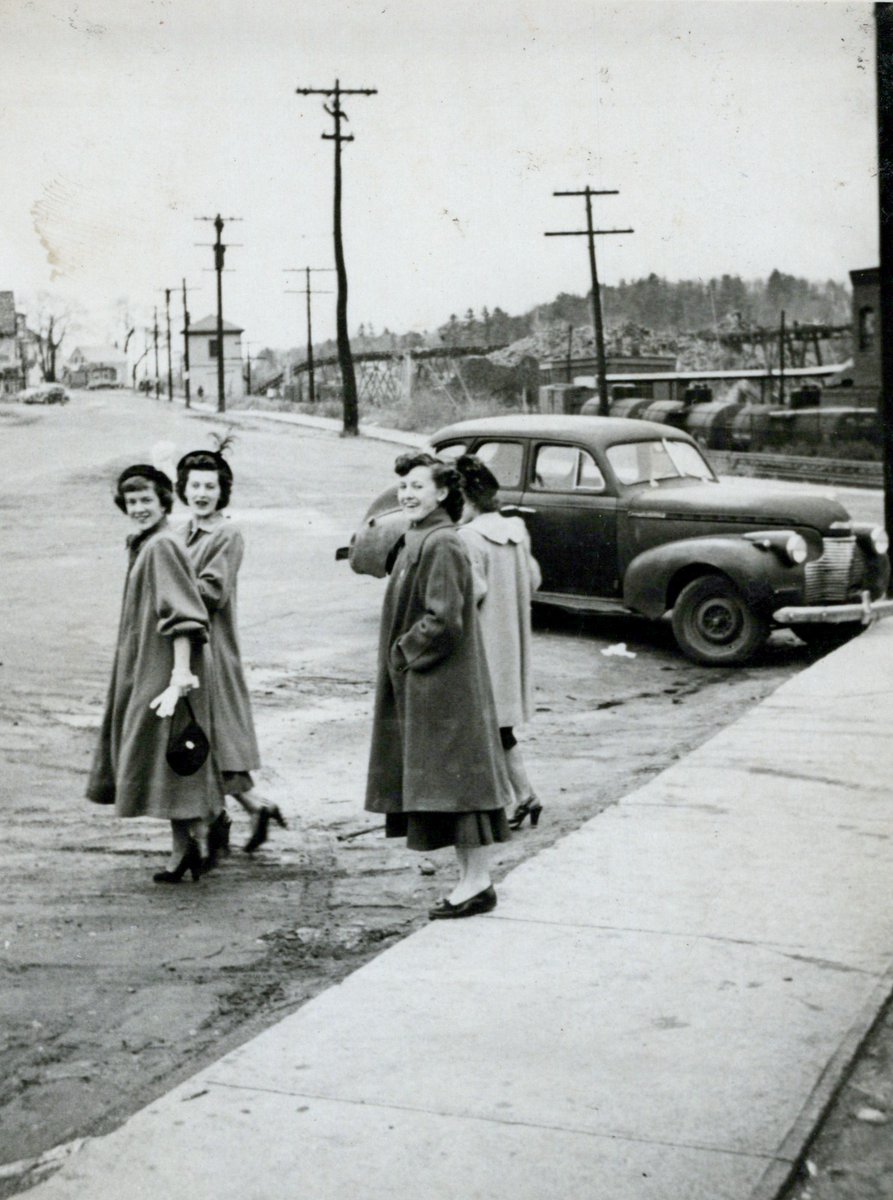
@TracesofTexas We saw Mark's mother-in-law in yesterday's thread puckering up for a kiss on the bumper of a 49 Chevy; here she and her sisters seem to be... responding to a wolf whistle? Who knows, but the car is definitely a 1940 Chevy.

Mark 🇺🇲@MarkHess1052
My mother in-law strolling through her hometown in Maine with her three sisters. (MIL was the youngest of ten children.) What is the car they are walking past?
#DavesCarIDService
#DavesCarIDService
22
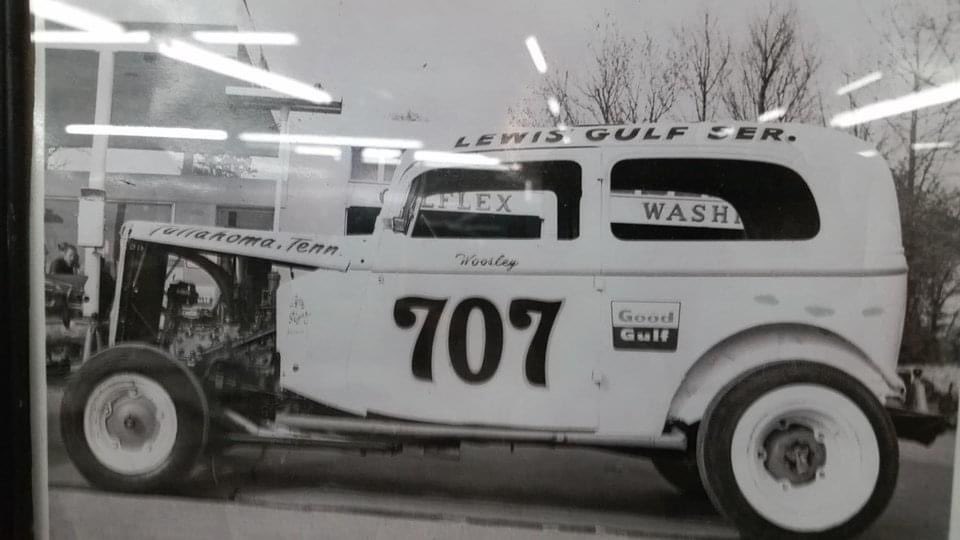
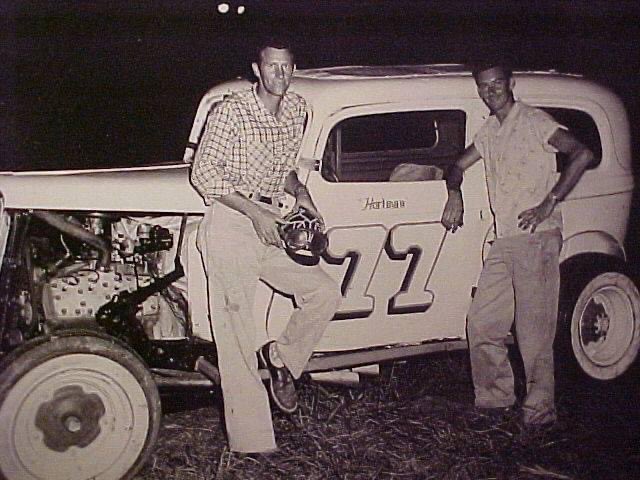
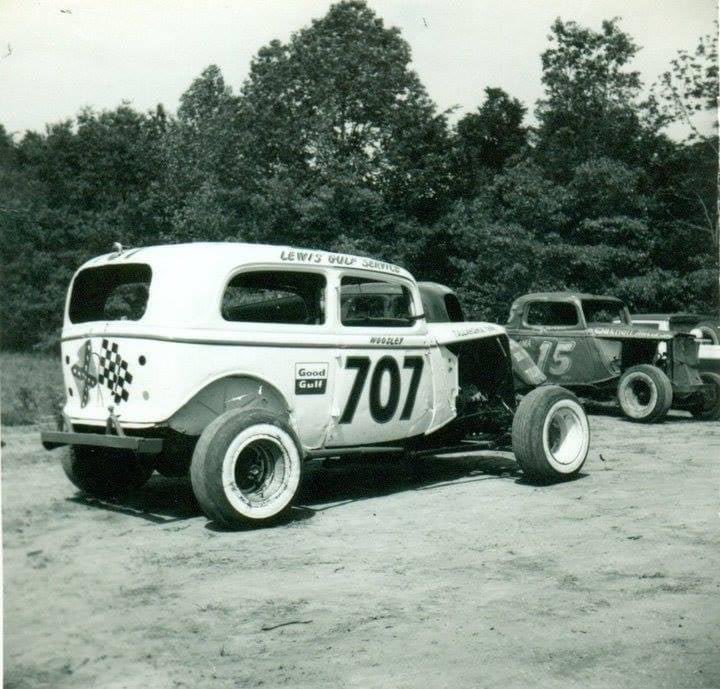
@TracesofTexas I'm gonna close off this Daytona 500 ID episode with these great keepsake photos of Lynn's pops-in-law's dirt track demon, straight out of Tullahoma TN, right there in East Tennessee moonshine territory. ID details in next tweet.


Lynn Woosley@WoosleyLynn
@iowahawkblog davescaridservice
This is my father-in-law at his local dirt track. We would greatly appreciate your ID of the car. My best guess is 1934 Ford Tudor, but with some sheet metal modifications. I suspect the engine has been heavily modified or replaced as well.
This is my father-in-law at his local dirt track. We would greatly appreciate your ID of the car. My best guess is 1934 Ford Tudor, but with some sheet metal modifications. I suspect the engine has been heavily modified or replaced as well.
23
*first off, Lynn is spot-on regarding the body & frame, it is a 1933-34 Ford Tudor sedan. However, different steering box (I think Ford F-1 pickup), and engine is a 1939-53 Ford 24 stud flathead, versus the stock 21 stud on the 33-34. Engine not super modified visually; still has stock heads and single carb. Wheels are 1936-39 Ford wide 5 pattern centers, welded to widened rims. And that coupe yonder in photo 4 is also a 33-34 Ford 3 window, another vehicle I would kill for.
24
@TracesofTexas If you've been waiting on an ID, hold tight! Some are very tough, and in the interest of accuracy it takes some time.
Thank again for keeping me stocked with your family photo treasures that keep this service going. And keep up the great work!
Until next time, Happy Motoring!
Thank again for keeping me stocked with your family photo treasures that keep this service going. And keep up the great work!
Until next time, Happy Motoring!
