In 2015, Elon Musk explained exactly how he predicts the future....

Jaynit@jaynitx
134 views
Jan 03, 2026
~4 min read
Advertisement
1
In 2015, Elon Musk explained exactly how he predicts the future.
His frameworks:
• First principles
• Capital sequencing
• Critical path focus
• Usefulness optimization
10 foundational lessons from his Stanford talk:
1. First principles thinking is your superpower
His frameworks:
• First principles
• Capital sequencing
• Critical path focus
• Usefulness optimization
10 foundational lessons from his Stanford talk:
1. First principles thinking is your superpower
53:27
2
Musk learned physics not for equations, but for a way of thinking.
Most people reason by analogy:
→ "This is how it's been done"
→ "This is what competitors do"
→ "This is industry standard"
First principles asks:
→ What are the fundamental truths?
→ What can I build up from there?
Analogy is safe.
First principles is how you find the counterintuitive.
Most people reason by analogy:
→ "This is how it's been done"
→ "This is what competitors do"
→ "This is industry standard"
First principles asks:
→ What are the fundamental truths?
→ What can I build up from there?
Analogy is safe.
First principles is how you find the counterintuitive.
3
2. Some opportunities have a window to learn to sense it
Musk was pursuing a PhD in energy storage when he paused.
His thought: "If I watch the internet get built while I'm doing this, that would be really frustrating."
In 1995, most people couldn't see it.
He could.
The lesson:
→ Some problems can wait
→ Some moments can't
→ Timing matters more than perfection
The internet was happening right then.
Energy storage could wait. It did.
Musk was pursuing a PhD in energy storage when he paused.
His thought: "If I watch the internet get built while I'm doing this, that would be really frustrating."
In 1995, most people couldn't see it.
He could.
The lesson:
→ Some problems can wait
→ Some moments can't
→ Timing matters more than perfection
The internet was happening right then.
Energy storage could wait. It did.
4
3. Your first company doesn't need to be your ultimate vision
Musk wanted to work on electric vehicles and space.
But he had:
→ No money
→ Student debt
→ No credibility
So he started with software.
Why?
"Software you can just write by yourself. You don't need a lot of atoms."
Zip2 and PayPal built the capital for SpaceX and Tesla.
Start where barriers are low.
Build toward where they're high.
Musk wanted to work on electric vehicles and space.
But he had:
→ No money
→ Student debt
→ No credibility
So he started with software.
Why?
"Software you can just write by yourself. You don't need a lot of atoms."
Zip2 and PayPal built the capital for SpaceX and Tesla.
Start where barriers are low.
Build toward where they're high.
5
4. Purpose is a competitive advantage for talent
Musk on why purpose matters:
"If there's something intrinsically enjoyable, the financial rewards are good, AND it's going to change the world, that's a pretty powerful motivator."
The best people want:
→ Meaning
→ Challenge
→ Impact
Purpose isn't marketing. It's recruiting strategy.
Musk on why purpose matters:
"If there's something intrinsically enjoyable, the financial rewards are good, AND it's going to change the world, that's a pretty powerful motivator."
The best people want:
→ Meaning
→ Challenge
→ Impact
Purpose isn't marketing. It's recruiting strategy.
6
5. Not everything needs to "change the world"
Musk's actual framework isn't disruption.
Its usefulness.
"Even if something makes people's lives only slightly better but affects a large number of people, the area under the curve is quite good."
→ Usefulness × scale = impact
Stop romanticizing revolution.
Optimize for usefulness.
Musk's actual framework isn't disruption.
Its usefulness.
"Even if something makes people's lives only slightly better but affects a large number of people, the area under the curve is quite good."
→ Usefulness × scale = impact
Stop romanticizing revolution.
Optimize for usefulness.
7
6. Bet on importance, not certainty
When SpaceX and Tesla started, Musk thought success was maybe 10% likely.
He didn't bet on certainty.
He bet on importance.
The question isn't:
"Will this definitely work?"
The question is:
"Is this worth attempting even if it probably won't?"
Most people wait for safe bets.
Safe bets are already crowded.
When SpaceX and Tesla started, Musk thought success was maybe 10% likely.
He didn't bet on certainty.
He bet on importance.
The question isn't:
"Will this definitely work?"
The question is:
"Is this worth attempting even if it probably won't?"
Most people wait for safe bets.
Safe bets are already crowded.
8
7. The advice he'd give his younger self
When asked what wisdom he'd share with his past self, Musk said:
"Listen more to critical feedback."
That's it.
→ Not "believe in yourself more"
→ Not "take bigger risks"
→ Not "ignore the doubters"
The people telling you what's wrong are more valuable than those telling you what's right.
When asked what wisdom he'd share with his past self, Musk said:
"Listen more to critical feedback."
That's it.
→ Not "believe in yourself more"
→ Not "take bigger risks"
→ Not "ignore the doubters"
The people telling you what's wrong are more valuable than those telling you what's right.
9
8. Don't romanticize failure
Silicon Valley loves "fail fast, fail often."
Musk's response:
"Given the options, I prefer to learn from success."
His point:
→ There are 1,000 ways a rocket can fail
→ There's 1 way it can work
→ You could spend forever exploring failure modes
Failure isn't a badge.
It's just information.
Don't fetishize it.
Silicon Valley loves "fail fast, fail often."
Musk's response:
"Given the options, I prefer to learn from success."
His point:
→ There are 1,000 ways a rocket can fail
→ There's 1 way it can work
→ You could spend forever exploring failure modes
Failure isn't a badge.
It's just information.
Don't fetishize it.
10
9. Train yourself to see what others feel
Musk on design:
"Most people don't consciously see small details. But they subconsciously see them. They know if something is appealing, even if they can't point out why."
His method:
→ Look closely
→ Ask "why don't I like this?"
→ Bring subconscious awareness into conscious awareness
Great design lives in details nobody notices, but everyone feels.
This is trainable. It's also a curse.
Musk on design:
"Most people don't consciously see small details. But they subconsciously see them. They know if something is appealing, even if they can't point out why."
His method:
→ Look closely
→ Ask "why don't I like this?"
→ Bring subconscious awareness into conscious awareness
Great design lives in details nobody notices, but everyone feels.
This is trainable. It's also a curse.
11
10. Solve the railway before you design the city
Musk spends about 30 minutes a week on Mars governance and colony design.
Why so little?
"We got to get the transport thing solved first. Otherwise, nothing else matters."
His analogy:
→ The Union Pacific Railroad had to exist
→ Before California could become California
→ Before Silicon Valley could exist
Most people obsess over exciting downstream problems.
Winners solve the unglamorous upstream ones first.
Musk spends about 30 minutes a week on Mars governance and colony design.
Why so little?
"We got to get the transport thing solved first. Otherwise, nothing else matters."
His analogy:
→ The Union Pacific Railroad had to exist
→ Before California could become California
→ Before Silicon Valley could exist
Most people obsess over exciting downstream problems.
Winners solve the unglamorous upstream ones first.
12
Musk isn't predicting products.
He's applying patterns:
→ First principles over analogy
→ Timing over perfection
→ Usefulness over disruption
→ Critical path over interesting tangents
→ Purpose as competitive advantage
The world is actually in great shape.
Violent crime is at historic lows.
Access to information is unprecedented.
The goal isn't to "change the world."
The goal is simpler:
"What is something I can do that would really be useful? And just do that."
That's the whole game.
He's applying patterns:
→ First principles over analogy
→ Timing over perfection
→ Usefulness over disruption
→ Critical path over interesting tangents
→ Purpose as competitive advantage
The world is actually in great shape.
Violent crime is at historic lows.
Access to information is unprecedented.
The goal isn't to "change the world."
The goal is simpler:
"What is something I can do that would really be useful? And just do that."
That's the whole game.
13
Want to think like the top 1%?
I study the world’s sharpest minds so you don’t have to.
Peak Thinkers breaks down mental models & systems from elite founders, strategists, and creators every week.
Subscribe here (for FREE) → peakthinkers.substack.com
I study the world’s sharpest minds so you don’t have to.
Peak Thinkers breaks down mental models & systems from elite founders, strategists, and creators every week.
Subscribe here (for FREE) → peakthinkers.substack.com
14
I hope you've found this thread helpful.
Follow me @jaynitx for more.
Like/Repost the quote below if you can:
Follow me @jaynitx for more.
Like/Repost the quote below if you can:
Jaynit@jaynitx
In 2015, Elon Musk explained exactly how he predicts the future.
His frameworks:
• First principles
• Capital sequencing
• Critical path focus
• Usefulness optimization
10 foundational lessons from his Stanford talk:
1. First principles thinking is your superpower
His frameworks:
• First principles
• Capital sequencing
• Critical path focus
• Usefulness optimization
10 foundational lessons from his Stanford talk:
1. First principles thinking is your superpower
15
If you’re a VC or founder, then
Your story, your beliefs, and your mission are your biggest assets.
We help VCs & founders turn their stories into unforgettable personal brands that attract influence and opportunities.
Book a free discovery call: calendly.com/articulatehq/3…
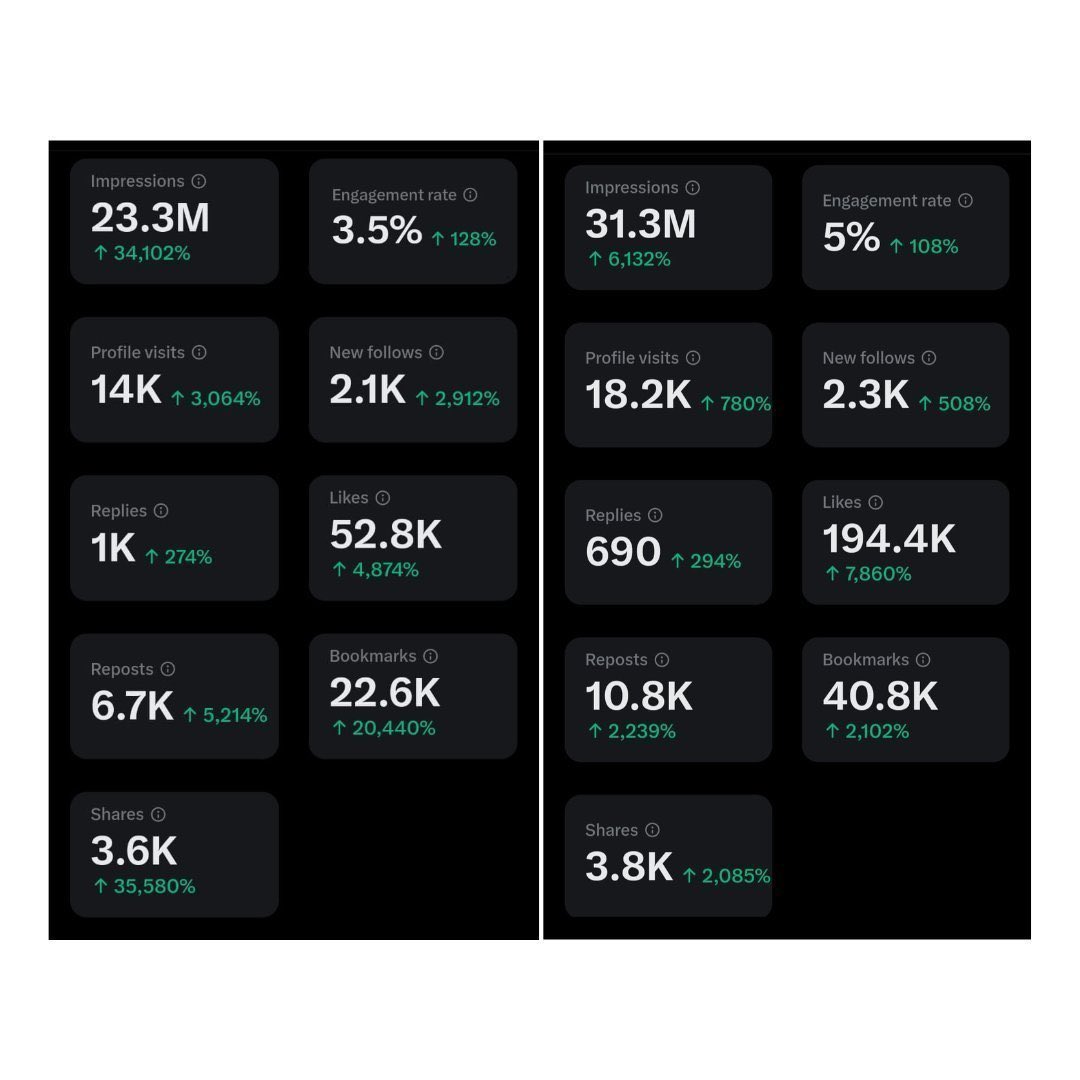


Your story, your beliefs, and your mission are your biggest assets.
We help VCs & founders turn their stories into unforgettable personal brands that attract influence and opportunities.
Book a free discovery call: calendly.com/articulatehq/3…


