WHAT IS ‘ETERNAL SEPTEMBER’? Useful term to conceptualise...

ɖʀʊӄքǟ ӄʊռʟɛʏ 🇧🇹🇹🇩@kunley_drukpa
42 views
Jan 11, 2026
~4 min read
Advertisement
1
WHAT IS ‘ETERNAL SEPTEMBER’?
Useful term to conceptualise repetitive, asinine or low-level ‘discourse’ online, especially in formerly ‘more intelligent’ spaces experiencing a mass influx of new participants - “Eternal September”. The term originates in the early history of the internet and describes a fundamental shift in how online communities behave once they are exposed to continuous mass participation. It first emerged in the early 1990s in reference to Usenet, one of the first large-scale online discussion systems. For many years, Usenet experienced a predictable annual cycle tied to the academic calendar. Each September, new university students gained access to the internet and began posting, often unfamiliar with established norms of online conduct, known as then as ‘netiquette’. Older users would spend several weeks correcting mistakes, sharing community ‘lore’, pointing newcomers to FAQs and enforcing community standards. By October, most new users had either adapted or left and the community returned to a relatively stable equilibrium
This pattern ended in 1993 when commercial internet providers, most notably America Online, opened Usenet access to millions of subscribers. Unlike universities, these services added users continuously rather than seasonally and provided little guidance on existing norms. The influx of newcomers became constant and overwhelming, far exceeding the community’s ability to socialise them. As a result, the corrective phase never ended. September became permanent, giving rise to the phrase “Eternal September.” While the term originally referred to this specific moment in Usenet’s history, it has since become a broader metaphor for what happens when an established online culture is inundated by perpetual growth. Maybe you can think of parallels here!
At its core Eternal September describes the breakdown of shared norms under conditions of unbounded scale. Early online communities were small enough to rely on informal social enforcement. Participants recognised one another, reputations mattered, bad behavior carried social costs etc. Norms such as staying on topic, avoiding repetition and not wasting people’s time with your dumb stupid retarded priors posts were essential to keeping discussions usable. Because growth was slow and predictable, these communities could absorb newcomers without losing coherence. Eternal September marks the point at which this balance collapses - as the number and rate of new participants make informal governance (broadly-defined) ineffective
The consequences are the loss of this kind of ‘historical memory’ are both cultural and structural. As newcomers vastly outnumber long-term participants, veteran or ‘oldhead’ influence diminishes and the incentive to teach these norms erodes. (4chan used to have the motto “lurk more” for this purpose). Experienced users grow fatigued from repeating the same talking points, always making corrections etc and often disengage, taking the community’s memory and knowledge with them. Norms that once defined the place are diluted or replaced, the ‘Coca Cola Effect’ runs riot - often shifting toward simplicity and immediacy rather than depth or rigour. On social media platforms lowest common denominator influencers grow more than more reflective, intelligent influencers etc. The culture adapts to what requires the least shared context, often at the cost of quality or nuance
[1/2]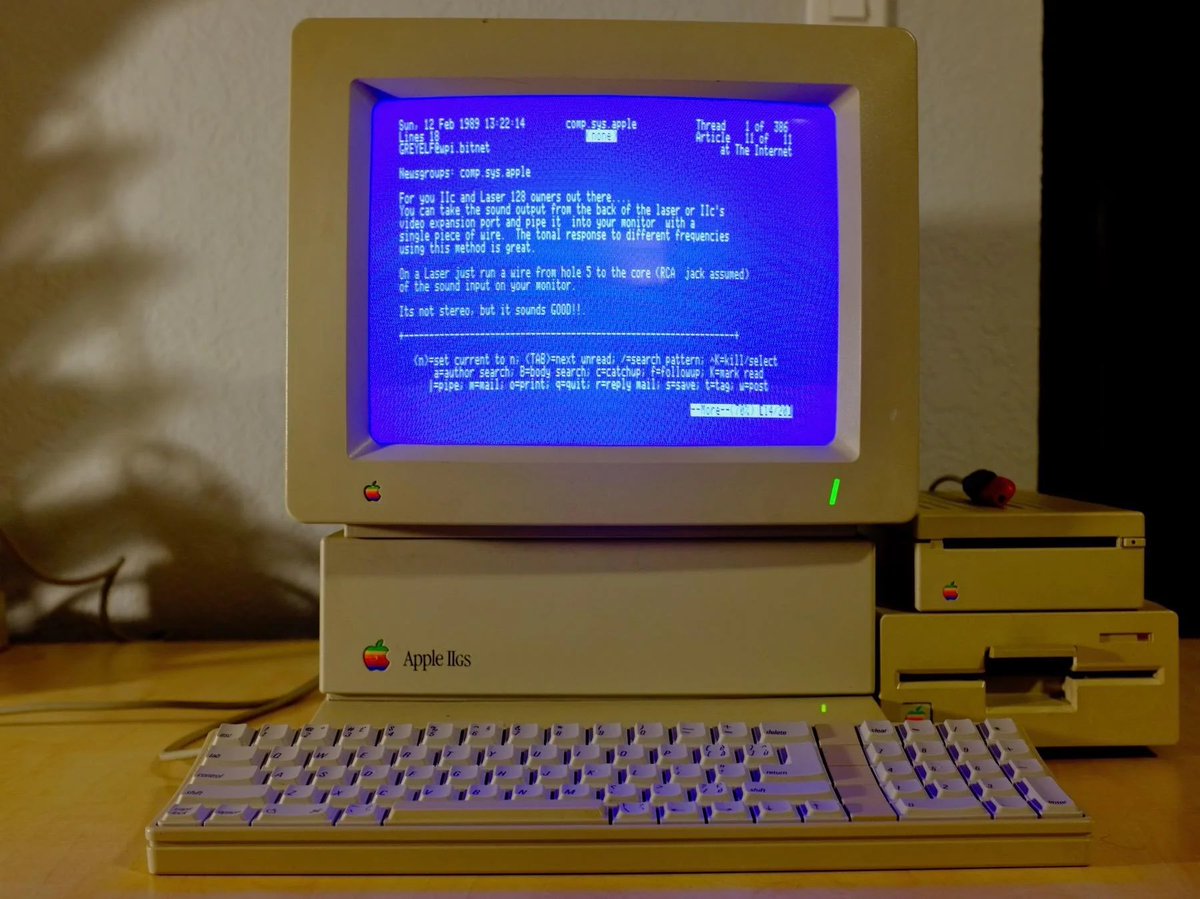
Useful term to conceptualise repetitive, asinine or low-level ‘discourse’ online, especially in formerly ‘more intelligent’ spaces experiencing a mass influx of new participants - “Eternal September”. The term originates in the early history of the internet and describes a fundamental shift in how online communities behave once they are exposed to continuous mass participation. It first emerged in the early 1990s in reference to Usenet, one of the first large-scale online discussion systems. For many years, Usenet experienced a predictable annual cycle tied to the academic calendar. Each September, new university students gained access to the internet and began posting, often unfamiliar with established norms of online conduct, known as then as ‘netiquette’. Older users would spend several weeks correcting mistakes, sharing community ‘lore’, pointing newcomers to FAQs and enforcing community standards. By October, most new users had either adapted or left and the community returned to a relatively stable equilibrium
This pattern ended in 1993 when commercial internet providers, most notably America Online, opened Usenet access to millions of subscribers. Unlike universities, these services added users continuously rather than seasonally and provided little guidance on existing norms. The influx of newcomers became constant and overwhelming, far exceeding the community’s ability to socialise them. As a result, the corrective phase never ended. September became permanent, giving rise to the phrase “Eternal September.” While the term originally referred to this specific moment in Usenet’s history, it has since become a broader metaphor for what happens when an established online culture is inundated by perpetual growth. Maybe you can think of parallels here!
At its core Eternal September describes the breakdown of shared norms under conditions of unbounded scale. Early online communities were small enough to rely on informal social enforcement. Participants recognised one another, reputations mattered, bad behavior carried social costs etc. Norms such as staying on topic, avoiding repetition and not wasting people’s time with your dumb stupid retarded priors posts were essential to keeping discussions usable. Because growth was slow and predictable, these communities could absorb newcomers without losing coherence. Eternal September marks the point at which this balance collapses - as the number and rate of new participants make informal governance (broadly-defined) ineffective
The consequences are the loss of this kind of ‘historical memory’ are both cultural and structural. As newcomers vastly outnumber long-term participants, veteran or ‘oldhead’ influence diminishes and the incentive to teach these norms erodes. (4chan used to have the motto “lurk more” for this purpose). Experienced users grow fatigued from repeating the same talking points, always making corrections etc and often disengage, taking the community’s memory and knowledge with them. Norms that once defined the place are diluted or replaced, the ‘Coca Cola Effect’ runs riot - often shifting toward simplicity and immediacy rather than depth or rigour. On social media platforms lowest common denominator influencers grow more than more reflective, intelligent influencers etc. The culture adapts to what requires the least shared context, often at the cost of quality or nuance
[1/2]
2
Although coined for Usenet, the Eternal September dynamic has recurred throughout internet history. Forums, open-source projects, collaborative platforms, social media etc. all struggled with the tension between growth and cohesion. Wikipedia, for example, though first conceived as a libertarian open project now exists in a state of continual Eternal September - with new contributors arriving daily who may be unfamiliar with its complex norms. In response, it has developed extensive rules, moderation systems and bureaucratic processes, its scale forcing communities to replace its old informal libertarian culture with formal governance. (Wikipedia is also infamously now very left-leaning please note!)
Modern social media represents, (many would say particularly on X,) Eternal September at an unprecedented scale. Entry barriers are minimal, participation is frictionless, cultural onboarding is largely nonexistent. Algorithms, rather than experienced community members, determine visibility and influence, often rewarding content that is emotionally charged or easily consumed. In this environment the perpetual influx of new users is not a problem to be solved but a design assumption. Eternal September becomes the default condition rather than an exception
Eternal September marks a turning point in internet history insofar as it symbolises the transition from small, self-regulating communities to the global mass medium it is today. Whether seen as a loss, an inevitability or a necessary phase, it broadly demonstrates conceptually that without deliberate mechanisms for governance and cultural transmission, perpetual growth inevitably transforms what a community is and how it functions. Many parallels here in real life too…
[2/2]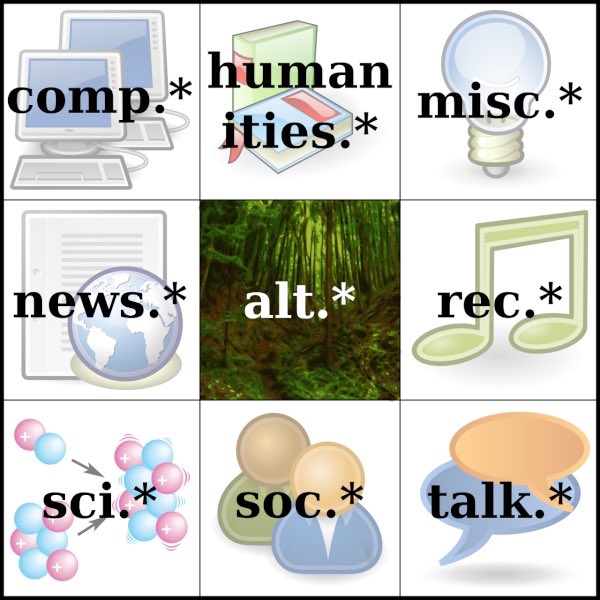
Modern social media represents, (many would say particularly on X,) Eternal September at an unprecedented scale. Entry barriers are minimal, participation is frictionless, cultural onboarding is largely nonexistent. Algorithms, rather than experienced community members, determine visibility and influence, often rewarding content that is emotionally charged or easily consumed. In this environment the perpetual influx of new users is not a problem to be solved but a design assumption. Eternal September becomes the default condition rather than an exception
Eternal September marks a turning point in internet history insofar as it symbolises the transition from small, self-regulating communities to the global mass medium it is today. Whether seen as a loss, an inevitability or a necessary phase, it broadly demonstrates conceptually that without deliberate mechanisms for governance and cultural transmission, perpetual growth inevitably transforms what a community is and how it functions. Many parallels here in real life too…
[2/2]
3
About the ‘Coca Cola Effect’ and Content Preferences

ɖʀʊӄքǟ ӄʊռʟɛʏ 🇧🇹🇹🇩@kunley_drukpa
WHAT IS THE ‘COCA COLA EFFECT’?
Have noticed recently the mass appearance of AI in the memetic ecosystems of third world countries, as in quoted tweet below - AI songs, AI posters, AI social media posts etc. are increasingly ubiquitous. A possibly unique feature of this AI cascade in the third world is just how prevalent this AI is in third world public life, I would say anecdotally much more so than in western countries. You wonder, why does nobody seem to care that there is this (as many would consider it) AI ‘slop’ so-called everywhere? What is happening?
Think part of this AI prevalence functions in a similar way to how other aspects of “modernity” already have. It’s difficult to describe this downstream effect but let’s be reductive about it and call it the ‘Coca Cola Effect’. Many people in the third world drink a lot of Coca Cola. Why? Because Coca Cola is much better than anything they had before. Have talked about this before - remember walking into a supermarket into a certain African country and finding rows and rows of shelves stacked with Coca Cola. A really really disgusting amount of Coca Cola. Thought, who is drinking this much Coca Cola? Well, it turned out the locals were - because they like drinking Coca Cola. Coca Cola is fun, enjoyable and easy to drink, it ‘tastes nice’, it is ‘accessible’, why would you not drink Coca Cola instead of water? There isn’t much else available to drink, the choice is obvious
This isn’t a value judgement, it’s easy enough to see because people vote with their feet (and stomachs) - especially where there isn’t really any extant social pressure or framework to be particularly discerning about what you consume. They enthusiastically adopt western things because those things are often a genuine improvement on what was available before, if there even was a native alternative. AI is going to do the same thing for a lot of entertainment etc. most likely for exactly the same reason. Many people think of it as janky unreliable ‘slop’ but (even outside of those occasional times when it can be good - which are often largely because of the tastes and discernments of the individual people using it as a creative tool) in the case of eg music it’s far more interesting and stimulating sonically than most of their own music - or is at least an adequate replacement for it insofar as it meets consumer demands vis-á-vis ‘the kinds of things they already actually like’ ‘at their level’. You can see it already with AI art. They genuinely like it and think it’s good and compared to what was available it often is
If an American or European restaurant used AI to design signage and a menu and a visual identity unless it was ‘really really good’ it would be pretty suspect, maybe even ‘low status’ so-called. But if a third-world restaurant did it it would be a level of polish and professionalisation far beyond what they would normally be expected to do you might even be impressed. I remember in a certain Latin American country a few months ago I saw a motorbike rental company that had made posters advertising in a ‘Studio Ghibli CHATGPT’ aesthetic. ‘RENT A BIKE’ and then it was some anime Latinas driving motorbikes through a tropical Ghiblesque beachside town. Thought, that’s very cool. Even when this eg AI signage isn’t done professionally it still generally looks ‘fairly decent’ or at least ‘basically fine’ as compared to the other signage in its surroundings
To the ‘Coca Cola Effect’ again, Coca Cola as sugary, unhealthy sludge but it tastes nice so it is better than brackish, warm bottled water. The ‘Coca Cola Effect’ is the preference for products or attitudes that are in some important way ‘better’ than existing products or attitudes even if those products or attitudes are considered ‘lower status’ or ‘slop’ by more discerning people
Have noticed recently the mass appearance of AI in the memetic ecosystems of third world countries, as in quoted tweet below - AI songs, AI posters, AI social media posts etc. are increasingly ubiquitous. A possibly unique feature of this AI cascade in the third world is just how prevalent this AI is in third world public life, I would say anecdotally much more so than in western countries. You wonder, why does nobody seem to care that there is this (as many would consider it) AI ‘slop’ so-called everywhere? What is happening?
Think part of this AI prevalence functions in a similar way to how other aspects of “modernity” already have. It’s difficult to describe this downstream effect but let’s be reductive about it and call it the ‘Coca Cola Effect’. Many people in the third world drink a lot of Coca Cola. Why? Because Coca Cola is much better than anything they had before. Have talked about this before - remember walking into a supermarket into a certain African country and finding rows and rows of shelves stacked with Coca Cola. A really really disgusting amount of Coca Cola. Thought, who is drinking this much Coca Cola? Well, it turned out the locals were - because they like drinking Coca Cola. Coca Cola is fun, enjoyable and easy to drink, it ‘tastes nice’, it is ‘accessible’, why would you not drink Coca Cola instead of water? There isn’t much else available to drink, the choice is obvious
This isn’t a value judgement, it’s easy enough to see because people vote with their feet (and stomachs) - especially where there isn’t really any extant social pressure or framework to be particularly discerning about what you consume. They enthusiastically adopt western things because those things are often a genuine improvement on what was available before, if there even was a native alternative. AI is going to do the same thing for a lot of entertainment etc. most likely for exactly the same reason. Many people think of it as janky unreliable ‘slop’ but (even outside of those occasional times when it can be good - which are often largely because of the tastes and discernments of the individual people using it as a creative tool) in the case of eg music it’s far more interesting and stimulating sonically than most of their own music - or is at least an adequate replacement for it insofar as it meets consumer demands vis-á-vis ‘the kinds of things they already actually like’ ‘at their level’. You can see it already with AI art. They genuinely like it and think it’s good and compared to what was available it often is
If an American or European restaurant used AI to design signage and a menu and a visual identity unless it was ‘really really good’ it would be pretty suspect, maybe even ‘low status’ so-called. But if a third-world restaurant did it it would be a level of polish and professionalisation far beyond what they would normally be expected to do you might even be impressed. I remember in a certain Latin American country a few months ago I saw a motorbike rental company that had made posters advertising in a ‘Studio Ghibli CHATGPT’ aesthetic. ‘RENT A BIKE’ and then it was some anime Latinas driving motorbikes through a tropical Ghiblesque beachside town. Thought, that’s very cool. Even when this eg AI signage isn’t done professionally it still generally looks ‘fairly decent’ or at least ‘basically fine’ as compared to the other signage in its surroundings
To the ‘Coca Cola Effect’ again, Coca Cola as sugary, unhealthy sludge but it tastes nice so it is better than brackish, warm bottled water. The ‘Coca Cola Effect’ is the preference for products or attitudes that are in some important way ‘better’ than existing products or attitudes even if those products or attitudes are considered ‘lower status’ or ‘slop’ by more discerning people