Hey coach! You are not as important as you think you are. Most...

David Garcia@IJaSport
15 views
Jan 11, 2026
~4 min read
Advertisement
1
Hey coach! You are not as important as you think you are. Most likely you are getting in the way of your players improving as fast as they could be. The fact is players make each other better, not you.
THREAD ON YOUR ROLE AS A COACH 🧵👇


THREAD ON YOUR ROLE AS A COACH 🧵👇
2
You know this instinctively. You put a good group of players together and have them play against each other (train) on a regular basis, they will undoubtedly improve… unless you wrongly disturb this process which I will discuss later.

3
This can be seen in those pockets of the world where footballers magically materialize, emerge one after the other as a result of playing against each other in the plazas, squares, and back alleys.

4
In any game, formal or informal, players are going to be constrained by Space and Time. This means that they will have to (inter)act in a limited amount of space, having to be precise, and a determinate amount of time, having to be quick.
5
This is true of all football everywhere. The worst players, the players who cannot manage the space/time constraints, will have to adapt and improve in order to be effective. As the worse players improve, the better players will have to improve as well.
6
This all happens within the format of a game where there is the same objective for both teams, scoring more goals than the opposition. This means that they will both do their very best to achieve the objective.
7
When this occurs, it’s a beautiful thing. Minds and bodies fusing into one through desired intentions to achieve their objectives. Subconsciously communicating with teammates and opponents to (inter)act in the best possible way.

8
And a coach can get in the way of this iron-sharpening-iron process by putting themselves at the center of it. The moment that they believe that they are going to bestow all of their mighty knowledge onto the players, they have already failed.
9
“Do this.” “Do that” or worse yet, “Don’t do this.” “Don’t do that.”
That subconscious attention which was being used to communicate with the game is getting hijacked, hacked by the almighty coach, overloaded to the point of failure.
That subconscious attention which was being used to communicate with the game is getting hijacked, hacked by the almighty coach, overloaded to the point of failure.
10
And at the lowest point of the coach, they take the player out of the tried-and-tested game format where they attempt to best their opponent and instead they are fooled into thinking that it’s a better use of their time with jousting partners if they don’t play.
11
Instead, “Play alone Charlie. Here is your own ball.”
“Sally. Don’t pay any mind to your teammates/opponents, they are also playing alone. Don’t worry, it’s fun. You’ll improve. All 18 of you will improve out there on your islands.”
“Sally. Don’t pay any mind to your teammates/opponents, they are also playing alone. Don’t worry, it’s fun. You’ll improve. All 18 of you will improve out there on your islands.”
12
Wait a second, what is my job as a coach then?
Ah good question! Remember that time when that player/group of players kept struggling to achieve their objective but simply could not figure out why?
Step up, coach, but tread lightly to keep it theirs.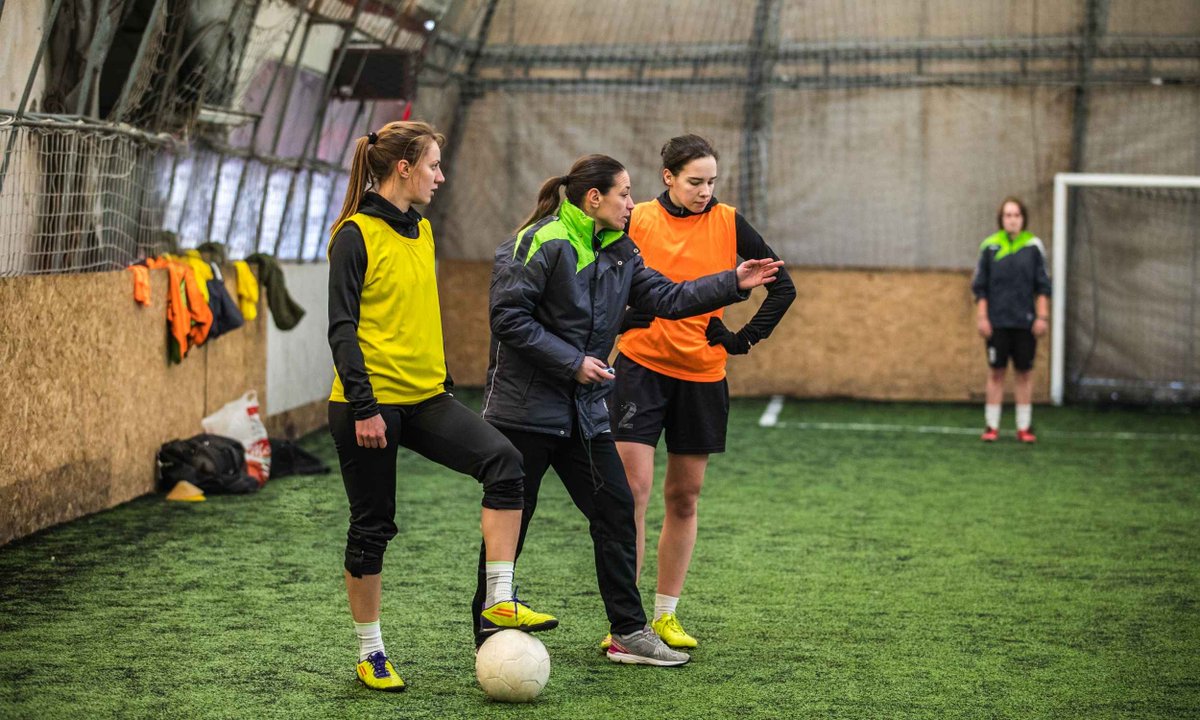
Ah good question! Remember that time when that player/group of players kept struggling to achieve their objective but simply could not figure out why?
Step up, coach, but tread lightly to keep it theirs.
13
Your job is a mirror. You provide reflection.
You reflect what happened, you reflect what they did, what they intended to do, what their teammates did, what the opponent did. Reflect it back to them. The clearer the reflection, the clearer the step back into the game.
You reflect what happened, you reflect what they did, what they intended to do, what their teammates did, what the opponent did. Reflect it back to them. The clearer the reflection, the clearer the step back into the game.
14
So let me simplify for you, your job is to:
- Provide game formats for your players
- Help them reflect on their contributions to the game as much as necessary.
It’s really that simple (in theory because in practice it’s incredibly difficult to do effectively).
- Provide game formats for your players
- Help them reflect on their contributions to the game as much as necessary.
It’s really that simple (in theory because in practice it’s incredibly difficult to do effectively).
15
🚨 DISCLAIMER: I am not saying that you simply roll a ball out and let them have at it. No, I am saying that.
The best coaches design games that bring out necessary (inter)actions and then reflect with the players to speed up player development.
The best coaches design games that bring out necessary (inter)actions and then reflect with the players to speed up player development.
16
You see that this is a two step process, develop the training activity and reflect with players.
How well do you do these things?
- Do your training activities resemble the game as much as possible?
- Do they meet the players’ needs?
- Do they facilitate self-expression?
How well do you do these things?
- Do your training activities resemble the game as much as possible?
- Do they meet the players’ needs?
- Do they facilitate self-expression?
17
- Does your reflection (feedback) process with players bring attention players’ awareness, intentions, decisions, and execution?
- Do you do this purposefully or is it whatever comes out of your mouth at any given moment?
- Do you do this purposefully or is it whatever comes out of your mouth at any given moment?
18
This is how coaches improve. This is what coach development should focus on primarily. This is what you should focus on when you reflect on your own coaching.
19
All of this will move you closer to an environmental architect.
A leader who designs environments where players interact, thrive, enjoy, and improve. This is the end goal. It’s a paradigm shift in your thinking to coaching.
A leader who designs environments where players interact, thrive, enjoy, and improve. This is the end goal. It’s a paradigm shift in your thinking to coaching.
20
But more importantly, when you do this right, you will create place, a time, an experience where the game lives in its truest nature. The way it emerged between people, from people, with people.
21
It’s a beautiful thing when we can get a group of people, who all want to play. You know the playful feeling.
Your training environment should be one that onlookers want to be a part of because of the contagious joy.
Your training environment should be one that onlookers want to be a part of because of the contagious joy.
22
Get instant access to our FREE Training Session Guide and 4 proven activities that will transform your football training sessions.
Coach smarter, not harder.
Download now: eepurl.com/iEwbD6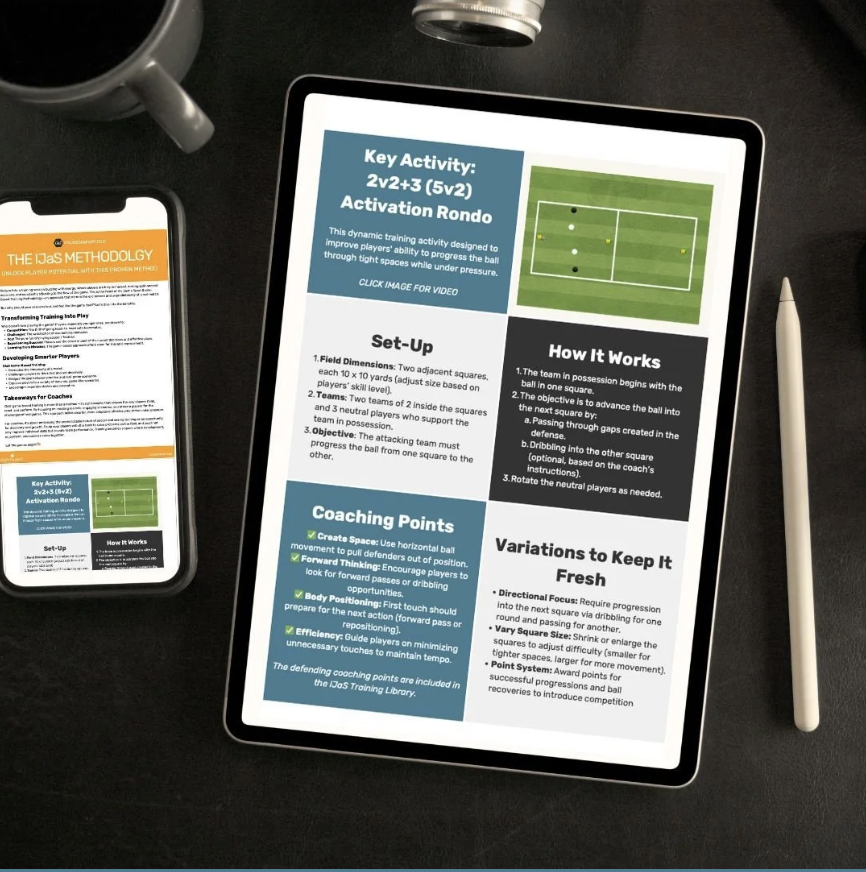
Coach smarter, not harder.
Download now: eepurl.com/iEwbD6
