3 investors who predicted every major crash are sounding the alarm....

Walker Deibel@walkerdeibel
19 views
Dec 29, 2025
~3 min read
Advertisement
1
3 investors who predicted every major crash are sounding the alarm.
Thiel bets against Nvidia. Burry exits the game. Buffett stockpiles cash like it's 2008.
They know something the market doesn't.
Here's the structural shift:
Thiel bets against Nvidia. Burry exits the game. Buffett stockpiles cash like it's 2008.
They know something the market doesn't.
Here's the structural shift:
2
Your net worth hits new peaks. Your confidence doesn't follow.
Portfolios grow on paper while control slips in practice.
The contradiction is obvious once you see it.
Here's what's actually happening:
Portfolios grow on paper while control slips in practice.
The contradiction is obvious once you see it.
Here's what's actually happening:
0:05
3
Public markets reprice constantly based on liquidity, flows, and sentiment.
When perception drifts from performance, concentrated public portfolios feel emotionally misaligned.
That drift is widening.
Sophisticated investors are responding with a quiet exit: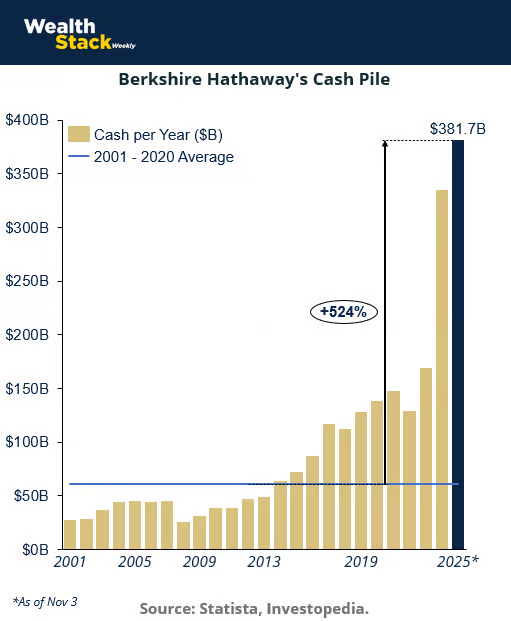
When perception drifts from performance, concentrated public portfolios feel emotionally misaligned.
That drift is widening.
Sophisticated investors are responding with a quiet exit:
4
Market volatility has increased sharply in recent years.
Index concentration has also grown, with a handful of large companies making up substantial portions of major indices.
This creates hidden concentration risk for passive investors.
Another signal emerged in late 2022:
Index concentration has also grown, with a handful of large companies making up substantial portions of major indices.
This creates hidden concentration risk for passive investors.
Another signal emerged in late 2022:
5
Job creation and market valuation used to move together.
That relationship broke.
Valuations kept climbing while job openings fell.
Pricing now runs on expectations, not economic output.
That relationship broke.
Valuations kept climbing while job openings fell.
Pricing now runs on expectations, not economic output.
6
Then there's the behavior of high-profile investors.
Some billionaires have increased cash positions dramatically.
Others have reduced major stock holdings.
It reflects shifting allocation preferences in the current environment.
Some billionaires have increased cash positions dramatically.
Others have reduced major stock holdings.
It reflects shifting allocation preferences in the current environment.
7
AI created massive market enthusiasm.
But its economic impact? Still developing.
AI companies trade at huge valuations compared to actual revenues.
Markets are betting on future productivity that hasn't materialized yet.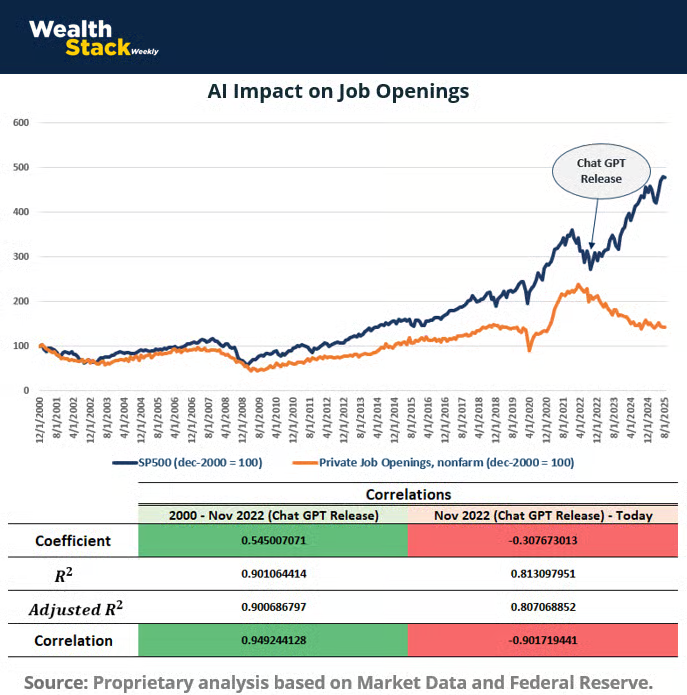
But its economic impact? Still developing.
AI companies trade at huge valuations compared to actual revenues.
Markets are betting on future productivity that hasn't materialized yet.
8
AI infrastructure companies are often interconnected.
They invest in each other, supply each other, build demand together.
This creates circular dynamics where valuations become self-reinforcing.
Prices rise faster than traditional performance metrics.
They invest in each other, supply each other, build demand together.
This creates circular dynamics where valuations become self-reinforcing.
Prices rise faster than traditional performance metrics.
9
You don't have to predict whether current valuations are sustainable.
You position your wealth so you maintain stability regardless of market direction.
Katie Haw figured this out the hard way:
You position your wealth so you maintain stability regardless of market direction.
Katie Haw figured this out the hard way:
10
A large portion of her net worth sat in a single tech stock.
"I'm investing in the company with my job and in the stock itself," she says.
During a downturn, she watched her net worth decline significantly on paper.
That's when she changed her approach entirely.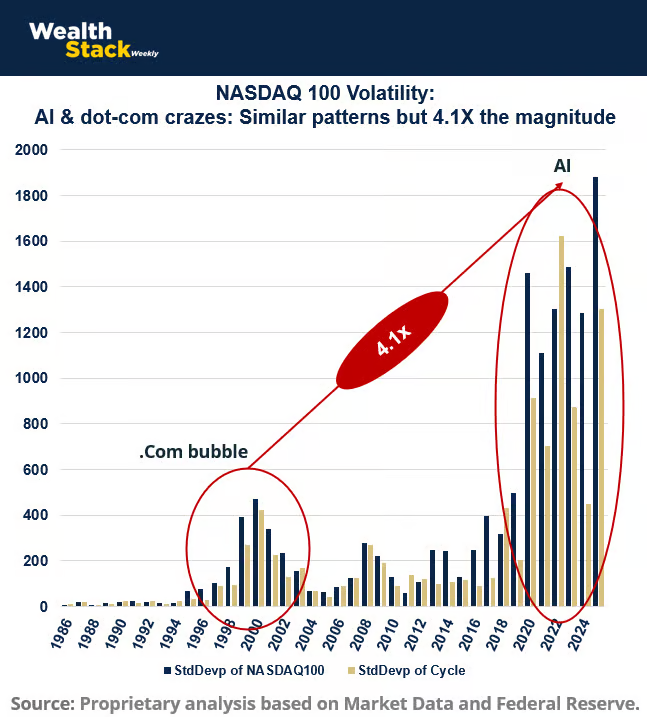
"I'm investing in the company with my job and in the stock itself," she says.
During a downturn, she watched her net worth decline significantly on paper.
That's when she changed her approach entirely.
11
Katie spent her career in enterprise tech sales closing large software deals.
Her compensation: W-2 income, variable commissions, ongoing RSUs.
She didn't unwind legacy holdings or try to time the market.
She simply rerouted new capital flow.
Her compensation: W-2 income, variable commissions, ongoing RSUs.
She didn't unwind legacy holdings or try to time the market.
She simply rerouted new capital flow.
12
One of her first private investments was a North Carolina land development deal.
Watching it progress from raw land through entitlements to infrastructure opened her eyes.
Value creation in action.
It solidified her conviction about private markets.
Watching it progress from raw land through entitlements to infrastructure opened her eyes.
Value creation in action.
It solidified her conviction about private markets.
13
Today, 20-25% of her net worth is in private investments.
Real estate, operating companies, tech-adjacent opportunities.
She also rolled old 401(k)s into a self-directed Roth invested in private real estate.
Her migration strategy had 4 simple steps:
Real estate, operating companies, tech-adjacent opportunities.
She also rolled old 401(k)s into a self-directed Roth invested in private real estate.
Her migration strategy had 4 simple steps:
14
1. Let legacy public holdings compound
2. Use fresh capital for private deals
3. Reinvest private returns
4. Expand gradually without forcing moves
Simple. Methodical. No market timing required.
"I'm not trying to time anything," she says.
2. Use fresh capital for private deals
3. Reinvest private returns
4. Expand gradually without forcing moves
Simple. Methodical. No market timing required.
"I'm not trying to time anything," she says.
15
"I'm trying to rebalance away from concentration and build income streams that aren't tied to corporate performance cycles."
Her approach shows how to begin without blowing up what you've built.
The playbook is straightforward:
Her approach shows how to begin without blowing up what you've built.
The playbook is straightforward:
16
Choose your public-market floor.
Most high earners land between 50-60%.
This becomes your anchor for every future decision.
Then redirect fresh capital, not old positions.
Most high earners land between 50-60%.
This becomes your anchor for every future decision.
Then redirect fresh capital, not old positions.
17
Use new savings (commissions, bonuses, RSU vests) to build private exposure.
Start with private income first: credit, real estate, infrastructure.
Once that foundation functions, add growth assets.
Start with private income first: credit, real estate, infrastructure.
Once that foundation functions, add growth assets.
18
Turn distributions into your compounding engine.
Private cash flow funds your next allocations.
This makes the private side self-reinforcing.
Trim concentrated public positions gradually over time.
Private cash flow funds your next allocations.
This makes the private side self-reinforcing.
Trim concentrated public positions gradually over time.
19
Add optionality once the core is stable.
Small, high-conviction checks for SPVs, secondaries, special situations.
Run annual reviews with 3 questions:
Is public exposure above target? Are income assets performing? Am I reinvesting distributions?
Small, high-conviction checks for SPVs, secondaries, special situations.
Run annual reviews with 3 questions:
Is public exposure above target? Are income assets performing? Am I reinvesting distributions?
20
Katie's strategy isn't unique.
I work with dozens of high earners executing similar moves.
Tech execs, professionals, entrepreneurs quietly shifting from public dependence to private stability.
Each has different tax considerations, but the core framework stays consistent.
I work with dozens of high earners executing similar moves.
Tech execs, professionals, entrepreneurs quietly shifting from public dependence to private stability.
Each has different tax considerations, but the core framework stays consistent.
21
If you want the case study collection, portfolio frameworks, and access to opportunities I'm sharing with my investor community:
Wealth Stack: wealthstack1.com
It's free and designed to help you build calm, durable wealth.
Wealth Stack: wealthstack1.com
It's free and designed to help you build calm, durable wealth.


