🧵1/12: Russia’s economy hasn’t collapsed, but it is suffering...

Oliver Alexander@OAlexanderDK
23 views
Dec 28, 2025
~2 min read
Advertisement
1
🧵1/12: Russia’s economy hasn’t collapsed, but it is suffering immensely. It still runs, but only because the central bank keeps it alive with constant REPO liquidity. What was once emergency support is now the daily operating system.
📷:@evgen1232007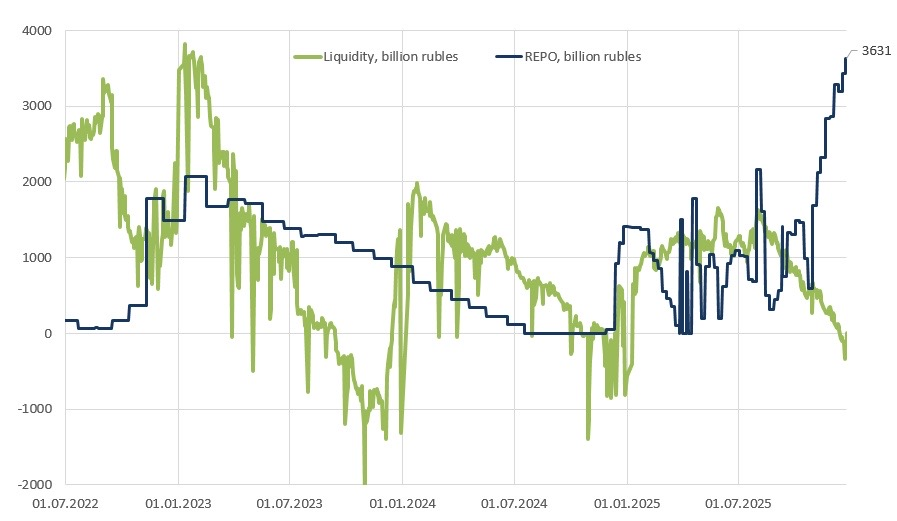
📷:@evgen1232007
2
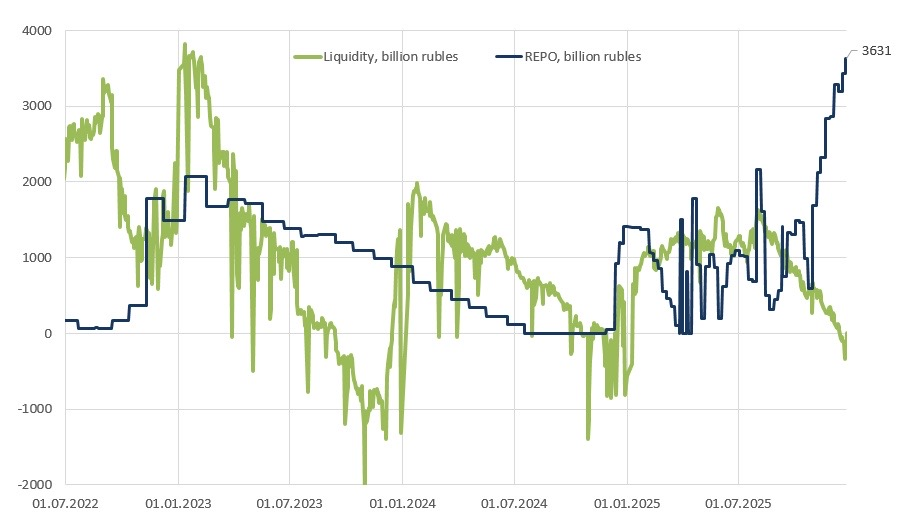
2/12: REPO usage shows the stress clearly. Trillions of rubles are borrowed week after week by the banks with no unwind. Banks aren’t smoothing short-term shocks anymore. They are refinancing theirs and the economy's survival on a rolling basis.
3
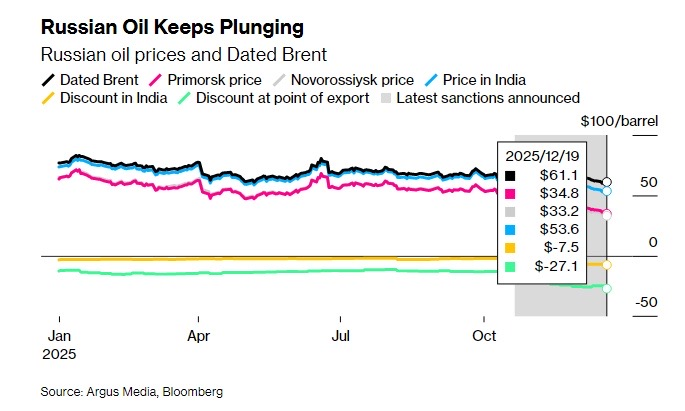
3/12: Oil used to stabilize everything. Now it doesn’t. Russian crude sells at deep discounts due to Western and kinetic sanctions, and tax revenue per barrel keeps falling. Even when export volumes hold, the state earns far less from each barrel.
4
4/12: With oil revenues no longer covering the government's spending, deficits are now a structural component of the Russian budget. The response is debt. A lot of it. The OFZ market has nearly doubled in size since 2022 and keeps growing.
📷:@evgen1232007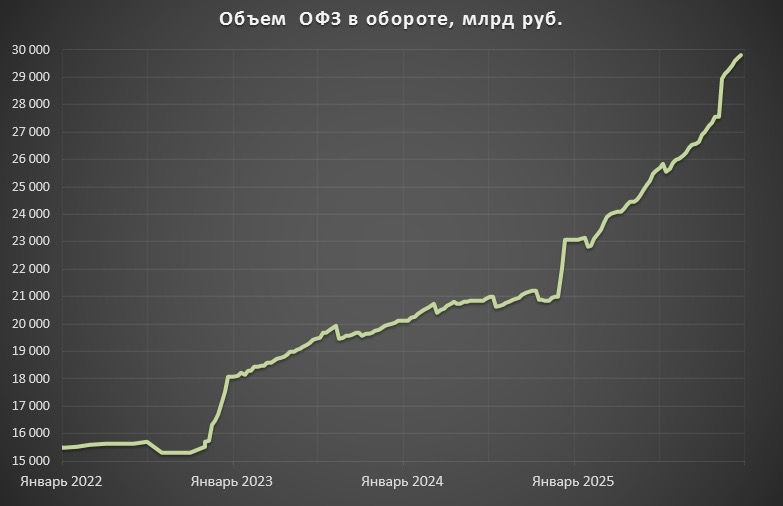
📷:@evgen1232007
5
5/12: Foreign investors are effectively gone. Non-residents now hold a record-low share of OFZs. Russia is funding its budget almost entirely from inside its own financial system, with no external shock absorber left.
📸: @Prune602
📸: @Prune602
6
6/12: Domestic banks absorb the bonds, then refinance them through the central bank. Bonds in, REPO out. It’s a circular closed loop that works on paper for a while, but concentrates all risk inside the system.
📸: @Prune602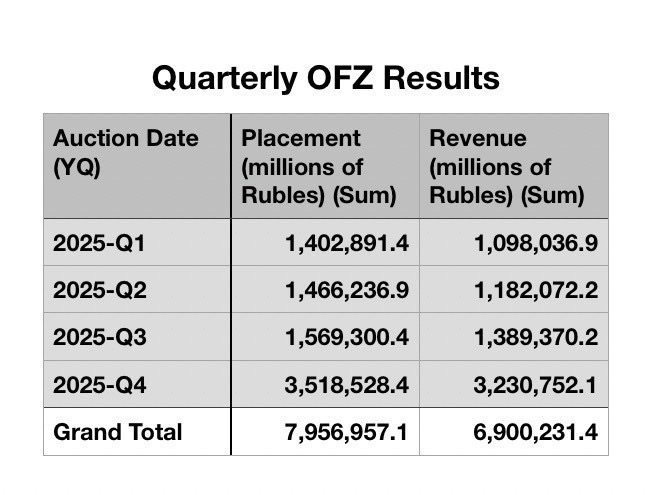

📸: @Prune602
7
7/12: The average Russian households is starting to feel it too. The share of “free money” left after essentials has collapsed. Russians now have roughly half the financial breathing room they had just two years ago.

8
8/12: This is why deposits are leaking and cash withdrawal are on the rise. This isn’t panic yet. It’s a slow, persistent loss of confidence in the system as people keep less money in banks and more on hand.
📷:@evgen1232007
📷:@evgen1232007
9
9/12: The real economy confirms the strain. Civilian production is falling across machinery, vehicles, construction materials, appliances, and equipment. This isn’t adaptation. It’s a broad contraction across a wide range of sectors.
📷:@evgen1232007


📷:@evgen1232007
10
10/12: Corporate profits still look fine on paper, but inflation and high interest rates tell another story. Real margins are shrinking, losses are spreading, and restructurings are rising across sectors.
📸: @Prune602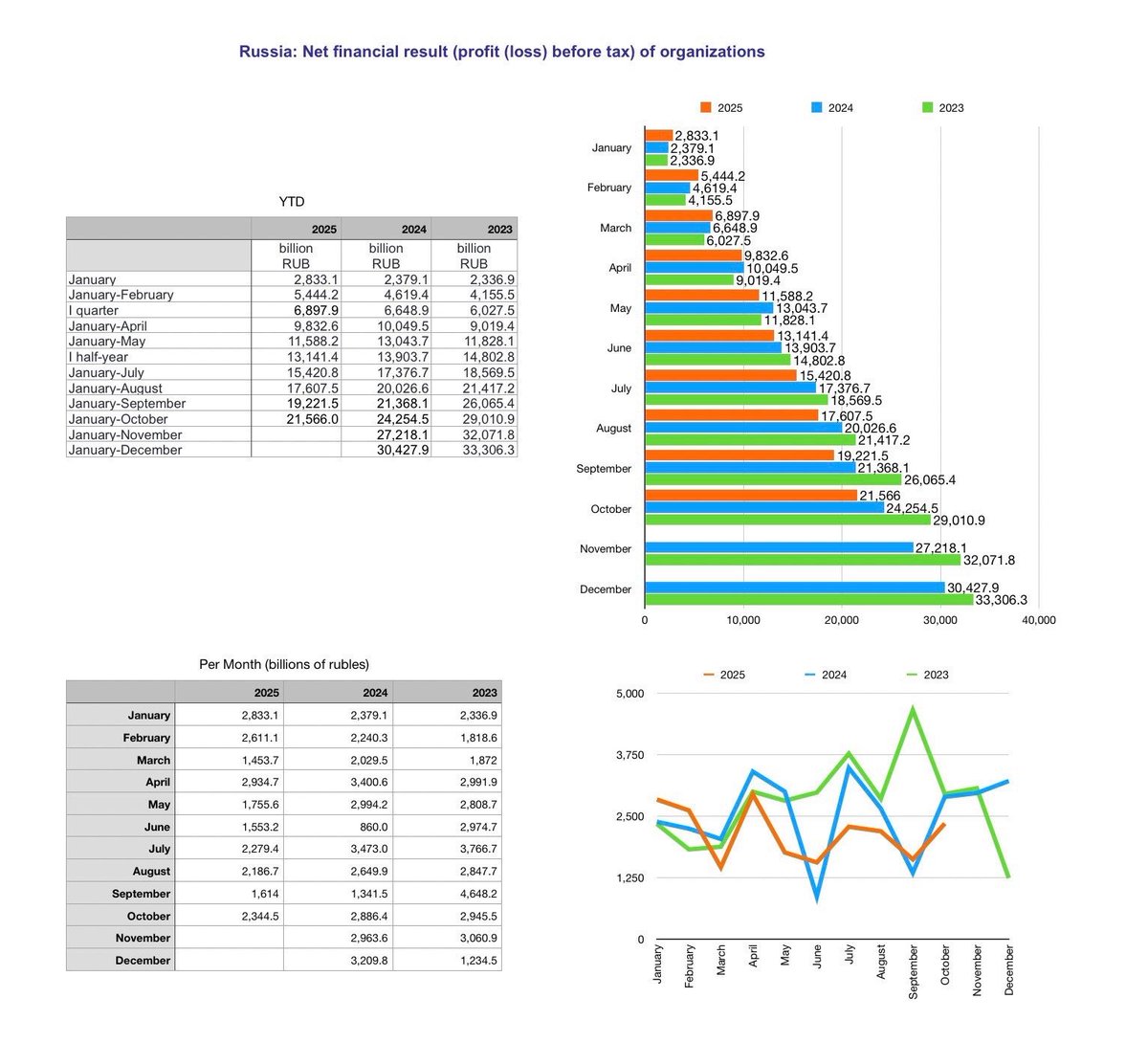
📸: @Prune602
11
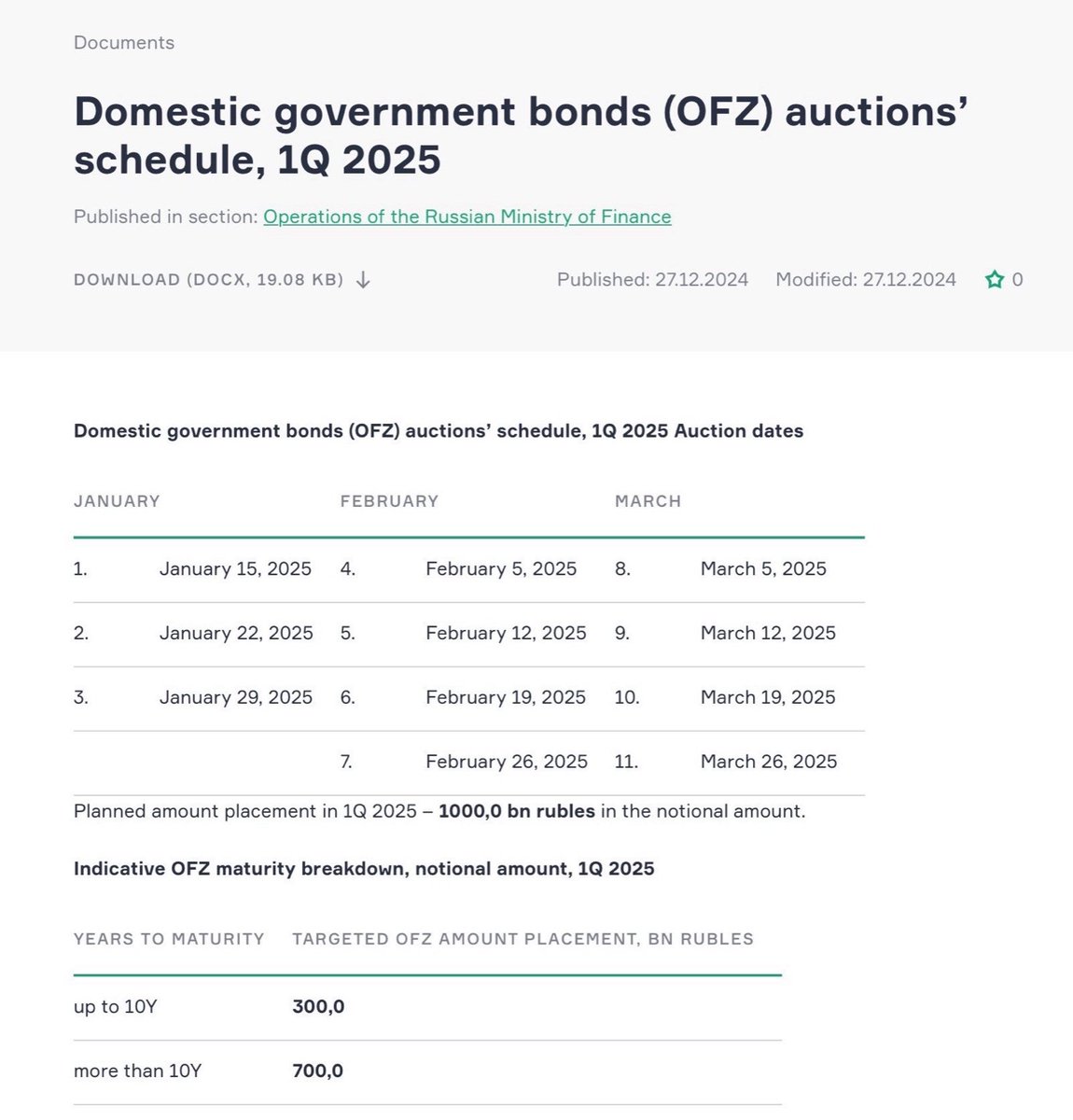
11/12: This is likely why the Ministry of Finance quietly changed OFZ targets. It is no longer “how many bonds placed,” but “how much cash raised.” Pricing and future debt no longer matters, all that matters is cash today.

12
12/12: Conclusion: Russia’s economy is alive but fragile. The buffers from 2022 are gone. Trust, liquidity, and confidence are now holding together a fragile system teetering on the brink. In this state, one major shock wouldn’t be absorbed, it would push it off the edge.
