High cortisol is literally more fattening than a diet of junk food...

Dalton (Analyze & Optimize)@Outdoctrination
139 views
Dec 18, 2025
~3 min read
Advertisement
1
High cortisol is literally more fattening than a diet of junk food (HFD).
Yet, almost nobody will talk about it when it comes to weight loss.
Here's how cortisol is fattening us up, and what to do about it (🧵1/12):
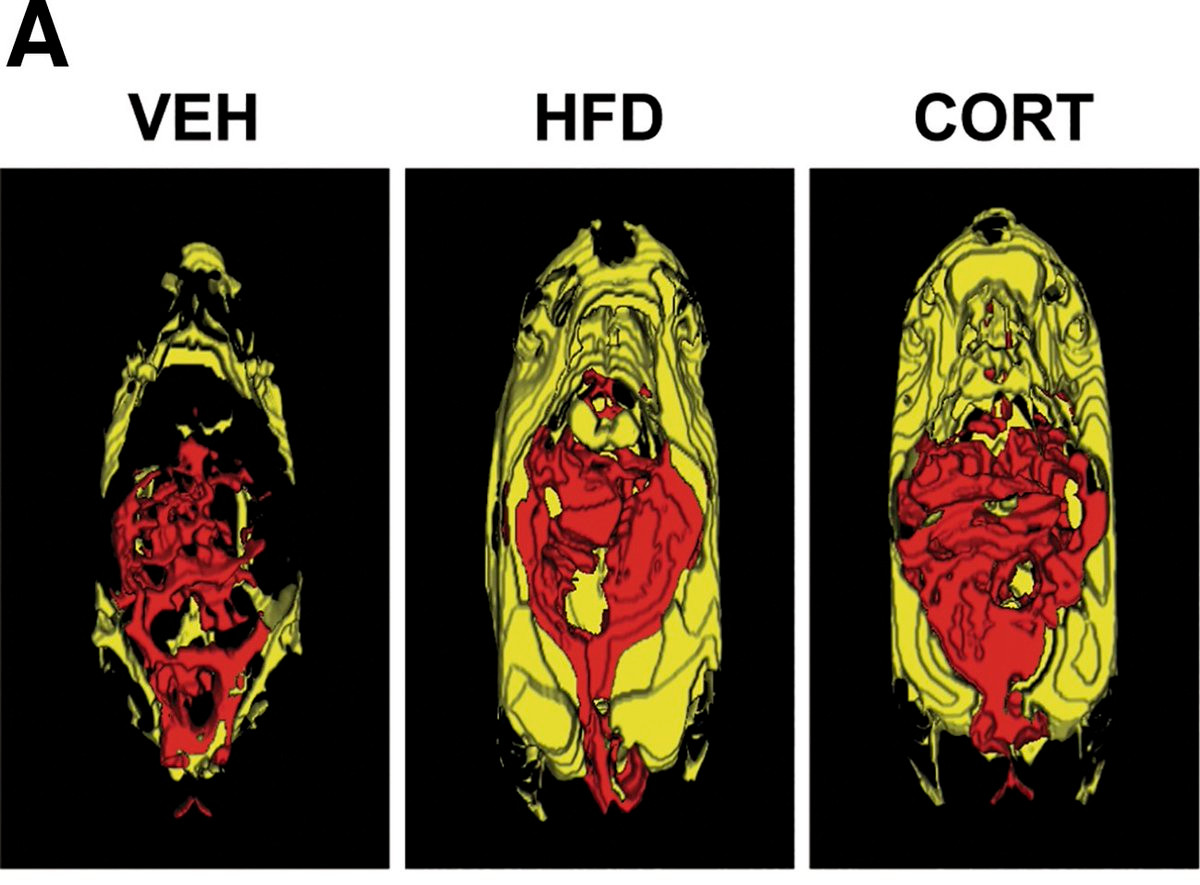

Yet, almost nobody will talk about it when it comes to weight loss.
Here's how cortisol is fattening us up, and what to do about it (🧵1/12):
Dalton (Analyze & Optimize)@Outdoctrination
High cortisol, anxiety, and can’t sleep? This is for you.
This is the ULTIMATE GUIDE to STRESS - the signs, the biological mechanisms and what to do about it:
This is the ULTIMATE GUIDE to STRESS - the signs, the biological mechanisms and what to do about it:
2
A few key fundamental truths have been known for DECADES in the research yet get overlooked today.
1. Animals under certain stress conditions will gain fat
2. People with obesity have higher cortisol production, despite not always having higher blood cortisol
3. Cortisol mimicking drugs can directly cause weight gain
but the focus remains solely on calories.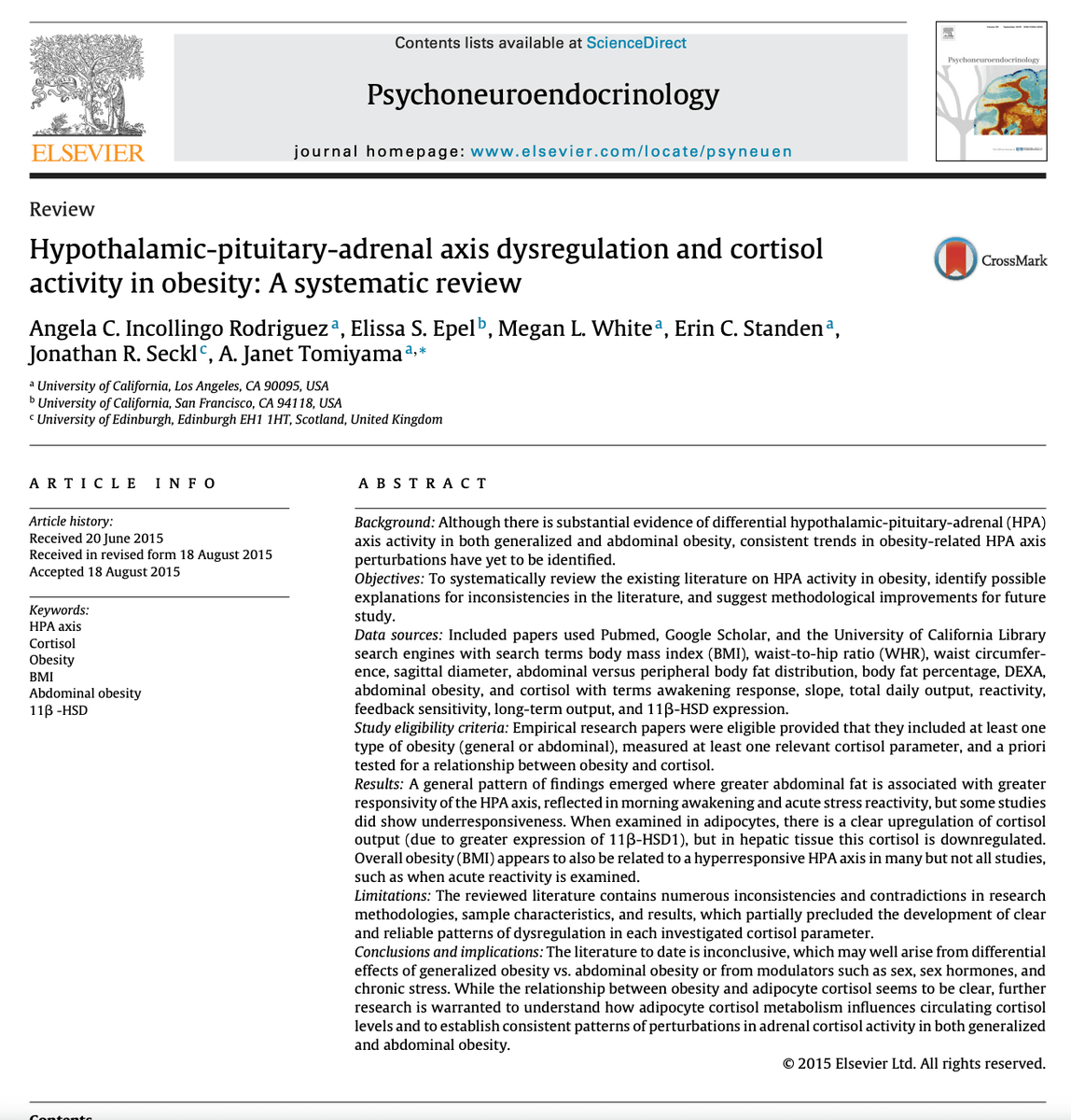
1. Animals under certain stress conditions will gain fat
2. People with obesity have higher cortisol production, despite not always having higher blood cortisol
3. Cortisol mimicking drugs can directly cause weight gain
but the focus remains solely on calories.
3
Another very obvious example of this is in Cushing's syndrome.
These people have pituitary or adrenal tumors typically, causing them to produce MASSIVE amounts of cortisol.
They almost universally have lots of belly fat.
These people have pituitary or adrenal tumors typically, causing them to produce MASSIVE amounts of cortisol.
They almost universally have lots of belly fat.
4
We can also see that giving animals high amounts of cortisol can directly cause obesity.
It also:
↣ Decreases lean mass
↣ Induces fatty liver
↣ Causes leptin / insulin resistance
This is in part by increasing nutrient absorption in the gut, but there are several other reasons at play here as well.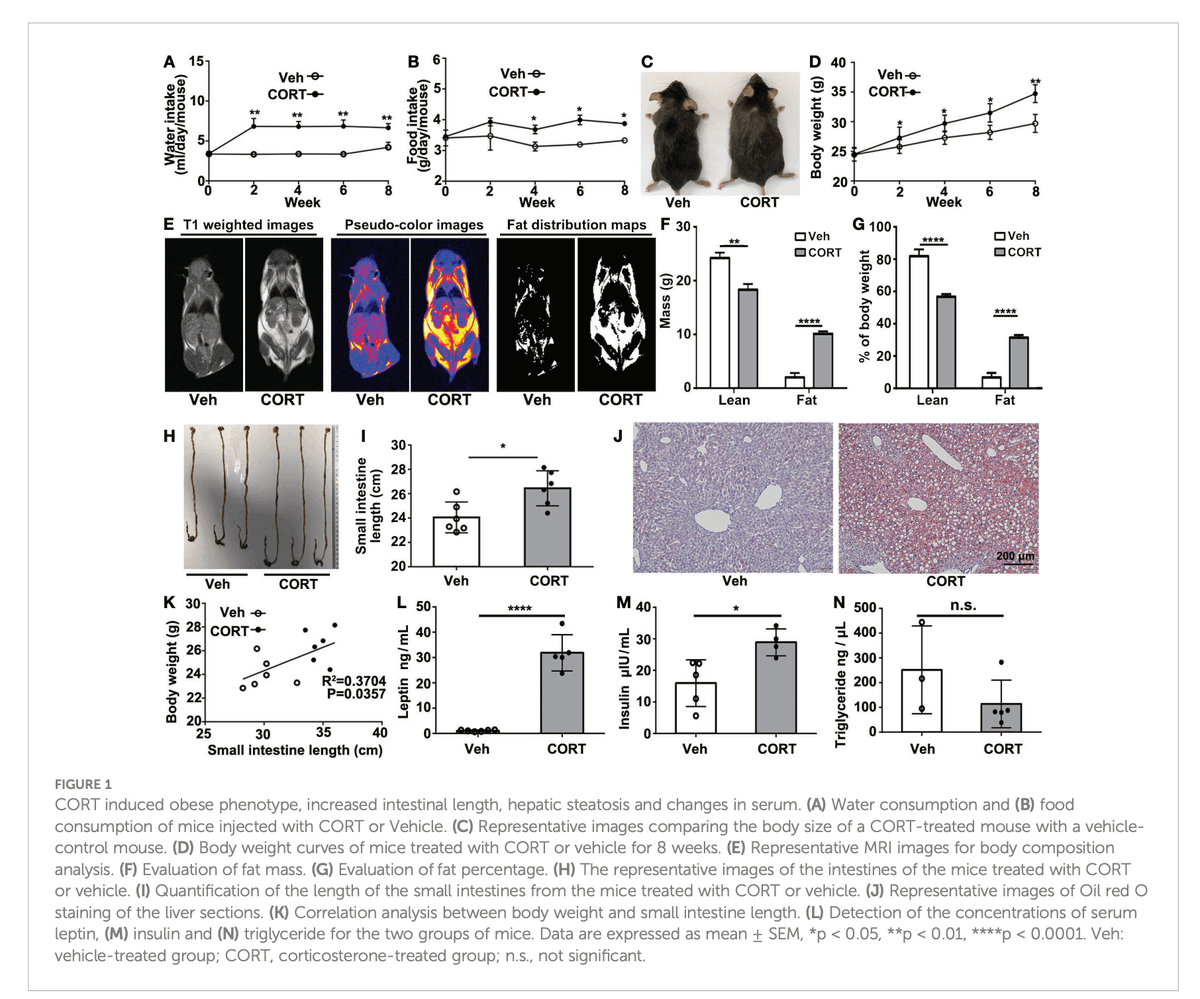
It also:
↣ Decreases lean mass
↣ Induces fatty liver
↣ Causes leptin / insulin resistance
This is in part by increasing nutrient absorption in the gut, but there are several other reasons at play here as well.
5
Recently, pharma companies have actually been trying to develop drugs that inhibit the CRF and ACTH in order to treat obesity.
CRF and ACTH are secreted by the hypothalamus in the brain and the pituitary to stimulate the production of cortisol.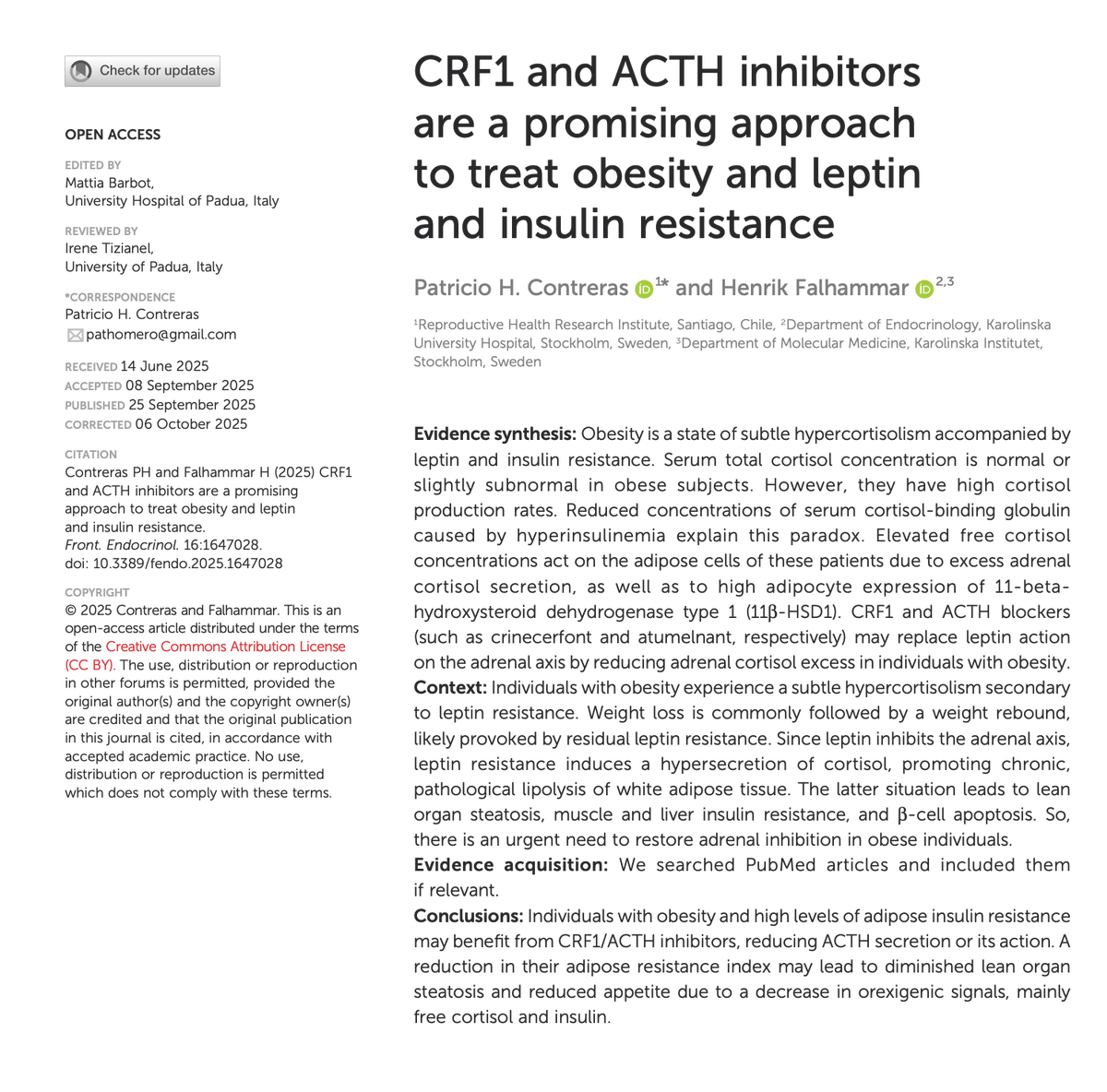
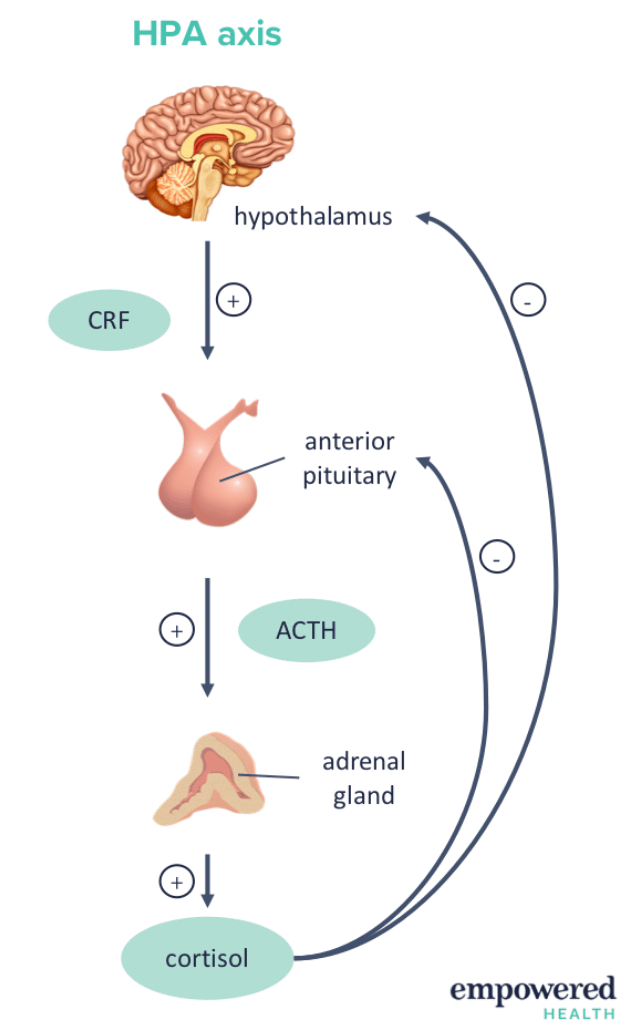
CRF and ACTH are secreted by the hypothalamus in the brain and the pituitary to stimulate the production of cortisol.
6
LEPTIN decreases cortisol production.
Low leptin & leptin resistance are common in weight gain.
This creates a viscous cycle where low leptin signaling and high cortisol continue to worsen each other and make you fat.
More on leptin below.


Low leptin & leptin resistance are common in weight gain.
This creates a viscous cycle where low leptin signaling and high cortisol continue to worsen each other and make you fat.
More on leptin below.
Dalton (Analyze & Optimize)@Outdoctrination
The reason you can’t lose weight (or keep it off) no matter how hard you try.
LEPTIN: why it’s SO important and how to optimize yours to boost your metabolism and finally stay thin for life.
LEPTIN: why it’s SO important and how to optimize yours to boost your metabolism and finally stay thin for life.
7
One of the main findings in people gaining weight is not just more cortisol production from the HPA axis,
but also higher cortisol production within the fat tissue itself.
The enzyme 11βHSD1 converts cortisone (much weaker) into cortisol in various tissues.
So even if you have what looks like normal cortisol levels in blood, you can have high cortisol within the fat tissue, which contributes to further fat gain.
Once again, pharma seems to want to develop drugs in order to inhibit this process.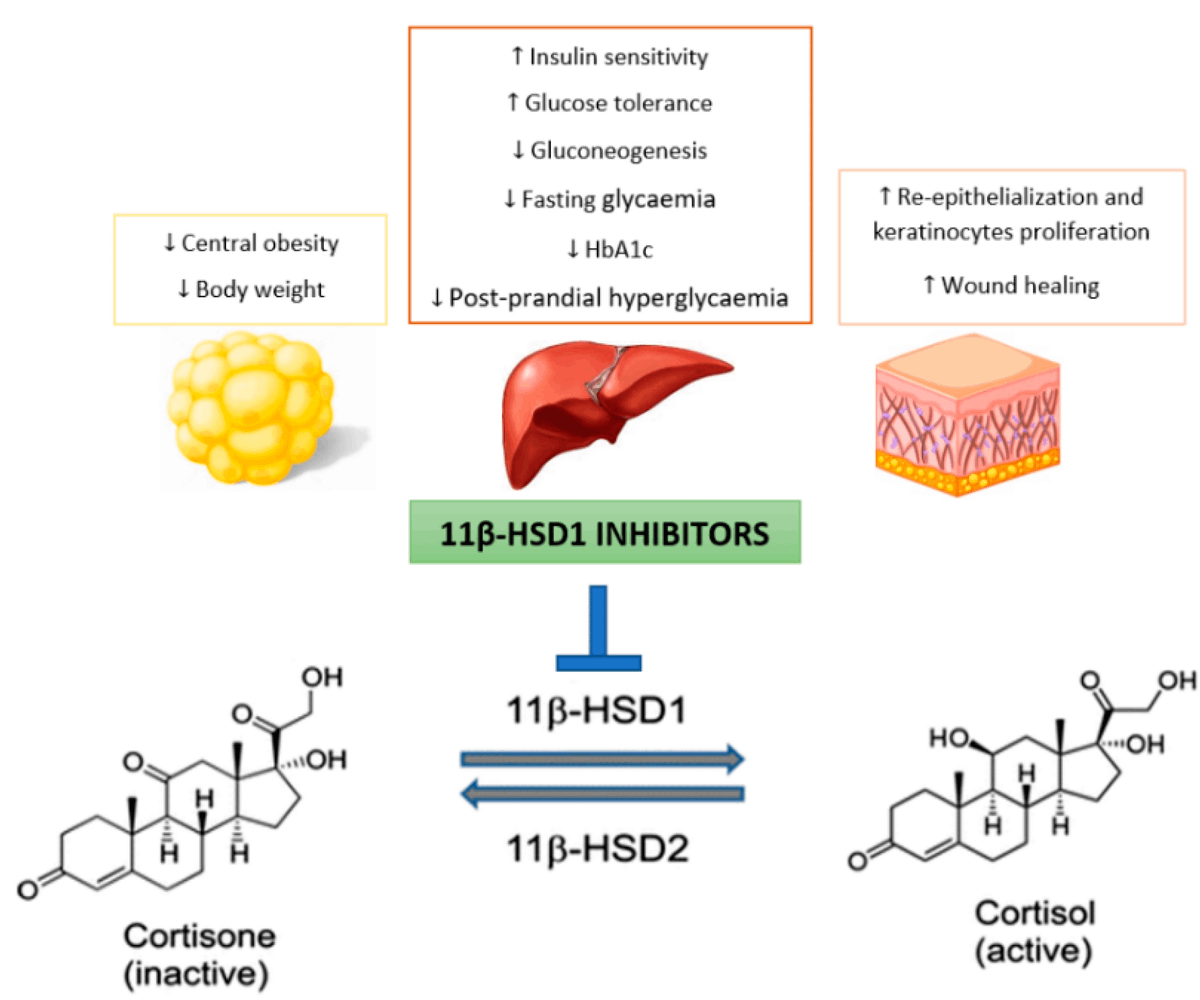
but also higher cortisol production within the fat tissue itself.
The enzyme 11βHSD1 converts cortisone (much weaker) into cortisol in various tissues.
So even if you have what looks like normal cortisol levels in blood, you can have high cortisol within the fat tissue, which contributes to further fat gain.
Once again, pharma seems to want to develop drugs in order to inhibit this process.
8
What governs the conversion of cortisone to cortisol?
Mitochondrial function.
If there is high NAD+, we can convert cortisol to the inactive cortisone.
NAD+ is high when mitochondrial function is optimal.
I dive deep into mitochondrial function below.


Mitochondrial function.
If there is high NAD+, we can convert cortisol to the inactive cortisone.
NAD+ is high when mitochondrial function is optimal.
I dive deep into mitochondrial function below.
Dalton (Analyze & Optimize)@Outdoctrination
READ THIS IF YOU ARE ALWAYS TIRED (no matter how much you rest).
It's not in your head. It's not normal, but it is fixable.
Let's talk about what causes FATIGUE + TIREDNESS, and what you can do about it to have flying energy levels for life:
It's not in your head. It's not normal, but it is fixable.
Let's talk about what causes FATIGUE + TIREDNESS, and what you can do about it to have flying energy levels for life:
9
In fact, NAD+ precursors can lower cortisol, perhaps through this mechanism.
They took niacinamide (a form of vitamin B3) combined with D-Ribose in this study - 1520 mg combined.
They took niacinamide (a form of vitamin B3) combined with D-Ribose in this study - 1520 mg combined.
10
Salicylate, which is a metabolite of aspirin, actually inhibits this enzyme and thus lowers tissue cortisol levels.
In this study they showed that obese men have higher levels of 11βHSD1,
and that giving salicylic acid to animals reverses their insulin resistance by inhibiting it.
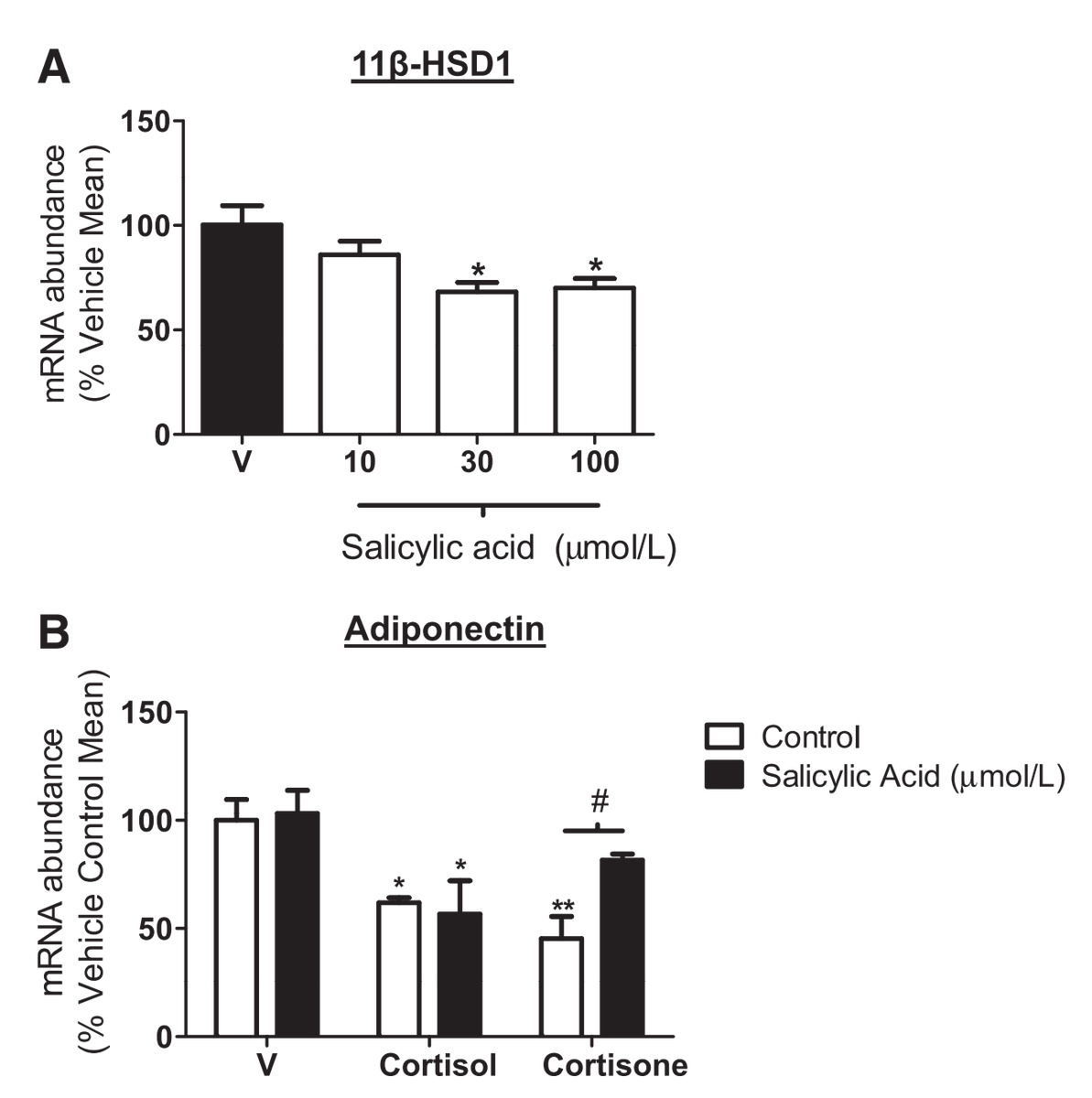
In this study they showed that obese men have higher levels of 11βHSD1,
and that giving salicylic acid to animals reverses their insulin resistance by inhibiting it.
11
What else can oppose this effect?
A big one is DHEA.
The ratio of DHEA to cortisol is associated with lower obesity risk.
DHEA inhibits the 11βHSD1 enzyme and can lower cortisol and improve body composition.
More on that below.
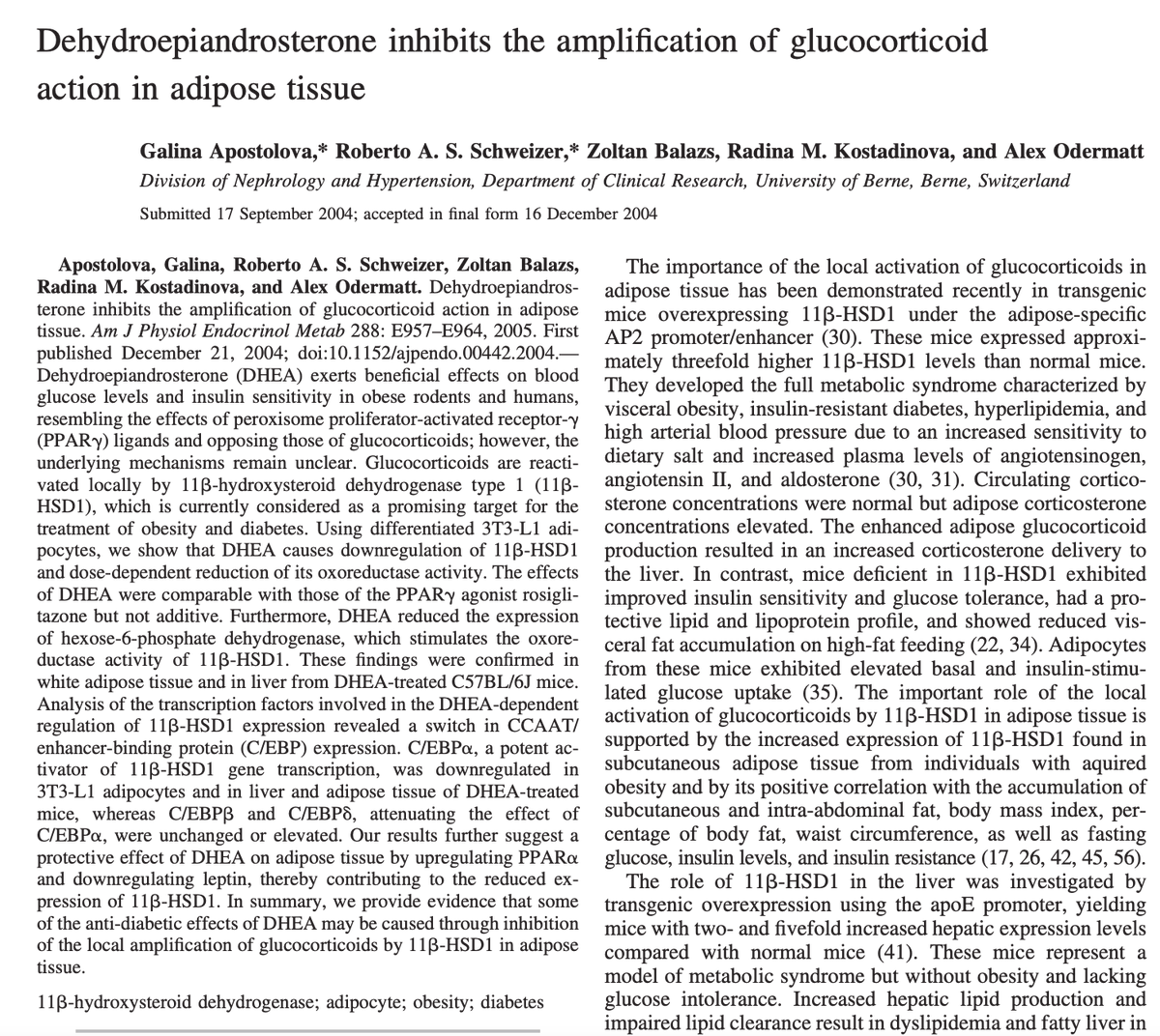

A big one is DHEA.
The ratio of DHEA to cortisol is associated with lower obesity risk.
DHEA inhibits the 11βHSD1 enzyme and can lower cortisol and improve body composition.
More on that below.
Dalton (Analyze & Optimize)@Outdoctrination
DHEA: a fountain of youth.
For lowering cortisol, improving cognitive function & mood, vibrant skin and fat loss, it might be just what you need.
Here’s why researchers have called aging “DHEA deficiency syndrome:”
For lowering cortisol, improving cognitive function & mood, vibrant skin and fat loss, it might be just what you need.
Here’s why researchers have called aging “DHEA deficiency syndrome:”
12
Another thing that inhibits 11βHSD1 is actually coffee.
Coffee extracts have been shown experimentally to do it.
Coffee extracts have been shown experimentally to do it.
13
Ultimately, you need to dial in your cortisol and HPA axis as a whole.
If you want to get some personalized help with that (or any other health goals) - we're here for you. Book a free call with us here:
go.prism.miami/consultation
If you want to get some personalized help with that (or any other health goals) - we're here for you. Book a free call with us here:
go.prism.miami/consultation
14
SOURCES
pmc.ncbi.nlm.nih.gov/articles/PMC37… rev
pmc.ncbi.nlm.nih.gov/articles/PMC98… induces animal study
Appetite dysregulation + direct adipogenic
Cushings example
11BHSD1 deficiency + inhibitors
pmc.ncbi.nlm.nih.gov/articles/PMC12… CRF / ACTH inhibitors
sci-hub.se/10.2337/diab.4… leptin inhibits
pubmed.ncbi.nlm.nih.gov/26356039/
pmc.ncbi.nlm.nih.gov/articles/PMC11… - higher secretion / hair levels, protection by DHEA
academic.oup.com/jcem/article/1… - GCs cause wt gain
Salicylate inhibits
Redox / mito is key - NAD+ boosters can help pubmed.ncbi.nlm.nih.gov/35684021/
pmc.ncbi.nlm.nih.gov/articles/PMC37… rev
pmc.ncbi.nlm.nih.gov/articles/PMC98… induces animal study
Appetite dysregulation + direct adipogenic
Cushings example
11BHSD1 deficiency + inhibitors
pmc.ncbi.nlm.nih.gov/articles/PMC12… CRF / ACTH inhibitors
sci-hub.se/10.2337/diab.4… leptin inhibits
pubmed.ncbi.nlm.nih.gov/26356039/
pmc.ncbi.nlm.nih.gov/articles/PMC11… - higher secretion / hair levels, protection by DHEA
academic.oup.com/jcem/article/1… - GCs cause wt gain
Salicylate inhibits
Redox / mito is key - NAD+ boosters can help pubmed.ncbi.nlm.nih.gov/35684021/
15
If you’re interested in getting lab testing, we offer a ton of different tests you can get without even needing to go to a doctor below. 10% off using code “ANALYZE” at checkout. revelationdiagnostics.com
