A leaked WikiLeaks cable from 2007 reveals some of UAE Mohammed bin...

Warfare Analysis@warfareanalysis
452 views
Nov 02, 2025
~6 min read
Advertisement
1
A leaked WikiLeaks cable from 2007 reveals some of UAE Mohammed bin Zayed’s views on free elections, Islam, Quran schools…. Pakistan…
🧵 Thread 1,2,3,4,5,6,7,8,9
🧵 Thread 1,2,3,4,5,6,7,8,9
2
1,
This thread is From a WikiLeaks cable dated January 24, 2007,
documenting a meeting between Mohammed bin Zayed Al Nahyan (MBZ), then Crown Prince of Abu Dhabi and now President of the UAE, and R. Nicholas Burns, the U.S. Under Secretary of State for Political Affairs at the time.
This thread is From a WikiLeaks cable dated January 24, 2007,
documenting a meeting between Mohammed bin Zayed Al Nahyan (MBZ), then Crown Prince of Abu Dhabi and now President of the UAE, and R. Nicholas Burns, the U.S. Under Secretary of State for Political Affairs at the time.
3
2, MBZ views on free elections: “Middle East is not California”
"MBZ: if we want to make peace." In "The Middle East," he insisted, "is not
California." In the post 9/11 world "in any Muslim country you will
see the same result." While members of the U.S. Congress and Senate
are loyal to their states and their constituencies, the masses in the
Middle East would tend to go with their hearts and vote overwhelmingly for the Muslim Brotherhood and the jihadists
represented by Hamas and Hizballah”
"MBZ: if we want to make peace." In "The Middle East," he insisted, "is not
California." In the post 9/11 world "in any Muslim country you will
see the same result." While members of the U.S. Congress and Senate
are loyal to their states and their constituencies, the masses in the
Middle East would tend to go with their hearts and vote overwhelmingly for the Muslim Brotherhood and the jihadists
represented by Hamas and Hizballah”
4
3, MBZ views on Quran schools: MBZ calls Quran schools “some Taliban schools”
“Correcting the situation required education, according to MbZ, a process that will take 25 to 50 years of focused effort to turn around deeply-rooted cultural phenomena.
In the western part of Abu Dhabi emirate alone, he said, the UAEG has closed down 80% of 262 so-called "talebani Quran
schools," to which no Emirati household would refuse to send its
sons.”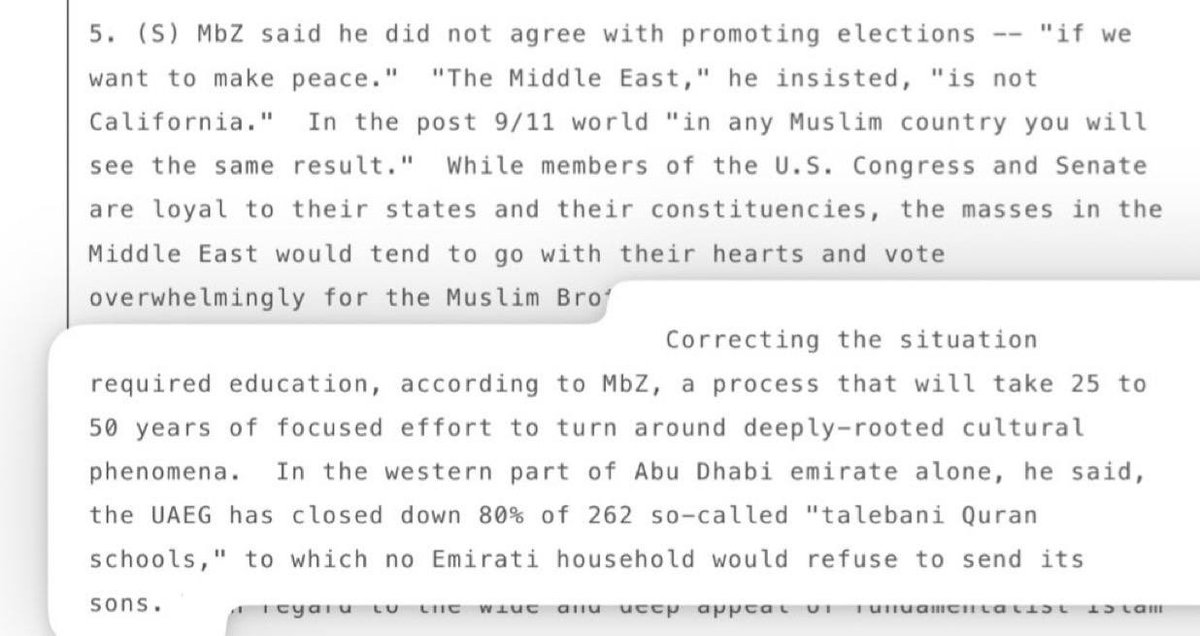
“Correcting the situation required education, according to MbZ, a process that will take 25 to 50 years of focused effort to turn around deeply-rooted cultural phenomena.
In the western part of Abu Dhabi emirate alone, he said, the UAEG has closed down 80% of 262 so-called "talebani Quran
schools," to which no Emirati household would refuse to send its
sons.”
5
4, MBZ: Muslims should never have free elections, We should worry about 3 Islamic counties: Egypt 🇪🇬, Saudi Arabia 🇸🇦 , and Pakistan 🇵🇰.
“MbZ countered that, "free elections in the Middle East" could eventually mean that the U.S. would "have to find
somewhere else to get 17 million barrels (of oil) a day."
In Iraq, MbZ said, elections had produced "a disaster."
As for the rise of Islamic fundamentalism and pressure from jihadists inspired by Iran,
he said he was not worried about the UAE, which could hold out for a
long time: "The Iranians will have a hard time coming here, but we
will lose Arab countries like Lebanon and Palestine.
Thank God for Hosni Mubarak (described as a family friend of the Al Nahyan).
If Egypt has free elections, they will elect the Muslim Brothers."
There were three large Islamic countries to worry about, according to
MbZ: Egypt, Saudi Arabia, and Pakistan.”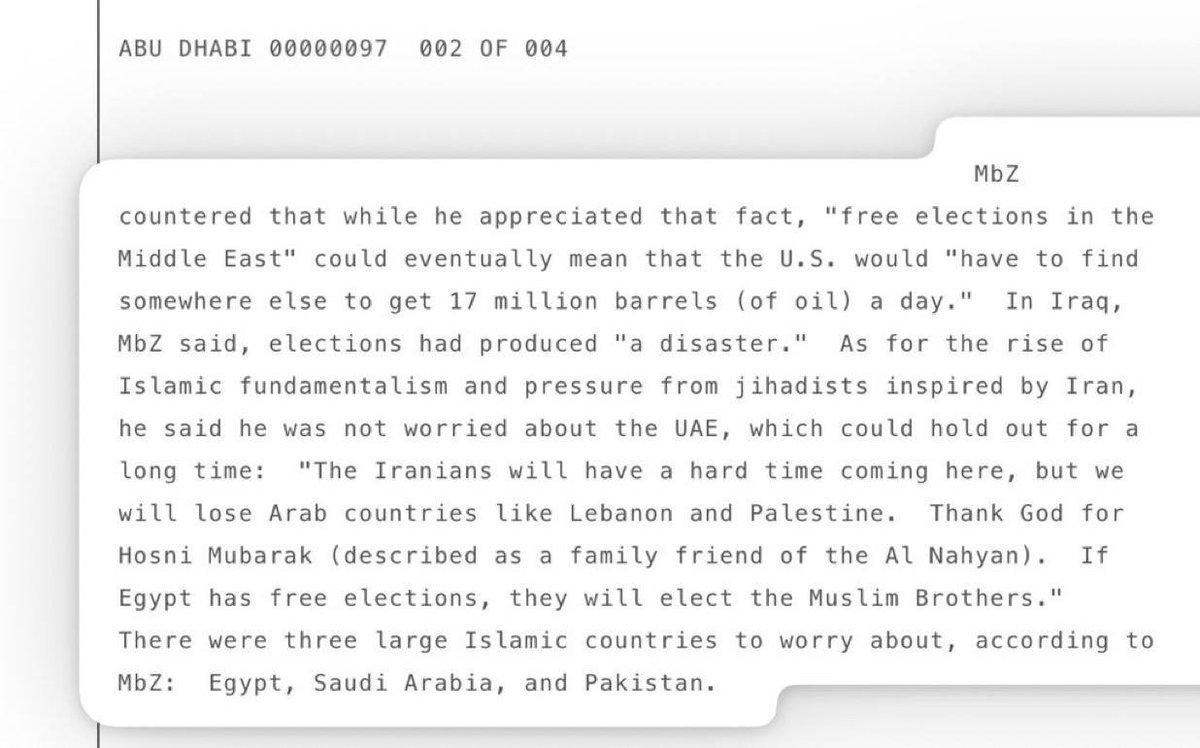
“MbZ countered that, "free elections in the Middle East" could eventually mean that the U.S. would "have to find
somewhere else to get 17 million barrels (of oil) a day."
In Iraq, MbZ said, elections had produced "a disaster."
As for the rise of Islamic fundamentalism and pressure from jihadists inspired by Iran,
he said he was not worried about the UAE, which could hold out for a
long time: "The Iranians will have a hard time coming here, but we
will lose Arab countries like Lebanon and Palestine.
Thank God for Hosni Mubarak (described as a family friend of the Al Nahyan).
If Egypt has free elections, they will elect the Muslim Brothers."
There were three large Islamic countries to worry about, according to
MbZ: Egypt, Saudi Arabia, and Pakistan.”
6
5, MBZ: No Peace with HAMAS
“With Hamas in power, MbZ said, there would be no peace
just as in Iran with Ahmadinejad. MbZ said it didn't matter who the
electorate picked to lead the country, Iran wants to be a regional
superpower and wants a nuclear weapon -- not just nuclear energy for
electricity. Reflecting on the UAE and Iran's almost 40-year history
of political contact, MbZ cited "a brother" of Ahmadinejad who told
him once that Iran would not rest until it had acquired a nuclear
capability.”
“With Hamas in power, MbZ said, there would be no peace
just as in Iran with Ahmadinejad. MbZ said it didn't matter who the
electorate picked to lead the country, Iran wants to be a regional
superpower and wants a nuclear weapon -- not just nuclear energy for
electricity. Reflecting on the UAE and Iran's almost 40-year history
of political contact, MbZ cited "a brother" of Ahmadinejad who told
him once that Iran would not rest until it had acquired a nuclear
capability.”
7
6, MBZ calls Muslim scholars “some holy man in Mecca”
“Referring to the UAE situation, MbZ opined that of the 60,000
soldier UAE armed forces and its loyalties, some 50 to 80% would
respond to a call of "some holy man in Mekkah."
He repeatedly alluded to being "stoned" by his own citizens if he pushed some
subjects too openly.
Acknowledging the prodding by the U.S. to hold elections, MbZ said the process would take at least 20 years and that focus should be on the next generation.
"When I travel to Saudi
Arabia, I meet with 80-85 year old Saudi leaders who never learned of
the internet until they were 70. There is a big gap in Saudi
Arabia." MbZ said the UAE is addressing the educational aspect of
the problem by privatizing government schools with the aim of
privatizing 25% in 5 years so that there will eventually be 0%
"talebani Quran schools."”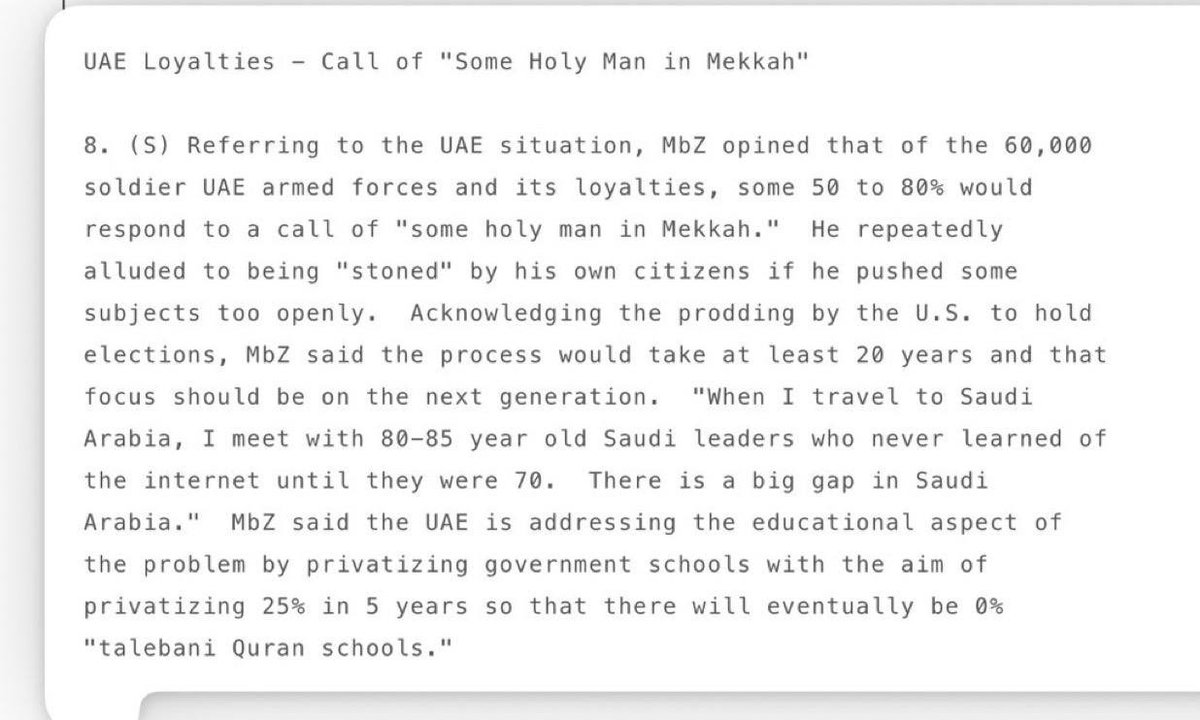
“Referring to the UAE situation, MbZ opined that of the 60,000
soldier UAE armed forces and its loyalties, some 50 to 80% would
respond to a call of "some holy man in Mekkah."
He repeatedly alluded to being "stoned" by his own citizens if he pushed some
subjects too openly.
Acknowledging the prodding by the U.S. to hold elections, MbZ said the process would take at least 20 years and that focus should be on the next generation.
"When I travel to Saudi
Arabia, I meet with 80-85 year old Saudi leaders who never learned of
the internet until they were 70. There is a big gap in Saudi
Arabia." MbZ said the UAE is addressing the educational aspect of
the problem by privatizing government schools with the aim of
privatizing 25% in 5 years so that there will eventually be 0%
"talebani Quran schools."”
8
7, MBZ: “ it is very difficult for the UAE to talk (openly about UAE agenda against Islam) in front of the full GCC+2, and that the UAE only felt comfortable talking in front of the Bahrainis, the Saudis and the Jordanians - but not necessarily the rest.”
“Hizballah, MbZ noted, is more dangerous even than Al Qaeda and
"did a very tough job on Israel this summer." Burns stated that his
interlocutor had made many compelling points, that we agree on the
high stakes and dangers posed by radical Islam, and that U.S. policy
is not simplistic. The world is changing and it is not realistic to
think that things can stay the same, Burns said. In the four GCC+2
meetings Secretary Rice has had since September, "we recognized the
threat you have cited and the clash between the forces of Reason vs.
Extremism. How can we work together with you to limit the power of
Iran and radical groups like Hizballah?" MbZ injected that it is
very difficult for the UAE to talk in front of the full GCC+2, and
that the UAE only felt comfortable talking in front of the Bahrainis,
the Saudis and the Jordanians - but not necessarily the rest.”
“Hizballah, MbZ noted, is more dangerous even than Al Qaeda and
"did a very tough job on Israel this summer." Burns stated that his
interlocutor had made many compelling points, that we agree on the
high stakes and dangers posed by radical Islam, and that U.S. policy
is not simplistic. The world is changing and it is not realistic to
think that things can stay the same, Burns said. In the four GCC+2
meetings Secretary Rice has had since September, "we recognized the
threat you have cited and the clash between the forces of Reason vs.
Extremism. How can we work together with you to limit the power of
Iran and radical groups like Hizballah?" MbZ injected that it is
very difficult for the UAE to talk in front of the full GCC+2, and
that the UAE only felt comfortable talking in front of the Bahrainis,
the Saudis and the Jordanians - but not necessarily the rest.”
9
8, MBZ on the execution of President Saddam Hussein on EID
“MbZ said that he felt Washington had only begun listening to the Arab Gulf region about four months ago. On matters like executing Saddam, MbZ said it didn't matter whether it was on Eid or on a Friday”
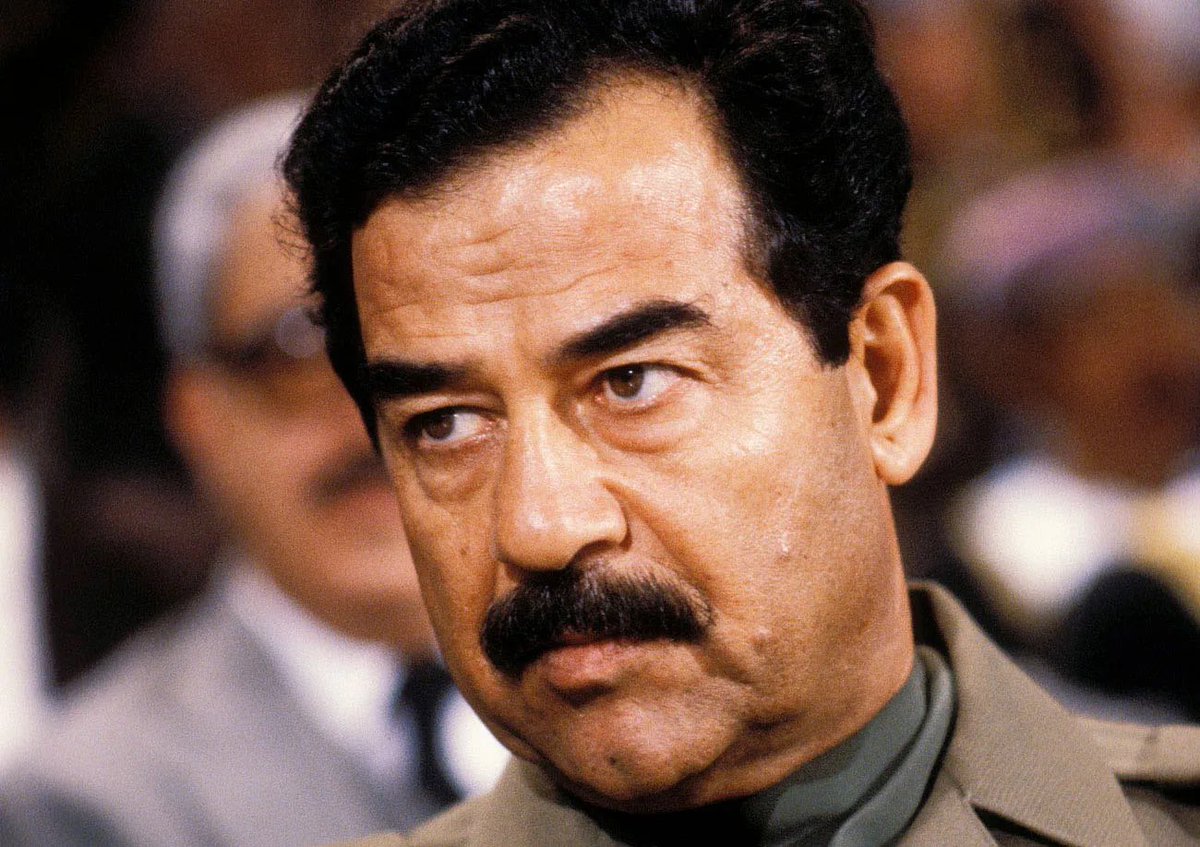
“MbZ said that he felt Washington had only begun listening to the Arab Gulf region about four months ago. On matters like executing Saddam, MbZ said it didn't matter whether it was on Eid or on a Friday”
10
9, MBZ: Iraq Needs a Secular Leader
“According to MbZ, Iraq needs a strong secular leader,
"someone like Iyad Allawi," for whose support he said the UAE had
spent lots of money.
In Iraq, MbZ ventured, "you need your man, but someone without American identity -- the kiss of death -- and you
need to protect him."
The problem, he said, is that too many Iraqi leaders lived for a long period in Iran or outside of Iraq, and that
Iran is paying out a lot of money to buy influence in Iraq.
MbZ aide Yousef Al Otaiba asserted that the Iranians were more effective at
distributing funding to further their goals.
Jeffrey explained that the security forces in Iraq could not be the army of a politician who wins only 9-10% of the vote (e.g. Allawi). There must be a
democratic basis for our support. At the moment Prime Minister
Maliki is being put to the test and is being evaluated.”
“According to MbZ, Iraq needs a strong secular leader,
"someone like Iyad Allawi," for whose support he said the UAE had
spent lots of money.
In Iraq, MbZ ventured, "you need your man, but someone without American identity -- the kiss of death -- and you
need to protect him."
The problem, he said, is that too many Iraqi leaders lived for a long period in Iran or outside of Iraq, and that
Iran is paying out a lot of money to buy influence in Iraq.
MbZ aide Yousef Al Otaiba asserted that the Iranians were more effective at
distributing funding to further their goals.
Jeffrey explained that the security forces in Iraq could not be the army of a politician who wins only 9-10% of the vote (e.g. Allawi). There must be a
democratic basis for our support. At the moment Prime Minister
Maliki is being put to the test and is being evaluated.”
11
10, MBZ admits to following American orders but complains about not being given full details.
“Conversation shifted to Lebanon, with Burns noting that the U.S. is placing a sizeable amount on the table in assistance for the Siniora government at the upcoming Paris meeting.
MbZ said "you can
count on us, but we want one thing"
and proceeded to complain about a
USG December public statement criticizing the UAE for lax export
controls. MbZ claimed that in terms of interdiction requests the UAE
cannot always assist and often needs more information in order to
act. When the issue of UAE cooperation or lack thereof with the U.S.
gets into the media, according to MbZ, his Arab "cultural side" comes
out and he has to reckon with the Arab street which says: "How come
you do whatever the Americans say?"”
“Conversation shifted to Lebanon, with Burns noting that the U.S. is placing a sizeable amount on the table in assistance for the Siniora government at the upcoming Paris meeting.
MbZ said "you can
count on us, but we want one thing"
and proceeded to complain about a
USG December public statement criticizing the UAE for lax export
controls. MbZ claimed that in terms of interdiction requests the UAE
cannot always assist and often needs more information in order to
act. When the issue of UAE cooperation or lack thereof with the U.S.
gets into the media, according to MbZ, his Arab "cultural side" comes
out and he has to reckon with the Arab street which says: "How come
you do whatever the Americans say?"”
