It's real. And it's spectacular. Sometimes, one fossil really can...

Dr. James G. Napoli@JGN_Paleo
19 views
Oct 30, 2025
~8 min read
Advertisement
1
It's real.
And it's spectacular.
Sometimes, one fossil really can change everything you think you know. NEW PAPER (see bottom of thread) AND 🧵
And it's spectacular.
Sometimes, one fossil really can change everything you think you know. NEW PAPER (see bottom of thread) AND 🧵
2
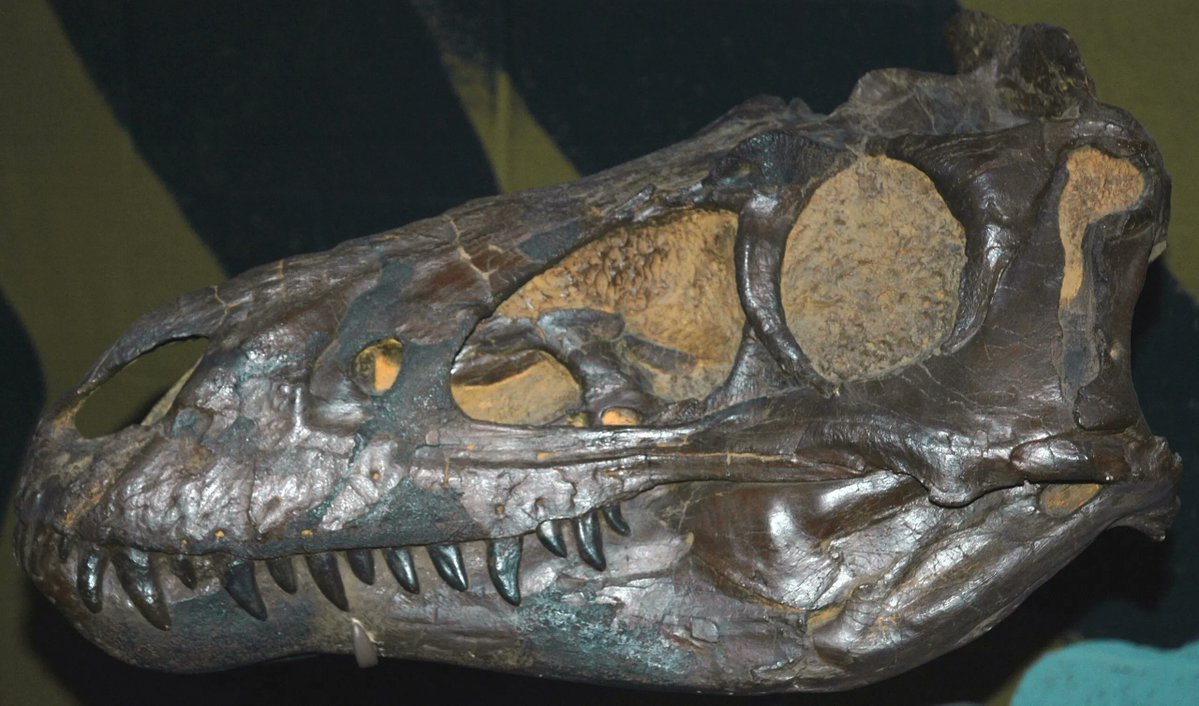
For paleontologists and dinofans, Nanotyrannus needs no introduction. This unassuming little skull is the unlikely focus of the most infamous debate in paleontology. Is it its own species? Or is it a young T. rex? It seems like a simple question - but its been very hard to solve.
3
I won't go into the background of the debate here - it's much too long! Suffice it to say, paleontologists have argued for decades about whether Nanotyrannus is a real dinosaur or not - and the debate has often been acrimonious.
4
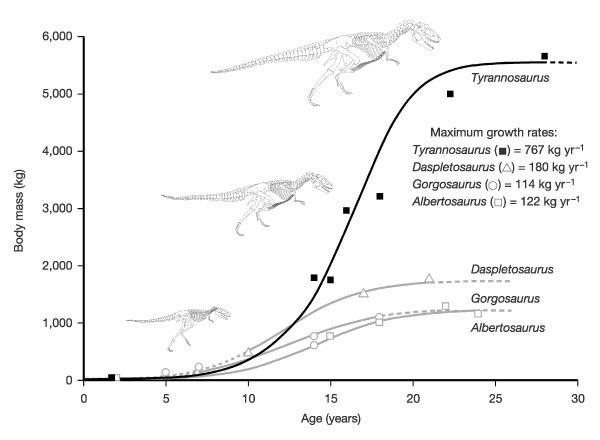
But the consensus was, until today, that these small theropod dinosaurs are T. rex teenagers. And this has become a foundational assumption in many, many studies on T. rex and how it lived, evolved, and grew.

5
But today, in our new paper, Dr. Lindsay Zanno and I have shown that science got this one wrong. Nanotyrannus was not the juvenile form of T. rex - it was its own species of sleek, speedy predator that lived alongside T. rex at the twilight of the Age of Dinosaurs.

6
How did we prove it? The right combination of an exceptional new fossil - the Dueling Dinosaurs tyrannosaur - and laser-focused science, using multiple lines of evidence to test different hypotheses and lead us to the truth.
7
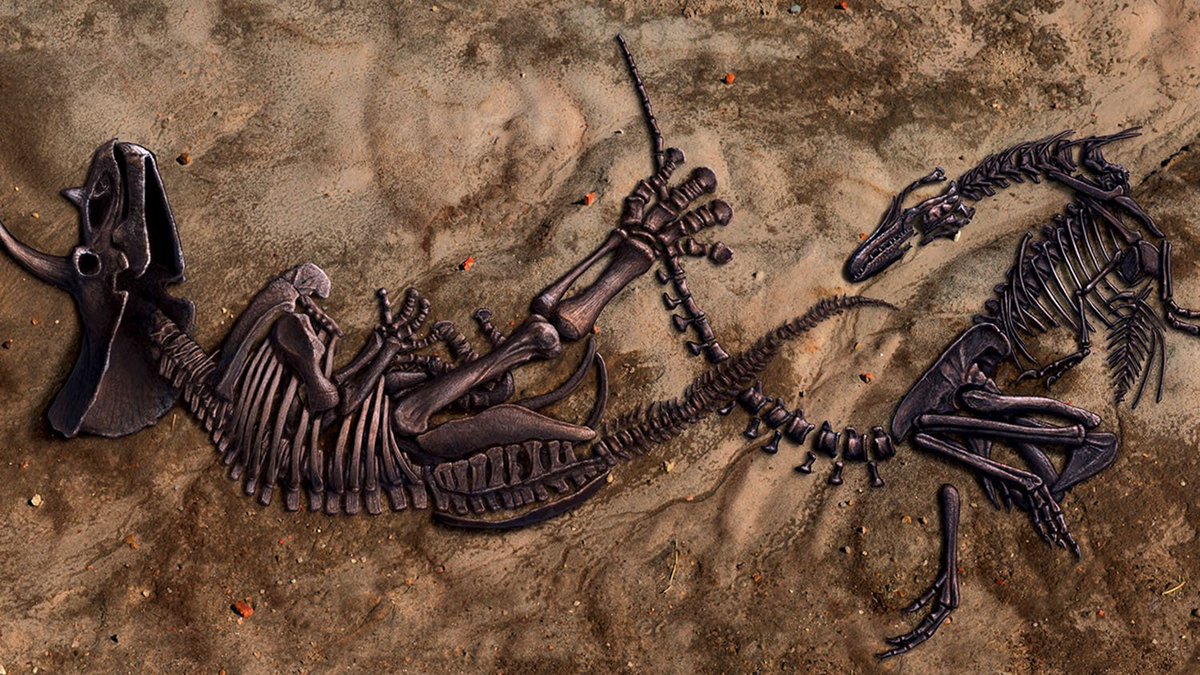
The Dueling Dinosaurs are a pair of exceptionally preserved dinosaurs - a Triceratops and, as we now know, a Nanotyrannus. The Nano is spectacularly complete - 100% complete. Every bone of its body is present - and those bones brought new data to an old debate.
8
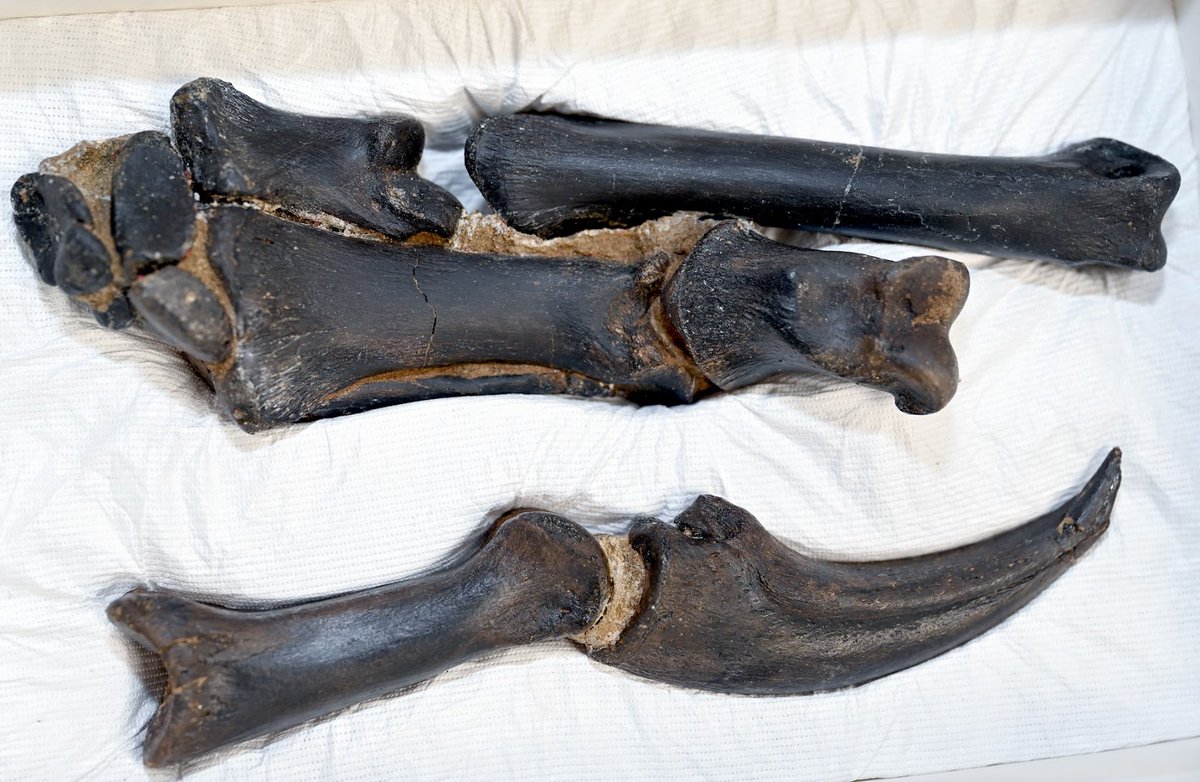
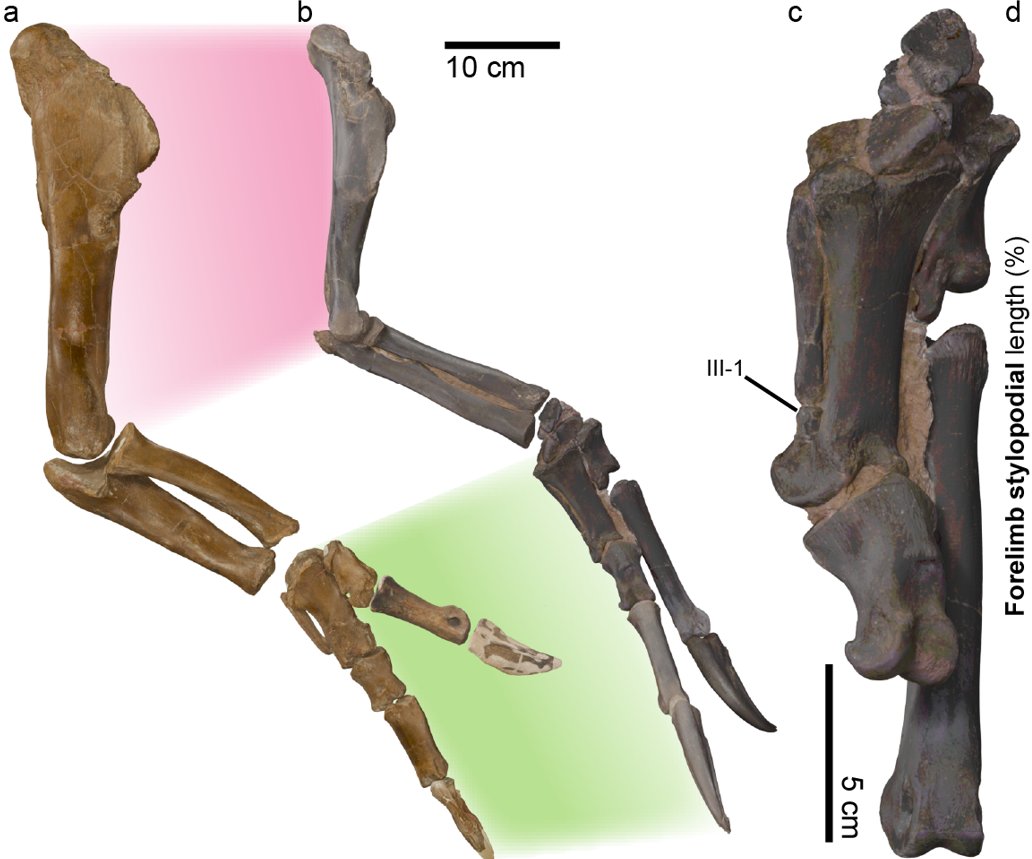
For one, its hands! The hands of Nanotyrannus had never been discovered before the DD Nano. They're huge! Some bones are twice as long as the same bones in T. rex. The claws are enormous and hooked, and the finger bones have well-developed muscle attachment sites.
9
We think Nanotyrannus still used its hands for hunting, at least a little. But they do show a sign of the evolutionary arm reduction that defined other tyrannosaur species - a vestigial third finger, represented only by a single finger bone.
10
T. rex famously only had two fingers, but Nanotyrannus technically still had three. Bones don't shrink or vanish during growth - so the huge hands and "bonus" finger of the DD Nano showed us clearly that the animal couldn't be a young T. rex.
11
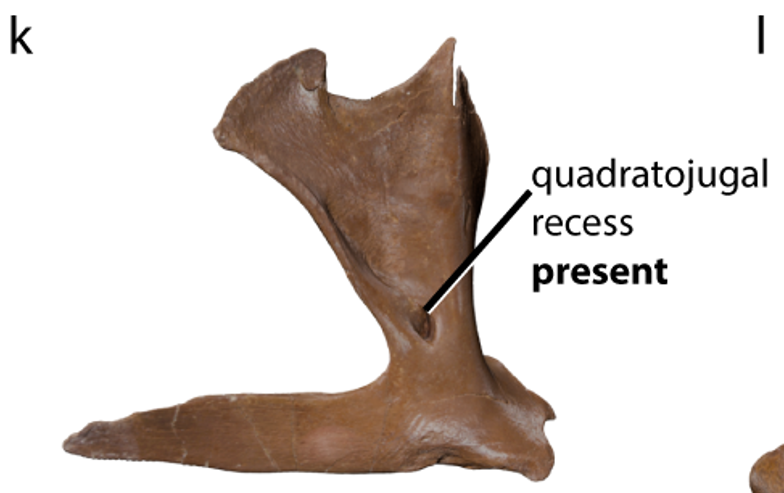
Second, Nanotyrannus has features of its skull that do not change during growth in other tyrannosaurs, and which we think *cannot* change during growth in any reptile. For instance, Nanotyrannus famously has a sinus in the quadratojugal bone...
12
...which would need to vanish during growth if it's T. rex. If anything, sinuses get *bigger* during growth! And my PhD work on living crocodylians showed that presence or absence of sinuses in particular bones is useful for species identification, even for tiny hatchlings.
13
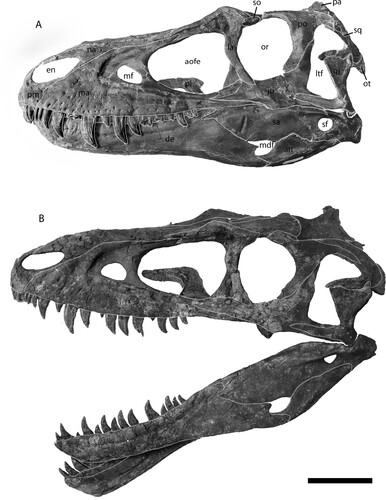
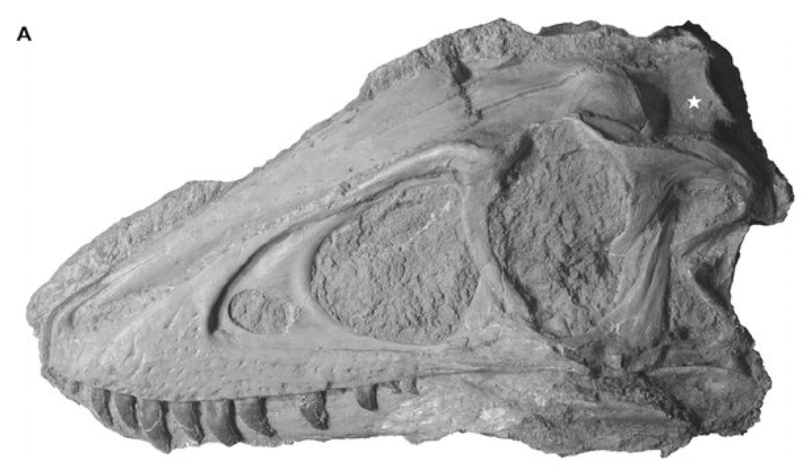
Nanotyrannus also has way more teeth in its jaws - up to 17 in the DD skull, and as few as 15. T. rex never has more than 12 teeth. Despite many claims to the contrary, tyrannosaurs do not lose teeth as they grow...

14
For instance, Gorgosaurus shows consistent variation between 13 and 15 teeth maxillary teeth, and Tarbosaurus adults have 13 maxillary teeth, just like the adorable 3 year old baby Tarbosaurus that was described in 2011. Tooth # is individually, not ontogenetically, variable.
15
In 1999, Thomas Carr justified tyrannosaur tooth loss with crocodylians, which he said lost teeth during growth too. But they don't. My own work on alligators found no evidence of growth-related tooth loss, and the studies Carr cited actually don't support his claim...
16
They're talking about a very particular circumstance, where overgrowth of a tooth from the lower jaw erodes away and destroys the socket for a tooth at the tip of the snout. It's common - but it's not a seamless reduction in the number of teeth.

17
And again, tooth count is set by birth - in fact, long *before* birth. The cell populations that eventually form tooth sockets in the jaws are there before the jaws themselves, and there's just no evidence for some positions closing up in any living or extinct animal.
18
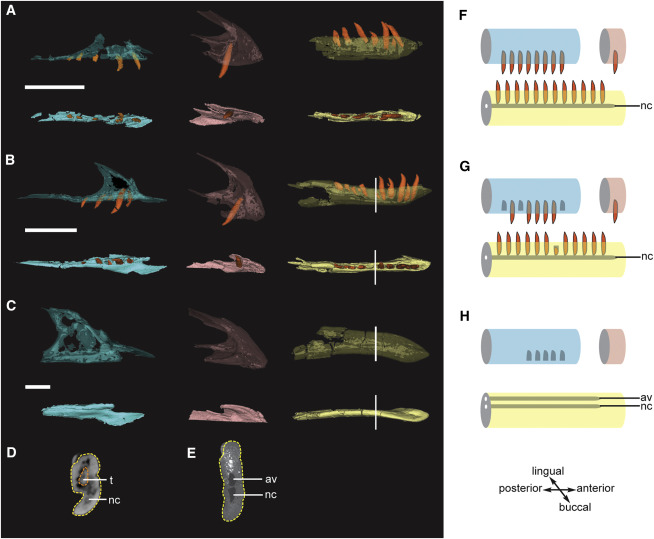
Some very odd theropods, distantly related to tyrannosaurs, did entirely replace their teeth with beaks during growth. But even in these species, we can see an internal canal in the jaws marking where the tooth roots had been.
19
So far, all of the evidence was against these two being the same species. The required growth changes were biologically impossible, at least according to our understanding of how development works, and what was seen in close relatives of T. rex.
20
But in modern systematics, we identify species by the presence of unique, derived features called apomorphies, which show common ancestry. So we also needed to see if Nanotyrannus did have unique traits that it shared only with T. rex.
21
If it did, it would be evidence that they were either the same species, or very close relatives. Carr (1999) had said that there were 13 of these traits, but Currie (2003) showed that 12 of these were actually not unique to T. rex and Nanotyrannus...
22
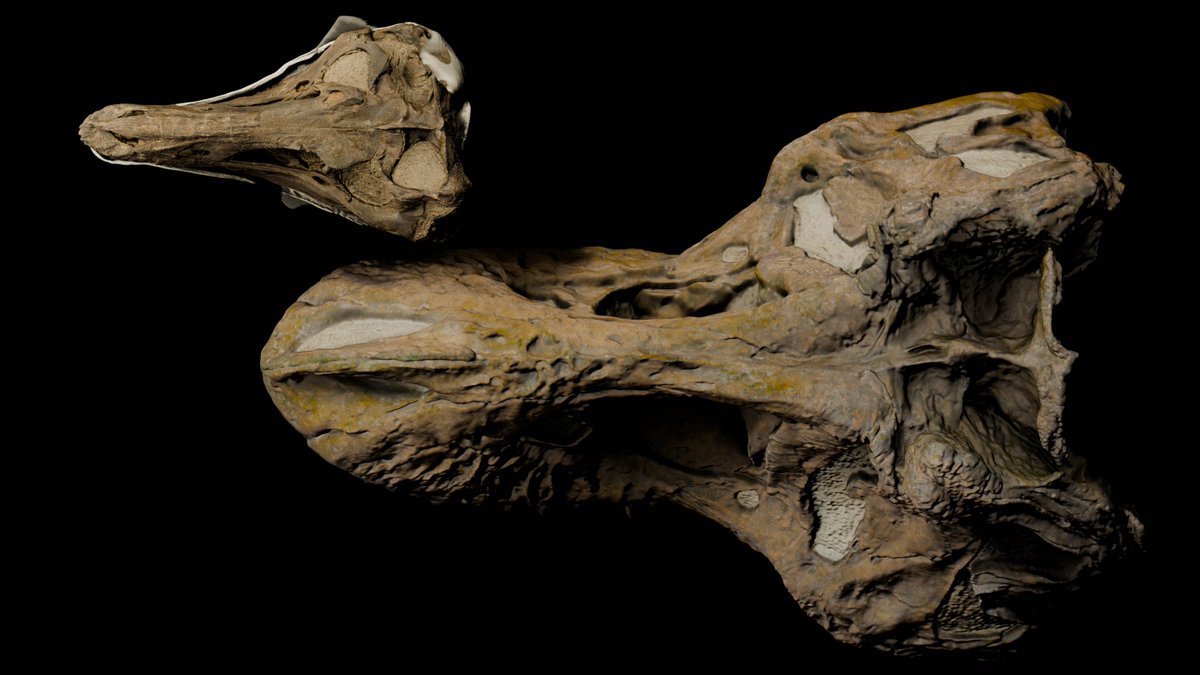
...and Lindsay and I showed that the last one was also flawed. T. rex and Nano both have very wide skulls, but the "width" is not directly comparable. In T. rex, the skull is very wide, and is over 1/2 the length of the skull. In Nano, the skull width is less than 1/2 its length.
23
So this isn't an apomorphy - it's convergent evolution. As we continued our work, we found that Nanotyrannus lacked *any* diagnostic trait of T. rex. Without apomorphies, there's no scientific justification to think these animals are the same species.
24
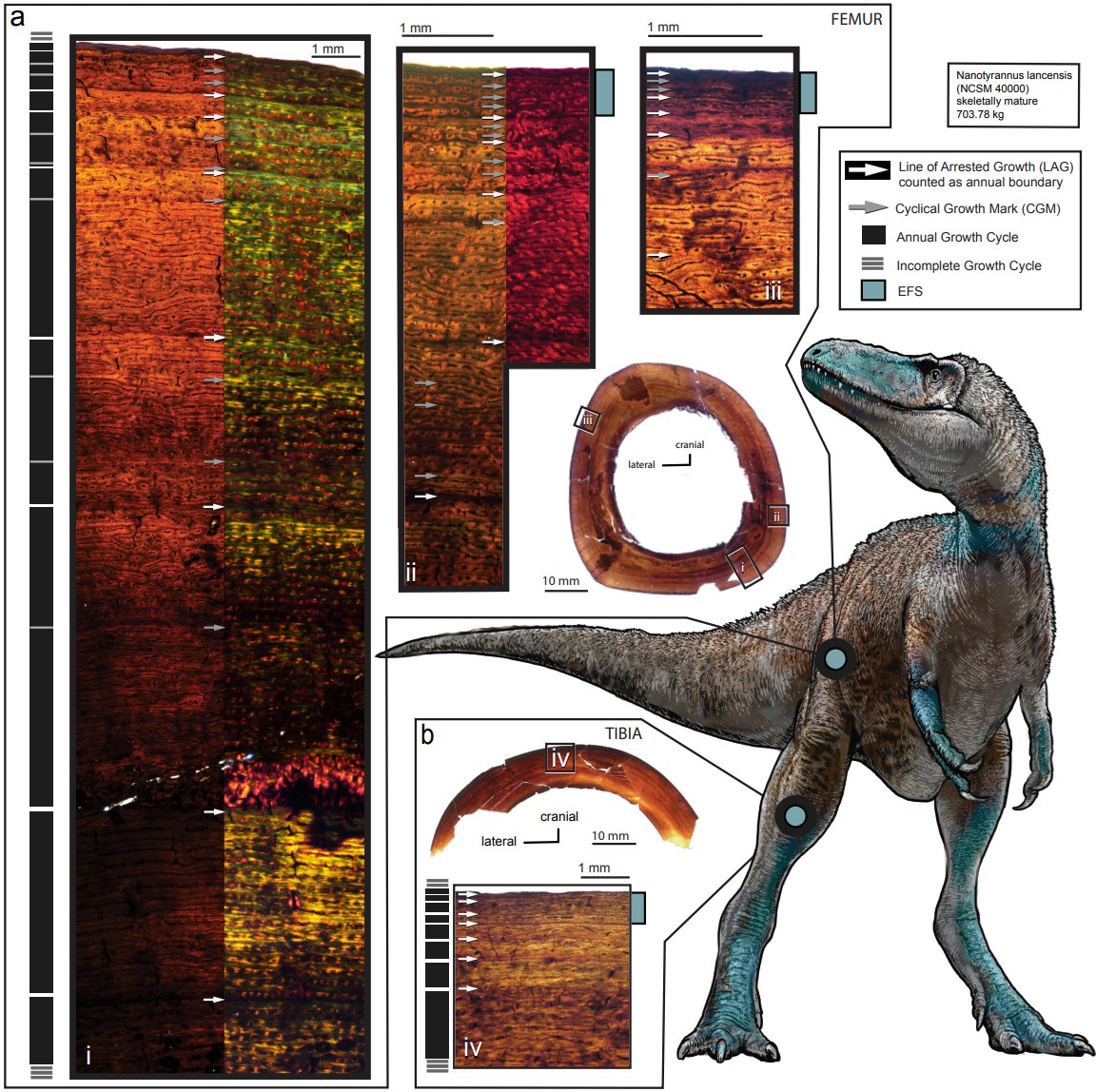
And finally, the growth record. I'll keep it short and sweet - the Dueling Dinosaurs tyrannosaur was an adult when it died. And an accessory sinus in its palatine bone, shared only with the Nano type specimen, is the apomorphy we needed to identify it as an adult Nanotyrannus.
25
So we had a dinosaur that had no features that said it was T. rex, could not have changed during growth to look like T. rex, and was an adult that was done growing at the moment of its death. There was simply no possible way for it to be a juvenile T. rex.
26
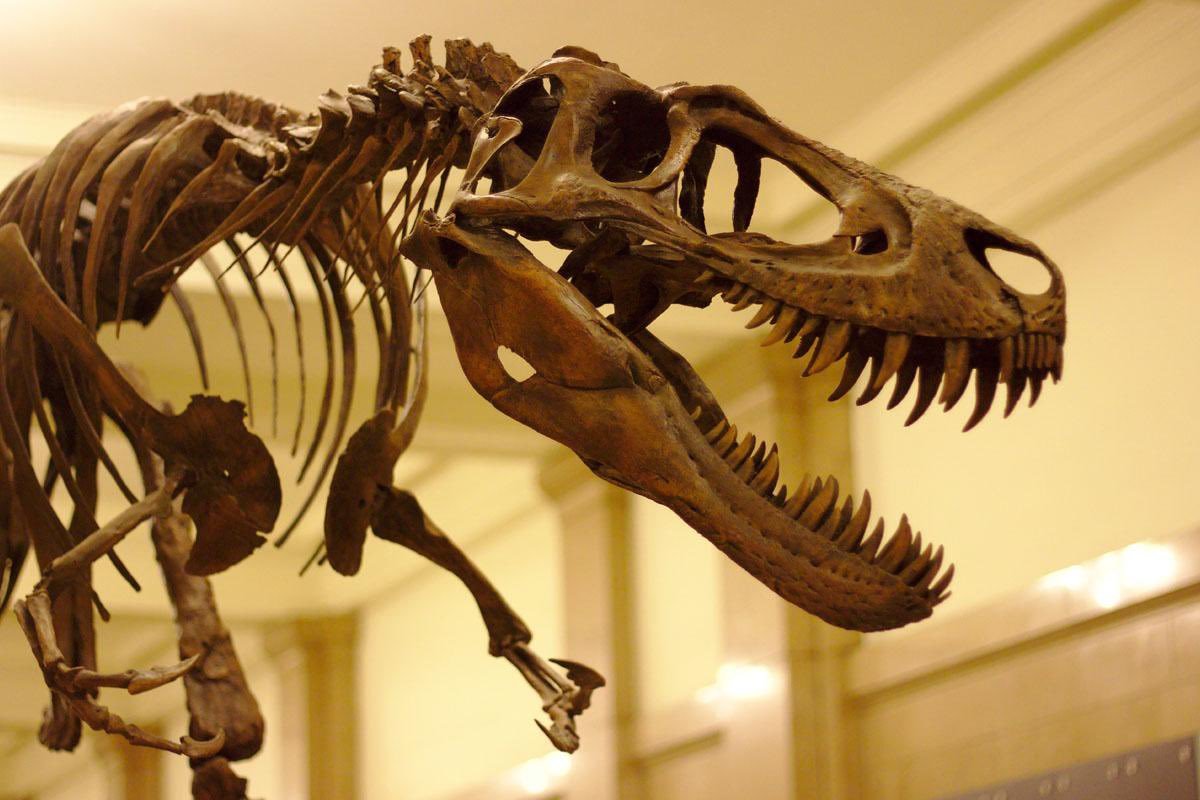
But there was one more fun wrinkle. We found that the Nanotyrannus specimen "Jane" was different, in many ways, from the DD Nano and the Nano type specimen. We had trouble believing it at first, but the conclusion was inescapable - it was another species!

27
Jane has been the focus of the Nano debate for years, and we recognized that it would always carry baggage of its controversy. So we gave it a name that symbolically washed all of that history away. Meet Nanotyrannus lethaeus - named for the River Lethe of Greco-Roman mythology.
28
Jane is from the Hell Creek Formation, so a river of the mythological underworld was fitting - but even more so because in the Aeneid, Vergil presents the Lethe as the river that souls drink from to forget their past lives and be reincarnated. We thought it was fitting.
29
Nanotyrannus lethaeus seems to have been a larger dinosaur than Nanotyrannus lancensis - even though Jane was not mature when she died, she was already slightly larger than the Dueling Dinosaurs specimen. We estimate that she could have gotten to be noticeably larger.

30
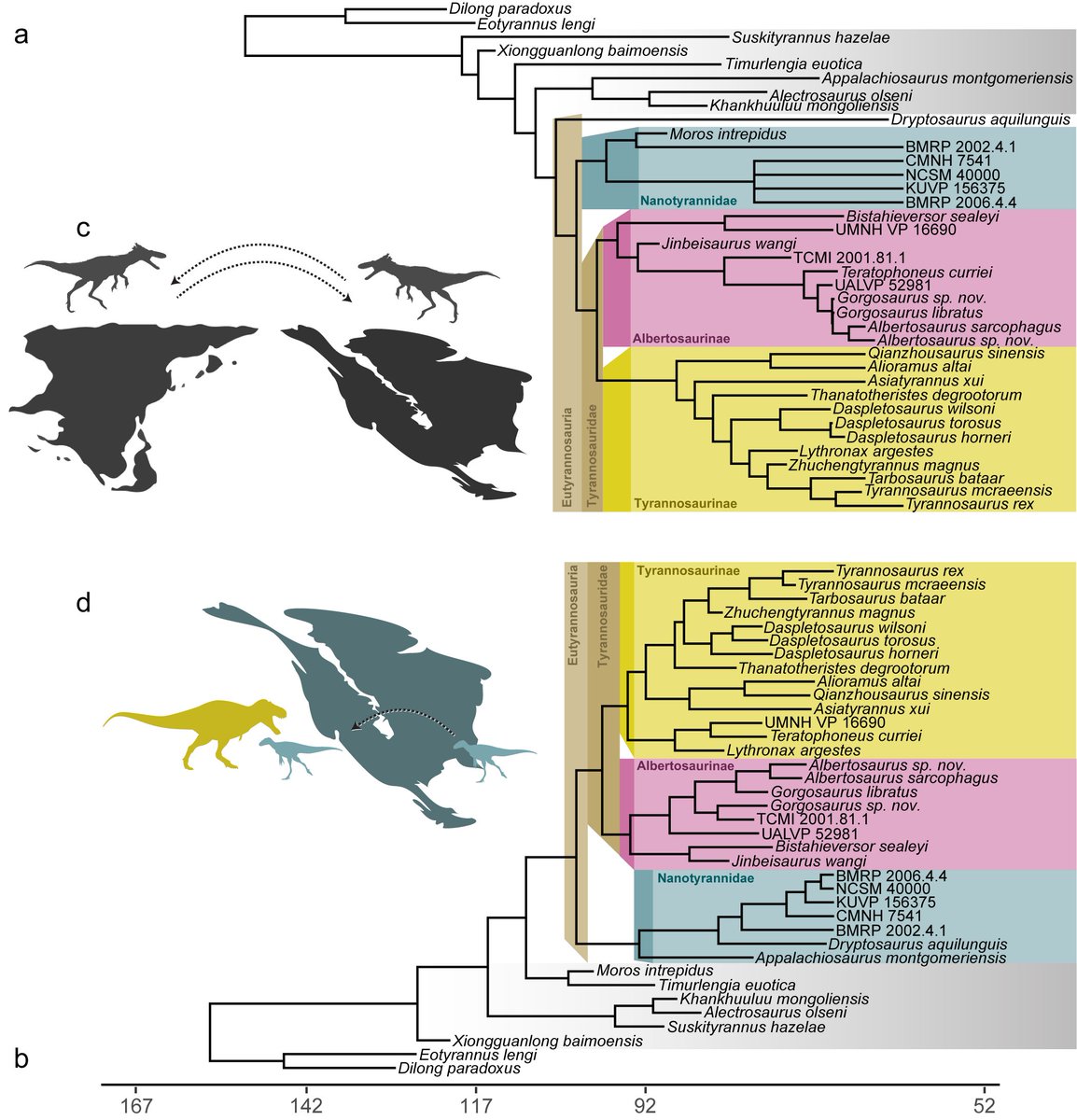
We created a new phylogenetic data matrix to figure out the interrelationships of tyrannosaurs, and found that Nanotyrannus is a member of a very early-diverging group of tyrannosaurs.
31
One of our analyses painted an even more intriguing idea - that Nanotyrannus had its ancestry in the Eastern half of North America, and migrated into T. rex's territory as sea level fell and reconnected the two halves of the continent. But we can't yet test this idea further.


32
As a proud out-of-touch East Coaster, I would love for Nanotyrannus to have originated here. But we need to do a lot more science to know for sure - and wait for the discovery of better fossils of East Coast dinosaurs.
33
Regardless of these lingering questions, the recognition of a valid Nanotyrannus means we need to rethink a lot of what we "know" about T. rex and its kin. We need to re-evaluate every species, describe more fossils, and re-do all of the studies that assumed Nano was invalid.
34
Lots more remains to be done on the Dueling Dinosaurs, but for now we can say that the world of the last days of the dinosaurs just got a lot more vibrant. Dinosaurs weren't in a long-term decline before the asteroid hit; they were innovating and diversifying right up to the end.
35
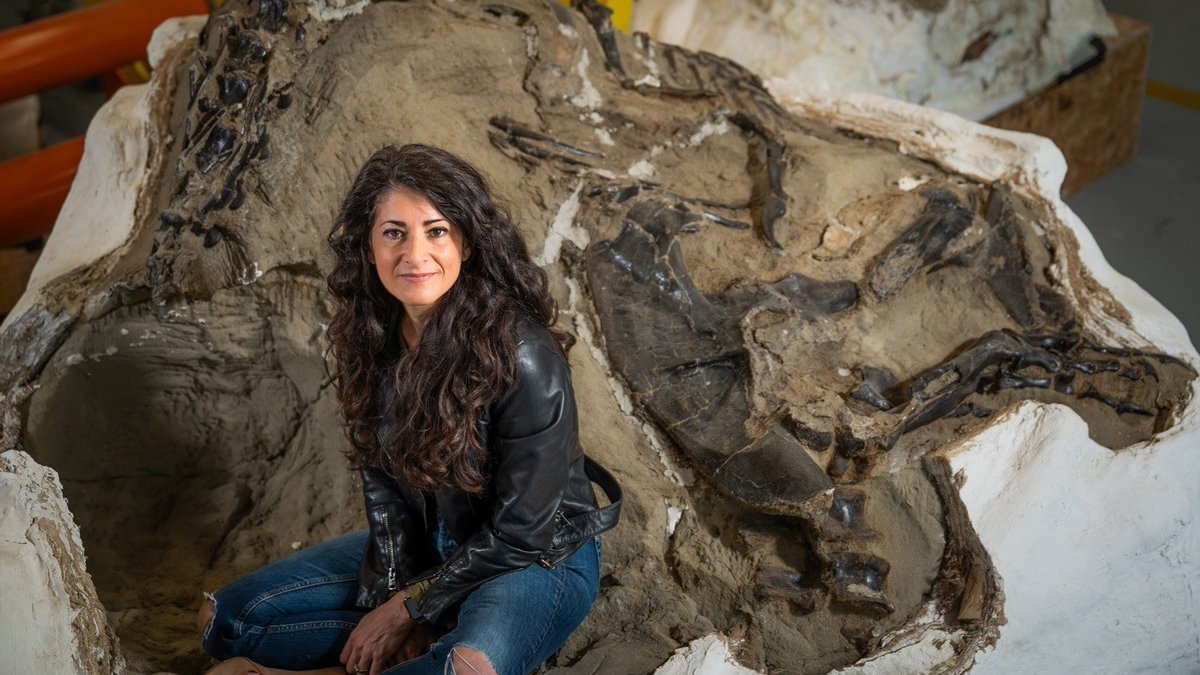
Before I end, I want to give a shoutout to the amazing scientist who made all of this possible. Thank you so much Lindsay, for everything. I learned so much about being a scientist while I worked in your lab - lessons I'll never forget, and I hope to teach to students of my own.
36
If it weren't for Lindsay's hard work, grit, and determination, the Dueling Dinosaurs may never have made it to a museum collection. Our field owes her, and everyone who worked with her to bring these specimens into the public trust, a debt of gratitude.

37
And now that you've made it to the end, you should READ OUR PAPER here: nature.com/articles/s4158…
We hope you like reading it almost as much as we enjoyed writing it!
We hope you like reading it almost as much as we enjoyed writing it!