The Vicious Cycle Causing Obesity More detailed explanation. This...

Jaromír Janda@mct4health
11 views
Oct 29, 2025
~3 min read
Advertisement
1
The Vicious Cycle Causing Obesity
More detailed explanation.
This is a model of obesity development. The base image comes from a study on mouse obesity. At the end, there’s a large “WG,” meaning weight gain.
doi.org/10.1016/j.redo…
1/16
More detailed explanation.
This is a model of obesity development. The base image comes from a study on mouse obesity. At the end, there’s a large “WG,” meaning weight gain.
doi.org/10.1016/j.redo…
1/16
2
It explains that the main activator of all three processes required for storing calories as fat is H₂O₂. The activator is specifically H₂O₂ produced by the enzyme xanthine oxidase (XO), which is part of the purine degradation pathway leading to uric acid.
2/16
2/16
3
The vicious cycle. We have three inputs: HFD meaning dietary fats; glucose — more precisely, cytosolic glucose that was not phosphorylated quickly enough into G6P by the hexokinase. And linoleic acid, a substrate for aldehyde production under oxidative stress.
3/16
3/16
4
Glucose outside the cell triggers nothing — it only matters once it crosses the membrane. If it enters slowly via GLUT1 transporters, phosphorylation is fast enough, cytosolic glucose doesn’t rise. If insulin is high, the cytosol becomes flooded with glucose via GLUT4.
4/16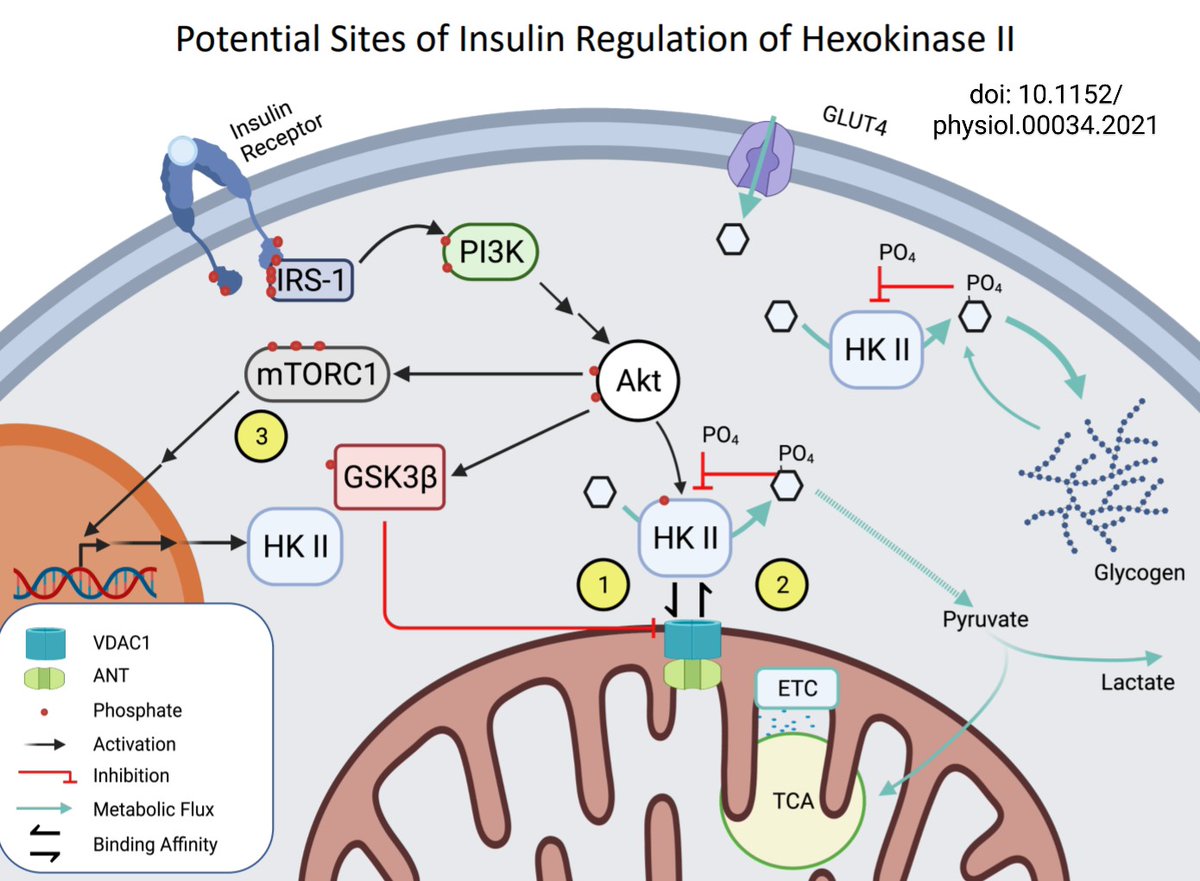
4/16
5
The polyol pathway begins with the aldose reductase (AR). It starts processing glucose only at high concentrations (Km ≈ 100 mM). The threshold isn’t sharp, but it’s written that above 10 mM it already converts glucose into sorbitol, which is then converted into fructose.
5/16
5/16
6
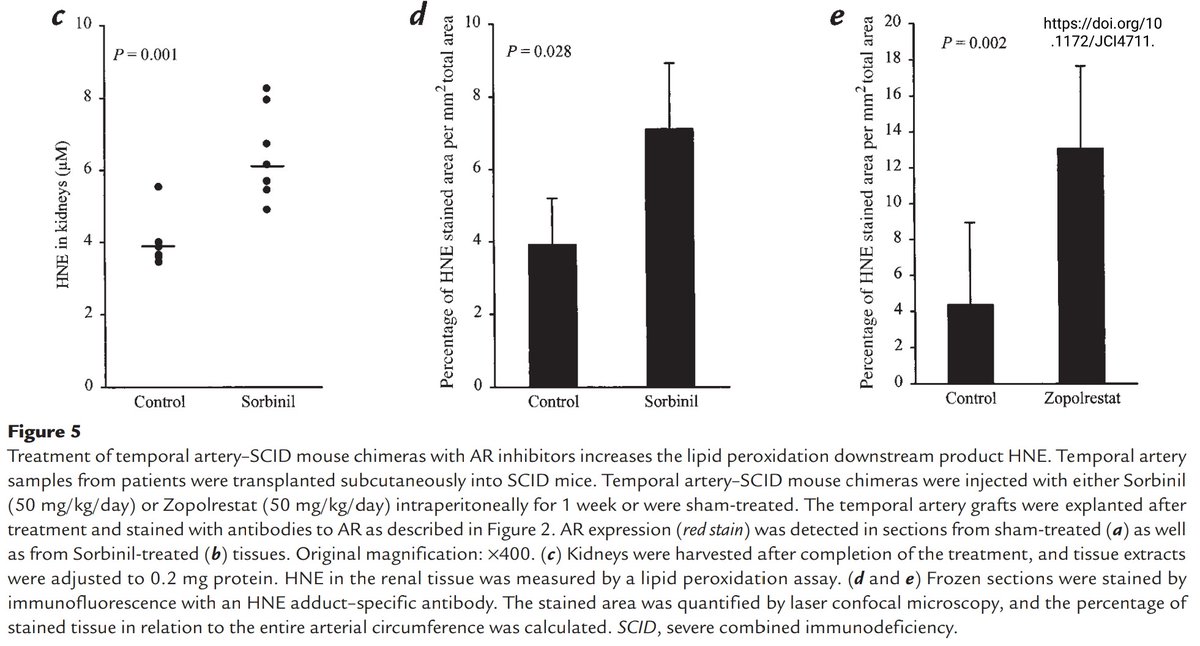
At normal 5 mM levels, it does nothing. Really nothing? Here lies the core of the matter. AR is more than 1,000 times more efficient at processing toxic aldehydes (Km ≈ 0.02 mM) than glucose. Thus, AR is primarily a detoxification enzyme, good for 4HNE processing.
6/16
6/16
7
When we add more glucose — via insulin — to a cell already under oxidative stress and producing high levels of H₂O₂, the AR enzyme increases in quantity, glucose is more easily converted into fructose. The presence of fructose triggers production fructokinase (KHK).
7/16
7/16
8
The mere presence of KHK changes cell activity from oxidative phosphorylation to fermentation. It activates the AMPD2/XO/H₂O₂ pathway, suppresses deacetylases SIRT2 and SIRT1, reduces antioxidant protection, and initiates uric acid production.
8/16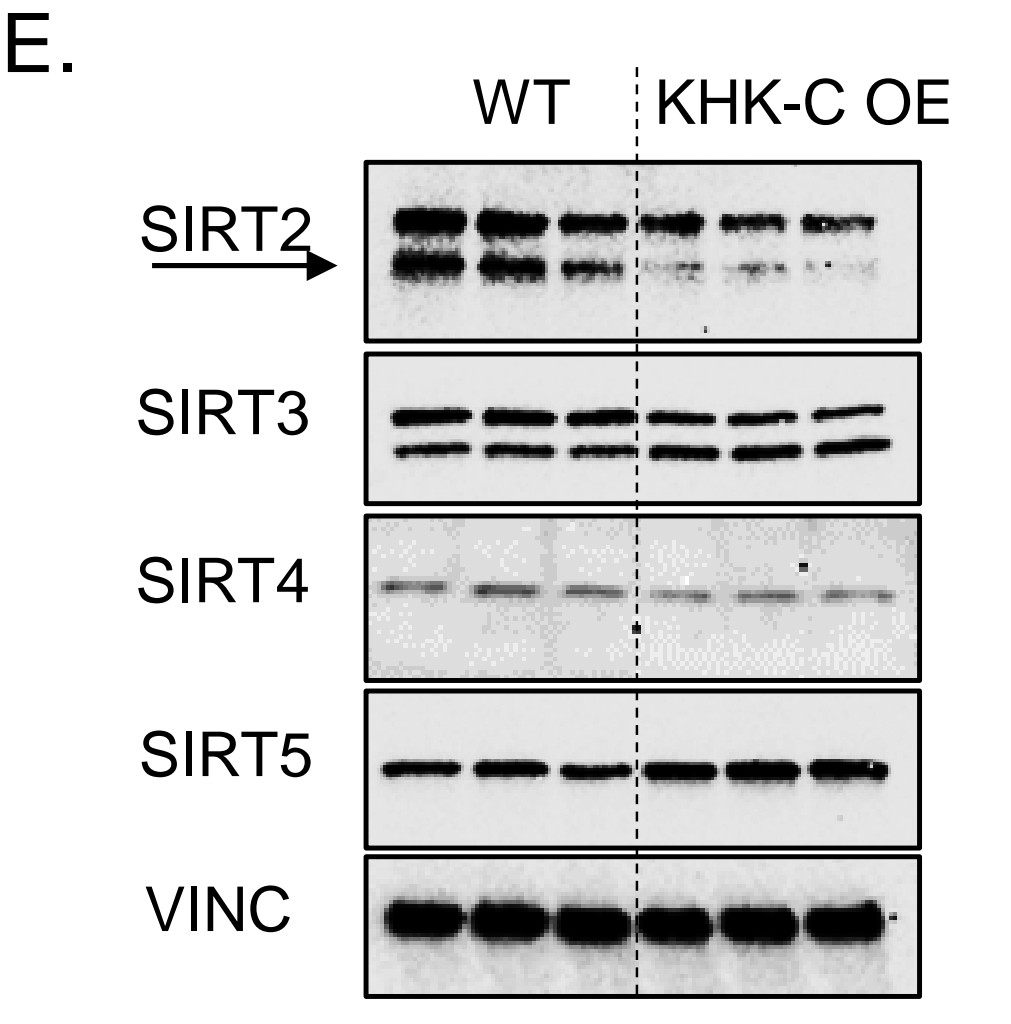
8/16
9
We usually blame high glucose levels, but here the real cause of elevated oxidative stress is the polyol pathway and fructose — not glucose itself. This can be confirmed by genetically disabling KHK production (KO).
9/16
9/16
10
Fructose activates oxidative stress. If membranes contain enough omega-6 derived from linoleic acid, sufficient aldehydes will be produced to activate AR — and thus the polyol pathway. The vicious cycle closes and becomes increasingly self-reinforcing.
10/16
10/16
11
Once a certain threshold is crossed, the cell’s metabolism flips.
Activators:
Omega-6 in membranes
Post-meal insulin and glucose levels
Slow rate of glucose phosphorylation in the cytosol
Rate at which the liver is flooded with glucose
Rate of absorption in GI tract
11/16
Activators:
Omega-6 in membranes
Post-meal insulin and glucose levels
Slow rate of glucose phosphorylation in the cytosol
Rate at which the liver is flooded with glucose
Rate of absorption in GI tract
11/16
12
Every slowdown in food processing plays a role here — slow eating, firm food texture (carbohydrates), large starch granules, preferably linear rather than branched starch structure, slow gastric emptying, and so on.
12/16
12/16
13
Therefore, any intervention that slows eating or digestion is covered by this model — including modern anti-obesity drugs that delay gastric emptying and slow intestinal activity.
13/16
13/16
14
Any disruption of this vicious cycle can help.
Low fat
Low LA content in fats
Slow digestion in the GI tract
Activating AMPK and inhibiting the AMPD2
SIRT1 deacetylase activators such as acetate/vinegar, flavonols
Antioxidants
Low-carb or ketogenic diet
14/16
Low fat
Low LA content in fats
Slow digestion in the GI tract
Activating AMPK and inhibiting the AMPD2
SIRT1 deacetylase activators such as acetate/vinegar, flavonols
Antioxidants
Low-carb or ketogenic diet
14/16
15
Some damage cannot be undone. If stem cell senescence occurs, recovery is very difficult. While oxidative stress may have removed dysfunctional cells through apoptosis, if stem cells are damaged, have entered senescence, and no longer divide, we cannot replace them.
15/16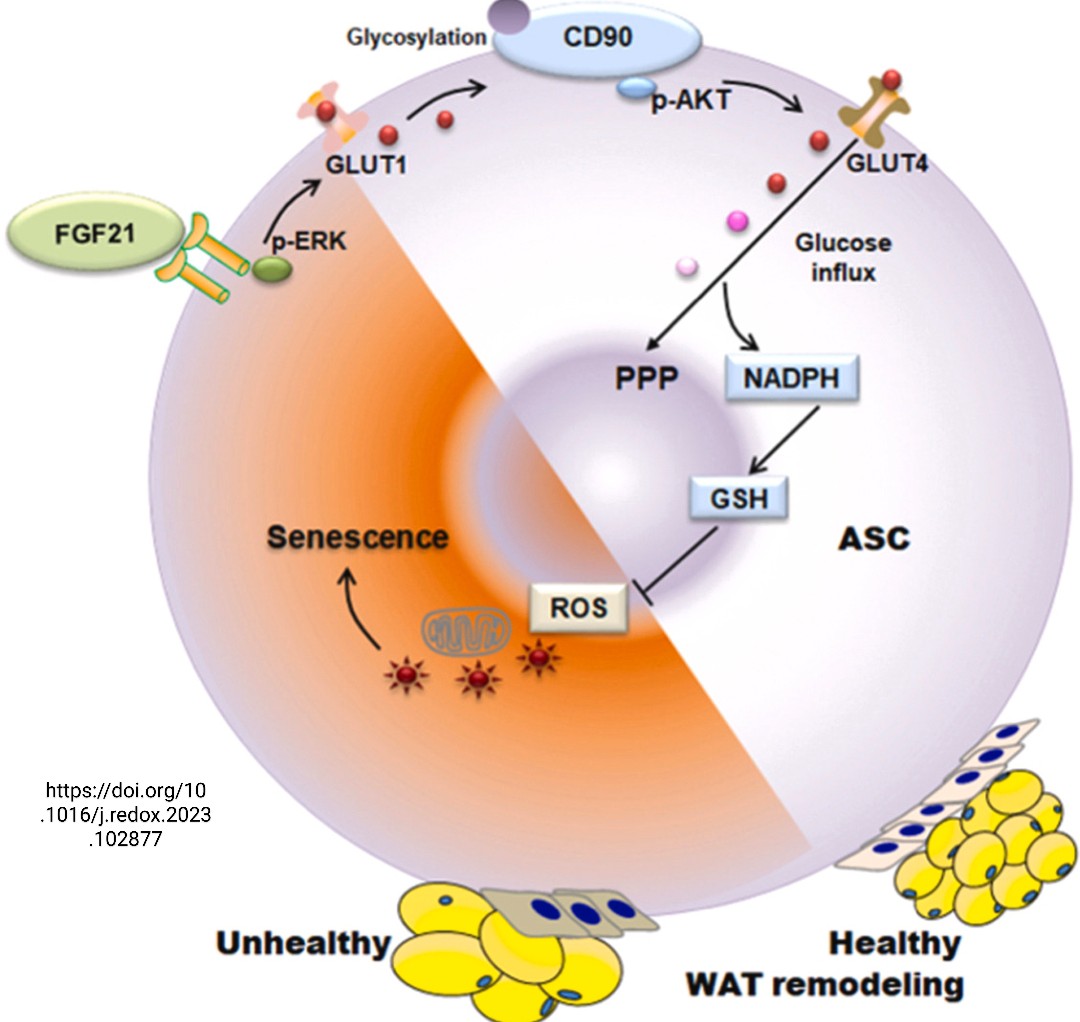
15/16
16
Even such a guru of linoleic acid toxicity as @TuckerGoodrich apparently didn’t fully understand how it was meant and how it works, so I hope it will help.
16/16

16/16
Jaromír Janda@mct4health
How do we gain weight (WG)?
By a high fat diet (HFD)?
Do we need linoleic acid (LA)?
Do we need fructose (F)?
All you need to know is in the picture.
HFD+dietary F=WG
(no LA needed)
HFD+LA=HFD+endogenous F+LA+H2O2=HFD+F+4HNE
(DNA damage and adipocytes senescence as surplus)
By a high fat diet (HFD)?
Do we need linoleic acid (LA)?
Do we need fructose (F)?
All you need to know is in the picture.
HFD+dietary F=WG
(no LA needed)
HFD+LA=HFD+endogenous F+LA+H2O2=HFD+F+4HNE
(DNA damage and adipocytes senescence as surplus)
