Vitamin B1 (thiamine) megadosing can massively reduce fatigue, in...

Dalton (Analyze & Optimize)@Outdoctrination
131 views
Sep 08, 2025
~6 min read
Advertisement
1
Vitamin B1 (thiamine) megadosing can massively reduce fatigue, in many cases reversing it entirely.
(🧵1/20)
(🧵1/20)
2
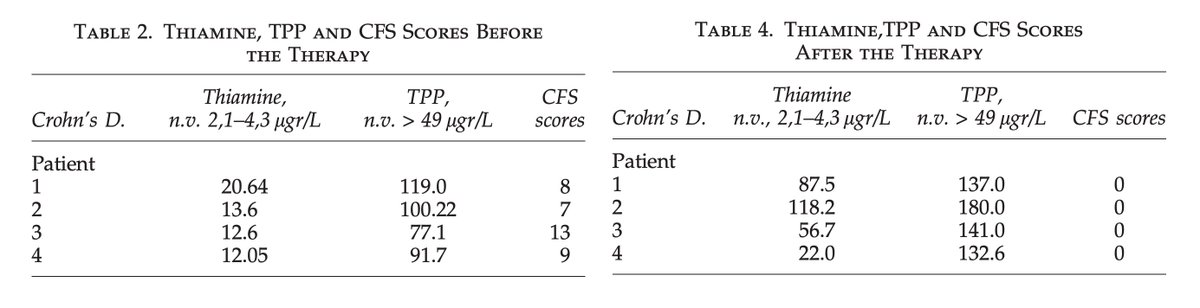
This study was a small pilot study conducted about a decade ago.
Anywhere from 600-1500 mg of B1 was used, depending on the weight of the patient.
The results were stunning.
10/12 patients had a complete reversal of fatigue.
The other two saw reductions by 50% and 66%.
(2/20)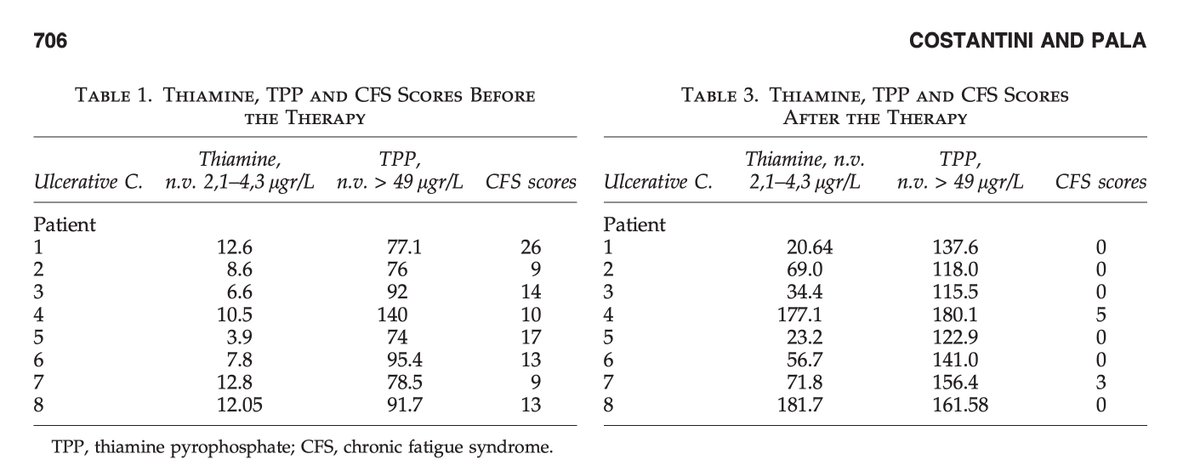
Anywhere from 600-1500 mg of B1 was used, depending on the weight of the patient.
The results were stunning.
10/12 patients had a complete reversal of fatigue.
The other two saw reductions by 50% and 66%.
(2/20)
3
What was stunning about this study was that these people did not have thiamine (B1) deficiency,
yet they responded to thiamine megadoses as if they were.
This is likely because measuring the amount of B1 or its active metabolite, TPP, is not sufficient to tell if someone gets enough of it into their cells, where it exerts its effects.
(3/20)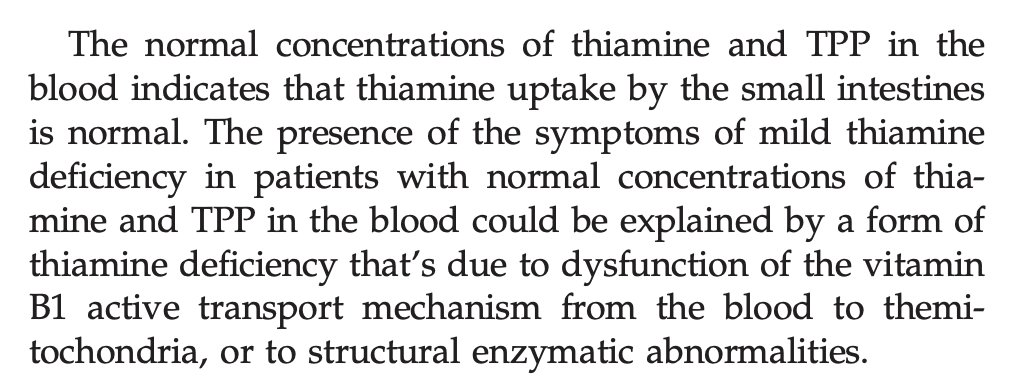
yet they responded to thiamine megadoses as if they were.
This is likely because measuring the amount of B1 or its active metabolite, TPP, is not sufficient to tell if someone gets enough of it into their cells, where it exerts its effects.
(3/20)
4
They suggest that certain genetic abnormalities of the thiamine (B1) transporters can be an issue.
Even if thiamine is normal in the blood, that doesn't mean it gets into cells where it helps.
Megadosing circumvents this.
(4/20)

Even if thiamine is normal in the blood, that doesn't mean it gets into cells where it helps.
Megadosing circumvents this.
(4/20)
5
Another study showed similar benefits in stroke patients at 600 mg per day.
Keep in mind this is >100X the normal amount you'd get in your diet.
These people showed fatigue reductions by ~75%.
(5/20)

Keep in mind this is >100X the normal amount you'd get in your diet.
These people showed fatigue reductions by ~75%.
(5/20)
6
Once again, there was no overt thiamine deficiency, at least as it is classically defined.
It's vital to not judge blood tests at face value.
You need to understand what its measuring in the big picture.
(6/20)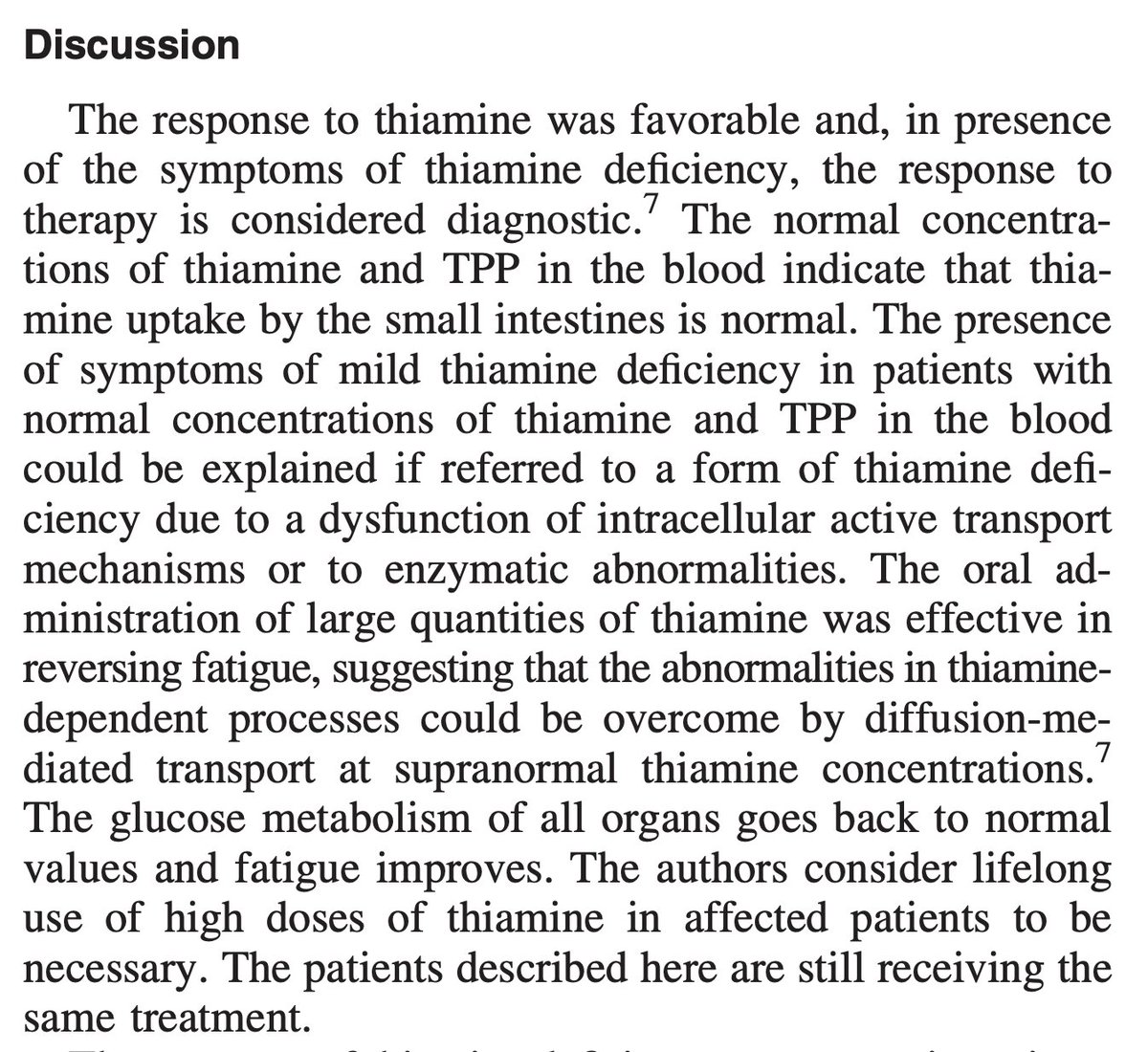
It's vital to not judge blood tests at face value.
You need to understand what its measuring in the big picture.
(6/20)
7
Thiamine (B1) megadosing (600-1500 mg/day) cuts fatigue nearly in half.
Here it was in patients with MS, 75% of whom often struggle with fatigue.
(7/20)
Here it was in patients with MS, 75% of whom often struggle with fatigue.
(7/20)
8
B1 megadosing also improved:
➜ Heat intolerance
➜ Sleep
➜ Depression
➜ Anxiety
➜ Irritability
➜ Dry skin
➜ Water retention
➜ High heart rate (tachycardia)
with NO side effects.
(8/20)
➜ Heat intolerance
➜ Sleep
➜ Depression
➜ Anxiety
➜ Irritability
➜ Dry skin
➜ Water retention
➜ High heart rate (tachycardia)
with NO side effects.
(8/20)
9
Thiamine megadosing also improves fatigue (& pain) in fibromyalgia.
Fatigue down 56.4%.
Pain down 63.3%.
(9/20)
Fatigue down 56.4%.
Pain down 63.3%.
(9/20)
10
Once again, improvement with these massive thiamine doses did not depend on underlying deficiency.
Some patients did not report any improvement until the dose was upped to around 1500 mg per day!
(10/20)
Some patients did not report any improvement until the dose was upped to around 1500 mg per day!
(10/20)
11
Most of these are small studies or case reports, but more recent studies continue to show thiamine's prowess.
For example, a 2020 paper in people with IBD showed thiamine doses, anywhere from 600-1800 mg of thiamine HCl, had huge benefits for fatigue.
G1 here had B1 the first 4 weeks, then nothing, then placebo weeks 8-12
G2 had placebo the first 4, then nothing, then B1 weeks 8-12
You can see that when either group had thiamine, it resulted in huge benefits.
(11/20)

For example, a 2020 paper in people with IBD showed thiamine doses, anywhere from 600-1800 mg of thiamine HCl, had huge benefits for fatigue.
G1 here had B1 the first 4 weeks, then nothing, then placebo weeks 8-12
G2 had placebo the first 4, then nothing, then B1 weeks 8-12
You can see that when either group had thiamine, it resulted in huge benefits.
(11/20)
12
Another recent study showed lower doses of thiamine can help with fatigue as well.
However, at these lower doses (300 mg), people needed to take it for 6+ months in order to see a benefit.
This can be fast tracked with higher doses.
(12/20)
However, at these lower doses (300 mg), people needed to take it for 6+ months in order to see a benefit.
This can be fast tracked with higher doses.
(12/20)
13
In fact, thiamine can mimic & outperform many of the benefits of exercise.
Here, a huge dose of TTFD, a form of B1 lowered:
➥ Lactate - a driver of muscle fatigue and a sign of inefficient metabolism
➥ Ammonia - a toxic byproduct of protein metabolism
People taking thiamine had similar performance in bicycle exercise as people literally training for it without thiamine.
(13/20)

Here, a huge dose of TTFD, a form of B1 lowered:
➥ Lactate - a driver of muscle fatigue and a sign of inefficient metabolism
➥ Ammonia - a toxic byproduct of protein metabolism
People taking thiamine had similar performance in bicycle exercise as people literally training for it without thiamine.
(13/20)
14
Vitamin B1 (Thiamine) is so important because it helps churn out energy in cells.
Enzymes like:
• Pyruvate dehydrogenase → central in carb metabolism
• α-KG dehydrogenase → Krebs cycle (all nutrients)
• Transketolase → antioxidant + detox power
• BCKDC → breaks down BCAAs for energy
all require the activated form of vitamin B1 (TPP).
(14/20)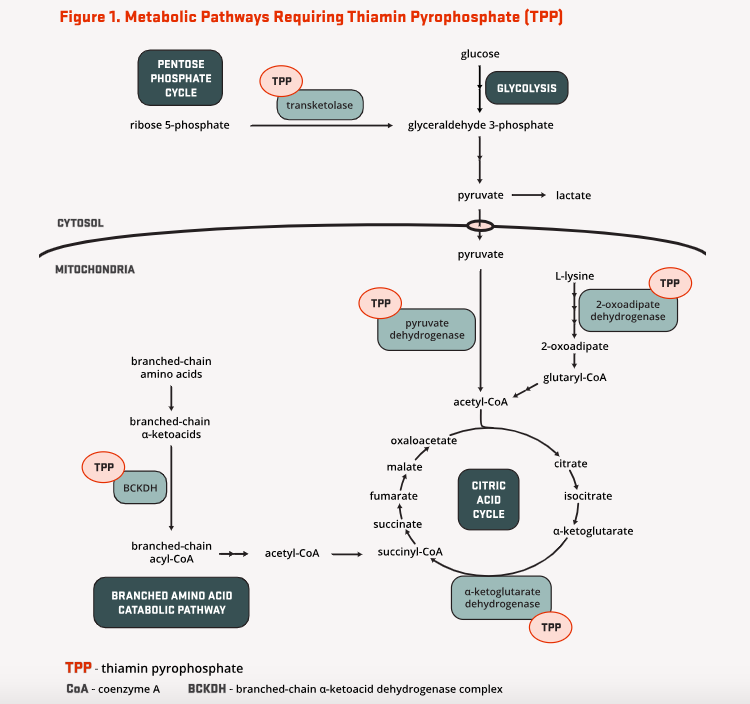
Enzymes like:
• Pyruvate dehydrogenase → central in carb metabolism
• α-KG dehydrogenase → Krebs cycle (all nutrients)
• Transketolase → antioxidant + detox power
• BCKDC → breaks down BCAAs for energy
all require the activated form of vitamin B1 (TPP).
(14/20)
15
Thiamine most notably is important for GLUCOSE metabolism.
One of the most vital steps in the metabolism of glucose is the conversion of a molecule called pyruvate into acetyl-coA.
This conversion is needed to get the most energy (30-32 ATP vs 2-7 without) out of glucose.
If your mitochondria are only harvesting a fraction of their energy from the food you eat, of course you will feel low energy.
(15/20)
One of the most vital steps in the metabolism of glucose is the conversion of a molecule called pyruvate into acetyl-coA.
This conversion is needed to get the most energy (30-32 ATP vs 2-7 without) out of glucose.
If your mitochondria are only harvesting a fraction of their energy from the food you eat, of course you will feel low energy.
(15/20)
16
Thiamine (B1) dependent metabolic reactions are also vital for maintaining a good NAD+/NADH ratio, which is vitally important for allowing cells to continue to burn energy.
(16/20)
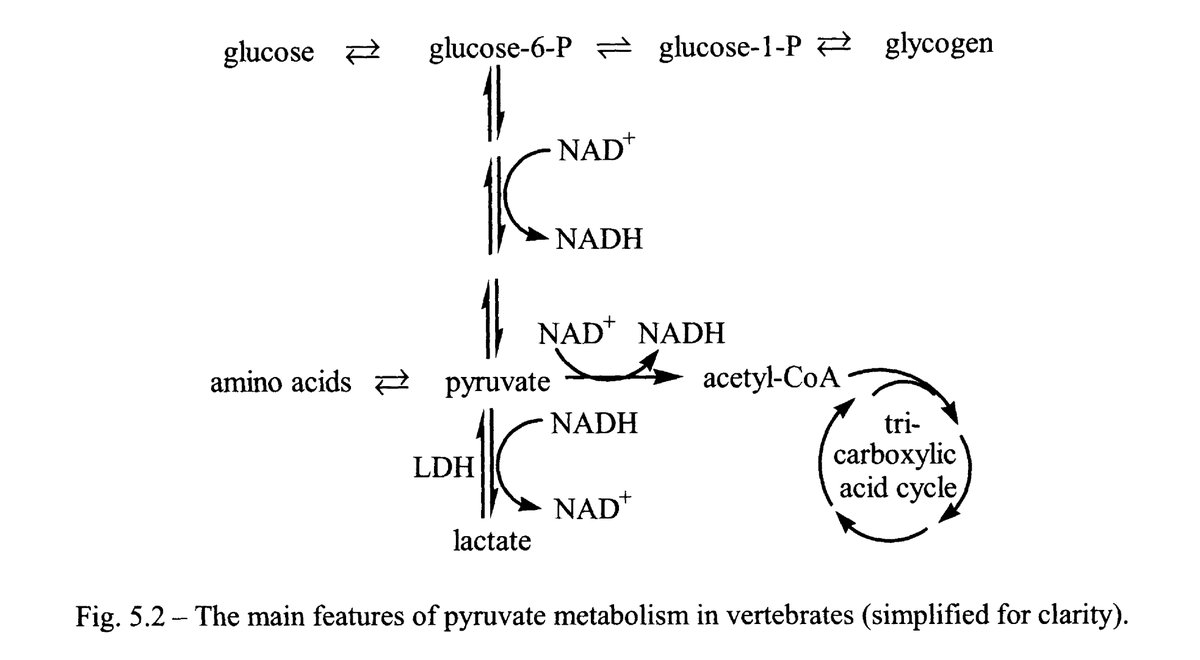
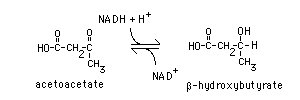
(16/20)
Dalton (Analyze & Optimize)@Outdoctrination
#3 NAD+/NADH ratios
This ratio is what governs how much energy you can burn vs how much your energy production is backed up.
NAD+ picks up electrons from the food you eat and becomes NADH.
NADH translates those electrons into energy.
More NAD+ relative to NADH means a greater capacity to continue pumping out energy.
High NADH relative to NAD+ means energy production is "backed up."
High NAD+ levels also governs gene expression for various things, including DNA repair and inflammation.
Having lots of NAD+ relative to NADH is a good thing.
You can measure this ratio by measuring:
➜ Pyruvate to lactate (cytosolic)
➜ Acetoacetate to beta hydroxybutyrate (mitochondrial)
The ratios in each of these cellular compartments can tell you where things are backed up.
This ratio is what governs how much energy you can burn vs how much your energy production is backed up.
NAD+ picks up electrons from the food you eat and becomes NADH.
NADH translates those electrons into energy.
More NAD+ relative to NADH means a greater capacity to continue pumping out energy.
High NADH relative to NAD+ means energy production is "backed up."
High NAD+ levels also governs gene expression for various things, including DNA repair and inflammation.
Having lots of NAD+ relative to NADH is a good thing.
You can measure this ratio by measuring:
➜ Pyruvate to lactate (cytosolic)
➜ Acetoacetate to beta hydroxybutyrate (mitochondrial)
The ratios in each of these cellular compartments can tell you where things are backed up.
17
Another important function of thiamine is to fuel the pentose phosphate pathway, as it required for the enzyme transketolase.
This pathway replenishes NADPH, which is vital for recycling glutathione, our master antioxidant / detoxifying agent.
Without it, you could be bogged down by toxins and free radical damage, both of which can contribute to fatigue.
(17/20)
This pathway replenishes NADPH, which is vital for recycling glutathione, our master antioxidant / detoxifying agent.
Without it, you could be bogged down by toxins and free radical damage, both of which can contribute to fatigue.
(17/20)
18
NADPH, formed with the help of B1, is also needed to synthesize various neurotransmitters.
Notably, it helps pump out dopamine and norepinephrine, both of which boost movement, motivation, and subjective energy levels.
(18/20)
Notably, it helps pump out dopamine and norepinephrine, both of which boost movement, motivation, and subjective energy levels.
(18/20)
19
There are multiple forms of thiamine that can allow you to take less for similar benefits.
Side effects reported in these studies were incredibly rare, such as elevated heart rate, which subsides immediately.
(19/20)

Side effects reported in these studies were incredibly rare, such as elevated heart rate, which subsides immediately.
(19/20)
Dalton (Analyze & Optimize)@Outdoctrination
There's several forms of B1 you can use to supplement.
This is the way to get many of the more powerful benefits.
Starting at a lower dose and going up is a good strategy as always.
TPP is the activated form of thiamine that the body produces.
This is the way to get many of the more powerful benefits.
Starting at a lower dose and going up is a good strategy as always.
TPP is the activated form of thiamine that the body produces.
20
In summary:
Thiamine (Vitamin B1) Megadosing & Fatigue:
◇ Pilot study: 600–1500 mg/day → 10/12 had full fatigue reversal, others improved 50–66%
◇ Not deficiency-driven: Benefits despite normal blood thiamine → likely transporter/genetic issues → megadosing bypasses
◇ Stroke patients: 600 mg/day reduced fatigue by ~75%
◇ MS patients: 600–1500 mg/day cut fatigue ~50%; also improved heat intolerance, sleep, mood, skin, water retention, tachycardia — no side effects
◇ Fibromyalgia: Fatigue ↓56.4%, pain ↓63.3% (some only responded at ~1500 mg/day)
◇ IBD (2020 study): 600–1800 mg/day showed large fatigue reductions, placebo-controlled crossover confirmed effects
◇ Lower doses (300 mg): Effective but require 6+ months; high doses act faster
◇ Performance: High-dose TTFD lowered lactate & ammonia → mimicked/exceeded exercise training in metabolic benefits
Why Thiamine Works (Mechanisms):
◇ Key enzymes: Pyruvate dehydrogenase, α-KG dehydrogenase, Transketolase, BCKDC
◇ Energy: Enables full glucose oxidation (30–32 ATP vs 2–7 without)
◇ Redox balance: Supports NAD+/NADH ratio for sustained energy
◇ Antioxidant defense: Fuels PPP → NADPH → regenerates glutathione
◇ Neurotransmitters: NADPH needed for dopamine & norepinephrine synthesis → boosts drive, motivation, energy
It's a simple, easy and cheap way to address this, low risk, high reward.
(20/20)
Thiamine (Vitamin B1) Megadosing & Fatigue:
◇ Pilot study: 600–1500 mg/day → 10/12 had full fatigue reversal, others improved 50–66%
◇ Not deficiency-driven: Benefits despite normal blood thiamine → likely transporter/genetic issues → megadosing bypasses
◇ Stroke patients: 600 mg/day reduced fatigue by ~75%
◇ MS patients: 600–1500 mg/day cut fatigue ~50%; also improved heat intolerance, sleep, mood, skin, water retention, tachycardia — no side effects
◇ Fibromyalgia: Fatigue ↓56.4%, pain ↓63.3% (some only responded at ~1500 mg/day)
◇ IBD (2020 study): 600–1800 mg/day showed large fatigue reductions, placebo-controlled crossover confirmed effects
◇ Lower doses (300 mg): Effective but require 6+ months; high doses act faster
◇ Performance: High-dose TTFD lowered lactate & ammonia → mimicked/exceeded exercise training in metabolic benefits
Why Thiamine Works (Mechanisms):
◇ Key enzymes: Pyruvate dehydrogenase, α-KG dehydrogenase, Transketolase, BCKDC
◇ Energy: Enables full glucose oxidation (30–32 ATP vs 2–7 without)
◇ Redox balance: Supports NAD+/NADH ratio for sustained energy
◇ Antioxidant defense: Fuels PPP → NADPH → regenerates glutathione
◇ Neurotransmitters: NADPH needed for dopamine & norepinephrine synthesis → boosts drive, motivation, energy
It's a simple, easy and cheap way to address this, low risk, high reward.
(20/20)
21
While B1 is often excellent for combatting fatigue, it might not be the only solution for your overall optimal health.
That needs to be personalized.
If you want help from us with that, schedule a free call here: go.prism.miami/consultation
That needs to be personalized.
If you want help from us with that, schedule a free call here: go.prism.miami/consultation
22
Objective Nutrients has a ton of forms of thiamine, we use them with our clients routinely.
objectivenutrients.com/?aff=31&affili…
objectivenutrients.com/?aff=31&affili…
23
I've written more about the benefits of thiamine here, as well as how to get it from food (even if it's not always enough):


Dalton (Analyze & Optimize)@Outdoctrination
Vitamin B1 is an energetic Godsend.
It combats fatigue, aids in digestion, ups dopamine, and even fights cancer.
Let's explore the benefits, the forms, how it works + how to implement it for maximum energy:
It combats fatigue, aids in digestion, ups dopamine, and even fights cancer.
Let's explore the benefits, the forms, how it works + how to implement it for maximum energy:
24
If you’re interested in getting lab testing, we offer a ton of different tests you can get without even needing to go to a doctor below. 10% off using code “ANALYZE” at checkout. revelationdiagnostics.com
