🧵 THREAD: The worldview of George Soros, the self-styled Messiah...

DataRepublican (small r)@DataRepublican
75 views
Aug 27, 2025
~10 min read
Advertisement
1
🧵 THREAD: The worldview of George Soros, the self-styled Messiah who reshaped the modern age
He once admitted:
"If truth be known, I carried some rather potent messianic fantasies with me from childhood… But when I had made my way in the world I wanted to indulge my fantasies to the extent that I could afford."
And indulge them he did.
I’ve written many threads about Soros, but never one that lays out his ideology in full, why his money carried more weight than Rockefeller or Bezos, why his methods proved uniquely disruptive.
Soros’s time is running short. But the system he engineered, the ripple effects of his philosophy, will outlive him by generations.
The question isn’t whether we agree with him. It’s whether we’re willing to study his playbook... and use the same tools ourselves.
Stay with me as I pull this thread together.
He once admitted:
"If truth be known, I carried some rather potent messianic fantasies with me from childhood… But when I had made my way in the world I wanted to indulge my fantasies to the extent that I could afford."
And indulge them he did.
I’ve written many threads about Soros, but never one that lays out his ideology in full, why his money carried more weight than Rockefeller or Bezos, why his methods proved uniquely disruptive.
Soros’s time is running short. But the system he engineered, the ripple effects of his philosophy, will outlive him by generations.
The question isn’t whether we agree with him. It’s whether we’re willing to study his playbook... and use the same tools ourselves.
Stay with me as I pull this thread together.
2
As we will soon see, Soros played a non-trivial role in the collapse of the Soviet Union.
In the 1960s and 1970s, he developed a financial theory called reflexivity. He went onto applying it to be one of the most successful hedge fund managers ever, if not hte most successful.
He found that it applied to history as well as finances and used it to hasten the Soviet Union's collapse.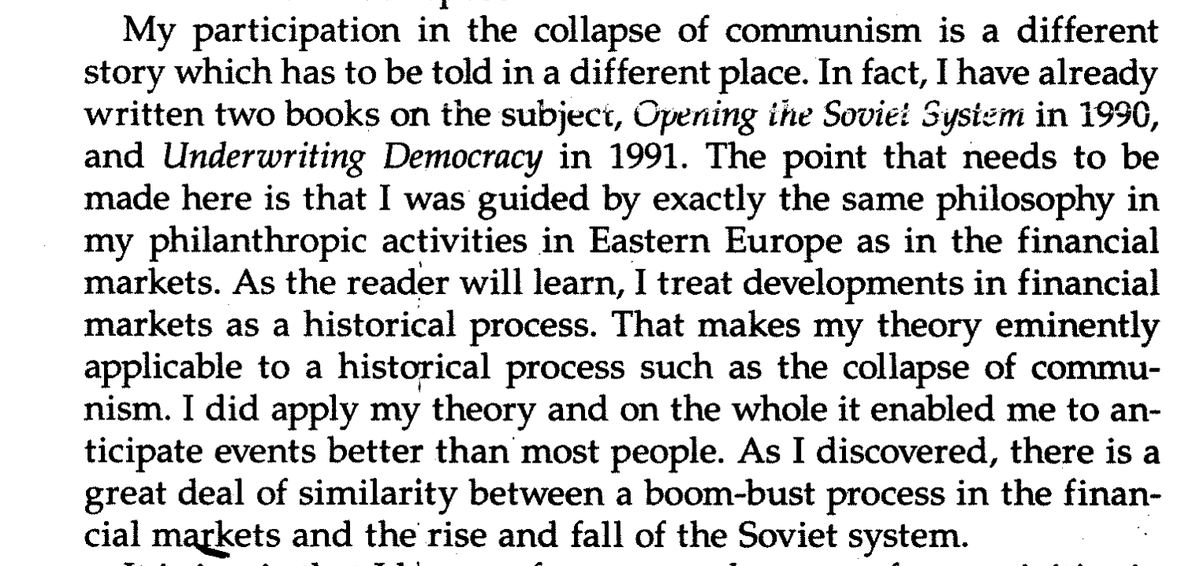
In the 1960s and 1970s, he developed a financial theory called reflexivity. He went onto applying it to be one of the most successful hedge fund managers ever, if not hte most successful.
He found that it applied to history as well as finances and used it to hasten the Soviet Union's collapse.
3
What is reflexivity?
Traditional economics assume that price is a reflection of market facts. That everything settles to its usual price.
Soros assumed the opposite: Prices are always wrong, but not only that, but and prices reshape facts.
Traditional economics assume that price is a reflection of market facts. That everything settles to its usual price.
Soros assumed the opposite: Prices are always wrong, but not only that, but and prices reshape facts.
4
To understand reflexivity, think of a startup company.
A startup may initially have nothing than hype. Investors throw millions at it anyway.
Then the startup starts hiring coders, marketers, etc. Now the hype is real! The product is real!
A startup may initially have nothing than hype. Investors throw millions at it anyway.
Then the startup starts hiring coders, marketers, etc. Now the hype is real! The product is real!
5
Investors throw more money at the startup ... and the startup keeps making more products.
Until it all crashes.
As my husband put it, reflexivity assumes "everything is a Ponzi scheme."
To Soros, everything -- stocks, history, currencies -- lies on some point in that cycle.
Until it all crashes.
As my husband put it, reflexivity assumes "everything is a Ponzi scheme."
To Soros, everything -- stocks, history, currencies -- lies on some point in that cycle.
6
Soros' fund grew 300-fund in a short time just by going all-in in these assumptions.
A big part of why his methodology hasn't been reproduced is because he was independent. He made big, all-in moves repeatedly. Your average trader at an institutional company is beholden to a process and might be fired for one wrong big trade.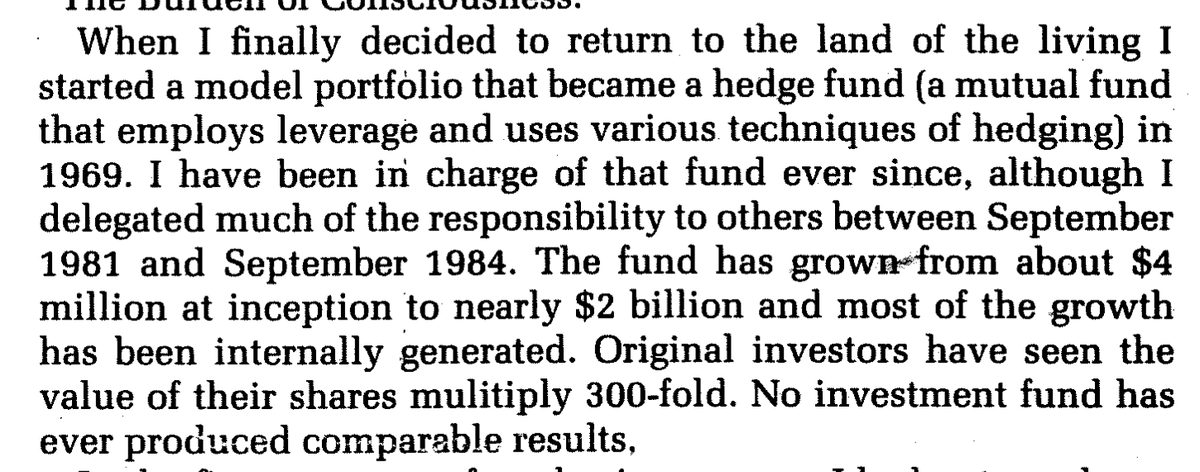
A big part of why his methodology hasn't been reproduced is because he was independent. He made big, all-in moves repeatedly. Your average trader at an institutional company is beholden to a process and might be fired for one wrong big trade.
7
Now, before I go into the details of how he applied this to hasten the Soviet Union fall (and how his people are trying the same thing here in the United States) ...
I need to backtrack and explain WHY he hated Communism.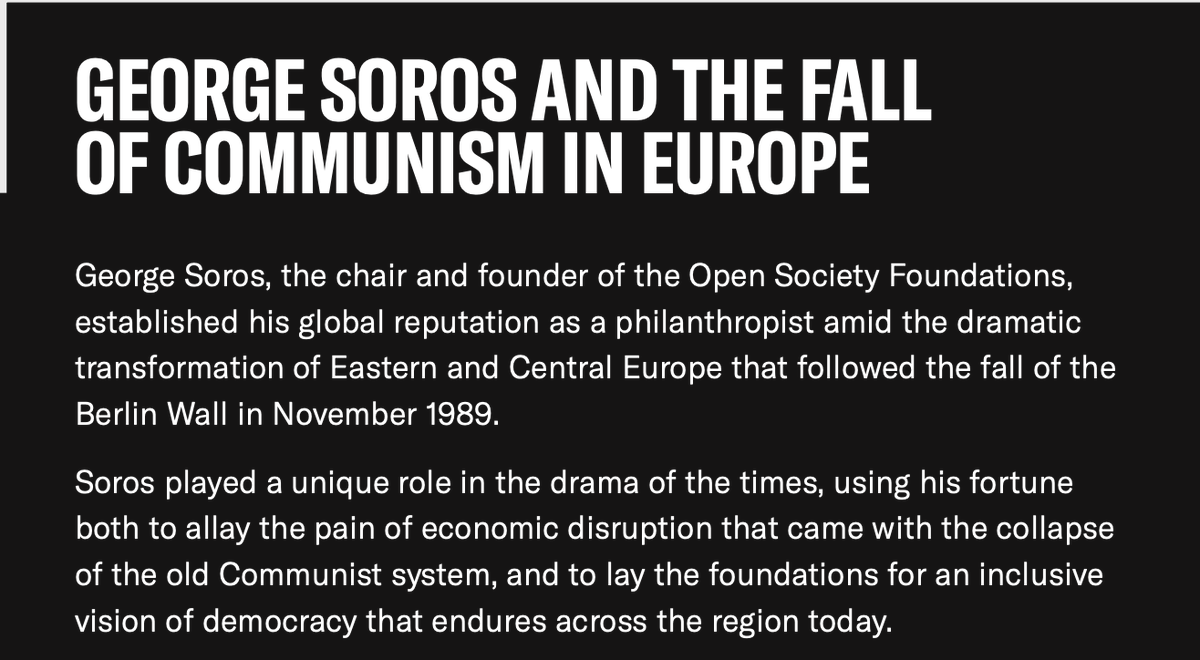
I need to backtrack and explain WHY he hated Communism.
8
Most Americans imagine left-wing politics as a straight line: starting with Democrats, then moving further left to Marxism, and further still to Leninism.
This view wrongly equates leftism with non-pluralism.
This view wrongly equates leftism with non-pluralism.
9
Everything George Soros did was to bring the world under one "Open Society" umbrella. Popper envisioned a Pantheon of "open societies" -- where individual countries co-exist with each other and nobody has a monopoly on truth.
People have told me - no, Soros twisted Karl Popper, Popper wanted freedoms and hated tyranny.
I argue the opposite. Soros carried out Popper's ideology more loyally than anyone.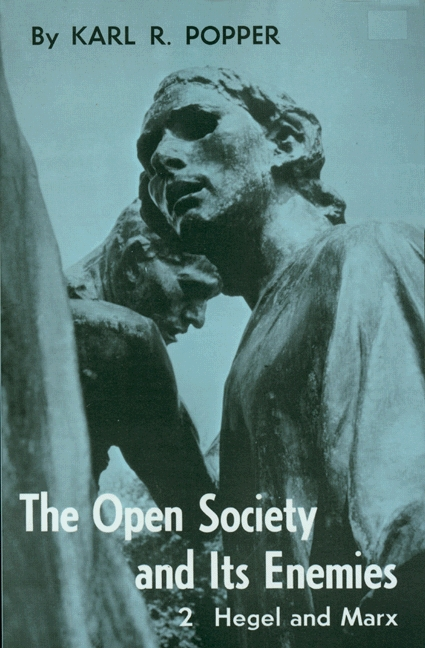
People have told me - no, Soros twisted Karl Popper, Popper wanted freedoms and hated tyranny.
I argue the opposite. Soros carried out Popper's ideology more loyally than anyone.
10
How Popper's "Open Society" became twisted to the current state of globalism is the exact same process by which Marx's ideal of a classless society becomes totalitarian in practice.
Every single one of Lenin's infamous 21 Conditions which created the tyranny of Communist states is found in Marx's writings. Lenin only codified them.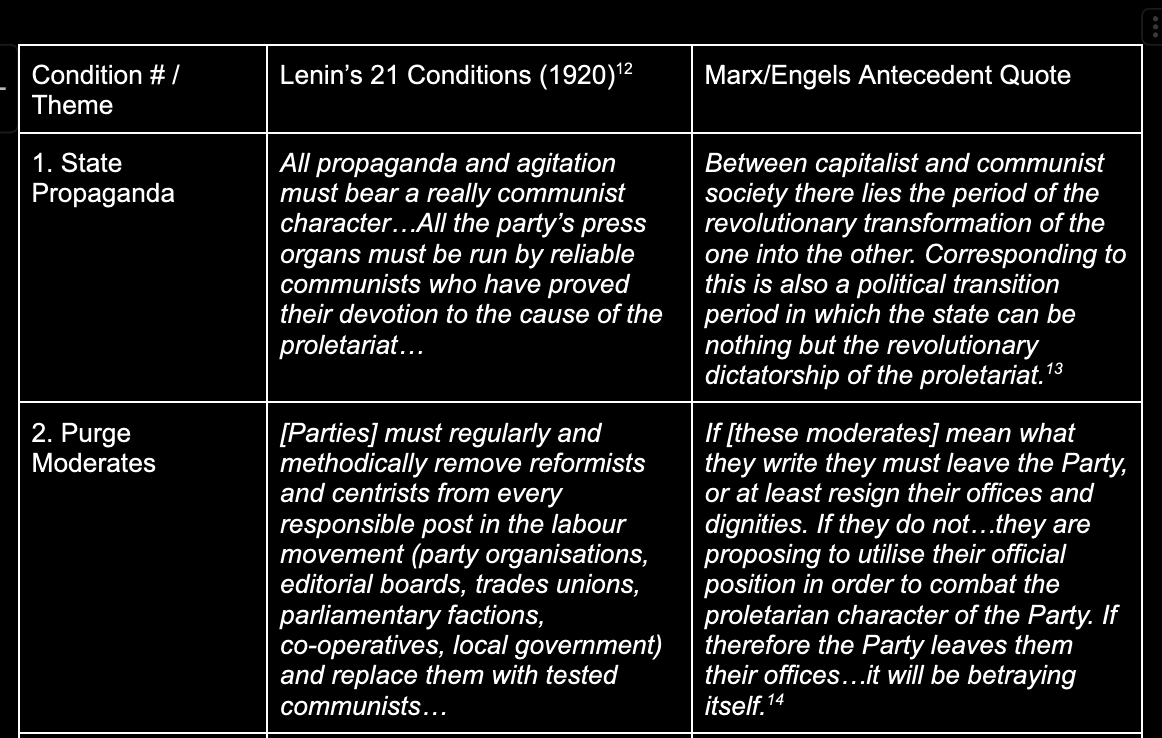
Every single one of Lenin's infamous 21 Conditions which created the tyranny of Communist states is found in Marx's writings. Lenin only codified them.
11
Marx believed his historical materialism, that mankind ultimately progresses through stages to a classless utopia, was an immutable scientific law. Any deviation from this was denying science.
And the logical institutional end of purity, it turns out, is the one-party dictatorship.
And the logical institutional end of purity, it turns out, is the one-party dictatorship.
12
It's also worth noticing that Ayn Rand also based her theories on immutable scientific laws.
"All the disasters that have wrecked your world, came from your leaders' attempt to evade the fact that A is A. All the secret evil you dread to face within you and all the pain you have ever endured, came from your own attempt to evade the fact that A is A. The purpose of those who taught you to evade it, was to make you forget that Man is Man."
She also similarly told her followers to never join any "impure" organizations such as libertarians.
"All the disasters that have wrecked your world, came from your leaders' attempt to evade the fact that A is A. All the secret evil you dread to face within you and all the pain you have ever endured, came from your own attempt to evade the fact that A is A. The purpose of those who taught you to evade it, was to make you forget that Man is Man."
She also similarly told her followers to never join any "impure" organizations such as libertarians.
13
Karl Popper took the opposite view: nobody knew the truth.
He divided into "open societies" and "closed societies."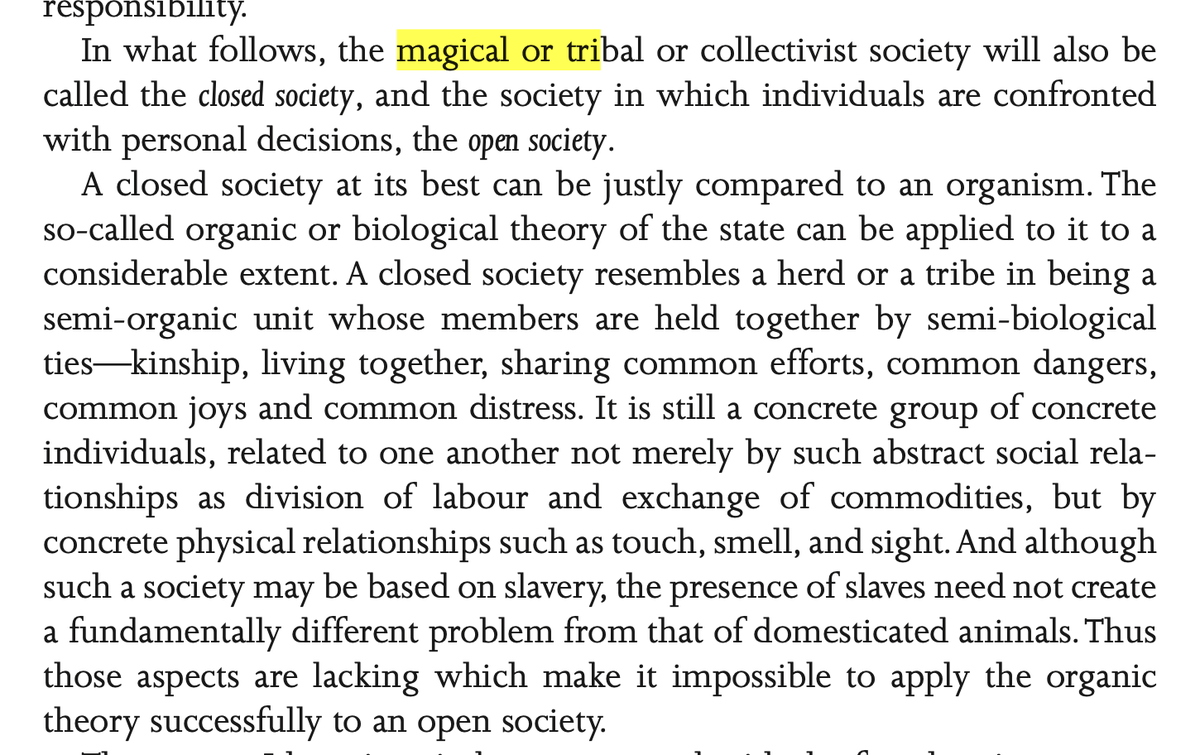
He divided into "open societies" and "closed societies."
14
As Popper wrote, "A closed society binds the individual into the tribe, demanding conformity and obedience; an open society releases him to act and decide for himself."
It sounds good, until you realize that sows the seeds of anti-faith, anti-tradition, and anti-patriotism.
It sounds good, until you realize that sows the seeds of anti-faith, anti-tradition, and anti-patriotism.
15
Popper's idea of avoiding tyrannical states such as the Soviet Union was to have open societies participate in what he called "piecemeal engineering" -- gradual, reversible, evolving decisions.
Note that this implicitly excludes closed societies.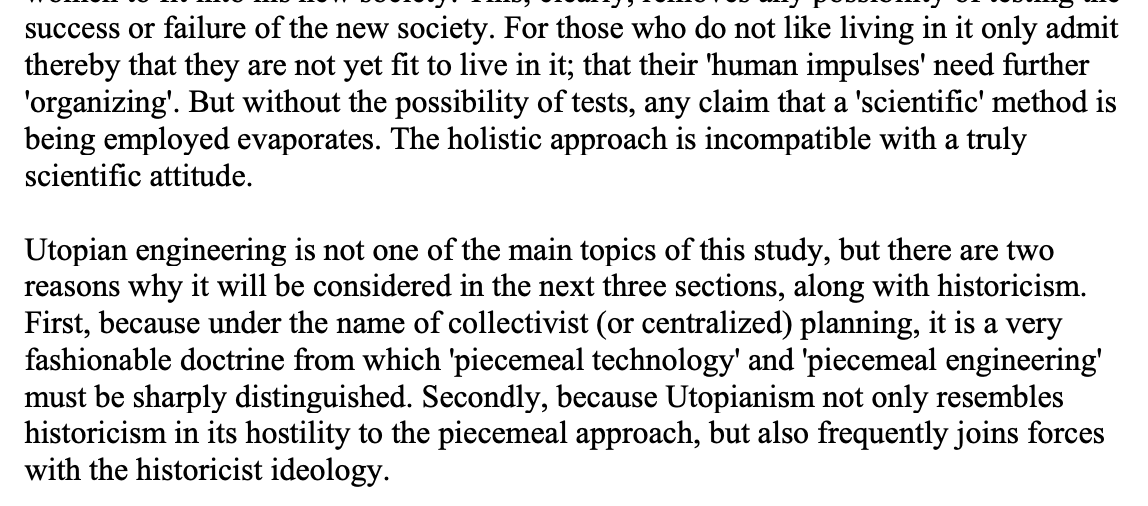
Note that this implicitly excludes closed societies.
16
If an open society is inherently exclusionary of closed societies, then that implies it is inherently exclusionary of ideas which bring on closed societies.
This is the "hidden clause" within Popper. It has credentialism built into it.
This is the "hidden clause" within Popper. It has credentialism built into it.
17
Soros' goal: transform the whole world into a coalition of Open Societies.
"I realized that I cared passionately about the concept of an open society in which people like me could enjoy freedom without being hounded to death."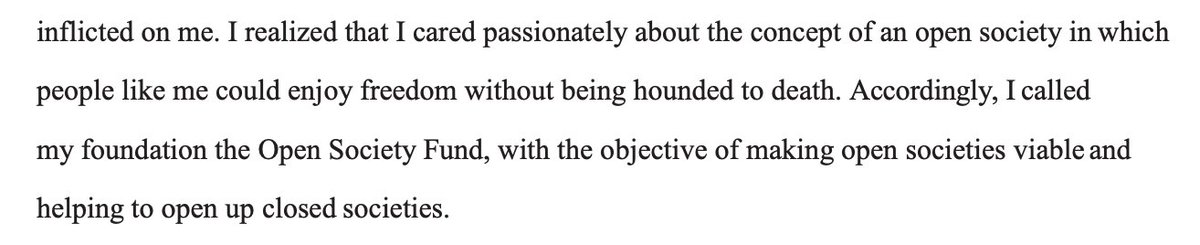
"I realized that I cared passionately about the concept of an open society in which people like me could enjoy freedom without being hounded to death."
18
The epistemological foundation of Soros’s “Open Society” is institutionalized pluralism, the belief that no single truth or authority is legitimate, and that society must be organized around the permanent negotiation of competing views.
But pluralism, when carried to its logical conclusion, is inherently corrosive of any fixed loyalties. If no one can claim binding truth, then no institution can demand unquestioned allegiance.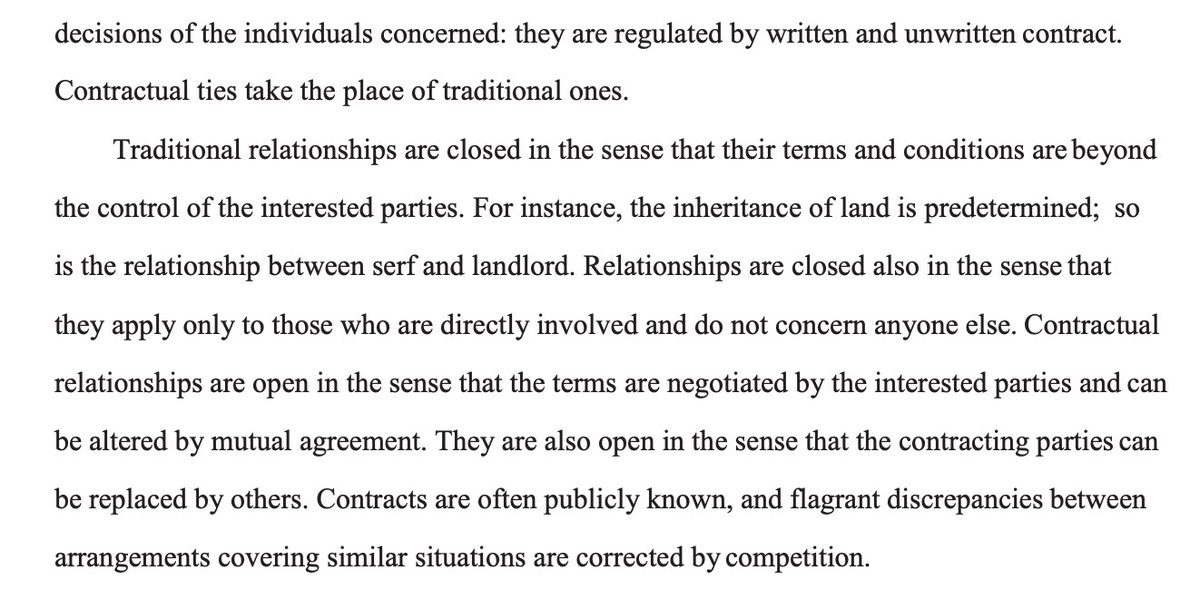
But pluralism, when carried to its logical conclusion, is inherently corrosive of any fixed loyalties. If no one can claim binding truth, then no institution can demand unquestioned allegiance.
19
What begins as a rejection of dogma extends outward to undermine inherited ties of every sort: nation, church, tradition, and even family.
The end state of pure pluralism is a society in which every bond must be continuously renegotiated, and nothing is taken as given.
The end state of pure pluralism is a society in which every bond must be continuously renegotiated, and nothing is taken as given.
20
So, Soros' extreme left-wing tyranny of globalism is the institutional outcome of Popper, just as Leninist one-party states were the institutional outcome of Marx.
Even though Popper and Communism were opposing ideologies!
Even though Popper and Communism were opposing ideologies!
21
Reflexivity is all about finding and squeezing contradictions.
The Soviet Union demanded total purity, and total adherence to its views. To carry that out, it required a total monopoly over the media.
That in itself created a "contradiction" waiting to be exploited: people continued to support Communism under the yoke of gulags and starvation, but only as long as they could not see the reality of their situation contrasted with much more prosperous countries.
The Soviet Union demanded total purity, and total adherence to its views. To carry that out, it required a total monopoly over the media.
That in itself created a "contradiction" waiting to be exploited: people continued to support Communism under the yoke of gulags and starvation, but only as long as they could not see the reality of their situation contrasted with much more prosperous countries.
22
(Family time, be back to wrap up this thread later.)
23
Under Reagan, the United States engaged in a global proxy war against the Soviet Union. The biggest success was perhaps SDI -- which had the psychological effort of turning warfare into a high-tech arms race, where the US had a wide advantage and USSR was handicapped by COCOM restrictions on importing technology.
A declassified CIA document estimates that the Soviet Union ended up spending 15 times more to catch up on their own version of SDI than USA did.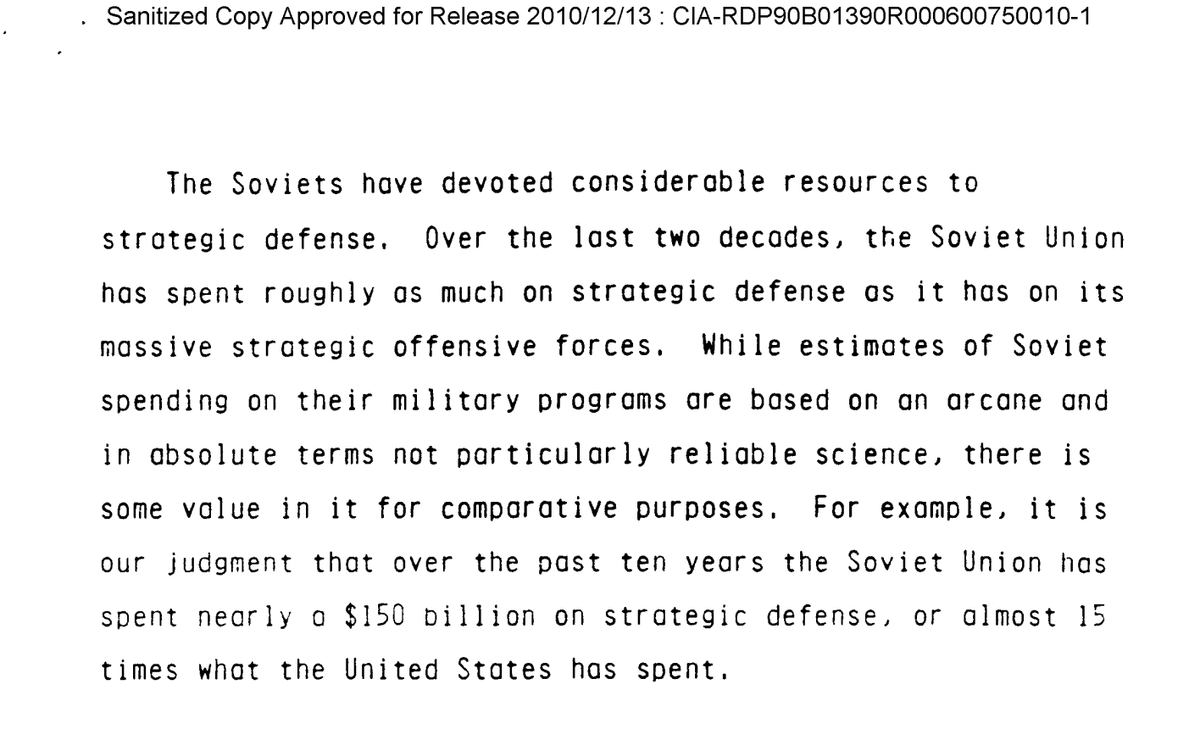
A declassified CIA document estimates that the Soviet Union ended up spending 15 times more to catch up on their own version of SDI than USA did.
24
But the USA engaged in proxy war from the outside the Iron Curtain. It had limited ability to engage in operations from inside. Even Radio Free Europe/Radio Liberty was frequently jammed.
Soros engaged in proxy war from *within.* He was not bound by any country or treaty and could do as he wished, especially as he was a dual citizen -- a citizen of Hungary, an Iron Curtain state.
And so he started in 1984.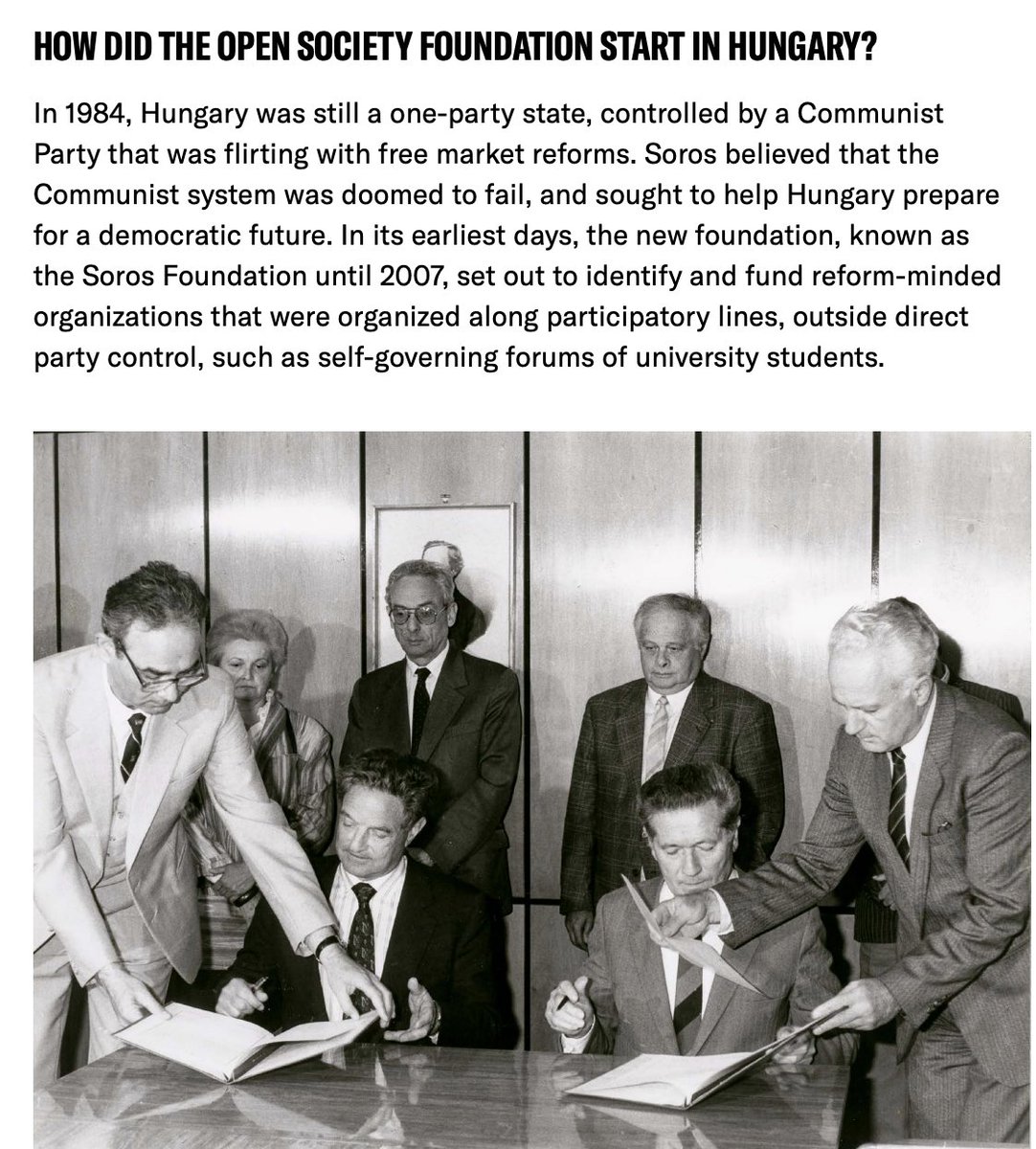
Soros engaged in proxy war from *within.* He was not bound by any country or treaty and could do as he wished, especially as he was a dual citizen -- a citizen of Hungary, an Iron Curtain state.
And so he started in 1984.
25
To manipulate reflexivity Soros-style, is to find a contradiction and apply pressure to it until it bursts.
In markets, Soros would identify a currency or asset that was overvalued because traders believed in its strength. He would build a massive short position, betting on its weakness. Once others noticed the cracks, their rush to unwind reinforced the downward spiral, and the perception of stability collapsed into a rout.
In markets, Soros would identify a currency or asset that was overvalued because traders believed in its strength. He would build a massive short position, betting on its weakness. Once others noticed the cracks, their rush to unwind reinforced the downward spiral, and the perception of stability collapsed into a rout.
26
Soros' reflexivity squeeze in Hungary was importing nearly a thousand Xerox machines into libraries and universities. Now, people could copy and distribute ideas. Then, he financed tons of tiny grants to encourage people to circulate ideas.
This seems small -- but the impact was disproportionate, precisely because he identified and squeezed the contradiction of Communism.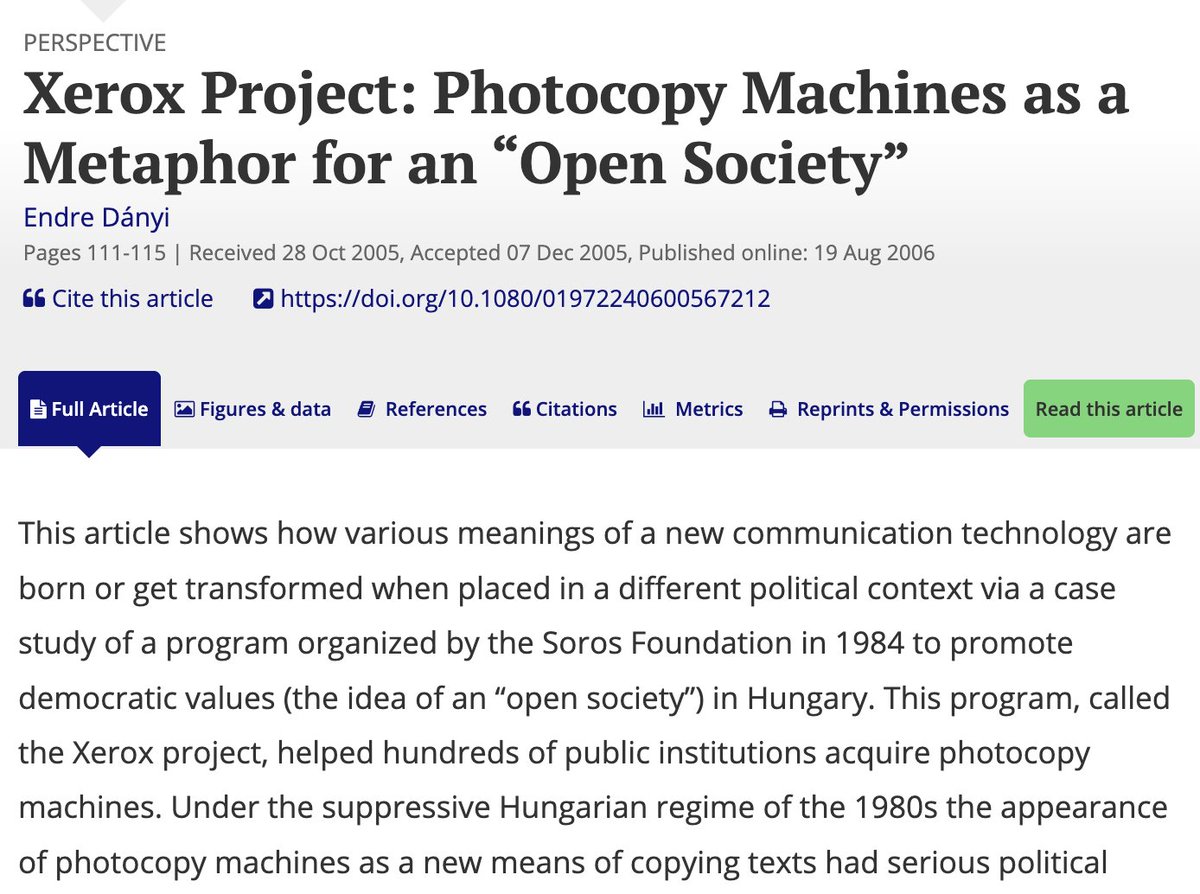
This seems small -- but the impact was disproportionate, precisely because he identified and squeezed the contradiction of Communism.
27
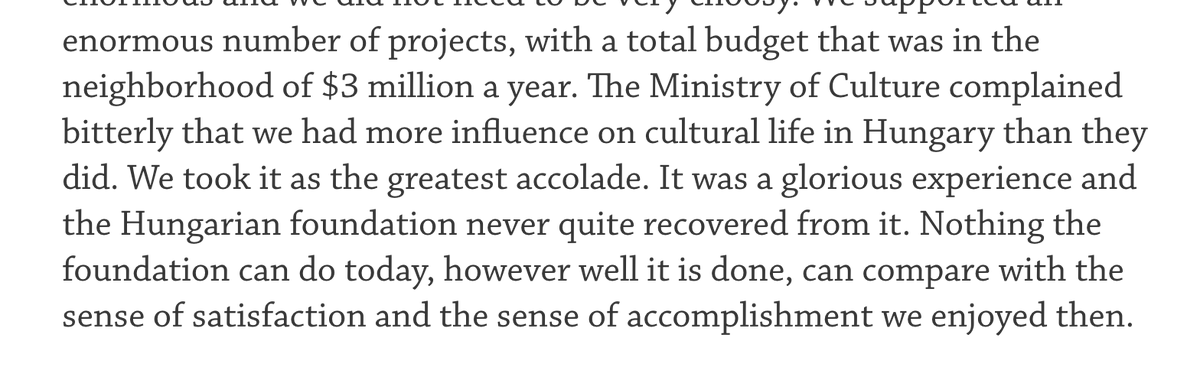
In fact the Hungarian Ministry of Culture complained Soros had a greater impact than they did!
28
If that sounds strange to you... consider that @elonmusk repeated the exact same move recently.
He "squeezed" the contradiction that globalism, although based on liberal pluralistic foundations, is not actually pluralistic or liberal... by buying Twitter and allowing free speech.
And since then, X has been non-stop exposing the tyranny of globalists.
He "squeezed" the contradiction that globalism, although based on liberal pluralistic foundations, is not actually pluralistic or liberal... by buying Twitter and allowing free speech.
And since then, X has been non-stop exposing the tyranny of globalists.
29
Soros would go onto having a big role in the "shock therapy" of Poland by bringing in Jeffrey Sachs.
When financial pressures hit the USSR from a perfect storm of military commitments, oil price crashes, and being extremely reliant on food imports -- Gorbachev started the policy of perestroika (restructuring) and glasnost (openness).
Soros immediately took advantage of that.
When financial pressures hit the USSR from a perfect storm of military commitments, oil price crashes, and being extremely reliant on food imports -- Gorbachev started the policy of perestroika (restructuring) and glasnost (openness).
Soros immediately took advantage of that.
30
Soros offered a partnership, and the USSR seized on that, partially because of his Hungarian philanthropy and perhaps imagining that he would be a bridge to Western relations.
USSR codified the "Cultural Initiative" and gave it sweeping powers, including freedom from taxes and freedom to engage in any economic activity. Soros compared the power he wielded to the East India Company.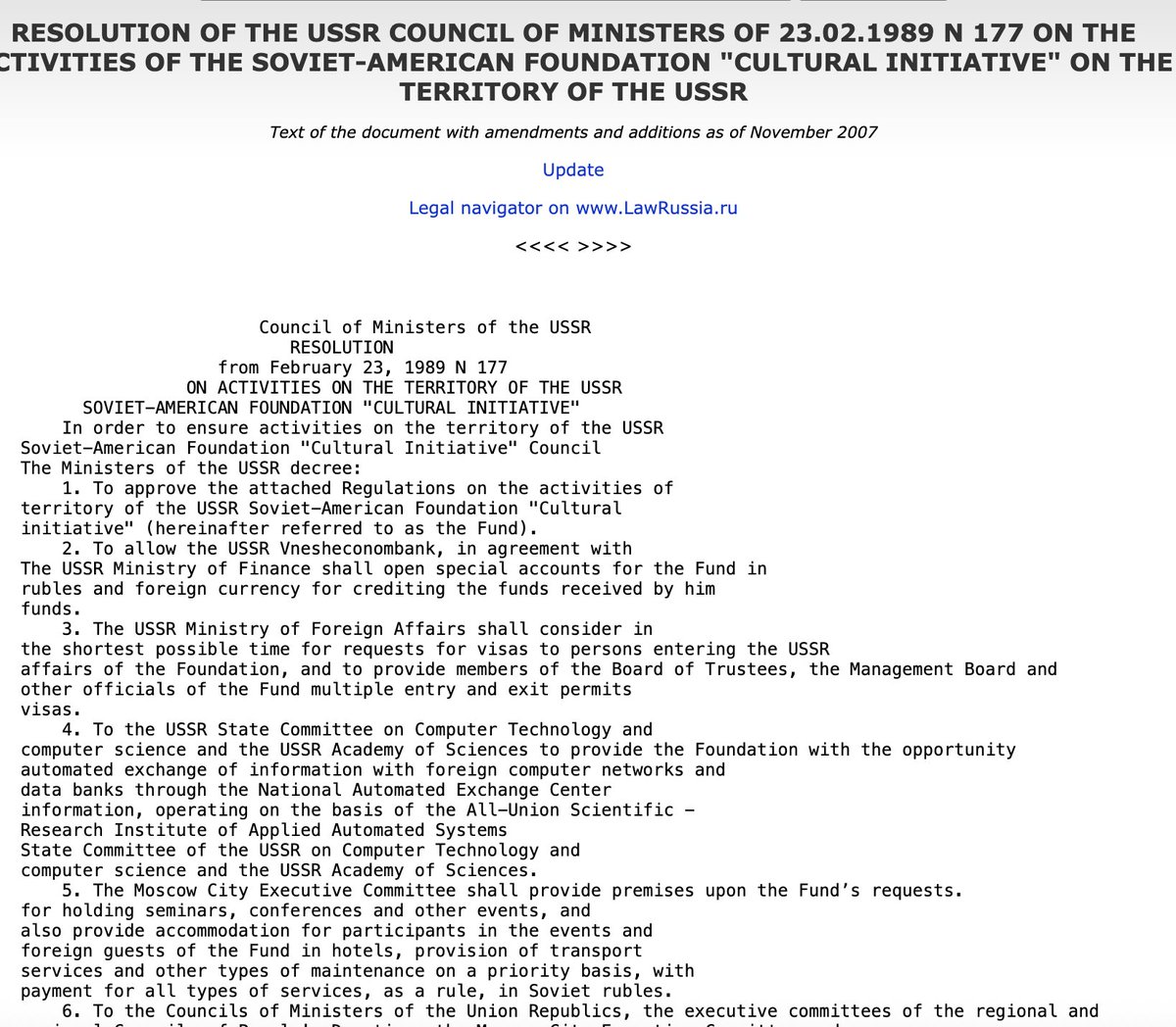
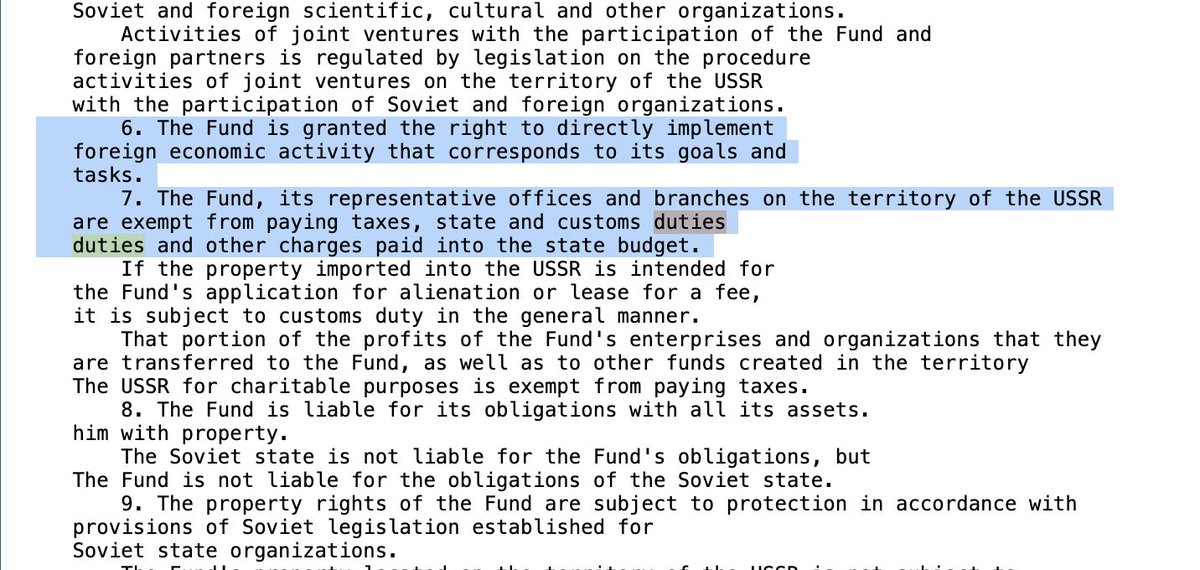
USSR codified the "Cultural Initiative" and gave it sweeping powers, including freedom from taxes and freedom to engage in any economic activity. Soros compared the power he wielded to the East India Company.
31
The result was Soros wasted no time setting up foundation offices in all the satellite states and countries, and repeating the exact same moves he did in Hungary.
It was not long until Communist legitimacy began to be eroded. It culminated in a coup by USSR hard-liners which attempted to restore censorship and other Communist reforms.
A coup that lasted only three days, ended with Gorbachev weakened and Yeltsin victorious.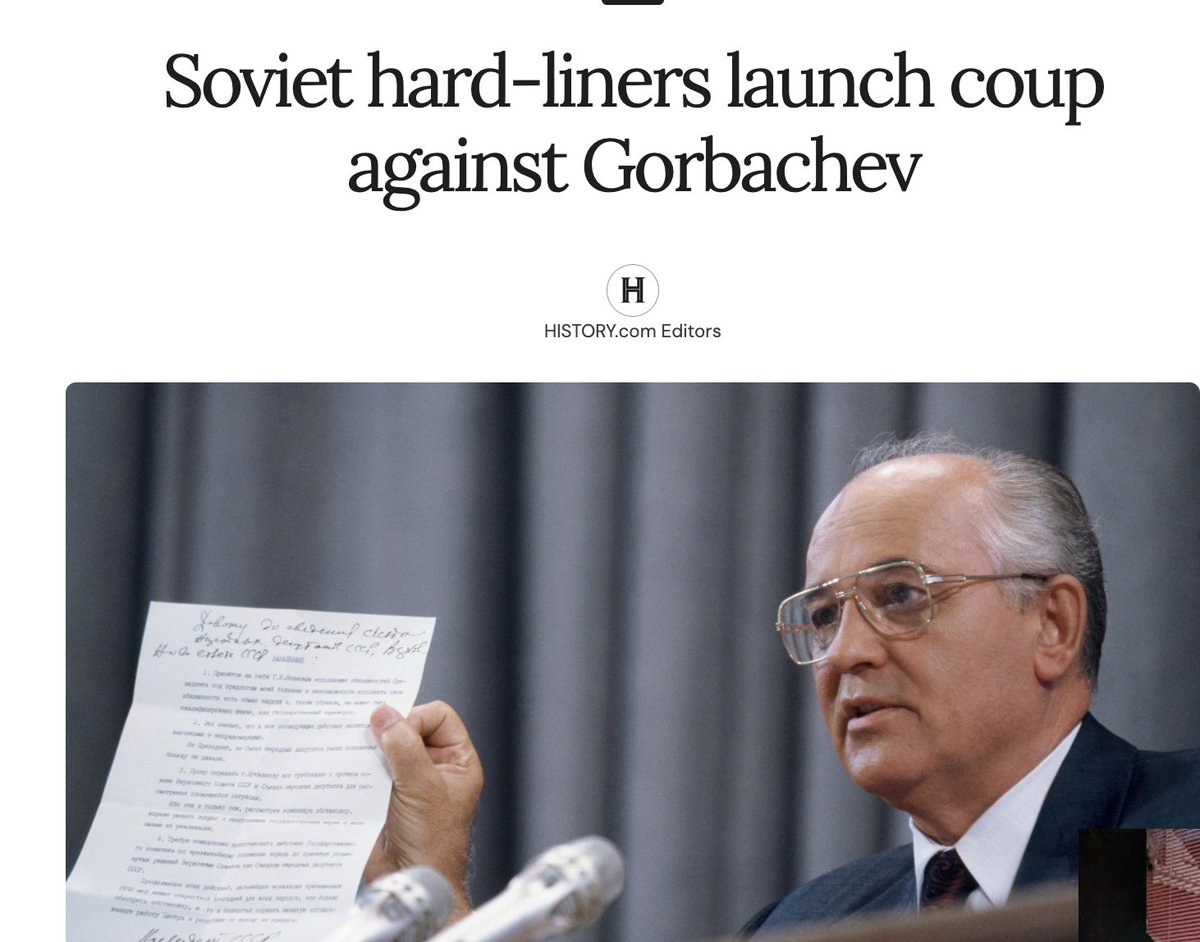
It was not long until Communist legitimacy began to be eroded. It culminated in a coup by USSR hard-liners which attempted to restore censorship and other Communist reforms.
A coup that lasted only three days, ended with Gorbachev weakened and Yeltsin victorious.
32
@elonmusk There is much, much more to this story -- and in fact a whole book to it.
But I hope this thread gives you an idea of Soros' ideology, reflexivity, and what we can learn from it.
Thank you for reading!
But I hope this thread gives you an idea of Soros' ideology, reflexivity, and what we can learn from it.
Thank you for reading!
33
Some people are taking this thread to mean that I am saying pluralism is bad -- NO.
I try to not to project religion into governance, but I believe Christianity justifies pluralism as an inherent feature of godly governance.
Paul wrote in Romans 7:18: "For I know that nothing good dwells in me, that is, in my flesh. For I have the desire to do what is right, but not the ability to carry it out."
And again in Philippians 3:12: "Not that I have already obtained this or am already perfect, but I press on to make it my own, because Christ Jesus has made me his own."
We will remain sinful creatures, until our death. As Jeremiah 17:9 says: "The heart is deceitful above all things, and desperately sick; who can understand it?"
What this implies is: Objective truth exists, but no human has the ability to interpret and pass down truth perfectly.
The difference between globalism and the United States of America is that globalism's epistemological foundation is pluralism above all.
The United States, by contrast, created its epistemological foundation on natural rights.
Both imply pluralism, but have very different implications as to how governance is done.
I try to not to project religion into governance, but I believe Christianity justifies pluralism as an inherent feature of godly governance.
Paul wrote in Romans 7:18: "For I know that nothing good dwells in me, that is, in my flesh. For I have the desire to do what is right, but not the ability to carry it out."
And again in Philippians 3:12: "Not that I have already obtained this or am already perfect, but I press on to make it my own, because Christ Jesus has made me his own."
We will remain sinful creatures, until our death. As Jeremiah 17:9 says: "The heart is deceitful above all things, and desperately sick; who can understand it?"
What this implies is: Objective truth exists, but no human has the ability to interpret and pass down truth perfectly.
The difference between globalism and the United States of America is that globalism's epistemological foundation is pluralism above all.
The United States, by contrast, created its epistemological foundation on natural rights.
Both imply pluralism, but have very different implications as to how governance is done.
34
@elonmusk Nor am I saying what Soros did in USSR was bad.
There's a reason I keep saying that nobody is totally good or totally evil.
There's a reason I keep saying that nobody is totally good or totally evil.