🧵 Recently, I had the chance to take part in a public conversation...

Oren Barsky@orenbarsky
43 views
Aug 19, 2025
~8 min read
Advertisement
1
🧵
Recently, I had the chance to take part in a public conversation with Mosab Hassan Yousef – “The Green Prince”.
Mosab is pure intensity. Every word counts, every sentence hits like a truth-bomb. For two hours straight – razor-sharp insights, almost prophetic.
Very few people in the world have walked the path he has (if any), which makes his insights on the current situation truly unique and eye-opening.
Many people have asked me what he said about the Palestinians, Israelis, children in Gaza ,Western leaders, Antisemitism, possible solutions to the war – and about himself
Here’s the essence 👇
Recently, I had the chance to take part in a public conversation with Mosab Hassan Yousef – “The Green Prince”.
Mosab is pure intensity. Every word counts, every sentence hits like a truth-bomb. For two hours straight – razor-sharp insights, almost prophetic.
Very few people in the world have walked the path he has (if any), which makes his insights on the current situation truly unique and eye-opening.
Many people have asked me what he said about the Palestinians, Israelis, children in Gaza ,Western leaders, Antisemitism, possible solutions to the war – and about himself
Here’s the essence 👇
2
Before diving into what Mosab had to say, here’s a bit of background for those less familiar: (If you already know his background, feel free to skip to the next tweet.)
Mosab was born in 1978 in a village near Ramallah, the eldest son of Sheikh Hassan Yousef Khalil – the village Imam who later became one of Hamas’s founders (and spent 17 years in Israeli prisons).
Mosab grew up during the First Intifada (87-93) and was first arrested at 18.
In prison, he came face to face with Hamas’s true nature and the deception of the Palestinian identity he had been raised into.
Driven by ideology, he decided to switch sides.
From 1999 to 2007, he secretly worked with the Shin Bet, earning the codename ‘The Green Prince.’
During those years, he prevented dozens of deadly attacks and saved thousands of innocent lives – Jews, Arabs, and Christians alike.
In 2005, he converted to Christianity, and in 2010, he was granted political asylum in the United States.
He later published his memoir ‘Son of Hamas’ (2009), and his story was featured in the award-winning documentary ‘The Green Prince’ (2014).
In short – very few people in the Middle East come close to his résumé. He knows both sides intimately, including their most extreme corners.
That makes him nearly unbeatable in debates; it’s hard to claim you understand the conflict better than he does.
Everyone who tried has regretted it. (I’ll share an example at the end).
Beyond his story, Mosab is razor-sharp.
As one of his Shin Bet handlers once said: ‘One insight from Mosab was worth a thousand hours of analysis by our best experts״
After watching quite a few of his videos, I finally got to see him speak live for the first time. Here’s what he had to say:
Mosab was born in 1978 in a village near Ramallah, the eldest son of Sheikh Hassan Yousef Khalil – the village Imam who later became one of Hamas’s founders (and spent 17 years in Israeli prisons).
Mosab grew up during the First Intifada (87-93) and was first arrested at 18.
In prison, he came face to face with Hamas’s true nature and the deception of the Palestinian identity he had been raised into.
Driven by ideology, he decided to switch sides.
From 1999 to 2007, he secretly worked with the Shin Bet, earning the codename ‘The Green Prince.’
During those years, he prevented dozens of deadly attacks and saved thousands of innocent lives – Jews, Arabs, and Christians alike.
In 2005, he converted to Christianity, and in 2010, he was granted political asylum in the United States.
He later published his memoir ‘Son of Hamas’ (2009), and his story was featured in the award-winning documentary ‘The Green Prince’ (2014).
In short – very few people in the Middle East come close to his résumé. He knows both sides intimately, including their most extreme corners.
That makes him nearly unbeatable in debates; it’s hard to claim you understand the conflict better than he does.
Everyone who tried has regretted it. (I’ll share an example at the end).
Beyond his story, Mosab is razor-sharp.
As one of his Shin Bet handlers once said: ‘One insight from Mosab was worth a thousand hours of analysis by our best experts״
After watching quite a few of his videos, I finally got to see him speak live for the first time. Here’s what he had to say:
3
On his early childhood as a Palestinian boy, and how he now views the children of Gaza and the reality they’re growing up in:
His earliest memories are of a normal, carefree life. He recalls family trips by car from Ramallah to the beach in Tel Aviv, with no checkpoints and no one stopping them. He even remembers his father asking Jewish passersby for directions, and people helping them kindly, without hesitation.
Things changed a few years later, with the outbreak of the First Intifada. He describes how funerals, injuries, arrests, and constant clashes with the IDF inevitably shaped a burning hatred of Israel.
As a child – and here he draws a direct line to today’s children in Gaza – there was simply no way to understand the bigger picture. Expecting anything other than hatred toward Israel would have been unrealistic.
He points out that Palestinian children essentially learn nothing. They have no knowledge of the history of the land they live in – not the ancient kingdoms, not modern history, not even their own. (And by now, you probably know why.)
They grow up completely ignorant of the broader context.
Instead, they’re taught a flat, one-dimensional narrative: that Zionists came,ans stole their land, and that the duty of every Palestinian child is to sacrifice themselves.
His earliest memories are of a normal, carefree life. He recalls family trips by car from Ramallah to the beach in Tel Aviv, with no checkpoints and no one stopping them. He even remembers his father asking Jewish passersby for directions, and people helping them kindly, without hesitation.
Things changed a few years later, with the outbreak of the First Intifada. He describes how funerals, injuries, arrests, and constant clashes with the IDF inevitably shaped a burning hatred of Israel.
As a child – and here he draws a direct line to today’s children in Gaza – there was simply no way to understand the bigger picture. Expecting anything other than hatred toward Israel would have been unrealistic.
He points out that Palestinian children essentially learn nothing. They have no knowledge of the history of the land they live in – not the ancient kingdoms, not modern history, not even their own. (And by now, you probably know why.)
They grow up completely ignorant of the broader context.
Instead, they’re taught a flat, one-dimensional narrative: that Zionists came,ans stole their land, and that the duty of every Palestinian child is to sacrifice themselves.
4
The turning point in prison:
At 18, he was arrested for the first time. Ironically, it was inside an Israeli prison that he saw how Hamas treated fellow Palestinians who refused to submit to their agenda.
That’s when it began to sink in: the Palestinian doctrine was one of sacrifice and death, with no real will for life.
So when people accuse him of betraying his relatives and family (with whom he has no contact), his answer is sharp: they are the ones who betrayed him.
They wanted to sacrifice him, along with all their children—like every average Palestinian expected to serve the agenda. And as he stresses, this wasn’t only Hamas’s agenda; it was also Yasser Arafat’s legacy.
At 18, he was arrested for the first time. Ironically, it was inside an Israeli prison that he saw how Hamas treated fellow Palestinians who refused to submit to their agenda.
That’s when it began to sink in: the Palestinian doctrine was one of sacrifice and death, with no real will for life.
So when people accuse him of betraying his relatives and family (with whom he has no contact), his answer is sharp: they are the ones who betrayed him.
They wanted to sacrifice him, along with all their children—like every average Palestinian expected to serve the agenda. And as he stresses, this wasn’t only Hamas’s agenda; it was also Yasser Arafat’s legacy.
5
How does he see the solution?
The solution, he says, is to uproot everything: the leaves, the branches, and the trunk.
The roots may take years to die, but evil itself will never disappear from the world. That’s why it must be confronted head-on—reduced to the size of a seed.
And still, evil doesn’t vanish.
Take Hitler: people thought Nazism died with him, yet less than a century later, we see the same agendas creeping back, embedding themselves dangerously deep in society.
This is why the world can never let its guard down. That, he argues, is the weakness of today’s Western leaders.
It’s also why he supports Israel’s actions—because in the Middle East, there is simply no other way.
The solution, he says, is to uproot everything: the leaves, the branches, and the trunk.
The roots may take years to die, but evil itself will never disappear from the world. That’s why it must be confronted head-on—reduced to the size of a seed.
And still, evil doesn’t vanish.
Take Hitler: people thought Nazism died with him, yet less than a century later, we see the same agendas creeping back, embedding themselves dangerously deep in society.
This is why the world can never let its guard down. That, he argues, is the weakness of today’s Western leaders.
It’s also why he supports Israel’s actions—because in the Middle East, there is simply no other way.
6
Is education the answer?
According to Mosab, the answer is no.
If you look closely, the most educated are often the most dangerous—the leaders, the planners, the masterminds. Many Hamas leaders are doctors and engineers.
The ones who designed the bombs and orchestrated the suicide attacks that killed thousands of innocents studied at the most prestigious universities.
And just look at what’s happening on the most elite campuses in the West. Education alone is not the answer.
According to Mosab, the answer is no.
If you look closely, the most educated are often the most dangerous—the leaders, the planners, the masterminds. Many Hamas leaders are doctors and engineers.
The ones who designed the bombs and orchestrated the suicide attacks that killed thousands of innocents studied at the most prestigious universities.
And just look at what’s happening on the most elite campuses in the West. Education alone is not the answer.
7
So what is the answer?
The answer, he says, is to face the most basic truth: the Palestinian identity is fabricated.
There has never been an ethnic group called “Palestinians.” (In fact, the very name is colonial—which, to him, is the ultimate irony.)
He even says: they’re barely Arabs.
The very essence of this identity was first to block, and later to eliminate, the Jewish state.
There was once an offer for an Arab state on the table, along side a Jewish state, but instead, the “Palestinian identity” was weaponized as a tool to destroy the deal.
There can be no “two states” solution, because the idea of Palestine itself is rooted in Israel’s destruction.
At times it served the KGB, later Egypt, now Iran and Qatar—but the agenda has always been the same. That’s the source, the very origin, of the so-called Palestinian identity.
The day Palestinians shed this false identity will be the day their suffering ends—and the day they can finally build an Arab state.
Israel’s problem, he insists, is not with Arabs.
After all, two million Arabs live inside Israel and coexist. The problem is with this fabricated identity, whose very existence is a call for Israel’s destruction.
Once that’s off the table, everything else can resolve itself.
The answer, he says, is to face the most basic truth: the Palestinian identity is fabricated.
There has never been an ethnic group called “Palestinians.” (In fact, the very name is colonial—which, to him, is the ultimate irony.)
He even says: they’re barely Arabs.
The very essence of this identity was first to block, and later to eliminate, the Jewish state.
There was once an offer for an Arab state on the table, along side a Jewish state, but instead, the “Palestinian identity” was weaponized as a tool to destroy the deal.
There can be no “two states” solution, because the idea of Palestine itself is rooted in Israel’s destruction.
At times it served the KGB, later Egypt, now Iran and Qatar—but the agenda has always been the same. That’s the source, the very origin, of the so-called Palestinian identity.
The day Palestinians shed this false identity will be the day their suffering ends—and the day they can finally build an Arab state.
Israel’s problem, he insists, is not with Arabs.
After all, two million Arabs live inside Israel and coexist. The problem is with this fabricated identity, whose very existence is a call for Israel’s destruction.
Once that’s off the table, everything else can resolve itself.
8
So what can be done now?
From his perspective, he’s not even willing to begin negotiations or any dialogue with someone who defines themselves as “Palestinian.”
But he recognizes that many in Israel don’t share his view.
That’s why he sees Trump’s plan as a good one: evacuate the civilians, rebuild from scratch, and establish governance under an Arab federation. In his words—bring America to Gaza, not the other way around.
From his perspective, he’s not even willing to begin negotiations or any dialogue with someone who defines themselves as “Palestinian.”
But he recognizes that many in Israel don’t share his view.
That’s why he sees Trump’s plan as a good one: evacuate the civilians, rebuild from scratch, and establish governance under an Arab federation. In his words—bring America to Gaza, not the other way around.
9
On the wider context of antisemitism and rising Jew-hatred worldwide:
Antisemitism, he says, has always been there. The Jews have always been a persecuted minority. They will never “win” public opinion—and they don’t need to.
“You’ve survived this for 3,000 years,” he says.
“And only because of your unity. You are the only truly authentic nation on the globe. You have something almost no other people have. What kept you alive all these years was your unity. And that’s exactly what you need today.”
Antisemitism, he says, has always been there. The Jews have always been a persecuted minority. They will never “win” public opinion—and they don’t need to.
“You’ve survived this for 3,000 years,” he says.
“And only because of your unity. You are the only truly authentic nation on the globe. You have something almost no other people have. What kept you alive all these years was your unity. And that’s exactly what you need today.”
10
On Europe and the West, increasingly giving in to Muslim immigration and Qatari money:
“They’re digging their own grave,” he says. “But don’t worry about them. One more 9/11-style event, and they’ll turn against the very Muslims who turned their countries into a mess.”
You know It's coming.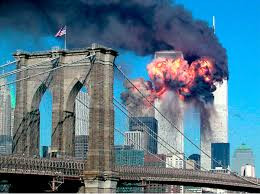
“They’re digging their own grave,” he says. “But don’t worry about them. One more 9/11-style event, and they’ll turn against the very Muslims who turned their countries into a mess.”
You know It's coming.
11
To end, a few things he said about himself:
He sees himself as a unique case.
His life path took him from the reality he was born into to a profound awakening.
But he doubts this journey is possible for others—and doesn’t believe anyone should expect it to happen on a wider scale.
That’s why he’s certain there is still much evil ahead of us.
He sees himself as a unique case.
His life path took him from the reality he was born into to a profound awakening.
But he doubts this journey is possible for others—and doesn’t believe anyone should expect it to happen on a wider scale.
That’s why he’s certain there is still much evil ahead of us.
12
I believe this is what makes his perspective truly unique and his insights so powerful: almost no one else in the world carries first-hand experience from both sides the way he does.
He wasn’t just an observer—he was inside the very core of the conflict: Hamas on one side, Shin Bet on the other.
That’s why, as I mentioned at the beginning, it’s nearly impossible to take him on in a debate. I’ll leave you with one of my favorite examples… enjoy
He wasn’t just an observer—he was inside the very core of the conflict: Hamas on one side, Shin Bet on the other.
That’s why, as I mentioned at the beginning, it’s nearly impossible to take him on in a debate. I’ll leave you with one of my favorite examples… enjoy
13
Here’s the first tweet for anyone who wants to share this thread.
And if @MosabHasanYOSEF would like to confirm—I believe I got most of it right.
And if @MosabHasanYOSEF would like to confirm—I believe I got most of it right.
Oren Barsky@orenbarsky
🧵
Recently, I had the chance to take part in a public conversation with Mosab Hassan Yousef – “The Green Prince”.
Mosab is pure intensity. Every word counts, every sentence hits like a truth-bomb. For two hours straight – razor-sharp insights, almost prophetic.
Very few people in the world have walked the path he has (if any), which makes his insights on the current situation truly unique and eye-opening.
Many people have asked me what he said about the Palestinians, Israelis, children in Gaza ,Western leaders, Antisemitism, possible solutions to the war – and about himself
Here’s the essence 👇
Recently, I had the chance to take part in a public conversation with Mosab Hassan Yousef – “The Green Prince”.
Mosab is pure intensity. Every word counts, every sentence hits like a truth-bomb. For two hours straight – razor-sharp insights, almost prophetic.
Very few people in the world have walked the path he has (if any), which makes his insights on the current situation truly unique and eye-opening.
Many people have asked me what he said about the Palestinians, Israelis, children in Gaza ,Western leaders, Antisemitism, possible solutions to the war – and about himself
Here’s the essence 👇
