1/ Introducing Visa for Stablecoin: The Next Big Move Visa brings &...

Dogan@doganeth_en
13 views
Jul 24, 2025
~3 min read
Advertisement
1
1/ Introducing Visa for Stablecoin: The Next Big Move
Visa brings & extracts significant value from existing payment system, via its distribution network and superior UX. How does this dynamic translate to crypto?
Introducing Visa for Stablecoins (VfS)
cyber.fund/content/VfS
Visa brings & extracts significant value from existing payment system, via its distribution network and superior UX. How does this dynamic translate to crypto?
Introducing Visa for Stablecoins (VfS)
cyber.fund/content/VfS
2
2/ Visa is one of the most powerful fintech companies globally, delivering
seamless user experience to nearly all fintech applications.
However, they charge premium fees: 0.5-3% for every transaction.
This represents an important expense for most online businesses.
seamless user experience to nearly all fintech applications.
However, they charge premium fees: 0.5-3% for every transaction.
This represents an important expense for most online businesses.
3
3/ Visa dominated the market because they:
- cooperated instead of fragmenting
- built a federated network governed by banks, not a for-profit board
- provided an excellent UX
- were regulated
- established a massive distribution of POS machines for real-world payments
- cooperated instead of fragmenting
- built a federated network governed by banks, not a for-profit board
- provided an excellent UX
- were regulated
- established a massive distribution of POS machines for real-world payments
4
4/ What if someone builds a Visa for Stablecoins?
Let's take a look at the current landscape:
With US policymakers pushing for stablecoin regulation, now is the right time for a federal stablecoin network.
However, not all stablecoin companies ready for this. Let me explain:
Let's take a look at the current landscape:
With US policymakers pushing for stablecoin regulation, now is the right time for a federal stablecoin network.
However, not all stablecoin companies ready for this. Let me explain:
5
5/ Now, we have 3 types of stablecoin providers:
a) Classical stablecoins (Circle, Tether)
b) Yield-sharing stablecoins (Agora)
c) Stablecoin-as-a-service protocols (m0, Stably)
To understand them, we need to look at why Visa succeeded in the market with its economic model.
a) Classical stablecoins (Circle, Tether)
b) Yield-sharing stablecoins (Agora)
c) Stablecoin-as-a-service protocols (m0, Stably)
To understand them, we need to look at why Visa succeeded in the market with its economic model.
6
6/ Visa succeeded by leveraging strong network effects: as more banks partnered with them, more cards were issued, encouraging more merchants to accept them.
Banks, in turn, could offer more credit to their users, creating a comprehensive flywheel effect.
It was a win-win.
Banks, in turn, could offer more credit to their users, creating a comprehensive flywheel effect.
It was a win-win.
7
7/ Visa started as a federated network where banks collectively governed the system—not the government or a single for-profit company. It was designed to be neutral infrastructure for moving money, owned and managed by its participants.
Let's take a look to the current market:
Let's take a look to the current market:
8
8/ a) Classical stablecoins
Tether and Circle issue stablecoins, which users and merchants accept to access dollar liquidity.
They earn around 4% yield from short-term T-bills and keep all the yield for themselves.
Tether and Circle issue stablecoins, which users and merchants accept to access dollar liquidity.
They earn around 4% yield from short-term T-bills and keep all the yield for themselves.
9
9/ b) Yield-Sharing Stablecoins
I coined this term, so it might sound a bit strange. These stablecoin issuers allow third-party businesses to use their stablecoin, earning a yield from the idle assets on their platform.
But protocols can’t own the brand and infra with this.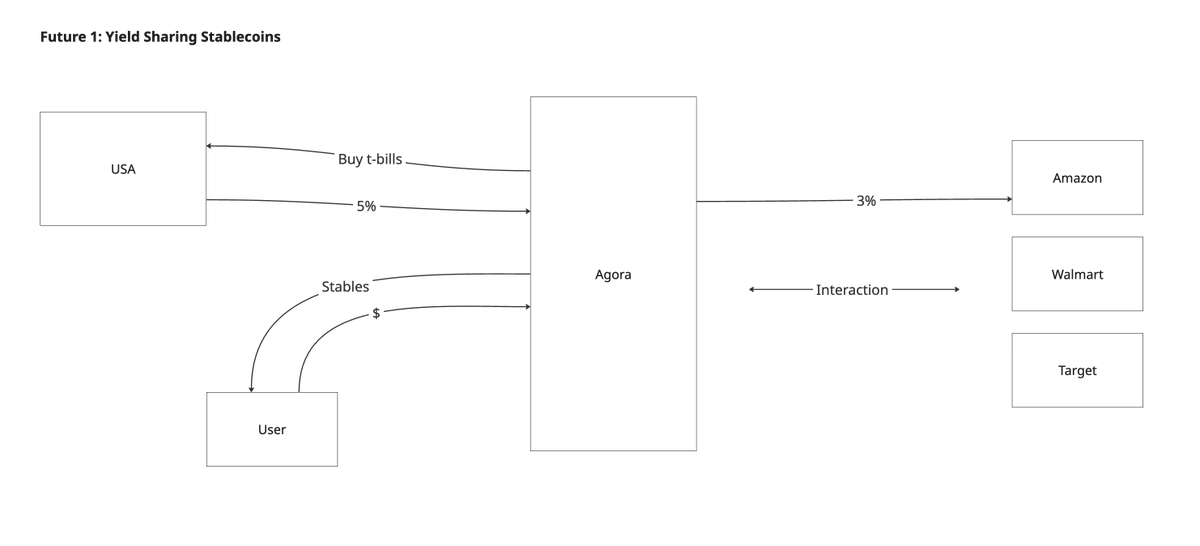
I coined this term, so it might sound a bit strange. These stablecoin issuers allow third-party businesses to use their stablecoin, earning a yield from the idle assets on their platform.
But protocols can’t own the brand and infra with this.
10
10/ c) Stablecoin as a Service protocols
These protocols enable anyone to issue their own white-labeled stablecoins without worrying about licenses and other complexities. The yield can also be shared among participants.
However, this approach has its challenges.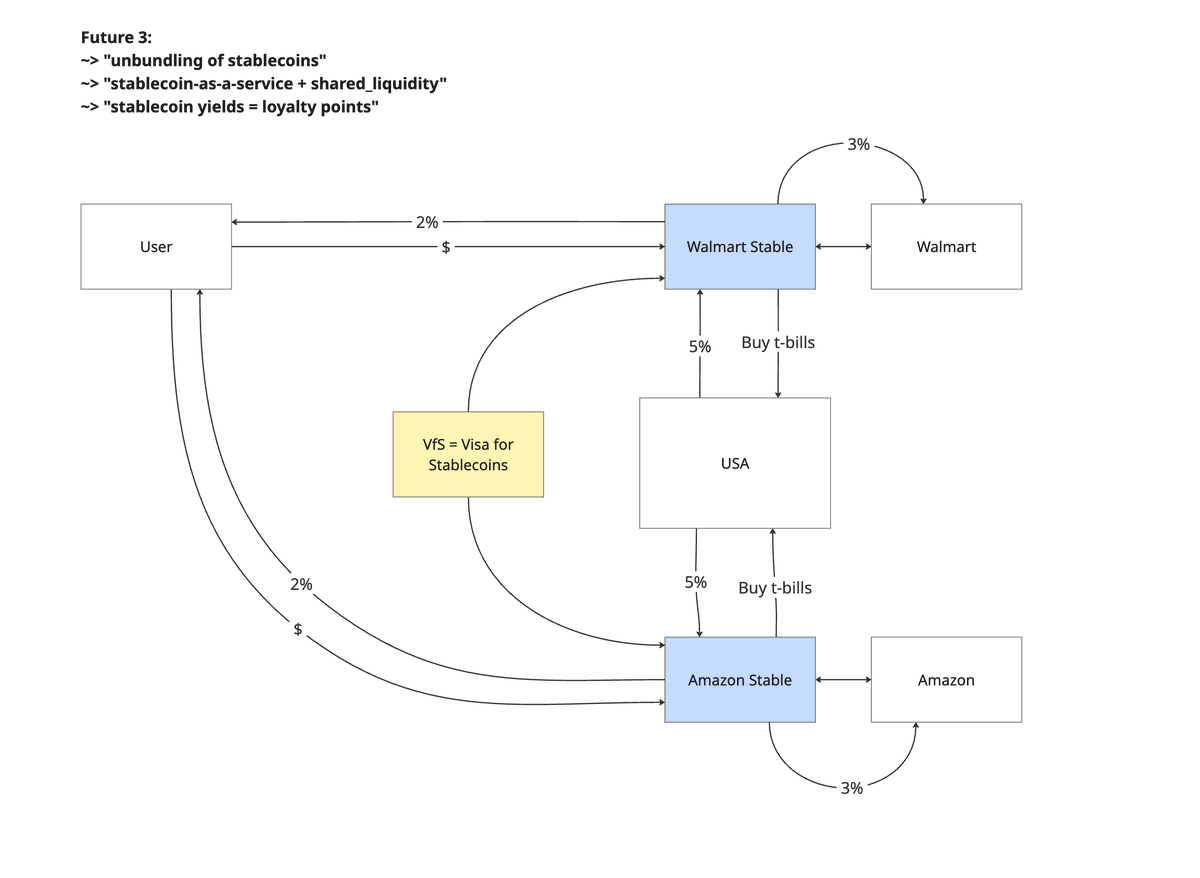
These protocols enable anyone to issue their own white-labeled stablecoins without worrying about licenses and other complexities. The yield can also be shared among participants.
However, this approach has its challenges.
11
11/ This is where Visa for Stablecoins comes into play. It should provide all the following features:
• Issuance, Treasury API
• Shared Liquidity Layer
• Chain-Abstracted Routing
• KYC/AML, Travel-Rule Toolkit
• Reg-Stack-as-a-Service
• Developer & Merchant SDKs
• Issuance, Treasury API
• Shared Liquidity Layer
• Chain-Abstracted Routing
• KYC/AML, Travel-Rule Toolkit
• Reg-Stack-as-a-Service
• Developer & Merchant SDKs
12
12/ However, there are still a lot of open questions remaining:
- What risks shift to merchants/issuers?
- What infrastructure must “Visa for Stablecoins” provide?
- Can shared liquidity work without owning infrastructure?
- And most importantly, how do you change user habits?
- What risks shift to merchants/issuers?
- What infrastructure must “Visa for Stablecoins” provide?
- Can shared liquidity work without owning infrastructure?
- And most importantly, how do you change user habits?
13
13/ We explored the concept of using Visa for stablecoins and how this could transform the construction of loyalty programs through interchange fees.
Read more here: cyber.fund/content/VfS
Read more here: cyber.fund/content/VfS