Canada’s 4 existing submarines are all over 30 years old and in...

🇨🇦 Policy Hawk@CDNPolicyHawk
9 views
Aug 29, 2025
~9 min read
Advertisement
1
Canada’s 4 existing submarines are all over 30 years old and in need of replacement.
While some comments from the (former) PM implied nuclear powered (SSN) submarines were a replacement option, it’s been confirmed only non-nuclear (SSK) boats are being considered. Why is this?🧵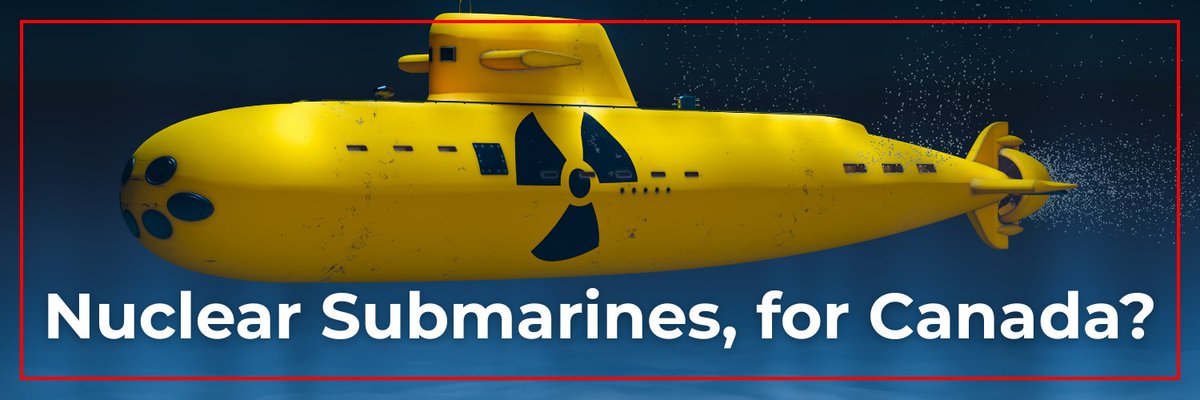
While some comments from the (former) PM implied nuclear powered (SSN) submarines were a replacement option, it’s been confirmed only non-nuclear (SSK) boats are being considered. Why is this?🧵
2
It is a fact that nuclear submarines have real advantages that matter to Canada. This includes the range & speed needed to reach the maritime chokepoints of potential adversaries and have a strategic impact, and the endurance to patrol at length under the ice of Canada’s Arctic.

3
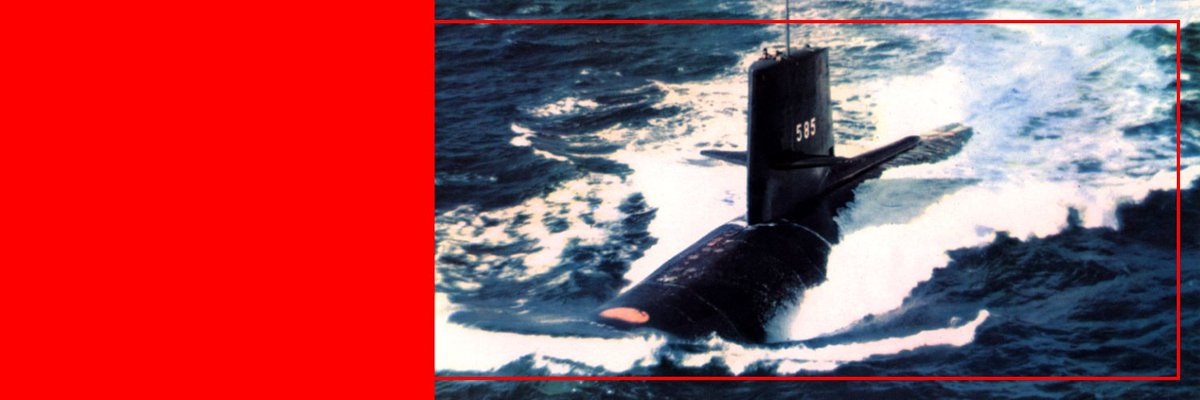
These facts have caused Canada to seriously consider the acquisition of SSNs on several occasions. In the late 1950s, there was a strong push from the Royal Canadian Navy to acquire an SSN fleet. They even got as far as recommending a class, the US Navy’s Skipjack-class.
4
The Canadian government decided, instead, to acquire the UK’s non-nuclear Oberon-class in 1960. But the topic wasn’t truly settled until 1964, when the following government reviewed a report on the topic and confirmed that it would not acquire an SSN to complement the Oberons.

5
In the mid-1980s, with the election of the Mulroney Government, the topic rose to even higher prominence. The previous government had been looking at options to replace the Oberons since 1980. The resulting report focused almost entirely on conventional (non-nuclear) submarines.

6
When presented with this report, in 1985, Mulroney’s Minister of National Defence asked for more information about nuclear submarines. On the basis of the information provided, a plan to acquire SSNs was included in the 1987 White Paper - before being abandoned in 1989.

7
A similar debate is happening now. The confluence of the Victoria-class’s age, diplomatic pressures heightening the Canadian Patrol Submarine Project’s (CPSP) profile, and the AUKUS agreement to provide SSNs to Australia has stirred the question - why no SSNs for Canada?

8
I think that we can answer this question by examining what happened in the 1980s, what the rationale is behind AUKUS, and what capability differences exist today between modern SSNs and SSKs.
First, the 1980s:
First, the 1980s:
9
It was almost inevitable that acquiring SSNs would be suggested when the Oberons came due for replacement in the 1980s. But it was a single act by a potential adversary that moved it from a notion into government policy.
That potential adversary was the United States of America.
That potential adversary was the United States of America.
10
In 1985, the United States sent the icebreaker USCGC Polar Sea through the Northwest Passage, between the islands of Canada’s Arctic archipelago, without seeking the permission of the Canadian government.
This caused significant concern in Canada.
This caused significant concern in Canada.
11
Seeing a threat to its sovereignty, and responding to popular domestic sentiment, Canada took the position that the sea-areas in question weren’t High Seas, Exclusive Economic Zones, or even territorial seas of Canada - all of which would give other nations some rights of access.

12
Rather, Canada took the position that the waters among its Arctic archipelago were “internal waters”, in the same way that navigable rivers are, over which Canada enjoyed absolute control and the right to allow (or block) access.
A position America, among others, did not accept.
A position America, among others, did not accept.
13
Having taken this position, Canada needed the capability to know when its claimed rights were being infringed, and to enforce those rights if necessary. Given the vicissitudes of the Arctic, it was quickly determined that only nuclear submarines provided this capability reliably.

14
This led to a proposal for a novel Canadian SSN designed around the Slowpoke-2 reactor that, instead of directly driving the submarine, would continuously charge a submarine’s battery systems. Giving it an operation cycle much like an SSK, but without the need to surface.

15
While this concept can be lauded for acknowledging some of Canada’s technical limitations, it still would have been deliriously expensive. And, also, (almost certainly) really bad.
Not only would the concept be inherently limited, no one makes good SSNs their first try.
Not only would the concept be inherently limited, no one makes good SSNs their first try.
16
Looking to France’s program as an example, they commissioned their first nuclear submarine in 1971. But their designs were consistently viewed as being behind their contemporaries until the Suffren-class entered service in 2020. That’s the timeline to develop competitive SSNs.

17
Canada would be starting even further behind. Even today, no military submarine has been built in Canada since WW1. And while Canada has a substantial nuclear industry, none of it is experienced in the highly specialized needs of naval nuclear technology.

18
These difficulties are contextualized by the knowledge that, at most, three countries (America, France, and the USSR) have independently developed nuclear submarines. Even on that short list, the USSR & France’s place is debatable.
Building nuclear submarines is hard.
Building nuclear submarines is hard.
19
To acquire SSNs, on any reasonable timeline or budget, Canada would have needed assistance from at least one of America, France or the UK - the only Western powers operating nuclear submarines at the time. But none were likely partners.

20
America was not an option as they were opposed to Canada’s acquisition of SSNs. Both because they saw (correctly) Canadian SSNs as a strategic move aimed at undermining its own interests in the Arctic, and believing the program would drain Canadian resources from Europe.

21
The UK and France did make half-hearted proposals to sell their designs to Canada. However, neither met Canada’s requirements, and the UK design required American approval for sale, while the French SSN of the day was unsuitable for the Arctic. This boxed in Canada’s ambitions.

22
In 1989, Canada and the US signed a Memorandum of Understanding in which America made clear that it did not fully recognize Canada’s Arctic claims, but agreed to seek Canadian permission to transit through Canada’s Arctic Archipelago regardless.

23
With much of the furor of 1987 behind them, and this promise that the US wouldn’t reignite it, the Mulroney government looked at the rapidly rising costs projected for their promised SSNs, and the technical difficulties, and decided to cancel the project as impractical.
24
Okay, so that’s the 1980s. But, so what?
AUKUS proves that the US and the UK are willing to sell SSNs to allies today. And, while it’s taken a while to get there, France’s Suffren class is (seemingly) excellent. Surely that means Canada can work with one of them for SSNs now?
AUKUS proves that the US and the UK are willing to sell SSNs to allies today. And, while it’s taken a while to get there, France’s Suffren class is (seemingly) excellent. Surely that means Canada can work with one of them for SSNs now?
25
Well, no. The logic behind AUKUS is built on Australia’s location. It’s not just an agreement for the US/UK to sell SSNs to Australia in the near term, and help Australia build its own SSNs in the long-term. It also includes the right to base their own SSNs in Australia.

26
Australia is much closer to where the US/UK want to deploy their SSNs in the Indo-Pacific than their own shores are. Basing SSNs in Australia reduces transit time, allowing fewer submarines to have the same “on-station” time. This is what frees up the SSNs for sale to Australia.

27
Canada does not have this card to play. The naval bases in Canada that could host US submarines are within a few hundred kilometres of the US bases those submarines are already homeported at. The UK could also use those US bases.

28
Australia’s experience building, and later upgrading, the Collins-class in the 1990s and early 2000s also positions them as a far more appealing submarine program partner. The class incorporated some truly world-beating innovations, and sustained a capable submarine industry.

29
America still views the acquisition of SSNs by Canada as a project that will drain resources from areas they’d prefer us to invest in - at best - and a hostile action targeted directly at their interests - at worst. The UK is too integrated in the US program to act independently.

30
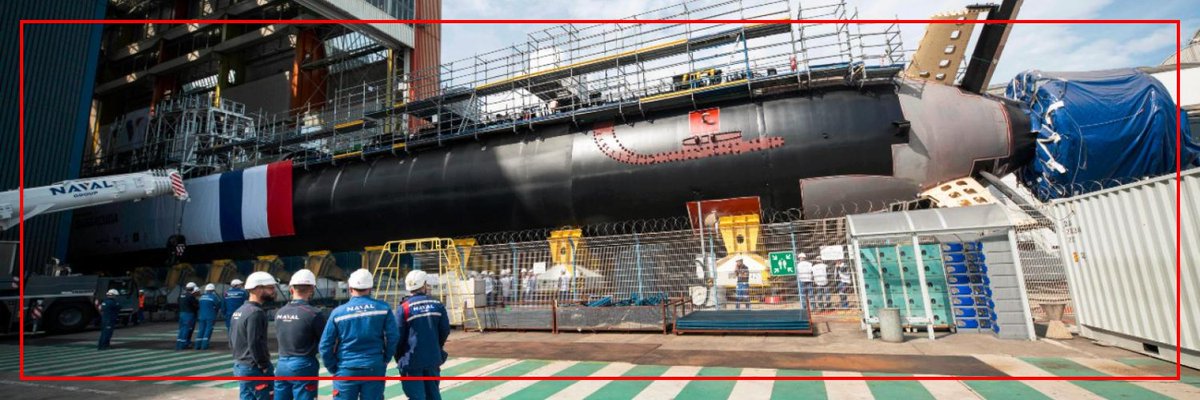
While France’s SSNs are no longer significantly handicapped compared to those of the US or UK, the number of SSNs they can build is still limited and appears nearly entirely utilized for their own purposes. It’s not clear that they could build SSNs for Canada at this time.
31
Conceivably, France could help Canada to domestically produce a French SSN design. However, that would not be quick either. France is currently helping Brazil to build their first SSN. That program started (in earnest) in 2008, and currently expects a commissioning date in 2034.

32
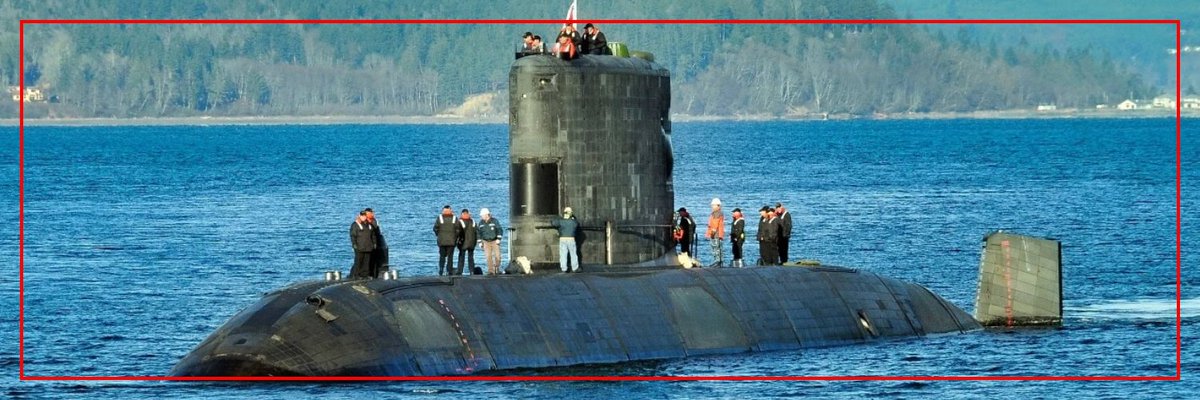
If all goes well, Canada’s current submarines have 10 years of operational life left. We can’t afford a 26 year program. Based on the Australian experience, even a complete about-face from America would not make Canadian acquisition of SSNs possible in that timeframe.
33
Even while these difficulties persist, the requirement for Canadian SSNs has diminished. Not because of a reduction in adversaries’ capabilities (though the USSR’s SSN fleet of the 1980s is no more), but because of advances in alternatives to nuclear submarines.

34
The alternative to SSNs are SSKs. Diesel-electric boats that cycle between running on batteries and snorkelling to recharge batteries with a diesel generator. This is a problem because, while SSKs can be quieter than SSNs while using batteries, their diesel generators are loud.

35
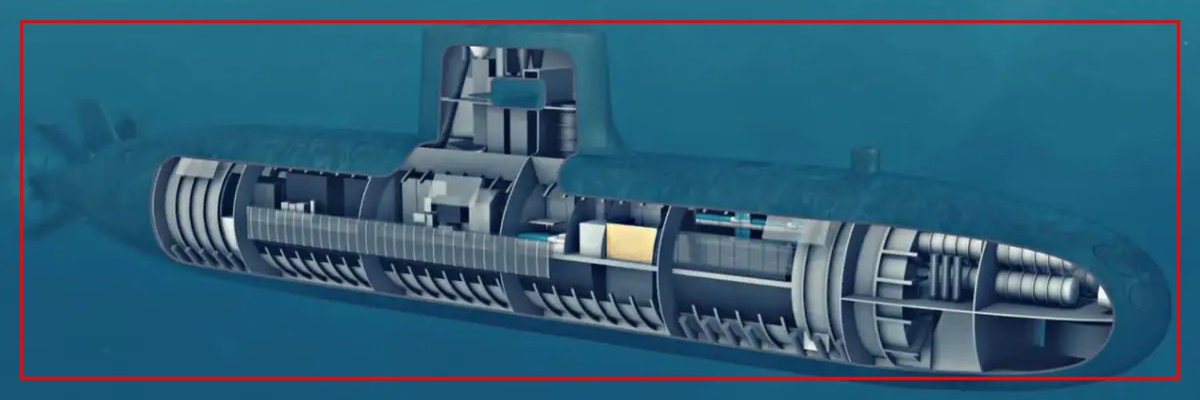
Traditionally, this cycle could be needed every few hours. Certainly every few days - and only then if they kept relatively stationary. However, in recent years, “air independent propulsion” (AIP) technology has extended the submerged time of SSKs up to several weeks.
36
This is important to Canada, because it opens the possibility of operating for extended periods under ice sheets in the Arctic. That’s not to say that AIP-equipped SSKs are not the equivalent of SSNs. They’re generally limited in speed, and 3 weeks isn’t 3 months.

37
However, their max speed is within the range that submarines (even those capable of much faster speeds) want to travel - especially when within their areas of operation - as higher speeds both increase the noise they make and make it harder for them to counter-detect adversaries.

38
This means they’re not enormously handicapped tactically, and have enough range while submerged to, say, travel from the most southern winter-extent of the Arctic ice-sheets to any point in the Arctic archipelago and return with time to spare. Choke points are even closer.

39
This makes AIP equipped SSKs suitable for Canada. And, since they’re significantly cheaper than SSNs, far more countries have experience making them, and they have fewer hurdles outside the scope of this thread (like crew training), they’re also much more attainable.

40
This is the reality that Canada faces. It is impossible to acquire SSNs in a timeframe that allows them to act as Victoria-class replacements - assuming we can acquire them at all. While an alternative type of boat suitable - if, perhaps, not ideal - to our needs is available.

41
*** Fin ***
I like to write long threads about interesting topics. But the algorithm doesn't always like me for doing it!
If you found value in this thread, please go back to the top post and like & share the top post. Here's a link back there:
x.com/CDNPolicyHawk/…
I like to write long threads about interesting topics. But the algorithm doesn't always like me for doing it!
If you found value in this thread, please go back to the top post and like & share the top post. Here's a link back there:
x.com/CDNPolicyHawk/…
42
Threads like this also take a significant amount of effort. I'd like to write them weekly, or more, but justifying the time is hard.
If you have the means and would like to help me write them just a bit more often, I've set up a patreon: patreon.com/c/CDNPOLICYHAWK
If you have the means and would like to help me write them just a bit more often, I've set up a patreon: patreon.com/c/CDNPOLICYHAWK
