Terming out the debt 101. Lots of folks think that choosing to NOT...

Andy Constan@dampedspring
52 views
Apr 27, 2025
~3 min read
Advertisement
1
Terming out the debt 101.
Lots of folks think that choosing to NOT term out the debt is a bet by the treasury on interest rates. In other words keep financing in bills until long term interest rates decline and THEN issue longer term.
I totally get that idea but want to look
Lots of folks think that choosing to NOT term out the debt is a bet by the treasury on interest rates. In other words keep financing in bills until long term interest rates decline and THEN issue longer term.
I totally get that idea but want to look
2
at the numbers a bit.
The first thing one has to ask is what is the end game of the Treasury debt composition if the current composition is undesired and is being held for market timing reasons
The second thing one has to consider is whether the "waiting" has a cost as if
The first thing one has to ask is what is the end game of the Treasury debt composition if the current composition is undesired and is being held for market timing reasons
The second thing one has to consider is whether the "waiting" has a cost as if
3
waiting is free then why not wait?
The last thing is what is the benefit if the treasury times the market correctly?
As a caveat this is way more complex than what my napkin math will describe and the timing can backfire or end up being more beneficial depending on how the
The last thing is what is the benefit if the treasury times the market correctly?
As a caveat this is way more complex than what my napkin math will describe and the timing can backfire or end up being more beneficial depending on how the
4
yield curve evolves through time. But I'll give it a go anyway
In order to keep it simple I'll assume only two financing options. 1month bills and 10 year notes.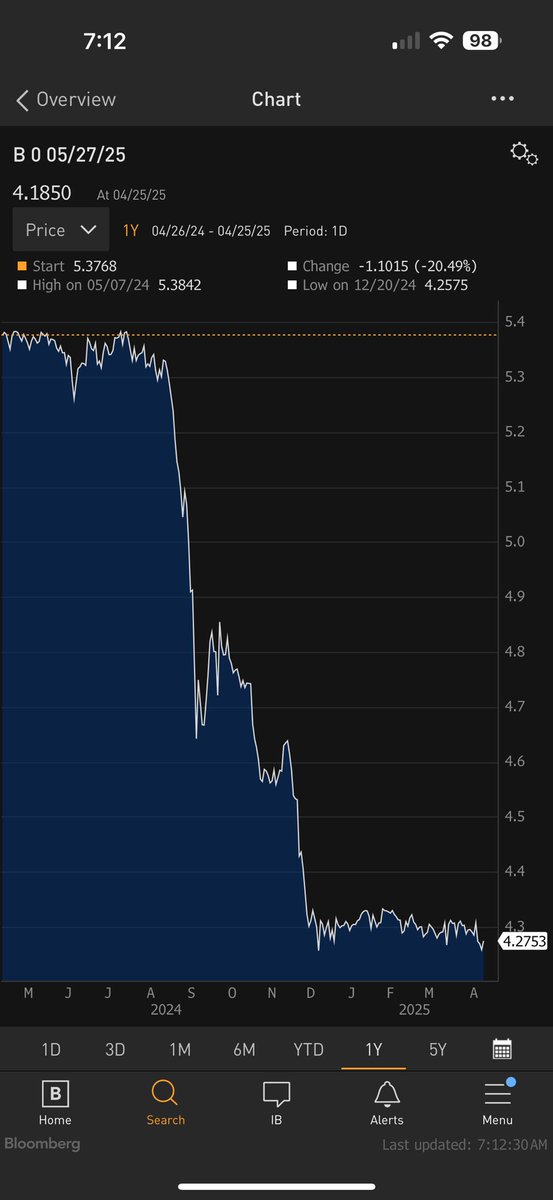

In order to keep it simple I'll assume only two financing options. 1month bills and 10 year notes.
5
Note how until the fed cut rates in September 1 month bills were higher in yield than 10 year notes by 100 bp (inverted curve). This is a cost of waiting. Since the fed cut 1month bills have been basically the mean of 10 year note yields and currently are on top of each other
6
There is no "cost" to wait now. Anyway I'm jumping the gun. Let's start at the end. Let's assume 22% bills issuance composition is undesired and 15% is target. There are currently roughly 6.7TN of bills and floating rate notes
7
outstanding in the public market. Assuming for the moment that deficit is unchanged the difference between current and desired bills amount is 7% of total debt and total debt is 6.7/.22=30.5 So the "excess" is 2.135 bills. I'm gonna use 2tn as a round number. That's what "needs"
8
to be termed out.
What does it cost to wait? Prior to September the cost of having 2Tn in excess bills was roughly 100bp per year. Thats 20BN per year of "cost" that the U.S. taxpayer paid before the Fed cut rates in 2024. That's a tiny cost but a cost nonetheless
What does it cost to wait? Prior to September the cost of having 2Tn in excess bills was roughly 100bp per year. Thats 20BN per year of "cost" that the U.S. taxpayer paid before the Fed cut rates in 2024. That's a tiny cost but a cost nonetheless
9
Today the "cost" is zero.
What's the benefit to waiting? Currently the market is pricing another 100bp of fed cuts over the next year. Maybe it's more maybe it's less but perhaps there could be a benefit of 20BN if they wait. This assumes almost certainly wrongly that the 10
What's the benefit to waiting? Currently the market is pricing another 100bp of fed cuts over the next year. Maybe it's more maybe it's less but perhaps there could be a benefit of 20BN if they wait. This assumes almost certainly wrongly that the 10
10
Year yield falls as rapidly as the Fed funds do but who really cares given this tiny benefit. The "benefit" is most likely smaller. But even if 10's fall in yield even more than 1month bills yields fall. Let's say it's 50% more the benefit is only 10BN.
What's the point of this
What's the point of this
11
thread. Mostly it's meant to debunk the idiocy of anyone thinking the terming out the debt is a meaningful thing. Unless you think they could drop bills issuance to zero and lock in 6TN of coupon debt at low yields all of these numbers are stupid small and meaningless.
12
The Treasury has 7% or 2TN more bills outstanding than they probably should. They should increase auction sizes 1 times by 100BN and work that excess bills down over the next 5 years. Will they? Are @SteveMiran @SecScottBessent @CEA47 hypocrites? Who knows