(1/10) During the 2024 US Presidential election, @Polymarket...

Daniel Sapkota@danielsapkota
63 views
Nov 09, 2025
~2 min read
Advertisement
1
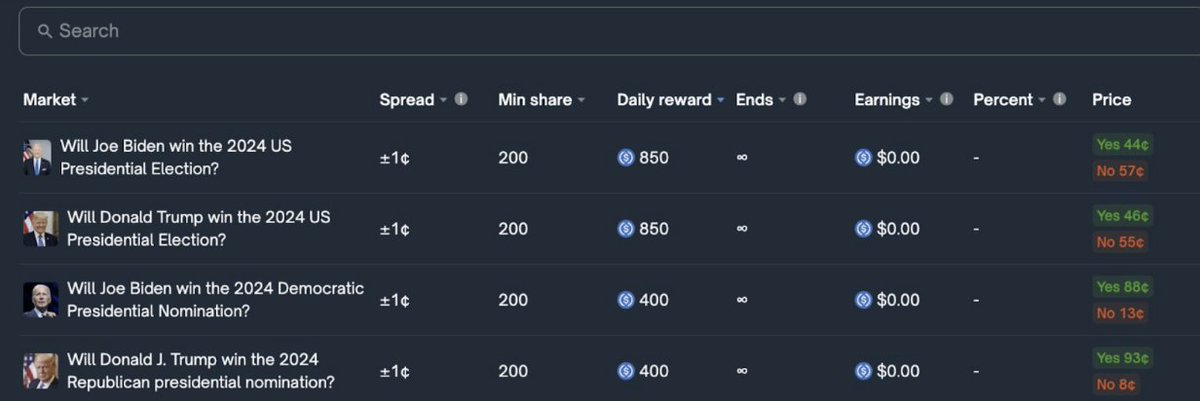
(1/10) During the 2024 US Presidential election, @Polymarket distributed over $25K daily in market maker rewards. Here's how I became a top 5 recipient by doing something radical – measuring volatility. I'm also open-sourcing my code.
2
@Polymarket (2/10) When new markets get retail-dominated, easy opportunities emerge. The opportunities stay longer when the consensus is that the market is unique. But anything with a price that moves is the same. It can be modeled, its volatility calculated, and strategies backtested

3
@Polymarket (3/10) First, I decoded the polymarket reward formula. Despite the scary looking docs, it's simple: rewards multiply if you post on both sides (bid/ask), and the closer you put the bid/ask, the exponentially better rewards you get.

4
@Polymarket (4/10) My system retrieved market data and calculated live volatility. When I frequently requested historical data, I crashed Polymarket's API server. It was a super bullish sign as it meant no one else was systematically analyzing this data live
5
@Polymarket (5/10) I upgraded to websockets and selected markets daily with the best risk-reward ratio: low volatility with high expected rewards. It was easy because people were providing the same liquidity in a 500% volatility market as they did in a 100% for the same reward.
6
@Polymarket (6/10) My bot targeted markets below volatility thresholds, placing YES and NO orders one tick above the nearest 200-share level. Risk management included position exits, dynamic stop-losses, continuous trade flow monitoring, and orderbook imbalance checks to protect capital
7
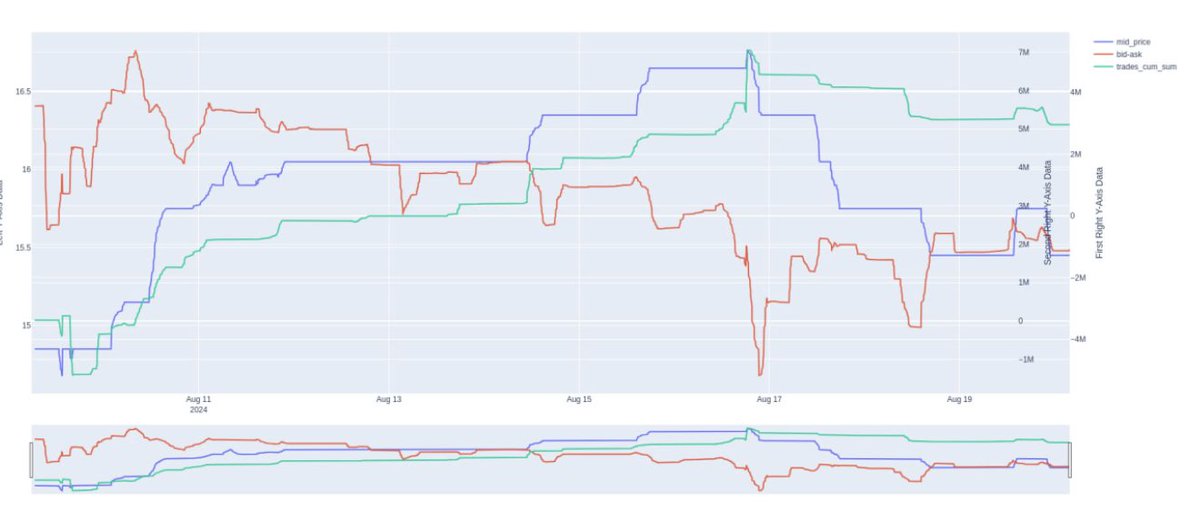
@Polymarket (7/10) I relied entirely on backtests for these parameters and it revealed something powerful: market signals were embedded in orderbook dynamics and cumulative trade volumes before showing up completely in price action.
8
@Polymarket (8/10) And, Instead of optimizing for each market, I classified params into four types based on liquidity patterns and behavior. Each type shared the same parameters for volatility thresholds and stop-losses, making the system surprisingly scalable.
9
@Polymarket (9/10) This strategy shows that while most makers focus on news-based MMing, simpler and well-accepted market-making strategies worked well in Polymarket. I'm open-sourcing my repo at github.com/warproxxx/poly… and believe the protocol can multiply its liquidity with such vaults.
10
@Polymarket (10/10) The repo includes websocket handling, position merging, and performance tracking, which the official SDK lacked. Follow me @defiance_cr for more insights on cryptos, stocks, commodities, exchange operations, and market making.
11
Honestly, if I were to recommend something, it would focus on retail distribution, more decentralization over the market creation side, and better Oracle mechanics. Polymarket X UMA sucks tits. People won't care about a lil centralization here -- if thats what it takes. Will keep an eye on the platform and make bets if anything of interest pops


