THE GODFATHER was released 53 years ago today. A landmark of...

All The Right Movies@ATRightMovies
60 views
Mar 24, 2025
~10 min read
Advertisement
1
THE GODFATHER was released 53 years ago today. A landmark of American cinema and widely regarded as among the greatest films ever made, the story of how it came to the big screen will bada-bing your brains all over your nice Ivy League suit…
1/46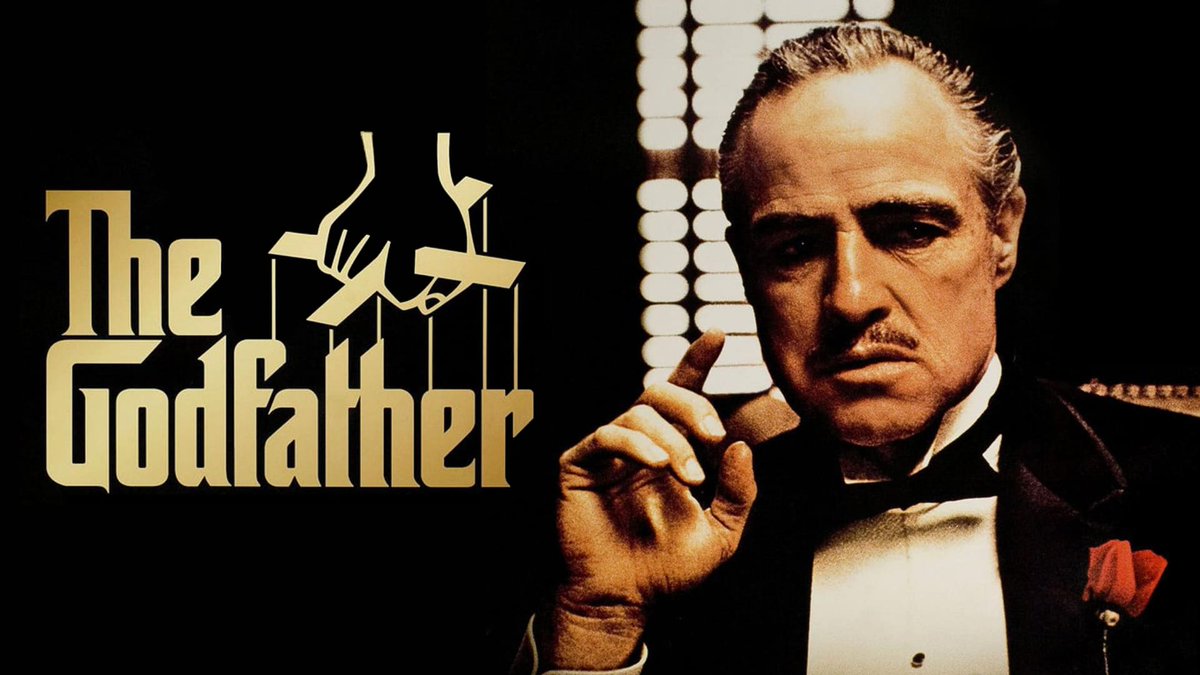
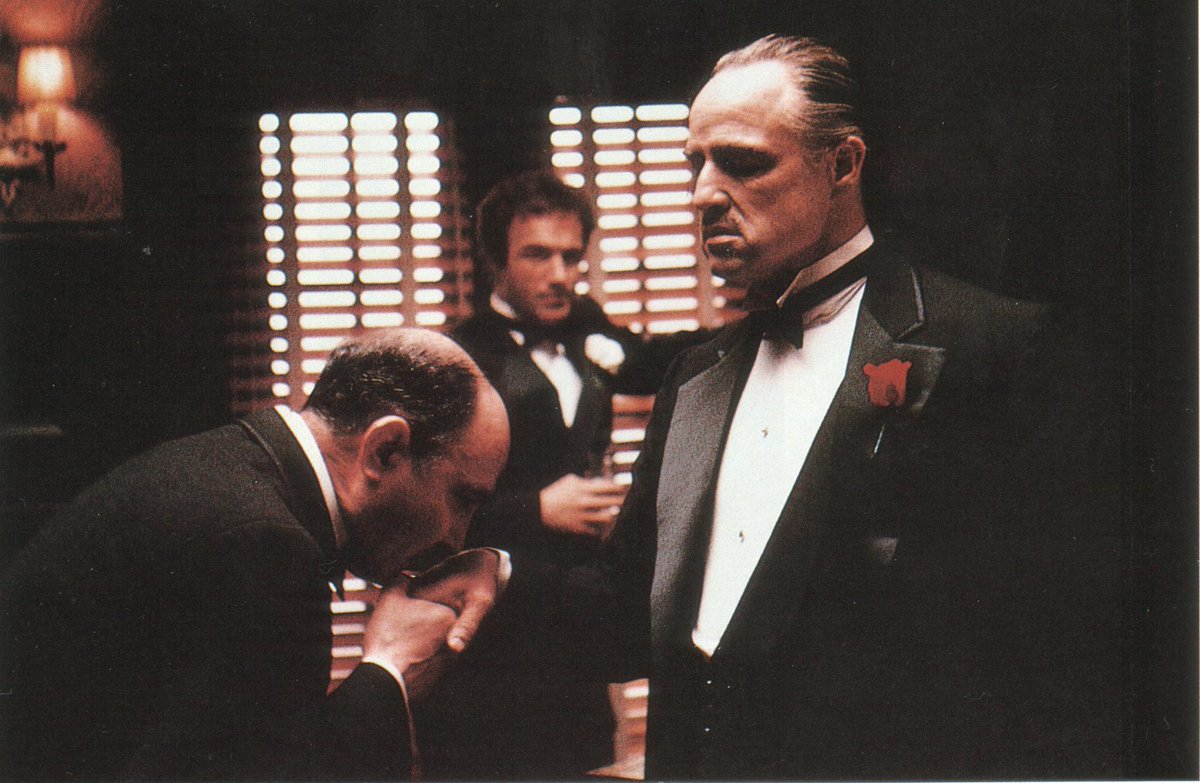


1/46
2
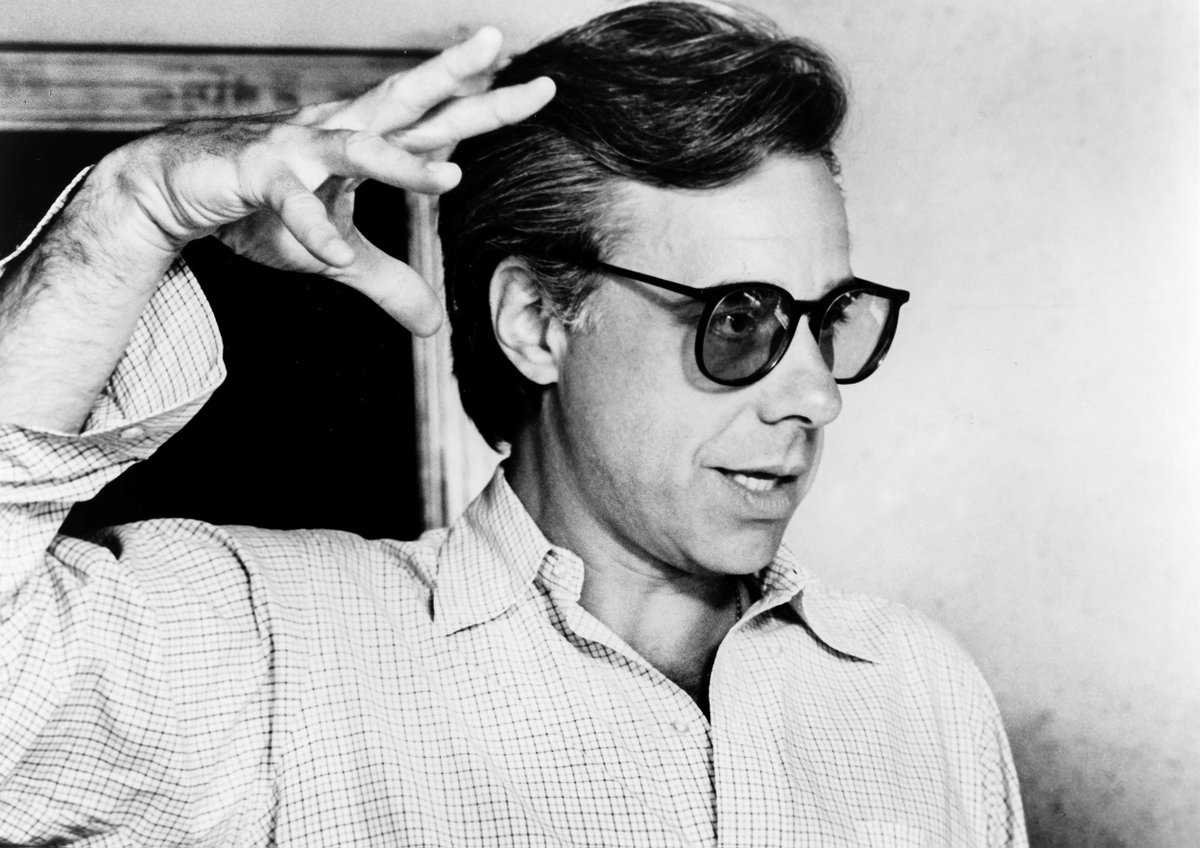
In 1967, struggling writer Mario Puzo started penning a new book – an epic crime thriller he called Mafia. Paramount literary scouts came across the manuscript when it was just a 20-page outline and took it to Paramount Vice President of Production, Peter Bart.
2/46

2/46
3
Bart loved it, calling it “much beyond a Mafia story.” He offered Puzo $12,500 for the film rights, with an extra $80k if it were made into a film. Puzo’s agent wanted to start a bidding war between studios but Puzo (reportedly in $10k of gambling debts) accepted the deal.
3/46
3/46
4
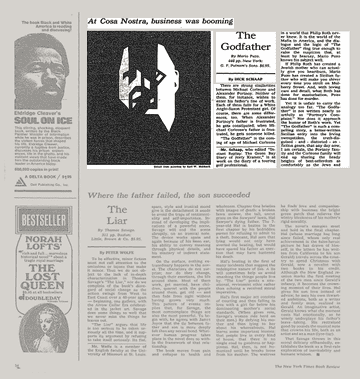
The book published in 1969, by which time Puzo had renamed it The Godfather. It was a huge hit, selling 9,000,000 copies in just two years and sitting on the New York Times best-seller list for 67 weeks. Seeing its success, Paramount but an adaptation into development.
4/46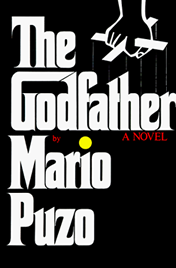
4/46
5
The project was given to Paramount studio executive Robert Evans to oversee. He interviewed producers and hired Albert S. Ruddy, who had a reputation for bringing in films under budget. Ruddy said he wanted to make “an ice blue terrifying movie about the people you love.”
5/46

5/46
6
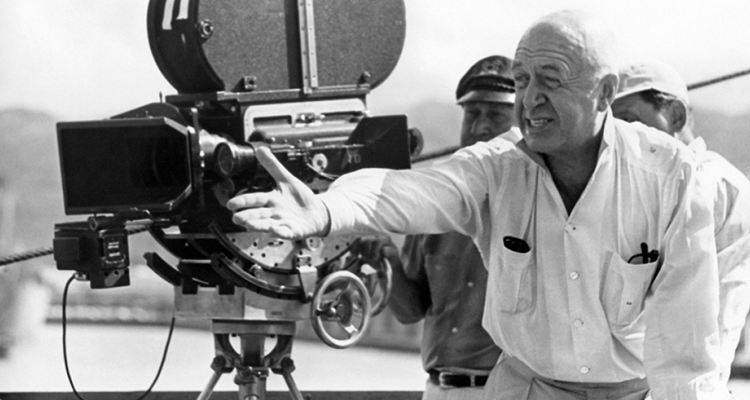
Evans and Ruddy’s first choice as director was Sergio Leone, but he turned it down to develop Once Upon A Time In America. Peter Bogdanovich (Paper Moon), Arthur Penn (Bonnie and Clyde), and Otto Preminger (Anatomy of a Murder) also reportedly turned it down.
6/46

6/46
7
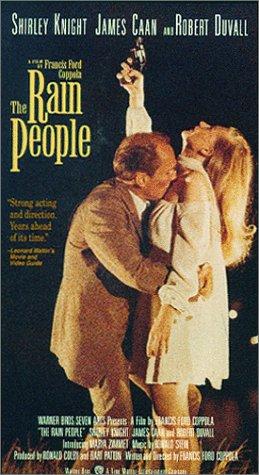
Paramount then turned to Francis Ford Coppola, who had impressed with his crime documentary The Rain People. Coppola wasn’t keen and called the book "pretty cheap stuff." However, Coppola's American Zoetrope studio owed Warner Bros $400k so he changed his mind.
7/46
7/46
8
Coppola and Puzo adapted the novel together to a movie script. And as soon as Coppola was hired, he drew up a potential cast wish list of who he wanted for the main roles in the film…
8/46
8/46
9
Even before Coppola was hired, Mario Puzo thought Marlon Brando would make a great Vito Corleone, and sent him a letter saying, "I think you're the only actor who can play the part Godfather with that quiet force and irony."
9/46

9/46
10
Head of Paramount, Charles Bludhorn, told Coppola that Brando would “never appear in a Paramount picture” and pushed to cast Laurence Olivier. Coppola filmed a screen test where Brando stuffed his mouth with cotton balls, and when the studio saw it, they relented.
10/46

10/46
11
Brando was only 48 years old at the time and playing a man in his 60s. Brando wanted to look “like a bulldog” so make up legend Dick Smith went to work. A special jaw prosthetic was made for the actor to wear.
11/46

11/46
12
In typical Brando fashion, he didn't work too hard in learning his lines. Coppola had other cast members hold up his dialogue, and would shoot scenes in such a way to obscure the cards.
12/46
12/46
13
In casting the second title character – Vito’s son Michael Corleone – many big names were considered. The studio wanted Robert Redford, Ryan O’Neal or Warren Beatty. And Jack Nicholson reportedly turned the role down.
13/46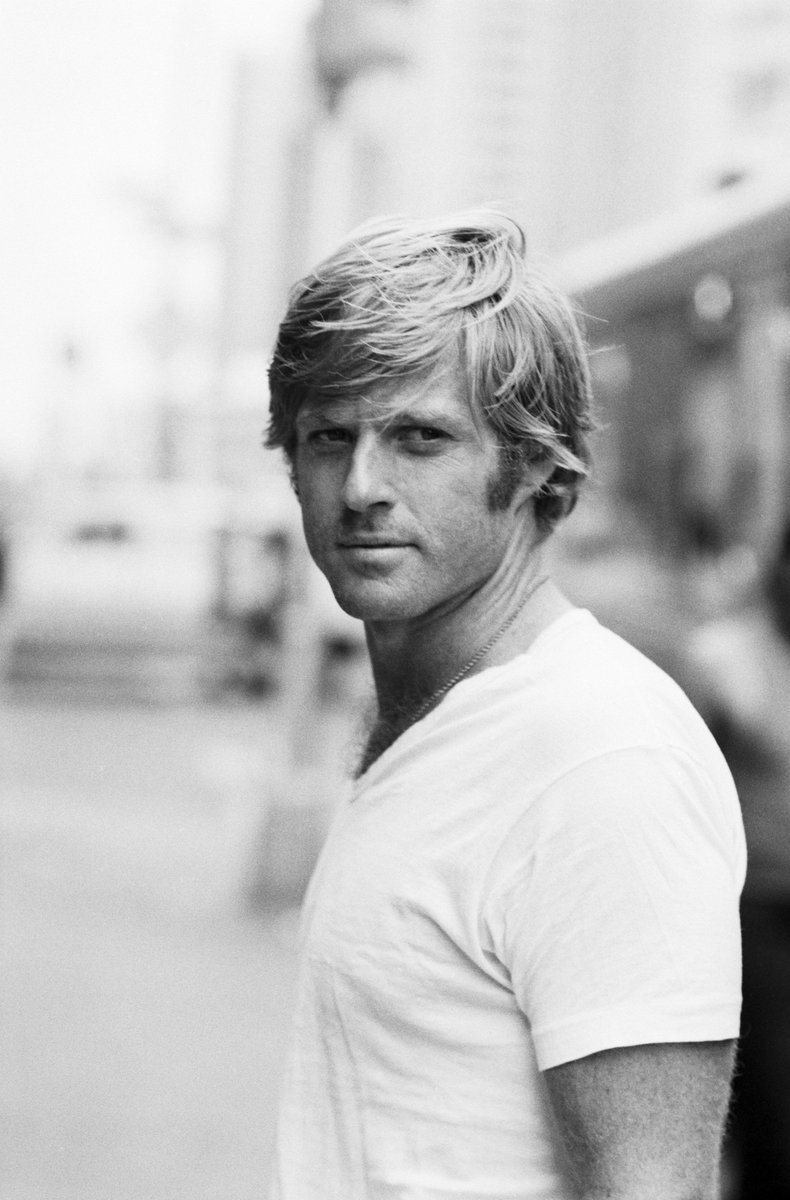


13/46
14
Instead, James Caan was cast as Michael. Coppola always wanted to cast young Italian-American Al Pacino, though, and a deal was struck with Robert Evans: Pacino would play Michael, if Caan was cast as Michael’s hothead older brother, Sonny.
14/46

14/46
15
Caan was cast as Sonny but another actor also auditioned. Robert De Niro may well have been cast had Coppola not considered him too young…
15/46
15/46
0:23
16
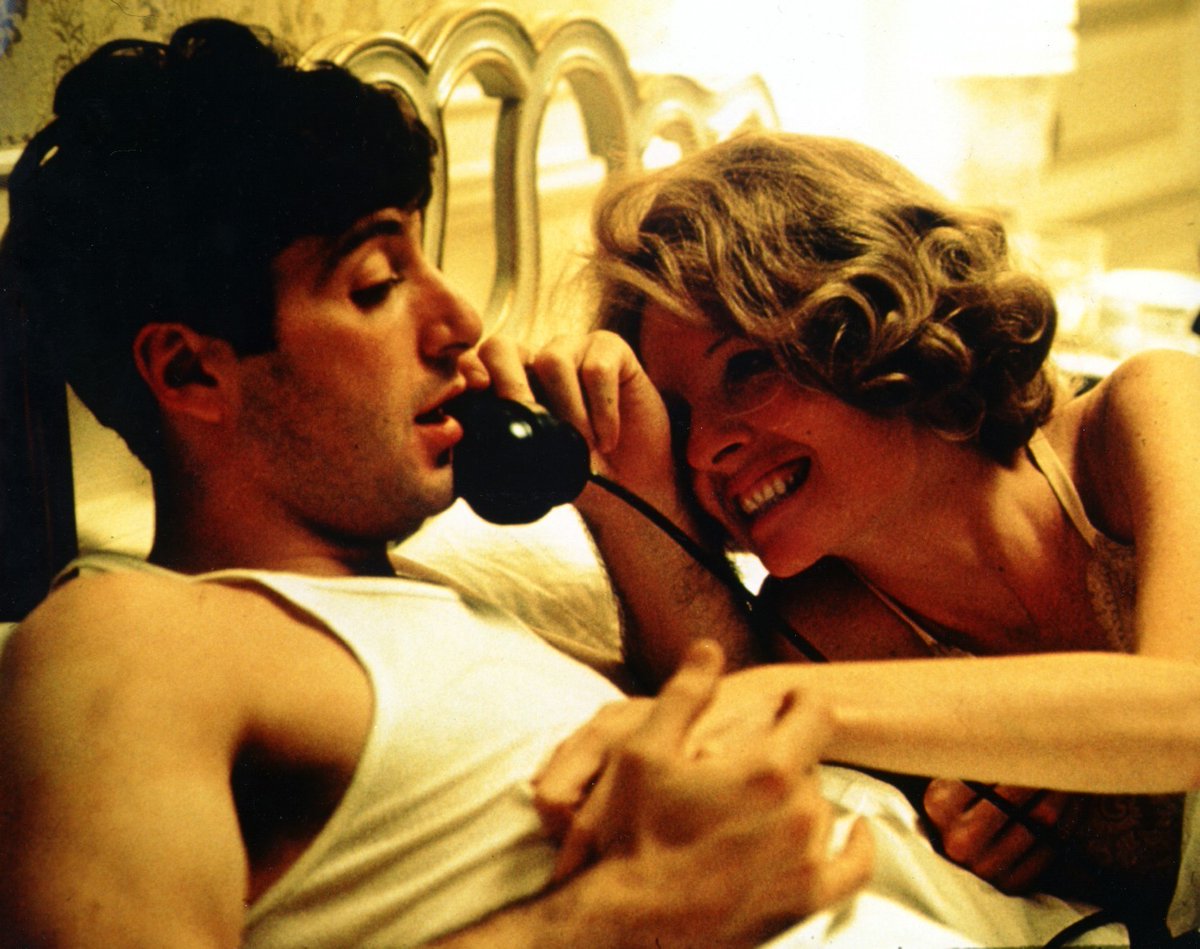
Coppola thought Michael’s wife, Kay Adams, was too boring and straight in the novel. To inject some charisma into the character, he hired Diane Keaton, who he called "so eccentric and kind of weird in a way."
16/46


16/46
17
Coppola had worked with Robert Duvall in The Rain People so cast him as consigliere Tom Hagen. And, after seeing John Cazale in an off-broadway production, Coppola cast him as the hapless Fredo Corleone.
17/46

17/46
18
American Jazz singer Morgana King was cast as Vito’s wife, Mama Corleone. She was a surprising choice considering she was only ten years older than Pacino and Caan and just five years older than Cazale.
18/46
18/46
19
Coppola also made it a family affair. His sister, Talia Shire, was hired as Connie Corleone. His daughter, Sofia, played Connie’s baby, and his wife (Eleanor), mother (Italia), father (Carmine) and sons (Gian-Carlo and Roman) were all extras.
19/46

19/46
20
To get his cast to bond as a family, Coppola held rehearsal sessions where the cast would sit down for a family meal, in character, and improvise. He said this naturally created the family hierarchy he wanted.
20/46
20/46
0:35
21
To cut costs, Paramount had asked Coppola to set the film in Kansas in 1972, rather than New York in the 1940s. Coppola said to do so would mean losing the integrity of the book and convinced them to keep the post-World War II setting.
21/46


21/46
22
Coppola was writing in San Francisco, and Puzo in L.A. Coppola wanted the film to have themes of family and the rise of American capitalism, where Puzo wanted to stay true to his novel. They were in regular contact and both said they worked well together, mostly.
22/46

22/46
23
To decide what to include, Coppola tore pages from the novel and stuck them into his own notebook, and decided which of the 50 scenes to keep. The final screenplay was 163 pages long, and Coppola tended to refer to his notebook on the set rather than the screenplay.
23/46

23/46
24
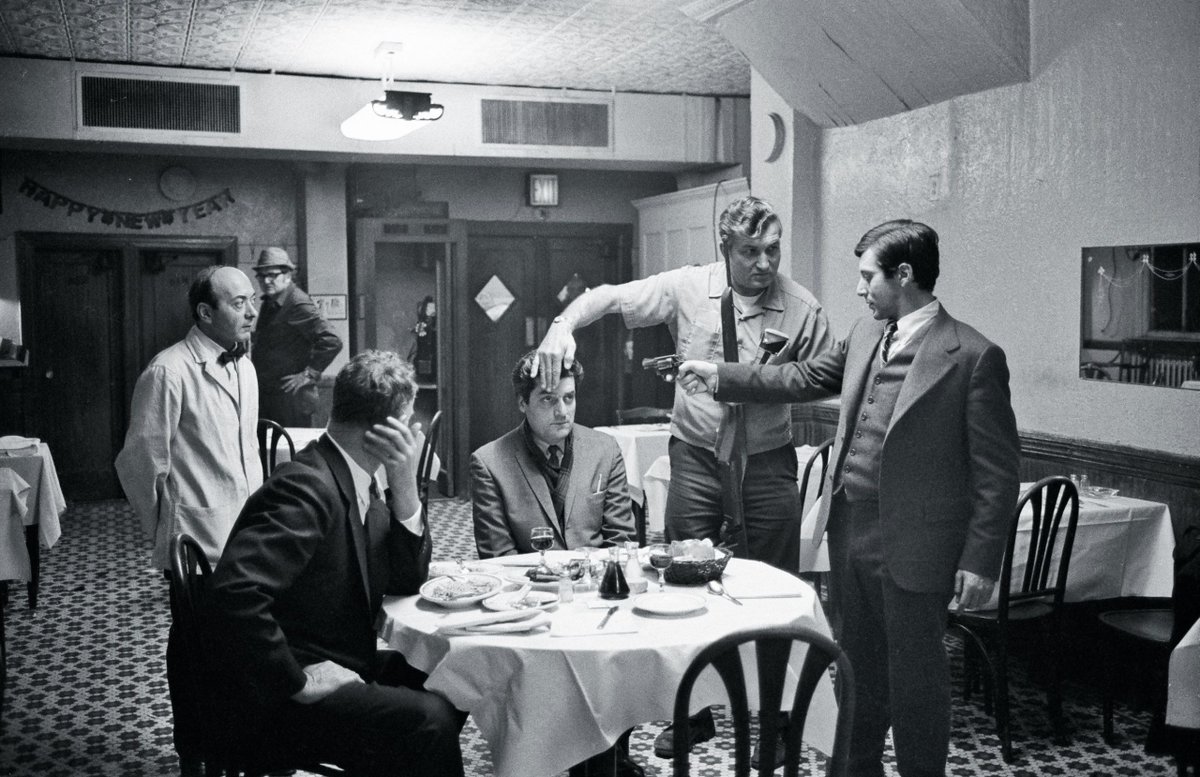
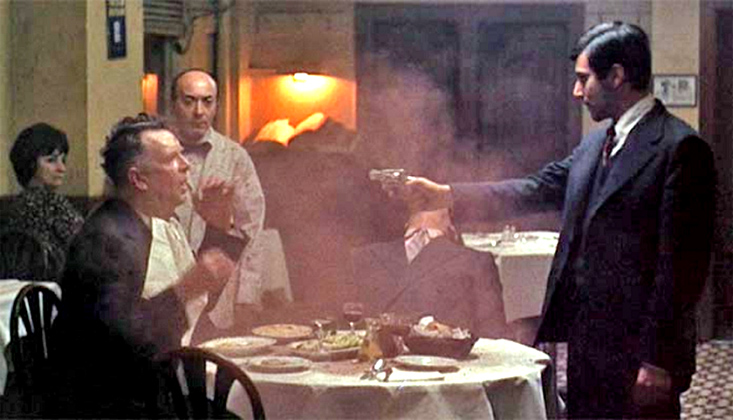
Coppola didn’t have it all his own way. During filming, the studio didn’t like what they saw as a “talky drama” and reportedly wanted Elia Kazan to take over directing. They changed their mind when they saw the restaurant scene where Michael kills Sollozzo and McCluskey.
24/46

24/46
25
The studio wanted Coppola to bring in a ‘violence coach’ to make some of the scenes more exciting. Coppola refused that request, but did add in the scene where Connie smashes a load of crockery to appease the executives.
25/46
25/46
0:04
26
The editor, Aram Avakian, and Assistant Director, Steve Kestner, complained to Evans that Coppola wasn’t shooting enough footage. On reviewing the dailies, Evans was satisfied with what he saw, and gave Coppola permission to fire them both instead, which he did.
26/46

26/46
27
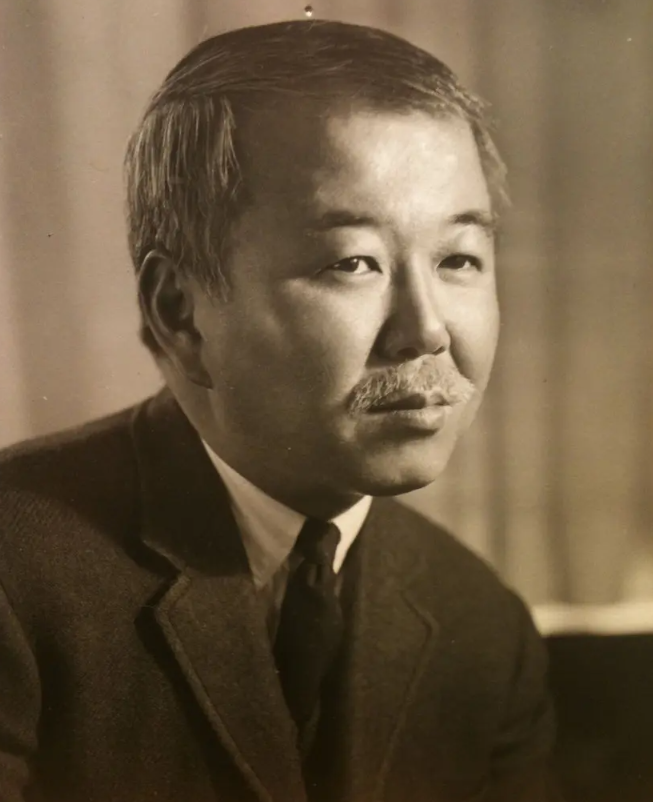
Paramount also wanted to get rid of the now-famous logo, first designed by S. Neil Fujita for the novel. Coppola insisted on keeping it as he wanted Puzo’s name above the title and, with the book still flying off the shelves, he got his wish.
27/46
27/46
28
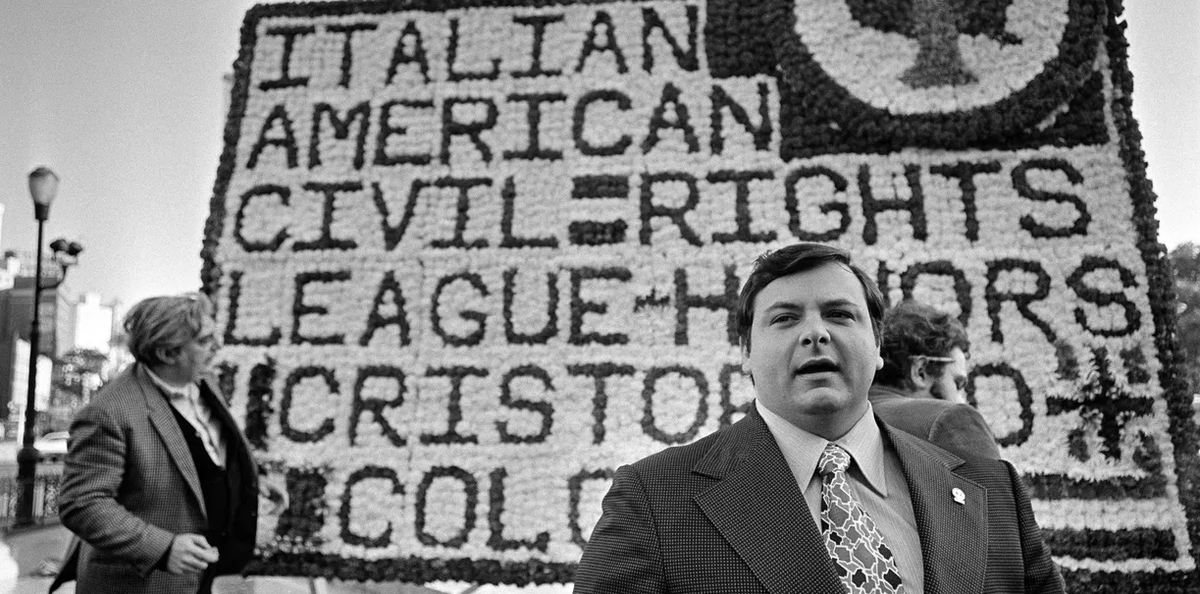
New York crime boss Joe Colombo and the Civil Rights League started a campaign to stop the film from being made, saying it emphasized stereotypes about Italian-Americans. At their request, Coppola removed all references to “mafia” and “mob” in the script.
28/46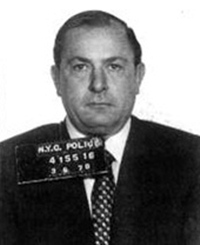
28/46
29
Legendary crooner Frank Sinatra was reported to inspire the film’s singer/actor Johnny Fontane, and Ol’ Blue Eyes was not happy about it. He reportedly told Al Martino he’d never work again if he played the part of Johnny in the film (though that didn’t stop him).
29/46

29/46
30
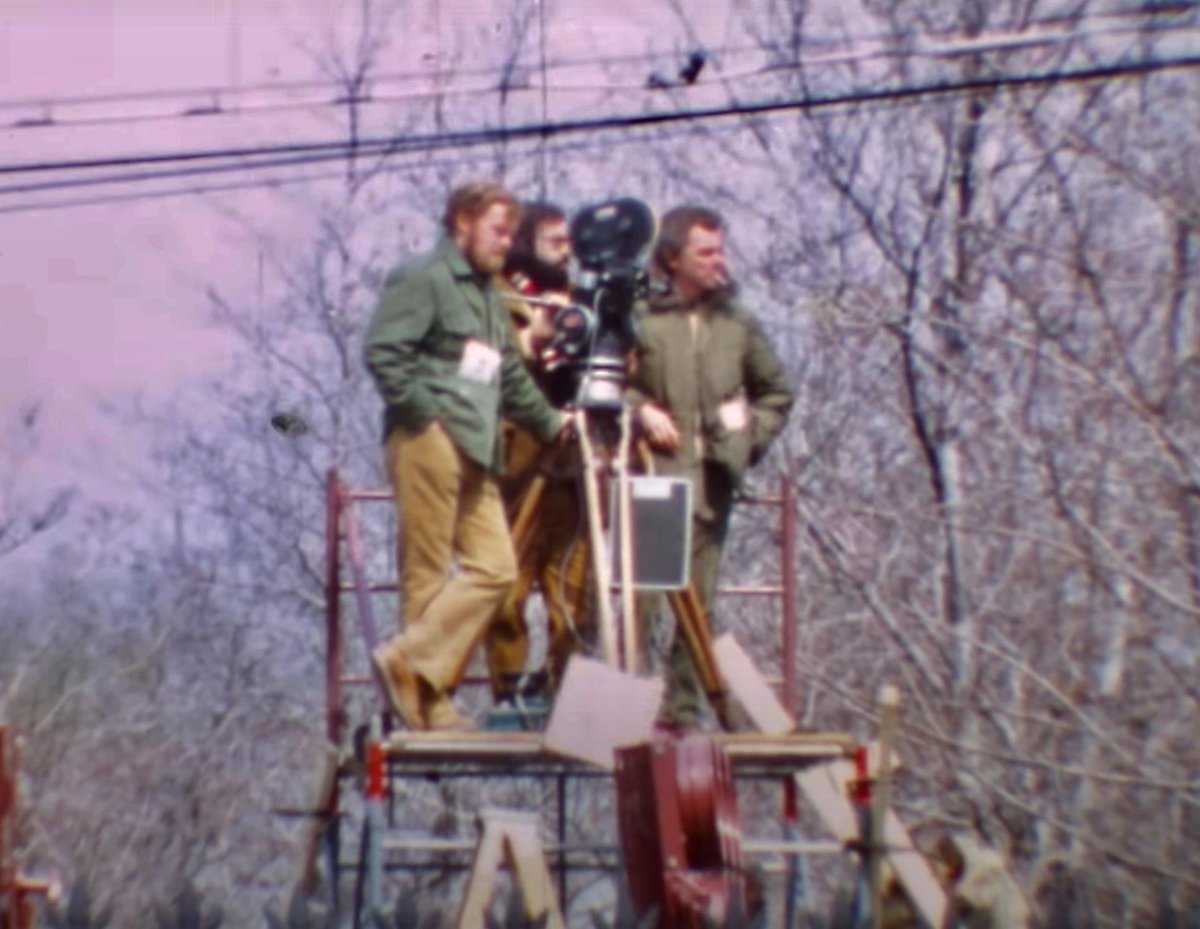
As Director of Photography, Coppola wanted Gordon Willis, who had shot Klute. He turned the offer down, until Coppola told him it wouldn’t look the same without him. Willis said the look they were going for was “a newspaper photograph in bad color.”
30/46


30/46
31
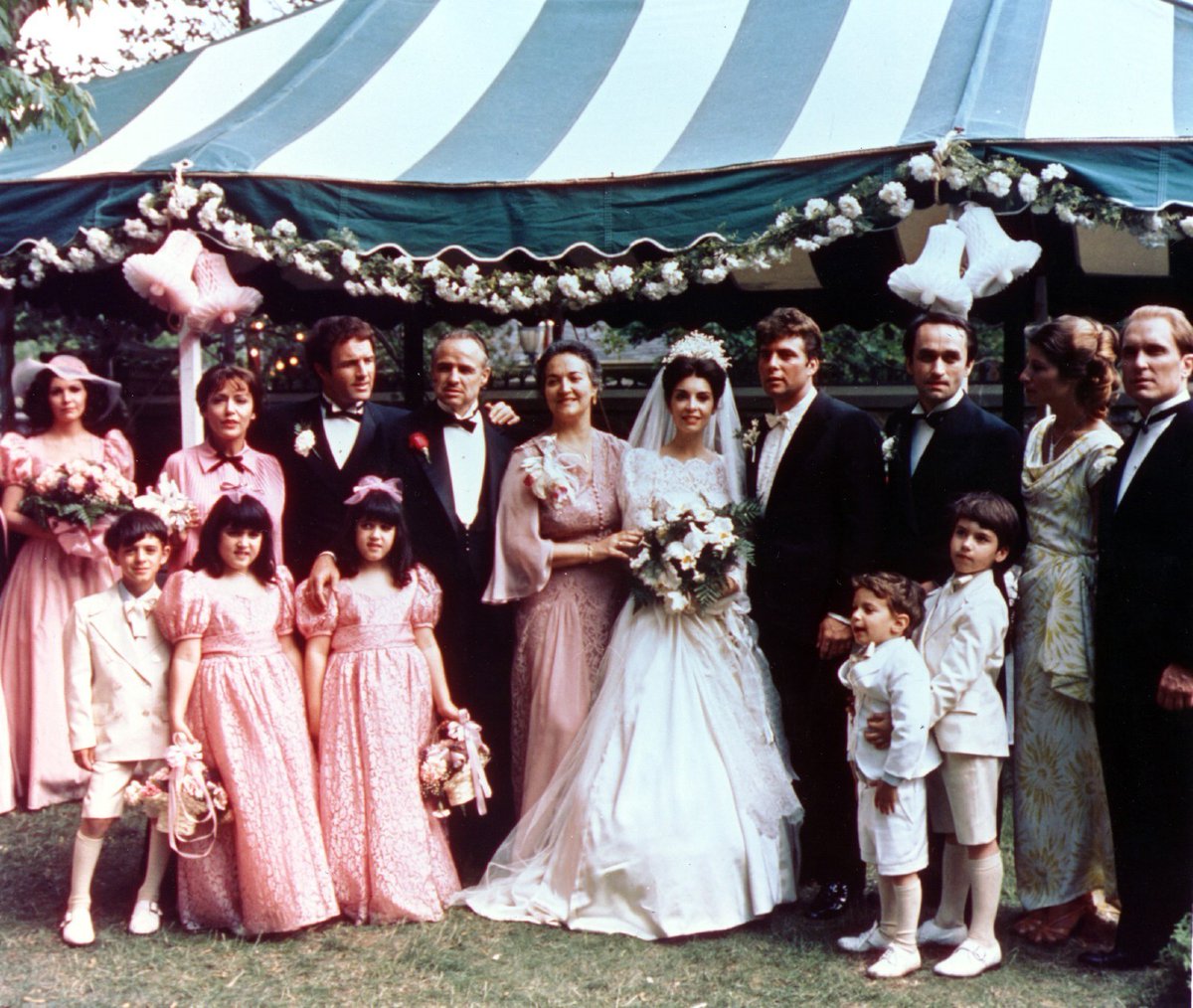
The film opens with Connie and Carlo’s wedding sequence. To make it more natural (and having just two days to film it) Coppola had the cast move around freely and improvise in the background. He and the crew then shot specific snippets among the action.
31/46


31/46
32
One of the most famous images from the film is Vito stroking the cat. The cat was a stray that Coppola picked up on the way to the set. He asked Brando to improvise with it, and it made it into the film.
32/46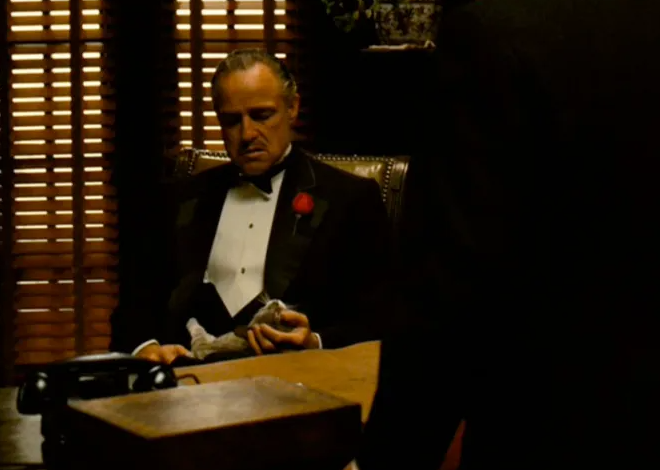

32/46
33
Lenny Montana (Luca Brasi) was a wrestler before an actor. He was so nervous about acting with Brando he kept fluffing his lines. As such, Coppola added a scene of Luca rehearsing his lines before seeing Vito, to make it seem like Luca stumbling rather than Montana.
33/46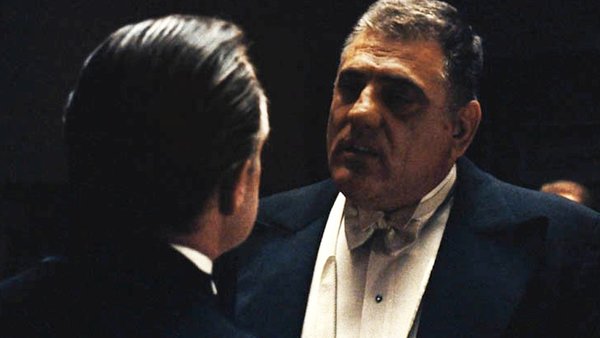

33/46
34
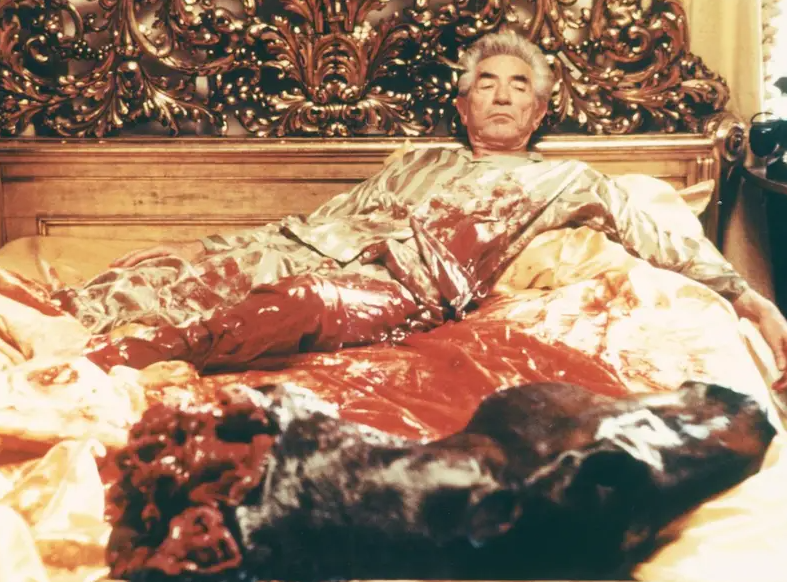
Maybe the film’s most iconic moment is when movie producer Jack Woltz finds his prized horse’s head in his bed. It wasn’t a prop. Coppola got a real horse’s head from a local dog food company. Animal rights groups unsuccessfully protested the scene.
34/46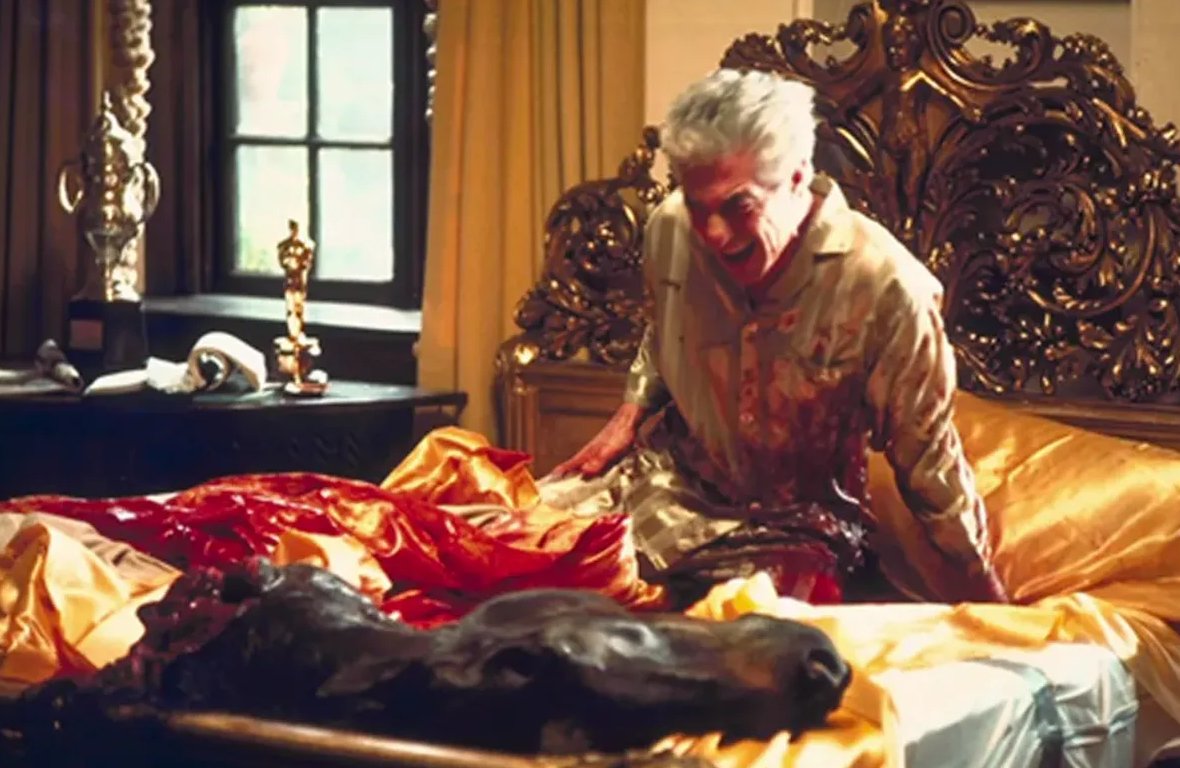


34/46
35
Originally, after the hit on Paulie Gatto, the script had Clemenza just say “Leave the gun.” Actor Richard Castellano ad-libbed the famous addition of “Take the cannoli” to reference the line where his character’s wife asks him to buy cannoli for dessert.
35/46

35/46
36
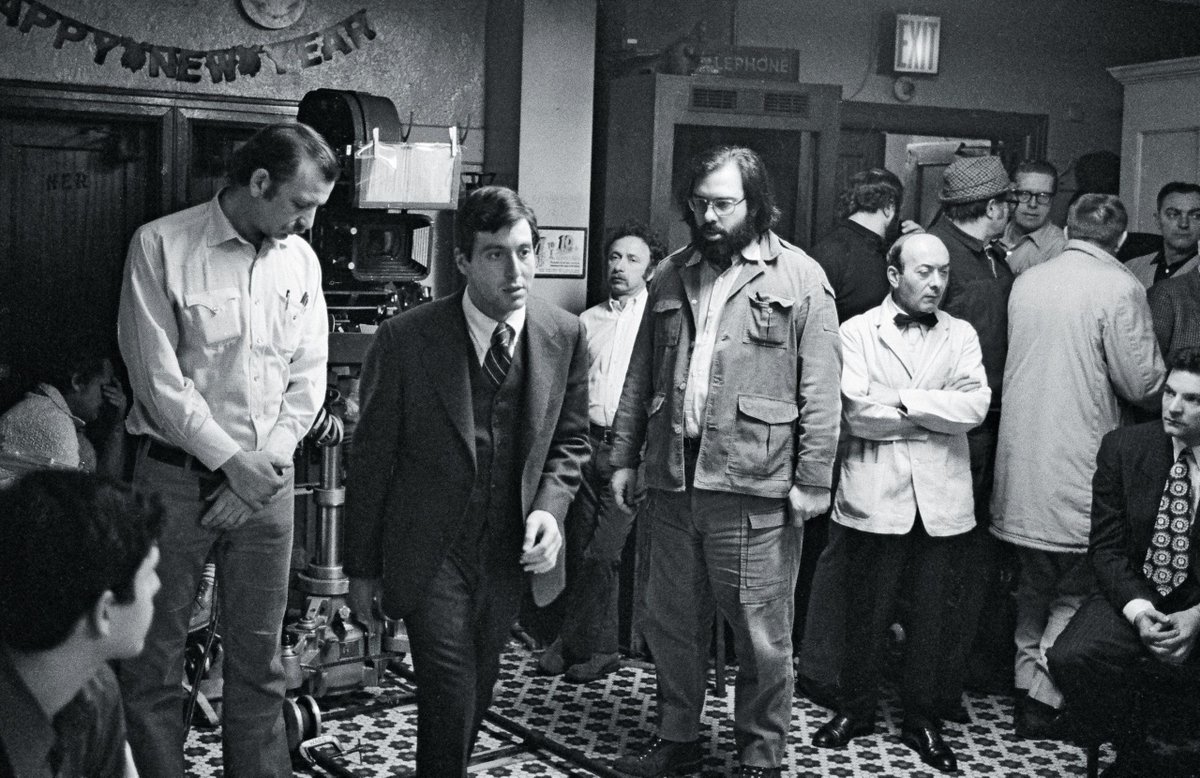
Coppola made the decision to shoot the restaurant scene without any background music. The scene is instead accompanied by the sound of trains rumbling by outside.
36/46


36/46
37
The Corleone family estate scenes were filmed at The Todt Hill mini-mansion at 110 Longfellow Avenue on Staten Island. It went on the market in 2014, and sold for $3m.
37/46

37/46
38
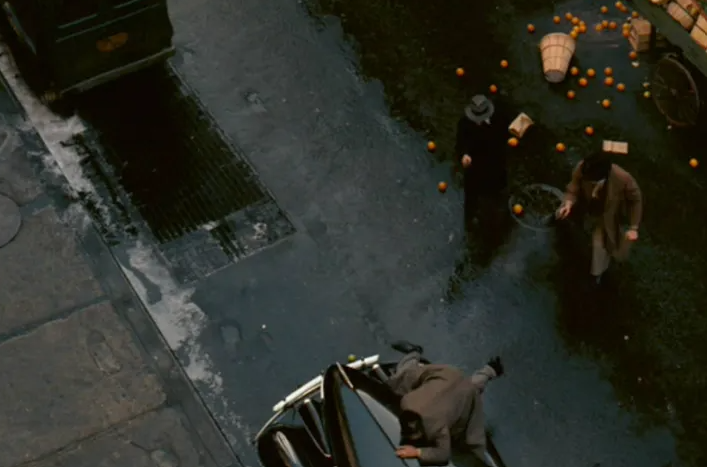
It’s often said that oranges are used to foreshadow upcoming deaths. This seems accurate but wasn’t the intention. Production designer Dean Tavoularis knew Gordon Willis was shooting with little lighting, so included the oranges as spots of brightness in the frame.
38/46


38/46
39
Sonny’s death scene was influenced by the brutal killing at the end of Bonnie And Clyde. It was the most expensive scene in the film at $100k, and Caan wore 127 blood-filled explosive squibs to and the car had 200+ holes drilled into it.
39/46


39/46
40
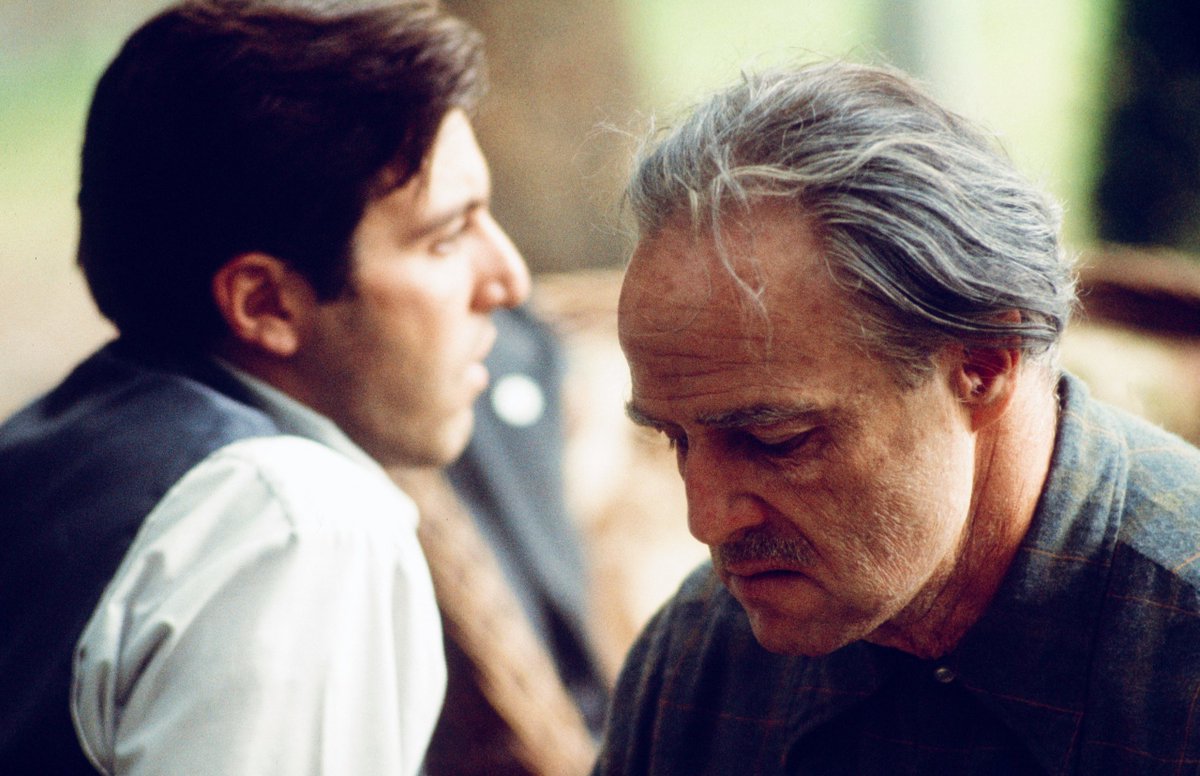
Acclaimed screenwriter Robert Towne (who wrote Chinatown) worked on the garden scene between Vito and Michael where Vito advises his son that “Whoever comes to you with this Barzini meeting, he's the traitor. Don't forget that."
40/46
40/46
41
After filming wrapped, Paramount told Coppola to deliver a cut no longer than 2hrs15mins, which he did. The studio said it was like a trailer and moved editing to L.A. This is why there are 3 credited editors. The film ended up with a 2hrs55mins runtime.
41/46


41/46
42
The film did amazingly well on its release. At the Oscars it won Best Picture, Coppola/Puzo won Best Adapted Screenplay, and Brando won Best Actor. Coppola lost out to Bob Fosse for Best Director, who won for Cabaret.
42/46

42/46
43
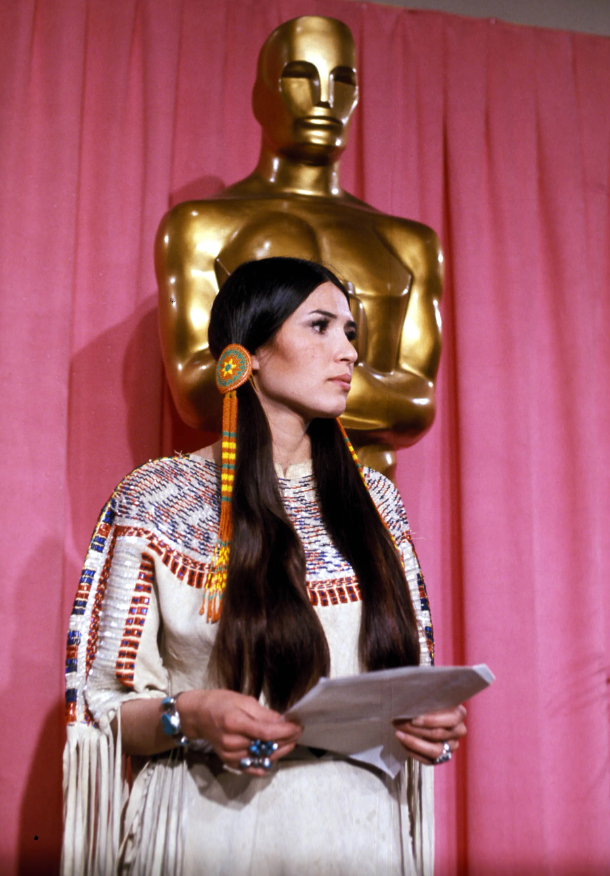
There was controversy when Brando refused his Oscar in objection at the depiction of American Indians by Hollywood. He sent activist Sacheen Littlefeather in his place, and the Academy brought in a rule that winners cannot send others in their place if they are alive.
43/46


43/46
44
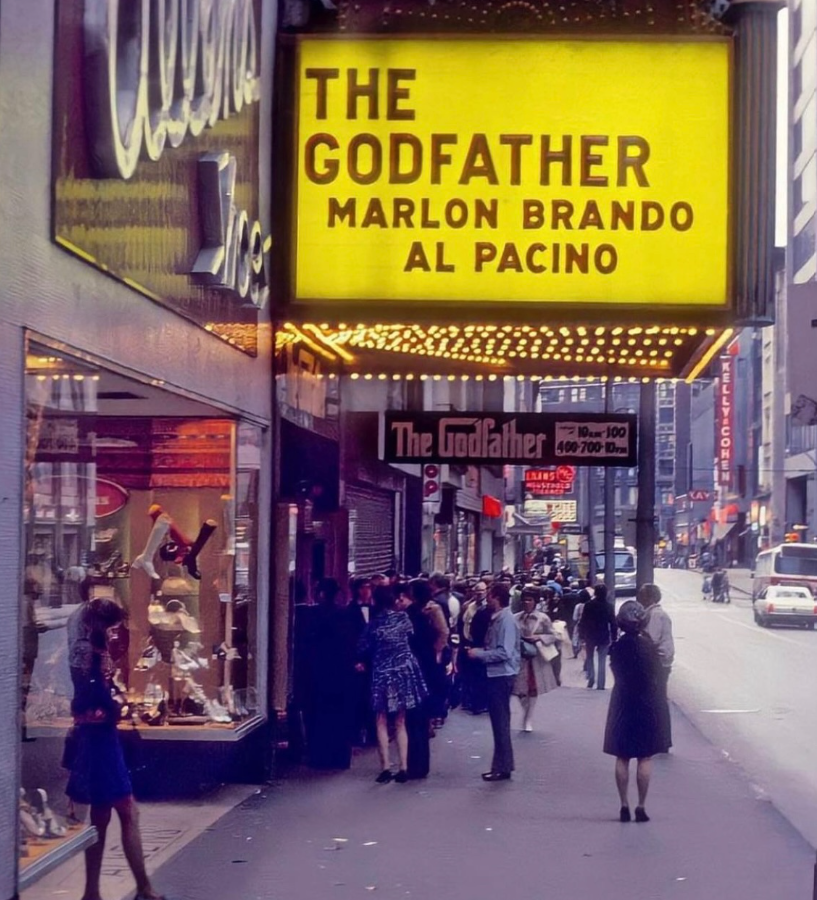
The budget for The Godfather was around $6.2m. It was a huge smash hit, becoming the highest grossing film ever made. The theatre lines were so big that savvy university students would charge a ‘place-holding fee’ of $5.
44/46


44/46
45
The box office record was taken one year later by The Exorcist but today, The Godfather is regarded as one of the greatest and most influential movies ever made, holding huge scores on popular aggregator sites like IMDb and Rotten Tomatoes.
45/46


45/46
46
Finally… Marlon Brando would later explain his decision to turn down the Oscar…
46/46
46/46
2:19
47
If you liked our story on how THE GODFATHER was made, please share the opening post 😄
All The Right Movies@ATRightMovies
THE GODFATHER was released 53 years ago today. A landmark of American cinema and widely regarded as among the greatest films ever made, the story of how it came to the big screen will bada-bing your brains all over your nice Ivy League suit…
1/46
1/46
48
Our latest podcast is on ONCE UPON A TIME IN HOLLYWOOD. Full of big laughs and opinions so please give it a listen 😀
alltherightmovies.com/podcast/once-u…
alltherightmovies.com/podcast/once-u…
