DUNE: PART ONE was released 4 years ago today. Acclaimed as one of...

All The Right Movies@ATRightMovies
84 views
Oct 22, 2025
~13 min read
Advertisement
1
DUNE: PART ONE was released 4 years ago today. Acclaimed as one of the great science fiction films of the 21st century, and among the best of director Denis Villeneuve, the making of story is as epic as you would expect…
1/62
1/62
2
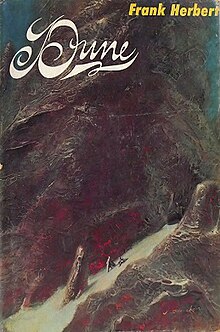
In 1965, Frank Herbert’ science fiction novel Dune was published. A future-set epic of interstellar travel and warfare, it became an instant, award-winning classic. Herbert considered his book unfilmable, but that didn’t stop film studios taking an interest.
2/62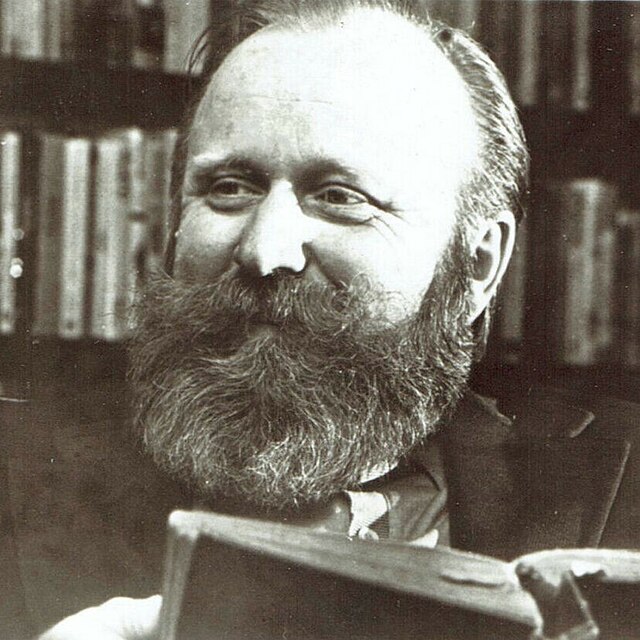
2/62
3
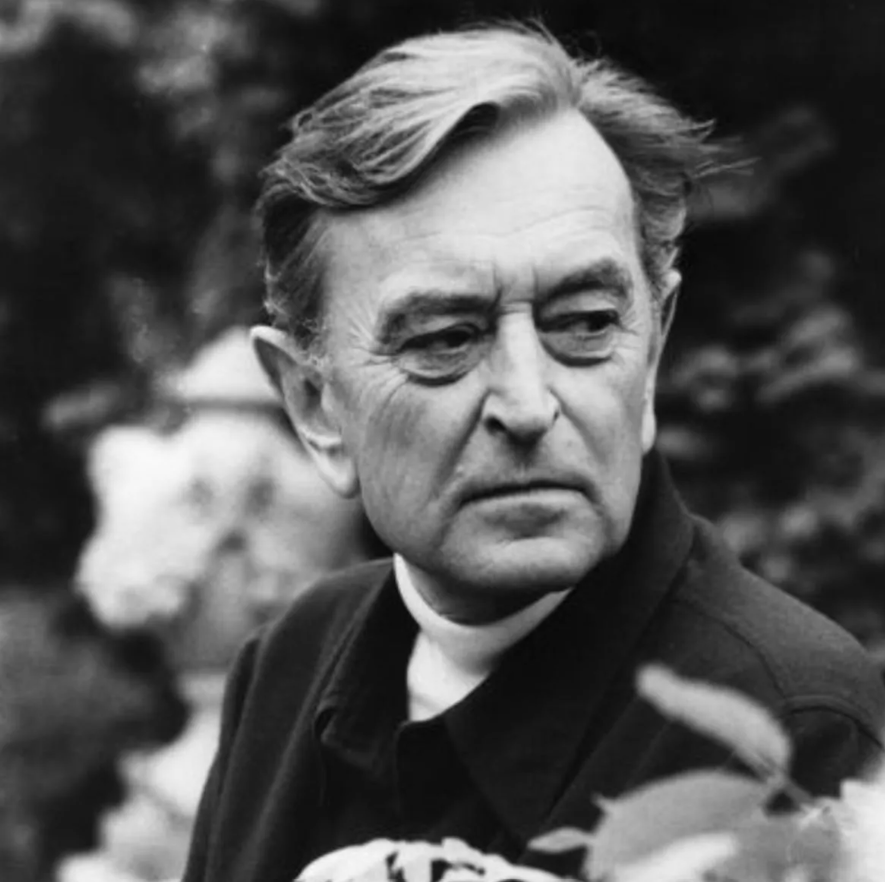
In 1971, production company Apjac International bought the rights, and wanted David Lean to direct, but Lean turned it down. Charles Jarrott was then considered to direct, and a script was written but, in 1973, Arthur Jacobs (head of Apjac) died, and the project stalled.
3/62
3/62
4
In 1974, the rights to Dune were bought by a French consortium, and avant garde filmmaker Alejandro Jodorowsky was hired to direct. The huge, ill-fated project has gone down as one of Hollywood’s great ‘What if…?’ stories
4/62

4/62
5
The rights then passed to producer Dino De Laurentiis. He hired to David Lynch to direct and, finally, in 1984, an adaptation of Dune was released. It strayed from the plot of Herbert’s book in places, was critically mauled, and flopped at the box office.
5/62


5/62
6
Other adaptations followed, including a 2000 miniseries on the Sci-Fi Channel and an attempt by Paramount Pictures to make a movie. They bought the rights in 2008 and hired Peter Berg to direct. After struggling for three years, Berg left the project, and Paramount dropped the idea.
6/62

6/62
7
Then, in 2016, Legendary Entertainment bought the TV and film rights for the entire Dune series. Perhaps inspired by Disney’s success with the Marvel Cinematic Universe, they planned a series of movies and TV shows, and knew who they wanted to direct the first release…
7/62

7/62
8
Canadian filmmaker Denis Villeneuve had read Dune as a 13-year-old and said adapting it was “a longstanding dream of mine.” With DV already signed up to direct two big sci fi films in Arrival (2016) and Blade Runner 2049 (2017), Legendary offered him Dune.
8/62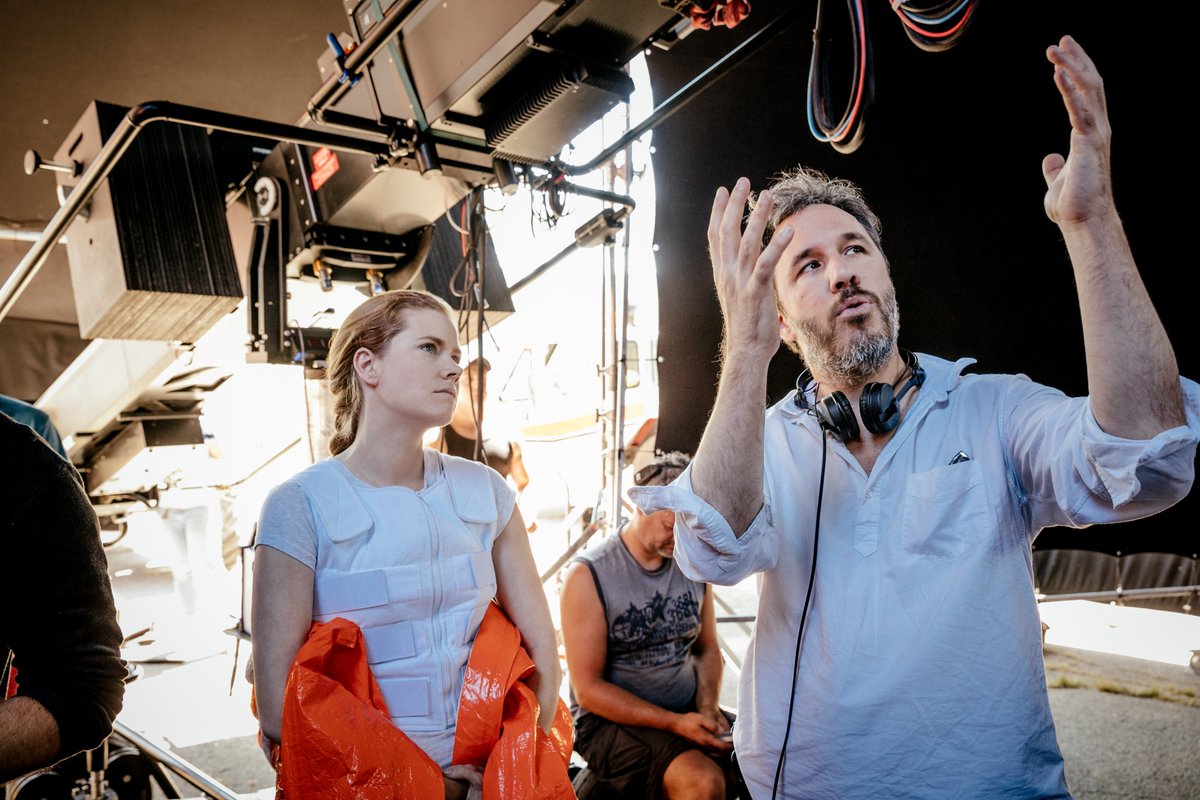

8/62
9
Warner Bros were interested in distributing, but Villeneuve had one stipulation. Herbert’s sprawling book was too big for one film, he said, so they had to split it across two films. WB agreed, but said they would only fund the first movie up front.
9/62
9/62
10
Either way, the first part was greenlit, and Villeneuve set about writing a script with the Oscar-winning writer of Forrest Gump, The Insider, and Munich, Eric Roth. Jon Spaihts also came in as a third writer later.
10/62

10/62
11
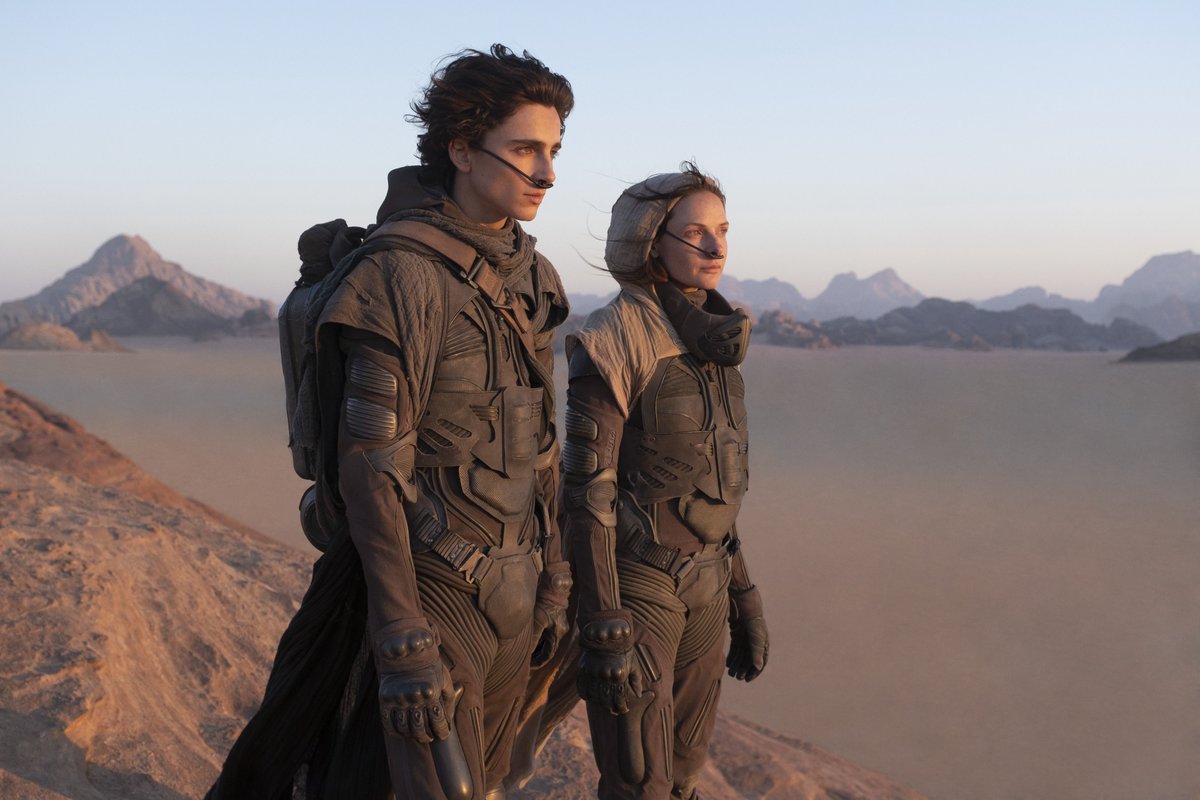
The protagonist of Dune is Paul Atreides, 15-year-old heir of House Atreides. 23-year-old Timothée Chalamet was one of Hollywood’s hottest young actors and, as soon as he heard about Villeneuve’s new film, he set up Google Alerts on his phone to keep up to date.
11/62
11/62
12
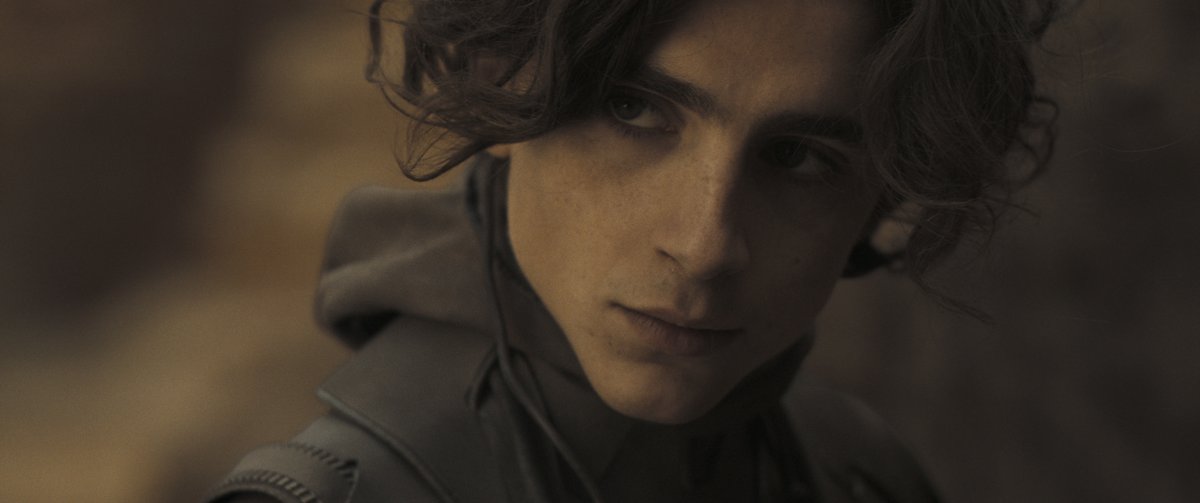
Villeneuve said he wanted an actor who was “an old soul in the body of a teenager” and, on meeting Chalamet, said “he has an insane charisma. Timothée has been gifted by the gods of cinema." There were no alternates, and Chalamet was cast as Paul.
12/62
12/62
13
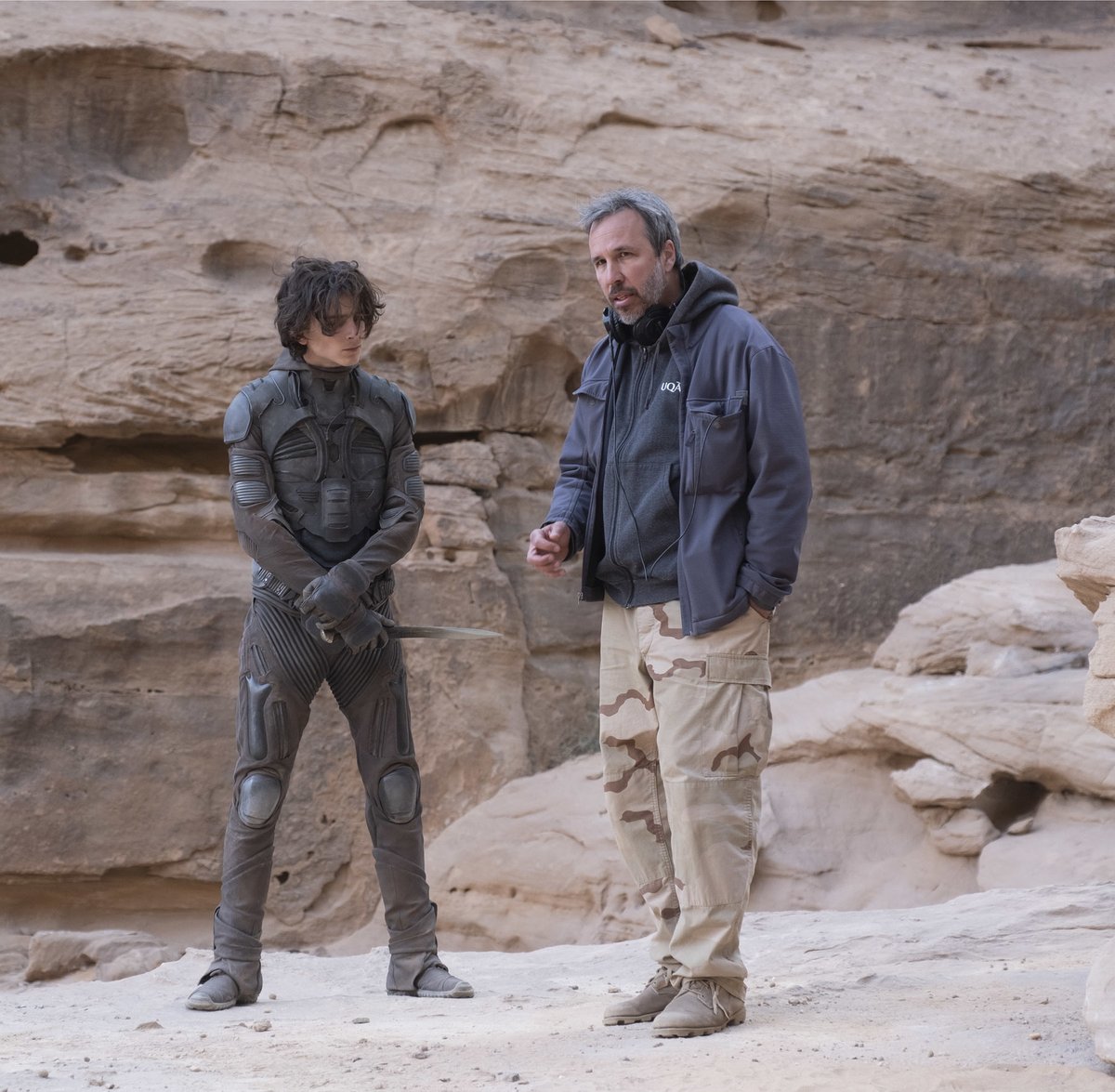
Villeneuve later admitted to being so impressed by Chalamet that, a few days into production, he wept tears of joy. “I was so relieved my instincts were right” Villeneuve said.
13/62
13/62
14
Paul’s mother is Lady Jessica. Villeneuve wanted Rebecca Ferguson in the role, but she wasn’t too keen, thinking she’d already been cast as “strong female character” in Mission: Impossible. On meeting with Villeneuve though, Ferguson loved his ideas and signed up.
14/62

14/62
15
Leader of House Atreides when the movie being is Duke Leto Atreides. Again, there was no audition process. Oscar Isaac contacted Villeneuve as soon as he heard about the production, and Villeneuve thought he had the stoic energy needed for Leto.
15/62

15/62
16
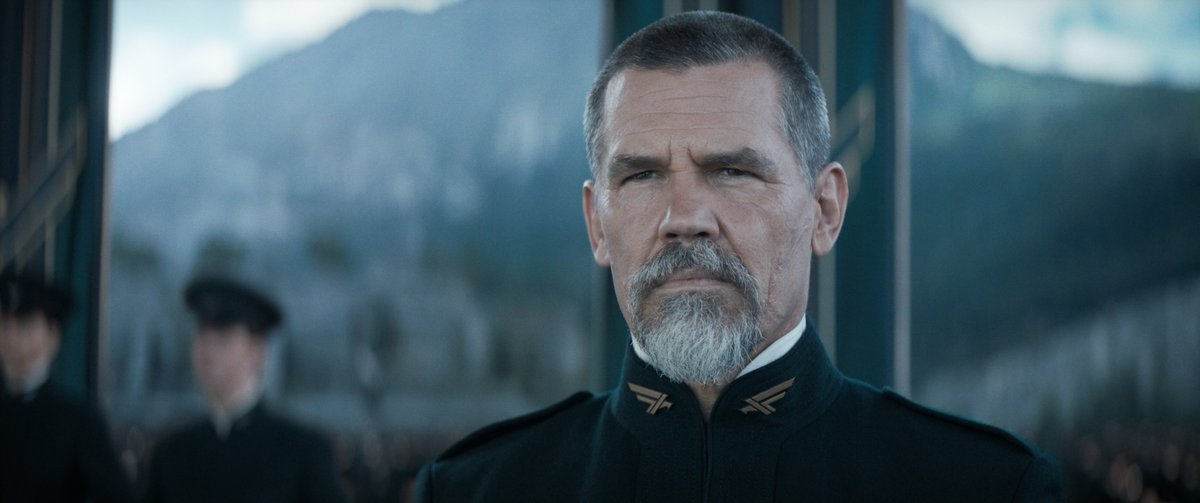
Josh Brolin had already worked with Villeneuve on action thriller Sicario, and Villeneuve wanted him to play Paul’s mentor, Gurney Halleck. Brolin had such faith in DV without reading the script, though he later said “I pretended I read it.”
16/62
16/62
17
Brolin’s daughter was born during pre-production and, when he found training for the fight sequences tough going, Brolin almost pulled out of Dune. Fight Co-Ordinator Roger Yuan said "He was close to sending an email saying, 'I can't do this film, I can't do it!”
17/62

17/62
18
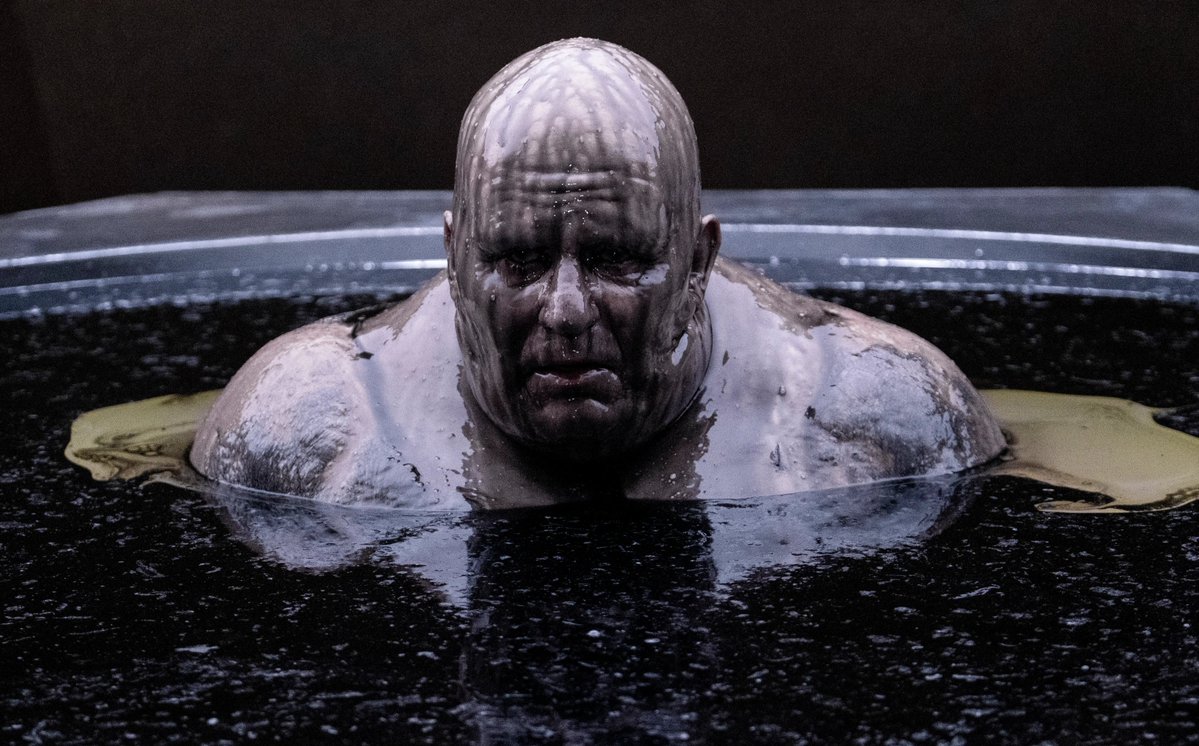
Villeneuve wanted Stellan Skarsgård to play the villain, Baron Vladimir Harkonnen, saying he was “intimidating.” And Dave Bautista was offered the role of Harkonnen ‘s nephew, Glossu Rabban, after working with Villeneuve in BR2049.
18/62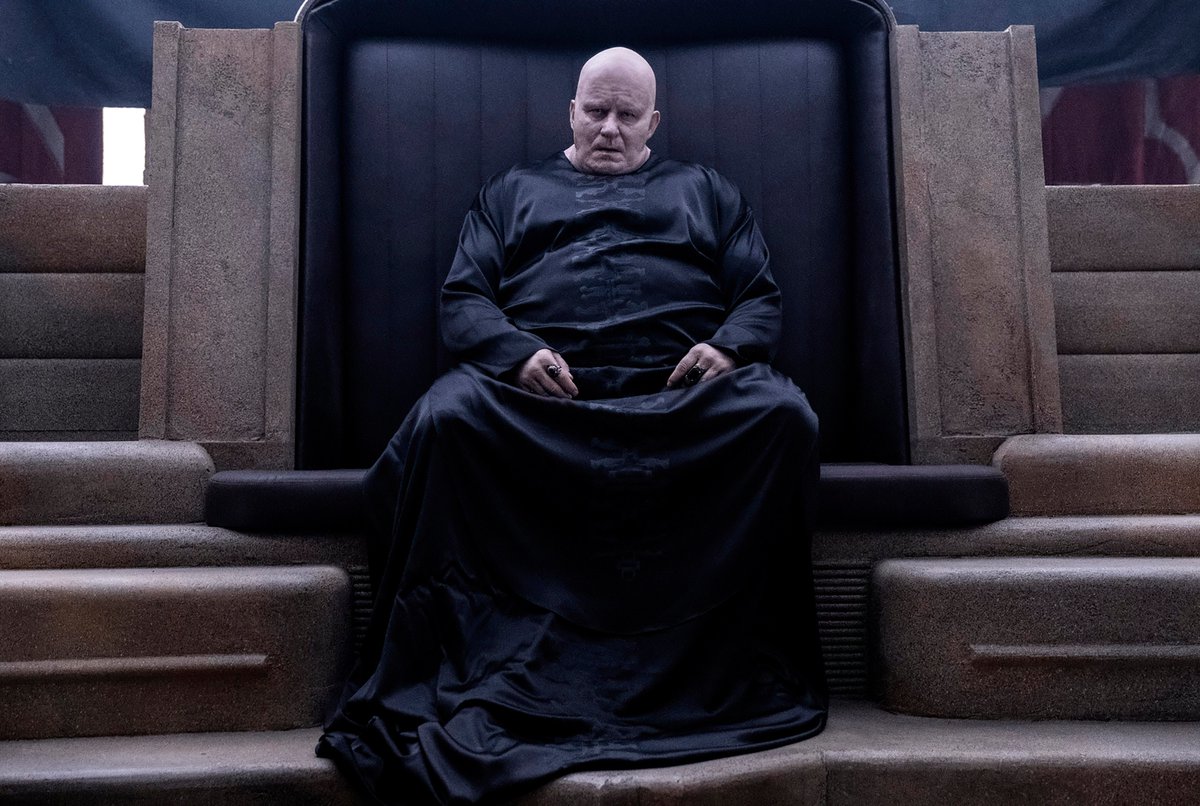

18/62
19
Skarsgård spent almost 30% of his time on the movie in the makeup chair. He filmed for about 10 days, and spent 8 hours of each of those in the chair. Skarsgård himself said he had to "not do much acting" as it was about “the power of his physicality”.
19/62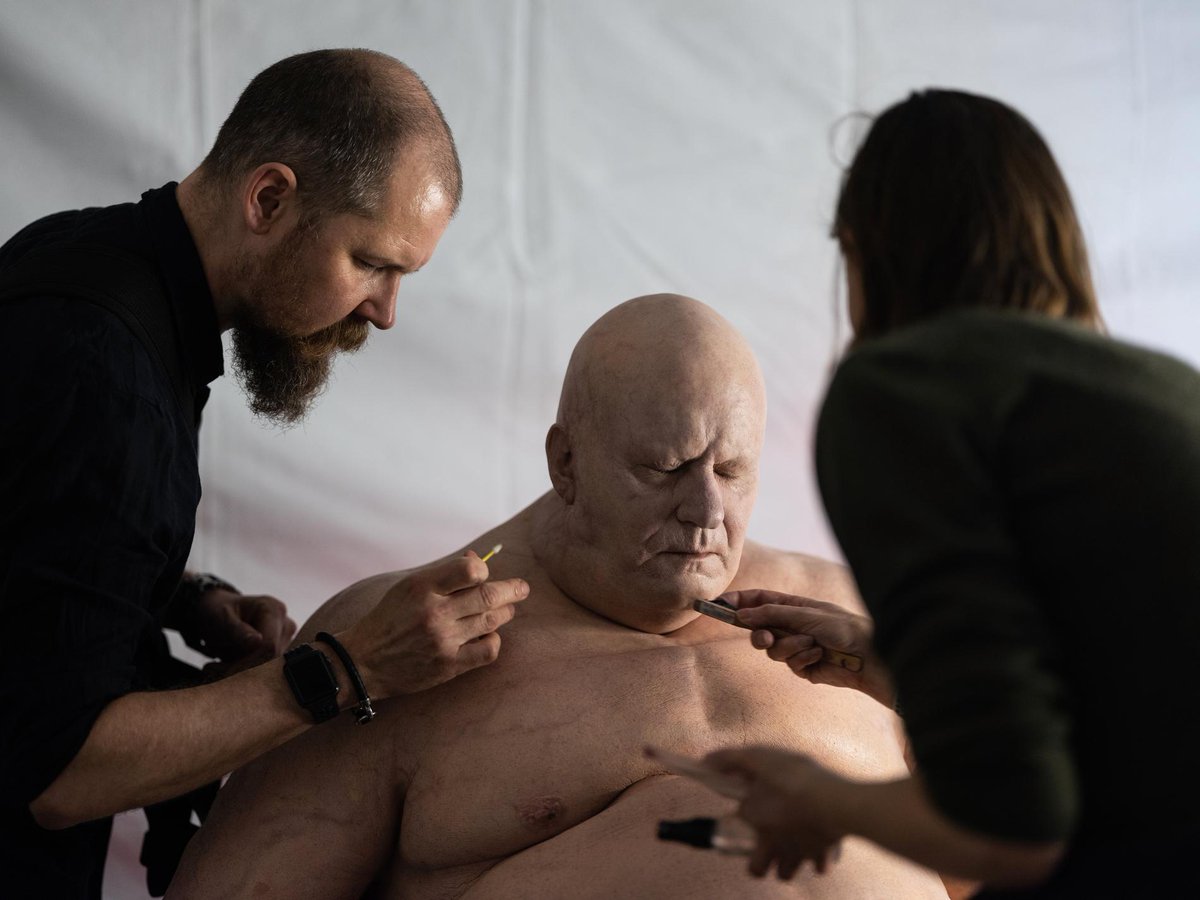

19/62
20
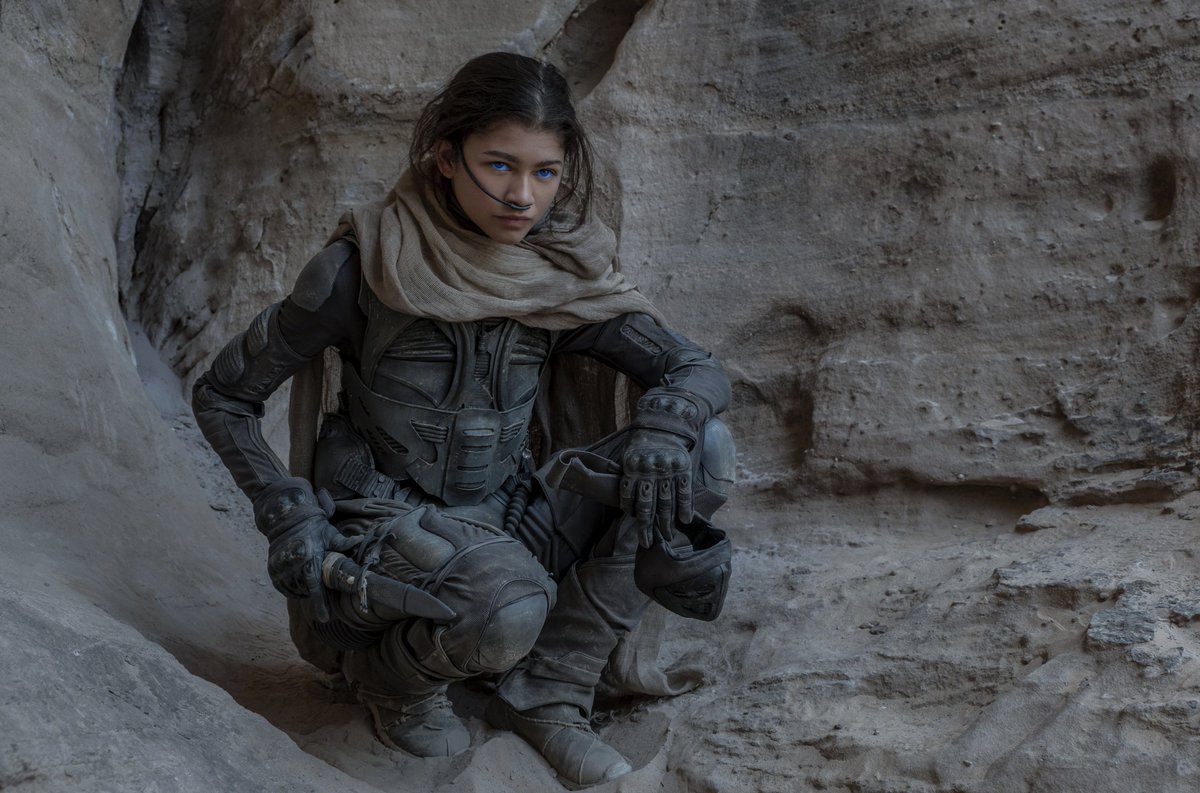
A role that did go through a typical auditioning process was young Fremen woman, Chani. The role came down to five finalists, including a 15-year-old Jenna Ortega. Zendaya was hired, with Villeneuve saying she had the best chemistry with Chalamet.
20/62
20/62
21
Chang Chen got the role of Dr. Yueh by after running into Villeneuve at the Cannes film festival. And Charlotte Rampling (who Jodorovsky had wanted as Jessica) plays the Bene Gesserit Reverend Mother. Rampling also dubbed herself in the French language version.
21/62

21/62
22
Like Villeneuve, Eric Roth had read the book as a child but not loved it as much as Villeneuve. He said this allowed him to adapt it more objectively with the aim of appealing to people who were fans of the book, or who hadn’t read it at all.
22/62

22/62
23
When Roth asked what they should change from the book, Villeneuve told him “More women.” One major change is Dr Liet Kynes. A white male in the books, she is played in the film by Sharon Duncan-Brewster, a black woman.
23/62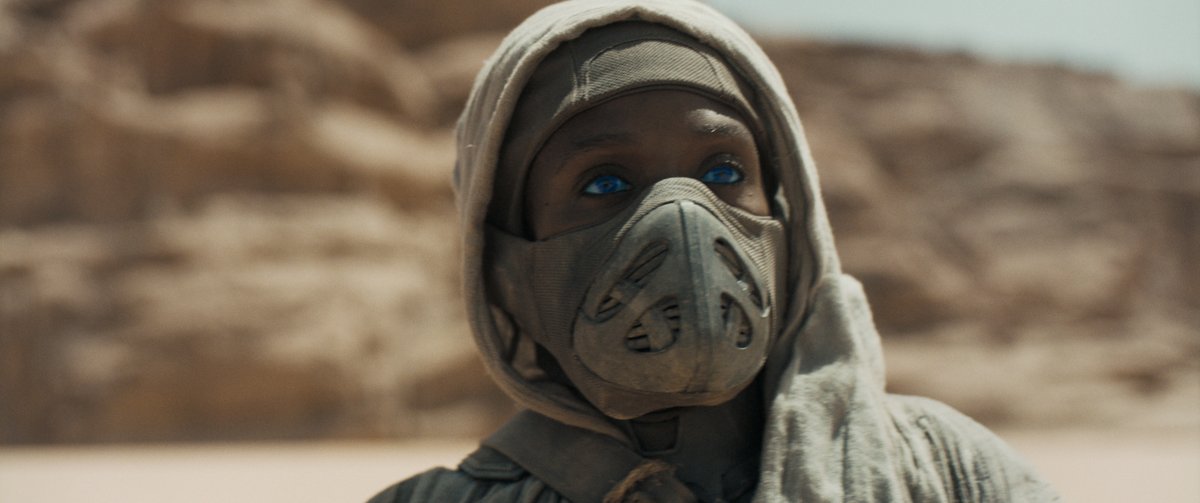

23/62
24
Villeneuve also told Roth he saw the film as a coming-of-age story, a call-to-action for youth, and also a social commentary critiquing capitalism and the exploitation of natural resources. A feature of the book is lengthy character monologues, they were removed for the film.
24/62

24/62
25
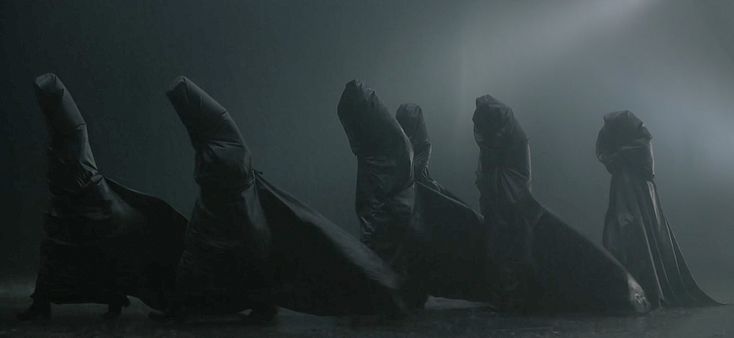
According to Dune historians, the setting (using our calendar) is approximately 23,500 AD. The humans are descended from Earth, which explains the use of Latin terms like Bene Gesserit, as well as English, Dutch, Hebrew, and Greek all showing up too.
25/62
25/62
26
There are other references to ‘ancient’ Earth. At one point, Gurney Halleck says "And I shall suck at the abundance of the seas, and the treasure hid in the sand.” This is a quote of Elder William Brewster, a passenger on the Mayflower in 1620.
26/62

26/62
27
There is an entire backstory in the books not mentioned in the film. 10,000 years prior to the events of the film, mankind had been enslaved by “thinking machines” before revolting. This explains the inconsistencies in technology in the film.
27/62

27/62
28
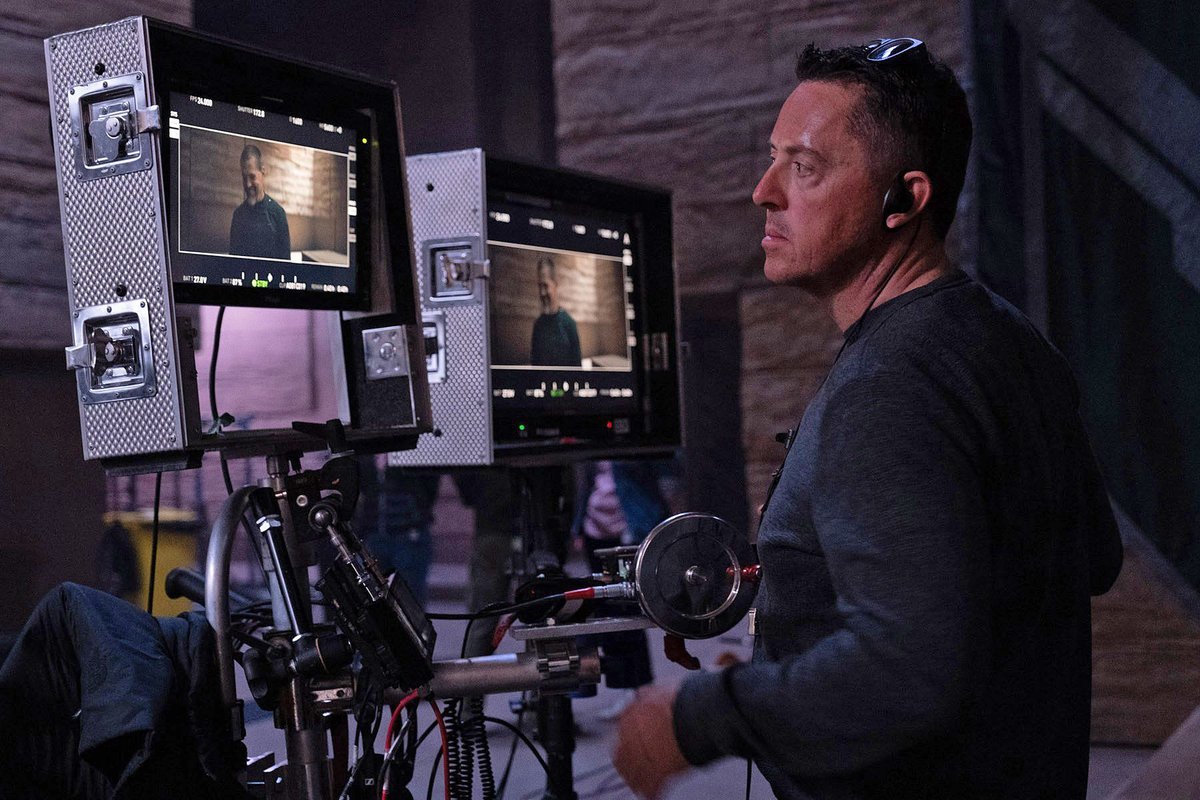
Having worked together on BR2049, Villeneuve planned to bring in Roger Deakins as Director of Photography. Deakins wasn’t available though, so Greig Fraser was hired. He would go on to win an Oscar for his work on the film.
28/62
28/62
29
The film was shot digitally on the set, then transferred onto 35mm film, before being scanned back to digital. This was done at Villeneuve’s request, to ensure the movie had a film-like quality to the visuals.
29/62


29/62
30
To match the epic scale he wanted to create visually, Villeneuve knew he wanted Hans Zimmer to write the score for the film. Zimmer loved the book and signed up, even though it meant turning down his longtime collaborator Christopher Nolan, who was making Tenet.
30/62

30/62
31
To prepare, Zimmer spent a week alone in the Utah deserts to absorb the sounds to feed into his writing. Before Villeneueve left for production, Zimmer told him “Don’t f*** it up” and, on giving Zimmer the finished film to score, Villeneueve told him the same thing.
31/62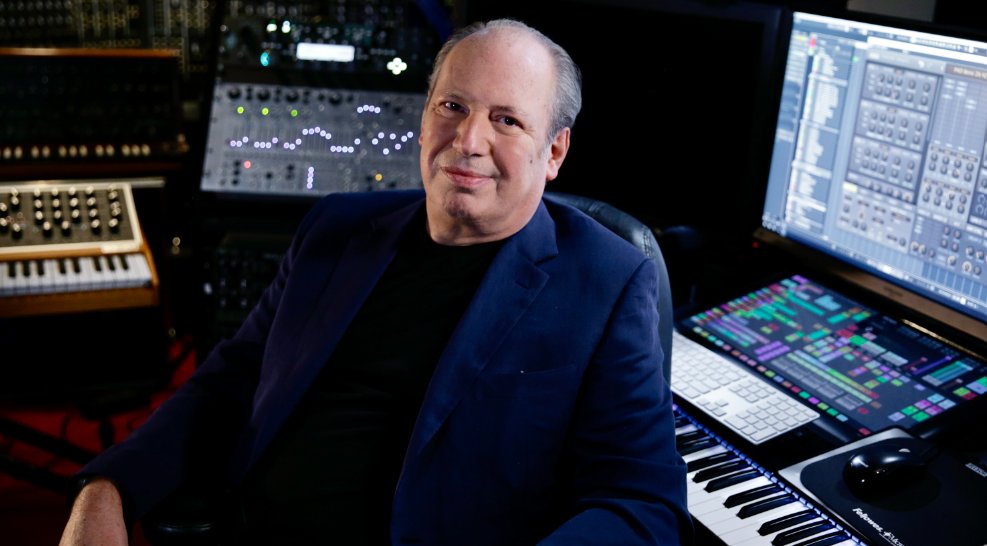
31/62
32
Zimmer also brought in vocalist Lisa Gerrard, who he had worked with on Gladiator, to provide the ethereal vocals. She apparently recorded her parts in a closet to, according to Zimmer, create “the sound echoing through the desert and bouncing off mountains.”
32/62

32/62
33
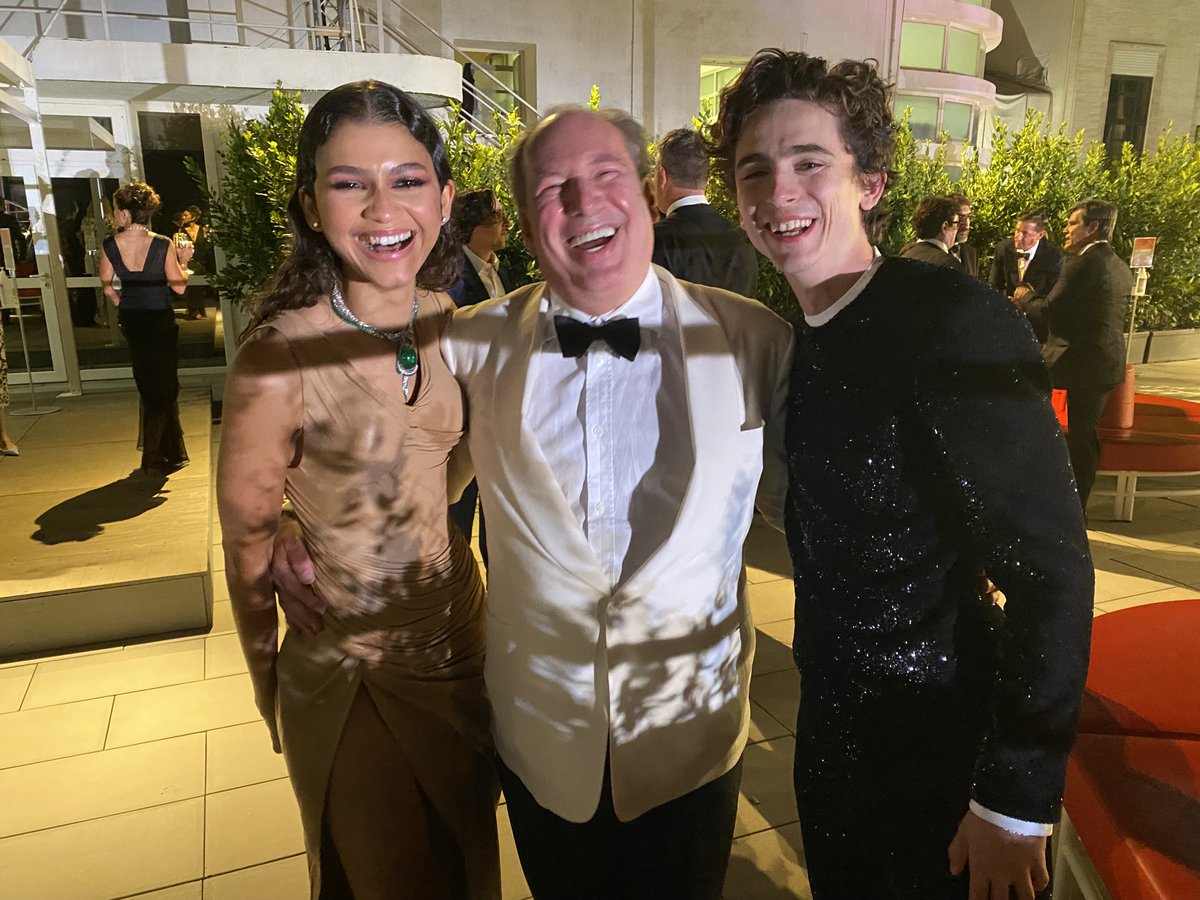
Zimmer shows up in the film too, as the bagpipe player on Arrakis, though the sound of the instrument was achieved on a guitar. The idea of using bagpipes came from Villeneuve himself.
33/62
33/62
34
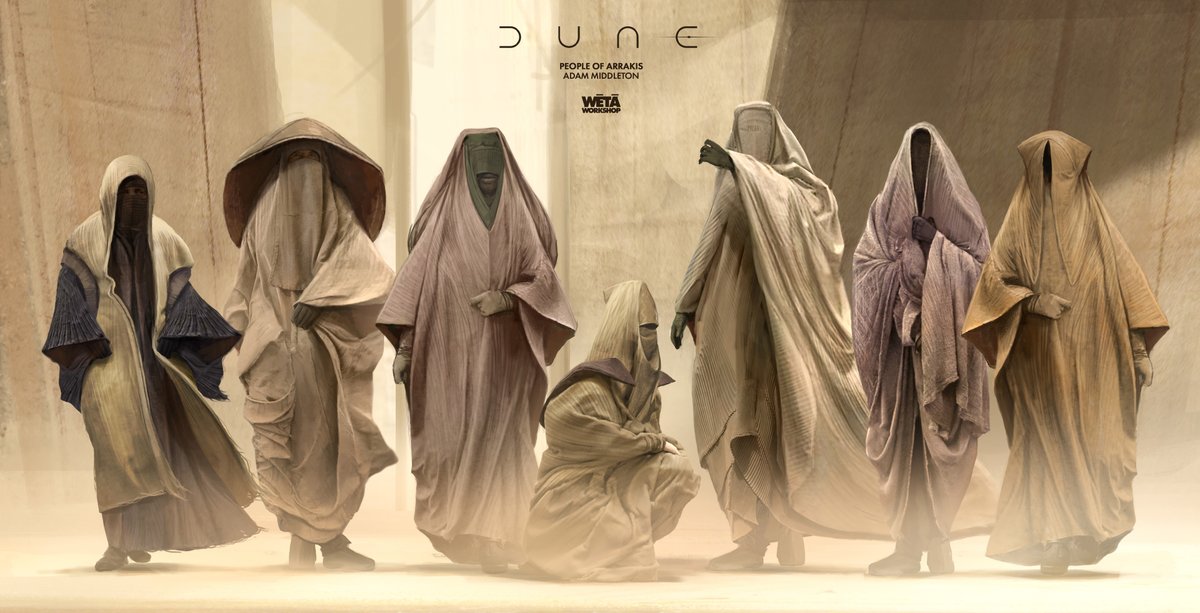
The costume designers were Jacqueline West and Bob Morgan and they produced over 1000 designs. Villeneuve’s brief was for the designs to be “grounded” so the pair studied world history including the Middle Ages, World War II, the Romanovs, art history, Africa and more.
34/62


34/62
35
Production Designer Patrice Vermette was given a similar brief and created a ‘visual bible’ for Dune to ensure the various design teams were aligned. His biggest creation was the city of Arrakeen, inspired by ancient Egypt, Africa, and brutalist structures.
35/62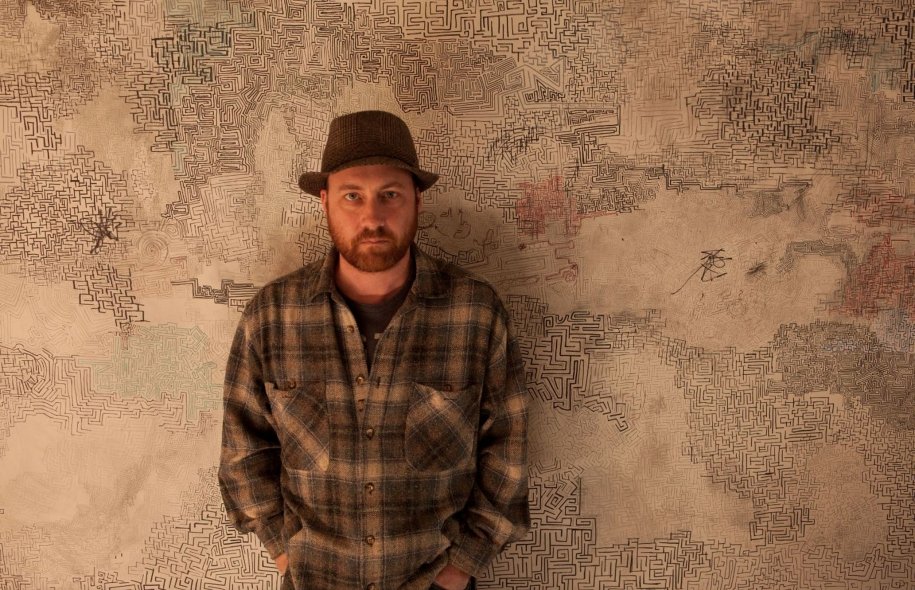


35/62
36
The sets were all practically created where possible with huge attention to detail. In the Emperor’s palace we see paintings and artwork covering the walls. Each was individually created based on the culture and history of Herbert’s world.
36/62
36/62
37
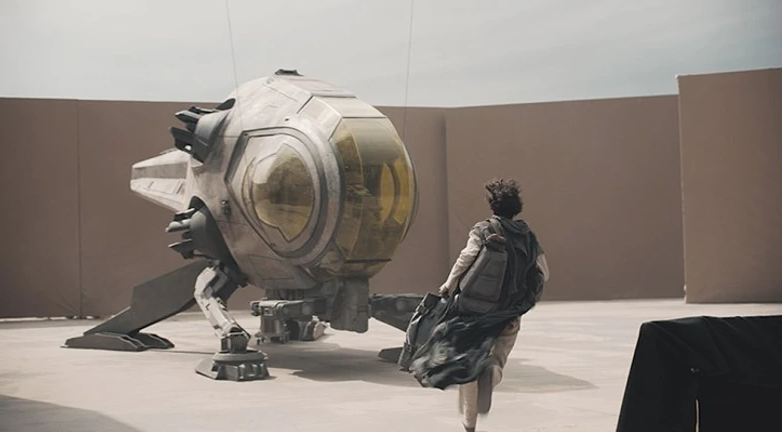
The film includes over 2000 visual effects shots. Visual Effects Supervisor Paul Lambert said they used a “sandscreen” chroma key process (using browns and yellows) rather than green screen as this created more a more natural final visual.
37/62
37/62
38
The fight coordinator was Roger Yuan and he also had disparate influences in creating the various culture’s fighting styles. Filipino martial arts, the ancient Mongols, Japanese Samurai, and Scandinavian Vikings were all inspirations.
38/62

38/62
39
Yuan also shows up in a very minor role. When Duncan Idaho (Jason Momoa) gives Paul an Arrakis compass, we see Yuan in the background. Also, the film’s Editor, Joe Walker, provided the voice of Paul’s filmbooks teaching him about Arrakis.
39/62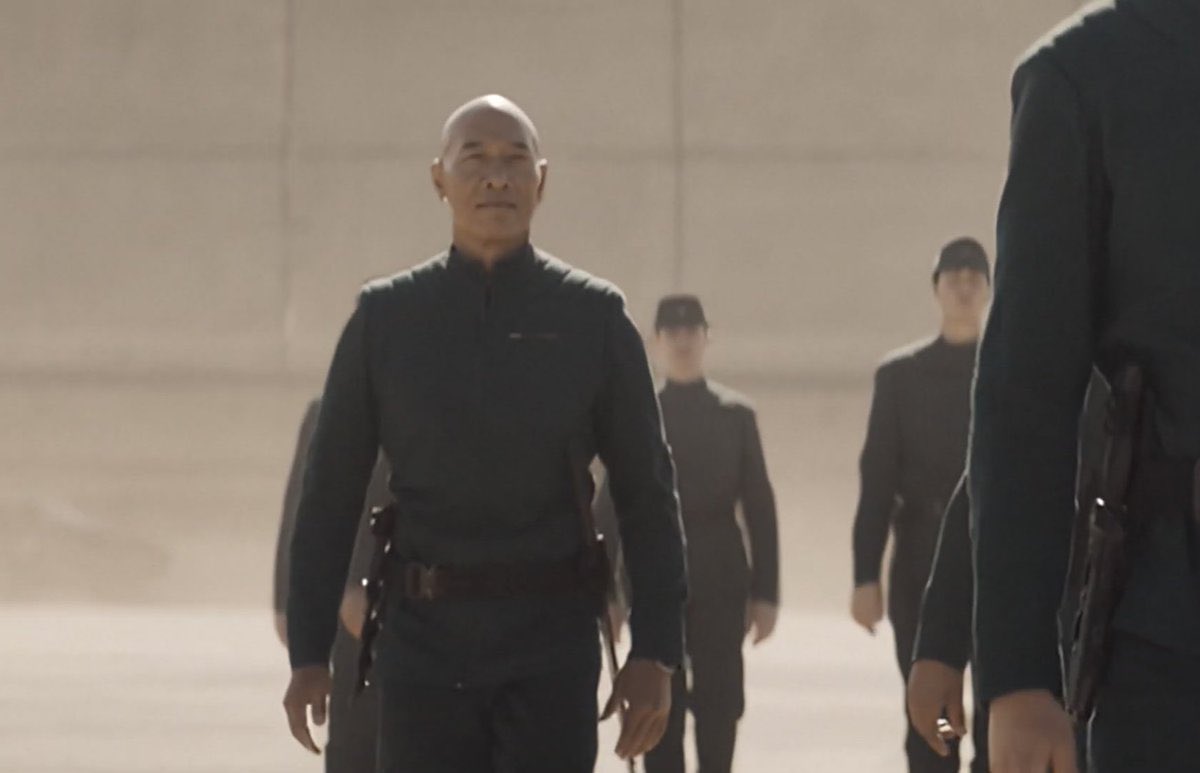

39/62
40
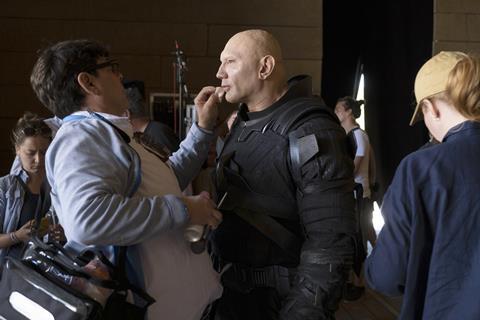
The makeup designer was Donald Mowat, with over 3 decades experience. He was responsible for distinctive elements such as the Fremen’s pale blue eyes, the prosthetics to create Harkonnen, and Stilgar’s (Javier Bardem) facial scarring.
40/62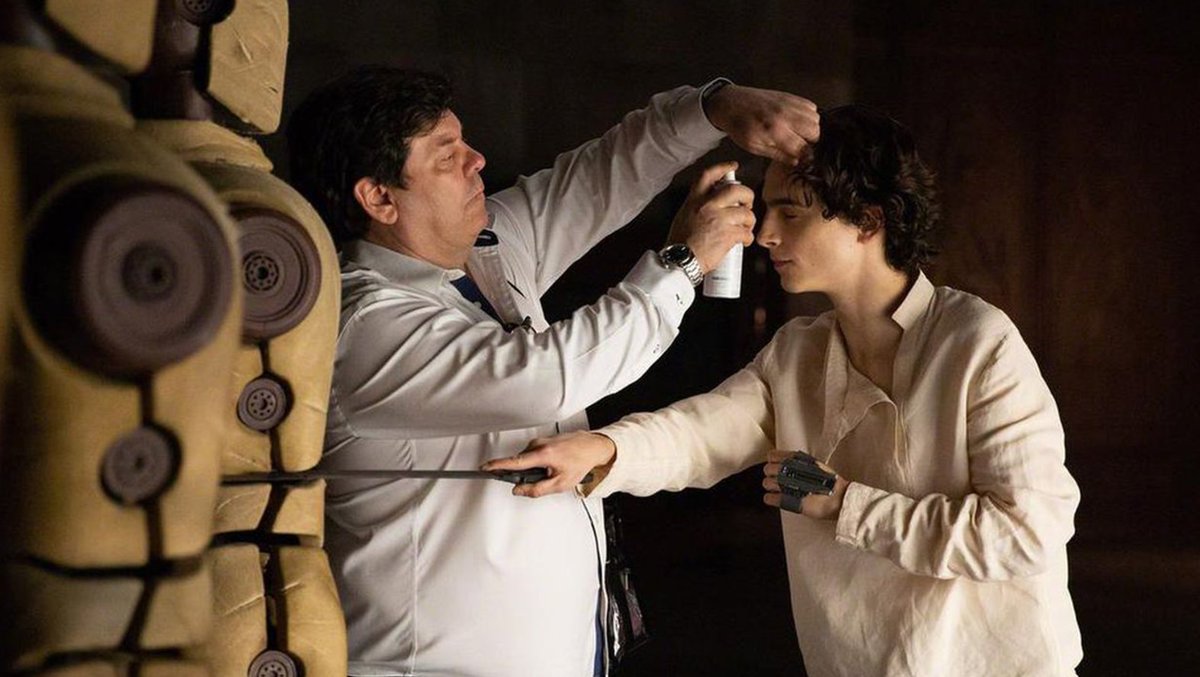


40/62
41
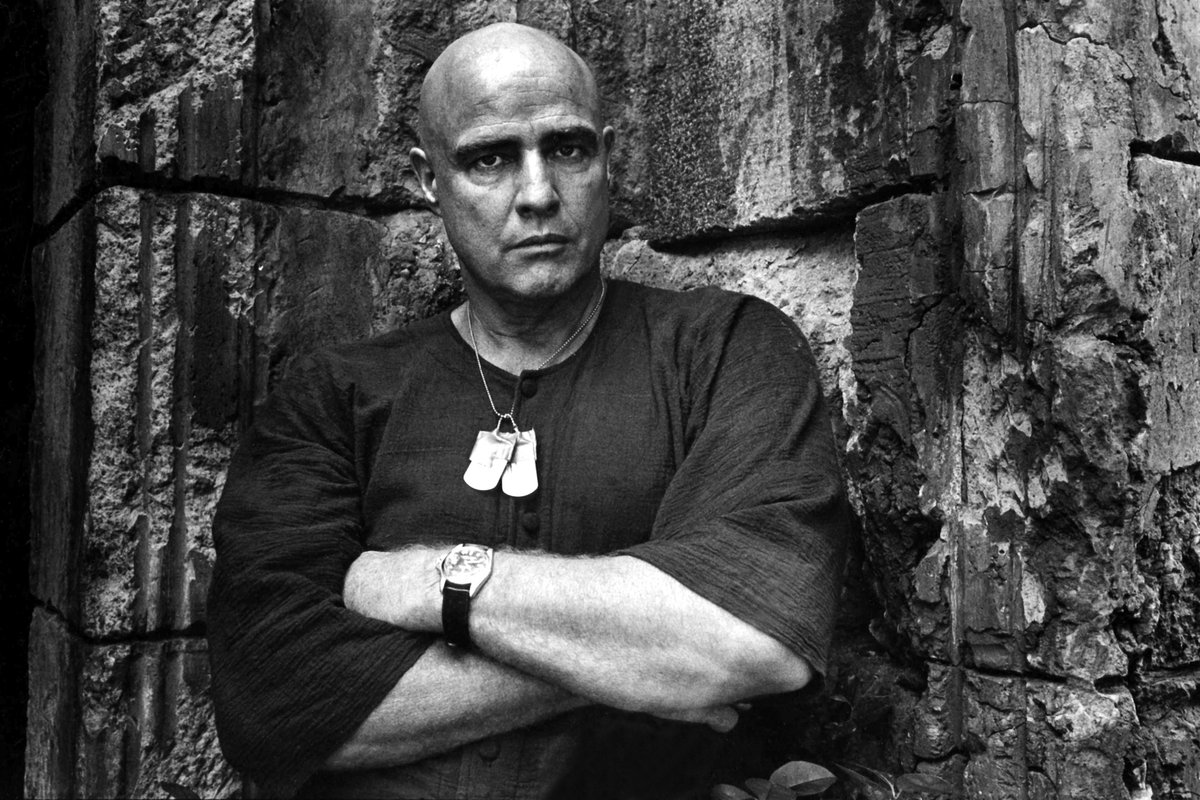
The physical creation of Harkonnen was a huge task. Villeneuve described the Baron to Mowat as having “pale alopecia”, leading Mowat to take inspiration from Marlon Brando’s Colonel Kurtz in Apocalypse Now. Harkonnen ended up a combination of suit and prosthetics.
41/62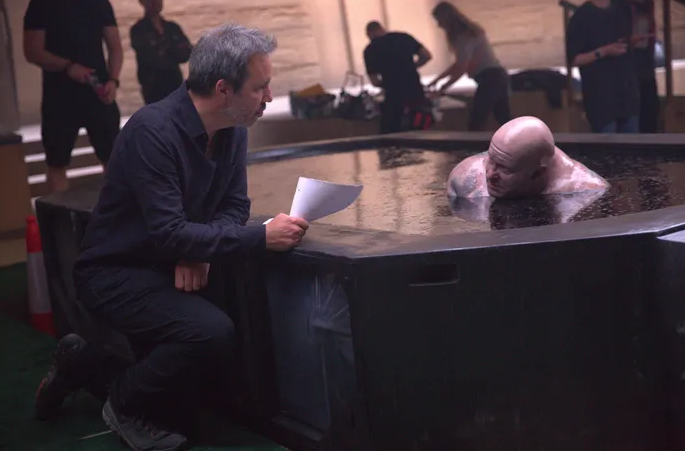

41/62
42
Practical rigs were attached to Skarsgård's body to allow the Baron to be levitated. The levitation was achieved practically with a ‘seesaw’ rig, but the suspensor device attached to his back was added in post using digital effects.
42/62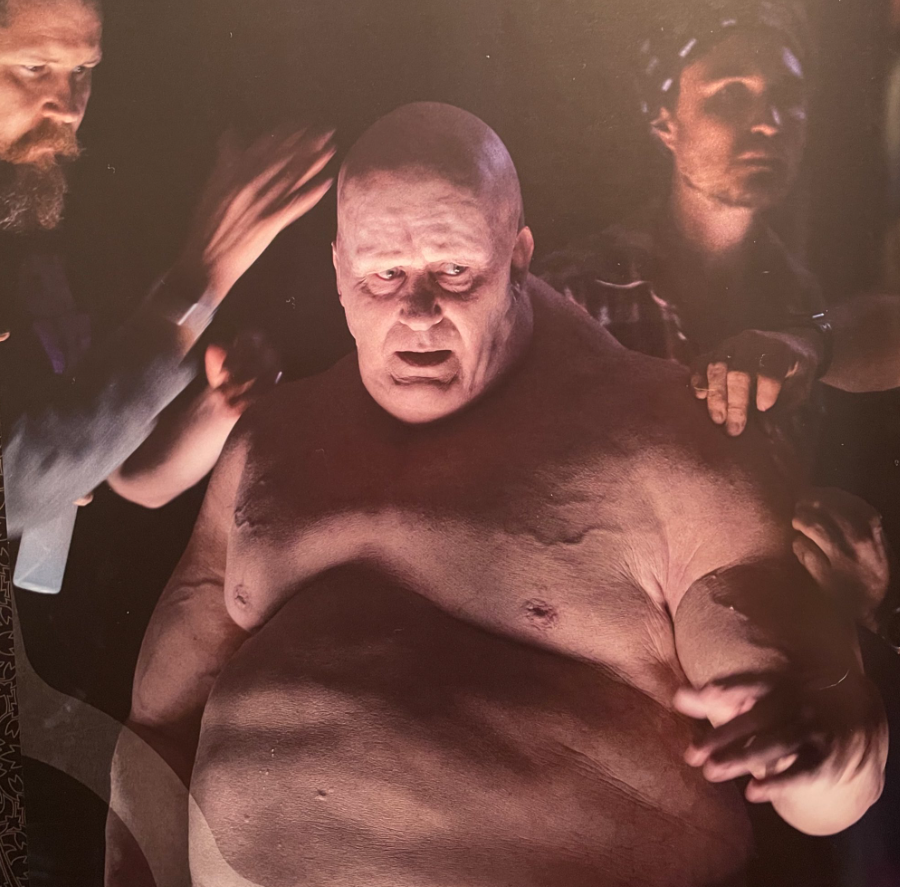

42/62
43
To create the various languages for the film, Villeneuve brought in linguistic expert David J. Peterson, who had worked on Game Of Thrones (among many other productions). He created the Fremen language, deriving from Arabic, Hebrew and Sanskrit.
43/62

43/62
44
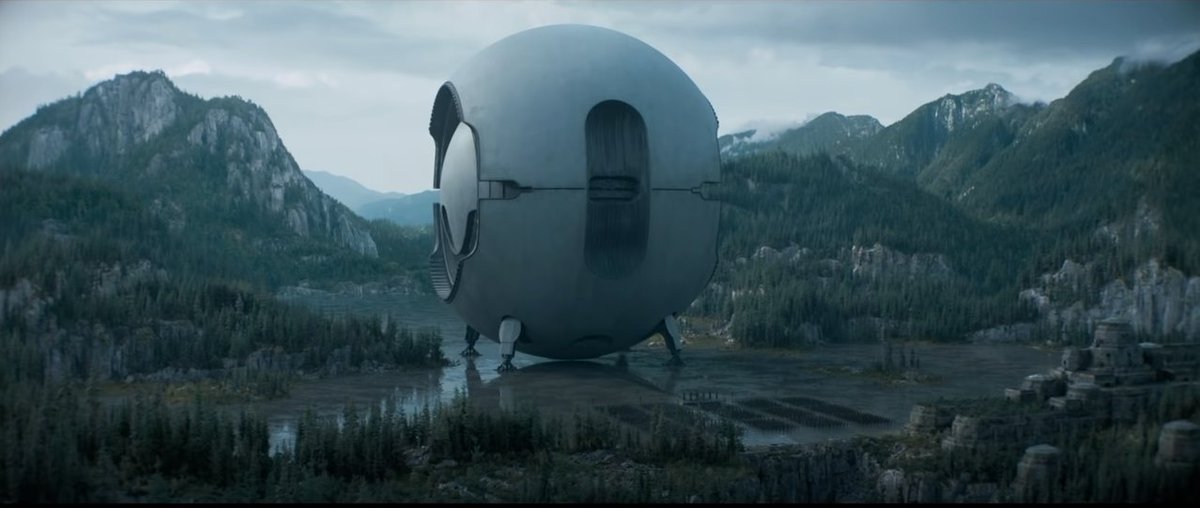
In researching locations for shooting, production designer Patrice Vermette used Google Earth. The ocean world of Caladan scenes were filmed in Stadlandet, Norway, and the Arrakis desert scenes were shot in Jordan and Abu Dhabi. Reshoots took place in Budapest, too.
44/62

44/62
45
The film was shot over 4 months, and not without problems. Chalamet said shooting days could reach temperatures of 120 degrees, and Ferguson said that most of the time they could only shoot between 5:30am and 7am, as it was too hot otherwise.
45/62

45/62
46
In an early scene, we see Paul and Dr Yueh locked in quit conversation. The language they are speaking is Mandarin. It was Villeneuve’s idea to speak the language, with coaching from Chang Chen, who praised Chalamet’s "perfect pronunciation.”
46/62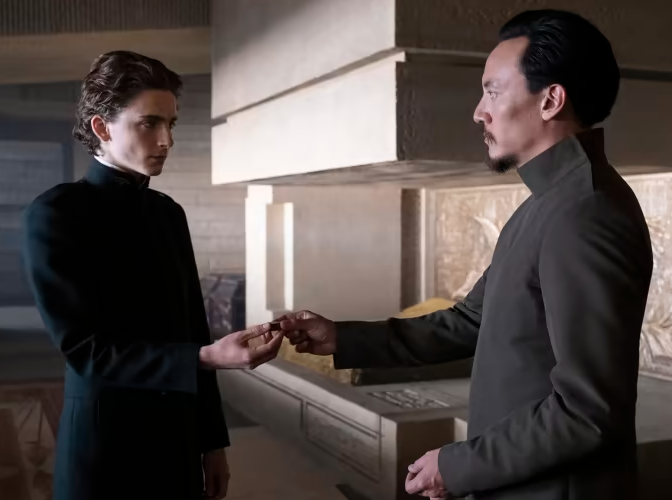
46/62
47
The small book that Gurney looks through several times is a nod to the Orange Catholic Bible, the main religious text of the Imperium referenced in the novels. It is a combination of the main religions of ancient Earth.
47/62
47/62
48
David Dastmalchian plays Piter De Vries, Mentat of House Harkonnen, and said he was terrified of the Baron: “It’s horrifying… yet through that design, his eyes and voice are the most powerful part. He scared me." The fact that Skarsgård was naked maybe didn’t help.
48/62

48/62
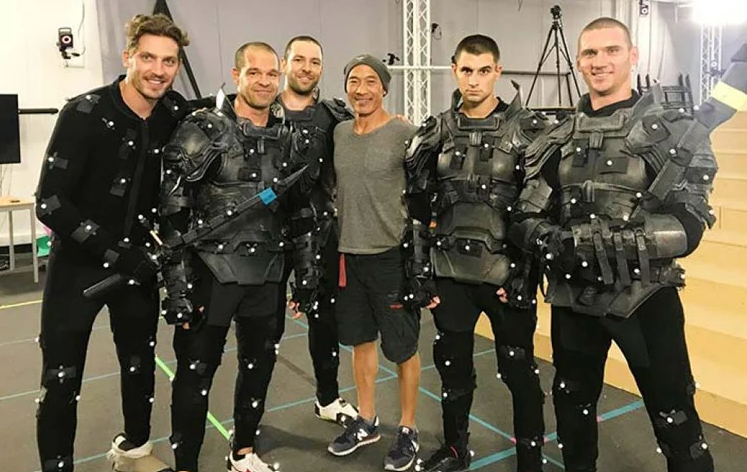
49
The battle sequence of Paul’s vision was created using motion capture. Only a few actors were filmed and then replicated onto the screen many times over to create a battle of hundreds of soldiers, with sandworms and explosions added too.
49/62
49/62
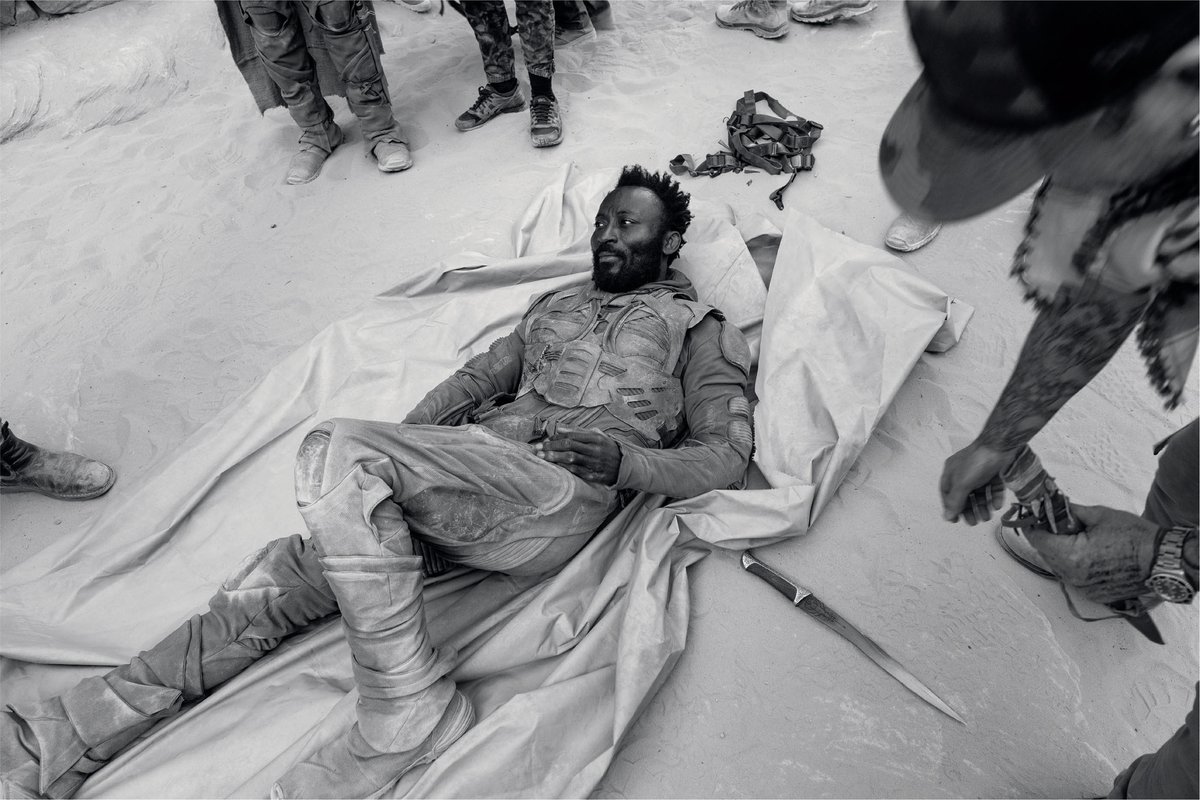
50
One of the key designs was the Stillsuits worn on Arrakis. Jacqualine West designed the suit, changing them to be a dark colour to make them more visible to cameras. And over 250 were physically created for filming, without zippers.
50/62


50/62
51
The sandworms were designed by Villeneuve and his design team, making them “prehistoric”. The process of creating the creatures took a year, starting with conversations around how they would live, the texture of their skin, and how it would eat under the sand.
51/62
51/62
52
The sandworms were created through CGI and months was spent figuring out how they would move and affect the sand. Special-effects supervisor Gerd Nefzer designed a vibrating 8x8ft steel plate to bury in the sand and signify an approaching sandworm.
52/62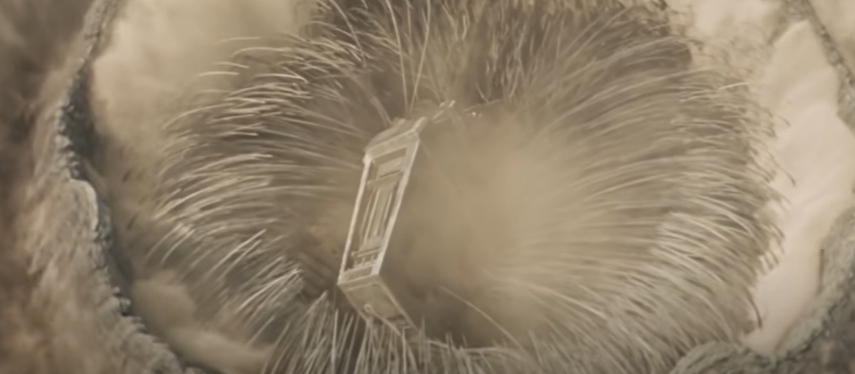
52/62
53
Black Swan choreographer Benjamin Millepied, was hired by Villeneuve to teach the sandwalk to Chalamet and Ferguson. Chalamet said perfecting the move was one of his biggest challenges working on the film.
53/62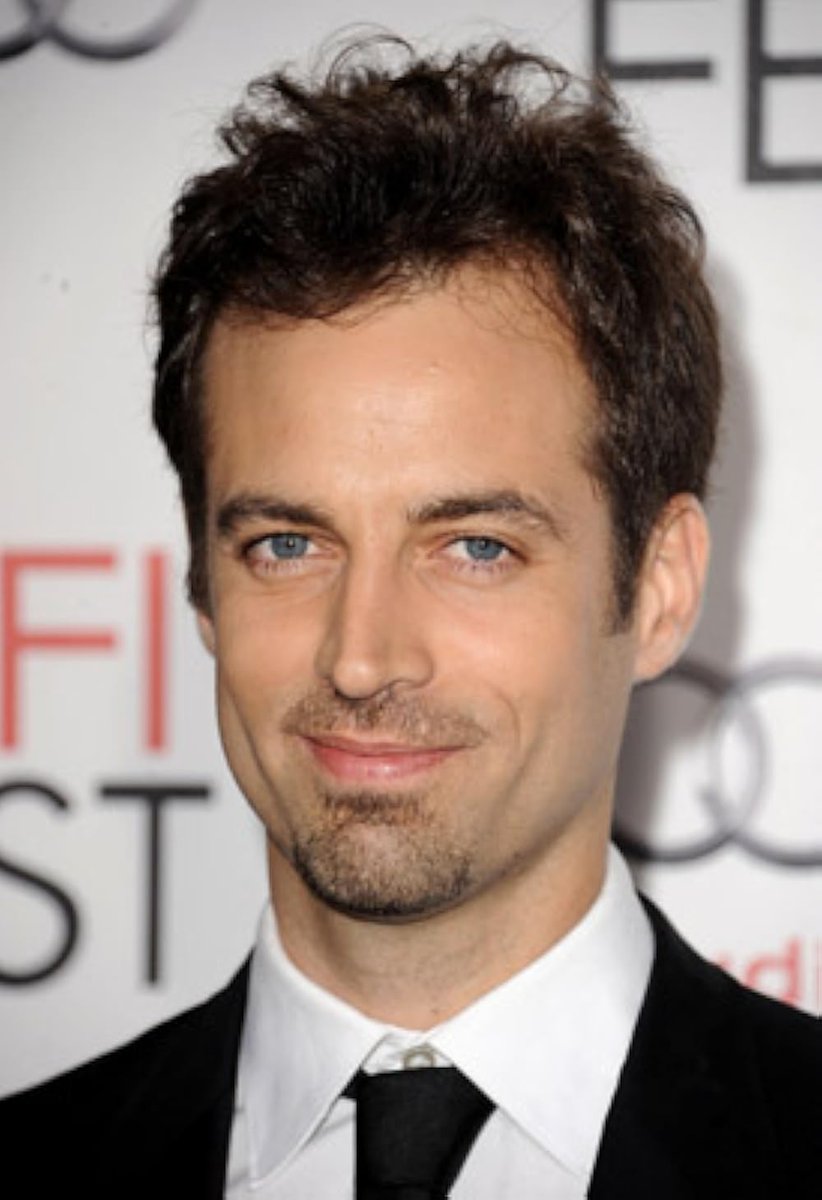

53/62
54
The Harkonnen soldier who suggests throwing Paul out of the ornithopter was played by Stephen Collins, a deaf actor. This is a nod to the books, where the Harkonnens chose a deaf soldier to oversee Paul and Jessica so as not to be affected by the Voice.
54/62

54/62
55
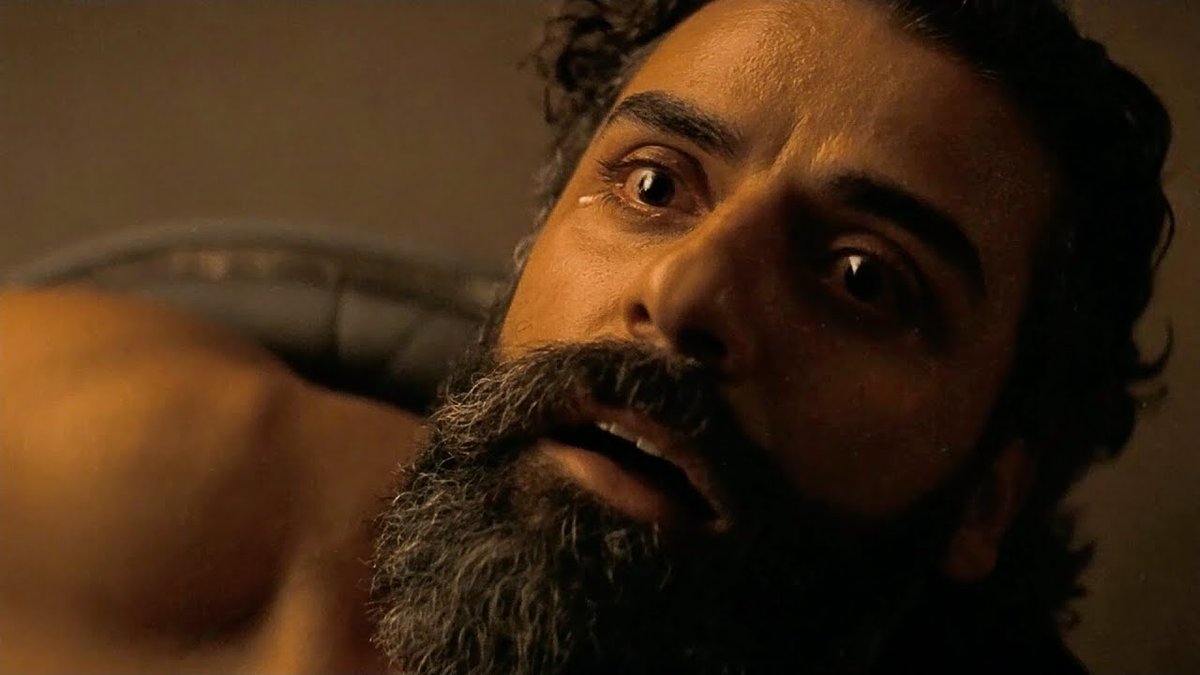
Leto's death was the final scene filmed by Isaac and, seeing parallels with Christ’s crucifixion, he suggested filming it naked, and Villeneuve agreed.
55/62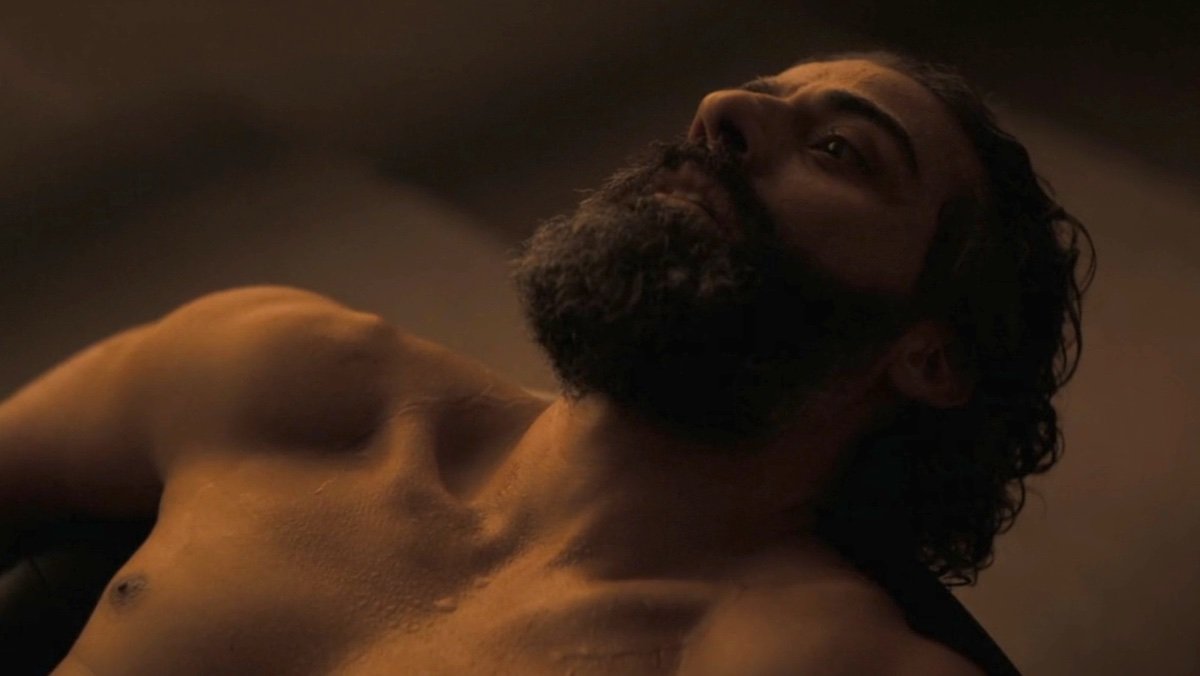
55/62
56
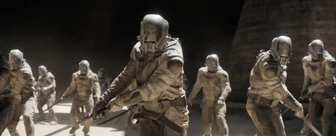
The Sardaukar army's chants were created by a choir of throat singers based upon traditions from Mongolia, Tibet and Northern Europe. And the Sardaukar's fighting style was based on Russian soldiers in WWII: wanting to mow down the enemy.
56/62
56/62
57
The Arrakeen invasion sequence was filmed on soundstages in Budapest, Hungary. It was a combination of digital and practical effects – the explosions were filmed for real and were so big they reached heights of 5km.
57/62


57/62
58
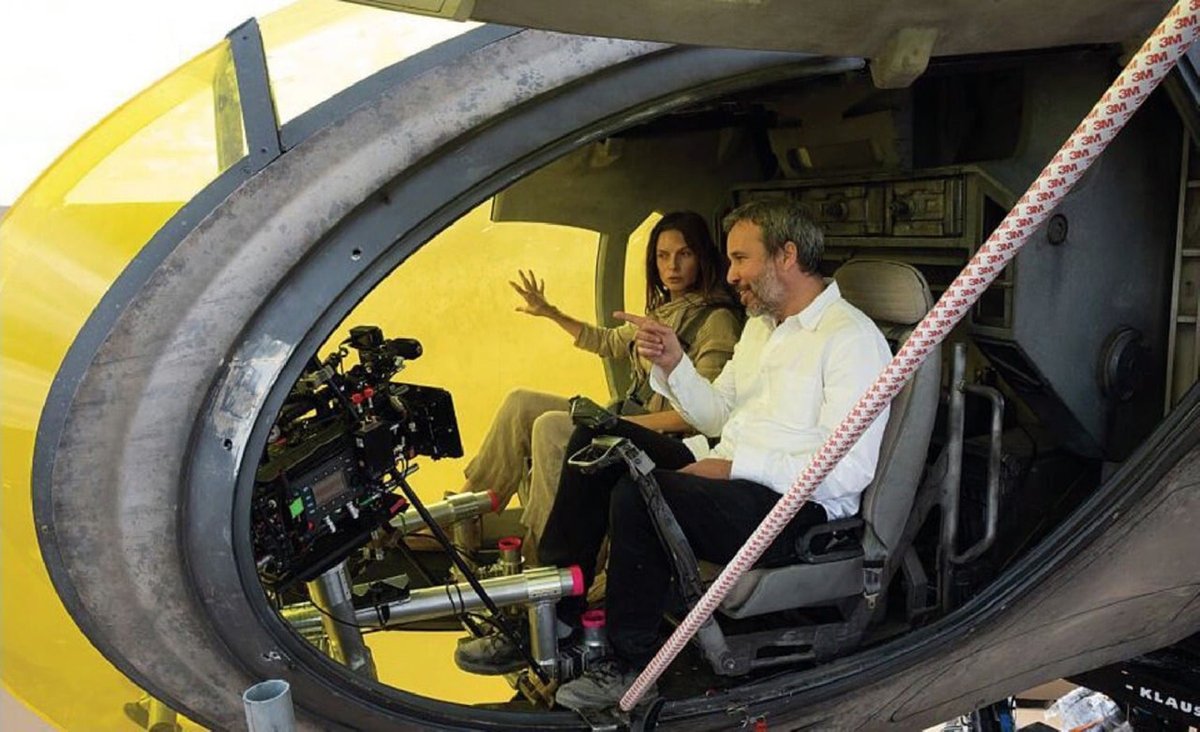
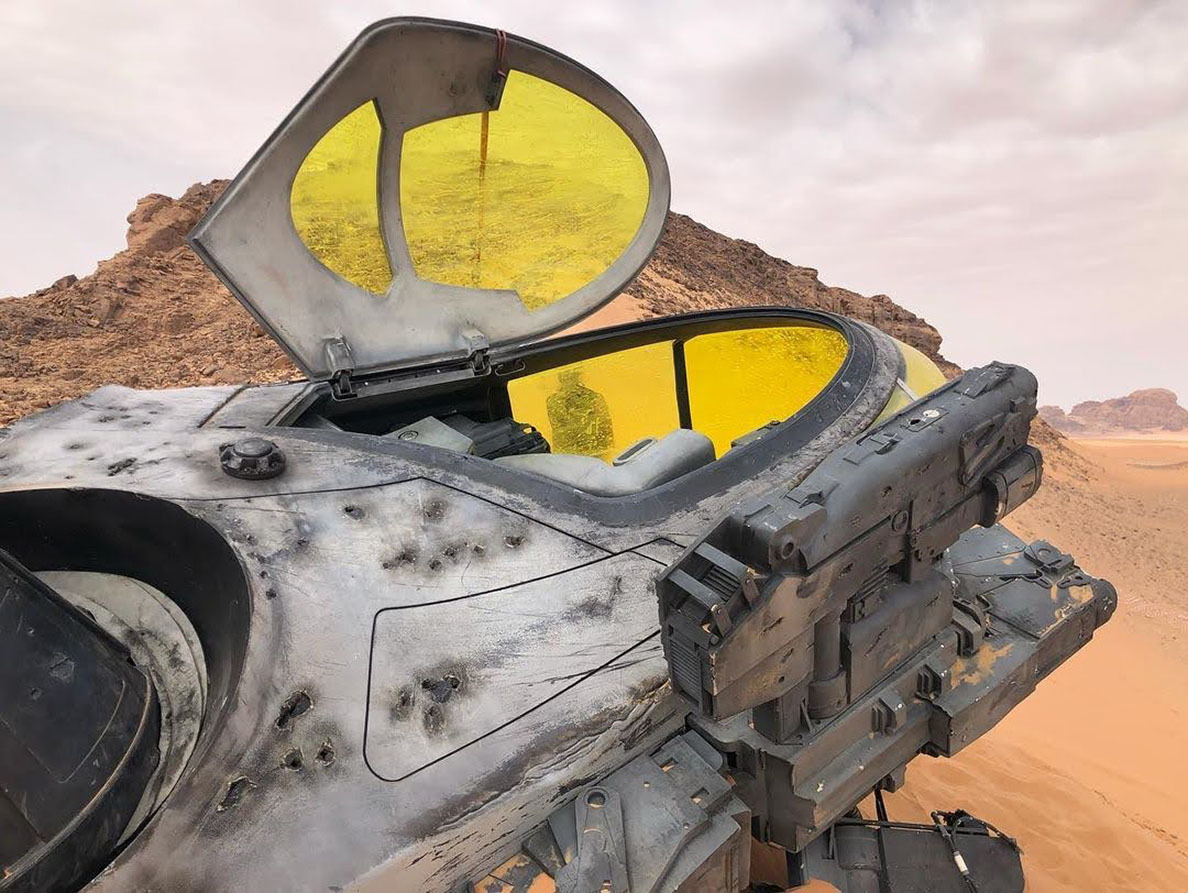
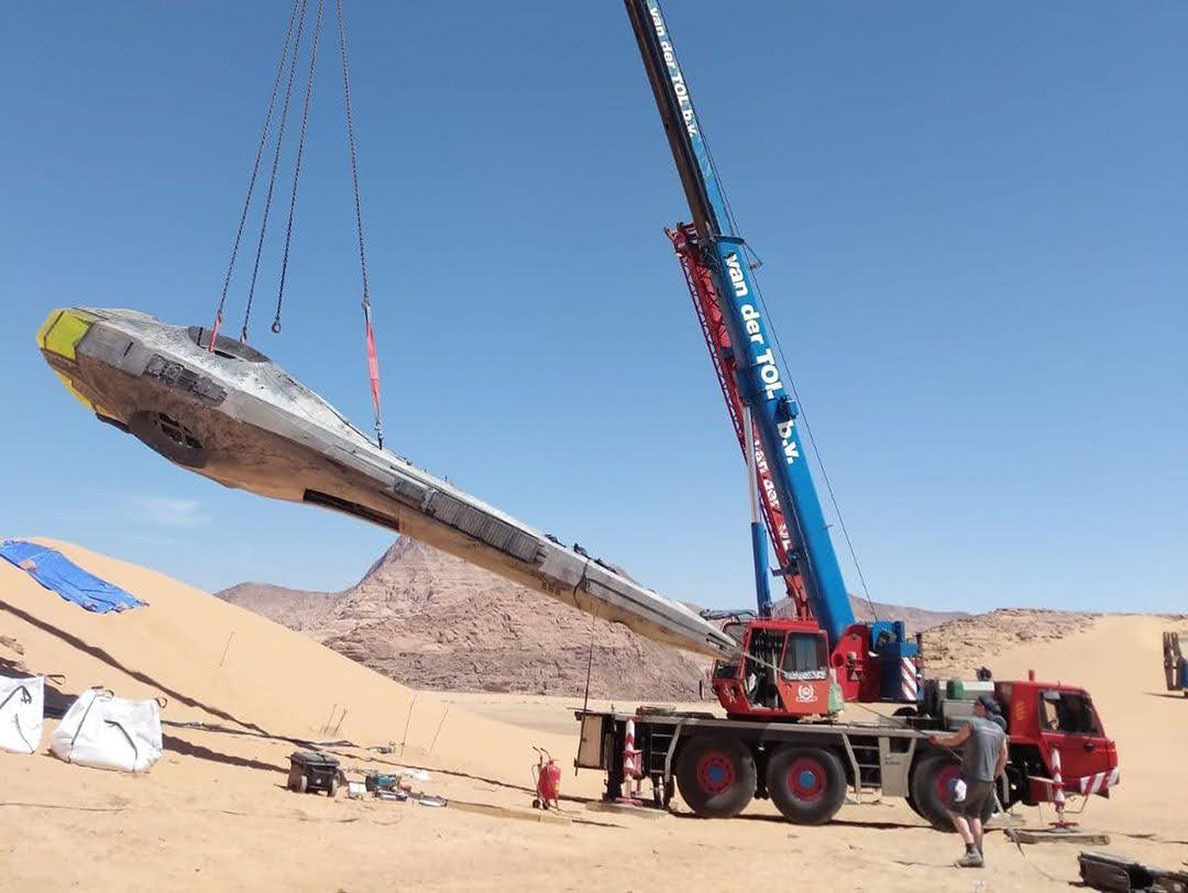
The idea for the dragonly appearance of the ornithopters came from Villeneuve and was designed by artist Sam Hudecki. Two functional ornithopter models, 48ft and 75ft, were created for filming, weight 11 tons. Cranes were used to make the models fly for filming.
58/62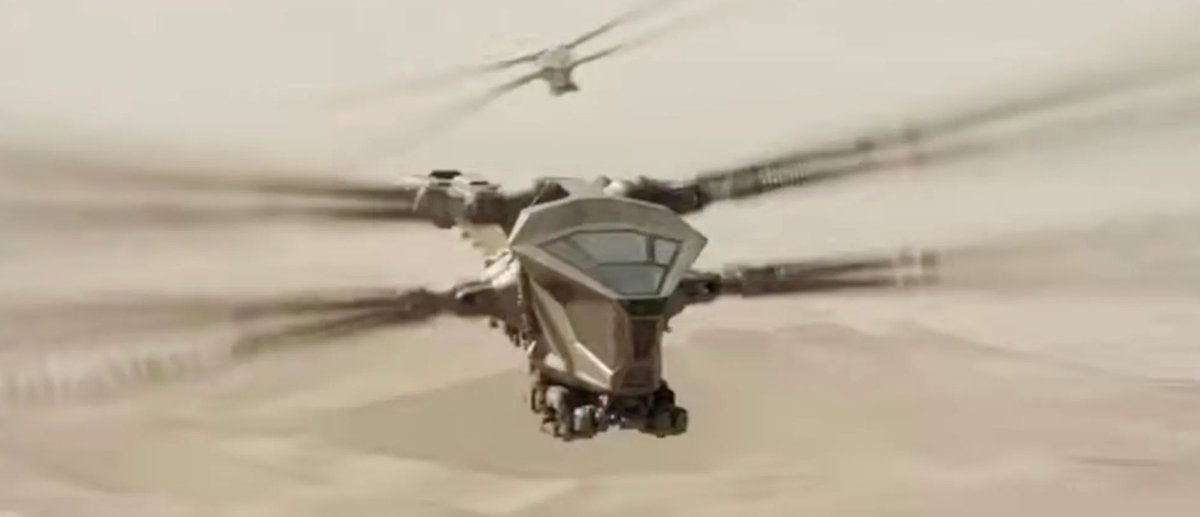
58/62
59
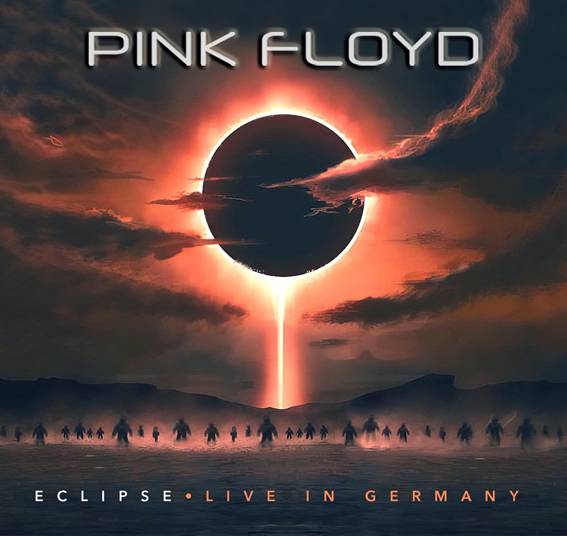
The first full trailer for the film was scored with a version of Pink Floyd's Eclipse by Hans Zimmer. This was a nod to Alejandro Jodorowsky's attempted adaptation; he planned for the score to be written by Pink Floyd.
59/62
59/62
60
At the time of release, Dune became caught up in the COVID-19 lockdown. It was scheduled for a release in November 2020, eventually opening in October 2021. It was also released at the same time on HBO Max, leading Villeneuve to say “They’ve killed the film.”
60/62

60/62
61
Despite the pandemic, the film still made money. On a budget of $165m, it grossed $397m worldwide and won 6 Academy Awards, including Best Score, Sound, Visual Effects, Editing, Production Design, and Cinematography. Dune: Part Two was quickly greenlit by WB.
61/62

61/62
62
Finally… if you want yet more Dune, Hans Zimmer composed a second Dune soundtrack He wrote original music for The Art and Soul of Dune, a making-of book written by one of the movie’s producers, Tanya Lapointe.
62/62

62/62
63
If you liked our making of story of DUNE: PART ONE, please share the opening post.
All The Right Movies@ATRightMovies
DUNE: PART ONE was released 4 years ago today. Acclaimed as one of the great science fiction films of the 21st century, and among the best of director Denis Villeneuve, the making of story is as epic as you would expect…
1/62
1/62
64
Enjoy this thread? The All The Right Movies podcast is full of deep dives, laughs and opinions as we tell “the story of Hollywood, one film at a time.” Listen now.
alltherightmovies.com/feature/listen…
alltherightmovies.com/feature/listen…
