Auction Market Theory (simplified) a thread 🧵

Luckshury@Luckshuryy
5 views
Apr 23, 2025
~2 min read
1
Auction Market Theory (simplified)
a thread 🧵
a thread 🧵
2
what is auction market theory:
a concept (not a strategy) which discusses how buyers and sellers interact within the market.
using a combination of:
- price
- volume
- time
we can determine which state of auction the market is in, either balance or imbalance.
a concept (not a strategy) which discusses how buyers and sellers interact within the market.
using a combination of:
- price
- volume
- time
we can determine which state of auction the market is in, either balance or imbalance.
3
balance:
where price has found acceptance, and where buyers and sellers are willing to trade within a fair value range.
fair value can be identified as the value area, where the majority of transactions have been occurring (68%).
deviations outside of the VA can be viewed as a premium/discounts to the current fair value price.
in a balanced (efficient market) you will tend to see:
- slower price action
- thicker books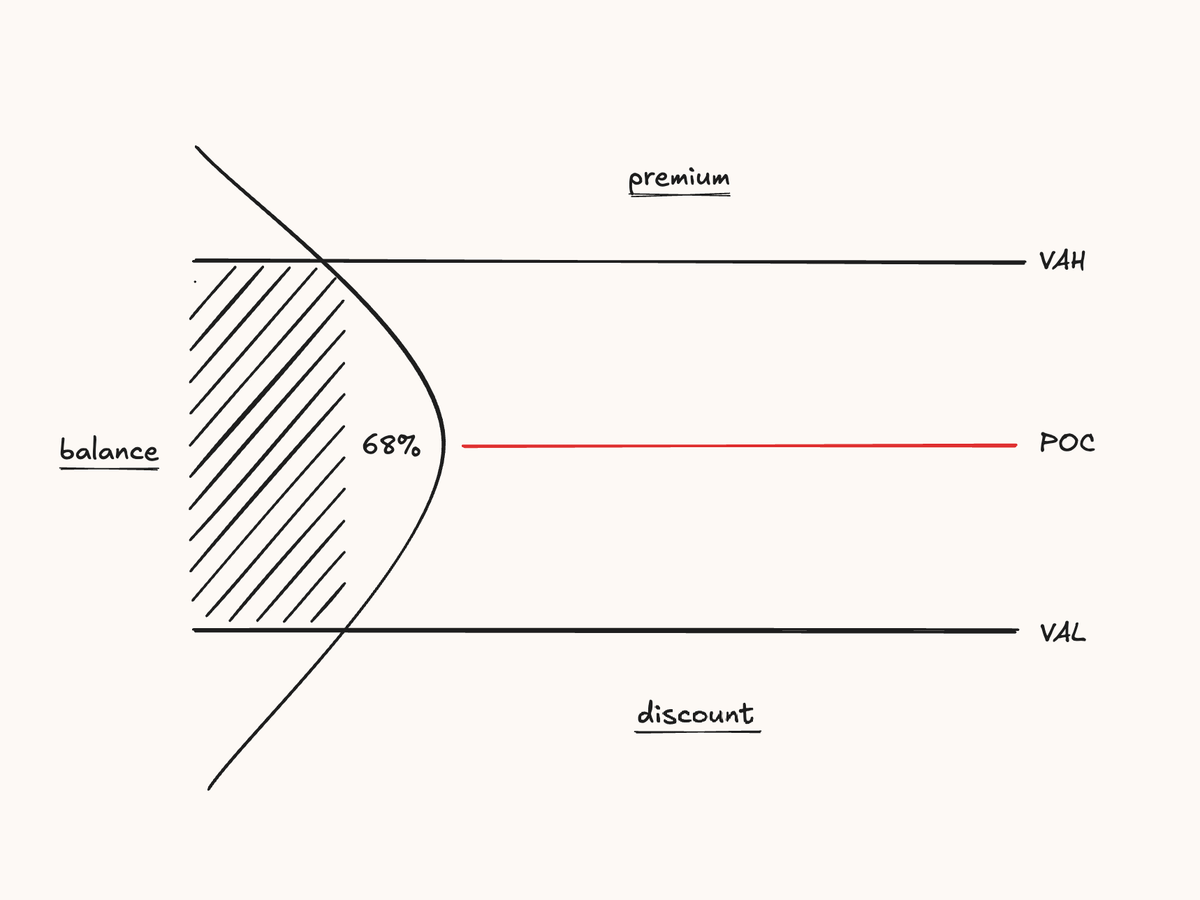
where price has found acceptance, and where buyers and sellers are willing to trade within a fair value range.
fair value can be identified as the value area, where the majority of transactions have been occurring (68%).
deviations outside of the VA can be viewed as a premium/discounts to the current fair value price.
in a balanced (efficient market) you will tend to see:
- slower price action
- thicker books
4
imbalance:
when price breaks out of a balanced market it will tend to trend which is the causation from an imbalance.
imbalances occur after a strong volume break of either end of the rangebound "efficient market".
one side of the market has a clear stronghold. which you do not want to step in front of so aggressively until balance is found again.
v shape reversals are not so common.
market transitioning from balance → imbalance
example ↓
when price breaks out of a balanced market it will tend to trend which is the causation from an imbalance.
imbalances occur after a strong volume break of either end of the rangebound "efficient market".
one side of the market has a clear stronghold. which you do not want to step in front of so aggressively until balance is found again.
v shape reversals are not so common.
market transitioning from balance → imbalance
example ↓
5
volume profiles:
are my go to way of identifying premium/discounts and where current balance is, if the market is within a balanced state.
I take my volume profile pulls after the market has found its balanced state through either:
1. time spent going sideways after imbalance (new range forming)
2. revisitation of previous area of balance
balanced markets can span across multiple days/weeks, so it makes sense to not look at balance solely on an individual period basis like daily/weekly.
using the volume profile will overall make it clearer:
- when price is breaking/finding balance
- deviating from current balance (discount/premium)
- revisiting previous areas of balance
imbalance (trend) → balance (range) → imbalance (trend)
example ↓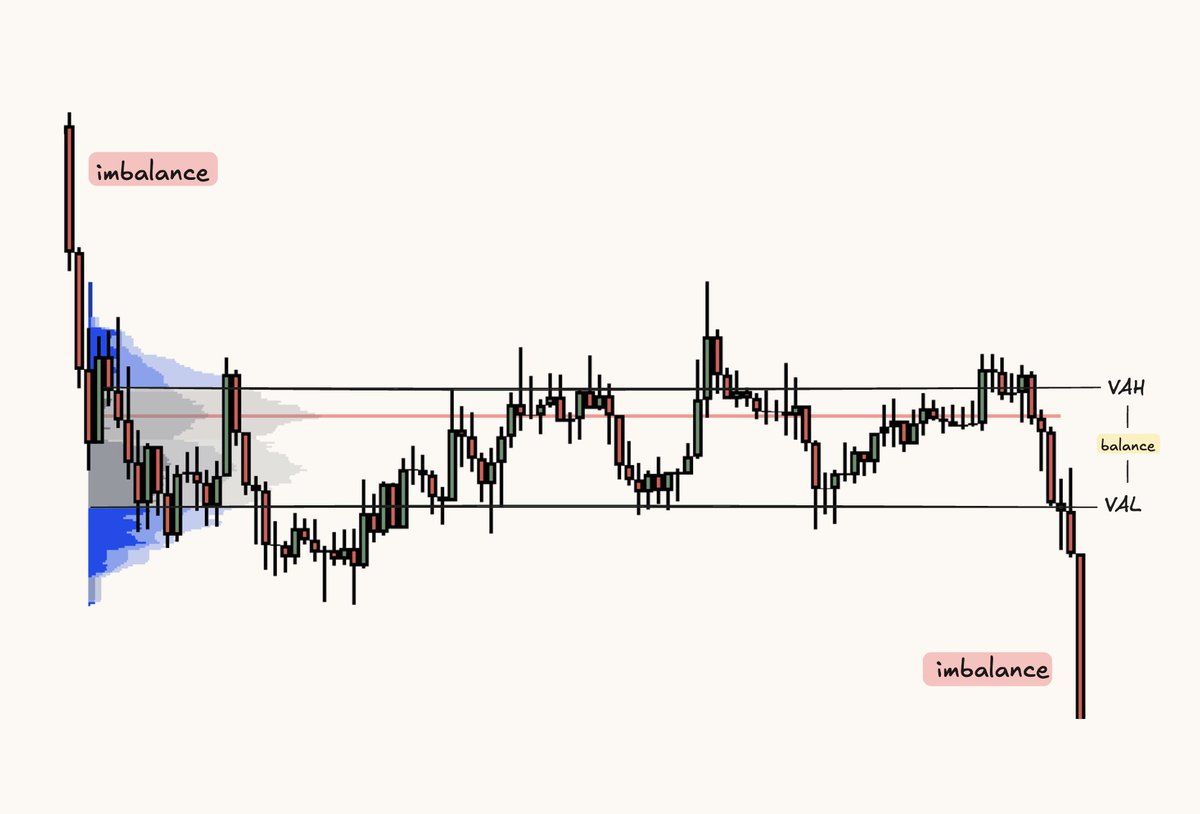
are my go to way of identifying premium/discounts and where current balance is, if the market is within a balanced state.
I take my volume profile pulls after the market has found its balanced state through either:
1. time spent going sideways after imbalance (new range forming)
2. revisitation of previous area of balance
balanced markets can span across multiple days/weeks, so it makes sense to not look at balance solely on an individual period basis like daily/weekly.
using the volume profile will overall make it clearer:
- when price is breaking/finding balance
- deviating from current balance (discount/premium)
- revisiting previous areas of balance
imbalance (trend) → balance (range) → imbalance (trend)
example ↓
6
use cases:
although not a strategy, the theory can help identify when markets transition between market conditions and much more:
1. knowing when the market is within an imbalanced state can prevent from stepping in front of a strong move.
2. Identifying when price deviates from fair value without a strong volume breakout can indicate premium or discounted failed auctions.
3. recognising when price revisits an area of old balance can reveal significant levels within the previous value area (poc).
also acceptance into the previous balance often leads to a rotation towards the opposite side.
although not a strategy, the theory can help identify when markets transition between market conditions and much more:
1. knowing when the market is within an imbalanced state can prevent from stepping in front of a strong move.
2. Identifying when price deviates from fair value without a strong volume breakout can indicate premium or discounted failed auctions.
3. recognising when price revisits an area of old balance can reveal significant levels within the previous value area (poc).
also acceptance into the previous balance often leads to a rotation towards the opposite side.
7
thanks for reading, let me know if you found this valuable, any likes are appreciated.
let me know if you have any questions below or specific topics covered, and ill do my best to get through them all.
let me know if you have any questions below or specific topics covered, and ill do my best to get through them all.