Top 6 methods to discover parameters (possibly vulnerable to SQLi,...

Intigriti@intigriti
29 views
Mar 04, 2025
~2 min read
Advertisement
1
Top 6 methods to discover parameters (possibly vulnerable to SQLi, XSS, SSRF, ...) that most bug bounty hunters miss! 🤑
A thread! 🧵 👇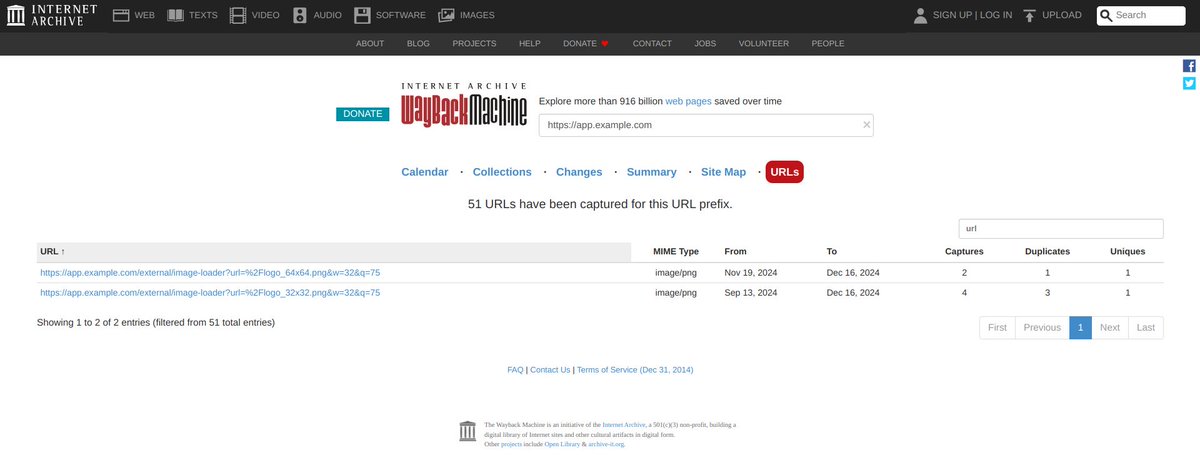
A thread! 🧵 👇
2
1️⃣ Crawling
Crawling the target and fetching parameter names from (hidden) HTML form fields is the most straightforward approach to discovering new parameters
You can use tools like paramspider or GAP to automate this entire process!
Crawling the target and fetching parameter names from (hidden) HTML form fields is the most straightforward approach to discovering new parameters
You can use tools like paramspider or GAP to automate this entire process!
3
Other proxy intercepting tools like Burp Suite & ZAP also support form field highlighting which can help you make hidden forms visible!
Check out our previous post on this topic to learn how to enable this option to find more parameters!

Check out our previous post on this topic to learn how to enable this option to find more parameters!
Intigriti@intigriti
Hidden parameters can lead to all sorts of vulnerabilities, from XSS to SQLi and potentially even command injections! 🤑
This useful option in Burp Suite makes every hidden input field (often with a reference to a hidden parameter) visible! 🤠
👇
This useful option in Burp Suite makes every hidden input field (often with a reference to a hidden parameter) visible! 🤠
👇
4
2️⃣ JavaScript files
JavaScript files contain important references to the target you're testing... including parameters!
On some occasions, you can even come across functions that process user input in (unsafe) ways which can result in DOM-based vulnerabilities!
JavaScript files contain important references to the target you're testing... including parameters!
On some occasions, you can even come across functions that process user input in (unsafe) ways which can result in DOM-based vulnerabilities!
5
One way to find new query parameters via JS files is by collecting variable names and transforming them into query parameters
Sometimes, these are valid parameters that get processed by the backend in unsafe ways, a tip from @hakluke! 👇
x.com/intigriti/stat…
Sometimes, these are valid parameters that get processed by the backend in unsafe ways, a tip from @hakluke! 👇
x.com/intigriti/stat…
6
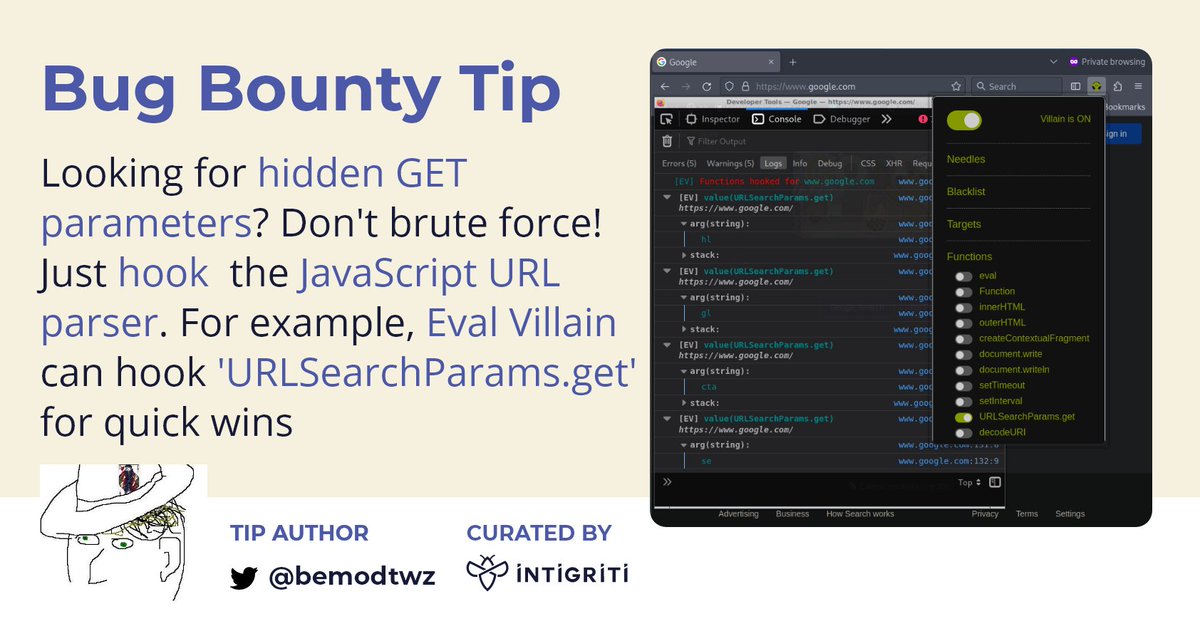
@hakluke Another way to find (hidden) query parameters is by intercepting them on the client side!
Tools like Eval Villain let you know when a certain query parameter was processed by the DOM
Take a look at this Bug bounty tip shared by @bemodtwz!
Tools like Eval Villain let you know when a certain query parameter was processed by the DOM
Take a look at this Bug bounty tip shared by @bemodtwz!
Intigriti@intigriti
Being a hacker means thinking out of the box!
@bemodtwz innovates on the GET parameter brute-forcing by hooking JS functions to find new GET parameters as they're being used!
#bugbounty #bugbountytips 👇
@bemodtwz innovates on the GET parameter brute-forcing by hooking JS functions to find new GET parameters as they're being used!
#bugbounty #bugbountytips 👇
7
@hakluke @bemodtwz 3️⃣ Parameter bruteforcing
Bruteforcing parameters is another effective way of enumerating potential query parameters!
Try to also bruteforce parameters using different content types and HTTP methods!
Bruteforcing parameters is another effective way of enumerating potential query parameters!
Try to also bruteforce parameters using different content types and HTTP methods!
8
Luckily for us, several open-source tools can help us automate this task, including bruteforcing with multiple content types & HTTP methods!
Here's a thread with one of the most important open-source tools that you'd definitely want to try out on your next target! 👇
Here's a thread with one of the most important open-source tools that you'd definitely want to try out on your next target! 👇
Intigriti@intigriti
4 tools to find hidden query parameters! 🛠️
A thread! 👇
A thread! 👇
9
4️⃣ Re-using parameters
Some parameters actually get re-used on multiple endpoints/application routes.
Look through your Burp Suite/ZAP proxy log to collect parameter names and try to re-use them on the same endpoint that you're testing!
Sometimes, you'll come across parameter names that are accepted on multiple endpoints!
Some parameters actually get re-used on multiple endpoints/application routes.
Look through your Burp Suite/ZAP proxy log to collect parameter names and try to re-use them on the same endpoint that you're testing!
Sometimes, you'll come across parameter names that are accepted on multiple endpoints!
10
5️⃣ Google/Github dorking
Google or Github dorking can help us filter indexed pages that contain query parameters! With more filters, we can further narrow down our search to a single app route or endpoint to only find query parameters for a particular URL!
Check out the example below! 👇
Google or Github dorking can help us filter indexed pages that contain query parameters! With more filters, we can further narrow down our search to a single app route or endpoint to only find query parameters for a particular URL!
Check out the example below! 👇
11
6️⃣ Internet Archive
As a last resort, you can check the Internet Archive (Wayback Machine) for archived URLs that contain query parameters!
Simply navigate to web.archive.org and search for your target! Next, browse through the results and look for any saved query parameters!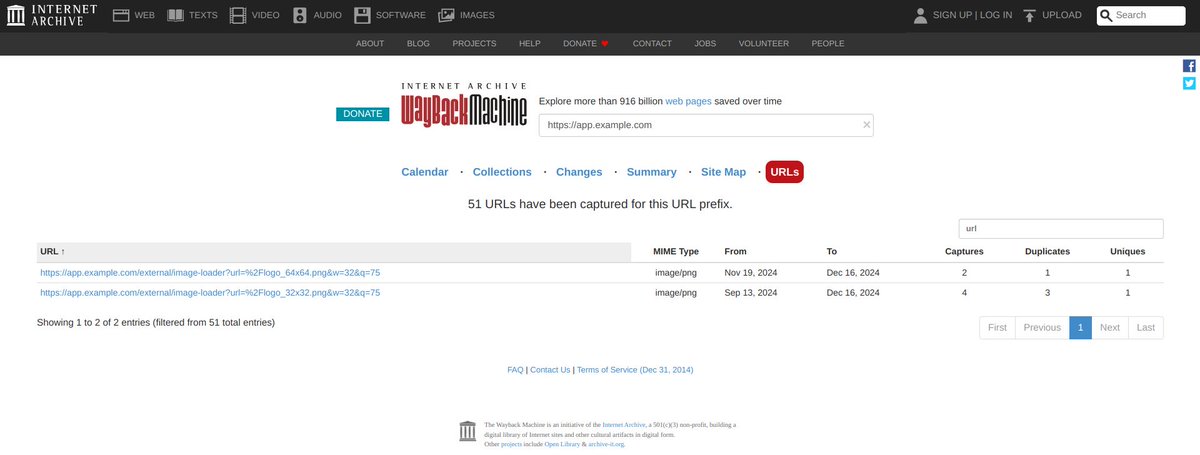
As a last resort, you can check the Internet Archive (Wayback Machine) for archived URLs that contain query parameters!
Simply navigate to web.archive.org and search for your target! Next, browse through the results and look for any saved query parameters!
12
@hakluke @bemodtwz That was it! We hope you've learned something new from this thread!
If you have enjoyed this thread:
1. Follow us @INTIGRITI for more of these threads! 🐛
2. Retweet the first Tweet to share it with your friends 💙
If you have enjoyed this thread:
1. Follow us @INTIGRITI for more of these threads! 🐛
2. Retweet the first Tweet to share it with your friends 💙
