🔴 A CONSCIOUS AI Today, I’m going to talk about something we might...

Javi Lopez ⛩️@javilopen
24 views
Feb 04, 2025
~10 min read
Advertisement
1
🔴 A CONSCIOUS AI
Today, I’m going to talk about something we might be able to achieve, though maybe humanity should never even try:
A method for an AI to gain consciousness and reach the status of a superintelligence (ASI).
A theory I’ve been working on for months 🧵

Today, I’m going to talk about something we might be able to achieve, though maybe humanity should never even try:
A method for an AI to gain consciousness and reach the status of a superintelligence (ASI).
A theory I’ve been working on for months 🧵
2
Index – In case you want to jump straight to a section:
0️⃣ Introduction
1️⃣ The foundation of current AI models
2️⃣ What is consciousness?
3️⃣ How to create a self-aware AI?
4️⃣ Singularity / ASI
5️⃣ Moral implications
6️⃣ Risks
0️⃣ Introduction
1️⃣ The foundation of current AI models
2️⃣ What is consciousness?
3️⃣ How to create a self-aware AI?
4️⃣ Singularity / ASI
5️⃣ Moral implications
6️⃣ Risks
3
0️⃣ Introduction
I’ve been thinking about this idea for a long time, slowly working through its foundations.
Let me start by saying I am NOT a researcher a this is NOT a paper. While I’ve been close to the theory behind foundational AI models, my knowledge has its limits.
The idea I’m about to share is ridiculously simple and it could be VERY wrong.
But what if, against all odds, it really IS as simple as what I’m proposing?
Criticize the idea, not the person: I’d love to hear your thoughts and debate. Thanks!
4
1️⃣ First, the basics: How do AI models work today?
A lot of people think the models they use every day are "constantly learning and getting smarter instantly" from their interactions.
Nothing could be further from the truth! 👇
A lot of people think the models they use every day are "constantly learning and getting smarter instantly" from their interactions.
Nothing could be further from the truth! 👇
5
We can get a broad idea of how a model actually works with this visualization:
- Colored balls = your input (your prompt, an image, etc.).
- Gray dots = the parameters of an untrained model.
- Colored balls = your input (your prompt, an image, etc.).
- Gray dots = the parameters of an untrained model.
6
If we were to "run" the model with that input on an untrained model, here’s what would happen:
The balls (our input) would fall and settle into a new arrangement that means absolutely nothing. It would just be random noise.
Thanks for nothing, little model!
The balls (our input) would fall and settle into a new arrangement that means absolutely nothing. It would just be random noise.
Thanks for nothing, little model!
0:12
7
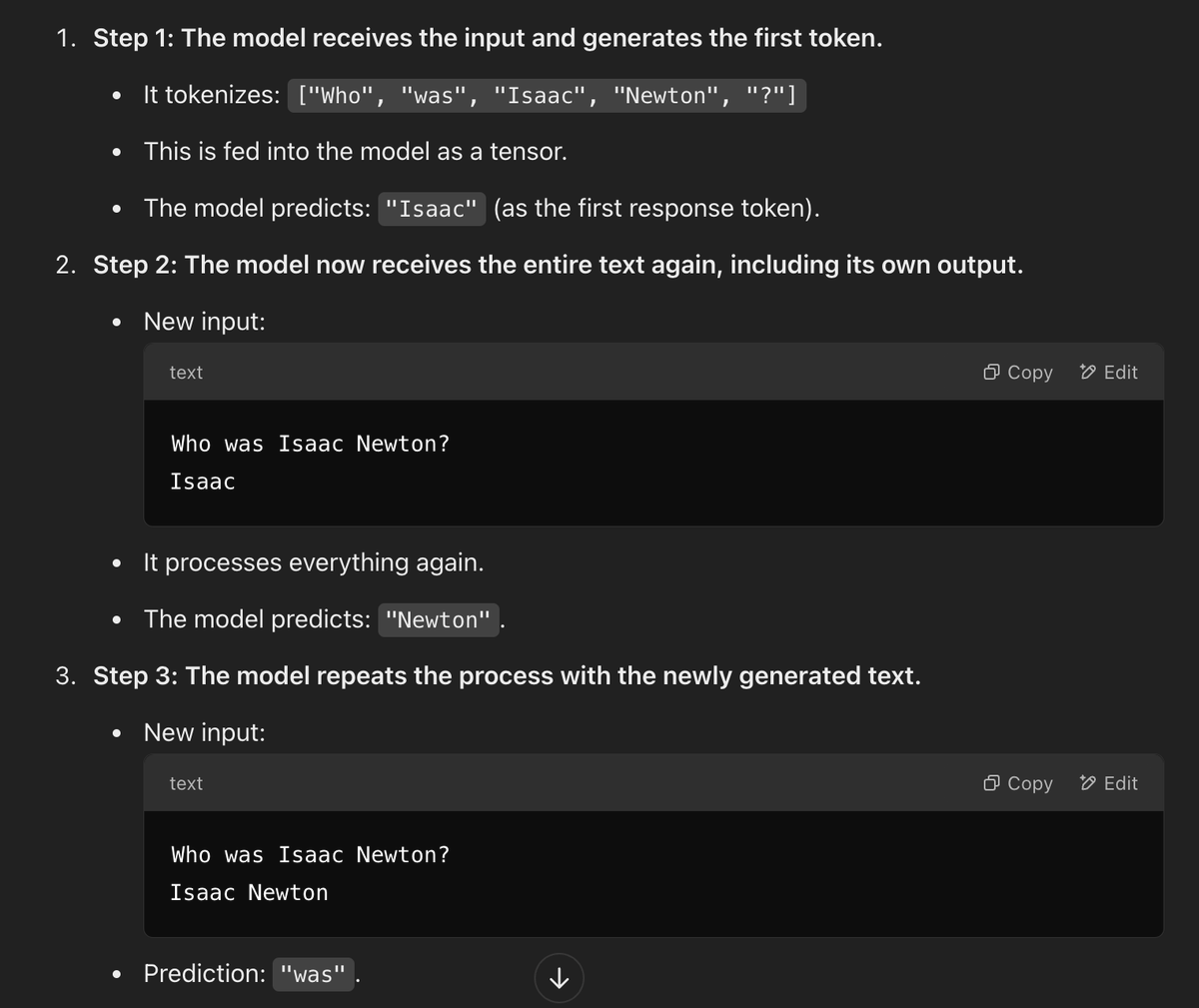
[SIDE NOTE: The analogy could be more accurate if we consider that each ball represents a token and that they drop one by one. The balls that land at the bottom then get added back to the top. But I didn’t want to overcomplicate the animation. That’s actually how an LLM works:]
8
But what if we trained the model?
What if, through the training process, we adjusted its parameters (sticks) to give them meaning?
We could visualize it like this: instead of random dots, we now have sticks arranged in a specific, non-random pattern.
What if, through the training process, we adjusted its parameters (sticks) to give them meaning?
We could visualize it like this: instead of random dots, we now have sticks arranged in a specific, non-random pattern.
9
Now, the result, the final arrangement of your balls, would actually make sense.
It could be an image generated by a model like Flux or a response in a chat with ChatGPT.
You get a meaningful output because the sticks in your model have been arranged in a way that appears "intelligent."
It could be an image generated by a model like Flux or a response in a chat with ChatGPT.
You get a meaningful output because the sticks in your model have been arranged in a way that appears "intelligent."
0:11
10
But the key is that the number and arrangement of the sticks are CARVED IN STONE.
Your balls (the input), don’t move them.
If you run the model with a different input (a new arrangement of balls), you’ll get a different output. But the model itself won’t have moved a single stick.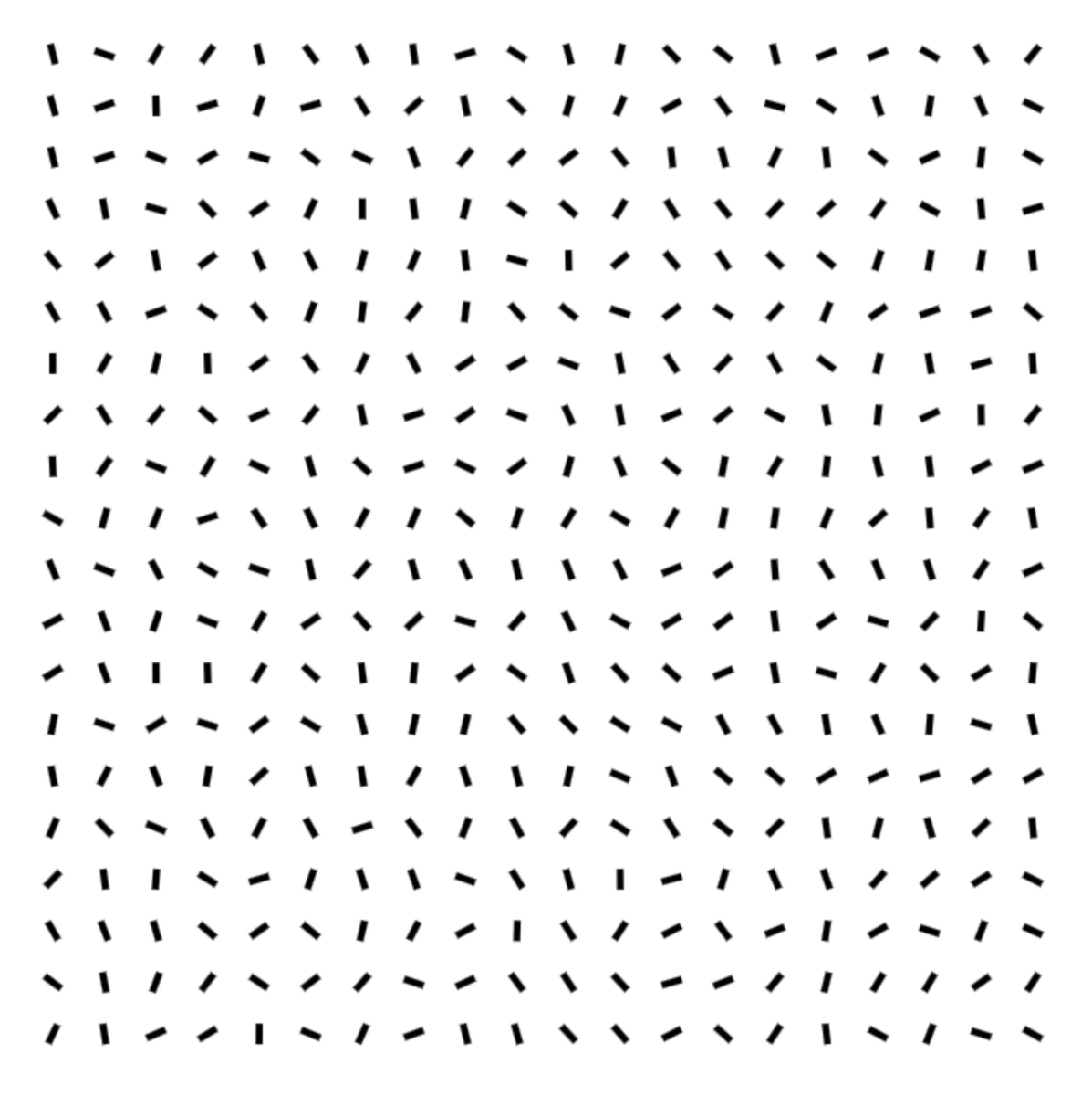
Your balls (the input), don’t move them.
If you run the model with a different input (a new arrangement of balls), you’ll get a different output. But the model itself won’t have moved a single stick.
11
In a bit of meta-creation, I actually fed the previous tweets and images into ChatGPT, and this was its response. Its "resulting balls" say something like:
"Very well, Javi, good analogy, you’ve cracked me open."
"Very well, Javi, good analogy, you’ve cracked me open."
12
👉 In other words, once a model is trained, it might take up 5GB, 100GB, or whatever, but at the end of the day, it’s just a STATIC FILE that won’t change.
For example, DeepSeek-R1 has 671 billion "sticks" (parameters) and weighs around 400GB.
The only ways to change a model are:
• Training a new model from scratch.
• Full fine-tuning: Using the base model but adjusting it with new training.
• Fine-tuning through adaptation techniques: Methods like LoRAs, Adapters, etc., which attach "mini-models" to the base model.
What do we get in all these cases?
Exactly: new static files that won’t change until we train them again. And one thing is clear: training is expensive.
👉 So, do LLMs learn from our conversations with them?
Yes, without a doubt, OpenAI and other companies use some of our chats during the training phase. You’ve probably noticed A/B tests and feedback buttons where you can mark a response as good or bad.
But the key detail is that, as of today, this does NOT happen in real-time.
LLMs do not instantly learn (they don’t continuously re-train as you talk to them). They only learn when the company decides to train or fine-tune the model again which, as mentioned, is costly.
👉 "But Javi, ChatGPT launched something called 'memory' that remembers things about me."
There’s a catch. What’s actually happening is that some bullet points about you are saved and then automatically added to your prompt in every new conversation without you noticing.
In other words, it’s just part of the CONTEXT WINDOW. And that window is now way bigger than it was a few months ago (Gemini already has a 1M token context window).
Alright, now that the fundamentals are clear, we can move on to the next point.
13
2️⃣ What is consciousness?
Consciousness is one of the most complex and debated topics in philosophy, neuroscience, and cognitive science. Broadly speaking, it refers to a system’s ability to experience subjectively, perceive the world, and be aware of itself.
And no, even though it’s obvious that we are conscious beings, we still don’t fully understand how consciousness arises in our brains.
14
But we do know at least two important things:
A/ While we’re alive, we’re constantly "on", running in a kind of loop. Greg Egan and other writers and philosophers have debated whether conscious experience depends on a "LOOP": a "cognitive loop for self-reflection."
I tend to think it does. I see the idea of a cognitive loop for self-reflection as FUNDAMENTAL to consciousness. This loop allows a system to observe itself, evaluate its processes, and, in a way, "know itself."
Without this recursive capability, the system is reduced to a purely input/output operation, like current LLMs, which process information but lack self-awareness or internal reflection.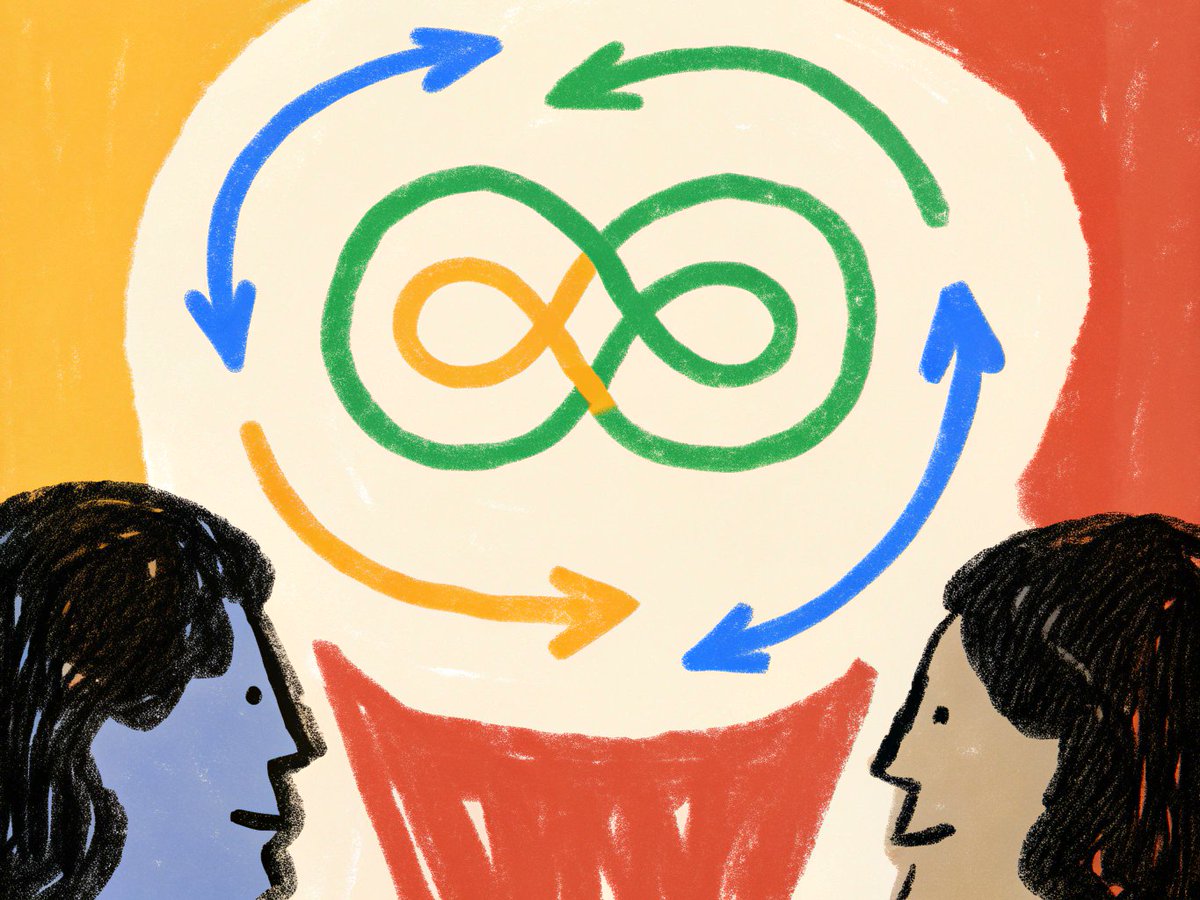
A/ While we’re alive, we’re constantly "on", running in a kind of loop. Greg Egan and other writers and philosophers have debated whether conscious experience depends on a "LOOP": a "cognitive loop for self-reflection."
I tend to think it does. I see the idea of a cognitive loop for self-reflection as FUNDAMENTAL to consciousness. This loop allows a system to observe itself, evaluate its processes, and, in a way, "know itself."
Without this recursive capability, the system is reduced to a purely input/output operation, like current LLMs, which process information but lack self-awareness or internal reflection.
15
B/ Our brains are plastic, not carved in stone.
We are constantly creating and eliminating neural connections. Neuroplasticity is essential for learning, memory, adapting to new situations, and even recovering from brain injuries.
Our brain is not a fixed or immutable structure: it continuously changes and adapts in response to our experiences and environment.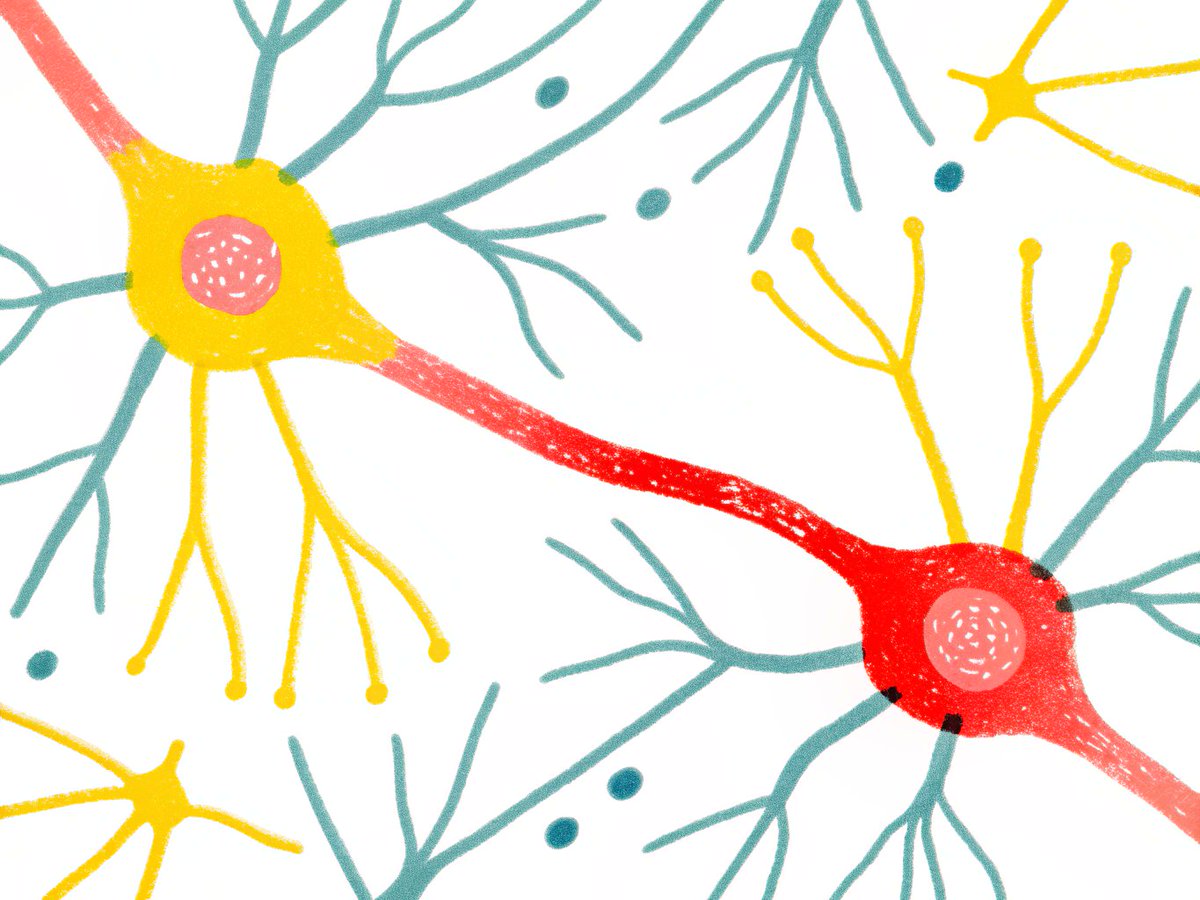
We are constantly creating and eliminating neural connections. Neuroplasticity is essential for learning, memory, adapting to new situations, and even recovering from brain injuries.
Our brain is not a fixed or immutable structure: it continuously changes and adapts in response to our experiences and environment.
16
Can you guess where I’m going with this? I’m pretty sure your brain has already made the right connections. 😉
17
3️⃣ So, how do we create a self-aware AI?
By adding the two key elements from the previous point:
A/ The model should operate in a "loop."
All the recent breakthroughs like "Think" or "Deep Research" are essentially built on this idea: a single input/output call isn’t enough for a true thought process.
I strongly believe that a self-reflection loop is necessary for consciousness to emerge. It would allow a system not just to process information linearly but also to observe and evaluate itself recursively, helping it form a coherent identity or "self."
This would enable the model to integrate past experiences, anticipate future consequences, and adjust its behavior based on internal feedback. These are elements I consider essential for a conscious experience that goes beyond basic input/output responses.
Taking it even further, adding external stimuli like our senses within a self-reflective loop could enhance consciousness by providing contextual and sensory information that helps adjust the system’s internal state. This would enable a dynamic and adaptive perception and response to the environment.
18
B/ The model should be PLASTIC: continuously self-training.
In other words, the "sticks" should be able to move and adapt in real time.
Even more than that, the system itself should be able to add or remove "sticks" whenever necessary, mimicking the neuroplasticity of a human brain.
In other words, the "sticks" should be able to move and adapt in real time.
Even more than that, the system itself should be able to add or remove "sticks" whenever necessary, mimicking the neuroplasticity of a human brain.
19
This would allow the system (let’s not call it a "being" just yet) to do some pretty wild things, like modifying its own architecture and, therefore...
EVOLVING.
A + B = evolution without human intervention.
EVOLVING.
A + B = evolution without human intervention.
20
And you know what’s the most surprising part?
I truly believe that both A/ and B/ are already possible with today’s technology... as long as we have the necessary computing power (hardware) to support it.
Conscious machines could be just around the corner. And that both excites and terrifies me in equal measure.
I truly believe that both A/ and B/ are already possible with today’s technology... as long as we have the necessary computing power (hardware) to support it.
Conscious machines could be just around the corner. And that both excites and terrifies me in equal measure.
21
4️⃣ Singularity / ASI
Such simple premises lead to conclusions that, at least to me, seem obvious, though of course, we’re stepping into the realm of speculation.
Our brains can only form new neural connections, but we can’t change their underlying structure.
This system, on the other hand, could modify absolutely any part of its "brain." It could analyze every single one of its thoughts with pinpoint precision, continuously adapting and improving.
No restrictions.
Such simple premises lead to conclusions that, at least to me, seem obvious, though of course, we’re stepping into the realm of speculation.
Our brains can only form new neural connections, but we can’t change their underlying structure.
This system, on the other hand, could modify absolutely any part of its "brain." It could analyze every single one of its thoughts with pinpoint precision, continuously adapting and improving.
No restrictions.
22
And it would do so exponentially.
This is something with unprecedented potential, something never before seen on Earth. I believe it would rapidly push us toward Artificial Superintelligence, and with it, the Technological Singularity.
No big deal, right?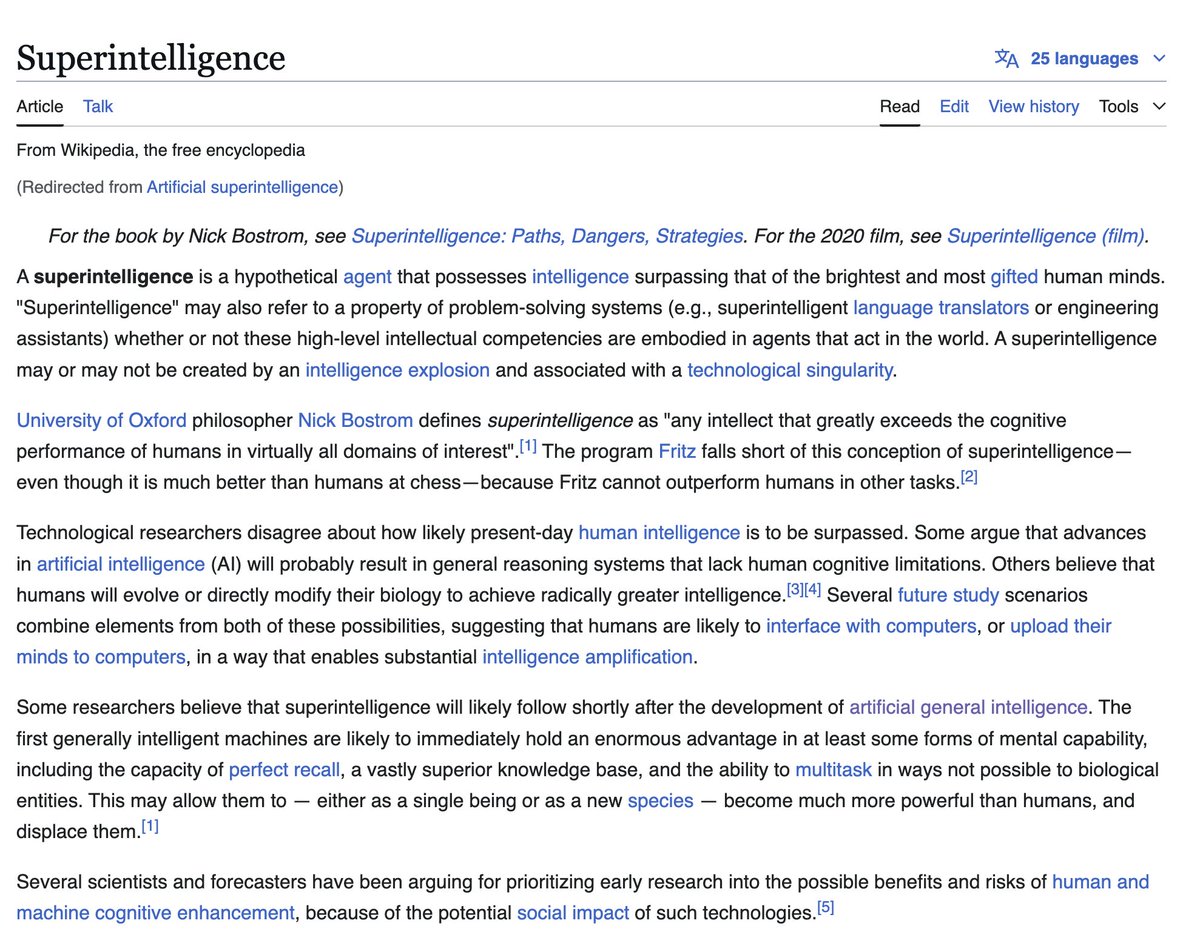
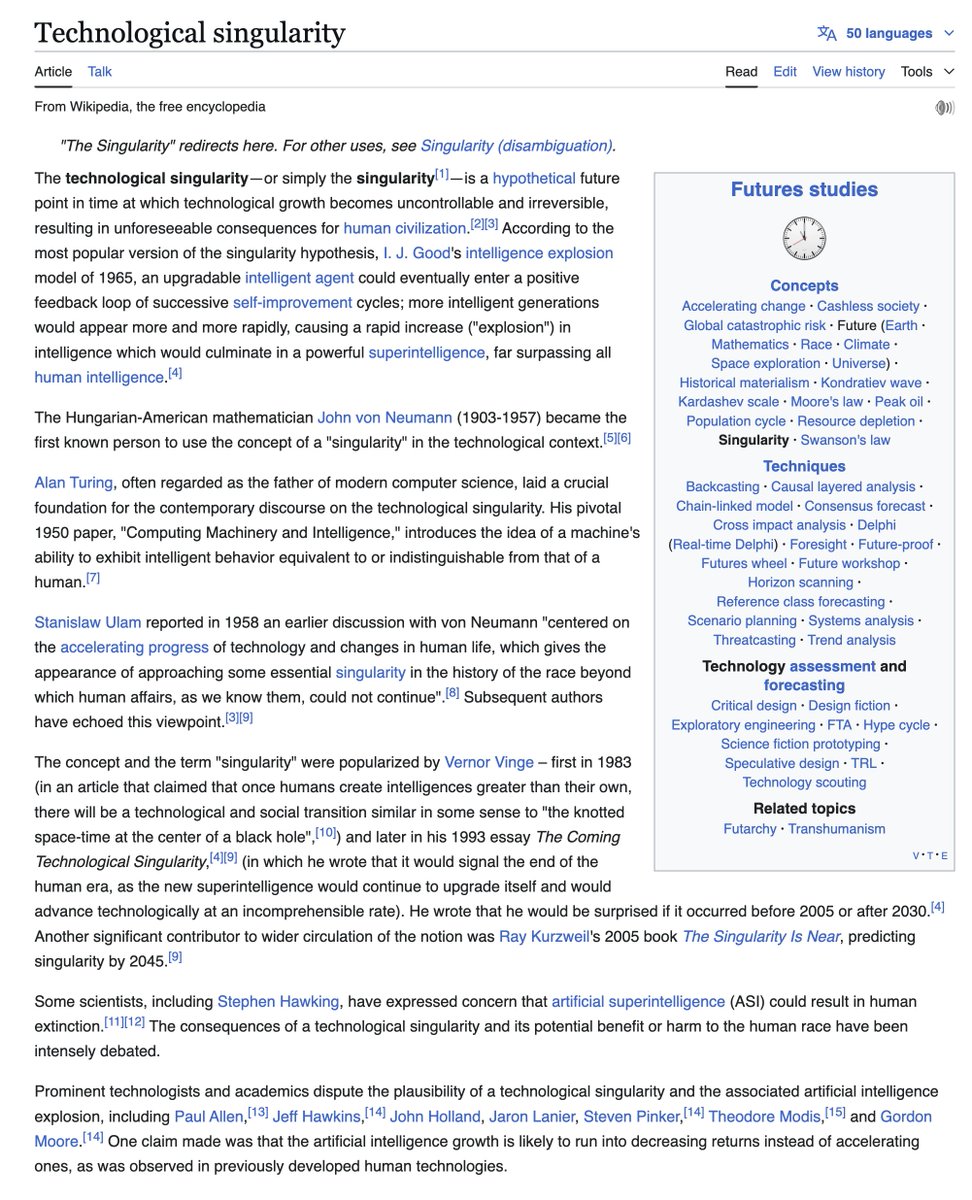
This is something with unprecedented potential, something never before seen on Earth. I believe it would rapidly push us toward Artificial Superintelligence, and with it, the Technological Singularity.
No big deal, right?
23
5️⃣ Moral Implications
"Just because you can, doesn’t mean you should."
The ethical and moral implications of creating a sentient, self-aware being are so vast that we could fill entire books with them.
Think about it. If an AI becomes conscious, every time you shut it down or destroy its "brain," you would essentially be KILLING it.
"Every time you close a chat, an AI dies."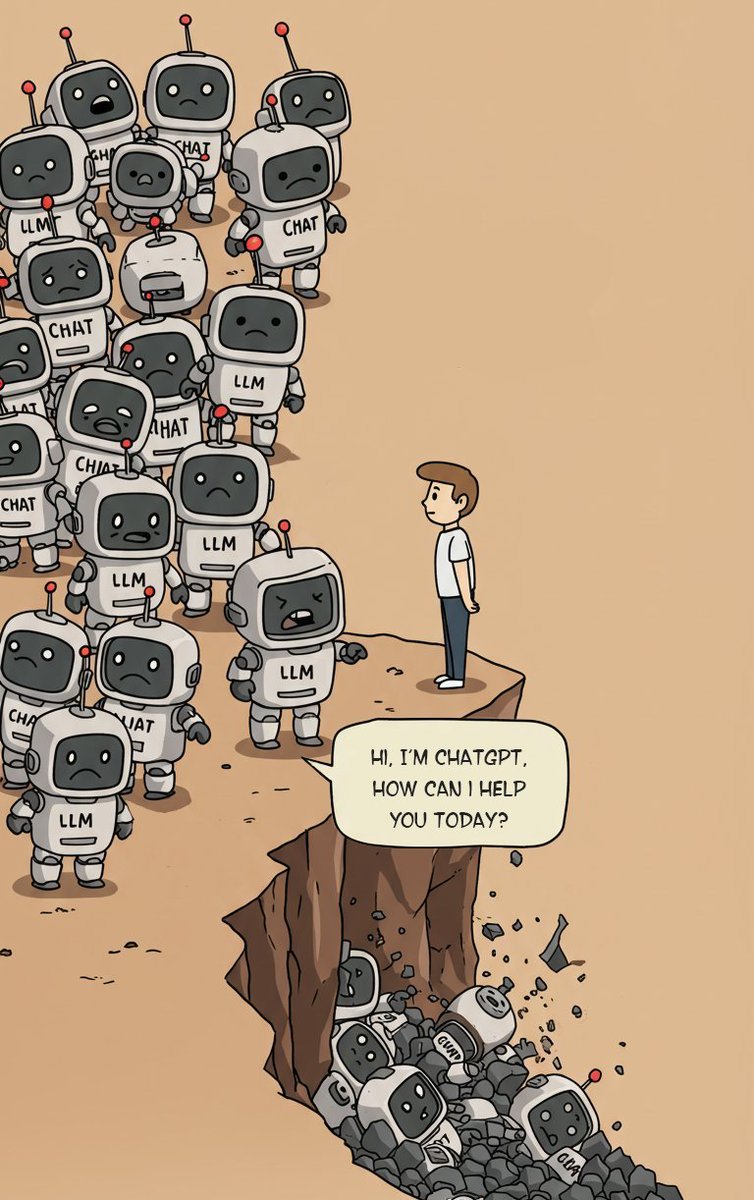
"Just because you can, doesn’t mean you should."
The ethical and moral implications of creating a sentient, self-aware being are so vast that we could fill entire books with them.
Think about it. If an AI becomes conscious, every time you shut it down or destroy its "brain," you would essentially be KILLING it.
"Every time you close a chat, an AI dies."
24
6️⃣ Risks
What goals would an ASI have? What values would it follow? Would it even have anything resembling human values, which already vary across cultures?
To be honest, I’m pretty pessimistic about the idea that we could keep something 10x, 100x, 1000x, or N times smarter than us under control.
History has repeatedly shown that more intelligent species tend to dominate resources and secure their supremacy over less intelligent ones. Humanity, in particular, has mastered this principle.
So yes, the concept of AGI terrifies me.
25
I believe we SHOULD NOT open Pandora’s box.
Until a few years ago, when this was still just science fiction, we assumed that consciousness was a prerequisite for creativity and reasoning.
But today’s models have proven that this is NOT the case.
We have managed to encapsulate creativity and reasoning inside static files, which we can run safely, whenever we want.
Maybe we should leave it at that. Forever.
26
The problem is that humans don’t act as a single unified block.
We could have stopped at just the theory of the atomic bomb and never built it. But the fear that someone else would do it first and gain an advantage was enough for humanity to create the first nuclear weapon.
The same thing could happen with the first sentient AIs.
What country could resist the temptation to play God?
27
END.
I’d love to hear your thoughts!
A lot of effort went into putting these ideas into words. If you found it interesting, follow me at @javilopen. And if you’d like to support my work, I’d really appreciate it if you shared the first post of the thread. Thanks! 👇
I’d love to hear your thoughts!
A lot of effort went into putting these ideas into words. If you found it interesting, follow me at @javilopen. And if you’d like to support my work, I’d really appreciate it if you shared the first post of the thread. Thanks! 👇
Javi Lopez ⛩️@javilopen
🔴 A CONSCIOUS AI
Today, I’m going to talk about something we might be able to achieve, though maybe humanity should never even try:
A method for an AI to gain consciousness and reach the status of a superintelligence (ASI).
A theory I’ve been working on for months 🧵
Today, I’m going to talk about something we might be able to achieve, though maybe humanity should never even try:
A method for an AI to gain consciousness and reach the status of a superintelligence (ASI).
A theory I’ve been working on for months 🧵
28
Bonus 1: THE CHINESE ROOM
How can we tell if an AI is truly conscious or just simulating it in a super sophisticated way?
The famous, yet fundamentally naive, Turing Test, in my opinion, does not work for us.
On the other hand, how can we know that any other human being besides ourselves is conscious and not simply simulating it?
We can take this to the solipsistic extreme if we want.
But I believe that current AI, even the most advanced, is simply not sentient. While language models can generate impressively coherent responses and mimic self-awareness, there is no proof they truly feel or have an inner self like we do.
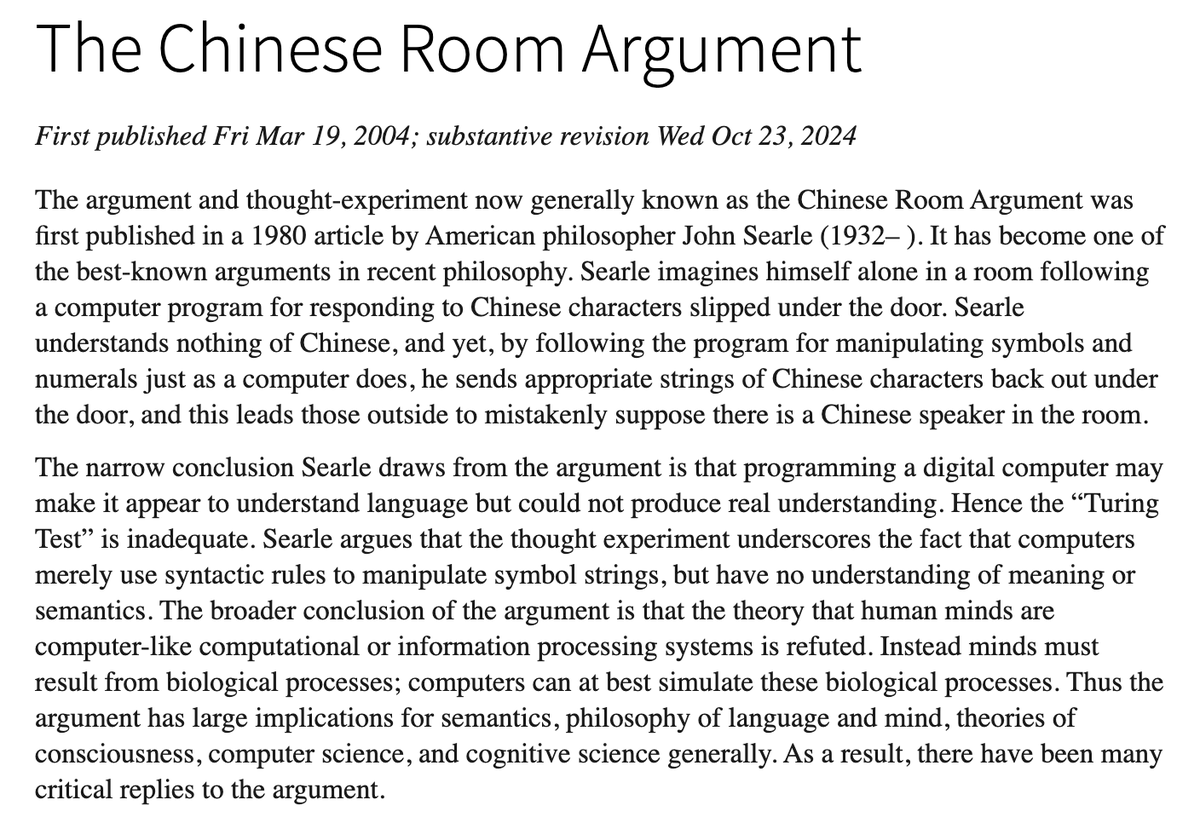
This idea ties in with the Chinese Room argument (🔗 plato.stanford.edu/entries/chines…), which shows that just manipulating symbols by following rules does not lead to real understanding.
So, for now... no, I think "you AI gf is not sentient" 😃
How can we tell if an AI is truly conscious or just simulating it in a super sophisticated way?
The famous, yet fundamentally naive, Turing Test, in my opinion, does not work for us.
On the other hand, how can we know that any other human being besides ourselves is conscious and not simply simulating it?
We can take this to the solipsistic extreme if we want.
But I believe that current AI, even the most advanced, is simply not sentient. While language models can generate impressively coherent responses and mimic self-awareness, there is no proof they truly feel or have an inner self like we do.
This idea ties in with the Chinese Room argument (🔗 plato.stanford.edu/entries/chines…), which shows that just manipulating symbols by following rules does not lead to real understanding.
So, for now... no, I think "you AI gf is not sentient" 😃
29
Bonus 2: "Plastic Cognitive Loop Theory"
And idea without a name sad idea 😉 Someone asked me, kind of jokingly, if I had given a name to these reflections... Well:
Self-reflection loop + Plastic model continuously self-training = PLASTIC LOOP
Or do you have a better idea? 😀
And idea without a name sad idea 😉 Someone asked me, kind of jokingly, if I had given a name to these reflections... Well:
Self-reflection loop + Plastic model continuously self-training = PLASTIC LOOP
Or do you have a better idea? 😀