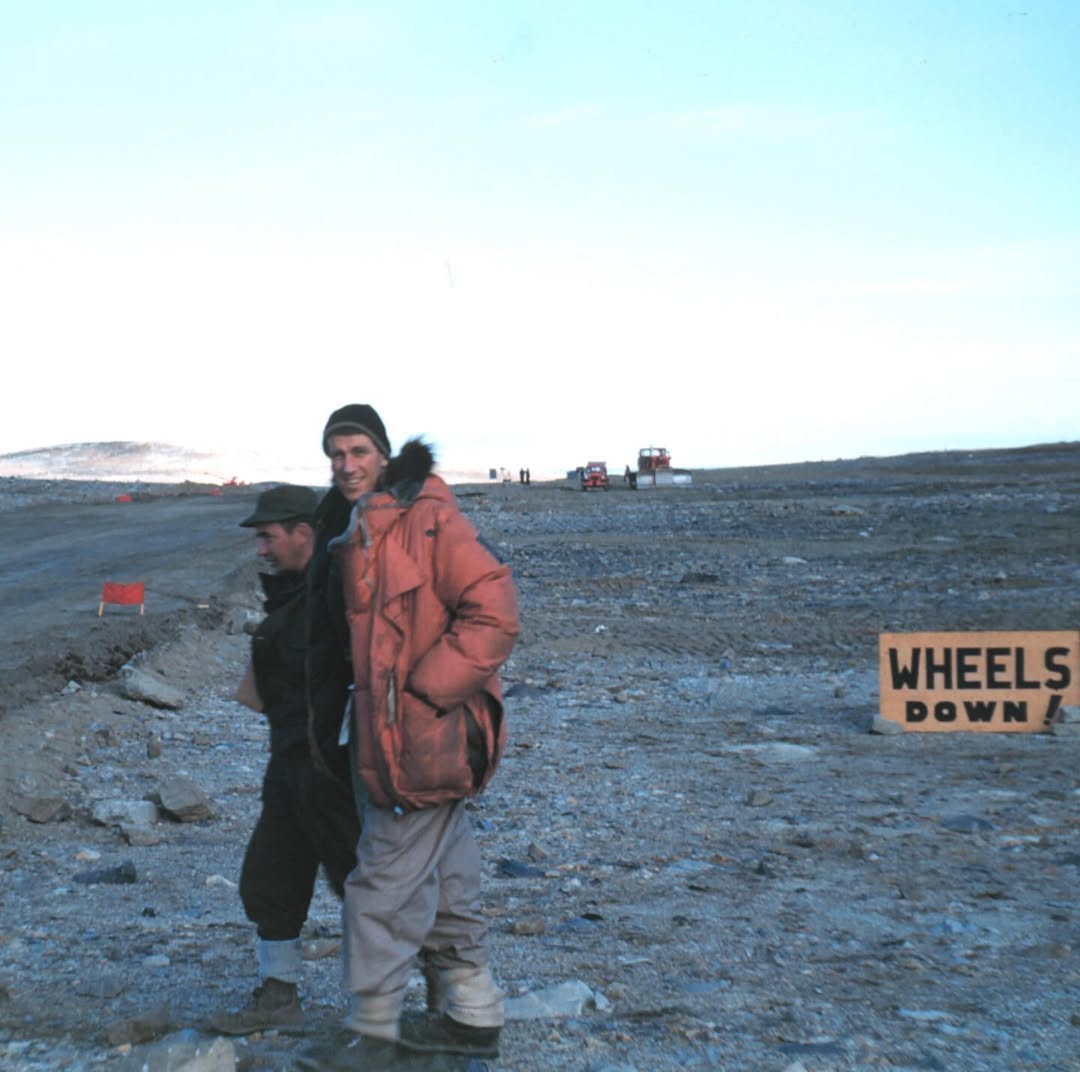
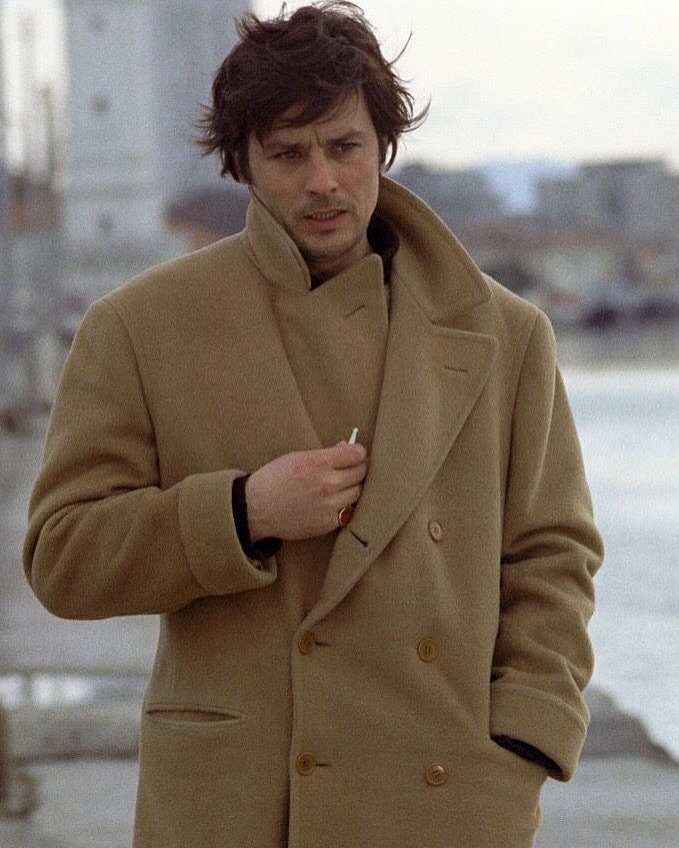
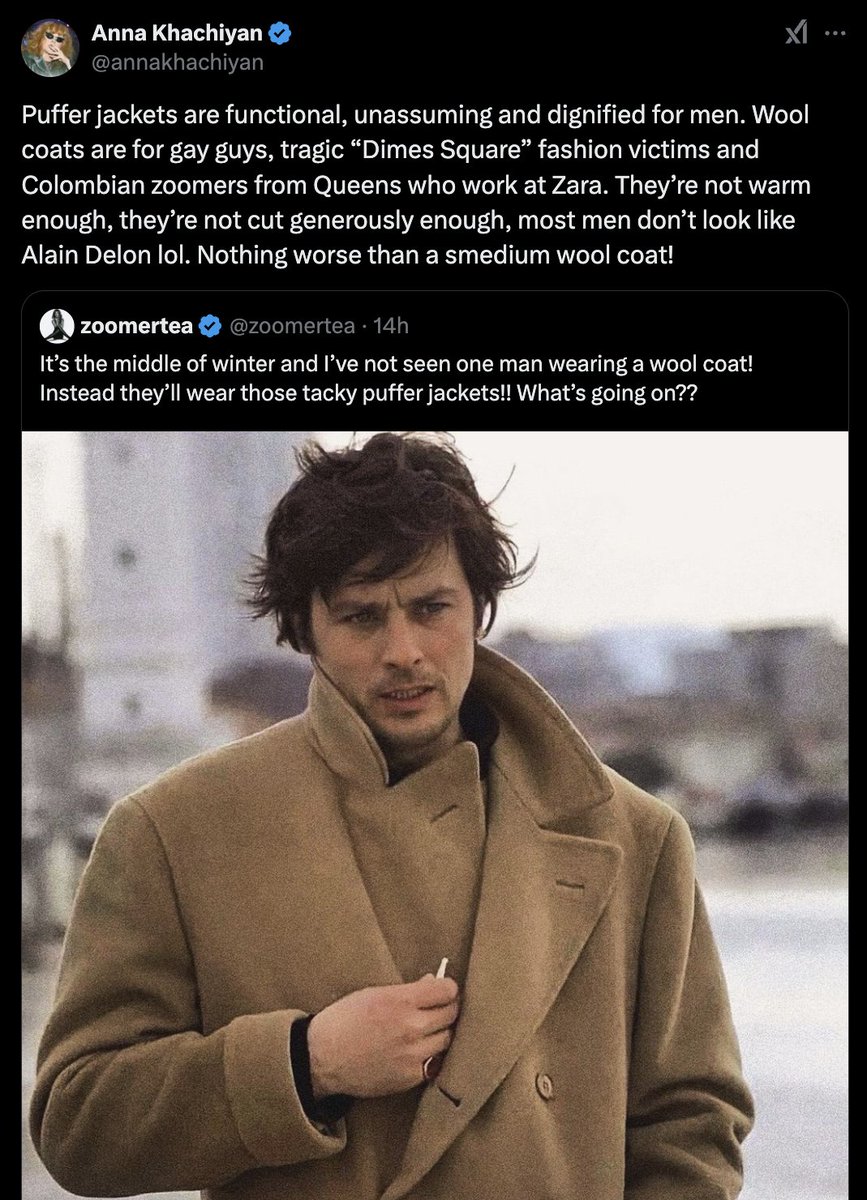
Two terrible takes. The second somehow worse than the first. 🧵

derek guy@dieworkwear
107 views
Aug 08, 2026
~4 min read
Advertisement
1
Two terrible takes. The second somehow worse than the first. 🧵
2
Wool and down are just materials, like linen or cotton. They can be used to make anything. Down doesn't have to be a Canada Goose parka. It can be something like a Rocky Mountain Featherbed vest or a Nigel Cabourn Everest parka.


3
The second is great because it's modeled after something Sir Edmund Hillary and his team wore on their climb up Mount Everest. The advantage of natural down is that it's very warm for its weight; synthetic versions are better in wet conditions. Fill power count tells you warmth.


4
Rocky Mountain Featherbed is distinguished by its Western yoke. It's great for a "Colorado cowboy" vibe. You can also check out Valstar for something dressier or Crescent Down Works and LL Bean for something more Americana/ preppy.


5
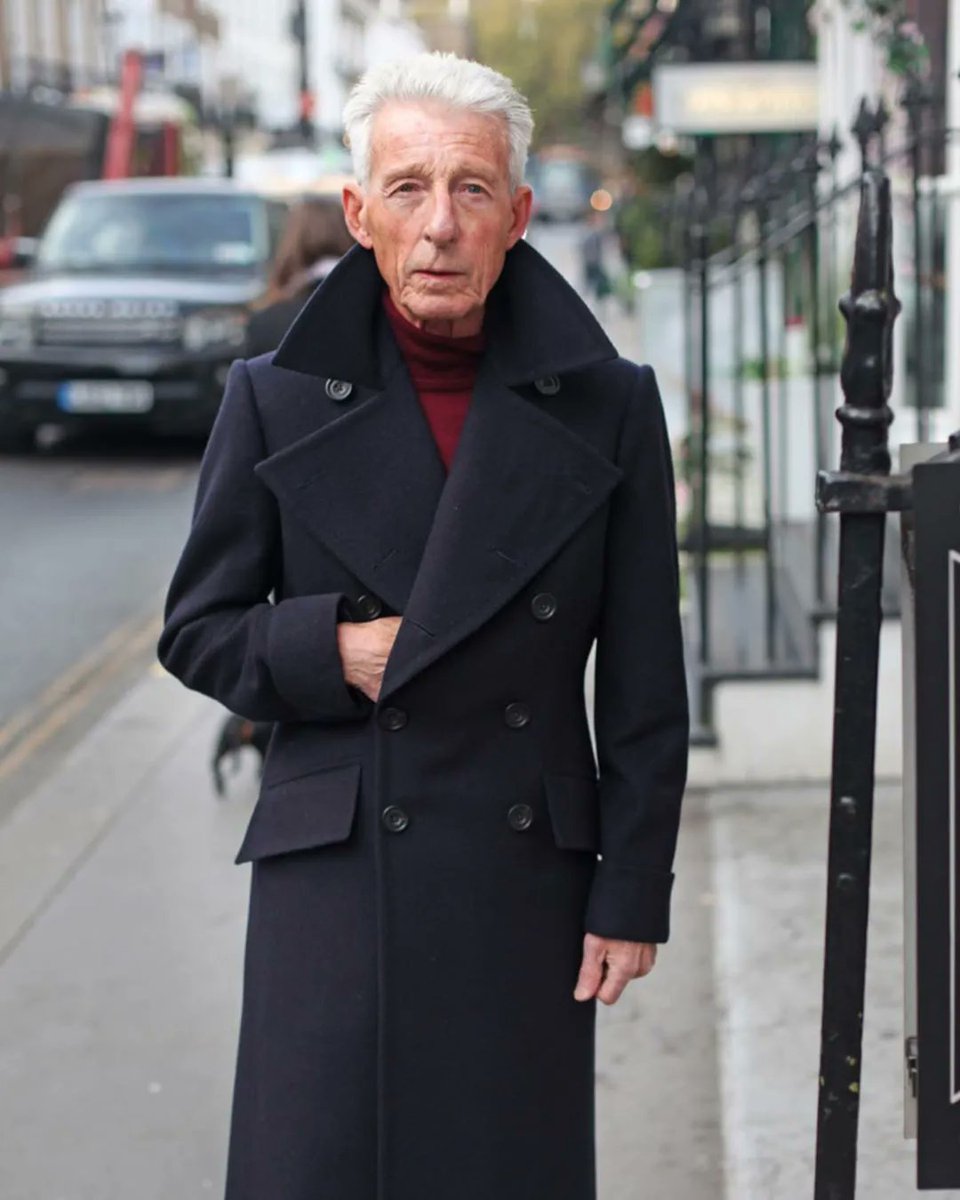
Similarly, wool can be used to make any kind of garment. The most formal overcoat is what's known as a Guard's coat—distinguished by its double-breasted closure, peak lapels, flapped pockets, and turnback cuffs. Typically comes in navy and is meant to be worn over "city suits"


6
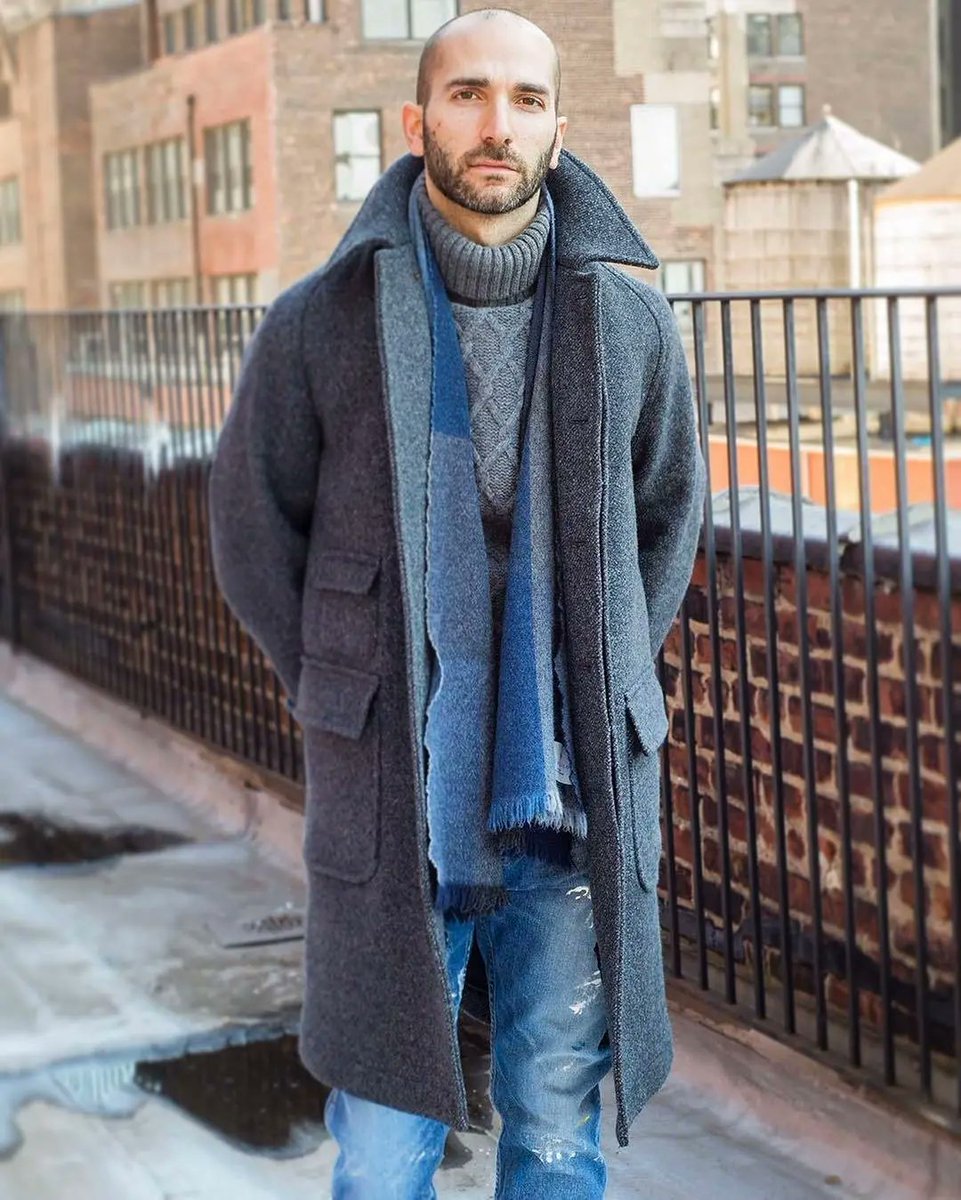
A step down in formality is the Balmacaan, originally made from tweed but now comes in a variety of materials. It's defined by its single-breasted closure, Prussian collar, slash pockets, and most importantly, raglan sleeve construction. The last gives it a "rounder" silhouette.


7
A raglan sleeve has a diagonal seam that goes from the neck point to the armscye. This is distinct from a set-in sleeve, which is made like what you see on dress shirts. Raglan sleeve is easier to layer bc there's no shoulder seam, but results in rounder shoulder line. Compare:
8
Moving down further on the formality scale, we have Loden coats. Originally built for walking in the Alps, they were briefly considered something of a status symbol in the 1980s, as they were part of the Yuppie financier uniform.


9
Loden coats are distinguished by their single-breasted closure, deep center reverse pleat, action back shoulder, and most importantly, the felted woolen overcoating that characteristically comes in a unique shade of green.


10
You'll often find them sold alongside Bavarian style clothing, such as this riding cape. This video is from Rajiv Surendra's Youtube channel (good wholesome channel, unlike a lot of the internet nowadays).
YouTube rajivsurendra
YouTube rajivsurendra
3:19
11
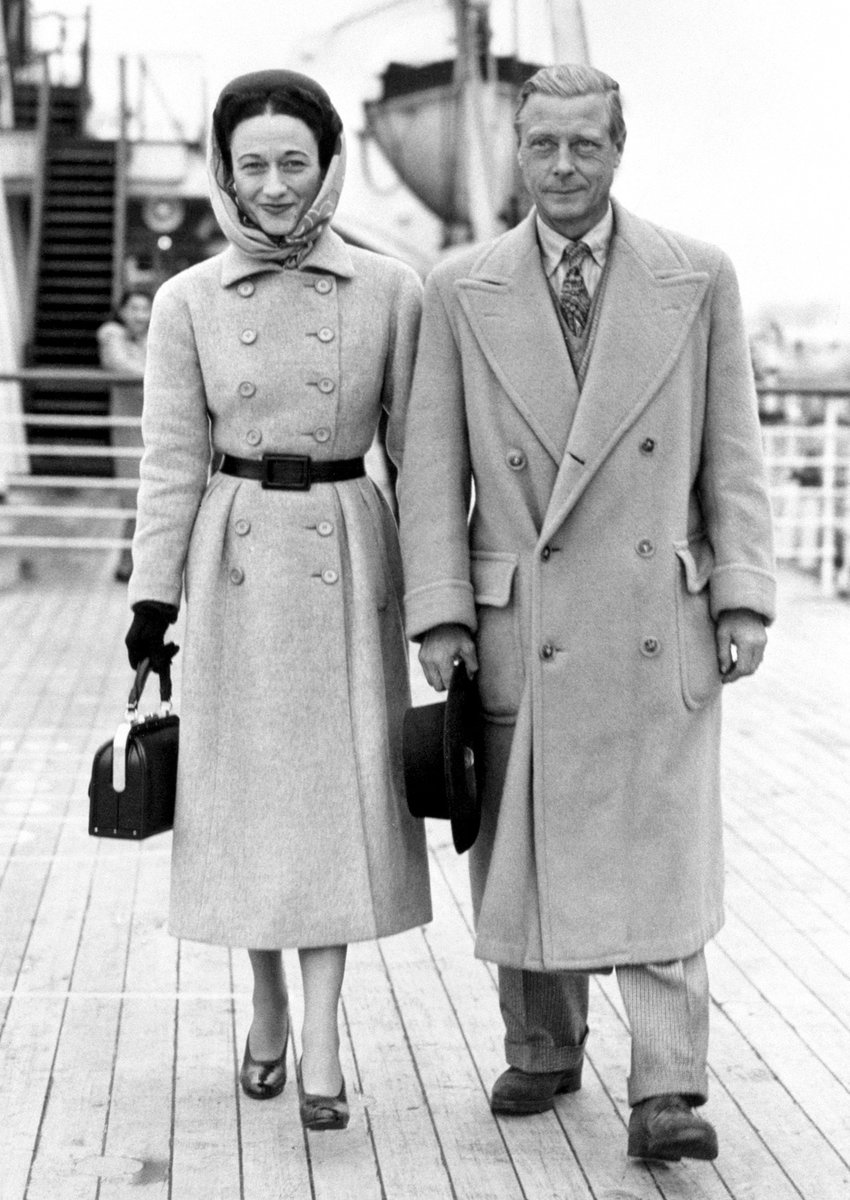
Let's get into one more: the polo coat, originally worn between periods of play at polo matches. It was first made in a wrap style design and only later had buttons. Of all the dress coat styles, I love this one the most bc of its association with classic American style.


12
The polo coat is defined by its double-breasted closure, envelope or mailbox pockets, Martingale back, center vent, and turnback cuffs. It's one of the first unisex styles since it was adopted by women (and, later, bears). Classic in camelhair, which wears warm like cashmere.


13
IMO, this is the coat you want if you love oxford button downs, Shetland sweaters, tweed jackets, and the heyday of Brooks Brothers/ Ralph Lauren. Can be made with an Ulster collar or peak lapel (first is better if you like popping your collar).

14
They're particularly great because they're very easy to dress down. Whereas a Guard's coat looks most natural over a dark worsted suit, a polo coat can work with grey flannel suits all the way down to jeans and sneakers.


15
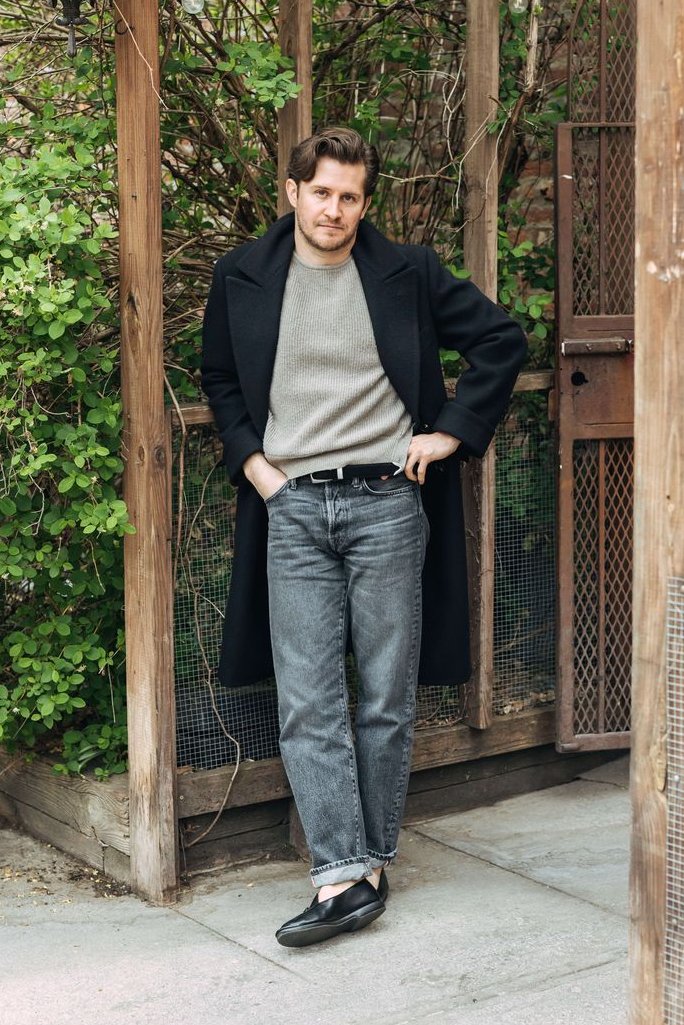
A navy Guard's coat can also be made to be more versatile if you change the collar from a peak lapel to an Ulster collar—a design originally worn in the countryside and turned up to block wind. Florentine tailors such as Liverano & Liverano and Qemal Selimi do very nice versions.

16
To me, it makes no sense to say that wool can't be warm because much depends on the weave and fabric weight. A 36oz Melton wool (what most people will know from peacoats) wears much warmer than a 18oz overcoating. You can tell from just how these two coats hang:


17
Not hard to find generously sized coats nowadays. First, you can just step into any thrift store. Classic coats are built like tanks, so they've last forever. And anything made prior to 2001 will be built big. Additionally, you can check brands like Lemaire and Wythe.


18
I write about big coats all the time (see link below). Caring about whether big coats are worn by "gay guys, Dime Square hipsters, and Colombian Zoomers (wtf?)" is the kind of clout chasing that makes ppl constantly update their wardrobe.
dieworkwear.com/2024/11/15/exc…
dieworkwear.com/2024/11/15/exc…
19
IMO, you should care less about whether ppl on the bleeding edge of cool are wearing something. Develop an aesthetic vocabulary outside of trends. Root it in culture and history. This is how you develop personal taste. Puffers and wool outerwear will always be great bc of history