Leptin is more than a satiety hormone—it's a central player in...

Michael Mindrum, MD@MichaelMindrum
33 views
Dec 06, 2024
~2 min read
Advertisement
1
Leptin is more than a satiety hormone—it's a central player in energy balance, behaviour, and our non-conscious response to palatable foods. Lets' take a look 👀. A 🧵 1/12
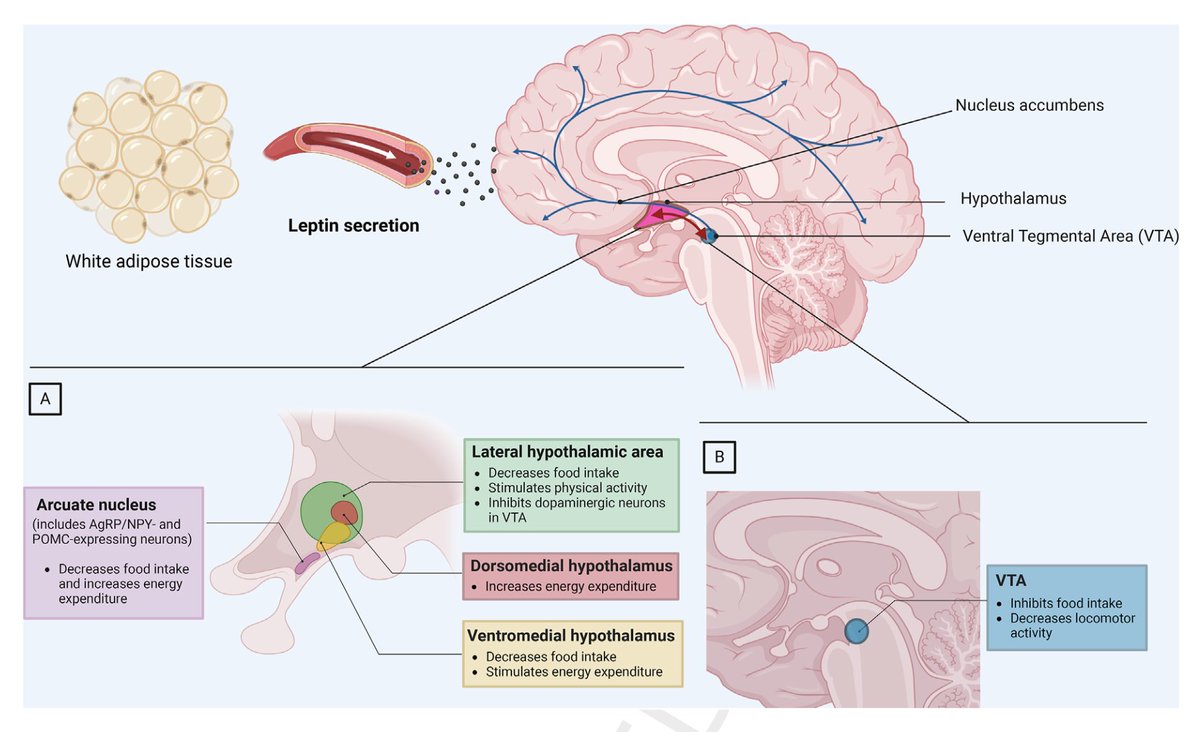
2
🧠 This review about leptin, one of the most important hormones related to regulation of our body fat, was published in Molecular Metabolism (Dec 2024). 2/12 sciencedirect.com/science/articl…
3
🧠 What is leptin? Leptin is a hormone secreted by fat cells. It tells your brain how much energy (fat) your body has stored and helps regulate hunger. But leptin does more than manage appetite—it also affects how much you enjoy and crave food. 3/12
4
🩺 Leptin's dual role. Leptin works in two ways:
1️⃣ As a signal: It reduces appetite by telling the brain you’re “full.” 2️⃣ In the reward system: It tamps down the brain's response to tasty, calorie-rich foods. 4/12
5
🌐 Leptin's wider role. Leptin doesn’t just curb appetite—it boosts fat-burning, promotes physical activity, and helps regulate glucose. Its effects go beyond hunger, influencing your body’s overall energy balance. 5/12
6
🙃 A surprising twist. Previously, we gave leptin to people with obesity & it failed miserably. Why? Those with obesity turned out to have high leptin, not less. It turns out that in obesity, the brain does not listen to leptin well - there is leptin resistance. 6/12
7
🔄 The leptin challenge in obesity. Obesity disrupts leptin's function. High fat levels lead to leptin resistance. The brain stops responding to leptin, hunger persists, and food cravings remain unchecked. 7/12
8
🧬 Why does leptin resistance happen? Think of it as static in communication. Obesity triggers negative feedback loops (SOCS3/PTP1B proteins block leptin signals), stress in brain cells (inflammation & ER stress), and overactivation of leptin pathways that dulls its effects. 8/12
9
🧩 Leptin and food cravings: Leptin regulates the brain’s reward pathways, lowering the pleasure of eating calorie-dense foods. When resistance develops, these cravings spike, making it harder to manage food intake. 9/12
10
🏃 What could be done? Emerging treatments aim to make leptin work better: Blocking proteins that disrupt leptin signaling (SOCS3 inhibitors). Anti-inflammatory therapies. Reducing leptin levels itself to improve sensitivity. 10/12
11
🔬 What’s next? To treat obesity, we need multi-targeted approaches to reset leptin pathways and improve brain-body communication. Understanding leptin resistance is key to unlocking its potential. 11/12
12
In the meantime, we can fall back on the tremendous gains we have made in understanding obesity and its effective treatment using behaviour change, pharmacotherapy, and surgical interventions as it aligns with your goals, values, and preferences! 12/12
13
h/t @scottisaacsmd for sharing the publication on X.
14
@scottisaacsmd #leptin