A russian soldier surrenders to a #Ukrainian #drone by offering a...

DanielR PhD@DanielR_PhD
37 views
Sep 30, 2024
~3 min read
Advertisement
1
1. A russian soldier surrenders to a #Ukrainian #drone by offering a trade. What is this thing that the russian is offering in exchange for his life? Is this a fair exchange?

2
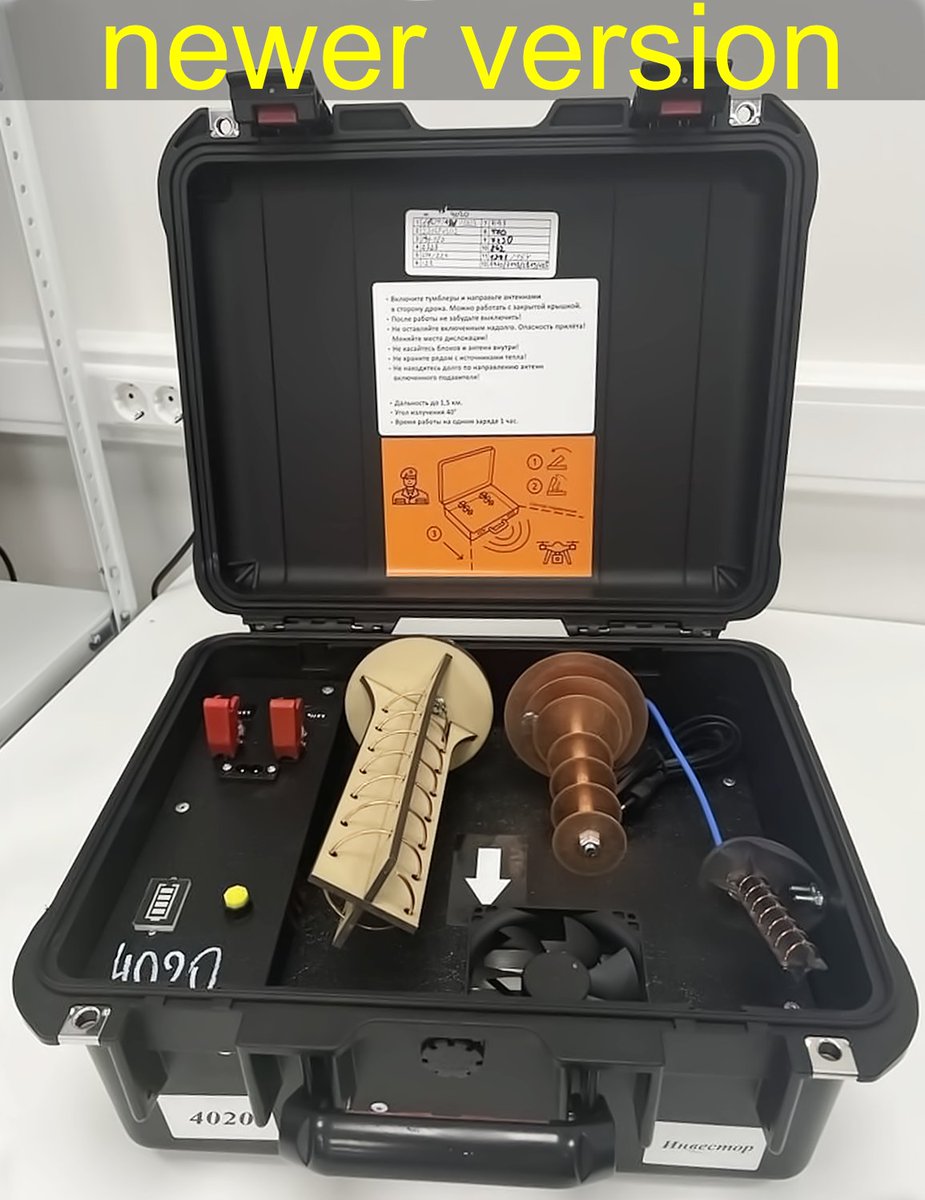
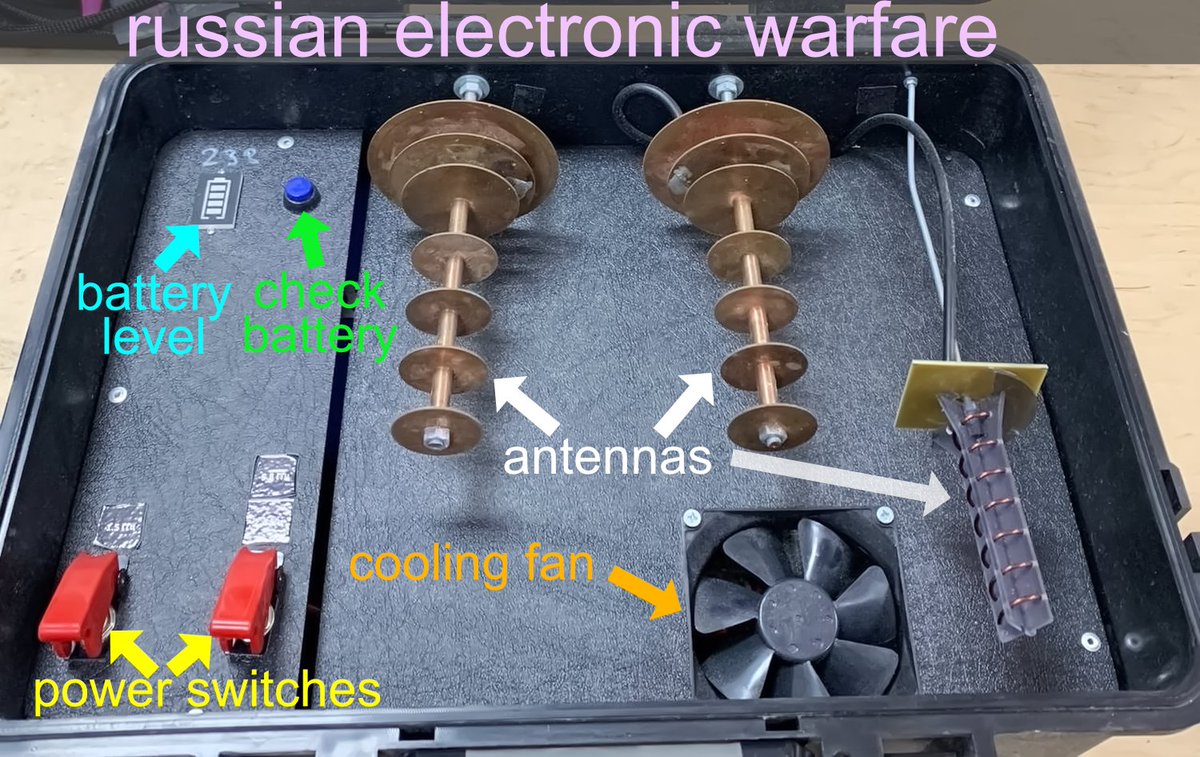
2. Here is a better view of the case. It is a russian Thunderstorm electronic warfare system intended to combat drones. The controls are very simple. There are two power switches to enable the transmitters. There is also a switch & indicator for checking the battery voltage.
3
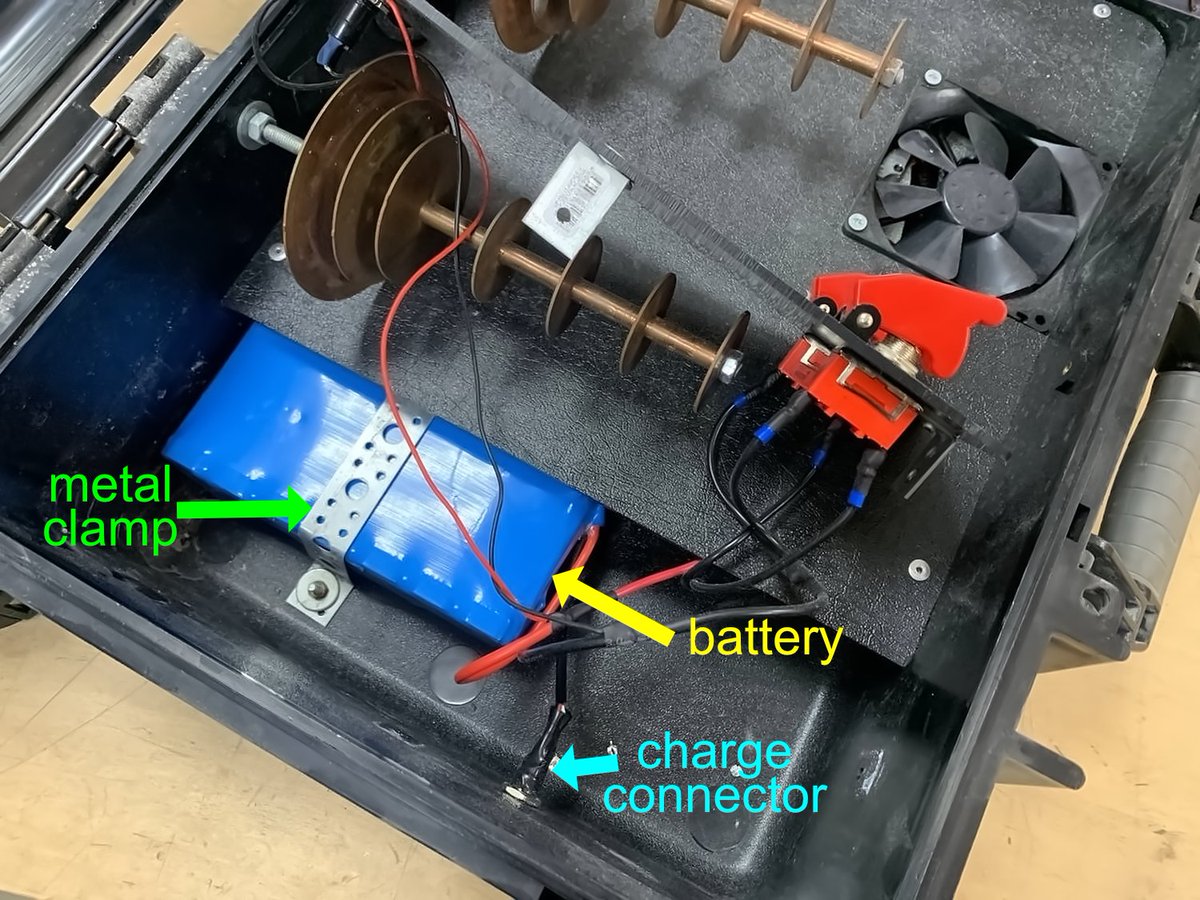
3. Removing the lid from the battery compartment reveals the underside of the controls. The battery-level board is not protected. This lid is held in place with hardware-store brackets and pop rivets.

4
4. The battery-level indicator costs about US$2. It is not waterproof and probably won’t last long in a trench or on a tank.

5
5. The battery is held in place with a metal clamp, which will almost certainly wear through the plastic cover protecting battery. The result will be a nice fire. Also visible is an external connector for charging the battery.
6
6. There are 3 jammer modules inside the case. The modules are Chinese-made and cost about US$100 each. Each module is connected to an antenna via a coax cable. These modules typically generate a lot of heat. There is a fan but no vents in the case. Also, there is no fan guard.

7
7. Instead of using a heatsink, the modules have insulating asbestos cloth placed between them and the plastic case. This likely guarantees the modules will overheat and fail but not melt the case.

8
8. Each module sweeps through a certain frequency range & requires a matched antenna. There are 3 directional antennas that transmit 100 W RF into the operator’s groin. The 2.4 GHz & 1.5 GHz antennas must be pointed at the drone to interfere with the control & GPS signals.

9
9. The 5.8 GHz helix antenna is odd as this type is directional and normally used for video receivers. To be effective, this antenna would need to be aimed at the ground station (pilot), not towards the drone. The polarisation would need to be correct too. Seems sketchy.

10
10. A question for the antenna experts. The two Yagi disc antennas look identical but operate at different frequencies. Does this seem reasonable or would different designs or sizes be expected? Note the serial number: they are making lots of these.

11
11. The instructions are an interesting read and state that the Thunderstorm will overheat and stop working when used as intended. It also warns against getting it hot, cold, wet or otherwise turning it on.

12
12. Overall it looks dodgy and perhaps someone in russia is making lots of money (it sells for about US$2,200). I have no idea how well the soldier in #1 fared but here is a photo of happy (?) russians receiving new ones. Note that there are a few variations of this design.

13
13. There are many examples of poor-quality electronic warfare kit, probably because the soldiers don’t know any better. If you found this thread interesting, please repost as a quote. Respectful comments are always welcome. Also consider reading my previous threads listed under “Highlights”.