The ultimate supplement to boost your metabolism: THYROID HORMONE -...

Dalton (Analyze & Optimize)@Outdoctrination
103 views
Dec 30, 2024
~5 min read
Advertisement
1
The ultimate supplement to boost your metabolism:
THYROID HORMONE - A complete guide
1. Symptoms you may be hypothyroid
Just to name a few:
• ALWAYS being tired
• Feeling COLD, especially at the extremities
• Slow / lethargic speech
• Stubborn weight gain
• Poor mood
• Puffy features: cheeks, love handles, general water retention
• Gynecomastia (man boobs)
• Muscular weakness
• Dry skin and hair
• Anxiety
• Hair loss
• Always being sick
Digestion is particularly responsive to thyroid hormone.
• Constipation or diarrhea
• Nausea
• Bacterial overgrowth
• Reflux
are all common in hypothyroidism.
Thyroid hormone is:
⬨ Key for gut regeneration, healing
⬨ Pro-motility
⬨ Vital for producing digestive enzymes
⬨ Required for producing stomach acid
⬨ Critical for gut immunity, gut barrier
2. Why labs are often misleading
TSH is the primary (and often only) metric a doctor will test for hypothyroidism.
A lower TSH should be indicative of higher thyroid hormone secretion, but it doesn't tell the full story.
For starters, TSH can be lowered by:
• Infection
• Trauma
• Cortisol
• Adrenaline
• Caffeine
• Fever
So a low TSH alone cannot rule out hypothyroidism.
The standard TSH reference range is also WAY too lenient (up to 5).
TSH >2 has been associated with:
• Heart disease
• High cortisol
Thyroid hormones:
• T4 (inactive)
• T3 (active, pro-metabolic)
• Reverse T3 (anti-metabolic)
can also be measured in the blood, but this doesn't tell the full story either.
These hormones must be transported through the blood, enter their target cells, and attach to the specific proteins in the cells that facilitate their actions.
Not as simple as thyroid in blood = thyroid activity.
Values of the “free” T3 and T4 can be misleading as well.
Thyroid hormones do not need to be "free" to exert their effects on various tissues, contrary the current medical dogma.
I still think testing can often be helpful, but you can certainly be hypothyroid while your labs look good on paper.
3. Diagnostics
An underarm temperature measured first thing in the morning, leaving the thermometer under the arm for 10 minutes to equilibrate, should start be >97.8°F.
Lower temperatures are highly indicative of hypothyroidism.
This was the gold standard thyroid test (along with aforementioned symptoms) that was successfully used to treat thousands of hypothyroid people before blood tests.
You can have “ideal” thyroid lab values yet be at the temperature of a hibernating bear.
A healthy resting pulse averaged 85 beats per minute, though Dr. Ward Dean has suggested between 65-75 is a good range.
If you eat carbs can and feel more tired and have lower temperature and pulse rate, this indicates a reliance on the stress hormones and a lack of thyroid function.
The response of the Achilles tendon when tapped was another assessment tool.
In a well-functioning thyroid, the foot would swing back energetically due to quick muscle relaxation.
but a slow, controlled return motion indicated potentially sluggish energy status, often a sign of hypothyroidism.
High cholesterol is another sign of hypothyroidism, while thyroid supplementation normalizes it.
4. NOT supplementing thyroid is unnatural
Consuming thyroid gland is as natural and "ancestral" as it gets.
Paleo researchers have stated that we probably consumed lots of thyroid gland throughout human history:
"the shift from scavenging towards hunting... would have increased thyroid gland consumption by hominins and thereby exogenous thyroid exposure."
"these Homo forebears started consuming small animals, such as amphibians, birds, and reptiles. This prey was consumed whole, and the animals’ thyroid glands thus provided a significant amount of thyroid hormone to their hominid predators."
"Nevertheless, tissues and organs (including thyroid glands) are commonly consumed by the primary hunters"
In fact, thyroid gland used to be in common foods like ground beef up until the mid 80s.
It is only recently when we stopped eating the whole animal, including the thyroid gland!
5. Using natural desiccated thyroid (NDT)
Desiccated thyroid comes from the thyroid glands of pigs or cows, and is the traditional way of supplanting thyroid hormones.
A grain (60 mg) is the unit of measurement for supplementation, containing ~40 mcg T4 + ~10 mcg T3.
A starting dose of a half grain is reasonable, and should be continued for 2-4 weeks before adjusting.
The hormones take around this long to stabilize.
As you use NDT, you should consistently track:
1. Morning temperature
2. Symptoms
Once you get to >97.8°F and symptoms resolve, the correct dose has been found.
The brand matters a lot. Many products seem to be unreliable, or outright useless.
That’s definitely been my experience. I’ve tried numerous products over the last few years.
I'll link below the thyroid product I have been using recently for myself and with clients.
I would take it with food to slow the absorption, or even split into multiple doses with meals.
I prefer at dinner.
While some may require full replacement (4 to 5 grains), others find relief with as little as 15 mg (quarter grain).
Broda Barnes observed that his patients often required about two grains of thyroid to alleviate hypothyroid symptoms, occasionally needing more.
If you experience
• Too fast of a heart rate
• Palpitations,
• Anxiety,
• Overheating
• Fatigue
• Shaky feelings
then you might have taken too much thyroid.
The amount taken should be reduced or discontinued entirely.
Effects of over stimulation should resolve in a few hours.
This type of response can also indicate low cholesterol or an issue with liver function, two systems that the thyroid depends on to do its good.
You may also need more nutrients, as the increased metabolic rate demands more resources.
Eat your liver, egg yolks, and oysters.
Many people who should be candidates for supplementation find that thyroid does nothing for them, no matter how much they take.
In my experience, this always seems to be tied to an issue with the gut.
I would try to address this first.
Or, you just may not need it at all. You may need to address other factors.
Of course, supplementing thyroid is not the ONLY way to improve thyroid function, but it seems like an appropriate strategy when other factors have been addressed.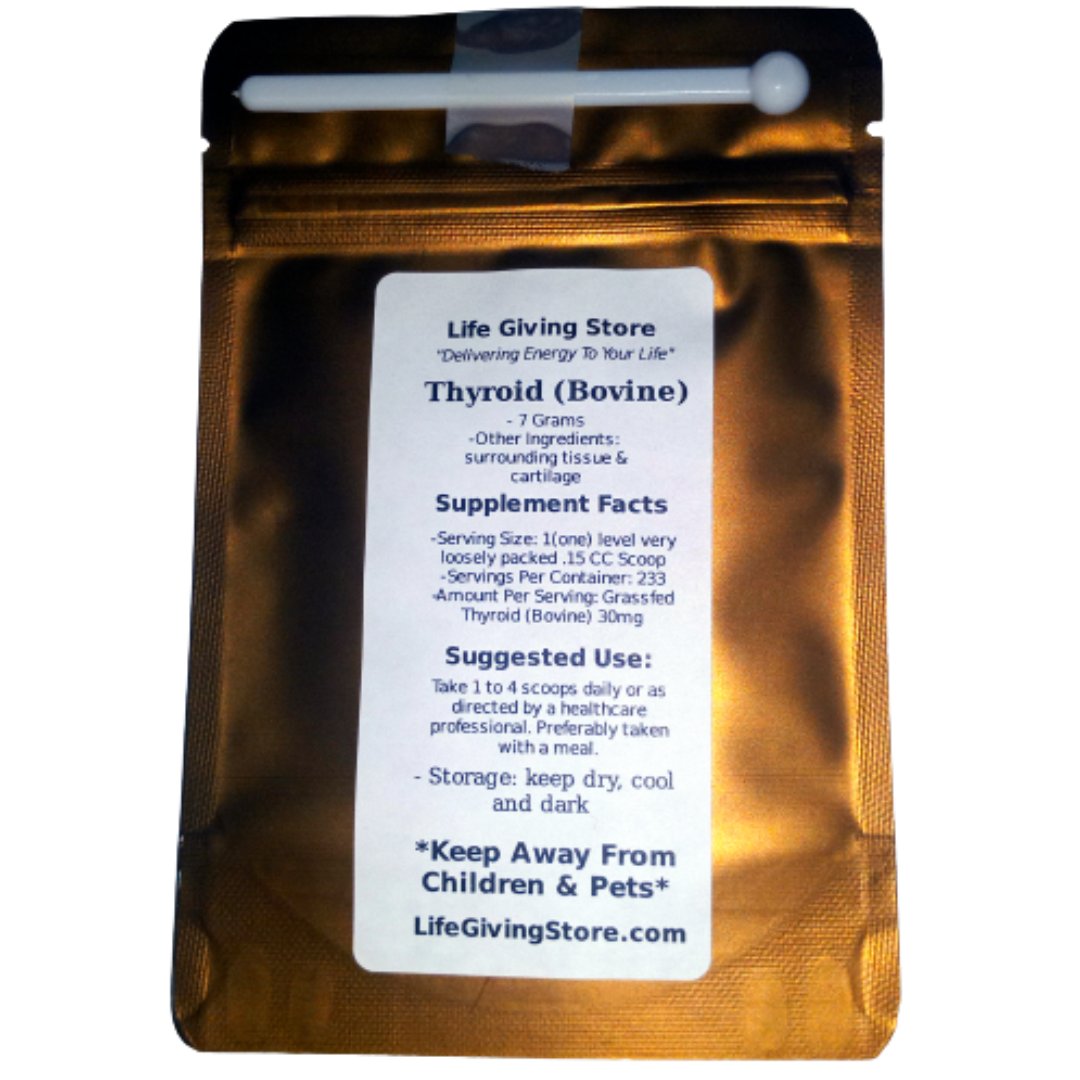
THYROID HORMONE - A complete guide
1. Symptoms you may be hypothyroid
Just to name a few:
• ALWAYS being tired
• Feeling COLD, especially at the extremities
• Slow / lethargic speech
• Stubborn weight gain
• Poor mood
• Puffy features: cheeks, love handles, general water retention
• Gynecomastia (man boobs)
• Muscular weakness
• Dry skin and hair
• Anxiety
• Hair loss
• Always being sick
Digestion is particularly responsive to thyroid hormone.
• Constipation or diarrhea
• Nausea
• Bacterial overgrowth
• Reflux
are all common in hypothyroidism.
Thyroid hormone is:
⬨ Key for gut regeneration, healing
⬨ Pro-motility
⬨ Vital for producing digestive enzymes
⬨ Required for producing stomach acid
⬨ Critical for gut immunity, gut barrier
2. Why labs are often misleading
TSH is the primary (and often only) metric a doctor will test for hypothyroidism.
A lower TSH should be indicative of higher thyroid hormone secretion, but it doesn't tell the full story.
For starters, TSH can be lowered by:
• Infection
• Trauma
• Cortisol
• Adrenaline
• Caffeine
• Fever
So a low TSH alone cannot rule out hypothyroidism.
The standard TSH reference range is also WAY too lenient (up to 5).
TSH >2 has been associated with:
• Heart disease
• High cortisol
Thyroid hormones:
• T4 (inactive)
• T3 (active, pro-metabolic)
• Reverse T3 (anti-metabolic)
can also be measured in the blood, but this doesn't tell the full story either.
These hormones must be transported through the blood, enter their target cells, and attach to the specific proteins in the cells that facilitate their actions.
Not as simple as thyroid in blood = thyroid activity.
Values of the “free” T3 and T4 can be misleading as well.
Thyroid hormones do not need to be "free" to exert their effects on various tissues, contrary the current medical dogma.
I still think testing can often be helpful, but you can certainly be hypothyroid while your labs look good on paper.
3. Diagnostics
An underarm temperature measured first thing in the morning, leaving the thermometer under the arm for 10 minutes to equilibrate, should start be >97.8°F.
Lower temperatures are highly indicative of hypothyroidism.
This was the gold standard thyroid test (along with aforementioned symptoms) that was successfully used to treat thousands of hypothyroid people before blood tests.
You can have “ideal” thyroid lab values yet be at the temperature of a hibernating bear.
A healthy resting pulse averaged 85 beats per minute, though Dr. Ward Dean has suggested between 65-75 is a good range.
If you eat carbs can and feel more tired and have lower temperature and pulse rate, this indicates a reliance on the stress hormones and a lack of thyroid function.
The response of the Achilles tendon when tapped was another assessment tool.
In a well-functioning thyroid, the foot would swing back energetically due to quick muscle relaxation.
but a slow, controlled return motion indicated potentially sluggish energy status, often a sign of hypothyroidism.
High cholesterol is another sign of hypothyroidism, while thyroid supplementation normalizes it.
4. NOT supplementing thyroid is unnatural
Consuming thyroid gland is as natural and "ancestral" as it gets.
Paleo researchers have stated that we probably consumed lots of thyroid gland throughout human history:
"the shift from scavenging towards hunting... would have increased thyroid gland consumption by hominins and thereby exogenous thyroid exposure."
"these Homo forebears started consuming small animals, such as amphibians, birds, and reptiles. This prey was consumed whole, and the animals’ thyroid glands thus provided a significant amount of thyroid hormone to their hominid predators."
"Nevertheless, tissues and organs (including thyroid glands) are commonly consumed by the primary hunters"
In fact, thyroid gland used to be in common foods like ground beef up until the mid 80s.
It is only recently when we stopped eating the whole animal, including the thyroid gland!
5. Using natural desiccated thyroid (NDT)
Desiccated thyroid comes from the thyroid glands of pigs or cows, and is the traditional way of supplanting thyroid hormones.
A grain (60 mg) is the unit of measurement for supplementation, containing ~40 mcg T4 + ~10 mcg T3.
A starting dose of a half grain is reasonable, and should be continued for 2-4 weeks before adjusting.
The hormones take around this long to stabilize.
As you use NDT, you should consistently track:
1. Morning temperature
2. Symptoms
Once you get to >97.8°F and symptoms resolve, the correct dose has been found.
The brand matters a lot. Many products seem to be unreliable, or outright useless.
That’s definitely been my experience. I’ve tried numerous products over the last few years.
I'll link below the thyroid product I have been using recently for myself and with clients.
I would take it with food to slow the absorption, or even split into multiple doses with meals.
I prefer at dinner.
While some may require full replacement (4 to 5 grains), others find relief with as little as 15 mg (quarter grain).
Broda Barnes observed that his patients often required about two grains of thyroid to alleviate hypothyroid symptoms, occasionally needing more.
If you experience
• Too fast of a heart rate
• Palpitations,
• Anxiety,
• Overheating
• Fatigue
• Shaky feelings
then you might have taken too much thyroid.
The amount taken should be reduced or discontinued entirely.
Effects of over stimulation should resolve in a few hours.
This type of response can also indicate low cholesterol or an issue with liver function, two systems that the thyroid depends on to do its good.
You may also need more nutrients, as the increased metabolic rate demands more resources.
Eat your liver, egg yolks, and oysters.
Many people who should be candidates for supplementation find that thyroid does nothing for them, no matter how much they take.
In my experience, this always seems to be tied to an issue with the gut.
I would try to address this first.
Or, you just may not need it at all. You may need to address other factors.
Of course, supplementing thyroid is not the ONLY way to improve thyroid function, but it seems like an appropriate strategy when other factors have been addressed.
3
IF YOU WANT PERSONALIZED HELP FROM US WITH YOUR HEALTH (on thyroid health or anything else), SCHEDULE A FREE CALL HERE prism.miami
